
Optimization Techniques Genetic Algorithms And other approaches for
- Slides: 38
Optimization Techniques Genetic Algorithms And other approaches for similar applications
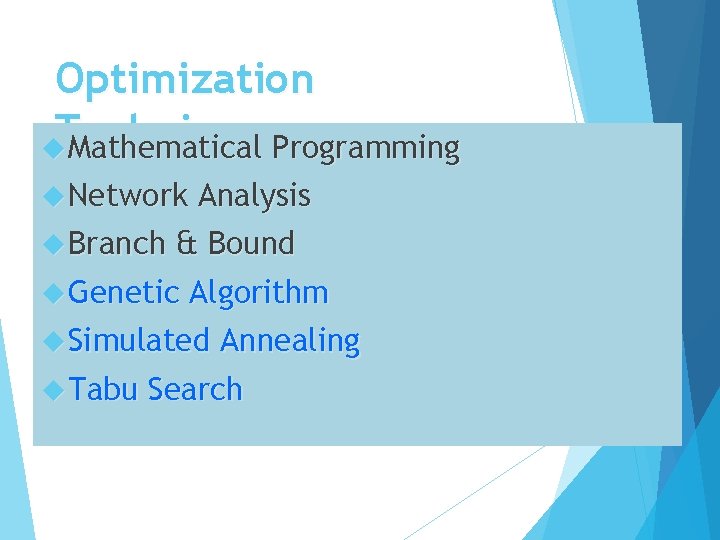
Optimization Techniques Mathematical Programming Network Analysis Branch & Bound Genetic Algorithm Simulated Annealing Tabu Search
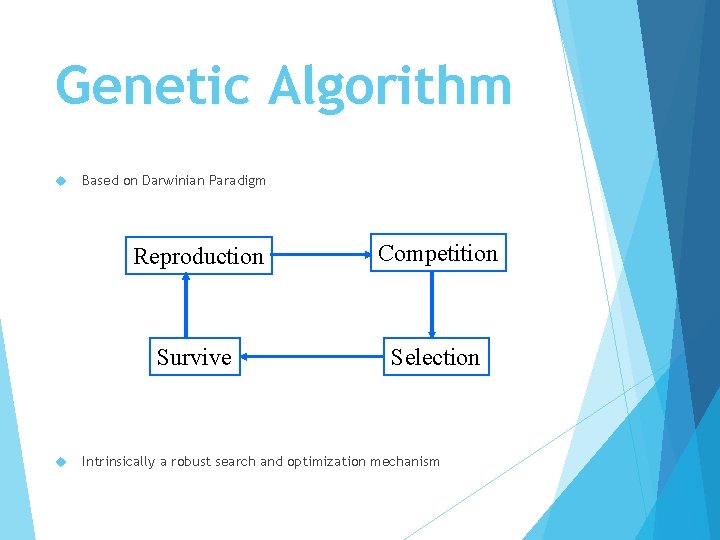
Genetic Algorithm Based on Darwinian Paradigm Reproduction Competition Survive Selection Intrinsically a robust search and optimization mechanism
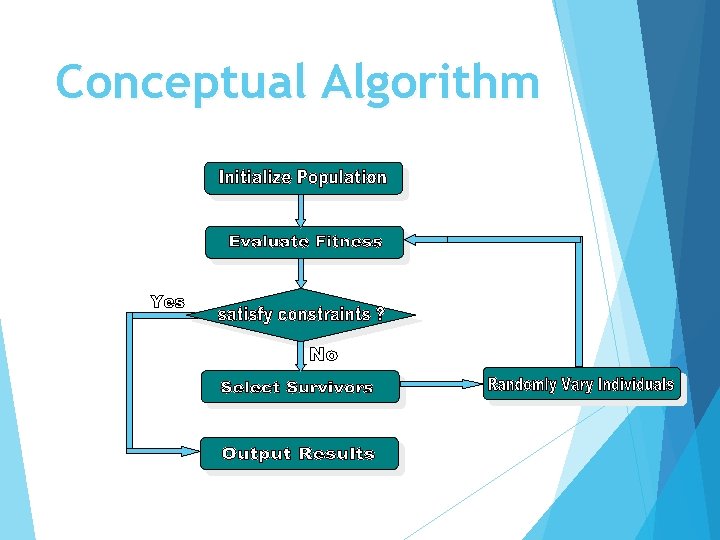
Conceptual Algorithm
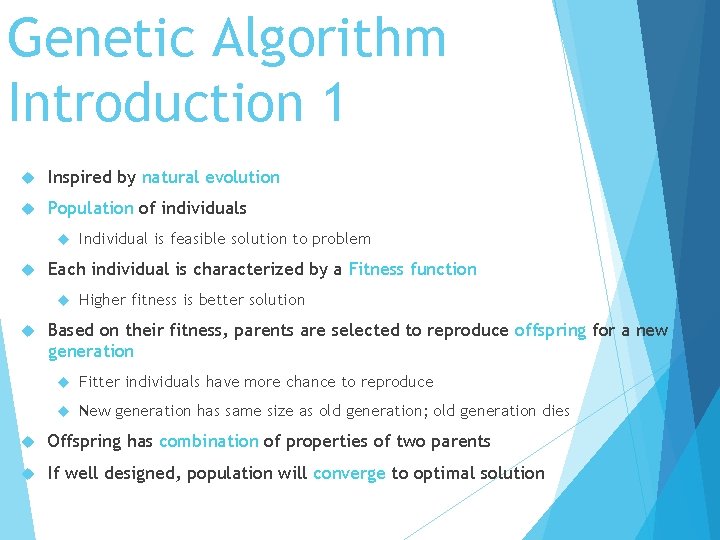
Genetic Algorithm Introduction 1 Inspired by natural evolution Population of individuals Each individual is characterized by a Fitness function Individual is feasible solution to problem Higher fitness is better solution Based on their fitness, parents are selected to reproduce offspring for a new generation Fitter individuals have more chance to reproduce New generation has same size as old generation; old generation dies Offspring has combination of properties of two parents If well designed, population will converge to optimal solution
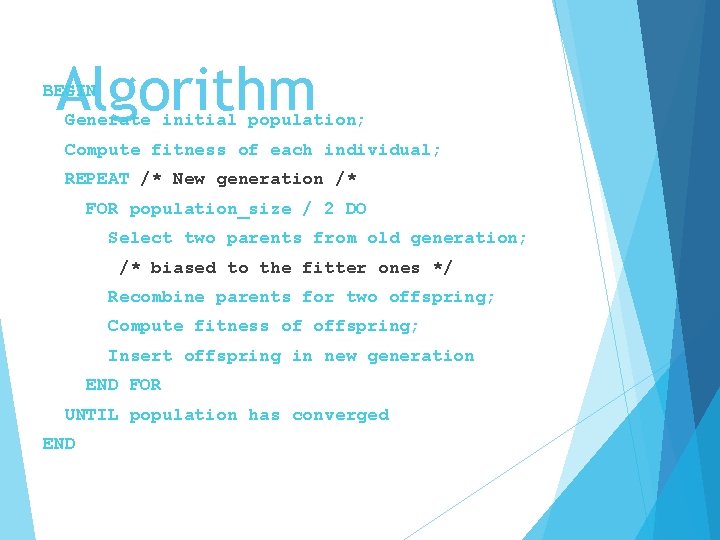
Algorithm BEGIN Generate initial population; Compute fitness of each individual; REPEAT /* New generation /* FOR population_size / 2 DO Select two parents from old generation; /* biased to the fitter ones */ Recombine parents for two offspring; Compute fitness of offspring; Insert offspring in new generation END FOR UNTIL population has converged END
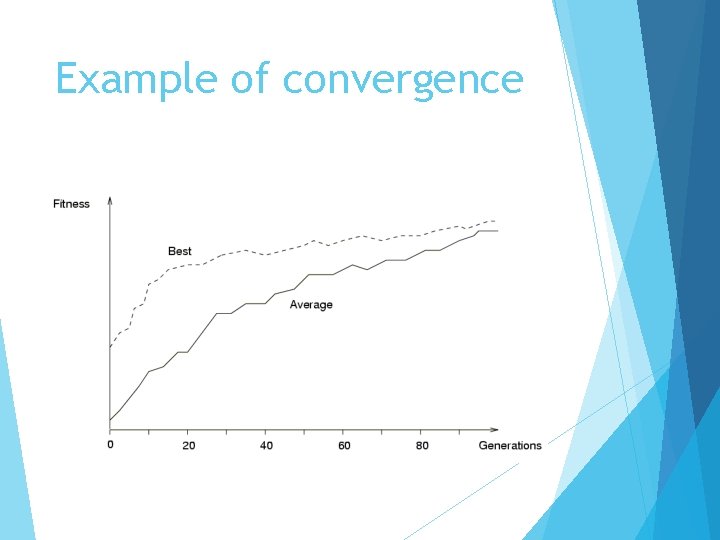
Example of convergence
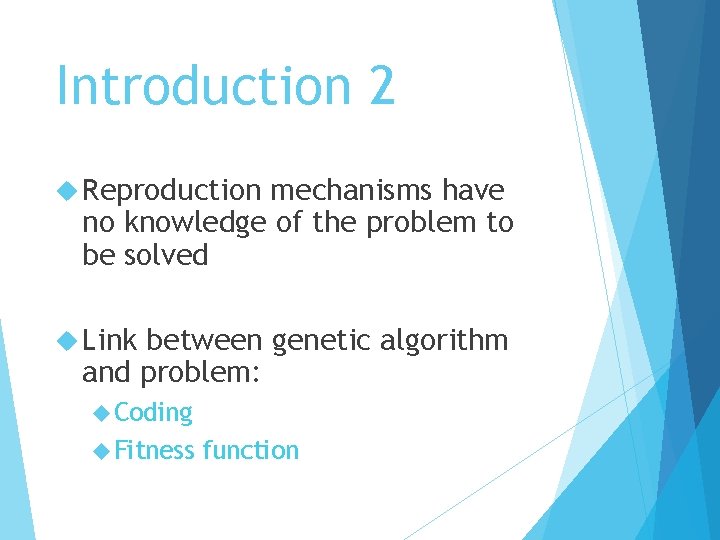
Introduction 2 Reproduction mechanisms have no knowledge of the problem to be solved Link between genetic algorithm and problem: Coding Fitness function
Basic principles 1 Coding or Representation String with all parameters Fitness function Parent selection Reproduction Crossover Mutation Convergence When to stop
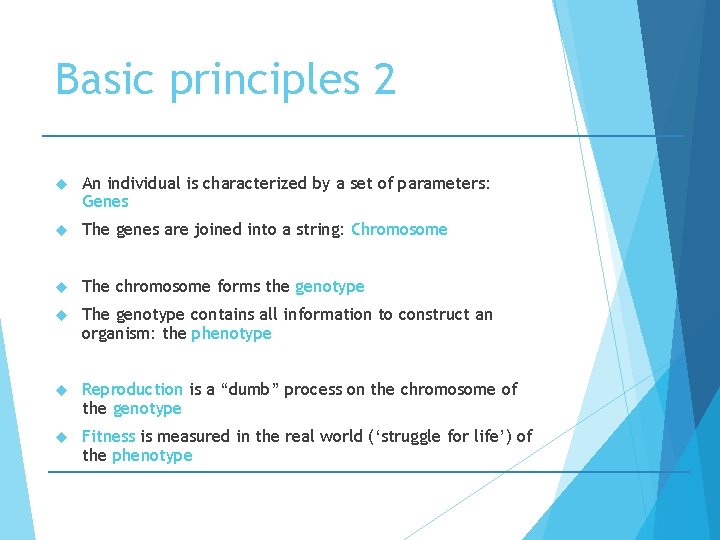
Basic principles 2 An individual is characterized by a set of parameters: Genes The genes are joined into a string: Chromosome The chromosome forms the genotype The genotype contains all information to construct an organism: the phenotype Reproduction is a “dumb” process on the chromosome of the genotype Fitness is measured in the real world (‘struggle for life’) of the phenotype
Coding Parameters of the solution (genes) are concatenated to form a string (chromosome) All kind of alphabets can be used for a chromosome (numbers, characters), but generally a binary alphabet is used Order of genes on chromosome can be important Generally many different codings for the parameters of a solution are possible Good coding is probably the most important factor for the performance of a GA In many cases many possible chromosomes do not code for feasible solutions
Genetic Algorithm Encoding Fitness Evaluation Reproduction Survivor Selection
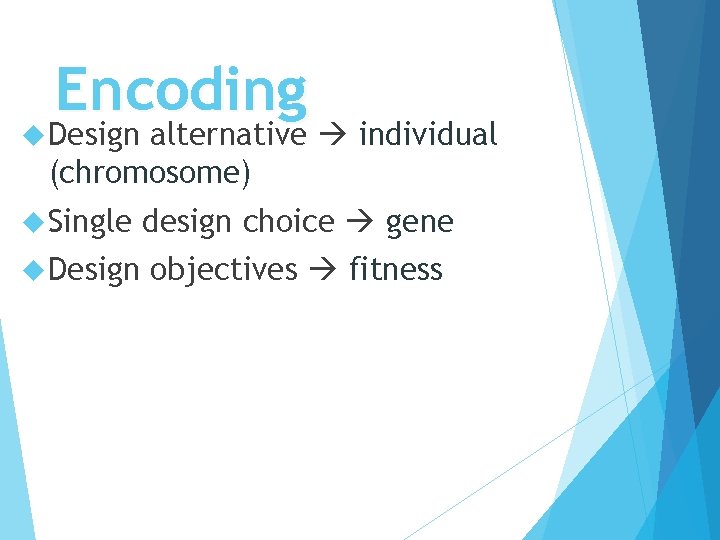
Encoding Design alternative individual (chromosome) Single design choice gene Design objectives fitness
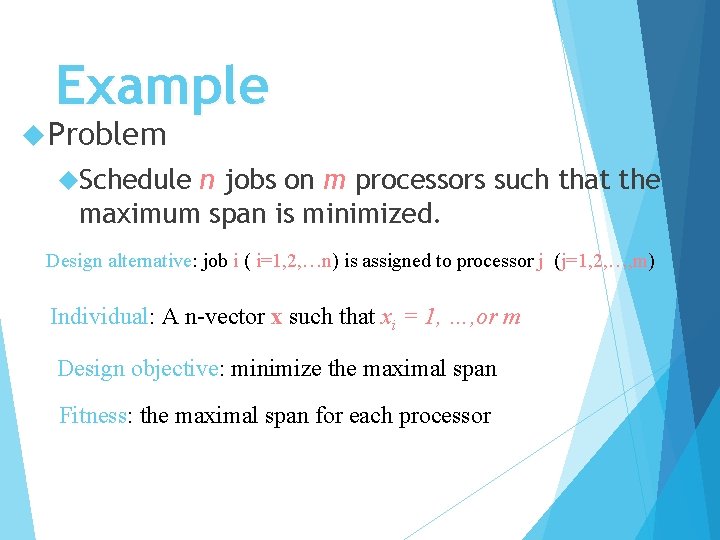
Example Problem Schedule n jobs on m processors such that the maximum span is minimized. Design alternative: job i ( i=1, 2, …n) is assigned to processor j (j=1, 2, …, m) Individual: A n-vector x such that xi = 1, …, or m Design objective: minimize the maximal span Fitness: the maximal span for each processor
Reproduction Crossover Mutation operators
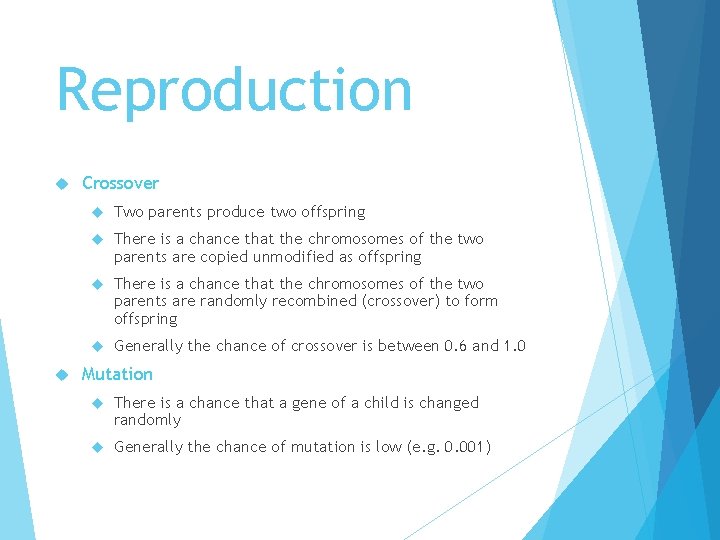
Reproduction Crossover Two parents produce two offspring There is a chance that the chromosomes of the two parents are copied unmodified as offspring There is a chance that the chromosomes of the two parents are randomly recombined (crossover) to form offspring Generally the chance of crossover is between 0. 6 and 1. 0 Mutation There is a chance that a gene of a child is changed randomly Generally the chance of mutation is low (e. g. 0. 001)
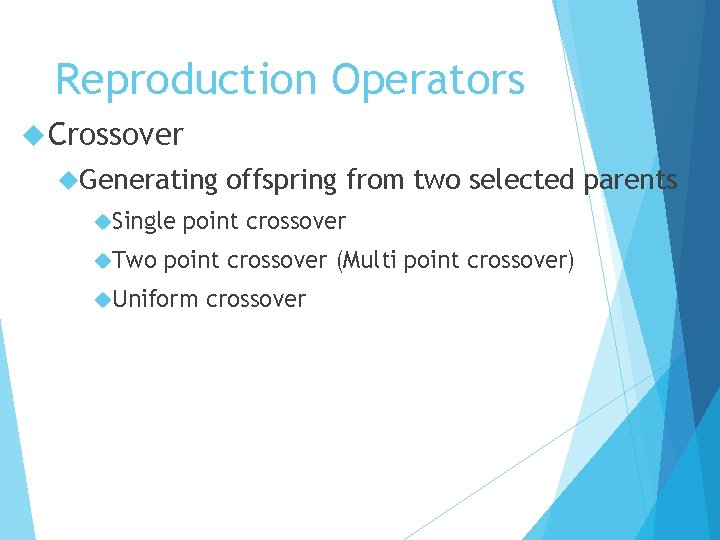
Reproduction Operators Crossover Generating Single Two offspring from two selected parents point crossover (Multi point crossover) Uniform crossover
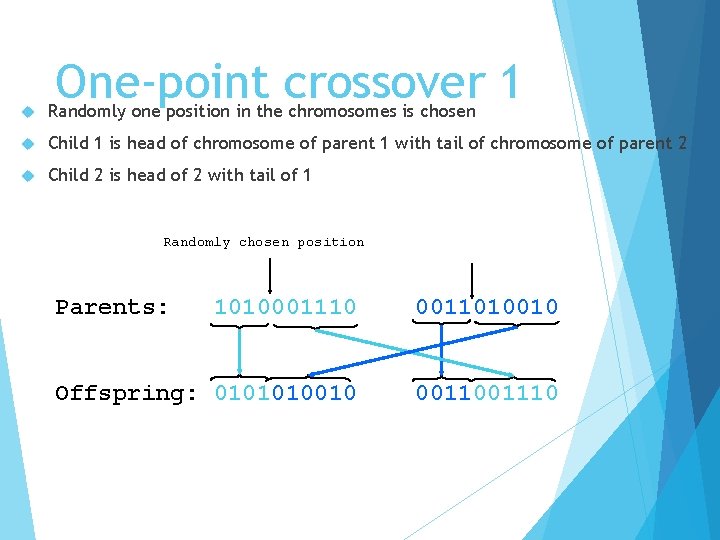
One-point crossover 1 Randomly one position in the chromosomes is chosen Child 1 is head of chromosome of parent 1 with tail of chromosome of parent 2 Child 2 is head of 2 with tail of 1 Randomly chosen position Parents: 1010001110 0011010010 Offspring: 0101010010 001110
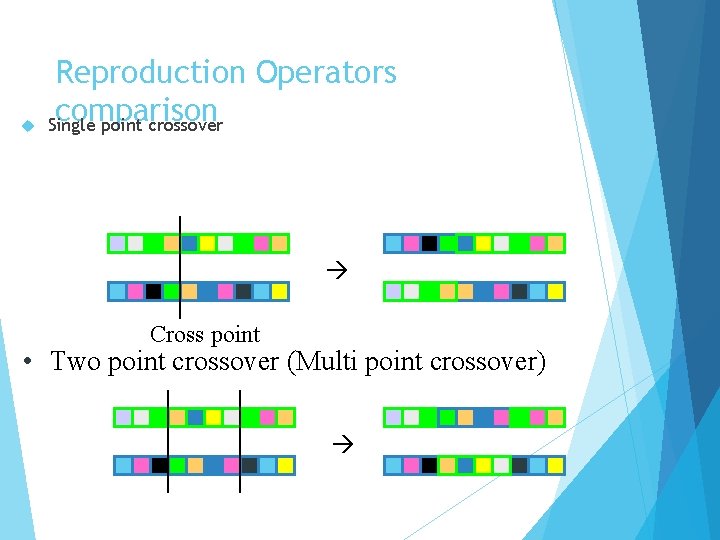
Reproduction Operators comparison Single point crossover Cross point • Two point crossover (Multi point crossover)
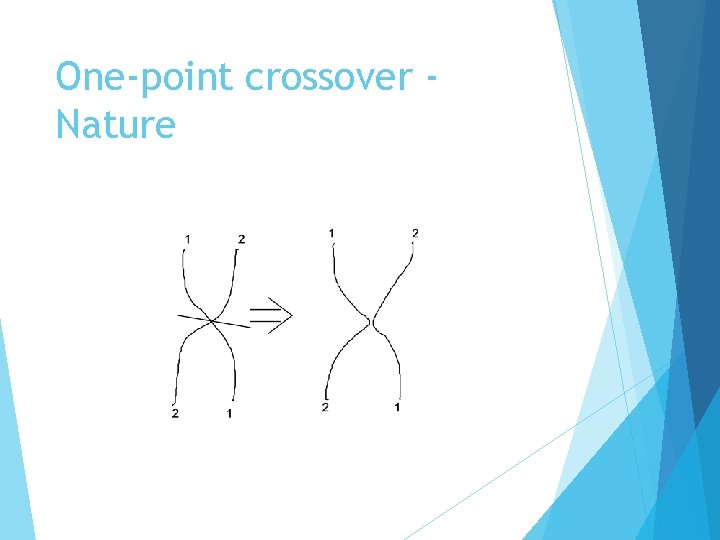
One-point crossover Nature
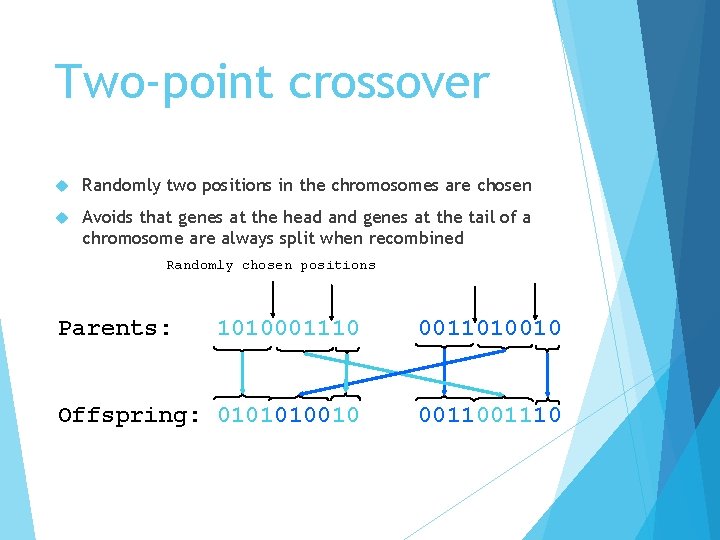
Two-point crossover Randomly two positions in the chromosomes are chosen Avoids that genes at the head and genes at the tail of a chromosome are always split when recombined Randomly chosen positions Parents: 1010001110 0011010010 Offspring: 0101010010 001110
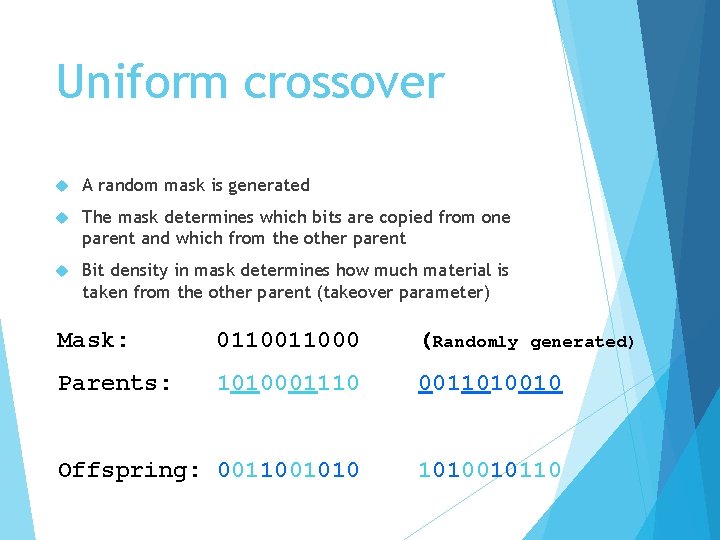
Uniform crossover A random mask is generated The mask determines which bits are copied from one parent and which from the other parent Bit density in mask determines how much material is taken from the other parent (takeover parameter) Mask: 011000 (Randomly Parents: 1010001110 0011010010 Offspring: 0011001010010110 generated)
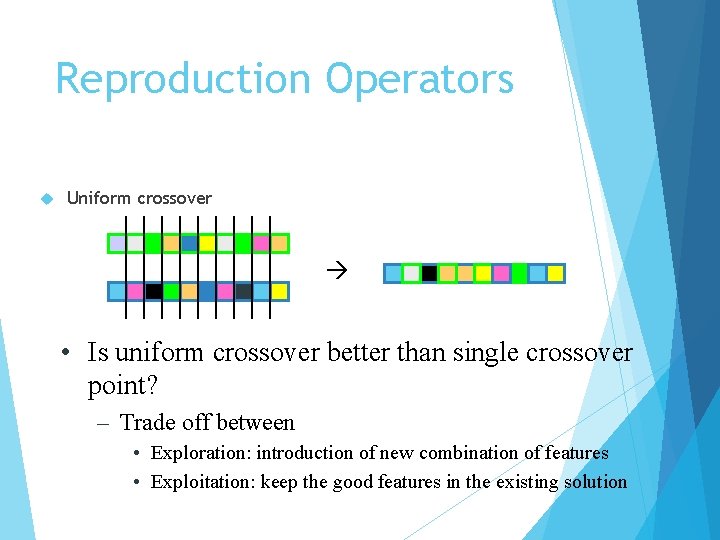
Reproduction Operators Uniform crossover • Is uniform crossover better than single crossover point? – Trade off between • Exploration: introduction of new combination of features • Exploitation: keep the good features in the existing solution
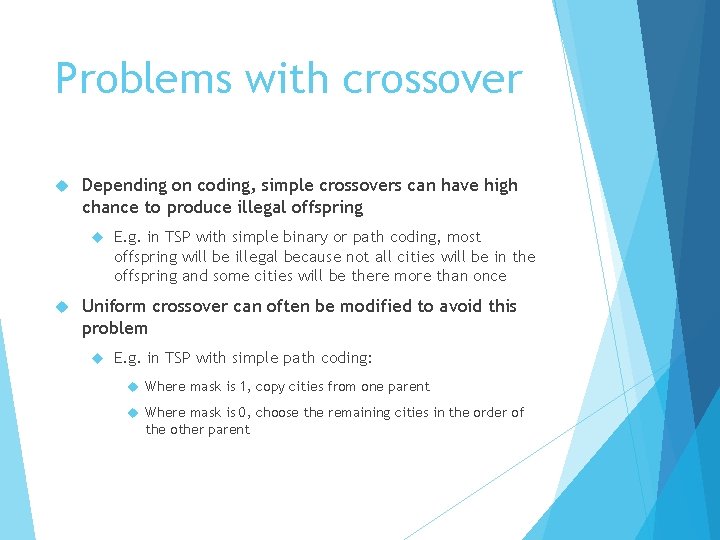
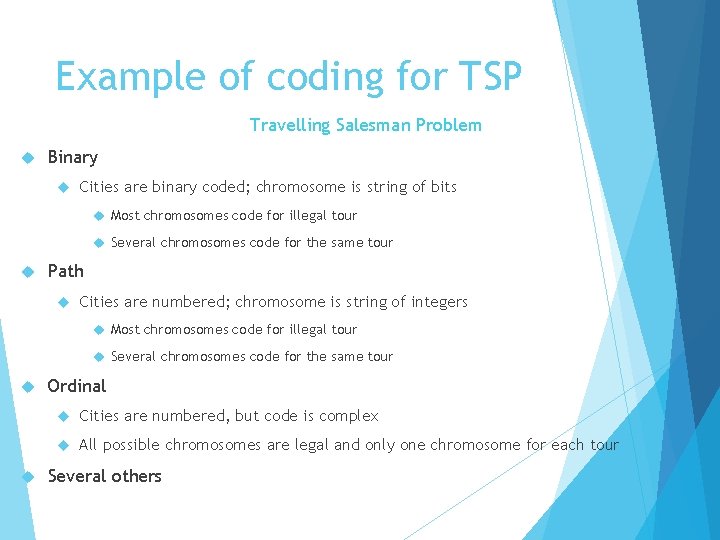
Problems with crossover Depending on coding, simple crossovers can have high chance to produce illegal offspring E. g. in TSP with simple binary or path coding, most offspring will be illegal because not all cities will be in the offspring and some cities will be there more than once Uniform crossover can often be modified to avoid this problem E. g. in TSP with simple path coding: Where mask is 1, copy cities from one parent Where mask is 0, choose the remaining cities in the order of the other parent
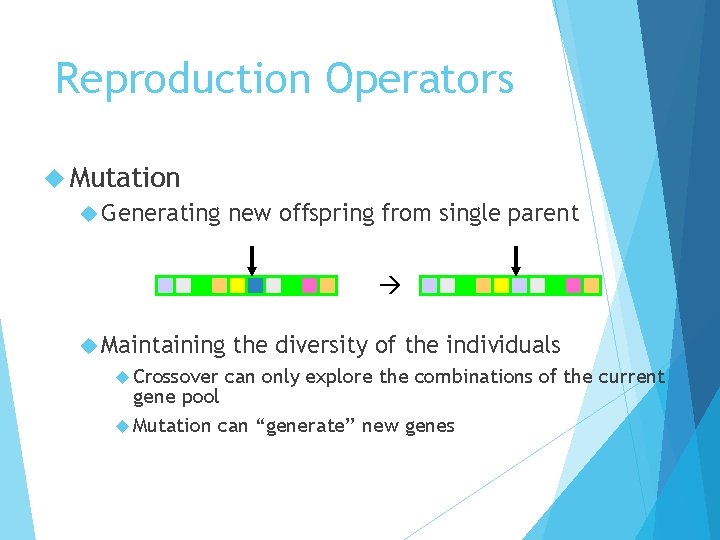
Reproduction Operators Mutation Generating new offspring from single parent Maintaining Crossover the diversity of the individuals can only explore the combinations of the current gene pool Mutation can “generate” new genes
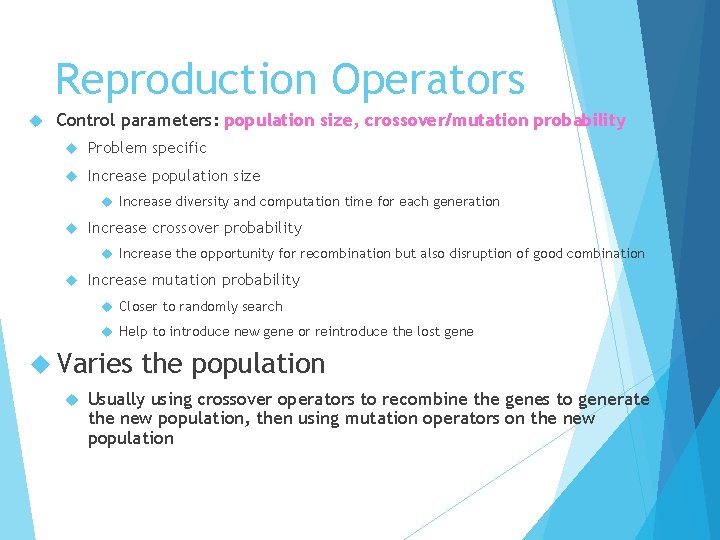
Reproduction Operators Control parameters: population size, crossover/mutation probability Problem specific Increase population size Increase diversity and computation time for each generation Increase crossover probability Increase the opportunity for recombination but also disruption of good combination Increase mutation probability Closer to randomly search Help to introduce new gene or reintroduce the lost gene Varies the population Usually using crossover operators to recombine the genes to generate the new population, then using mutation operators on the new population
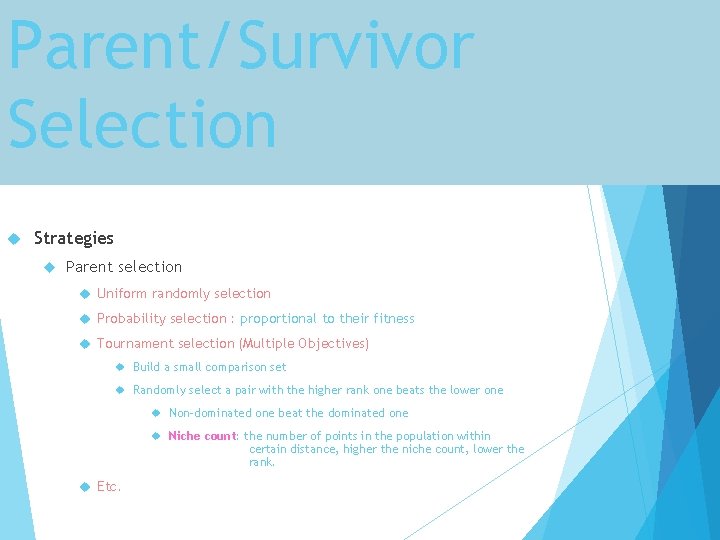
Parent/Survivor Selection Strategies Survivor selection Always keep the best one Elitist: deletion of the K worst Probability Etc. selection : inverse to their fitness
Parent/Survivor Selection Too strong fitness selection bias can lead to suboptimal solution Too little fitness bias selection results in unfocused and meandering search
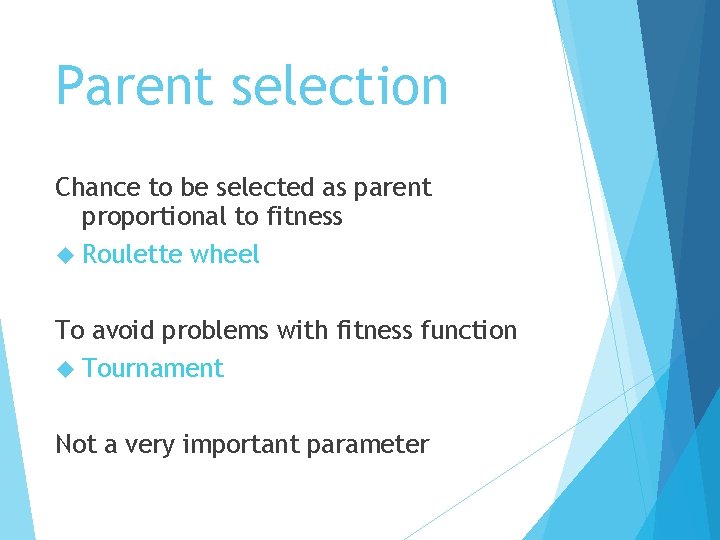
Parent selection Chance to be selected as parent proportional to fitness Roulette wheel To avoid problems with fitness function Tournament Not a very important parameter
Parent/Survivor Selection Strategies Parent selection Uniform randomly selection Probability selection : proportional to their fitness Tournament selection (Multiple Objectives) Build a small comparison set Randomly select a pair with the higher rank one beats the lower one Non-dominated one beat the dominated one Niche count: the number of points in the population within certain distance, higher the niche count, lower the rank. Etc.
Others Global Optimal Parameter Tuning Parallelism Random number generators
Example of coding for TSP Travelling Salesman Problem Binary Cities are binary coded; chromosome is string of bits Most chromosomes code for illegal tour Several chromosomes code for the same tour Path Cities are numbered; chromosome is string of integers Most chromosomes code for illegal tour Several chromosomes code for the same tour Ordinal Cities are numbered, but code is complex All possible chromosomes are legal and only one chromosome for each tour Several others
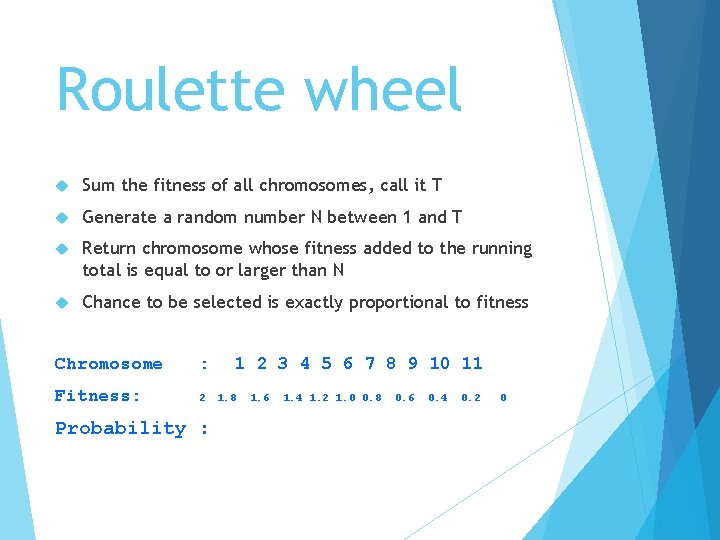
Roulette wheel Sum the fitness of all chromosomes, call it T Generate a random number N between 1 and T Return chromosome whose fitness added to the running total is equal to or larger than N Chance to be selected is exactly proportional to fitness Chromosome : Fitness: 2 1. 8 Probability : 1 2 3 4 5 6 7 8 9 10 11 1. 6 1. 4 1. 2 1. 0 0. 8 0. 6 0. 4 0. 2 0
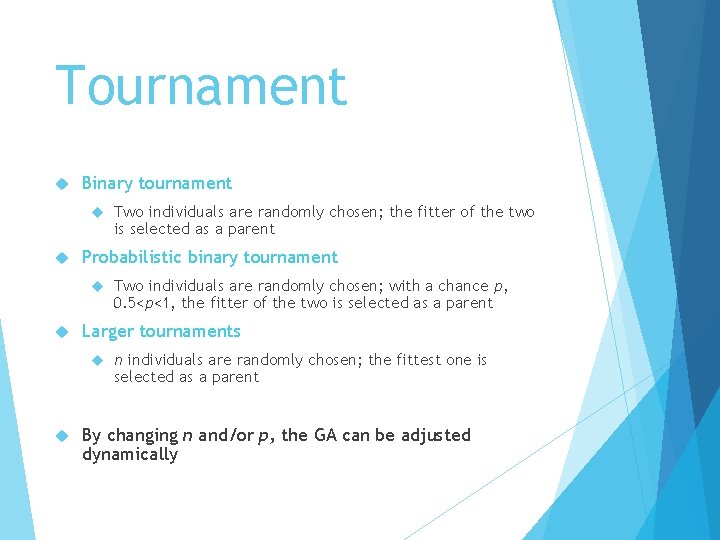
Tournament Binary tournament Probabilistic binary tournament Two individuals are randomly chosen; with a chance p, 0. 5<p<1, the fitter of the two is selected as a parent Larger tournaments Two individuals are randomly chosen; the fitter of the two is selected as a parent n individuals are randomly chosen; the fittest one is selected as a parent By changing n and/or p, the GA can be adjusted dynamically
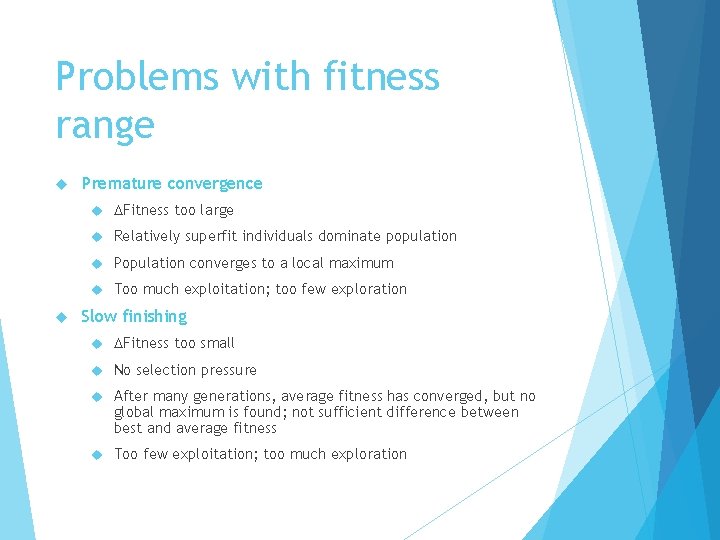
Problems with fitness range Premature convergence Fitness too large Relatively superfit individuals dominate population Population converges to a local maximum Too much exploitation; too few exploration Slow finishing Fitness too small No selection pressure After many generations, average fitness has converged, but no global maximum is found; not sufficient difference between best and average fitness Too few exploitation; too much exploration
Fitness Function Purpose Parent selection Measure for convergence For Steady state: Selection of individuals to die Should reflect the value of the chromosome in some “real” way Next to coding the most critical part of a GA
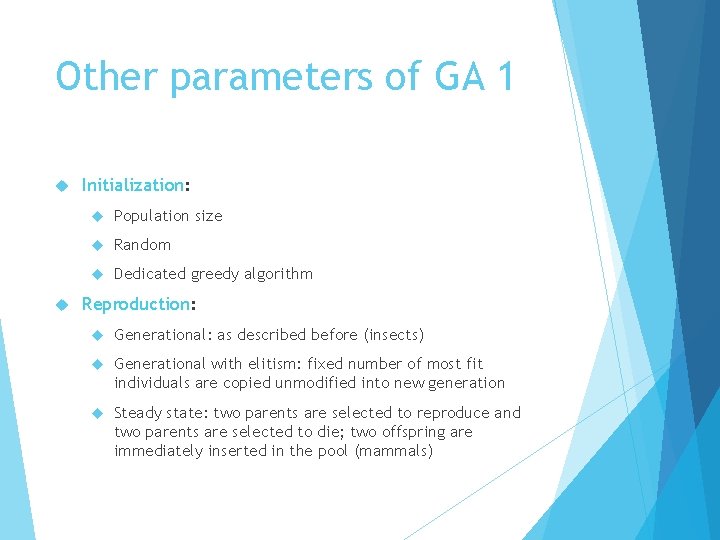
Other parameters of GA 1 Initialization: Population size Random Dedicated greedy algorithm Reproduction: Generational: as described before (insects) Generational with elitism: fixed number of most fit individuals are copied unmodified into new generation Steady state: two parents are selected to reproduce and two parents are selected to die; two offspring are immediately inserted in the pool (mammals)
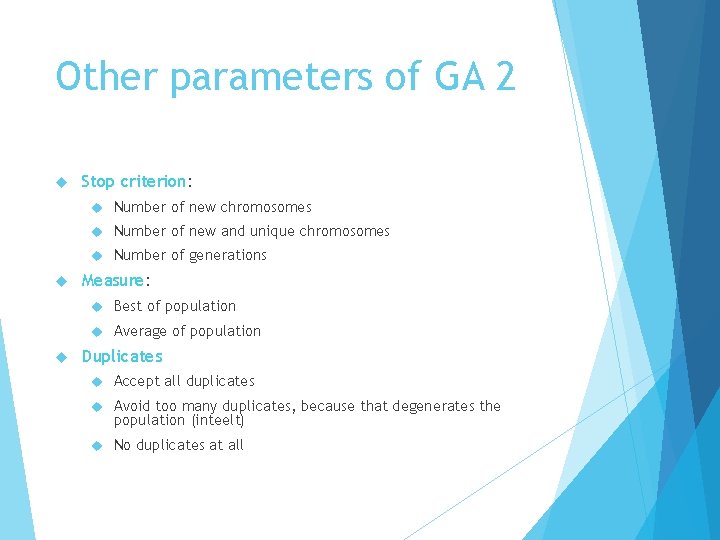
Other parameters of GA 2 Stop criterion: Number of new chromosomes Number of new and unique chromosomes Number of generations Measure: Best of population Average of population Duplicates Accept all duplicates Avoid too many duplicates, because that degenerates the population (inteelt) No duplicates at all