
Optimism and Emotional Support Exploring Positive and Negative

- Slides: 16
Optimism and Emotional Support: Exploring Positive and Negative Outcomes in Students Melina Condren mcondren@yorku. ca
Student Stress • Students report stressors such as coursework, isolation, worries about job prospects, etc. • 76% of students report feeling overwhelmed (American College Health Association, 2001). • First-year students face a variety of additional stressors during the transition from high school to university.
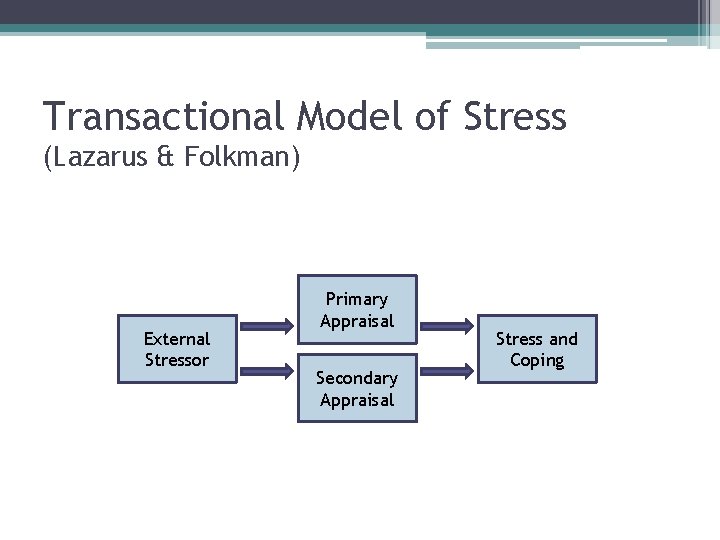
Transactional Model of Stress (Lazarus & Folkman) External Stressor Primary Appraisal Secondary Appraisal Stress and Coping
Positive Resources • Internal resources: optimism, psychological control, self-esteem. • External resources: money, time, social support. • Positive psychology (Seligman). ▫ Strengths rather than weaknesses ▫ Prevention rather than cure ▫ Positive rather than negative outcomes
Optimism • Dispositional optimism is the generalized expectation of positive outcomes. • Optimism can be learned. • Unrealistic optimism can lead to negative mental and physical health outcomes.
Social Support • Instrumental support ▫ Tangible resources • Informational support ▫ Identifying, understanding, and coping with problems • Emotional support ▫ Empathy, acceptance, caring, esteem
Optimism and Emotional Support • Optimism and emotional support appear to be related. • Optimists may use support more effectively. • Optimists report greater levels of support than pessimists. ▫ Do they receive more support than pessimists? ▫ Are they more optimistic about their support networks?
My projects • Three projects examining student well-being. • 68 first-year students. • Data collected at two time points: beginning and end of fall semester. • Variables examined included optimism, emotional support, vigor, depression, and proactive coping. • Examined how optimism and emotional support act together to promote positive outcomes.
Vigor • Vigor is characterized by a high degree activity, energy, mental resilience, stamina, and persistence when problems arise. • Vigor is related to positive mental and physical health outcomes.
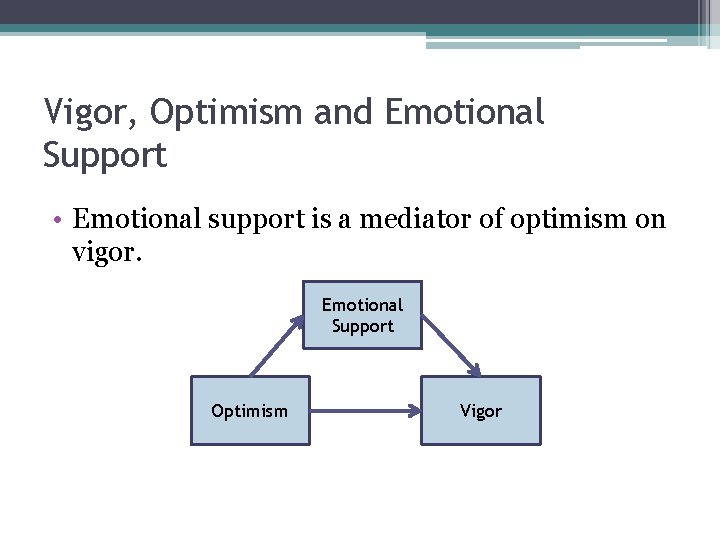
Vigor, Optimism and Emotional Support • Emotional support is a mediator of optimism on vigor. Emotional Support Optimism Vigor
Depression • High rates of depression are commonly found in undergraduate samples. • 22% students report having been unable to function because of depression (American College Health Association, 2001) • Depression in students has been linked to cognitive symptoms, motivational symptoms, social problems, alcohol abuse, and increased suicide risk.
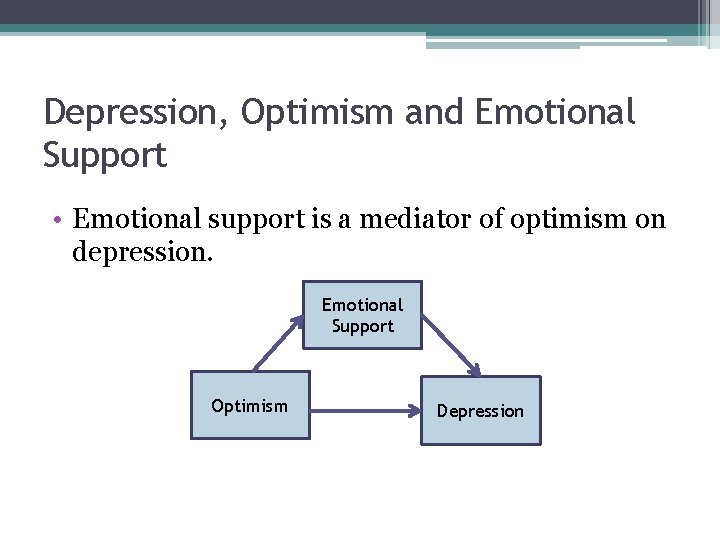
Depression, Optimism and Emotional Support • Emotional support is a mediator of optimism on depression. Emotional Support Optimism Depression
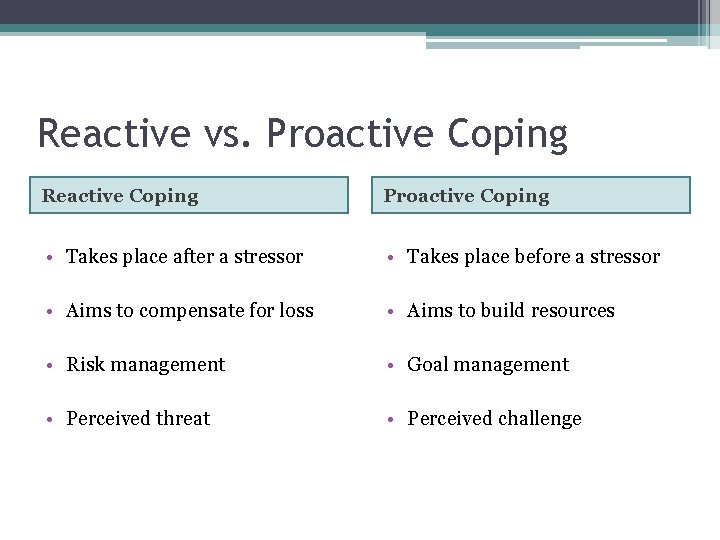
Reactive vs. Proactive Coping Reactive Coping Proactive Coping • Takes place after a stressor • Takes place before a stressor • Aims to compensate for loss • Aims to build resources • Risk management • Goal management • Perceived threat • Perceived challenge
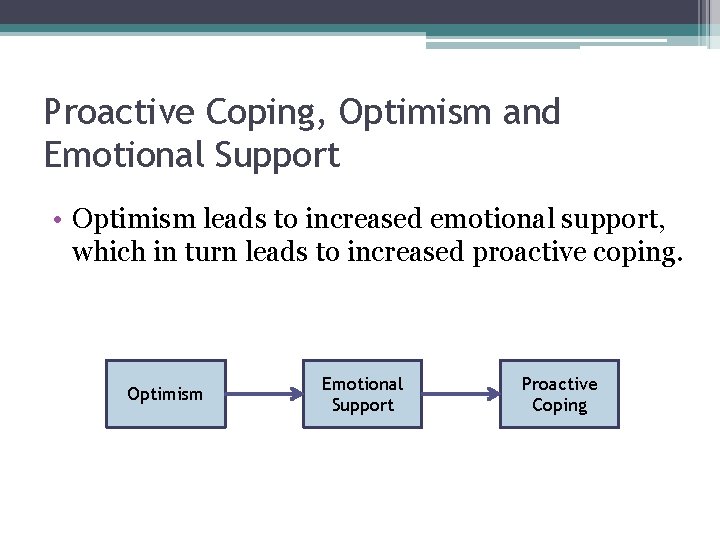
Proactive Coping, Optimism and Emotional Support • Optimism leads to increased emotional support, which in turn leads to increased proactive coping. Optimism Emotional Support Proactive Coping
Summary: Promoting Positive Outcomes • These studies suggest that optimism leads to increased emotional support, which in turn leads to various positive outcomes. • However, we cannot infer causality. • Why might optimism lead to increased support? • How can individuals develop these positive resources?
Questions?