
Optimising Discharge for Orthopaedic Trauma Patients Fiona Ballance
Optimising Discharge for Orthopaedic Trauma Patients Fiona Ballance Team Lead Occupational Therapist Glasgow Royal Infirmary

Major Changes to Glasgow NHS in 2015

2 Acute Hospitals Queen Elizabeth University Hospital (QEUH) Glasgow Royal Infirmary (GRI)
Implications for the Orthopaedic Service across Glasgow • 2 A&E Depts in Glasgow (previously 4) • Decrease in Orthopaedic bed numbers across the city • Projected decrease in length of stay (across the city) to accommodate this • Centralised GORU • New ways of working: • - Increase in Day Surgery - Same day admissions for elective - Work Smart (New team Structure for AHPs)
Implications for GRI • Increase in patient numbers • Previously GRI admitted 20 -25% of the Orthopaedic admissions in Glasgow now 37% • Increase in the proportion of majors and patients with more complex needs • No increase in bed numbers (57 Trauma) • No increase in staffing
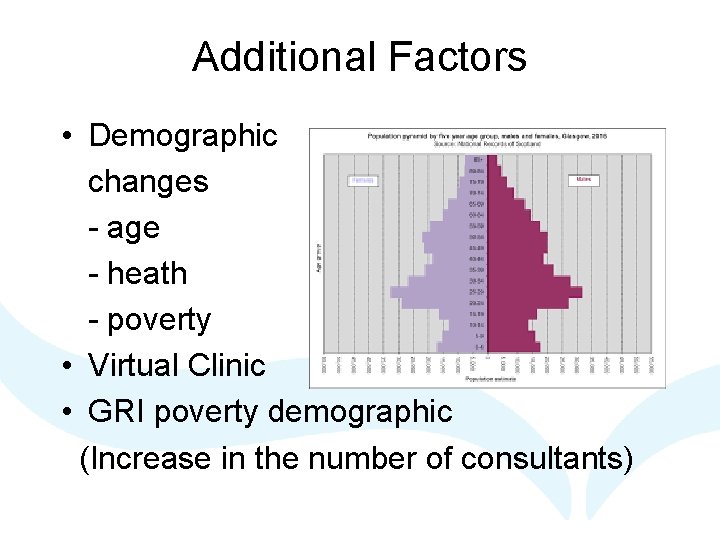
Additional Factors • Demographic changes - age - heath - poverty • Virtual Clinic • GRI poverty demographic (Increase in the number of consultants)

Where are we now? • Trauma Length of Stay (Lo. S) 7. 1 days (Elective Lo. S 5. 0 days) • 37 – 40% of Glasgow Orthopaedic admissions • Additional increase due to rising number of admissions across Glasgow (all areas) • Activity fluctuations with increases that sometimes require patients to be boarded out to other wards. (Less seasonal variation) • Lower usage of GORU
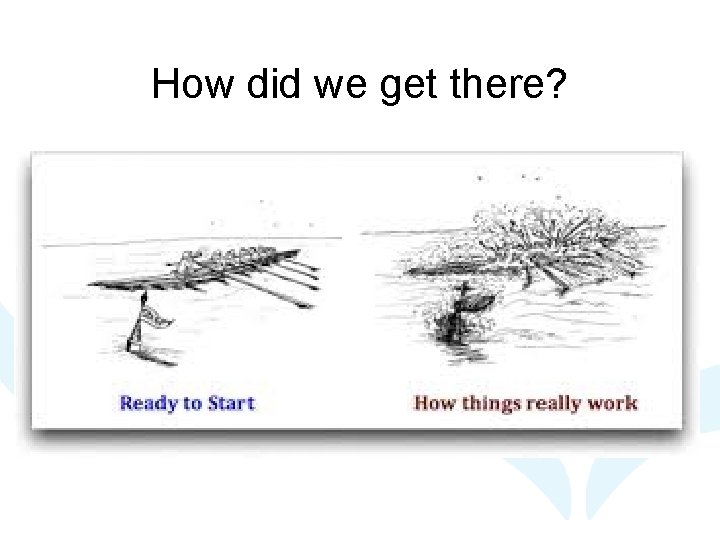
How did we get there?
Marginal Gains
Initiatives, Guidelines & Practice • • National GG&C AHP GRI OT GRI
National • MSK and Orthopaedic Quality Drive 5 High Impact Workstrands – Incl Hip # • Scottish Standards of care for Hip Fracture Patients (2016). (SIGN 111 2009) • Ongoing audit (Original 1993 -2008) (link to National Hip # Database) • Hip Fracture Care Pathway Report 2017 http: //www. shfa. scot. nhs. uk/_docs/2017 -08 -22 SHFA-Report. pdf • Workshop/Event (yearly)

Scottish Standards of Care for Hip Fracture Patients • • • Time in ED <2 hours 2. Patients should have all of the ‘Big Six’ interventions carried out in the ED: analgesia; SEWS (Scottish Early Warning Score) chart; pressure areas assessment; Intravenous (IV)/oral fluids as appropriate; bloods taken; cognition screening 3. Admission assessments completed with 24 hours, including: pressure areas assessment; falls risk assessment; nutrition, food and fluids assessment; full cognitive assessment 4. Patients medically fit for an operation should proceed to theatre within 48 hours of admission 5. Patients scheduled for an afternoon theatre slot should not be fasted for solids/non-clear liquids for longer than 10 hours 6. Patients should not have clear oral fluids withheld for more than four hours 7. Routine pre-operative catheterisation should be avoided 8. All frail patients should have a Comprehensive Geriatric Assessment (CGA) completed within two days of admission. 9. Patients should have post-operative mobilization (or assessment for potential mobilization) by end of first post-op day 10. Post-operative Occupational Therapist (OT) assessment should be performed by the end of the third post-operative day 11. Discharge planning should be commenced within 48 hours from admission 12. All professionals in the care pathway should have a continuous process of improvement that includes recording patient-reported outcome measures (PROM) and feedback regarding patient or carer experience

• 9. Patients should have post-operative mobilization (or assessment for potential mobilization) by end of first post-op day • 10. Post-operative Occupational Therapist (OT) assessment should be performed by the end of the third post-operative day • 11. Discharge planning should be commenced within 48 hours from admission • 12. All professionals in the care pathway should have a continuous process of improvement that includes recording patient-reported outcome measures (PROM) and feedback regarding patient or carer experience
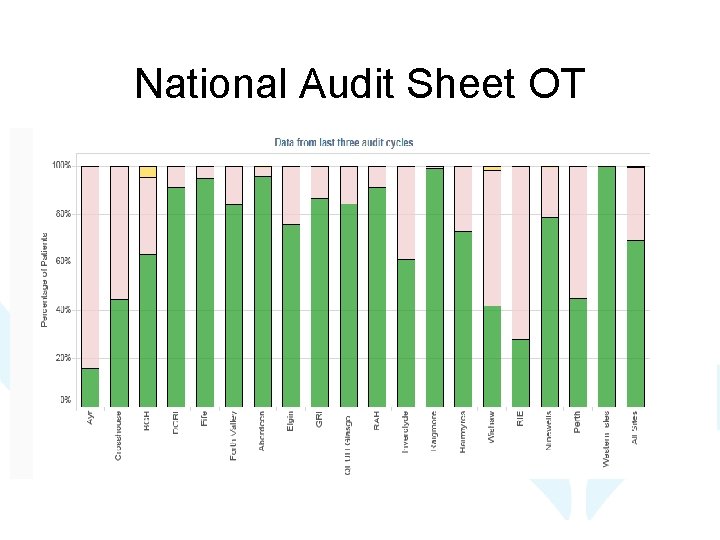
National Audit Sheet OT
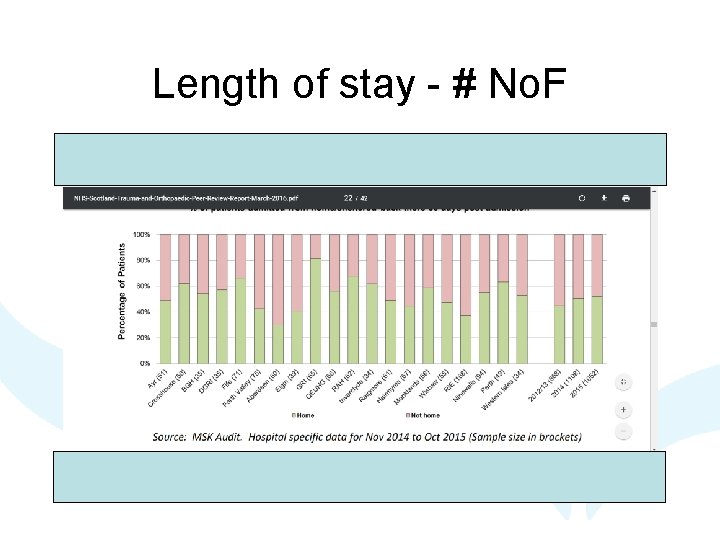
Length of stay - # No. F
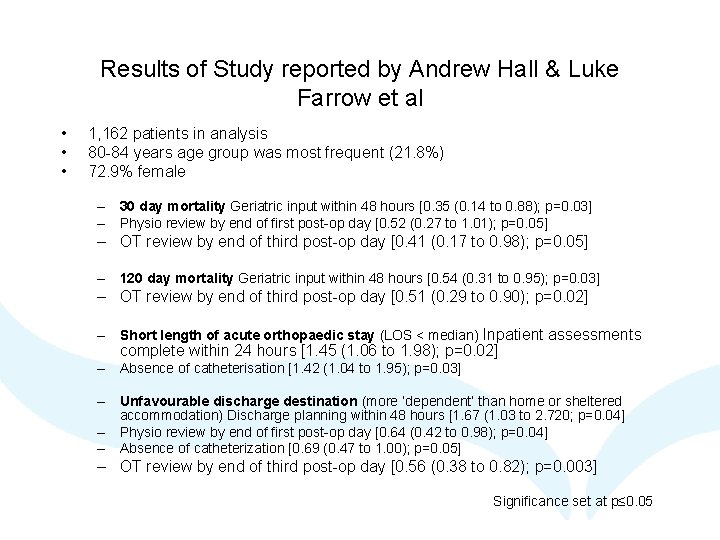
Results of Study reported by Andrew Hall & Luke Farrow et al • • • 1, 162 patients in analysis 80 -84 years age group was most frequent (21. 8%) 72. 9% female – 30 day mortality Geriatric input within 48 hours [0. 35 (0. 14 to 0. 88); p=0. 03] – Physio review by end of first post-op day [0. 52 (0. 27 to 1. 01); p=0. 05] – OT review by end of third post-op day [0. 41 (0. 17 to 0. 98); p=0. 05] – 120 day mortality Geriatric input within 48 hours [0. 54 (0. 31 to 0. 95); p=0. 03] – OT review by end of third post-op day [0. 51 (0. 29 to 0. 90); p=0. 02] – Short length of acute orthopaedic stay (LOS < median) Inpatient assessments complete within 24 hours [1. 45 (1. 06 to 1. 98); p=0. 02] – Absence of catheterisation [1. 42 (1. 04 to 1. 95); p=0. 03] – Unfavourable discharge destination (more ‘dependent’ than home or sheltered accommodation) Discharge planning within 48 hours [1. 67 (1. 03 to 2. 720; p=0. 04] – Physio review by end of first post-op day [0. 64 (0. 42 to 0. 98); p=0. 04] – Absence of catheterization [0. 69 (0. 47 to 1. 00); p=0. 05] – OT review by end of third post-op day [0. 56 (0. 38 to 0. 82); p=0. 003] Significance set at p≤ 0. 05
GG&C AHP • Hip # Working Group - meets bi-monthly (N & S Sectors & Clyde) • Link to Hip QUIP (QEUH) • Scottish Hip # Working Group • Local Practice - Audit - GORU Usage • Share with wider AHP team
GRI MDT meetings to address needs identified: • #No. F Stakeholder meetings – monthly • GRIFT Scotland Report

GRI Wards • Monthly meetings to discuss responses and initiatives at ward level, and to plan next steps • Response to patient feedback • Open visiting • Patient information • Daily MDT Meeting in all wards, with continued updates through the day

Teamwork is very important
Occupational Therapy Focus on discharge as soon as practical Influences on practice: • Scottish Government initiatives focus on treatment in the right place at the right time, and to practice realistic medicine • AHP National Delivery plan focus on AHP working in the community
Occupational Therapy • Patients seen as early as possible for initial interview. Before theatre if possible (Use of support staff to gather information) • • Measurement sheets issued early Early liaison with family/carers OT/PT paperwork (EPR) Early mobilisation may involve joint sessions
Occupational Therapy Cont’d • Focus on transfers and self care • Assess and Treat on the ward/ward gym
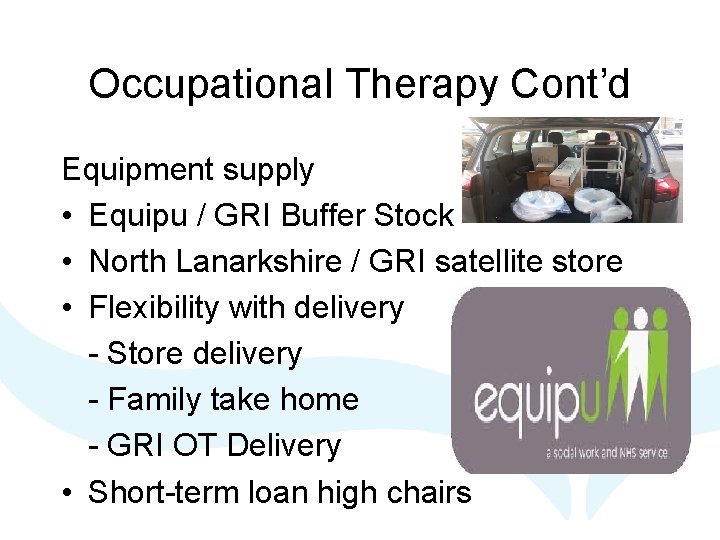
Occupational Therapy Cont’d Equipment supply • Equipu / GRI Buffer Stock • North Lanarkshire / GRI satellite store • Flexibility with delivery - Store delivery - Family take home - GRI OT Delivery • Short-term loan high chairs
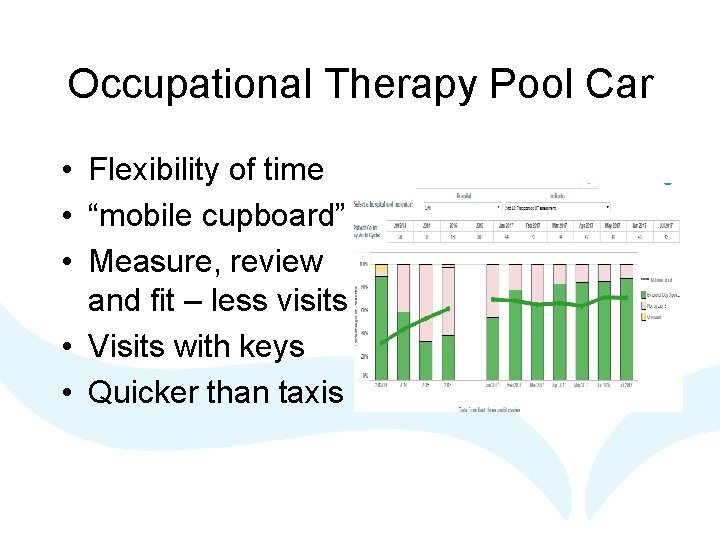
Occupational Therapy Pool Car • Flexibility of time • “mobile cupboard” • Measure, review and fit – less visits • Visits with keys • Quicker than taxis

OT Discharge Planning • Independent with transfers • Independent mobility (functional mobility) • Can get assistance with personal care and meal preparation • Continued rehab at home from Community Rehab Teams/Reablement, and able to refer to some through Sci Gateway (electronically) • Telecare access • Access to service fitting keysafes • Links to falls • Rollout of “minor adaptations”
Occupational Therapy & Physiotherapy • • • Generic support workers Scope for skill sharing in future? Patient information booklet Care Home Project Developing the use of the New Mobility Score (NMS) to predict/plan discharges and to target resources. More potential? • Winter weekend working • Funded Public Holiday cover
Occupational Therapy # No. F Audit

Any Questions Thank You E-mail: fiona. ballance@ggc. scot. nhs. uk
- Slides: 29