
Optimal Revascularization of the Diabetic Patient with Coronary
Optimal Revascularization of the Diabetic Patient with Coronary Artery Disease Konstantinos Dean Boudoulas, MD Associate Professor of Medicine/Cardiovascular Medicine Section Head, Interventional Cardiology Director, Cardiac Catheterization Laboratory The Ohio State University
Diabetes Mellitus Background § Estimated > 170 million people worldwide have diabetes mellitus. § Diabetics have a 2 - to 4 -fold increase risk of coronary artery disease (CAD) compared to non-diabetics. § 75% of diabetics die from cardiovascular disease. § Diabetes often is associated with chronic kidney disease; interventions (PCI or CABG) are associated with higher risk in diabetics, especially if chronic kidney disease is present. § Revascularization (PCI or CABG) outcomes in diabetics are inferior to non-diabetics. Baber U, et al. Eur Heart J. 2016; 37: 3440– 47. Armstrong EJ, et al. Circulation. 2013; 128: 1675 -85.
Diabetes Mellitus Background § Hyperglycemia, insulin resistance, and altered free fatty acid metabolism found in diabetics alters inflammatory pathways causing: - endothelial dysfunction thrombogenesis monocyte activation foam cell transformation altered smooth muscle cell migration others § These changes result in increased coronary artery plaque burden and plaque instability. Armstrong EJ, et al. Circulation. 2013; 128: 1675 -85.
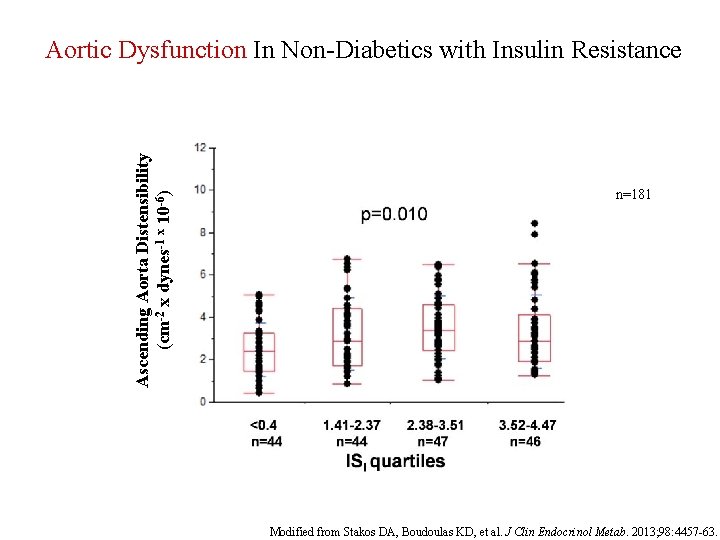
Ascending Aorta Distensibility (cm-2 x dynes-1 x 10 -6) Aortic Dysfunction In Non-Diabetics with Insulin Resistance n=181 Modified from Stakos DA, Boudoulas KD, et al. J Clin Endocrinol Metab. 2013; 98: 4457 -63.
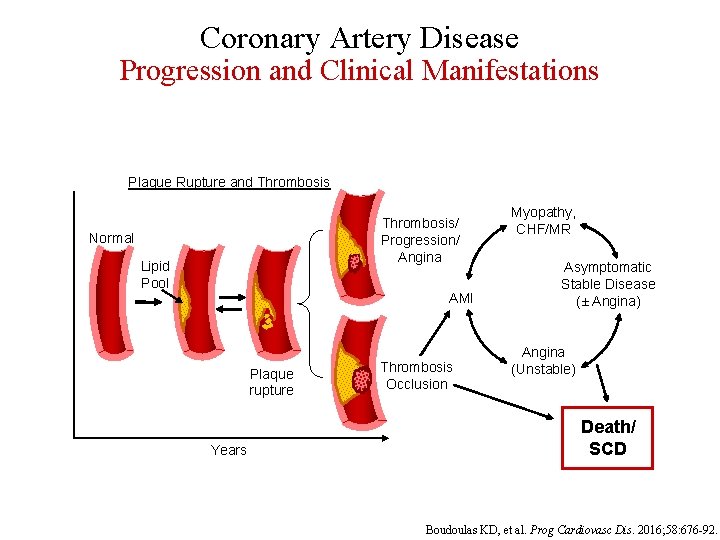
Coronary Artery Disease Progression and Clinical Manifestations Plaque Rupture and Thrombosis/ Progression/ Angina Normal Lipid Pool AMI Plaque rupture Years Thrombosis Occlusion Myopathy, CHF/MR Asymptomatic Stable Disease (± Angina) Angina (Unstable) Death/ SCD Boudoulas KD, et al. Prog Cardiovasc Dis. 2016; 58: 676 -92.
Coronary Artery Disease Medical Management § Therapy for the plaque - statin, PCSK 9 inhibitors, smoking cessation, others § Therapy to preserve/improve left ventricular function - b-blockers, ACE inhibitors, angiotensin receptor blockers, others § Therapy for angina/ischemia - b-blockers, calcium channel blockers, nitrates, others § Therapy to prevent sudden cardiac death § These measures should be applied to all patients with coronary artery disease regardless of symptoms and/or underlying pathology.
Optimal Coronary Artery Revascularization in the Diabetic Patient
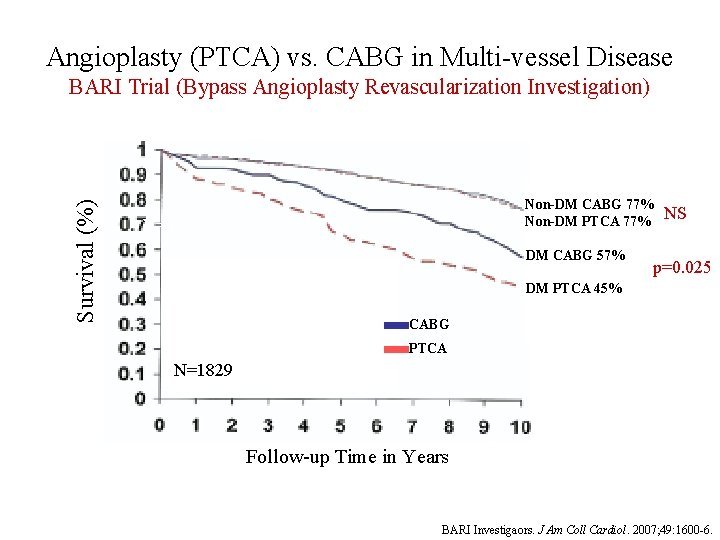
Angioplasty (PTCA) vs. CABG in Multi-vessel Disease Survival (%) BARI Trial (Bypass Angioplasty Revascularization Investigation) Non-DM CABG 77% Non-DM PTCA 77% N=1829 DM CABG 57% NS p=0. 025 DM PTCA 45% CABG PTCA N=1829 Follow-up Time in Years BARI Investigaors. J Am Coll Cardiol. 2007; 49: 1600 -6.
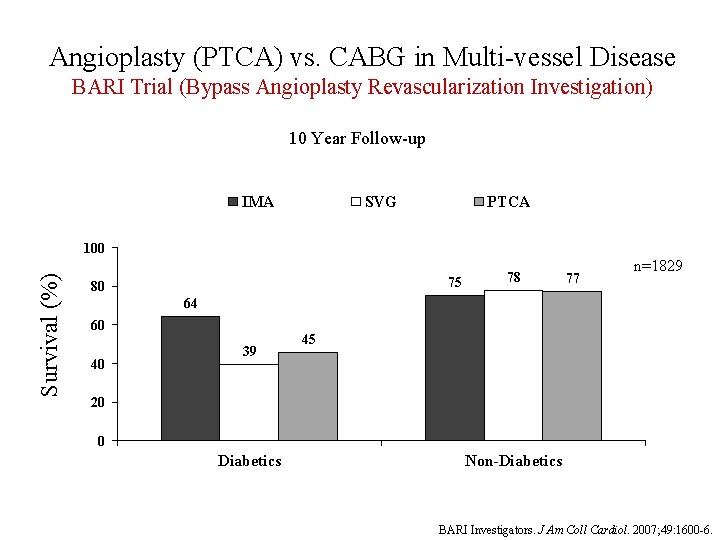
Angioplasty (PTCA) vs. CABG in Multi-vessel Disease BARI Trial (Bypass Angioplasty Revascularization Investigation) 10 Year Follow-up IMA SVG PTCA Survival (%) 100 75 80 78 77 n=1829 64 60 40 39 45 20 0 Diabetics Non-Diabetics BARI Investigators. J Am Coll Cardiol. 2007; 49: 1600 -6.
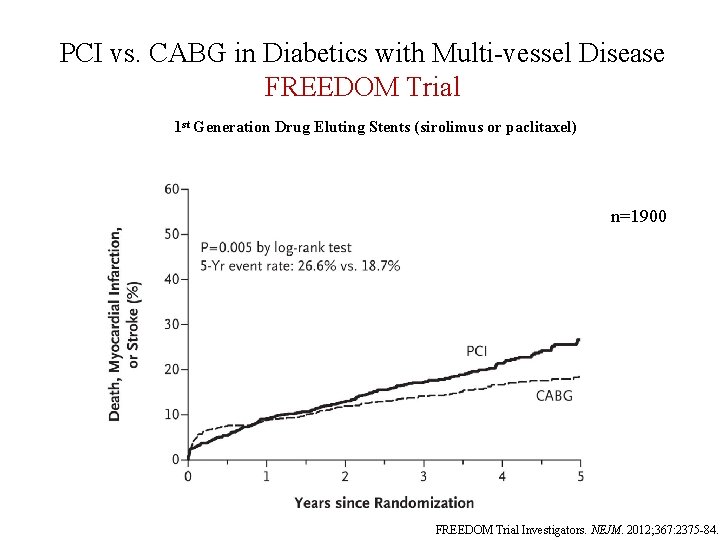
PCI vs. CABG in Diabetics with Multi-vessel Disease FREEDOM Trial 1 st Generation Drug Eluting Stents (sirolimus or paclitaxel) n=1900 FREEDOM Trial Investigators. NEJM. 2012; 367: 2375 -84.
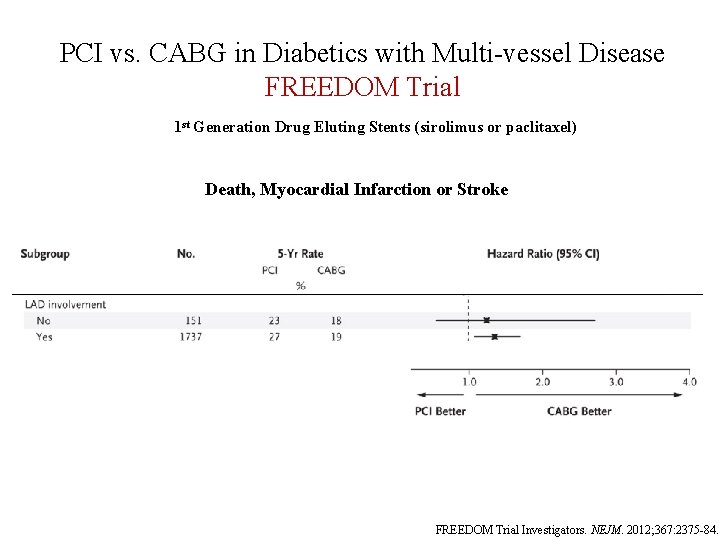
PCI vs. CABG in Diabetics with Multi-vessel Disease FREEDOM Trial 1 st Generation Drug Eluting Stents (sirolimus or paclitaxel) Death, Myocardial Infarction or Stroke FREEDOM Trial Investigators. NEJM. 2012; 367: 2375 -84.
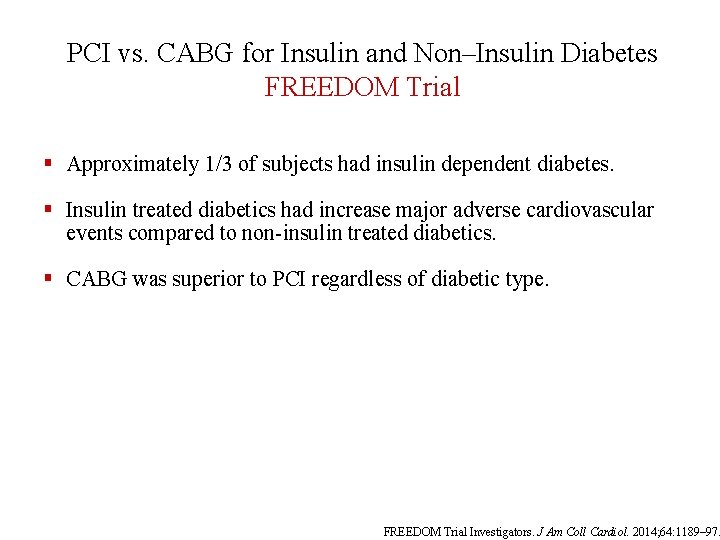
PCI vs. CABG for Insulin and Non–Insulin Diabetes FREEDOM Trial § Approximately 1/3 of subjects had insulin dependent diabetes. § Insulin treated diabetics had increase major adverse cardiovascular events compared to non-insulin treated diabetics. § CABG was superior to PCI regardless of diabetic type. FREEDOM Trial Investigators. J Am Coll Cardiol. 2014; 64: 1189– 97.
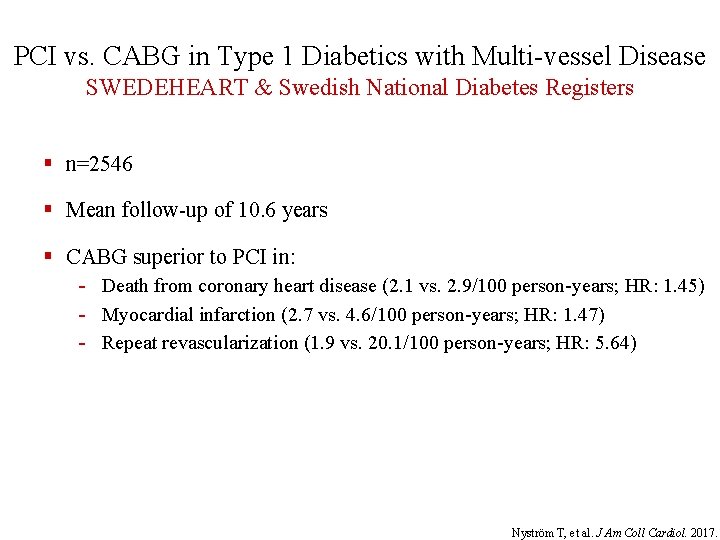
PCI vs. CABG in Type 1 Diabetics with Multi-vessel Disease SWEDEHEART & Swedish National Diabetes Registers § n=2546 § Mean follow-up of 10. 6 years § CABG superior to PCI in: - Death from coronary heart disease (2. 1 vs. 2. 9/100 person-years; HR: 1. 45) - Myocardial infarction (2. 7 vs. 4. 6/100 person-years; HR: 1. 47) - Repeat revascularization (1. 9 vs. 20. 1/100 person-years; HR: 5. 64) Nyström T, et al. J Am Coll Cardiol. 2017.
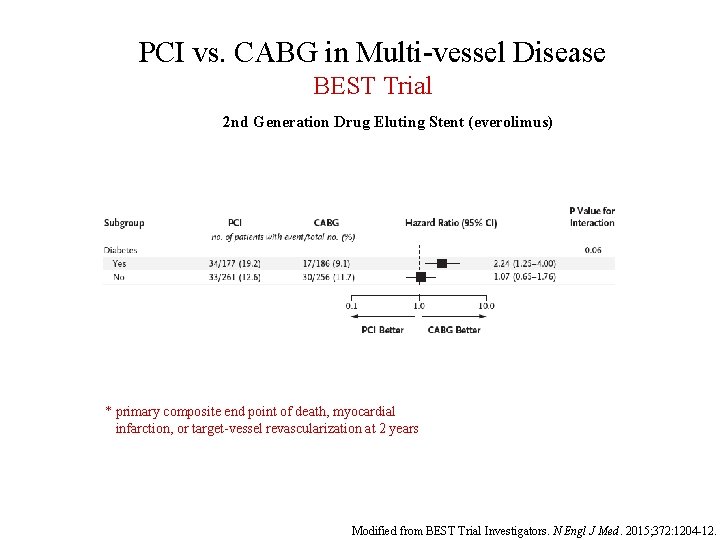
PCI vs. CABG in Multi-vessel Disease BEST Trial 2 nd Generation Drug Eluting Stent (everolimus) * primary composite end point of death, myocardial infarction, or target-vessel revascularization at 2 years Modified from BEST Trial Investigators. N Engl J Med. 2015; 372: 1204 -12.
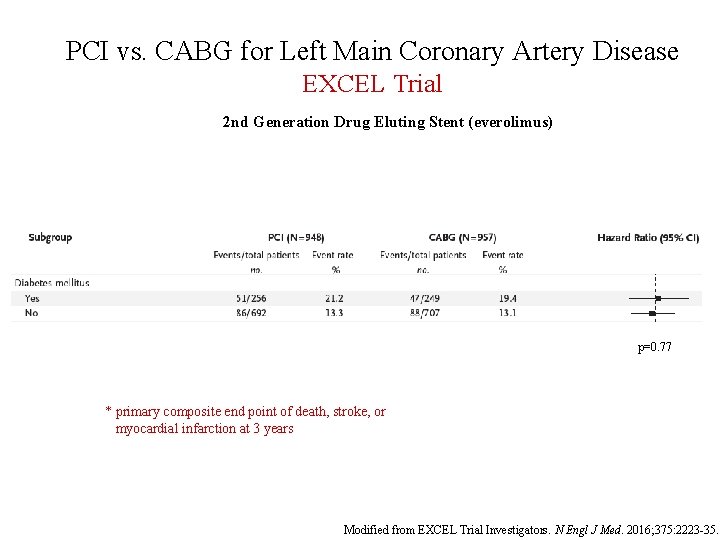
PCI vs. CABG for Left Main Coronary Artery Disease EXCEL Trial 2 nd Generation Drug Eluting Stent (everolimus) p=0. 77 * primary composite end point of death, stroke, or myocardial infarction at 3 years Modified from EXCEL Trial Investigators. N Engl J Med. 2016; 375: 2223 -35.
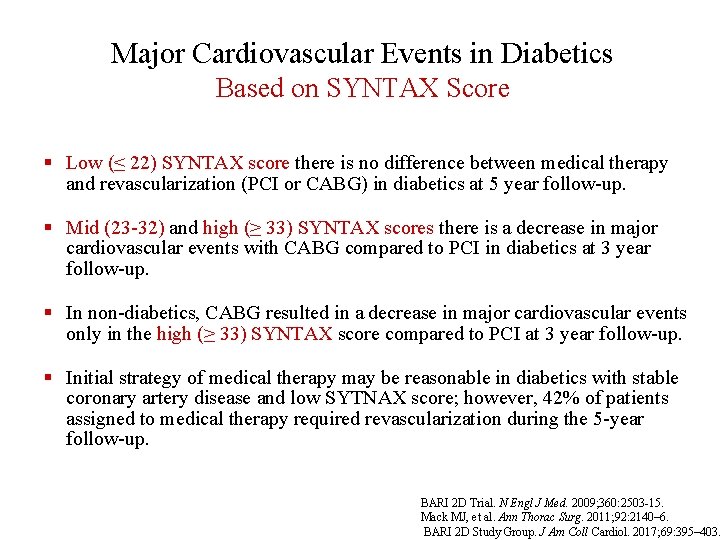
Major Cardiovascular Events in Diabetics Based on SYNTAX Score § Low (≤ 22) SYNTAX score there is no difference between medical therapy and revascularization (PCI or CABG) in diabetics at 5 year follow-up. § Mid (23 -32) and high (≥ 33) SYNTAX scores there is a decrease in major cardiovascular events with CABG compared to PCI in diabetics at 3 year follow-up. § In non-diabetics, CABG resulted in a decrease in major cardiovascular events only in the high (≥ 33) SYNTAX score compared to PCI at 3 year follow-up. § Initial strategy of medical therapy may be reasonable in diabetics with stable coronary artery disease and low SYTNAX score; however, 42% of patients assigned to medical therapy required revascularization during the 5 -year follow-up. BARI 2 D Trial. N Engl J Med. 2009; 360: 2503 -15. Mack MJ, et al. Ann Thorac Surg. 2011; 92: 2140– 6. BARI 2 D Study Group. J Am Coll Cardiol. 2017; 69: 395– 403.
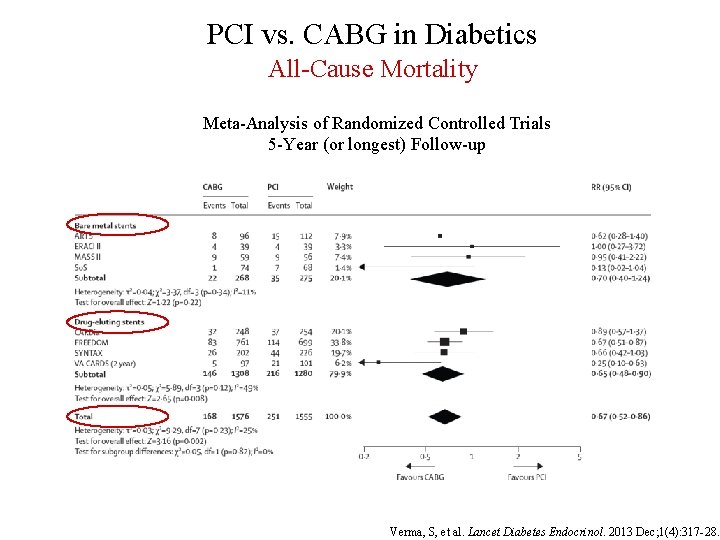
PCI vs. CABG in Diabetics All-Cause Mortality Meta-Analysis of Randomized Controlled Trials 5 -Year (or longest) Follow-up Verma, S, et al. Lancet Diabetes Endocrinol. 2013 Dec; 1(4): 317 -28.
Drug Eluting Stents (DES) vs. Bare Metal Stents (BMS) Diabetes Mellitus § DES provide better results compared to BMS. § No significant increase risk of stent thrombosis with DES compared to BMS. § Second generation DES may be superior to first generation DES. § Diabetics requiring insulin therapy have the highest rates of restenosis regardless of stent type. Bangalore S, et al. BMJ. 2012; 345: e 5170. Bavishi C, et al. Int J Cardiol. 2017; 230: 310 -318. Piccolo R, et al. J Am Coll Cardiol Intv. 2015; 8: 1657– 66.
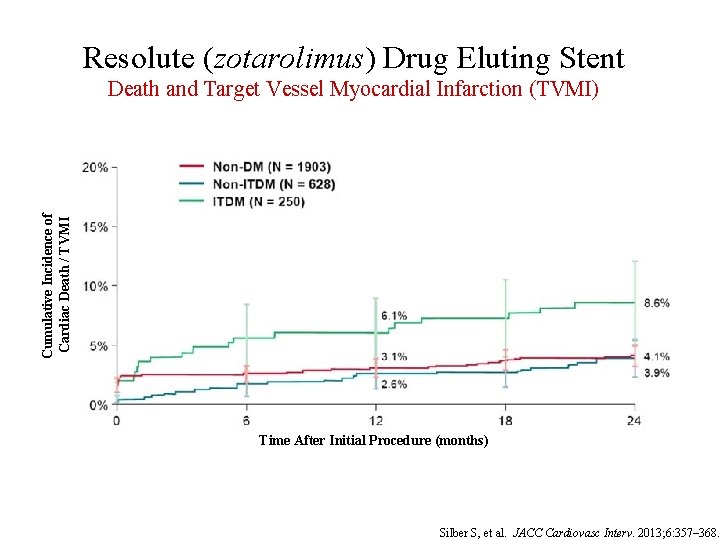
Resolute (zotarolimus) Drug Eluting Stent Cumulative Incidence of Cardiac Death / TVMI Death and Target Vessel Myocardial Infarction (TVMI) Time After Initial Procedure (months) Silber S, et al. JACC Cardiovasc Interv. 2013; 6: 357– 368.
Revascularization Modality in Diabetic Patients § CABG is a superior form of revascularization in diabetics mostly due to the utilization of the LIMA to the left anterior descending artery decreasing major cardiovascular events including mortality. Bangalore S, et al. BMJ. 2012; 345: e 5170.
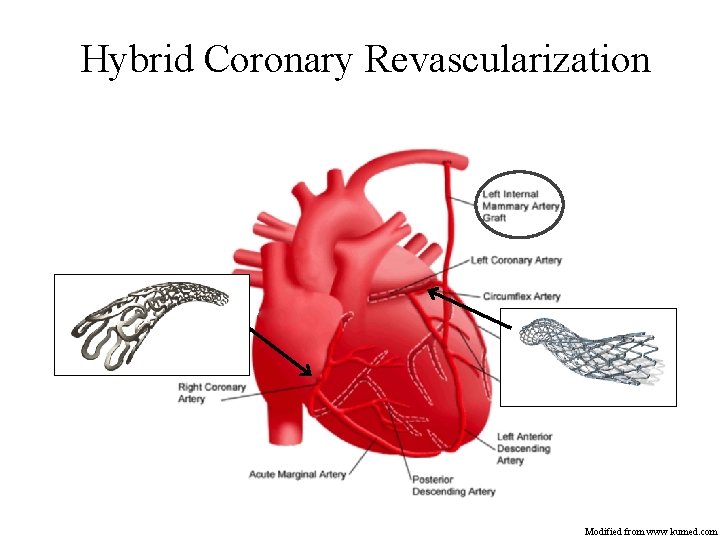
Hybrid Coronary Revascularization Modified from www. kumed. com
Hybrid Approach to Coronary Revascularization Advantages § Less invasive than standard CABG using minimal invasive access and off-pump. § Utilize LIMA to the LAD (most survival benefit). § Decreases cardiopulmonary bypass (if used) and surgical times; avoids clamping aorta. § Substitutes coronary artery stents for grafts; drug eluting stents provide a good form of revascularization. § Allows close collaboration between interventional cardiologist and cardiothoracic surgeon. § LIMA angiogram can be performed immediately post-surgery (prior to chest closure) if using the Hybrid Cardiovascular Operating Room.
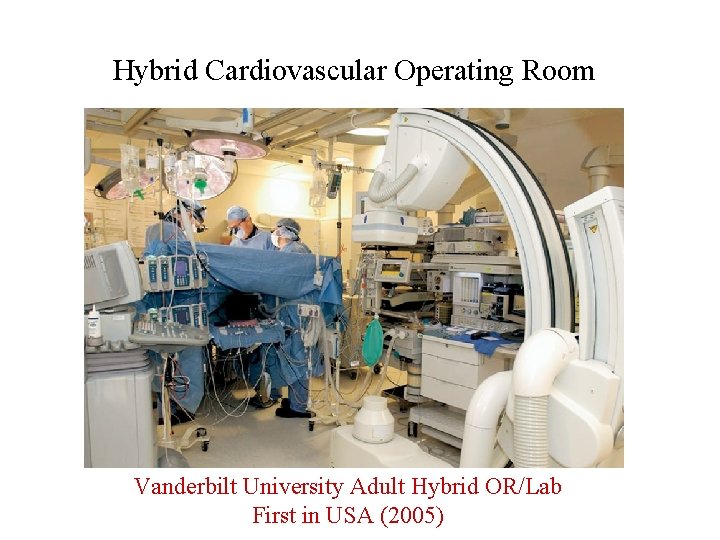
Hybrid Cardiovascular Operating Room Vanderbilt University Adult Hybrid OR/Lab First in USA (2005)
Hybrid Cardiovascular Operating Room Major Key Advantage § LIMA angiogram can be performed immediately post-surgery (prior to chest closure) with ability to revise defect if present prior to patient leaving the Hybrid Cardiovascular Operating Room.
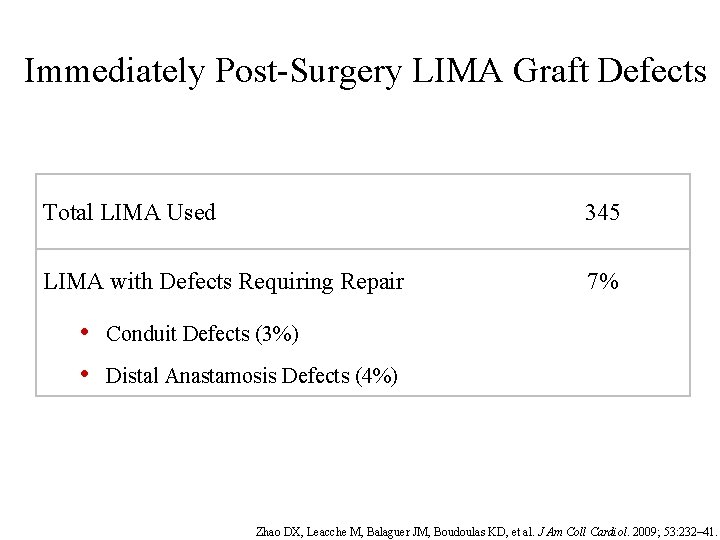
Immediately Post-Surgery LIMA Graft Defects Total LIMA Used 345 LIMA with Defects Requiring Repair 7% • Conduit Defects (3%) • Distal Anastamosis Defects (4%) Zhao DX, Leacche M, Balaguer JM, Boudoulas KD, et al. J Am Coll Cardiol. 2009; 53: 232– 41.
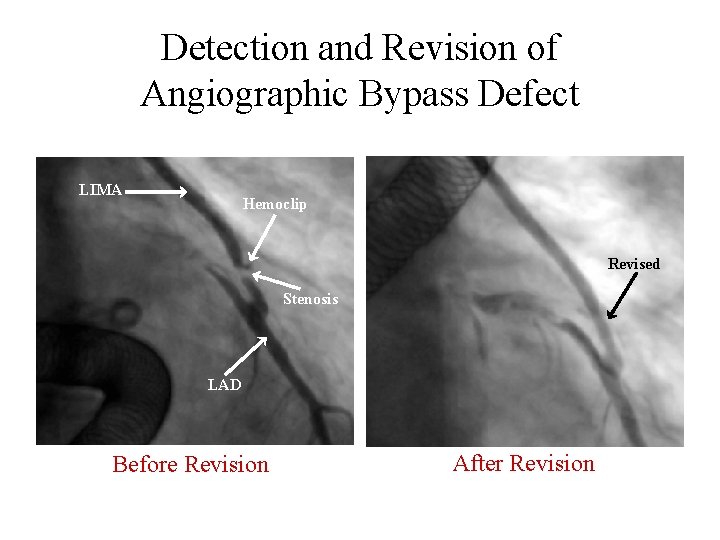
Detection and Revision of Angiographic Bypass Defect LIMA Hemoclip Revised Stenosis LAD Before Revision After Revision
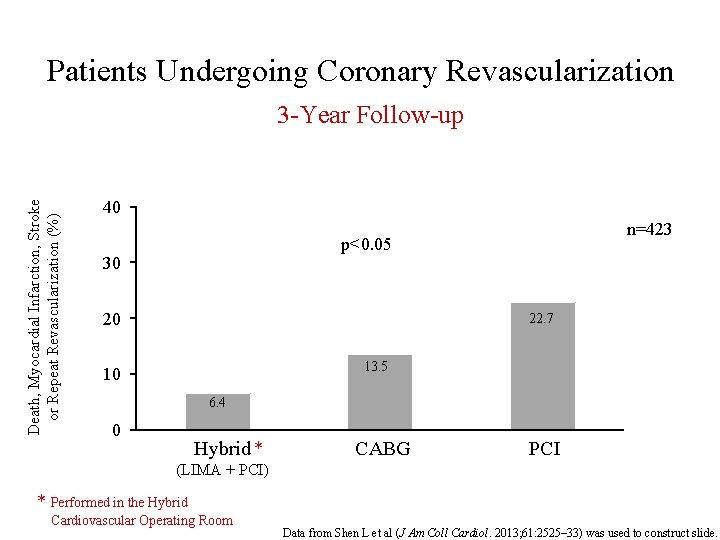
Patients Undergoing Coronary Revascularization Death, Myocardial Infarction, Stroke or Repeat Revascularization (%) 3 -Year Follow-up 40 n=423 p<0. 05 30 20 22. 7 13. 5 10 6. 4 0 Hybrid * CABG PCI (LIMA + PCI) * Performed in the Hybrid Cardiovascular Operating Room Data from Shen L et al (J Am Coll Cardiol. 2013; 61: 2525– 33) was used to construct slide.
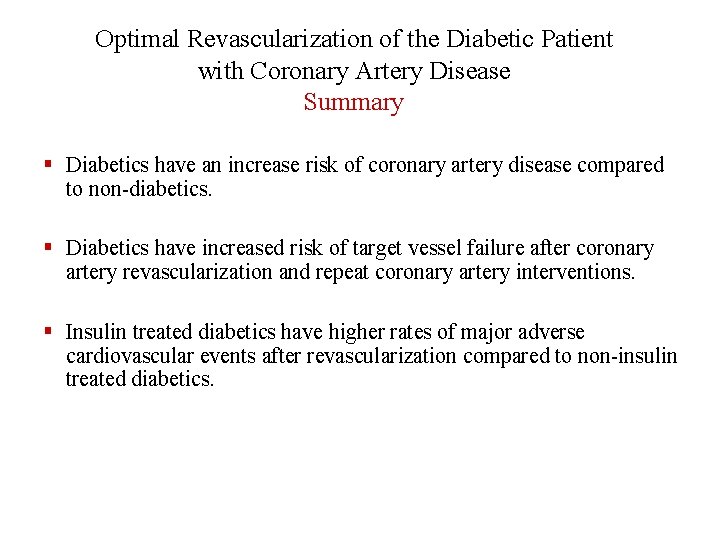
Optimal Revascularization of the Diabetic Patient with Coronary Artery Disease Summary § Diabetics have an increase risk of coronary artery disease compared to non-diabetics. § Diabetics have increased risk of target vessel failure after coronary artery revascularization and repeat coronary artery interventions. § Insulin treated diabetics have higher rates of major adverse cardiovascular events after revascularization compared to non-insulin treated diabetics.
Optimal Revascularization of the Diabetic Patient with Coronary Artery Disease Summary § Medical therapy initially may be reasonable in diabetics with stable coronary artery disease and low SYTNAX score; however, a substantial number of patients will require revascularization within 5 years. § Mid and high SYNTAX scores have decrease in major cardiovascular events with CABG compared to PCI. § CABG is a superior form of revascularization in diabetics mostly due to the utilization of the LIMA to the left anterior descending artery decreasing major cardiovascular events including mortality.
Optimal Revascularization of the Diabetic Patient with Coronary Artery Disease Summary § Hybrid approach for coronary revascularization may be considered providing a less invasive approach to revascularization utilizing the LIMA to the LAD (survival benefit) and PCI to other vessels. § Medical management is critical to provide therapy for the plaque, preserve/improve left ventricular function, treat angina/ischemia and prevent sudden cardiac death.

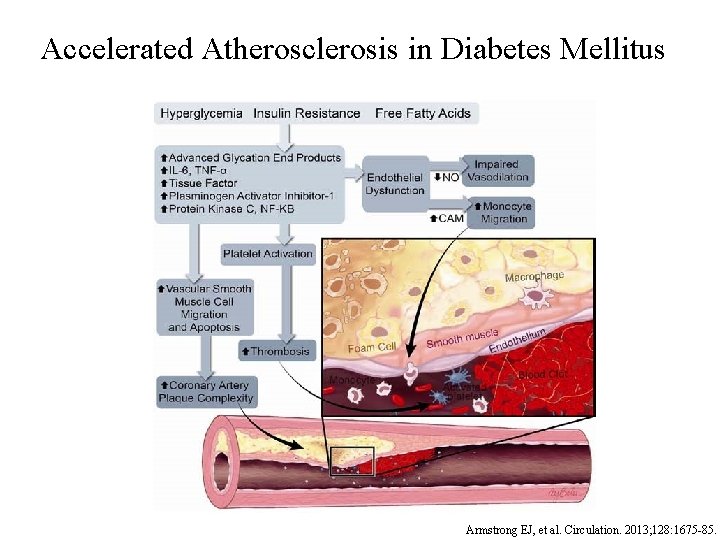
Accelerated Atherosclerosis in Diabetes Mellitus Armstrong EJ, et al. Circulation. 2013; 128: 1675 -85.

Saphenous Vein Grafts Diabetes Mellitus § Saphenous vein graft occlusion is more common among diabetics versus non-diabetics. Singh SK, et al. Circulation. 2008; 118[suppl 1]: S 222– 25.
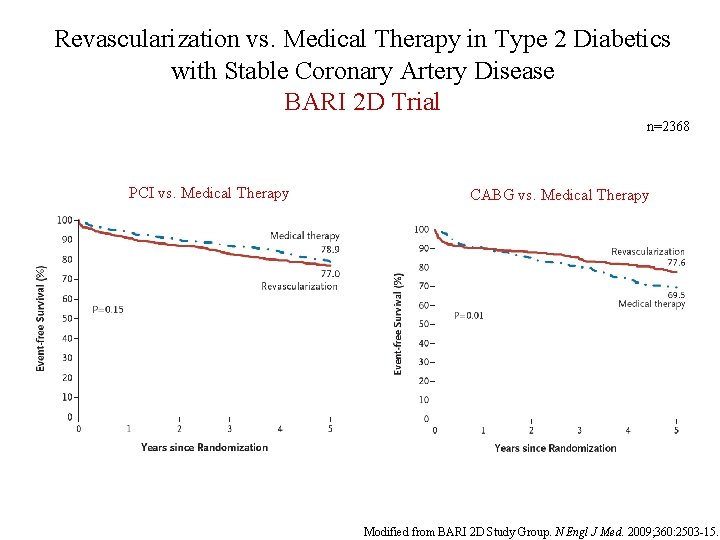
Revascularization vs. Medical Therapy in Type 2 Diabetics with Stable Coronary Artery Disease BARI 2 D Trial n=2368 PCI vs. Medical Therapy CABG vs. Medical Therapy Modified from BARI 2 D Study Group. N Engl J Med. 2009; 360: 2503 -15.

SYNTAX Score and 5 -Year Outcomes BARI 2 D Trial § CABG group had significantly higher SYNTAX scores compared to PCI group (36% vs. 13% had mid/high scores, respectively; p < 0. 001). § Patients with low SYNTAX scores (≤ 22) there was no significant difference in major cardiovascular events between medical therapy and revascularization for both CABG and PCI. § Patients with mid/high SYNTAX scores major cardiovascular events were significantly lower after revascularization than with medical therapy in the CABG group, but not in the PCI group. BARI 2 D Study Group. J Am Coll Cardiol. 2017; 69: 395– 403.
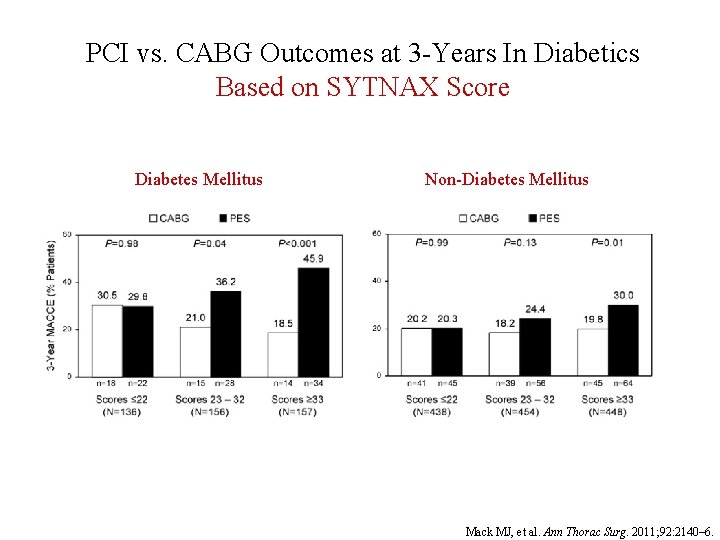
PCI vs. CABG Outcomes at 3 -Years In Diabetics Based on SYTNAX Score Diabetes Mellitus Non-Diabetes Mellitus Mack MJ, et al. Ann Thorac Surg. 2011; 92: 2140– 6.
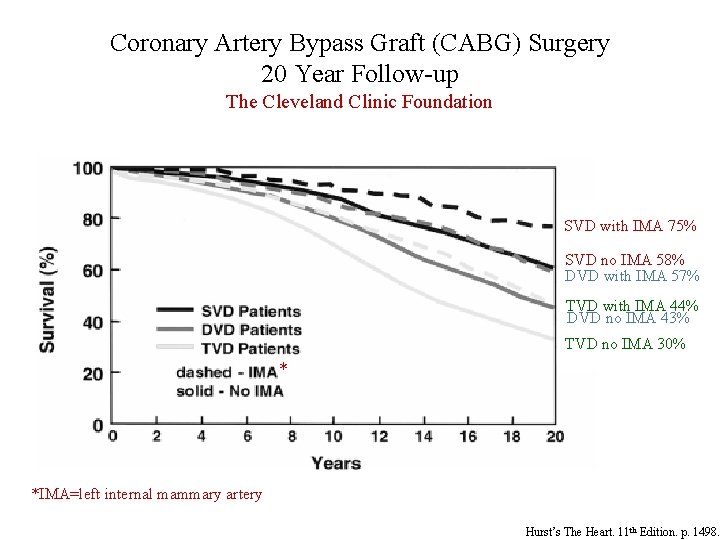
Coronary Artery Bypass Graft (CABG) Surgery 20 Year Follow-up The Cleveland Clinic Foundation SVD with IMA 75% SVD no IMA 58% DVD with IMA 57% TVD with IMA 44% DVD no IMA 43% TVD no IMA 30% * *IMA=left internal mammary artery Hurst’s The Heart. 11 th Edition. p. 1498.
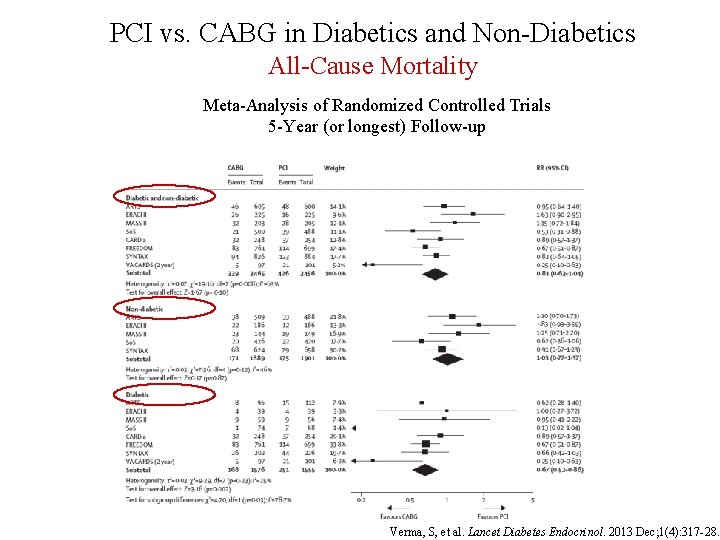
PCI vs. CABG in Diabetics and Non-Diabetics All-Cause Mortality Meta-Analysis of Randomized Controlled Trials 5 -Year (or longest) Follow-up Verma, S, et al. Lancet Diabetes Endocrinol. 2013 Dec; 1(4): 317 -28.
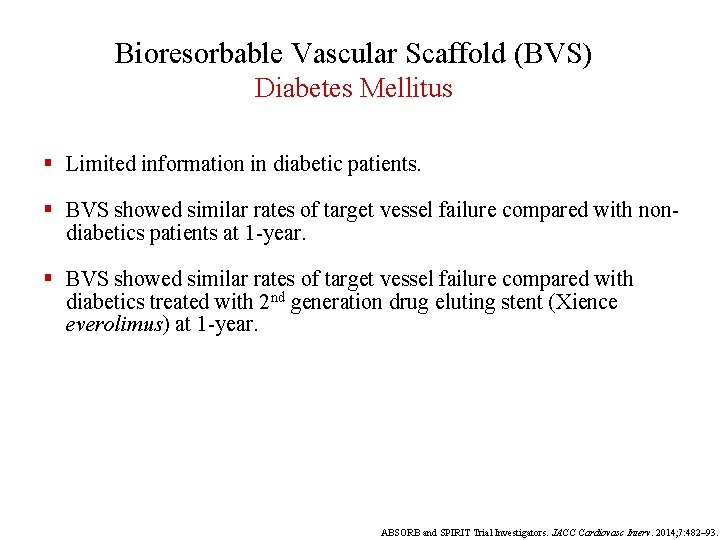
Bioresorbable Vascular Scaffold (BVS) Diabetes Mellitus § Limited information in diabetic patients. § BVS showed similar rates of target vessel failure compared with nondiabetics patients at 1 -year. § BVS showed similar rates of target vessel failure compared with diabetics treated with 2 nd generation drug eluting stent (Xience everolimus) at 1 -year. ABSORB and SPIRIT Trial Investigators. JACC Cardiovasc Interv. 2014; 7: 482– 93.
Anti-Platelet Therapy Diabetes Mellitus § Prasugrel (TRITON-TIMI 38) and ticagrelor (PLATO) overall showed clinical improvement compared with clopidogrel after PCI. - Subgroup analyses showed diabetics had relative reductions in major cardiovascular events ≥ than reductions in non-diabetics. § A large proportion of patients treated with enteric coated aspirin did not achieve complete inhibition of thromboxane B 2 due to incomplete absorption; reduced bioavailability of enteric coated aspirin may contribute to aspirin resistance in diabetics. § No significant difference in cardiovascular or bleeding outcomes with aspirin monotherapy vs. dual antiplatelet therapy post-CABG. James S, et al. Eur Heart J. 2010; 31: 3006– 16. Wiviott SD, et al. Circulation. 2008; 118: 1626– 36. Bhatt, Dl, et al. J Am Coll Cardiol. 2017; 69: 603– 12. van Diepen S, et al. J Am Coll Cardiol. 2017; 69: 119– 27.
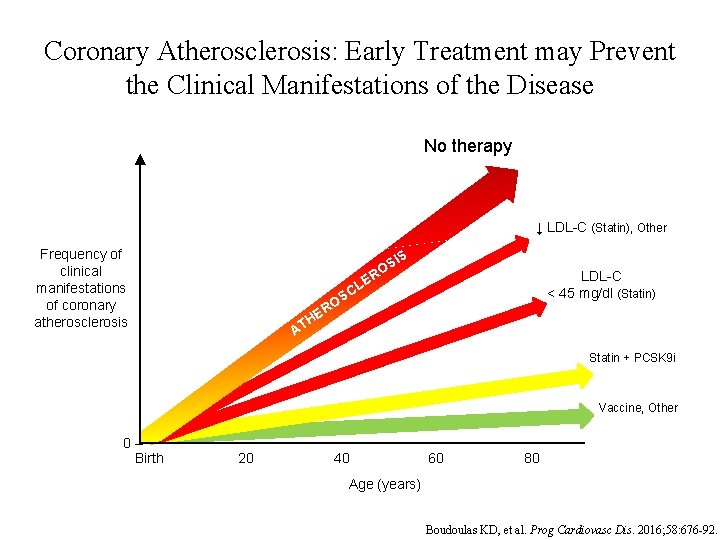
Coronary Atherosclerosis: Early Treatment may Prevent the Clinical Manifestations of the Disease No therapy ↓ LDL-C (Statin), Other Frequency of clinical manifestations of coronary atherosclerosis E CL S RO IS LDL-C < 45 mg/dl (Statin) OS R E H AT Statin + PCSK 9 i Vaccine, Other 0– Birth 20 40 60 80 Age (years) Boudoulas KD, et KD, al. Prog Dis. 2016; 58: 676 -92. Boudoulas et al. Cardiovasc Prog Cardiovasc 2016; 58: 676 -92.
- Slides: 41