
OPTIMAL INITIAL CONDITIONS FOR SIMULATION OF SEISMOTECTONIC TSUNAMIS



- Slides: 35
OPTIMAL INITIAL CONDITIONS FOR SIMULATION OF SEISMOTECTONIC TSUNAMIS M. A. Nosov, S. V. Kolesov Faculty of Physics M. V. Lomonosov Moscow State University, Russia
OPTIMAL INITIAL CONDITIONS FOR SIMULATION OF SEISMOTECTONIC TSUNAMIS
OPTIMAL INITIAL CONDITIONS FOR SIMULATION OF SEISMOTECTONIC TSUNAMIS [Win. ITDB, 2007]:
OPTIMAL INITIAL CONDITIONS FOR SIMULATION OF SEISMOTECTONIC TSUNAMIS
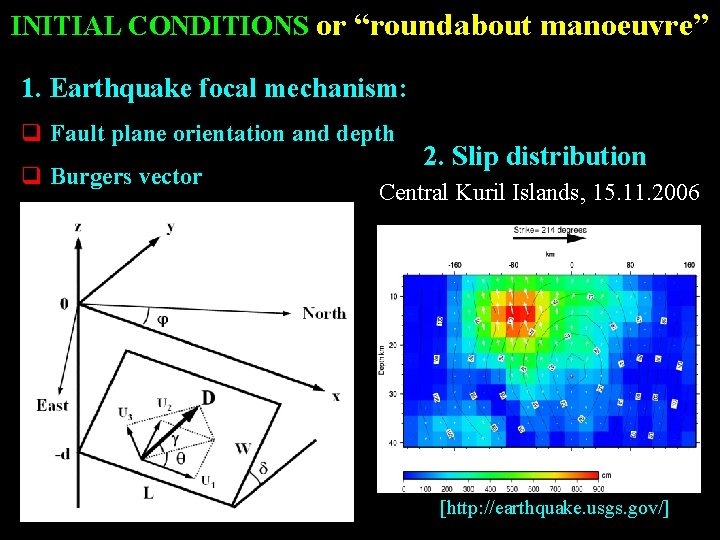
INITIAL CONDITIONS or “roundabout manoeuvre” 1. Earthquake focal mechanism: q Fault plane orientation and depth q Burgers vector 2. Slip distribution Central Kuril Islands, 15. 11. 2006 [http: //earthquake. usgs. gov/]
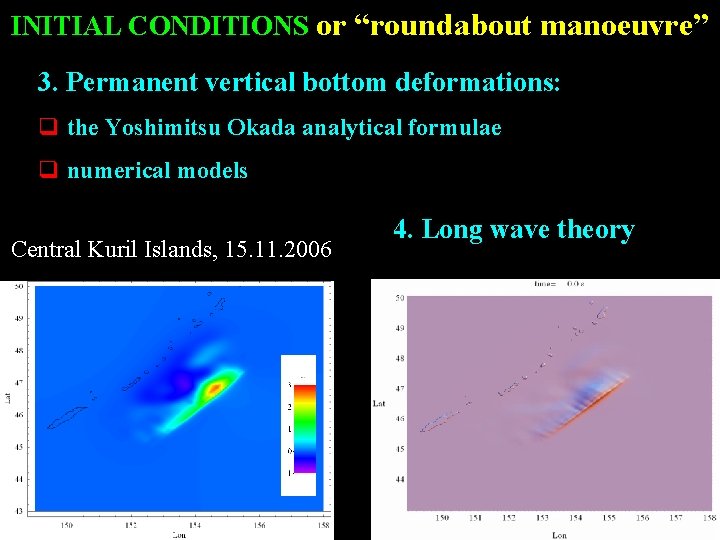
INITIAL CONDITIONS or “roundabout manoeuvre” 3. Permanent vertical bottom deformations: q the Yoshimitsu Okada analytical formulae q numerical models Central Kuril Islands, 15. 11. 2006 4. Long wave theory
OPTIMAL INITIAL CONDITIONS FOR SIMULATION OF SEISMOTECTONIC TSUNAMIS
OPTIMAL INITIAL CONDITIONS FOR SIMULATION OF SEISMOTECTONIC TSUNAMIS The “roundabout manoeuvre” means Initial Elevation = Vertical Bottom Deformation ? ? ? There a few reasons why…
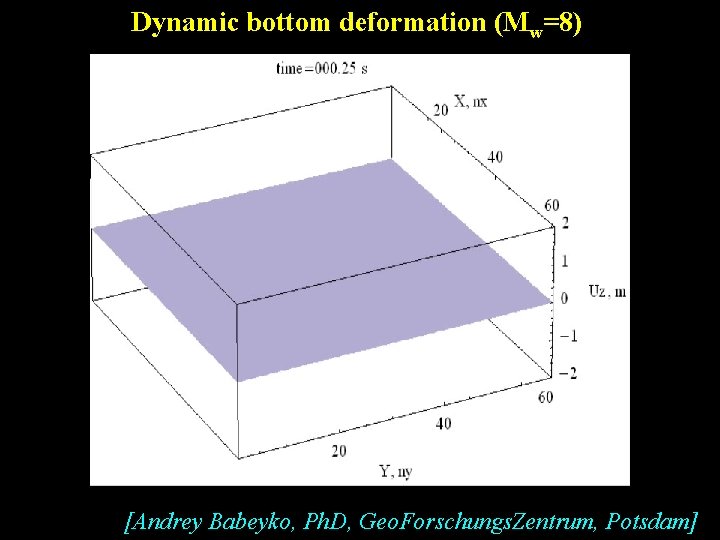
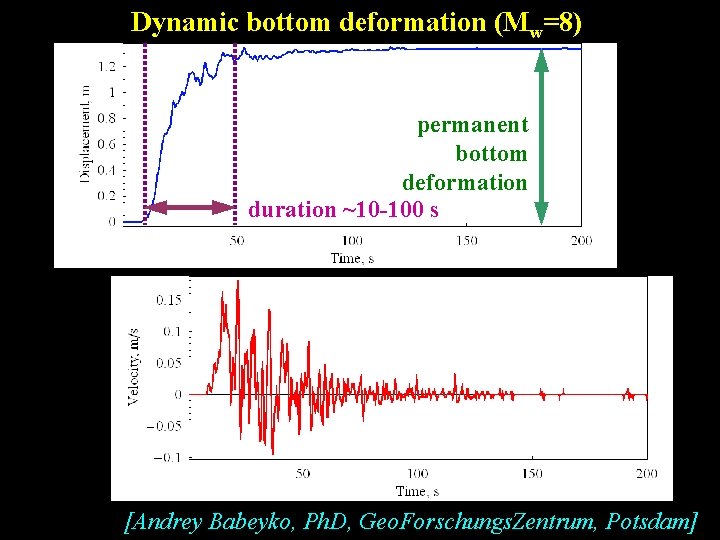
Dynamic bottom deformation (Mw=8) [Andrey Babeyko, Ph. D, Geo. Forschungs. Zentrum, Potsdam]
Dynamic bottom deformation (Mw=8) permanent bottom deformation duration ~10 -100 s [Andrey Babeyko, Ph. D, Geo. Forschungs. Zentrum, Potsdam]
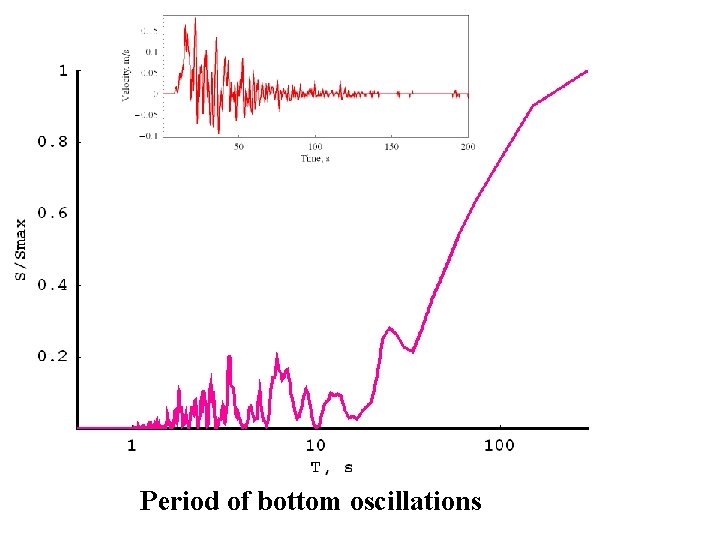
Period of bottom oscillations
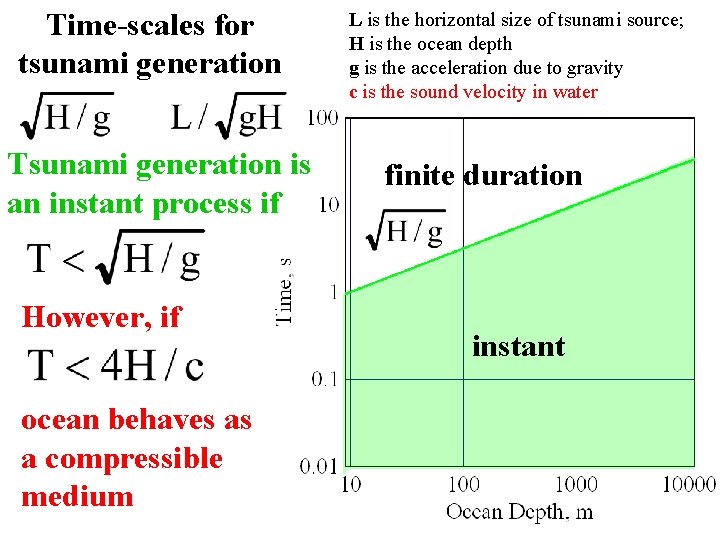
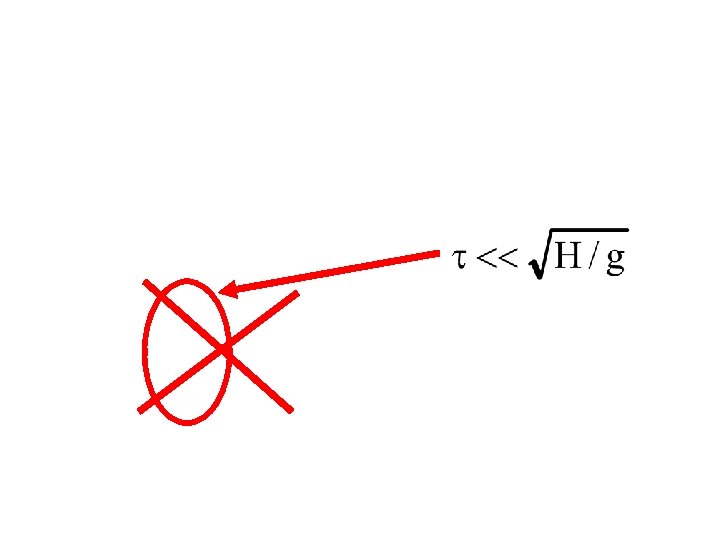
Time-scales for tsunami generation Tsunami generation is an instant process if However, if ocean behaves as a compressible medium L is the horizontal size of tsunami source; H is the ocean depth g is the acceleration due to gravity c is the sound velocity in water finite duration instant
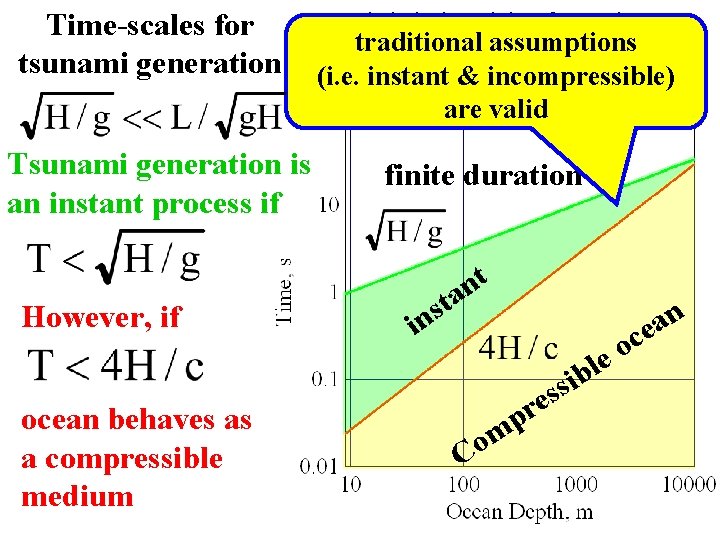
Time-scales for tsunami generation L is the horizontal size of tsunami source; Htraditional is the ocean depth assumptions the acceleration due to gravity (i. e. gc isisinstant & incompressible) the sound velocity in water are valid Tsunami generation is an instant process if However, if ocean behaves as a compressible medium finite duration t n a i t s n n a ce i s es o e bl Co r p m
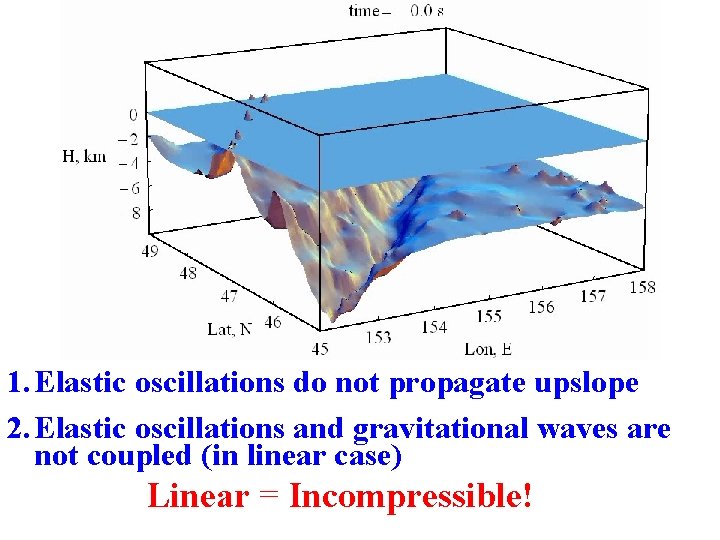
1. Elastic oscillations do not propagate upslope 2. Elastic oscillations and gravitational waves are not coupled (in linear case) Linear = Incompressible!
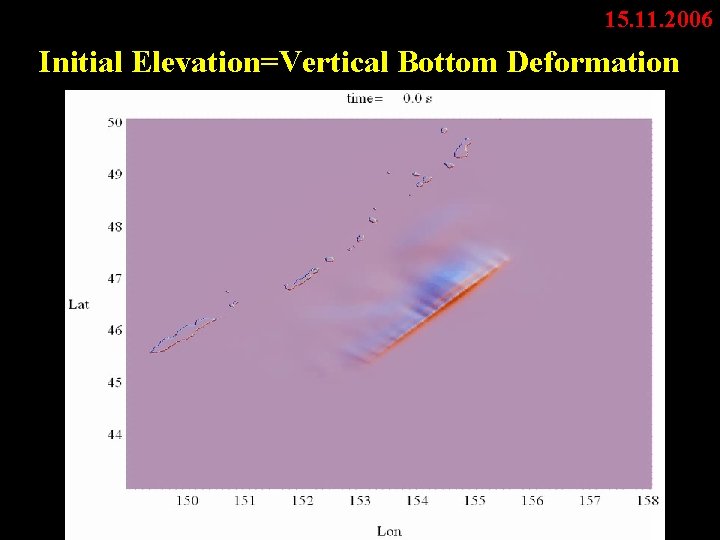
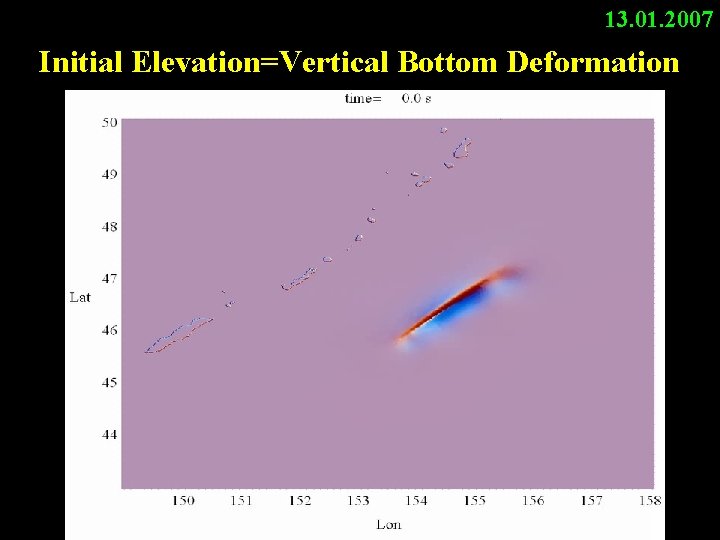
Initial Elevation = Vertical Bottom Deformation ? ? ?
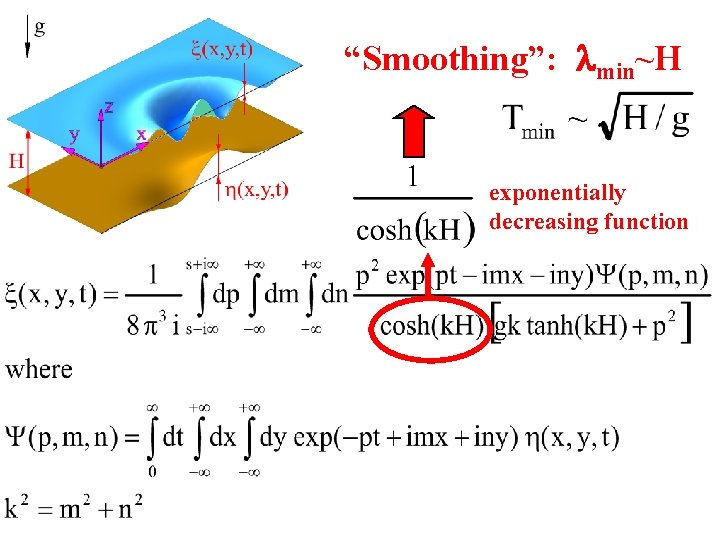
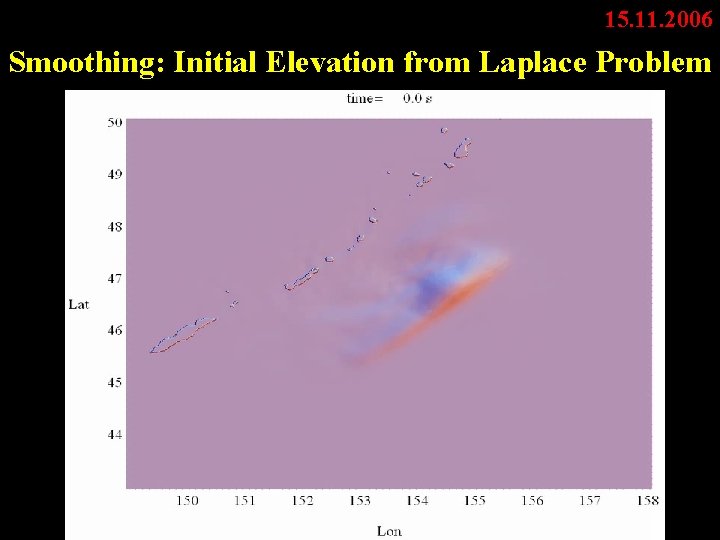
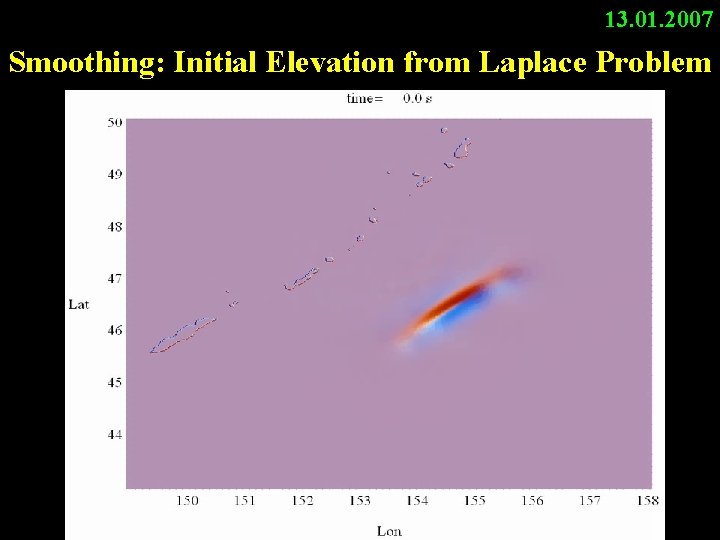
“Smoothing”: min~H exponentially decreasing function
Initial Elevation = Vertical Bottom Deformation Due to “smoothing”
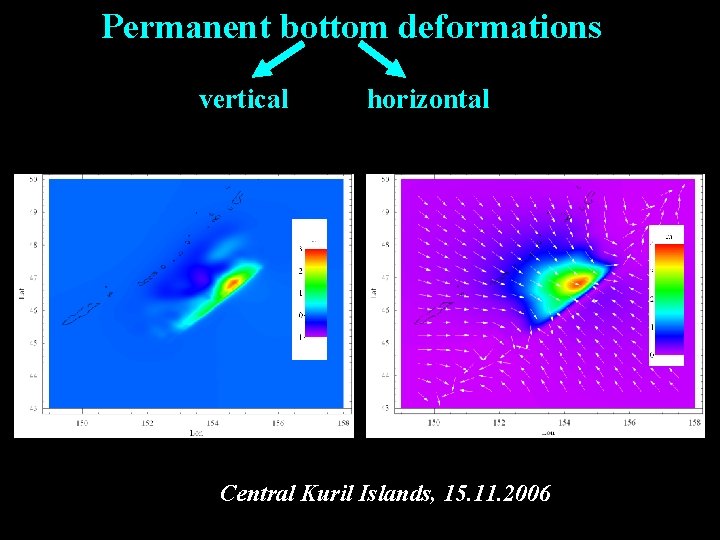
Permanent bottom deformations vertical horizontal Central Kuril Islands, 15. 11. 2006
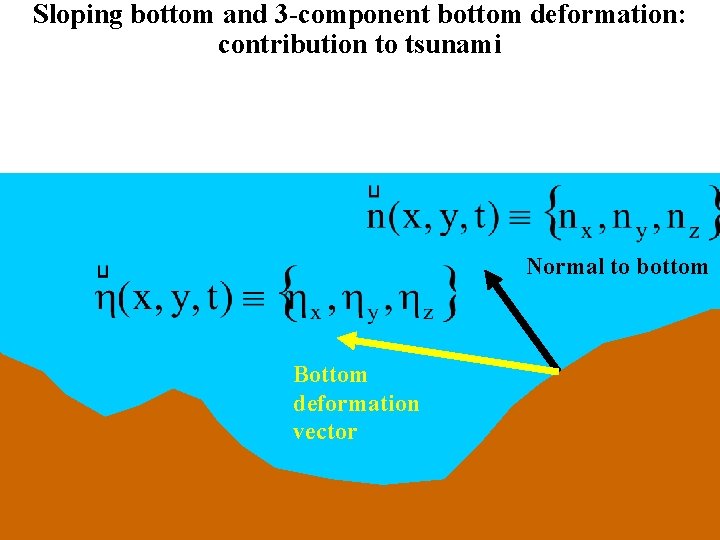
Sloping bottom and 3 -component bottom deformation: contribution to tsunami Normal to bottom Bottom deformation vector
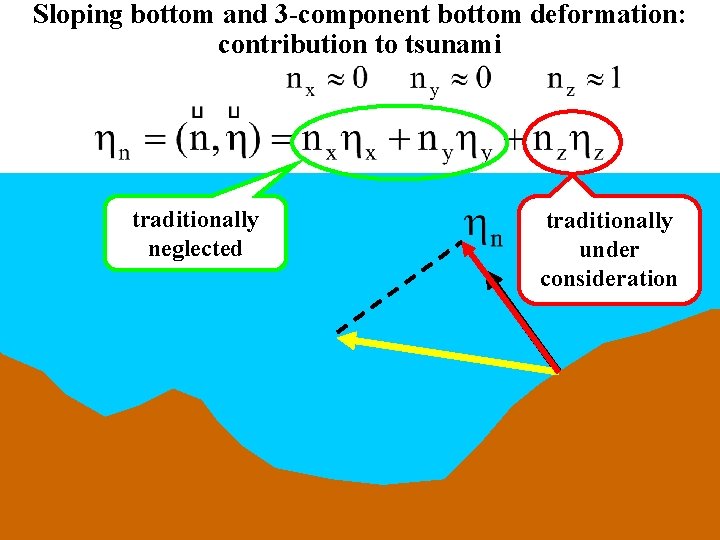
Sloping bottom and 3 -component bottom deformation: contribution to tsunami traditionally neglected traditionally under consideration
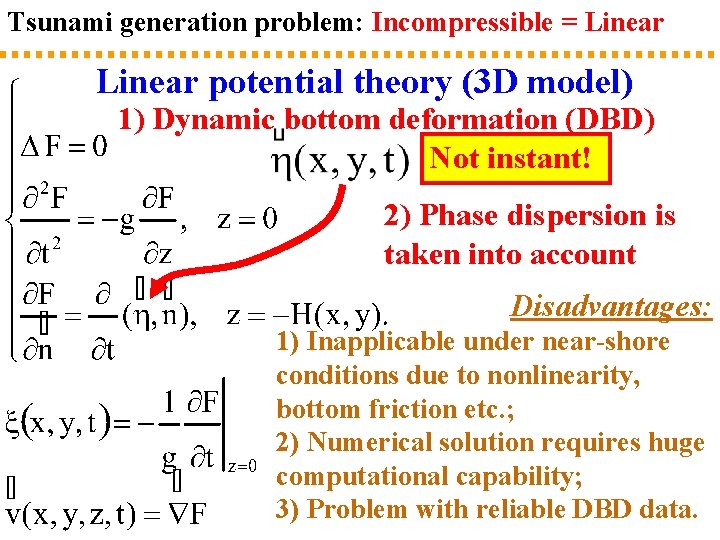
Tsunami generation problem: Incompressible = Linear potential theory (3 D model) 1) Dynamic bottom deformation (DBD) Not instant! 2) Phase dispersion is taken into account Disadvantages: 1) Inapplicable under near-shore conditions due to nonlinearity, bottom friction etc. ; 2) Numerical solution requires huge computational capability; 3) Problem with reliable DBD data.
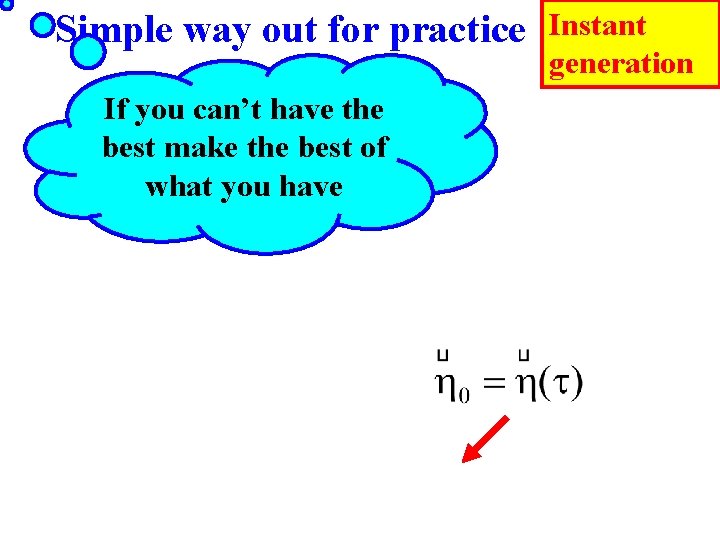
Simple way out for practice If you can’t have the best make the best of what you have Instant generation
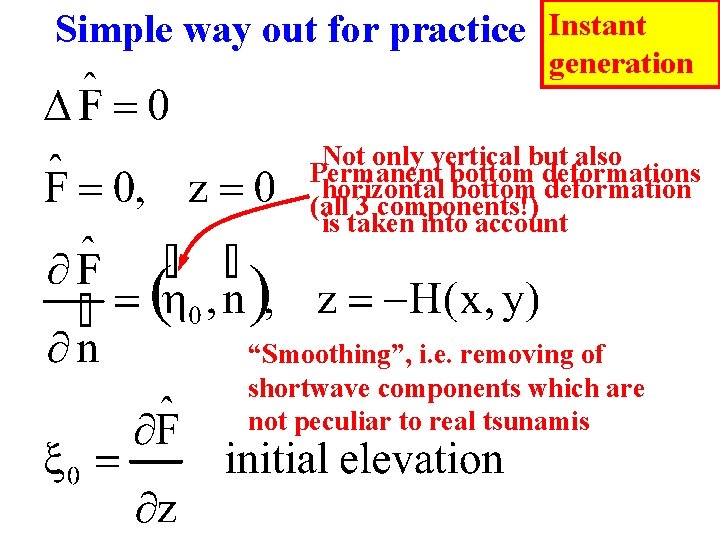
Simple way out for practice Instant generation Not only vertical but also Permanent bottom deformations horizontal bottom deformation (all 3 components!) is taken into account “Smoothing”, i. e. removing of shortwave components which are not peculiar to real tsunamis
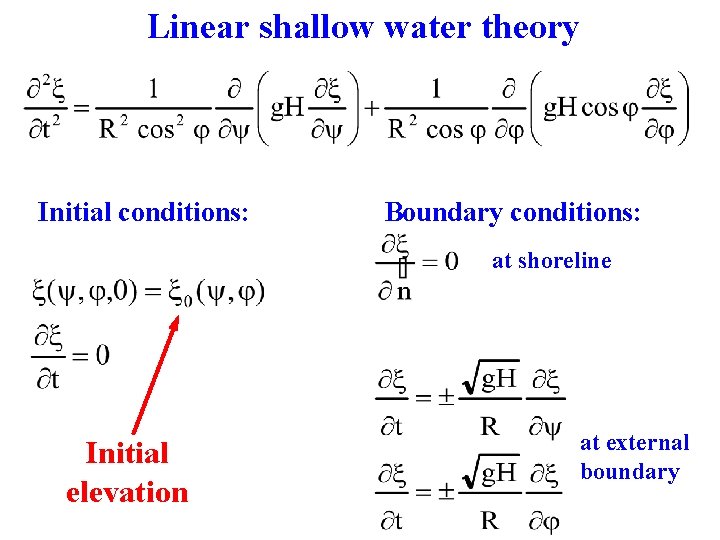
Linear shallow water theory Initial conditions: Boundary conditions: at shoreline Initial elevation at external boundary
15. 11. 2006 Initial Elevation=Vertical Bottom Deformation
15. 11. 2006 Smoothing: Initial Elevation from Laplace Problem
13. 01. 2007 Initial Elevation=Vertical Bottom Deformation
13. 01. 2007 Smoothing: Initial Elevation from Laplace Problem
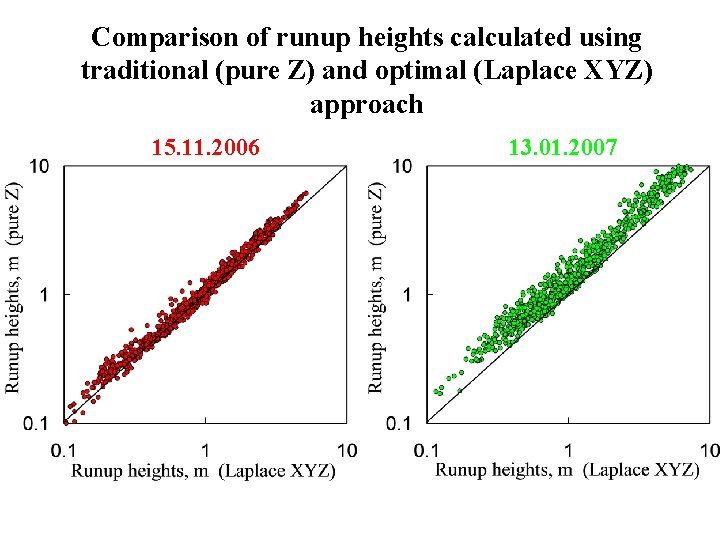
Comparison of runup heights calculated using traditional (pure Z) and optimal (Laplace XYZ) approach 15. 11. 2006 13. 01. 2007
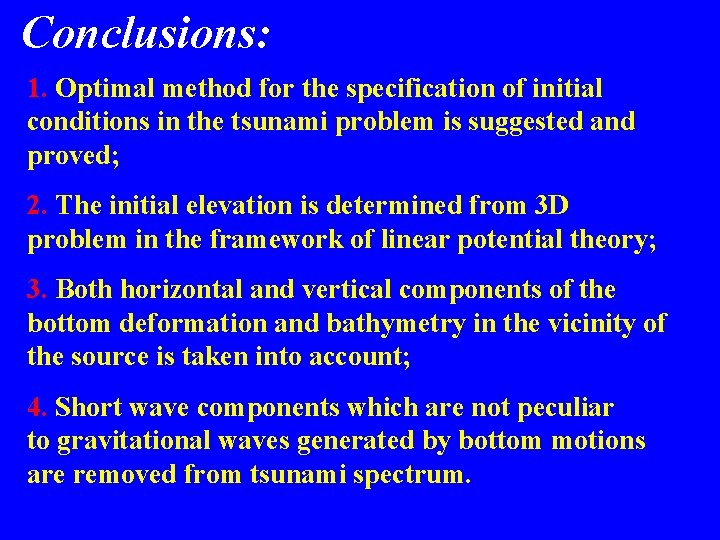
Conclusions: 1. Optimal method for the specification of initial conditions in the tsunami problem is suggested and proved; 2. The initial elevation is determined from 3 D problem in the framework of linear potential theory; 3. Both horizontal and vertical components of the bottom deformation and bathymetry in the vicinity of the source is taken into account; 4. Short wave components which are not peculiar to gravitational waves generated by bottom motions are removed from tsunami spectrum.
Than k you f or yo u r atte ntion !
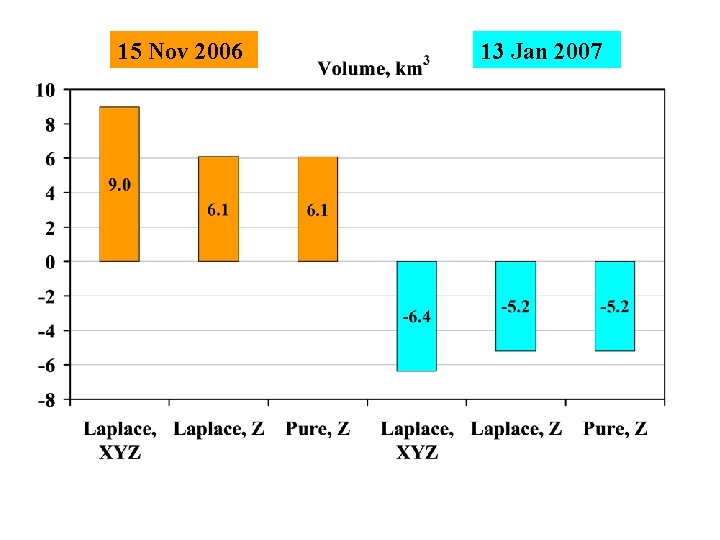
15 Nov 2006 13 Jan 2007
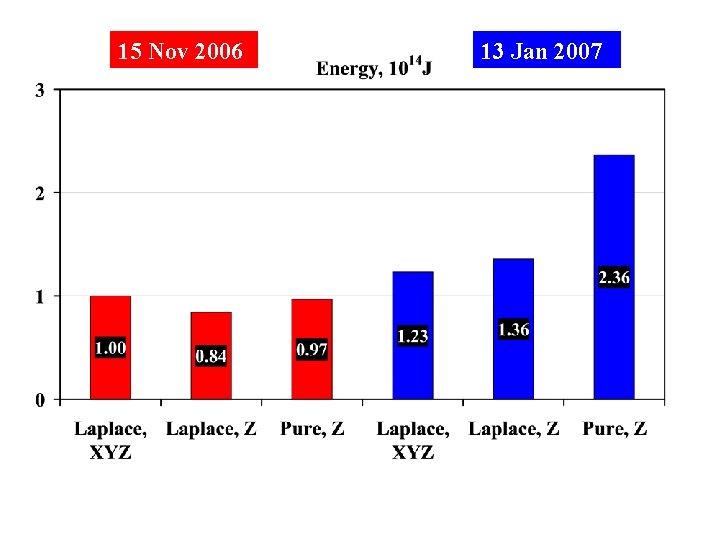
15 Nov 2006 13 Jan 2007