
Optimal concentrations of Ethanol and Isopropanol for the

- Slides: 20
Optimal concentrations of Ethanol and Isopropanol for the dissolution of PMMA By Maya Costales
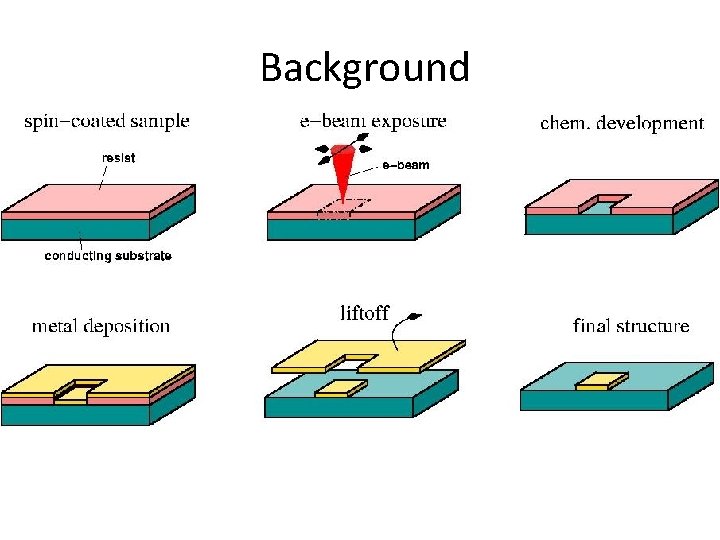
Background • Nanofabrication – Substrate – Resist – Etching Tool – Developer
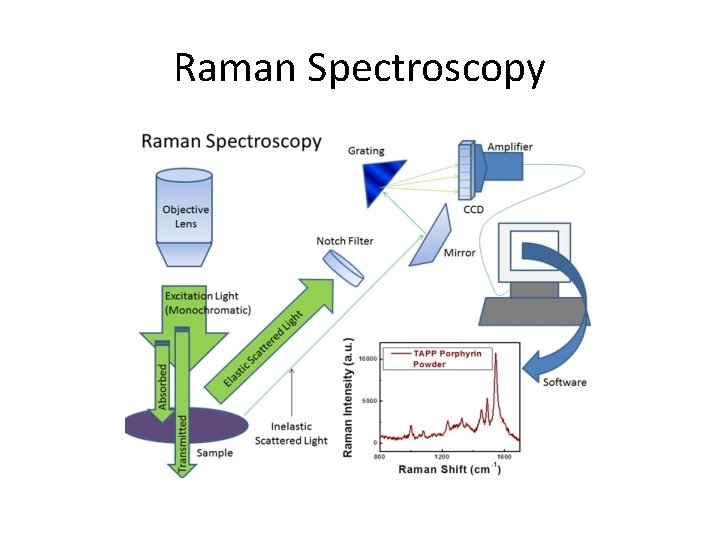
Raman Spectroscopy
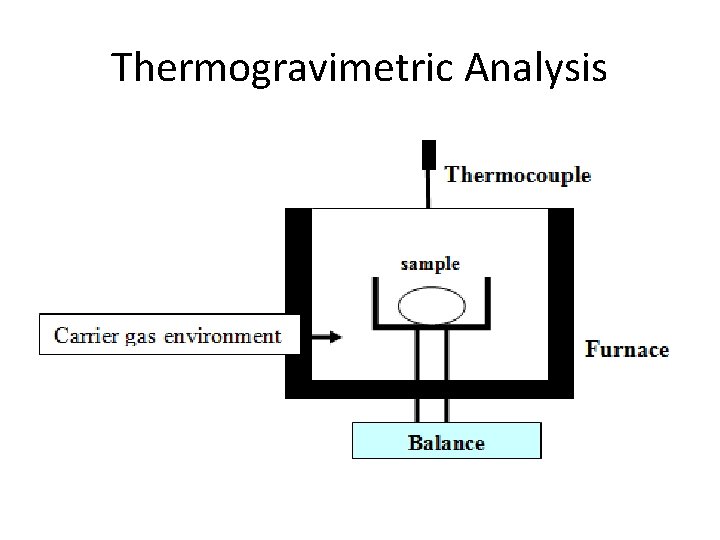
Thermogravimetric Analysis
Focusing Question Last Year • Can Alcohol Water Solutions be used as replacements for MIBK-IPA solutions as PMMA developers?
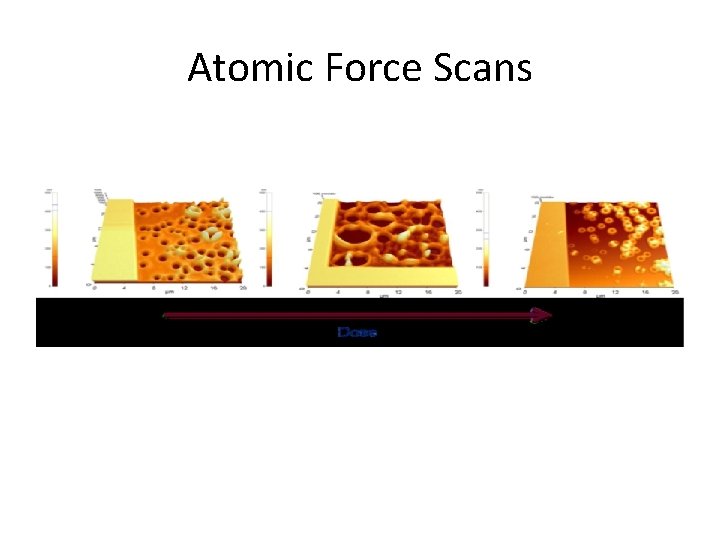
Atomic Force Scans
Focusing Question • Can we learn from Raman and TGA how PMMA and the alcohol-water mixtures interact?
Data Acquisition Protocol/Methods • Raman • TGA
Issues with Data Acquisition • • Raman Laser TGA recipe Machine Artifacts Raman data acquisition and Fluorescence
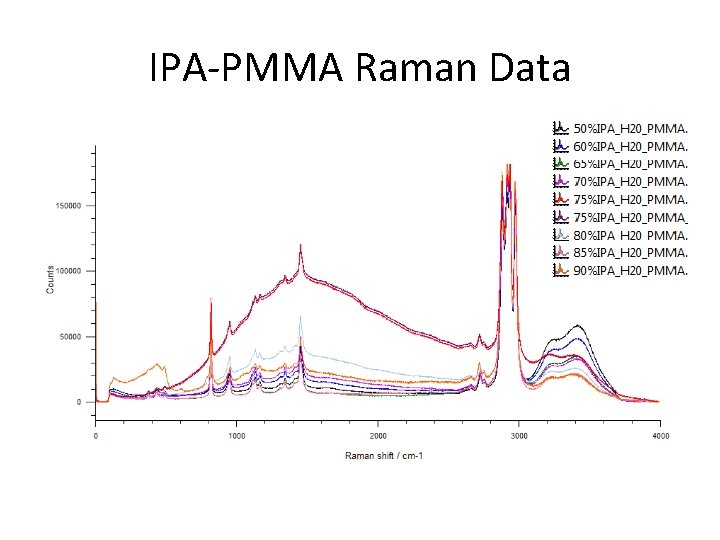
IPA-PMMA Raman Data
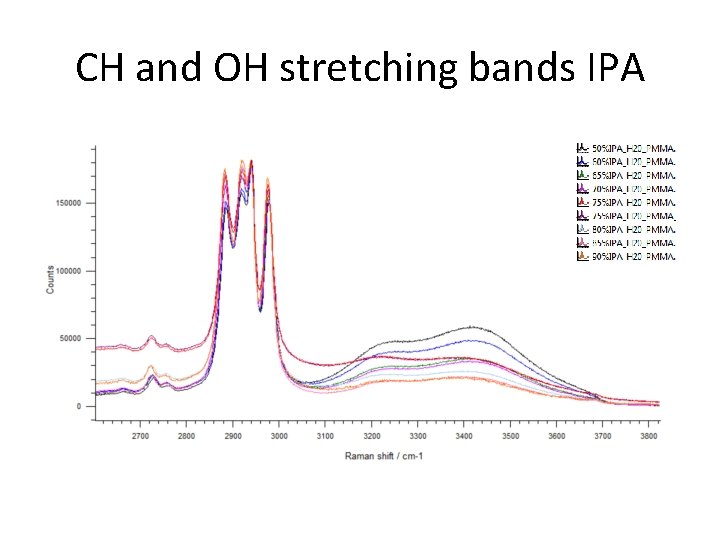
CH and OH stretching bands IPA
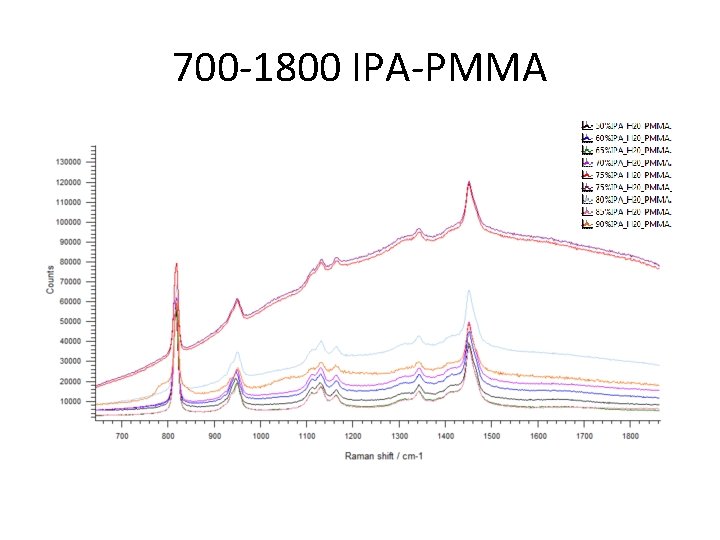
700 -1800 IPA-PMMA
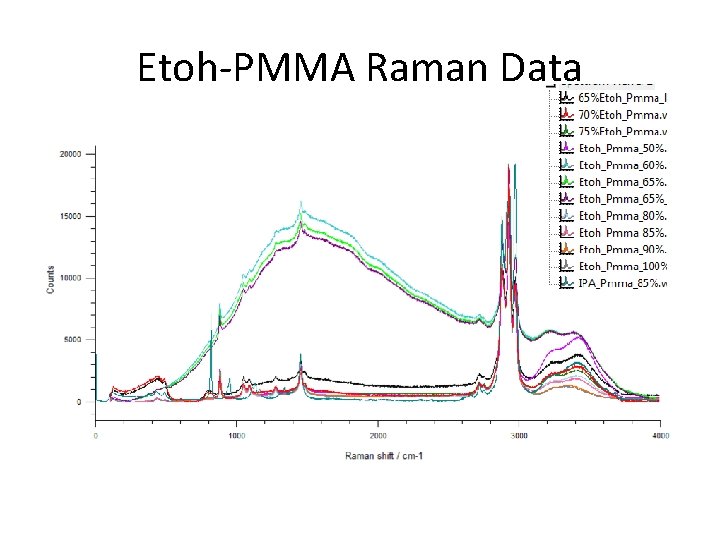
Etoh-PMMA Raman Data
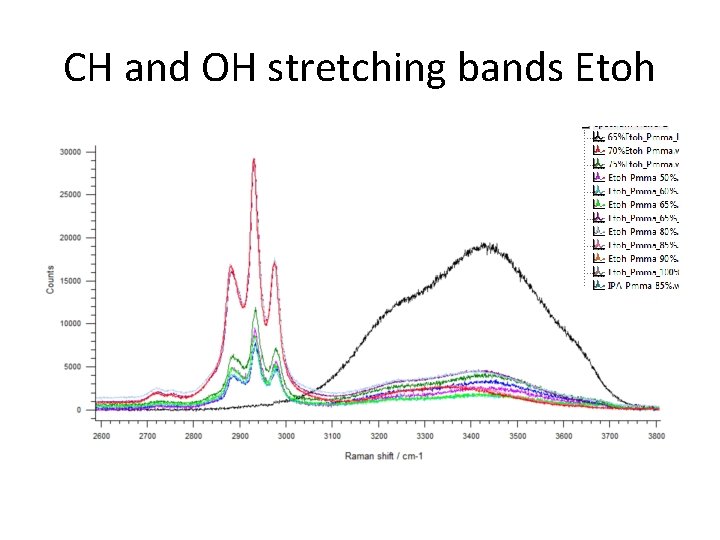
CH and OH stretching bands Etoh
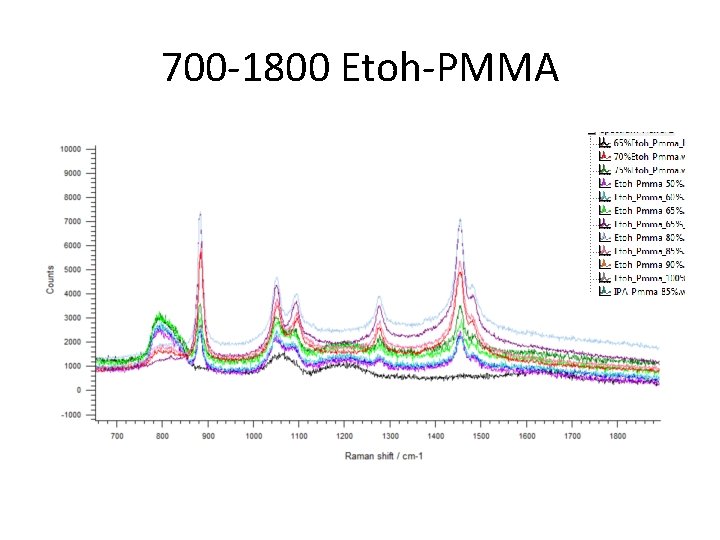
700 -1800 Etoh-PMMA
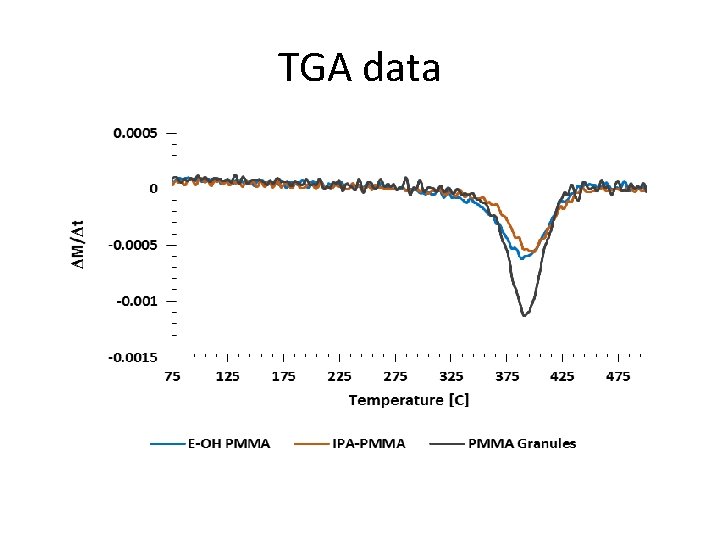
TGA data
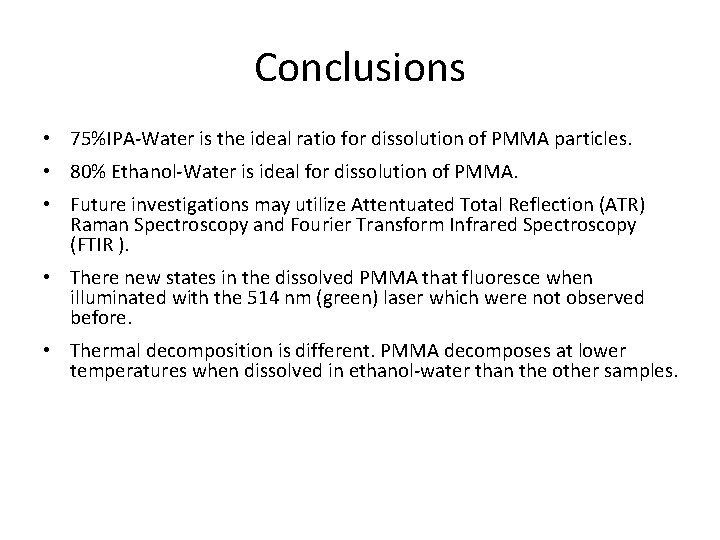
Conclusions • 75%IPA-Water is the ideal ratio for dissolution of PMMA particles. • 80% Ethanol-Water is ideal for dissolution of PMMA. • Future investigations may utilize Attentuated Total Reflection (ATR) Raman Spectroscopy and Fourier Transform Infrared Spectroscopy (FTIR ). • There new states in the dissolved PMMA that fluoresce when illuminated with the 514 nm (green) laser which were not observed before. • Thermal decomposition is different. PMMA decomposes at lower temperatures when dissolved in ethanol-water than the other samples.
References • Miller-Chou, B. (2003). A Review Of Polymer Dissolution. Progress in Polymer Science, 28, 1223 -1270. • Mohammad, M. , Muhammad, M. , Dew, S. , & Stepanova, M. (2011). Fundamentals of Electron Beam Exposure and Development. Nanofabrication Techniques and Principles, 1141. • Mohammad, M. , Dew, S. , & Stepanova, M. (2013). SML resist processing for high-aspect-ratio and high-sensitivity electron beam lithography. Nanoscale Research Letters, 8, 139. • Ohmura, R. , Takeya, S. , Uchida, T. , & Ebinuma, T. (2004). Clathrate Hydrate Formed with Methane and 2 -Propanol: Confirmation of Structure II Hydrate Formation. Industrial & Engineering Chemistry Research, 43, 4964 -4966.
Acknowledgements
Questions?