
Optics of a single Homogeneous and Isotropic Layer
- Slides: 20
Optics of a single Homogeneous and Isotropic Layer
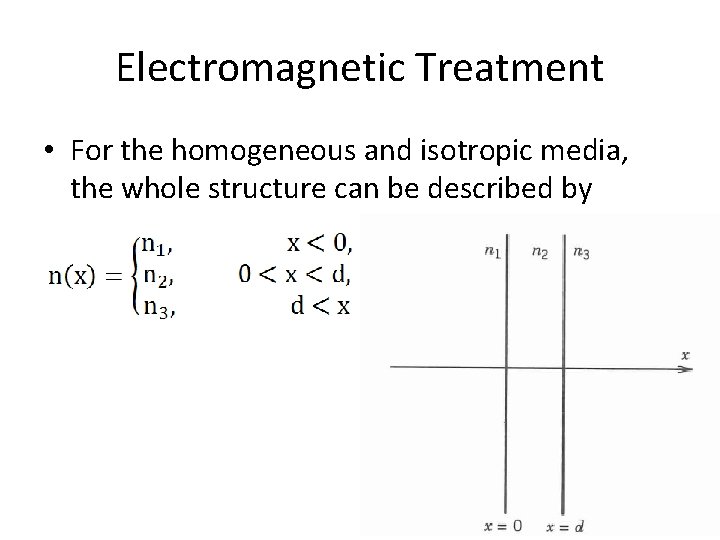
Electromagnetic Treatment • For the homogeneous and isotropic media, the whole structure can be described by
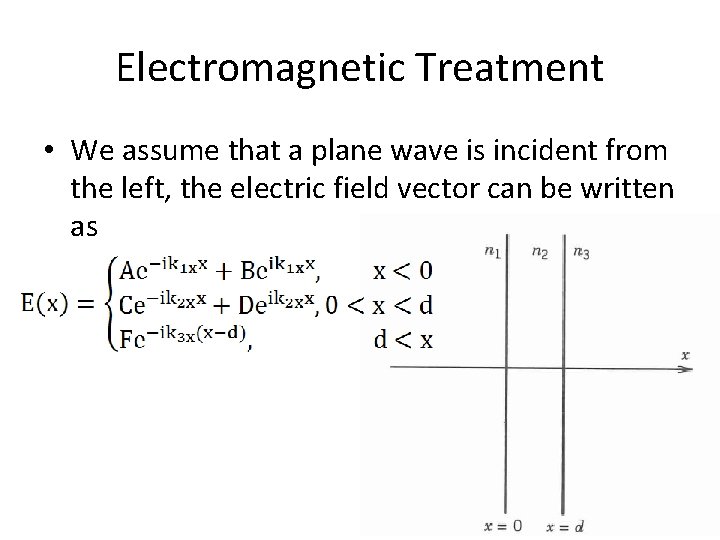
Electromagnetic Treatment • We assume that a plane wave is incident from the left, the electric field vector can be written as
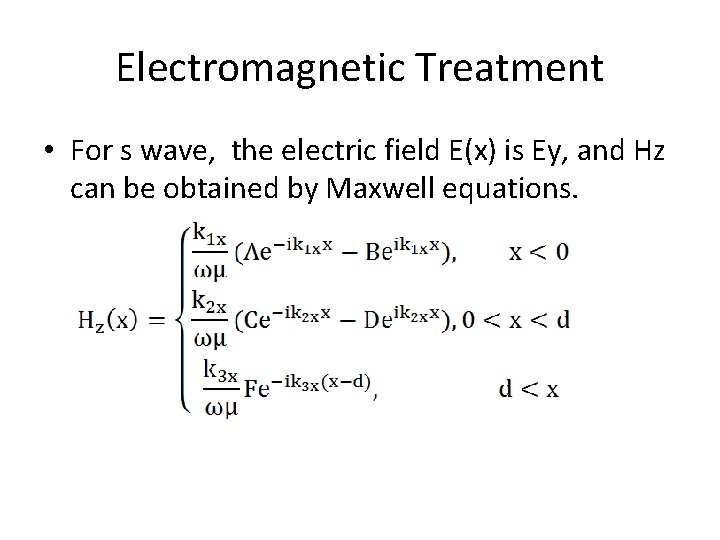
Electromagnetic Treatment • For s wave, the electric field E(x) is Ey, and Hz can be obtained by Maxwell equations.
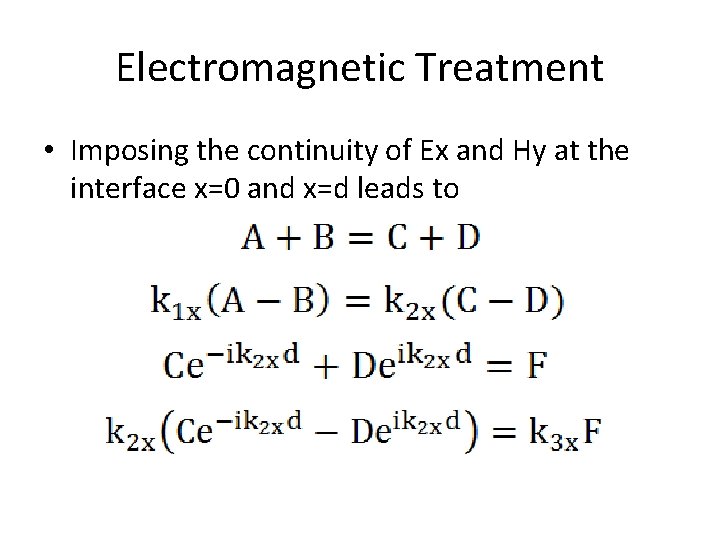
Electromagnetic Treatment • Imposing the continuity of Ex and Hy at the interface x=0 and x=d leads to
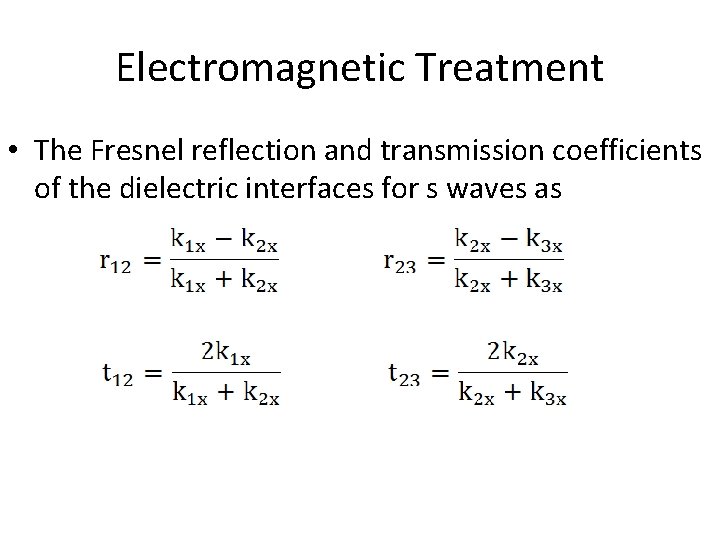
Electromagnetic Treatment • The Fresnel reflection and transmission coefficients of the dielectric interfaces for s waves as
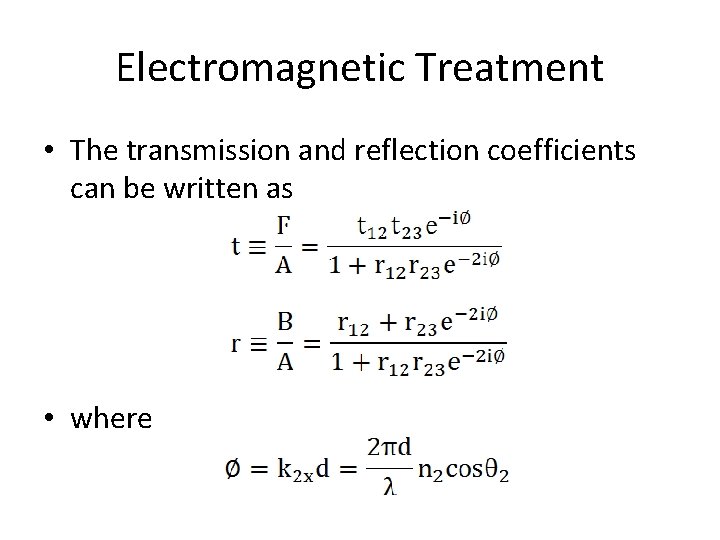
Electromagnetic Treatment • The transmission and reflection coefficients can be written as • where
Electromagnetic Treatment • A similar electromagnetic analysis for the p wave leads to exactly the same expressions for the transmission and reflection coefficients.
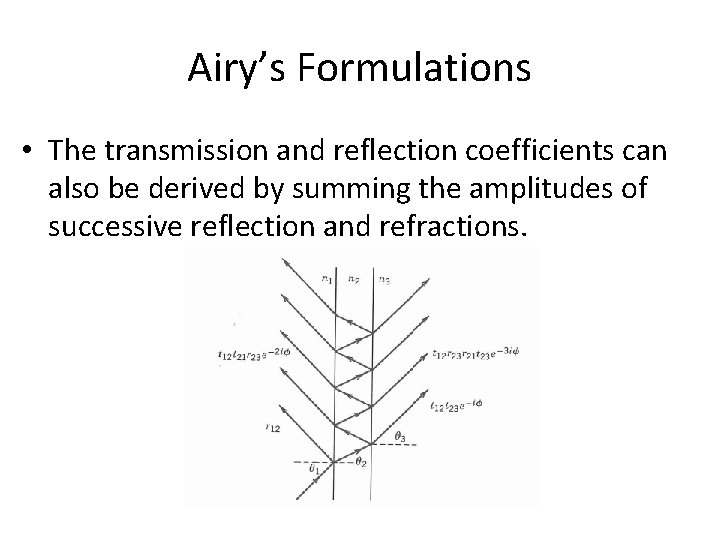
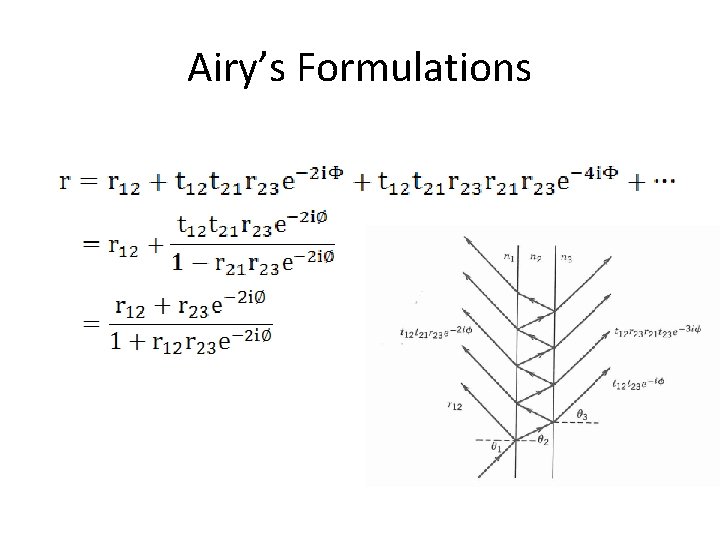
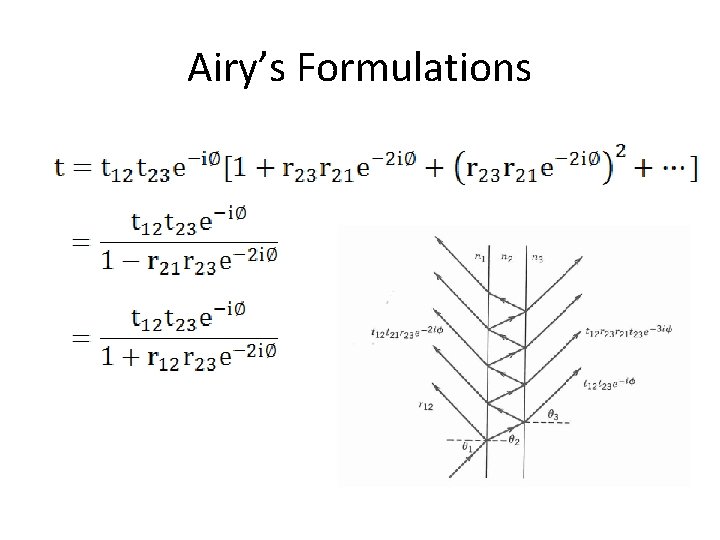
Airy’s Formulations • The transmission and reflection coefficients can also be derived by summing the amplitudes of successive reflection and refractions.
Airy’s Formulations
Airy’s Formulations
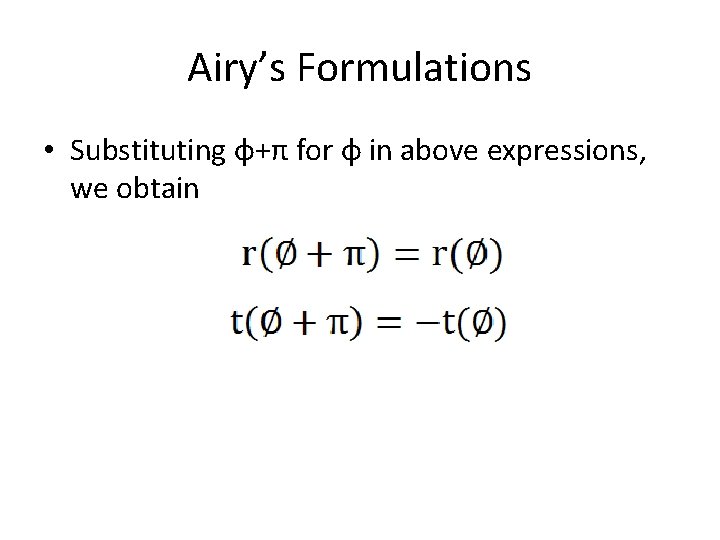
Airy’s Formulations • Substituting φ+π for φ in above expressions, we obtain
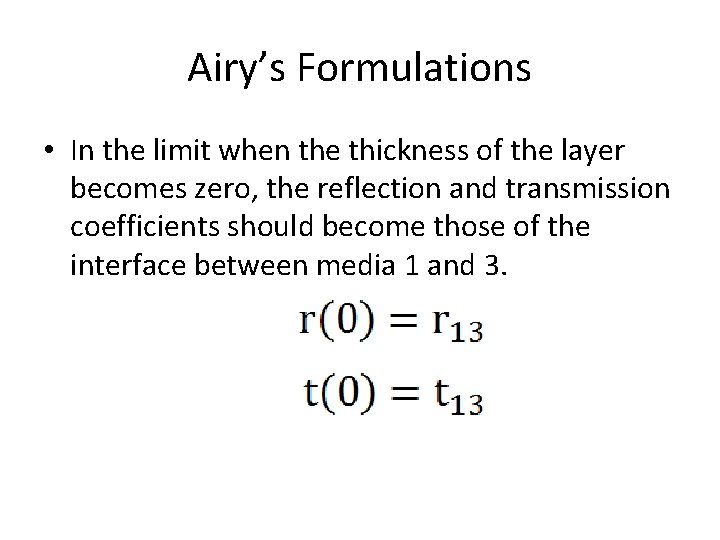
Airy’s Formulations • In the limit when the thickness of the layer becomes zero, the reflection and transmission coefficients should become those of the interface between media 1 and 3.
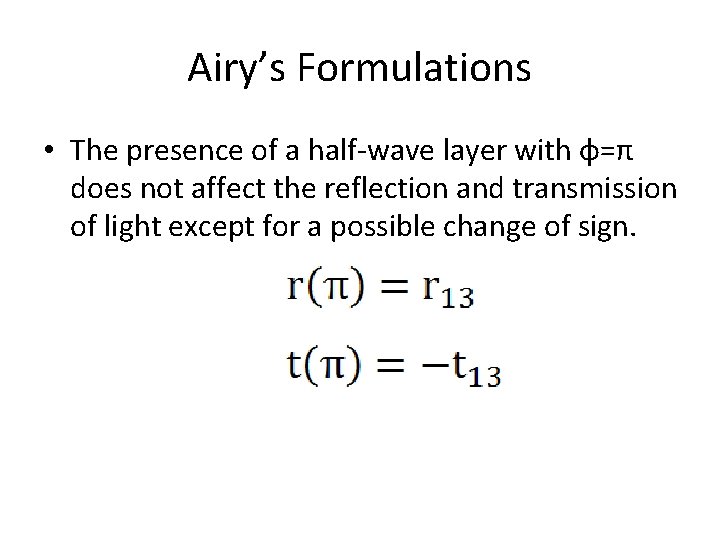
Airy’s Formulations • The presence of a half-wave layer with φ=π does not affect the reflection and transmission of light except for a possible change of sign.
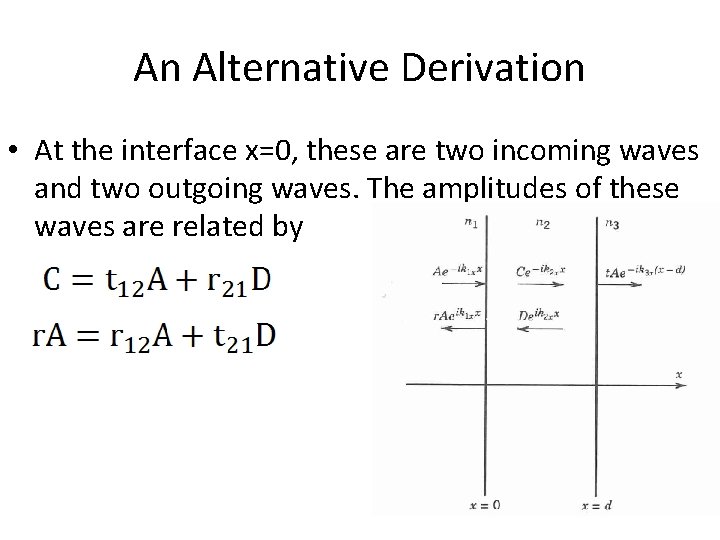
An Alternative Derivation • At the interface x=0, these are two incoming waves and two outgoing waves. The amplitudes of these waves are related by
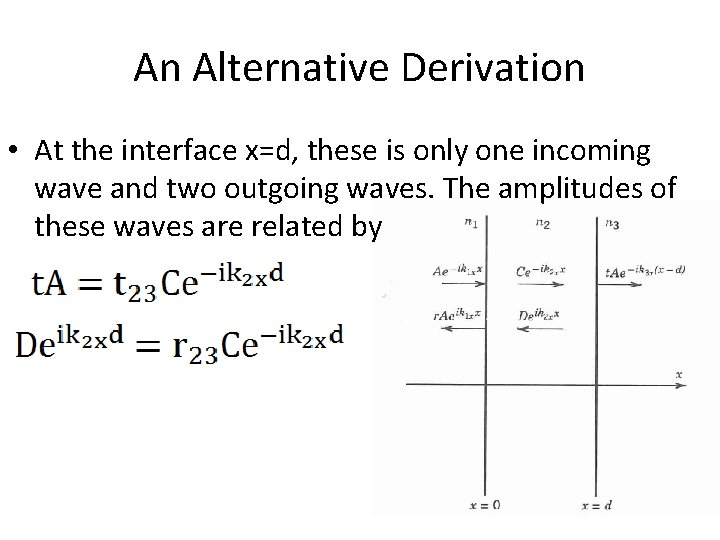
An Alternative Derivation • At the interface x=d, these is only one incoming wave and two outgoing waves. The amplitudes of these waves are related by
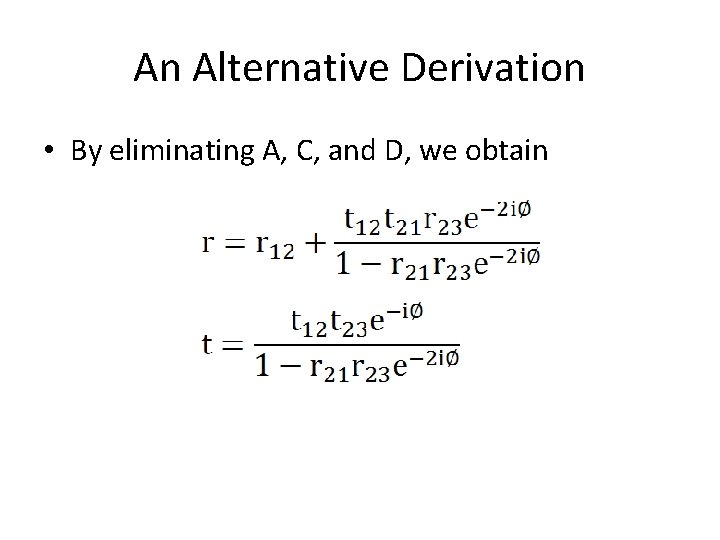
An Alternative Derivation • By eliminating A, C, and D, we obtain
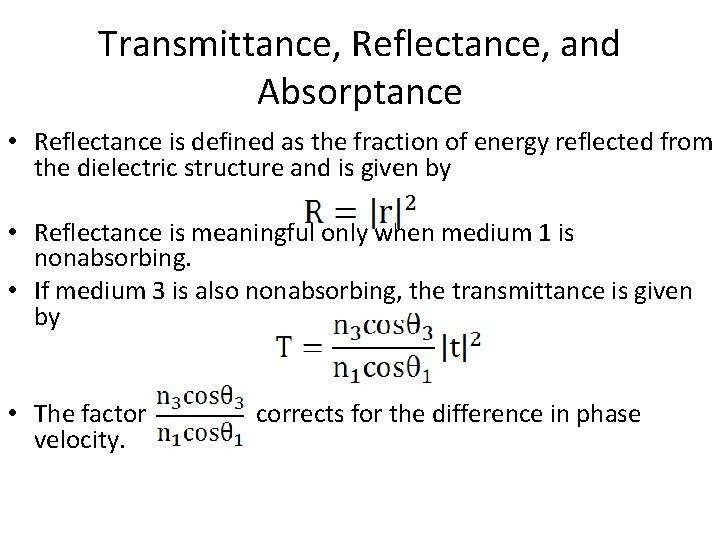
Transmittance, Reflectance, and Absorptance • Reflectance is defined as the fraction of energy reflected from the dielectric structure and is given by • Reflectance is meaningful only when medium 1 is nonabsorbing. • If medium 3 is also nonabsorbing, the transmittance is given by • The factor velocity. corrects for the difference in phase
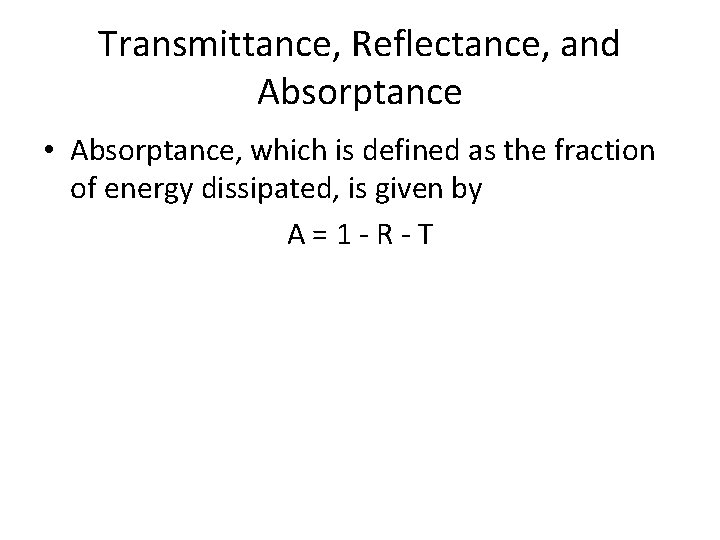
Transmittance, Reflectance, and Absorptance • Absorptance, which is defined as the fraction of energy dissipated, is given by A=1 -R-T
A Thin Film on a Substrate