
Optical Mineralogy in a Nutshell Use of the
- Slides: 16
Optical Mineralogy in a Nutshell Use of the petrographic microscope in three easy lessons Part III © Jane Selverstone, University of New Mexico, 2003 Used and Modified with Permission
A few new properties, and then some review… Cleavage – number and orientation of cleavage planes Twinning – type of twinning, orientation Extinction angle – parallel or inclined? Angle? Habit – characteristic form of mineral
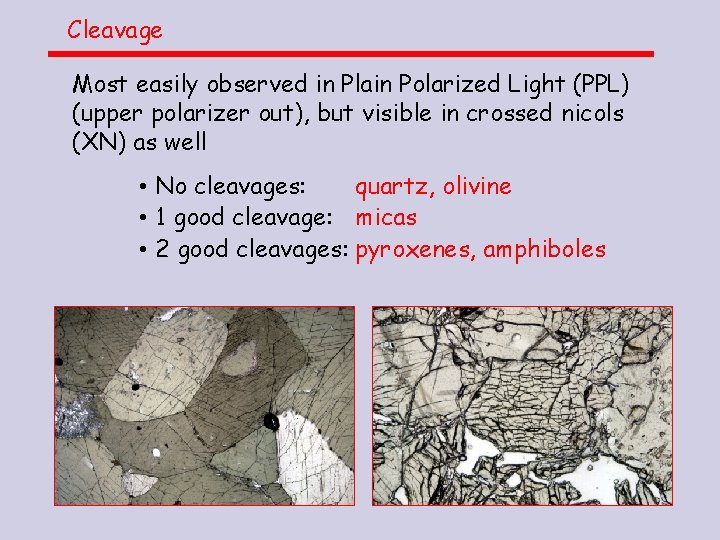
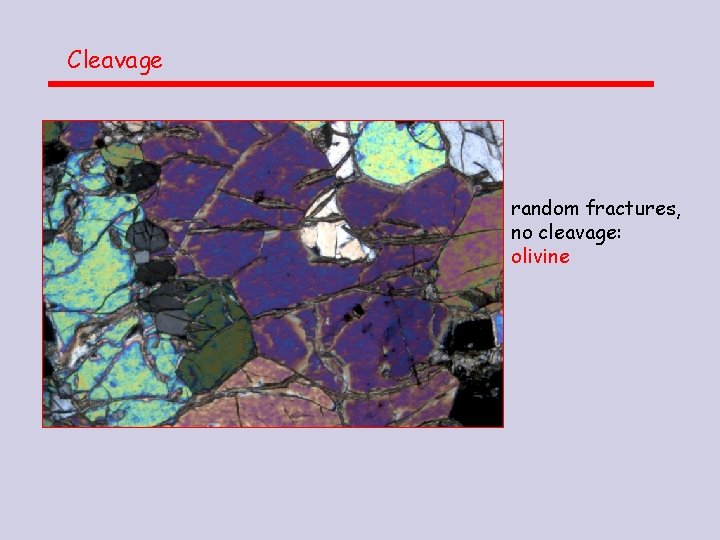
Cleavage Most easily observed in Plain Polarized Light (PPL) (upper polarizer out), but visible in crossed nicols (XN) as well • No cleavages: quartz, olivine • 1 good cleavage: micas • 2 good cleavages: pyroxenes, amphiboles
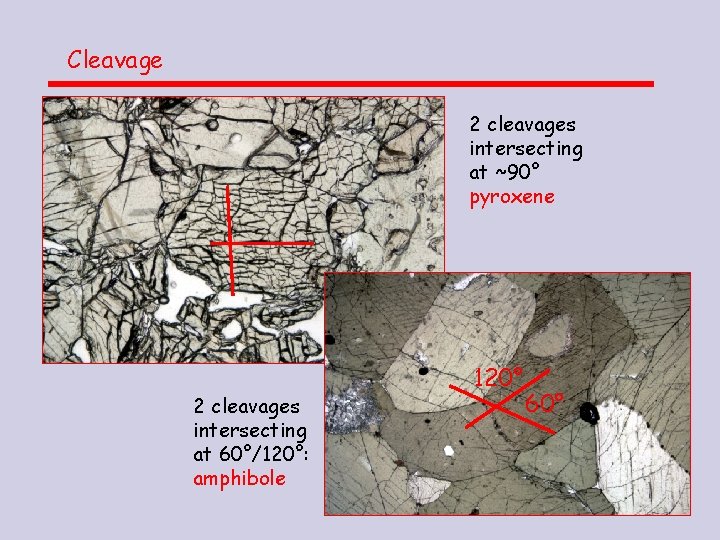
Cleavage 2 cleavages intersecting at ~90° pyroxene 2 cleavages intersecting at 60°/120°: amphibole 120° 60°
Cleavage random fractures, no cleavage: olivine
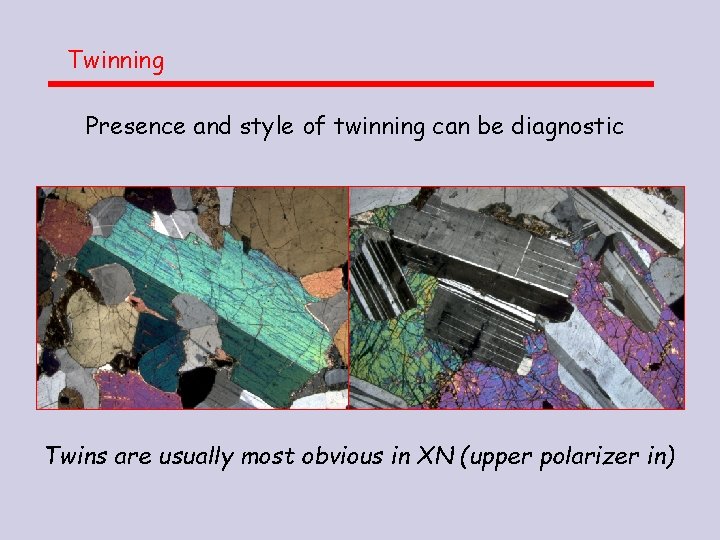
Twinning Presence and style of twinning can be diagnostic Twins are usually most obvious in XN (upper polarizer in)
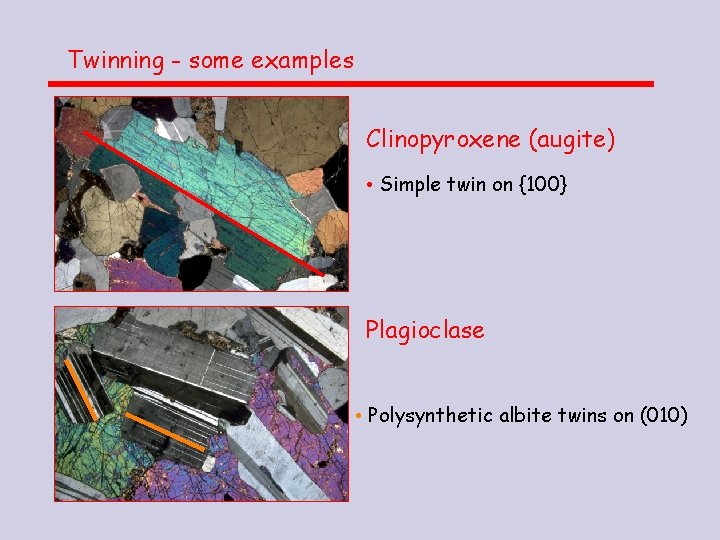
Twinning - some examples Clinopyroxene (augite) • Simple twin on {100} Plagioclase • Polysynthetic albite twins on (010)
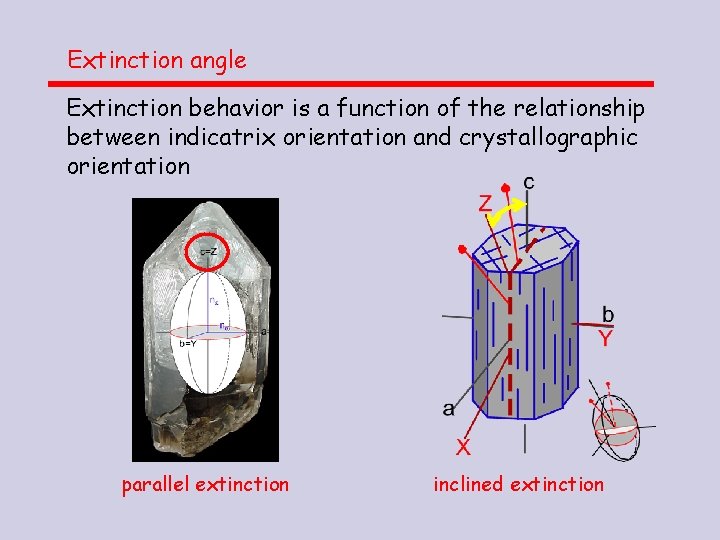
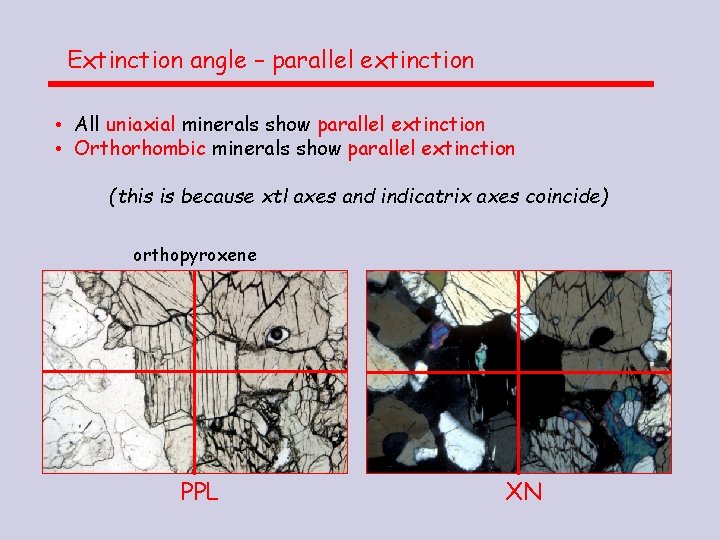
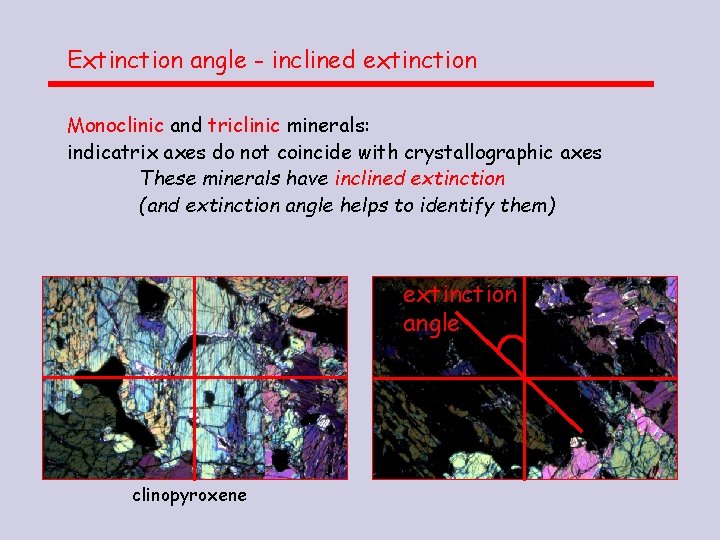
Extinction angle Extinction behavior is a function of the relationship between indicatrix orientation and crystallographic orientation parallel extinction inclined extinction
Extinction angle – parallel extinction • All uniaxial minerals show parallel extinction • Orthorhombic minerals show parallel extinction (this is because xtl axes and indicatrix axes coincide) orthopyroxene PPL XN
Extinction angle - inclined extinction Monoclinic and triclinic minerals: indicatrix axes do not coincide with crystallographic axes These minerals have inclined extinction (and extinction angle helps to identify them) extinction angle clinopyroxene
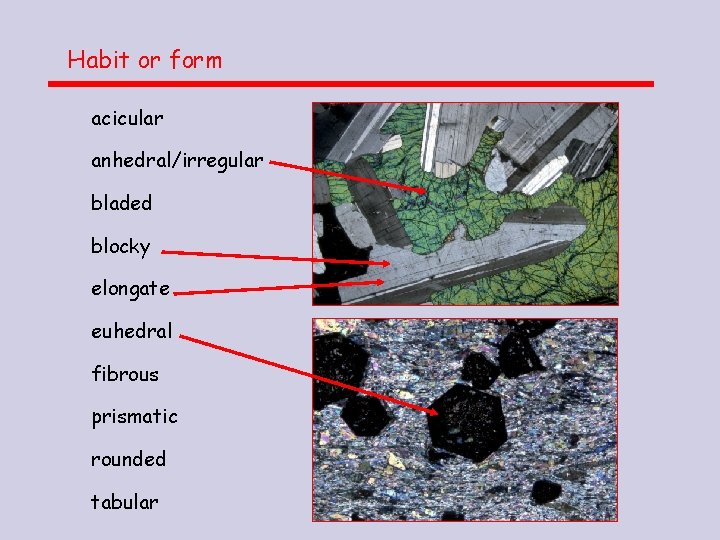
Habit or form acicular anhedral/irregular bladed blocky elongate euhedral fibrous prismatic rounded tabular
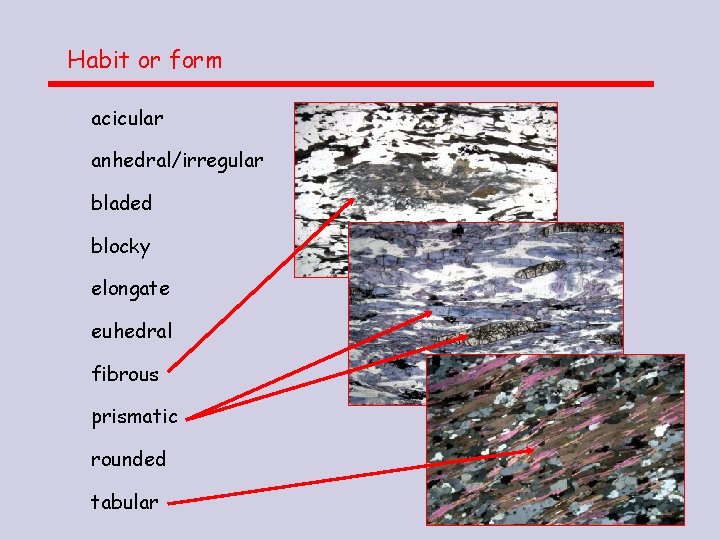
Habit or form acicular anhedral/irregular bladed blocky elongate euhedral fibrous prismatic rounded tabular
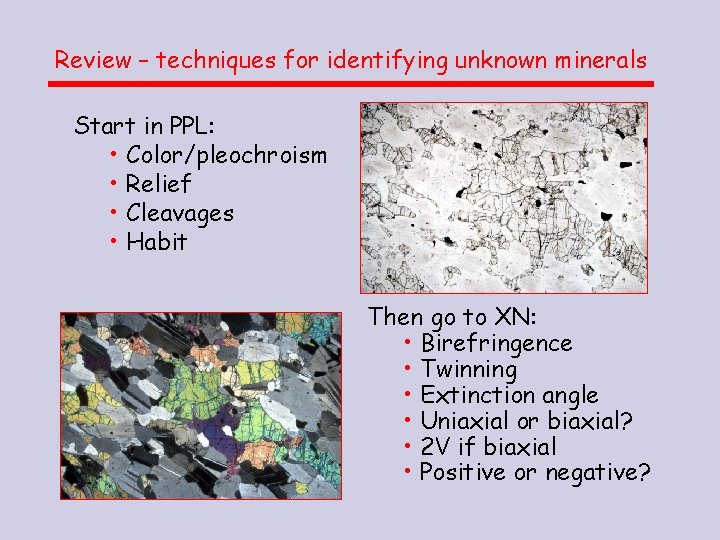
Review – techniques for identifying unknown minerals Start in PPL: • Color/pleochroism • Relief • Cleavages • Habit Then go to XN: • Birefringence • Twinning • Extinction angle • Uniaxial or biaxial? • 2 V if biaxial • Positive or negative?
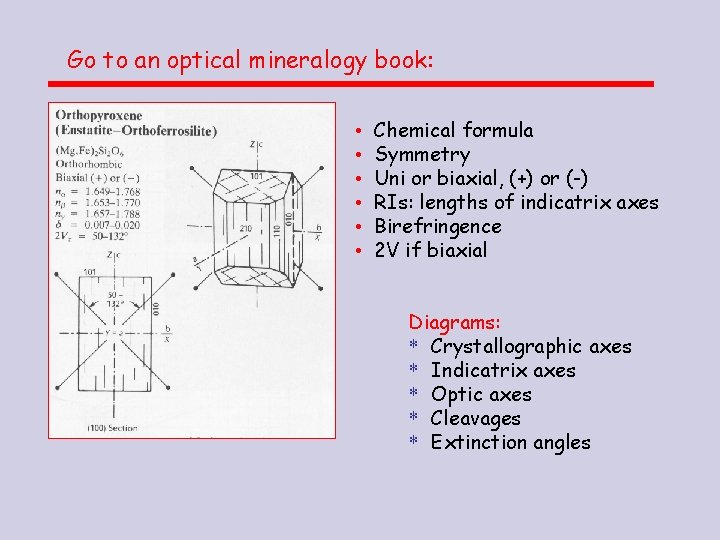
Go to an optical mineralogy book: • • • Chemical formula Symmetry Uni or biaxial, (+) or (-) RIs: lengths of indicatrix axes Birefringence 2 V if biaxial Diagrams: * Crystallographic axes * Indicatrix axes * Optic axes * Cleavages * Extinction angles
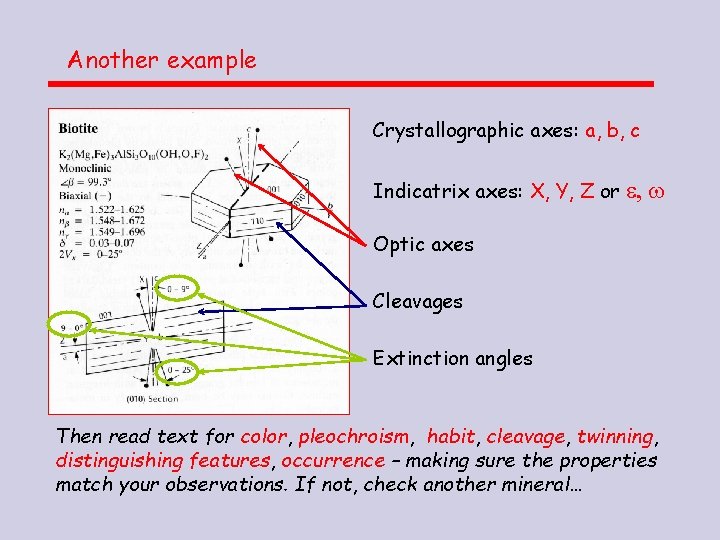
Another example Crystallographic axes: a, b, c Indicatrix axes: X, Y, Z or e, w Optic axes Cleavages Extinction angles Then read text for color, pleochroism, habit, cleavage, twinning, distinguishing features, occurrence – making sure the properties match your observations. If not, check another mineral…
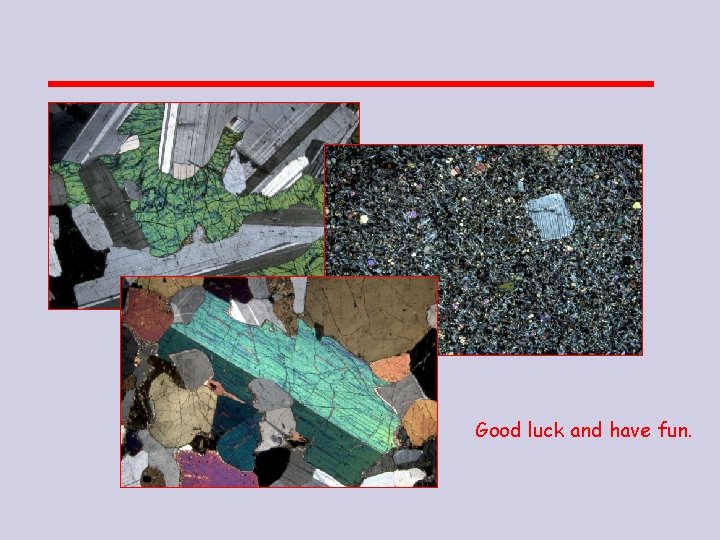
Good luck and have fun.