
Optical microscopy Optics Lenses and image formation Depth
- Slides: 14
Optical microscopy Optics Lenses and image formation Depth of field Numerical aperture Resolution Instrument Specimen preparation Contrast Examples
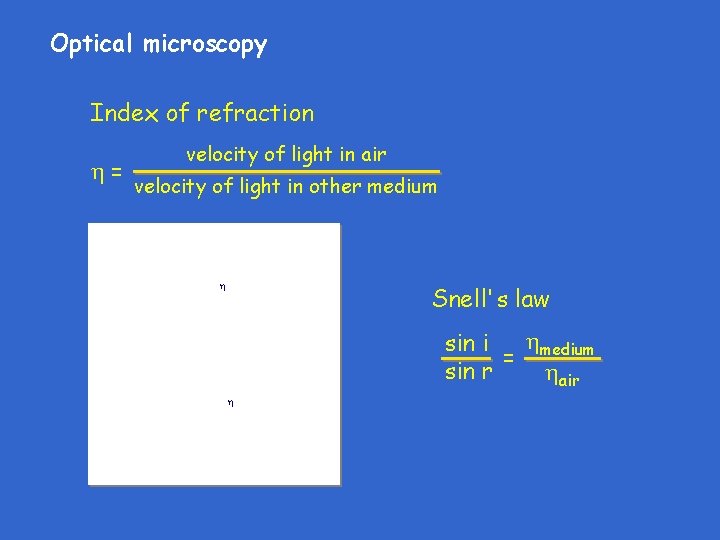
Optical microscopy Index of refraction = velocity of light in air velocity of light in other medium Snell's law medium sin i = sin r air
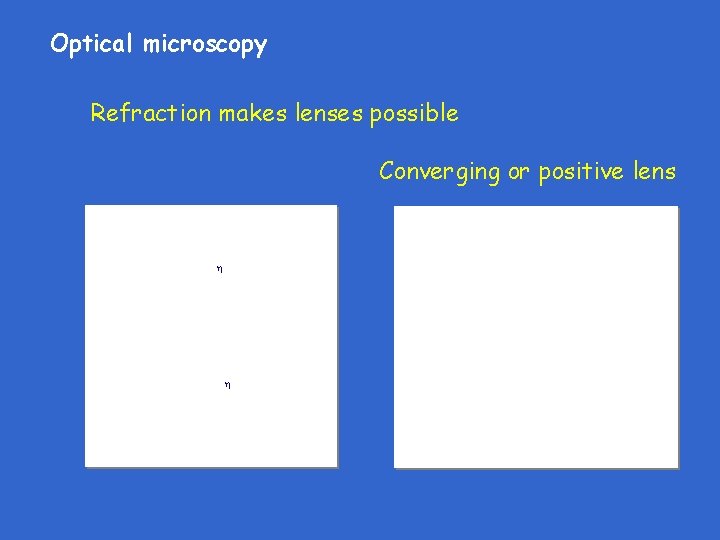
Optical microscopy Refraction makes lenses possible Converging or positive lens
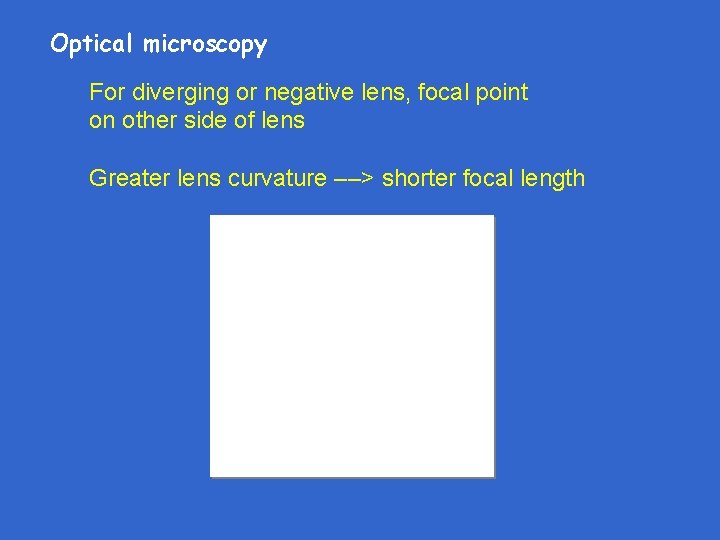
Optical microscopy For diverging or negative lens, focal point on other side of lens Greater lens curvature ––> shorter focal length
Optical microscopy
Optical microscopy Image formation in lens system
Optical microscopy Numerical aperture = N. A. = sine of half the angle over which light enters objective lens. Resolution = /2 N. A.
Optical microscopy
Optical microscopy
Optical microscopy
Optical microscopy image display
Optical microscopy
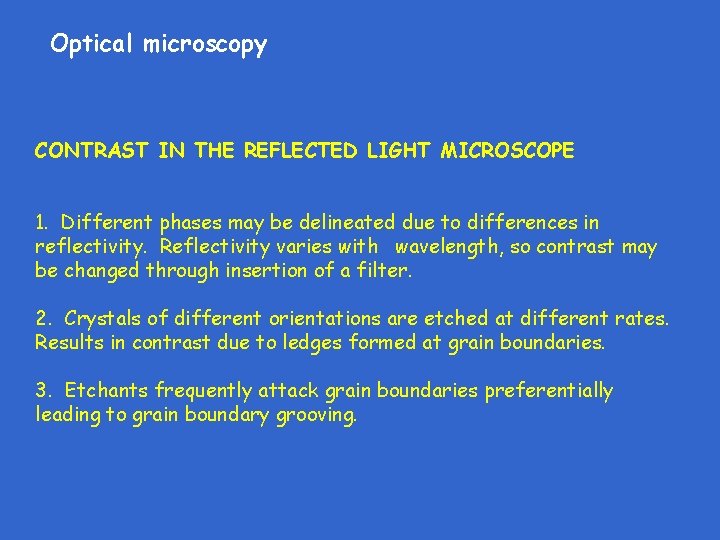
Optical microscopy CONTRAST IN THE REFLECTED LIGHT MICROSCOPE 1. Different phases may be delineated due to differences in reflectivity. Reflectivity varies with wavelength, so contrast may be changed through insertion of a filter. 2. Crystals of different orientations are etched at different rates. Results in contrast due to ledges formed at grain boundaries. 3. Etchants frequently attack grain boundaries preferentially leading to grain boundary grooving.
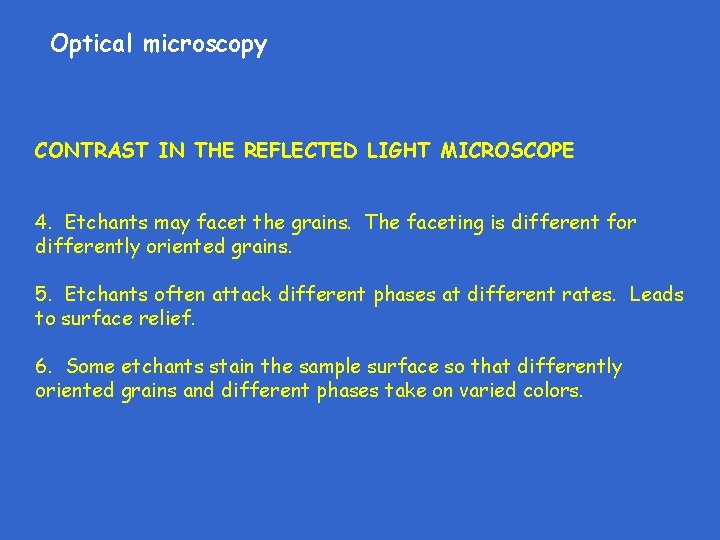
Optical microscopy CONTRAST IN THE REFLECTED LIGHT MICROSCOPE 4. Etchants may facet the grains. The faceting is different for differently oriented grains. 5. Etchants often attack different phases at different rates. Leads to surface relief. 6. Some etchants stain the sample surface so that differently oriented grains and different phases take on varied colors.