
Optical Instruments for Solar Eclipse Measurements Advisor Dr



- Slides: 22
Optical Instruments for Solar Eclipse Measurements Advisor: Dr. Joe Shaw LOGAN CARPENTER
Project Assignments � Spectropolarimeter � � Aurora Detector � � Jon and Logan Kendra and Logan Solar radiometer � Everyone and Logan
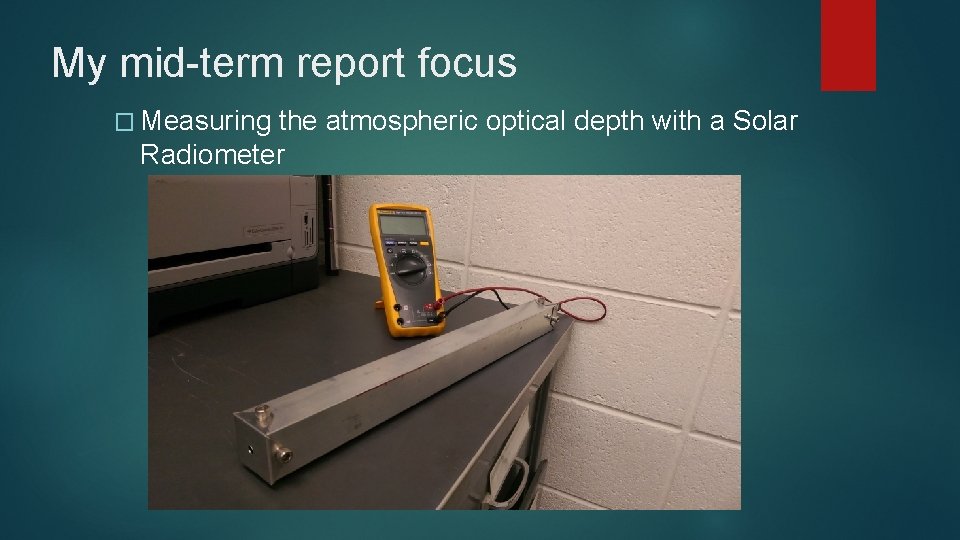
My mid-term report focus � Measuring the atmospheric optical depth with a Solar Radiometer
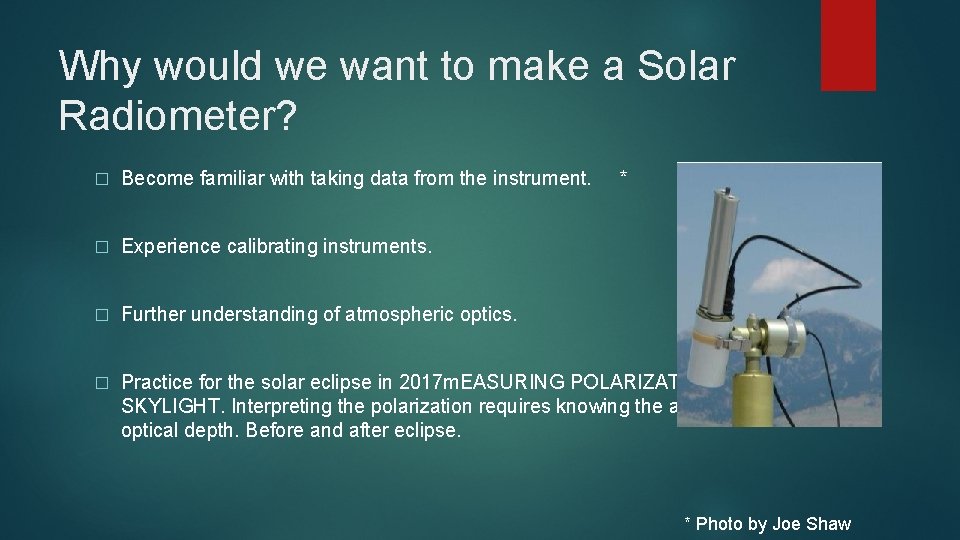
Why would we want to make a Solar Radiometer? � Become familiar with taking data from the instrument. * � Experience calibrating instruments. � Further understanding of atmospheric optics. � Practice for the solar eclipse in 2017 m. EASURING POLARIZATION OF SKYLIGHT. Interpreting the polarization requires knowing the aerosol optical depth. Before and after eclipse. * Photo by Joe Shaw
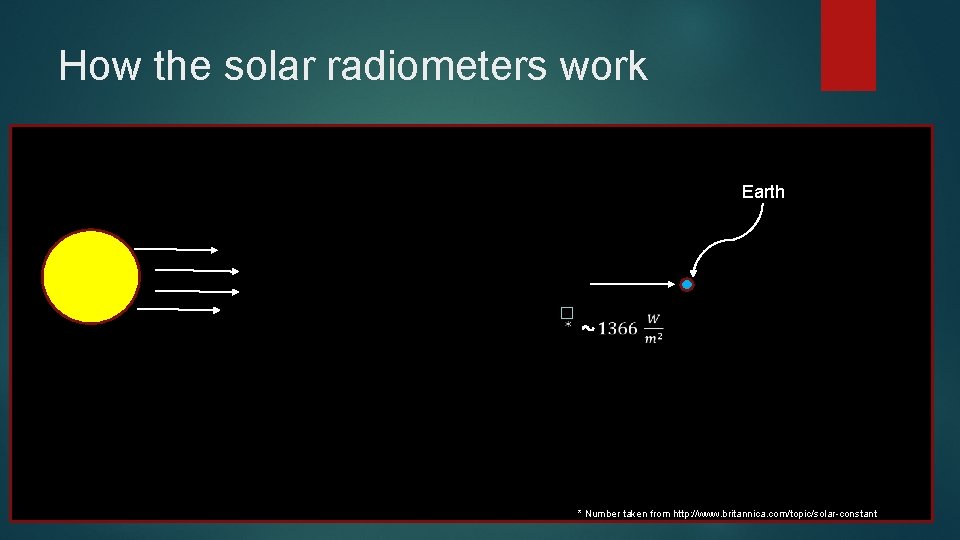
How the solar radiometers work Earth � * Number taken from http: //www. britannica. com/topic/solar-constant
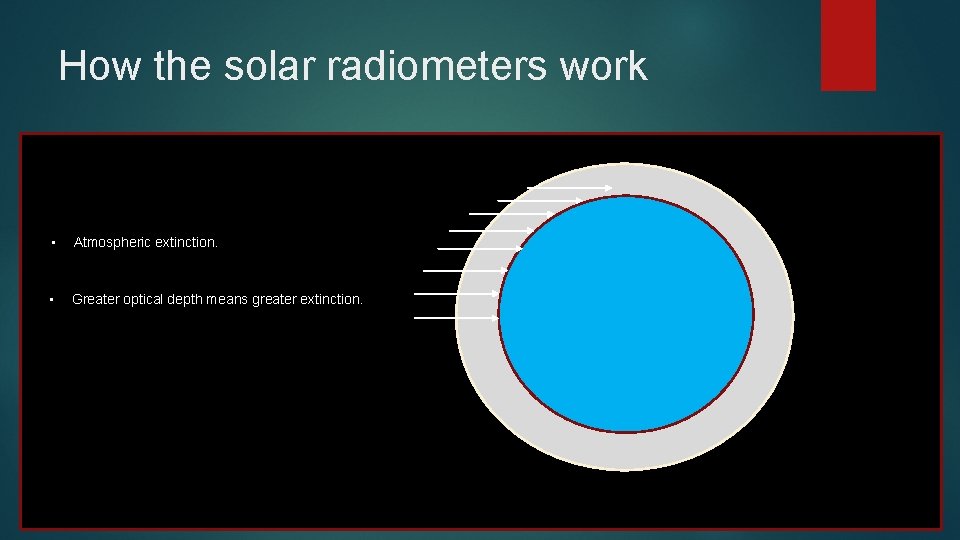
How the solar radiometers work • Atmospheric extinction. • Greater optical depth means greater extinction.
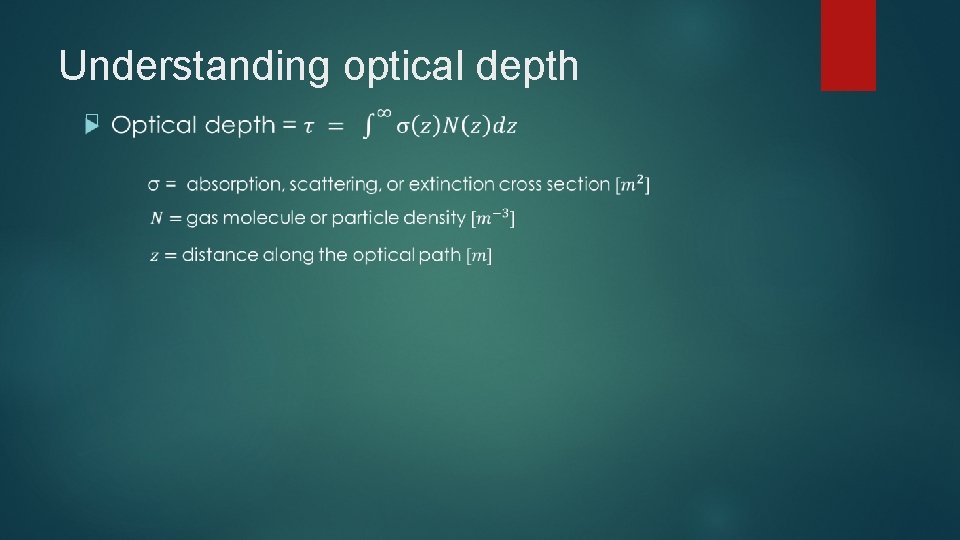
Understanding optical depth �
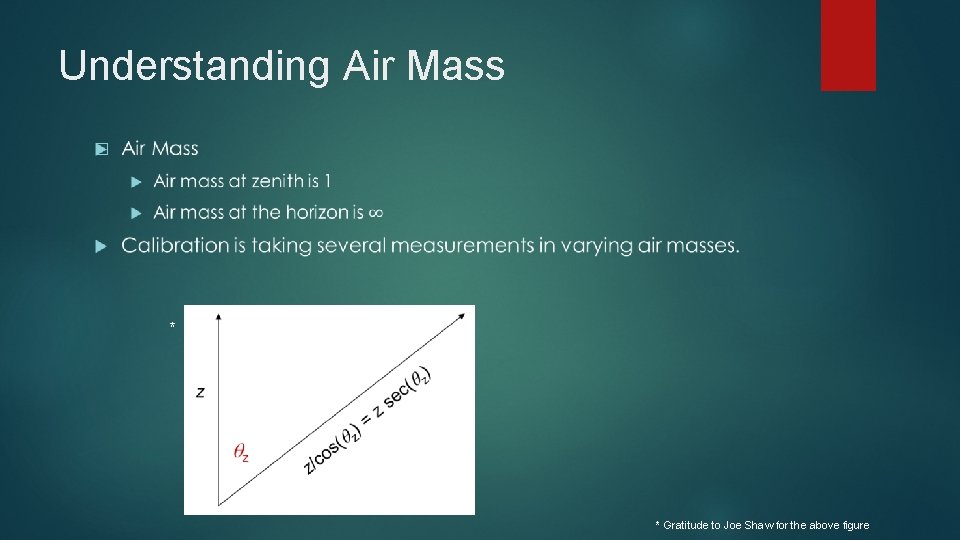
Understanding Air Mass � * * Gratitude to Joe Shaw for the above figure
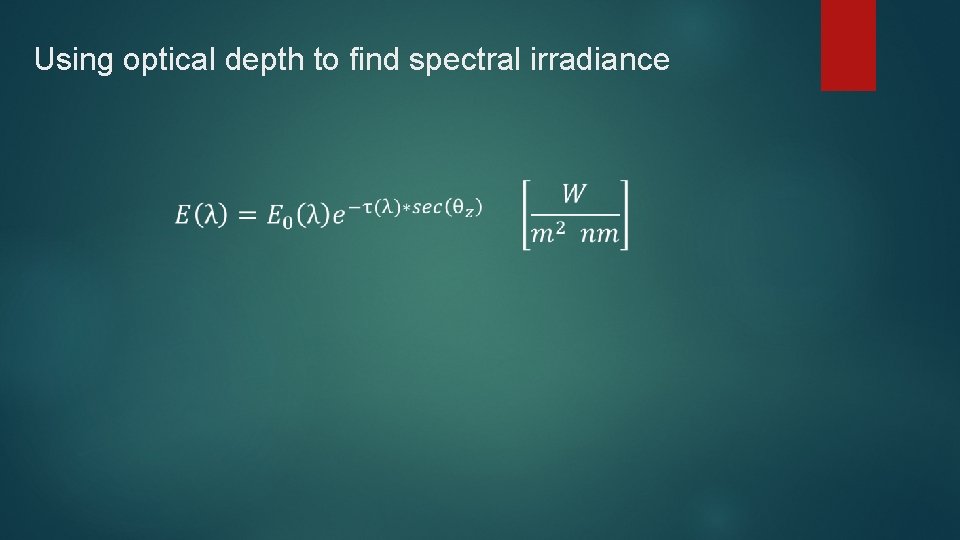
Using optical depth to find spectral irradiance
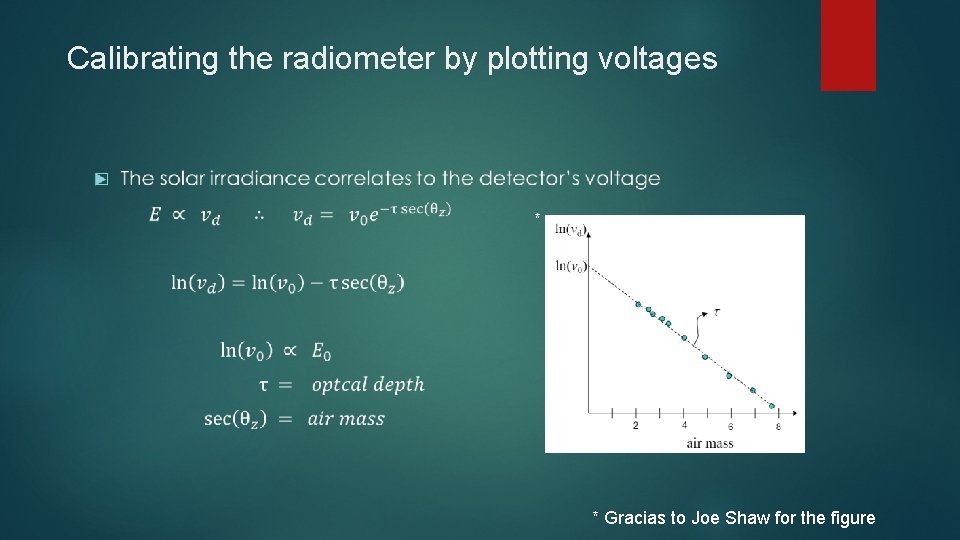
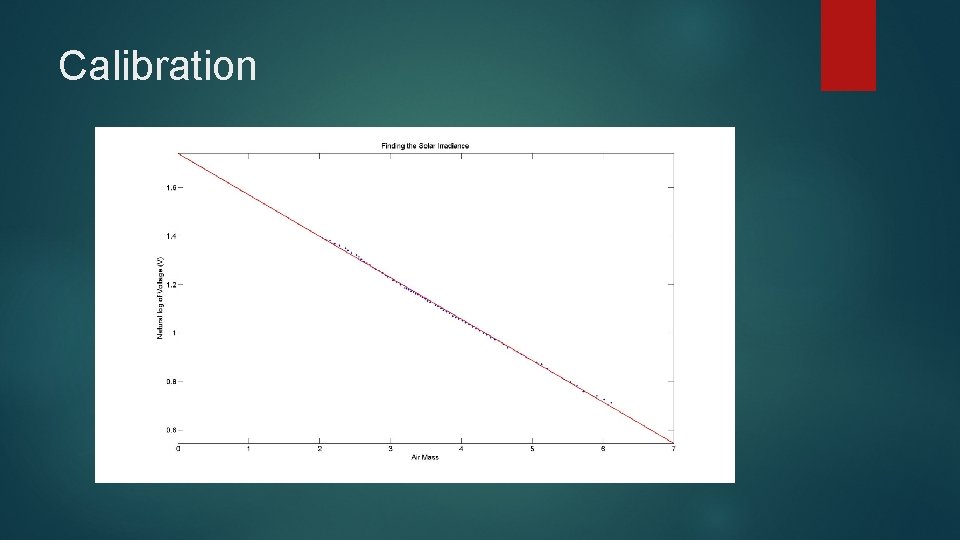
Calibrating the radiometer by plotting voltages � * * Gracias to Joe Shaw for the figure
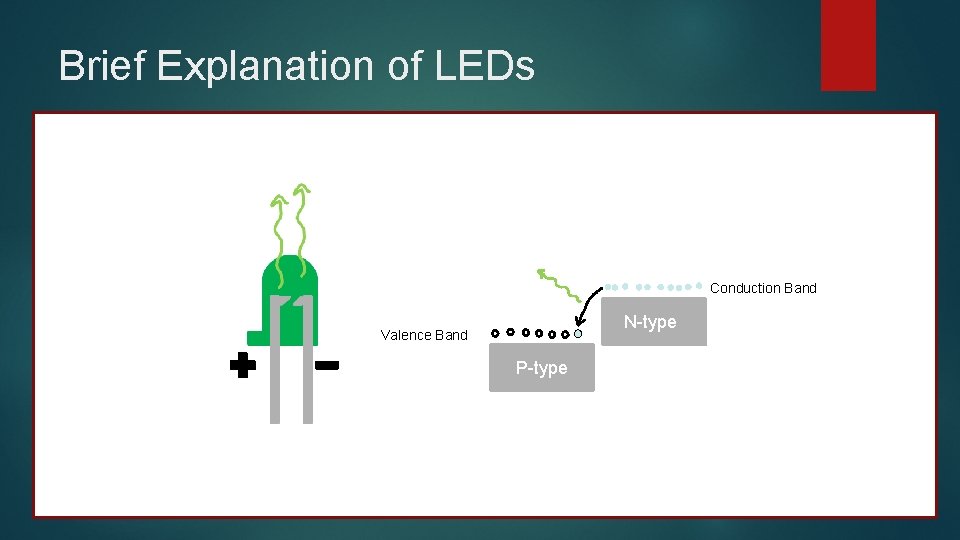
Brief Explanation of LEDs Conduction Band N-type Valence Band P-type
How LSDs work Light. Sucking. Diode.
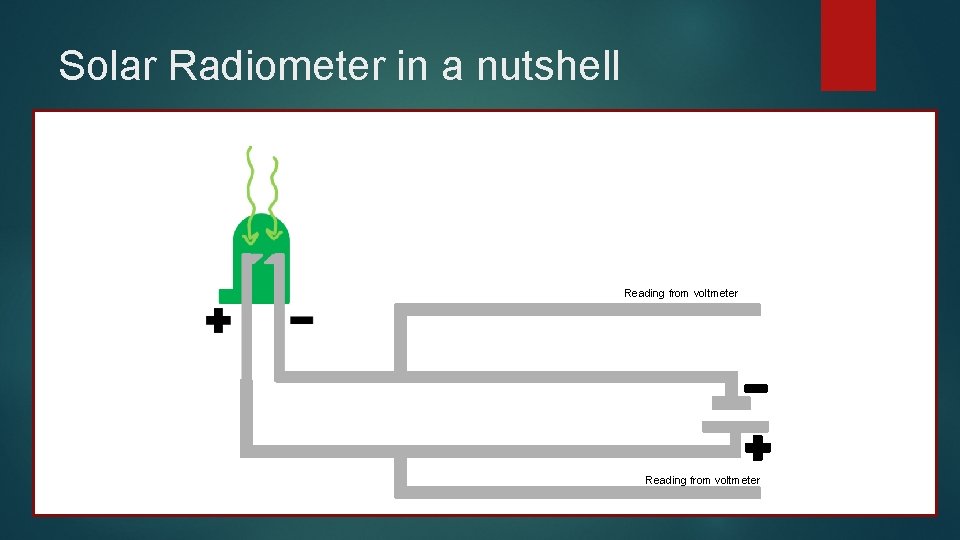
Solar Radiometer in a nutshell Reading from voltmeter
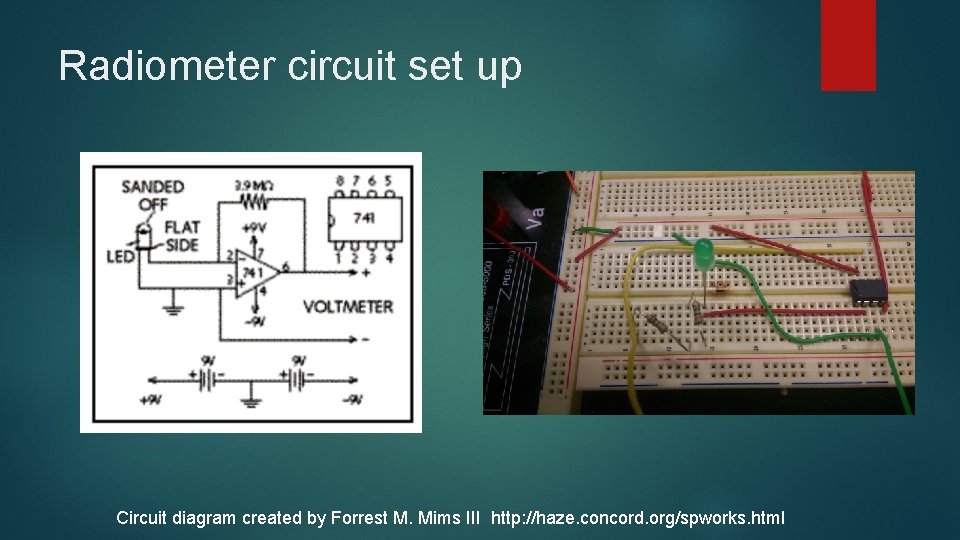
Radiometer circuit set up Circuit diagram created by Forrest M. Mims III http: //haze. concord. org/spworks. html
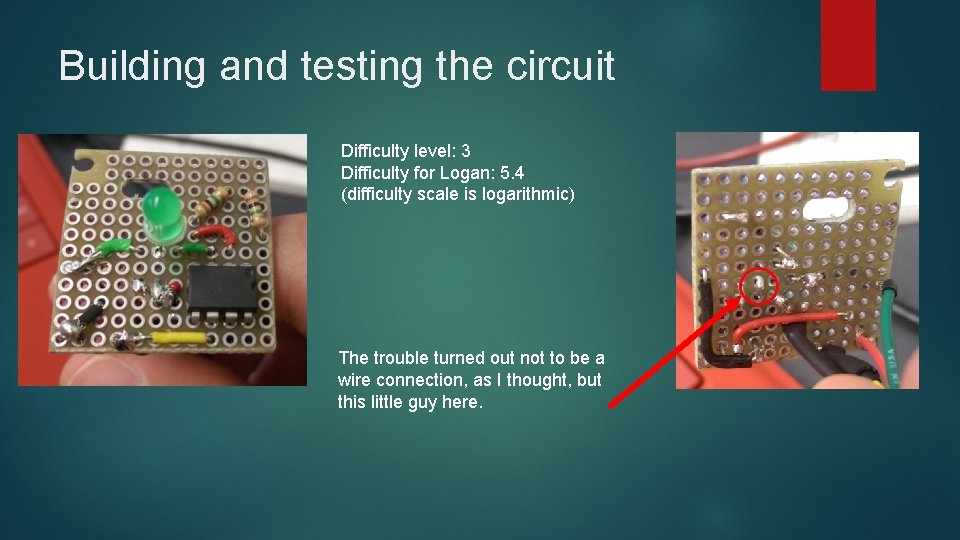
Building and testing the circuit Difficulty level: 3 Difficulty for Logan: 5. 4 (difficulty scale is logarithmic) The trouble turned out not to be a wire connection, as I thought, but this little guy here.
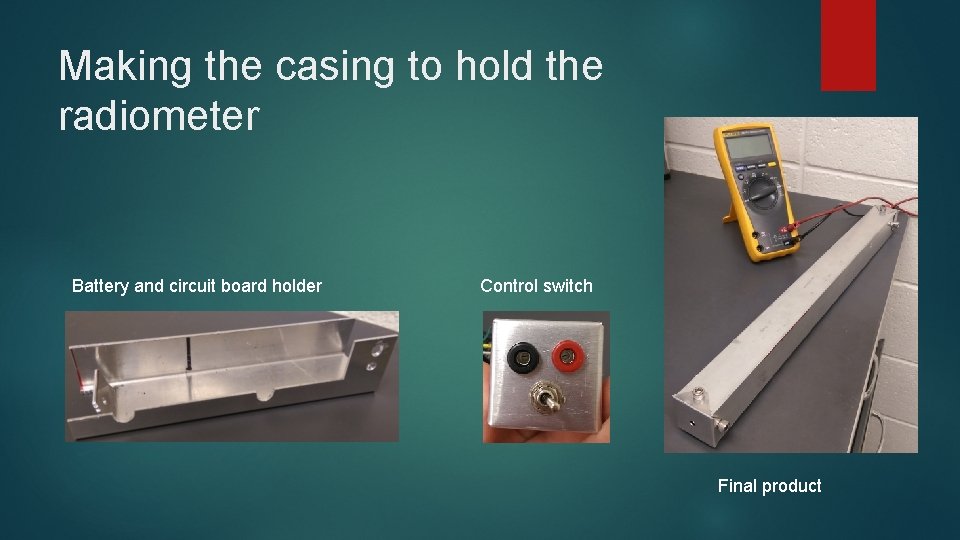
Making the casing to hold the radiometer Battery and circuit board holder Control switch Final product
Taking Readings Pic of Voltage vs Time
Calibration � Picture of log(voltage) vs air mass
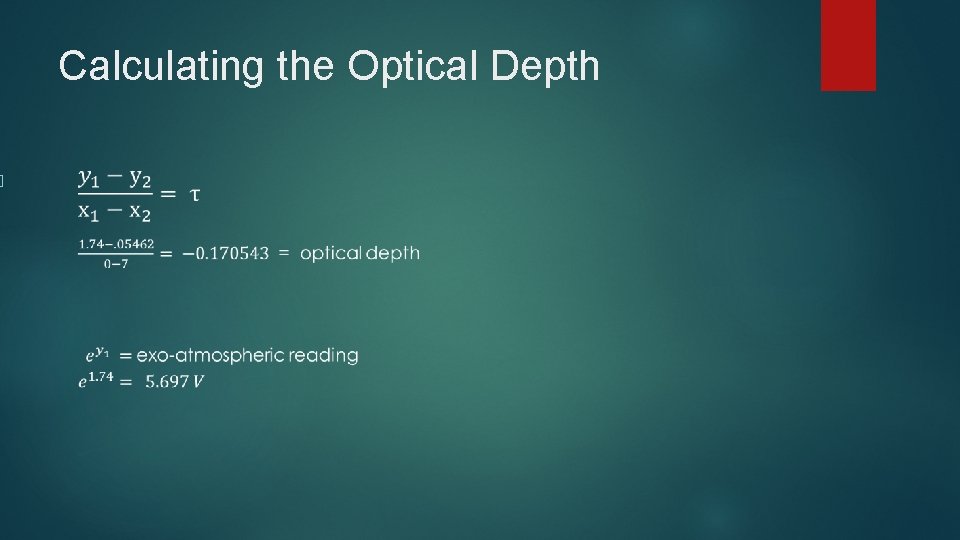
� Calculating the Optical Depth
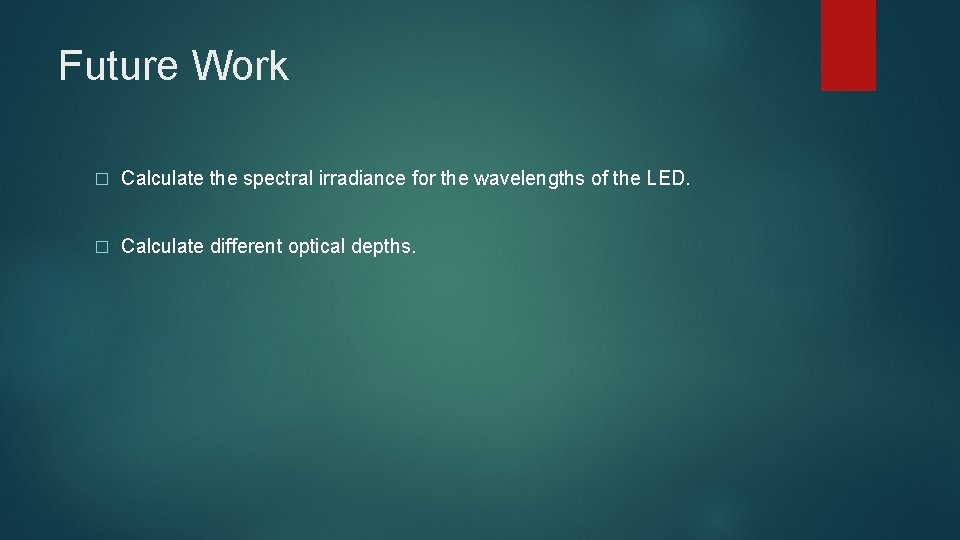
Future Work � Calculate the spectral irradiance for the wavelengths of the LED. � Calculate different optical depths.
Acknowledgements � Thanks to Joe Shaw for teaching us about atmospheric optics and helping through the whole process. � Thanks is also due to Joe’s grad students, Dave and Paul, who helped us on a day to day basis.
Questions? 質問? Preguntas? 问题? Perguntas? ? ﺍﻷﺴﺌﻠﺔ