
Optical Crosstalk in Si PM Nepomuk Otte MaxPlanckInstitut
- Slides: 19
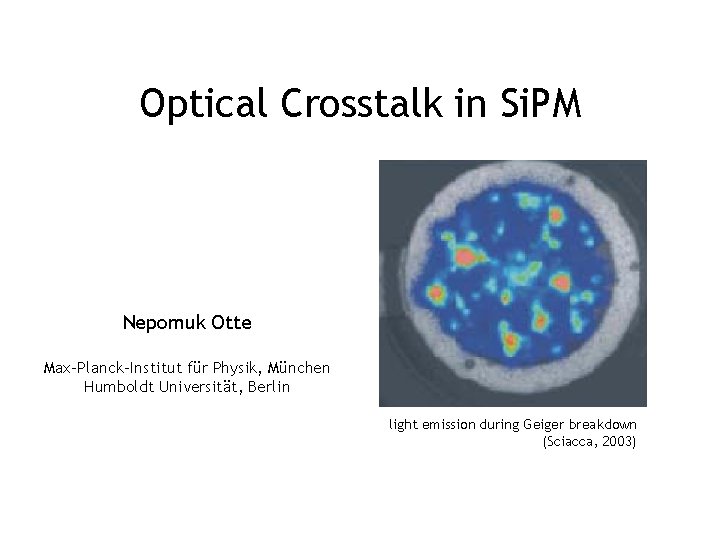
Optical Crosstalk in Si. PM Nepomuk Otte Max-Planck-Institut für Physik, München Humboldt Universität, Berlin light emission during Geiger breakdown (Sciacca, 2003)
Outline • • • optical crosstalk light emission in avalanches what is Si. Si? tuning Si. Si photons responsible for optical crosstalk simulating optical crosstalk in a back side illuminated Si. PM • conclusions
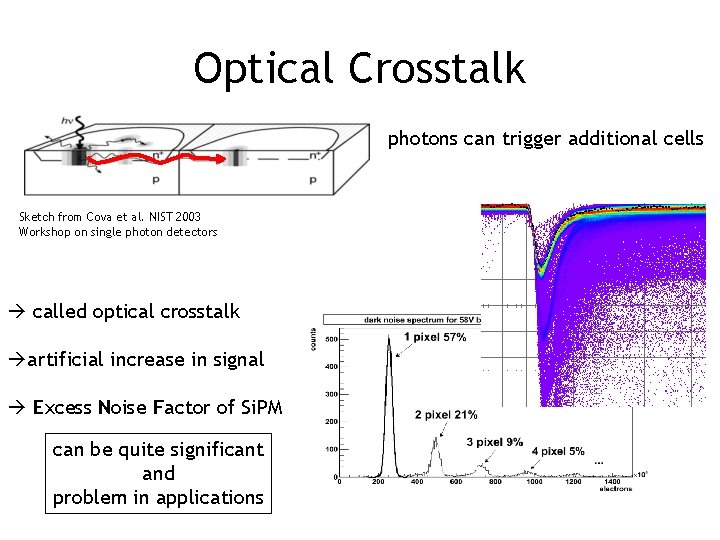
Optical Crosstalk photons can trigger additional cells Sketch from Cova et al. NIST 2003 Workshop on single photon detectors called optical crosstalk artificial increase in signal Excess Noise Factor of Si. PM can be quite significant and problem in applications
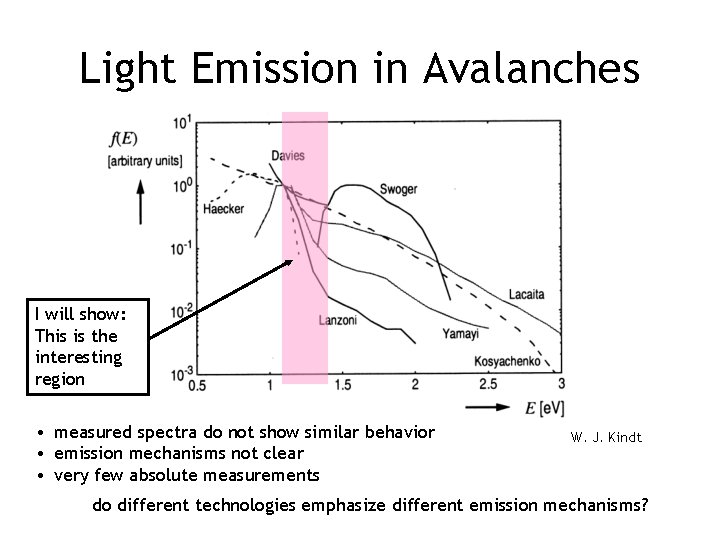
Light Emission in Avalanches I will show: This is the interesting region • measured spectra do not show similar behavior • emission mechanisms not clear • very few absolute measurements W. J. Kindt do different technologies emphasize different emission mechanisms?
Si. PM-Simulator* full geometrical description of a Si. PM: • number of cells • active volume • … simulation of avalanche photons: • black body radiation with free parameters: - temperature - intensity • isotropic emission photoelectrons in non-depleted bulk are subject to simple diffusion model; lifetime of electrons is free parameter *Elisabeth ”Sis(s)i”von Wittelsbach was the empress consort of Emperor Franz Joseph of Austria. She was born 1853 in Munich, Bavaria and murdered 1898 in Geneva, Switzerland
Tuning of Model Parameters Si. Si has three free parameters which need to be determined • temperature of photon spectrum • intensity of photon spectrum / probability that avalanche carrier emits photon • lifetime of electrons in non-depleted bulk
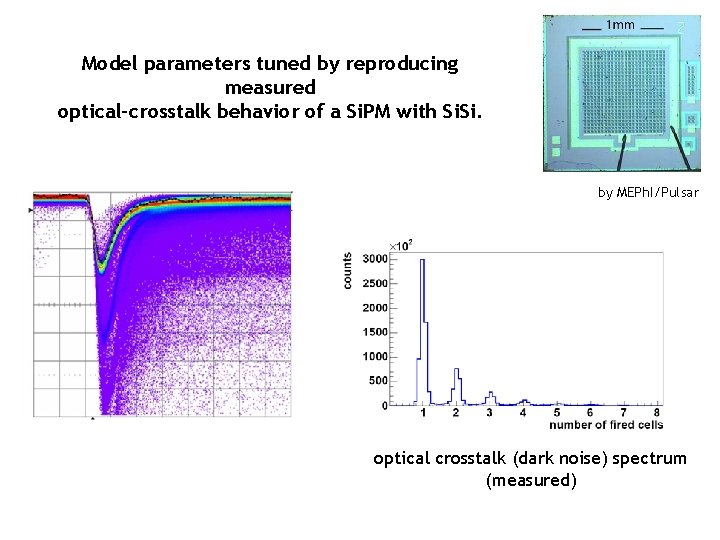
Model parameters tuned by reproducing measured optical-crosstalk behavior of a Si. PM with Si. by MEPh. I/Pulsar optical crosstalk (dark noise) spectrum (measured)
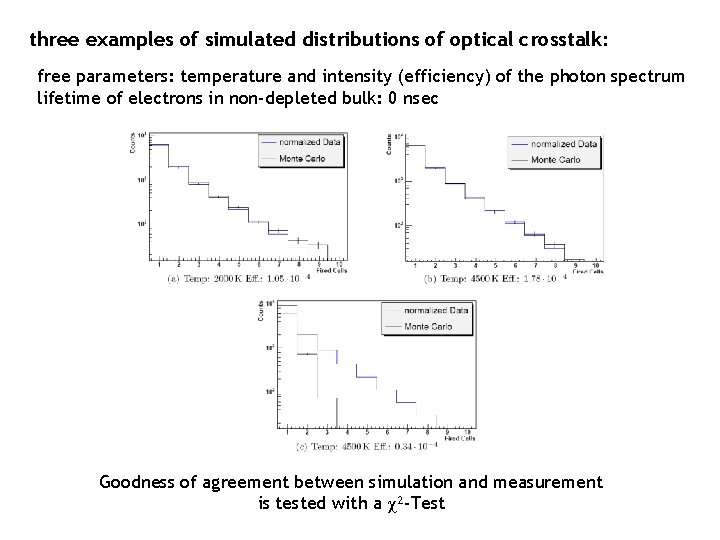
three examples of simulated distributions of optical crosstalk: free parameters: temperature and intensity (efficiency) of the photon spectrum lifetime of electrons in non-depleted bulk: 0 nsec Goodness of agreement between simulation and measurement is tested with a χ²-Test
Simulated optical crosstalk: • Temperature 4500 K • Efficiency >1. 015 e. V: 1. 45 x 10 -4 photons/electron • electron lifetime 60 nsec • integration time 18 nsec simulated and measured crosstalk distribution residuals Residuals can be explained by dark counts which are not simulated in Si. Si
χ² -distribution of a scan in: • temperature of the photon spectrum • intensity of photon spectrum no unique solution of model parameters but log scale
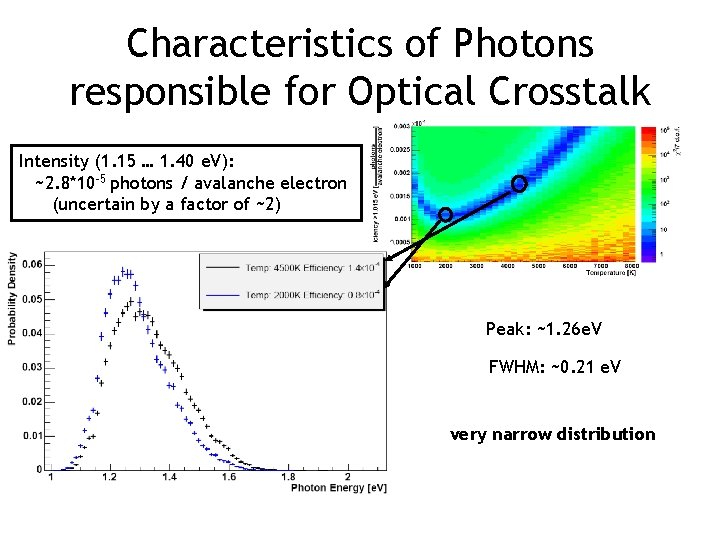
Characteristics of Photons responsible for Optical Crosstalk Intensity (1. 15 … 1. 40 e. V): ~2. 8*10 -5 photons / avalanche electron (uncertain by a factor of ~2) Peak: ~1. 26 e. V FWHM: ~0. 21 e. V very narrow distribution
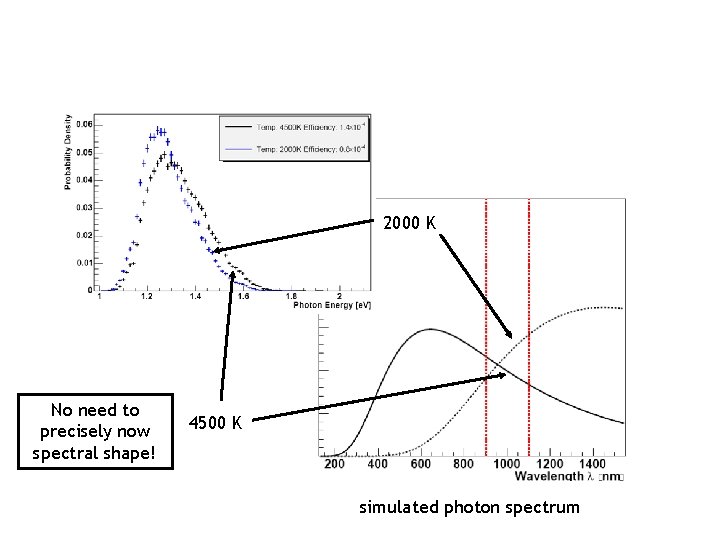
2000 K No need to precisely now spectral shape! 4500 K simulated photon spectrum
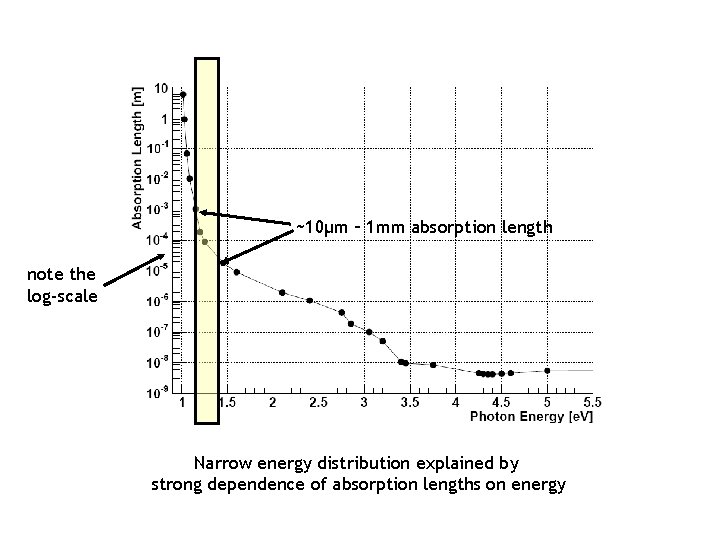
~10µm – 1 mm absorption length note the log-scale Narrow energy distribution explained by strong dependence of absorption lengths on energy
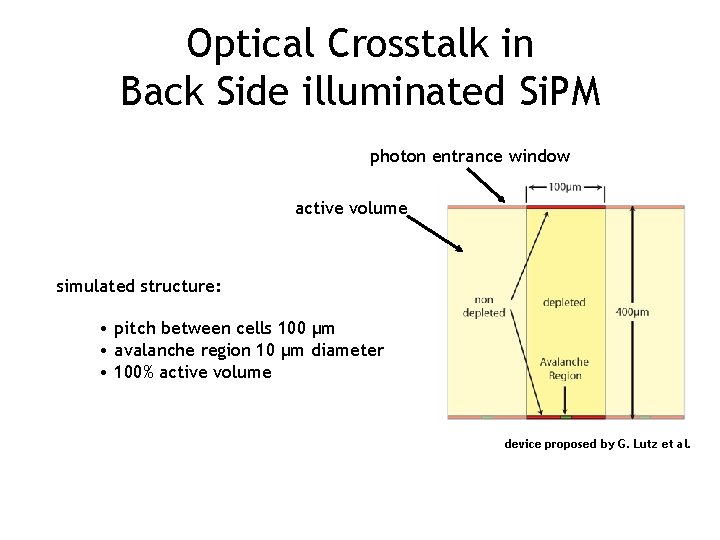
Optical Crosstalk in Back Side illuminated Si. PM photon entrance window active volume simulated structure: • pitch between cells 100 µm • avalanche region 10 µm diameter • 100% active volume device proposed by G. Lutz et al.
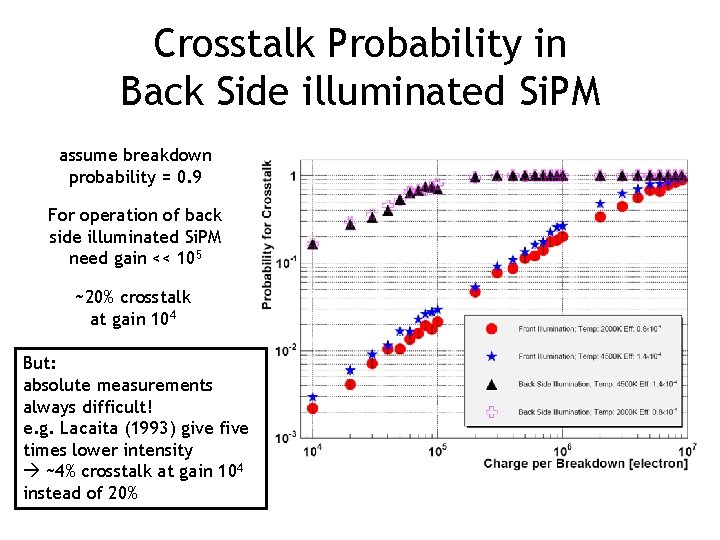
Crosstalk Probability in Back Side illuminated Si. PM assume breakdown probability = 0. 9 For operation of back side illuminated Si. PM need gain << 105 ~20% crosstalk at gain 104 But: absolute measurements always difficult! e. g. Lacaita (1993) give five times lower intensity ~4% crosstalk at gain 104 instead of 20%
Conclusions • Si. Si is a nice tool to study Si. PM • crosstalk behavior well described after tuning three free parameters in the simulation of which two are strongly correlated. • only photons within a narrow energy interval (1. 15 e. V-1. 40 e. V) give rise to optical crosstalk • measured intensity of photons: ~2. 8 • 10 -5 photons / avalanche electron (1. 15 e. V-1. 40 e. V) • optical crosstalk is a serious problem for back side illuminated Si. PM need low gain ~104; but: – inferred photon intensity could be too high
Two Examples of Crosstalk Events
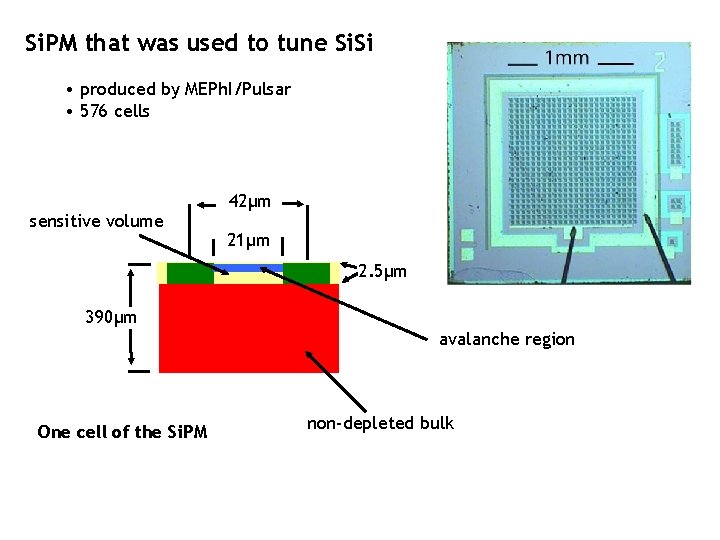
Si. PM that was used to tune Si. Si • produced by MEPh. I/Pulsar • 576 cells sensitive volume 42µm 21µm 2. 5µm 390µm avalanche region One cell of the Si. PM non-depleted bulk
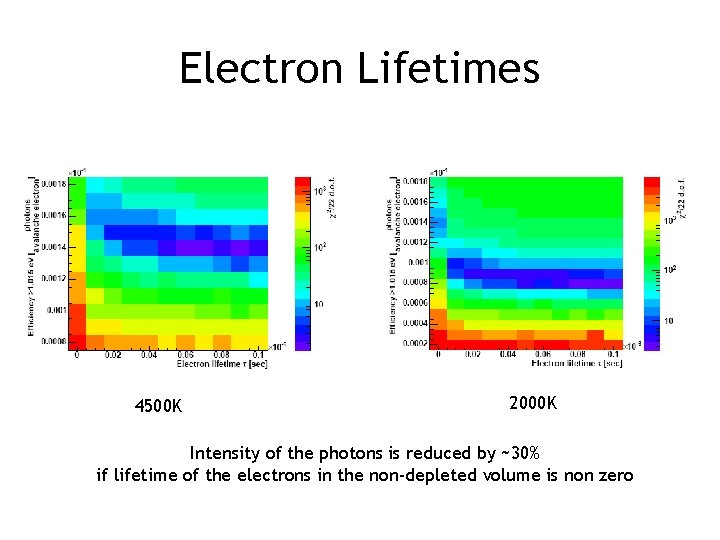
Electron Lifetimes 4500 K 2000 K Intensity of the photons is reduced by ~30% if lifetime of the electrons in the non-depleted volume is non zero