
Optical and Infrared Detectors for Astronomy Basic Principles
Optical and Infrared Detectors for Astronomy Basic Principles to State-of-the-art James W. Beletic NATO/ASI and Euro Summer School Optics in Astrophysics September 16 -27, 2002

Goals of the Detector Course The student should gain an understanding of: 1. The role detectors play in an astronomical observatory Why detectors are the MOST important technology! 2. 3. 4. 5. 6. Fundamental detector physics Standard detector architecture What affects quantum efficiency and readout noise The state-of-the-art today Special applications / areas of research & development
Course Outline Lecture 1: Role of detectors in observatory Detector physics Standard architecture Lecture 2: Quantum efficiency Readout noise Detector imperfections Lecture 3: Manufacturers Bigger devices / Mosaics Electronics Special applications Optical CMOS and CMOS + CCD
Course Outline Lecture 1: Role of detectors in observatory Detector physics Standard architecture
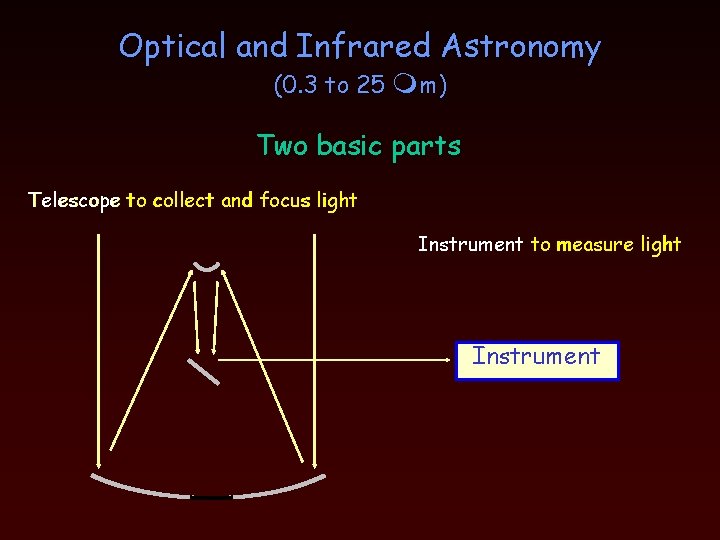
Optical and Infrared Astronomy (0. 3 to 25 m) Two basic parts Telescope to collect and focus light Instrument to measure light Instrument
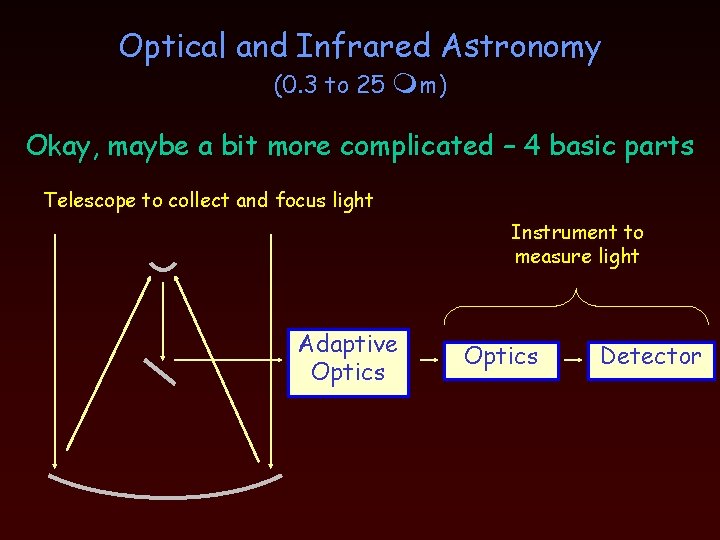
Optical and Infrared Astronomy (0. 3 to 25 m) Okay, maybe a bit more complicated – 4 basic parts Telescope to collect and focus light Instrument to measure light Adaptive Optics Detector
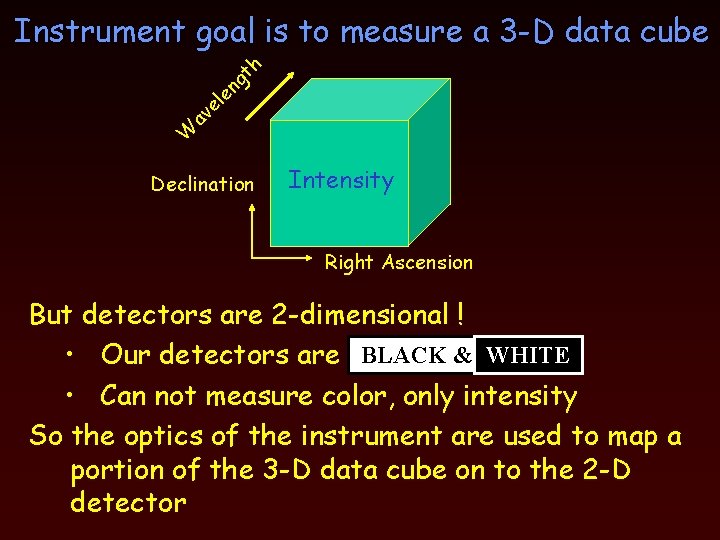
W av el e ng th Instrument goal is to measure a 3 -D data cube Declination Intensity Right Ascension But detectors are 2 -dimensional ! WHITE • Our detectors are BLACK & WHITE • Can not measure color, only intensity So the optics of the instrument are used to map a portion of the 3 -D data cube on to the 2 -D detector

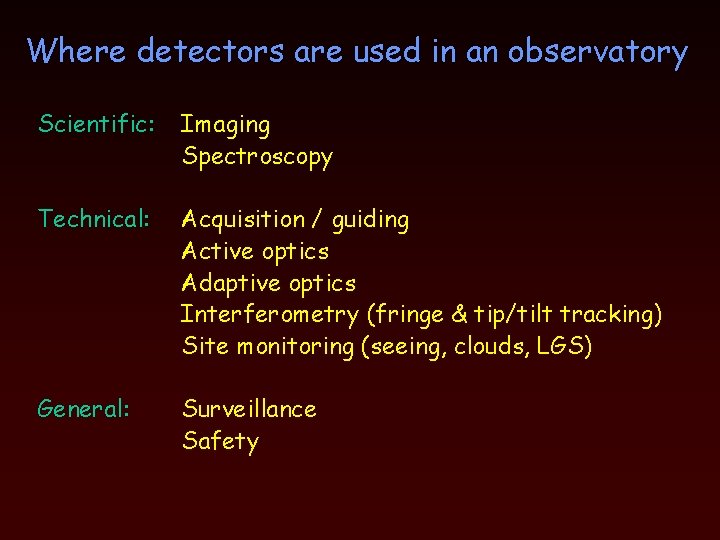
Where detectors are used in an observatory Scientific: Imaging Spectroscopy Technical: Acquisition / guiding Active optics Adaptive optics Interferometry (fringe & tip/tilt tracking) Site monitoring (seeing, clouds, LGS) General: Surveillance Safety
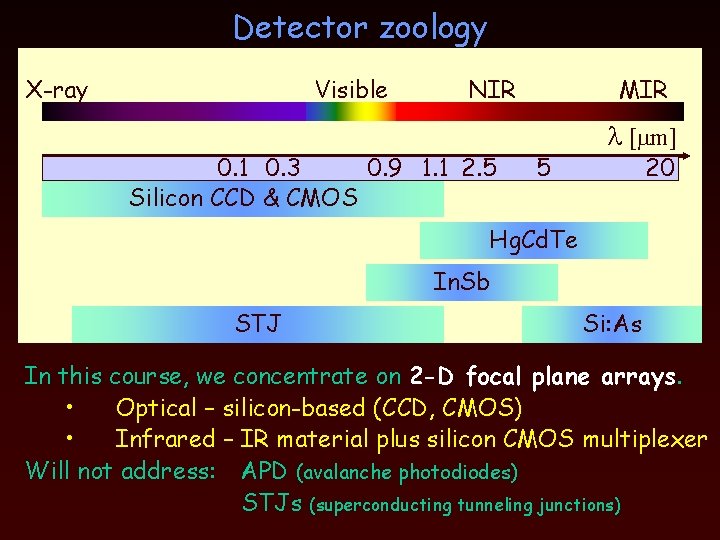
Detector zoology X-ray Visible NIR 0. 1 0. 3 0. 9 1. 1 2. 5 Silicon CCD & CMOS MIR 5 l [mm] 20 Hg. Cd. Te In. Sb STJ Si: As In this course, we concentrate on 2 -D focal plane arrays. • Optical – silicon-based (CCD, CMOS) • Infrared – IR material plus silicon CMOS multiplexer Will not address: APD (avalanche photodiodes) STJs (superconducting tunneling junctions)
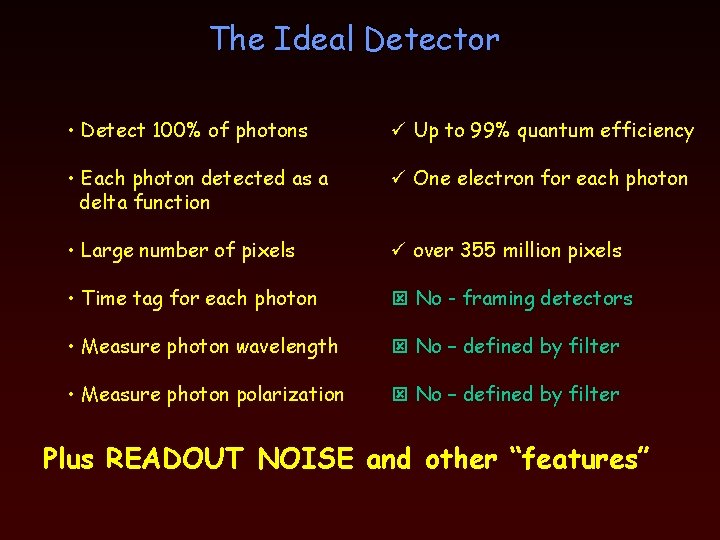
The Ideal Detector • Detect 100% of photons ü Up to 99% quantum efficiency • Each photon detected as a delta function ü One electron for each photon • Large number of pixels ü over 355 million pixels • Time tag for each photon ý No - framing detectors • Measure photon wavelength ý No – defined by filter • Measure photon polarization ý No – defined by filter Plus READOUT NOISE and other “features”
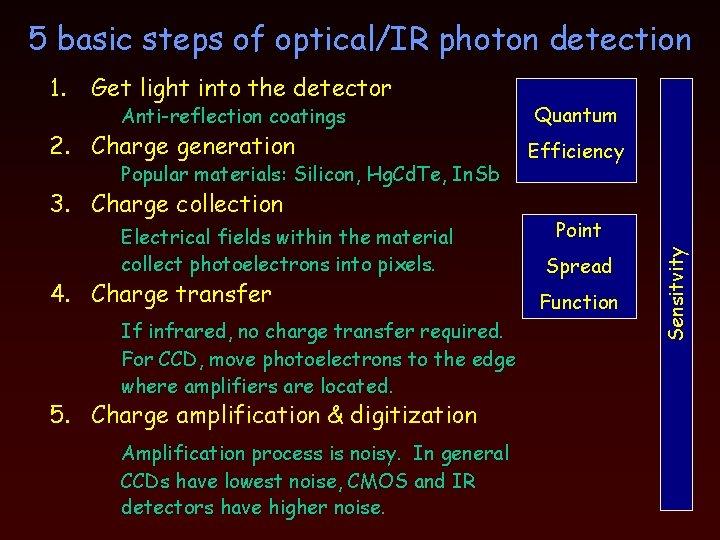
5 basic steps of optical/IR photon detection Get light into the detector Anti-reflection coatings 2. Charge generation Popular materials: Silicon, Hg. Cd. Te, In. Sb 3. Charge collection Electrical fields within the material collect photoelectrons into pixels. 4. Charge transfer If infrared, no charge transfer required. For CCD, move photoelectrons to the edge where amplifiers are located. 5. Charge amplification & digitization Amplification process is noisy. In general CCDs have lowest noise, CMOS and IR detectors have higher noise. Quantum Efficiency Point Spread Function Sensitvity 1.
Take notice • Optical and IR focal plane arrays are similar in many ways – • But optical and IR detectors are different in some important ways – • I will combine information about optical and IR detectors as much as possible. I will try to be careful to differentiate when necessary. Please ask if you are ever confused whether the subject is optical and/or IR detectors.
Step 1: Get light into the detector Anti-reflection coatings • AR coatings will be discussed in lecture 2 when quantum efficiency is presented.
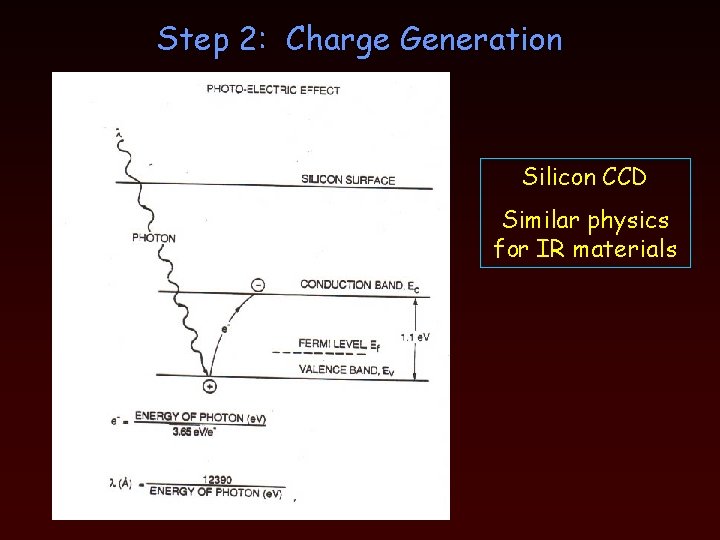
Step 2: Charge Generation Silicon CCD Similar physics for IR materials
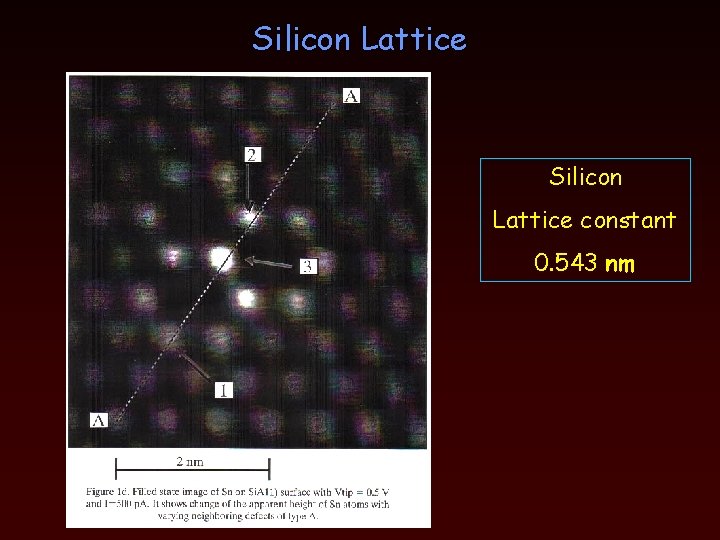
Silicon Lattice constant 0. 543 nm
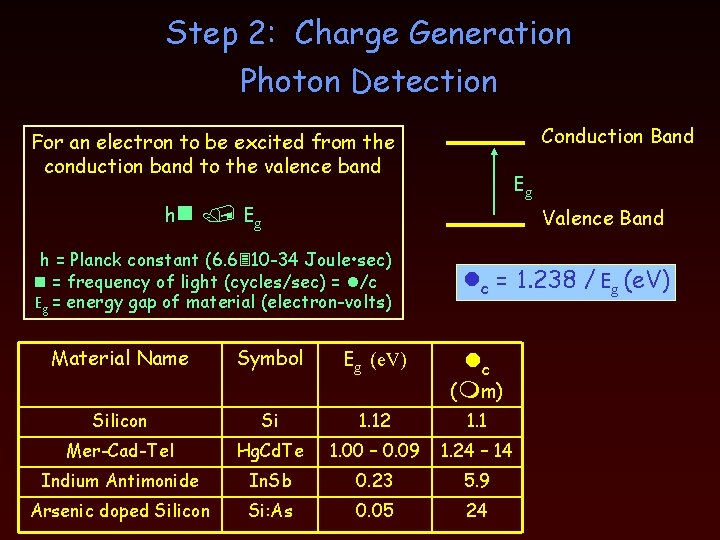
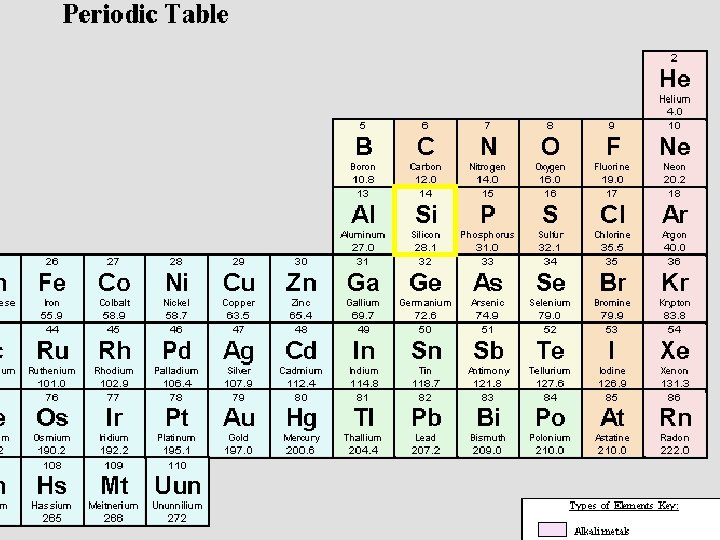
Step 2: Charge Generation Photon Detection Conduction Band For an electron to be excited from the conduction band to the valence band h Eg Valence Band h = Planck constant (6. 6 10 -34 Joule • sec) = frequency of light (cycles/sec) = /c Eg = energy gap of material (electron-volts) c = 1. 238 / Eg (e. V) Material Name Symbol Eg (e. V) c ( m) Silicon Si 1. 12 1. 1 Mer-Cad-Tel Hg. Cd. Te 1. 00 – 0. 09 1. 24 – 14 Indium Antimonide In. Sb 0. 23 5. 9 Arsenic doped Silicon Si: As 0. 05 24
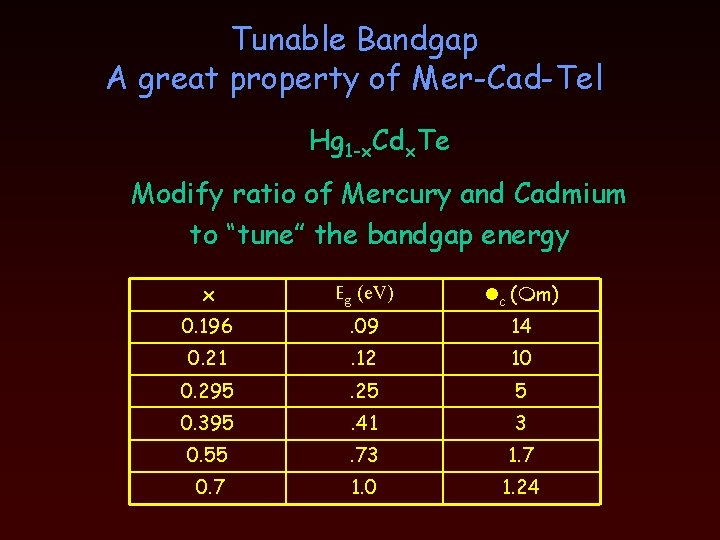
Tunable Bandgap A great property of Mer-Cad-Tel Hg 1 -x. Cdx. Te Modify ratio of Mercury and Cadmium to “tune” the bandgap energy x Eg (e. V) c ( m) 0. 196 . 09 14 0. 21 . 12 10 0. 295 . 25 5 0. 395 . 41 3 0. 55 . 73 1. 7 0. 7 1. 0 1. 24
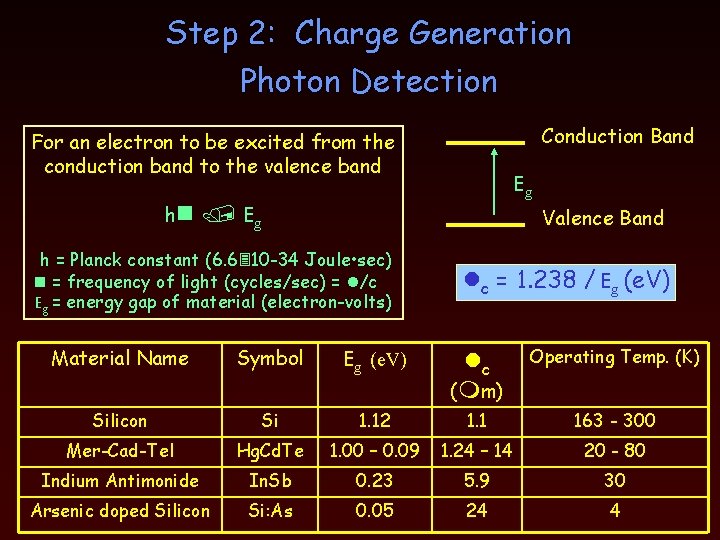
Step 2: Charge Generation Photon Detection Conduction Band For an electron to be excited from the conduction band to the valence band h Eg Valence Band h = Planck constant (6. 6 10 -34 Joule • sec) = frequency of light (cycles/sec) = /c Eg = energy gap of material (electron-volts) c = 1. 238 / Eg (e. V) Material Name Symbol Eg (e. V) c ( m) Operating Temp. (K) Silicon Si 1. 12 1. 1 163 - 300 Mer-Cad-Tel Hg. Cd. Te 1. 00 – 0. 09 1. 24 – 14 20 - 80 Indium Antimonide In. Sb 0. 23 5. 9 30 Arsenic doped Silicon Si: As 0. 05 24 4
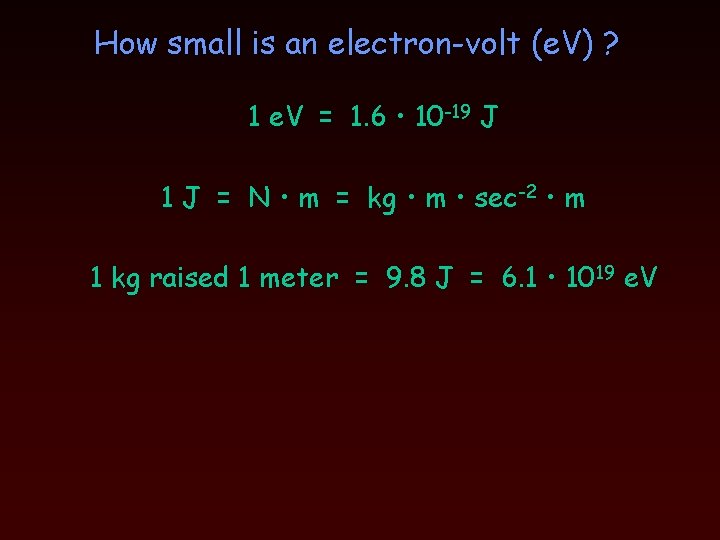
How small is an electron-volt (e. V) ? 1 e. V = 1. 6 • 10 -19 J 1 J = N • m = kg • m • sec-2 • m 1 kg raised 1 meter = 9. 8 J = 6. 1 • 1019 e. V
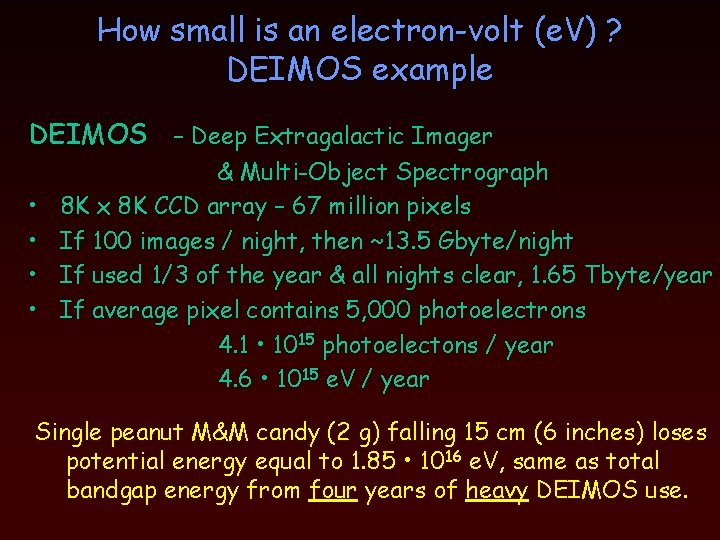
How small is an electron-volt (e. V) ? DEIMOS example DEIMOS – Deep Extragalactic Imager • • & Multi-Object Spectrograph 8 K x 8 K CCD array – 67 million pixels If 100 images / night, then ~13. 5 Gbyte/night If used 1/3 of the year & all nights clear, 1. 65 Tbyte/year If average pixel contains 5, 000 photoelectrons 4. 1 • 1015 photoelectons / year 4. 6 • 1015 e. V / year Single peanut M&M candy (2 g) falling 15 cm (6 inches) loses potential energy equal to 1. 85 • 1016 e. V, same as total bandgap energy from four years of heavy DEIMOS use.
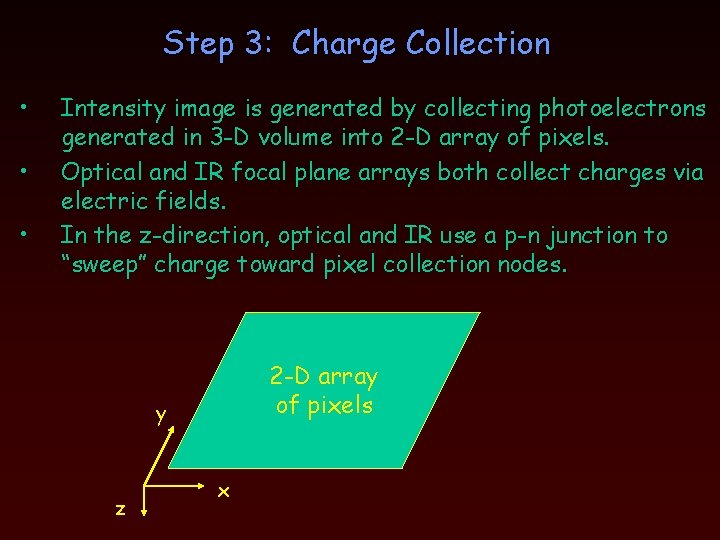
Step 3: Charge Collection • • • Intensity image is generated by collecting photoelectrons generated in 3 -D volume into 2 -D array of pixels. Optical and IR focal plane arrays both collect charges via electric fields. In the z-direction, optical and IR use a p-n junction to “sweep” charge toward pixel collection nodes. 2 -D array of pixels y z x
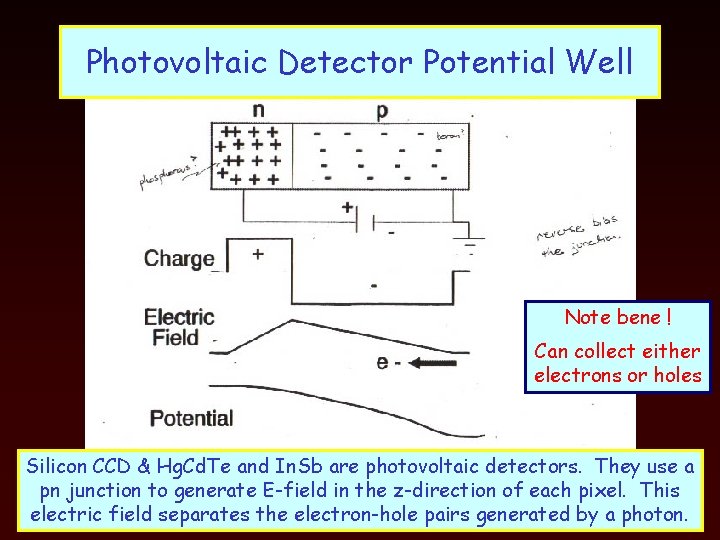
Photovoltaic Detector Potential Well Note bene ! Can collect either electrons or holes Silicon CCD & Hg. Cd. Te and In. Sb are photovoltaic detectors. They use a pn junction to generate E-field in the z-direction of each pixel. This electric field separates the electron-hole pairs generated by a photon.
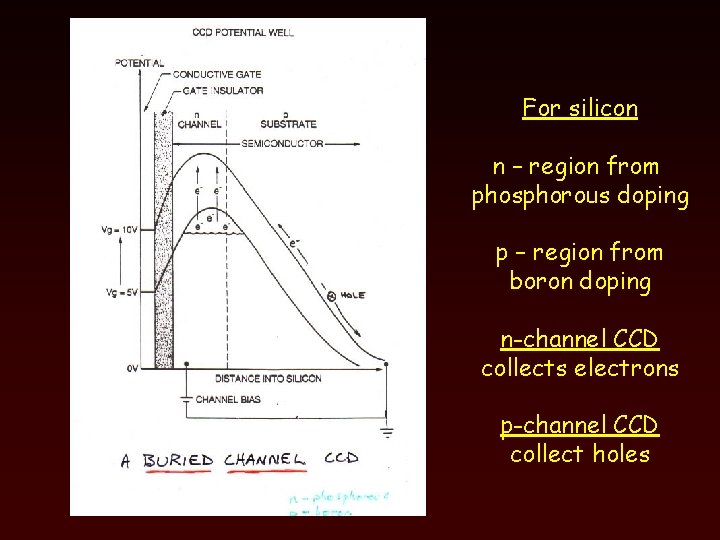
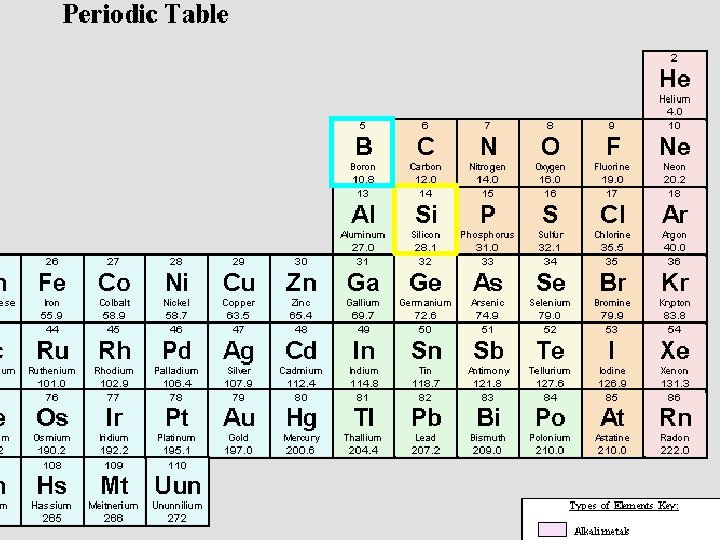
For silicon n – region from phosphorous doping p – region from boron doping n-channel CCD collects electrons p-channel CCD collect holes
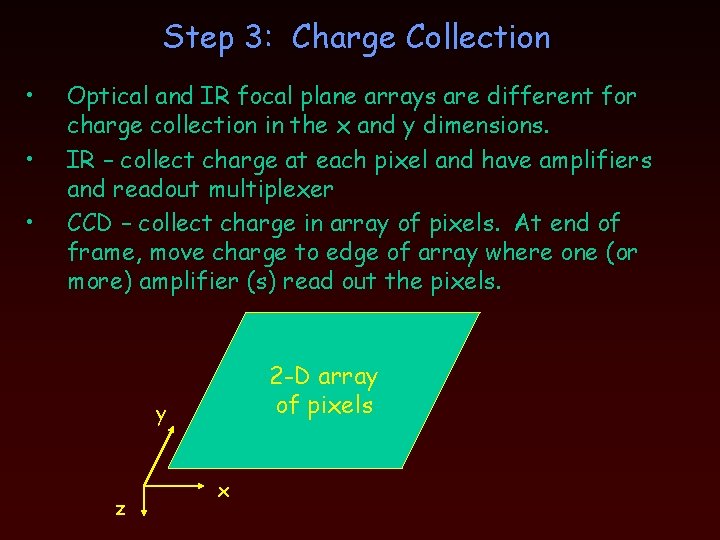
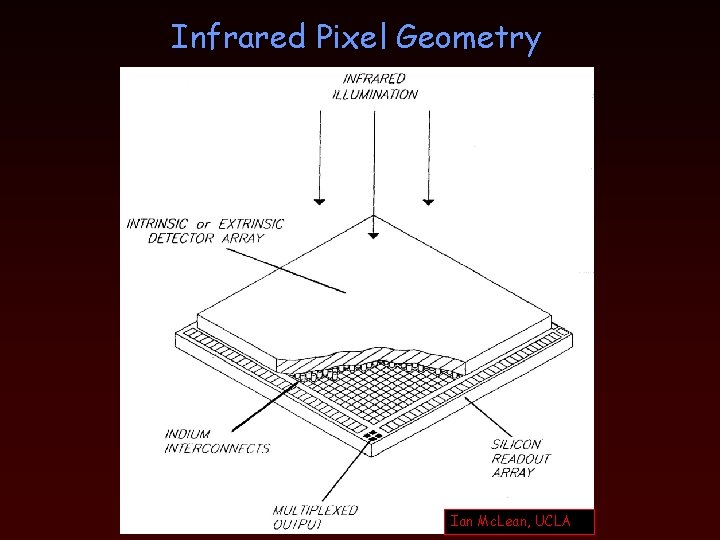
Step 3: Charge Collection • • • Optical and IR focal plane arrays are different for charge collection in the x and y dimensions. IR – collect charge at each pixel and have amplifiers and readout multiplexer CCD – collect charge in array of pixels. At end of frame, move charge to edge of array where one (or more) amplifier (s) read out the pixels. 2 -D array of pixels y z x
Infrared Pixel Geometry Ian Mc. Lean, UCLA
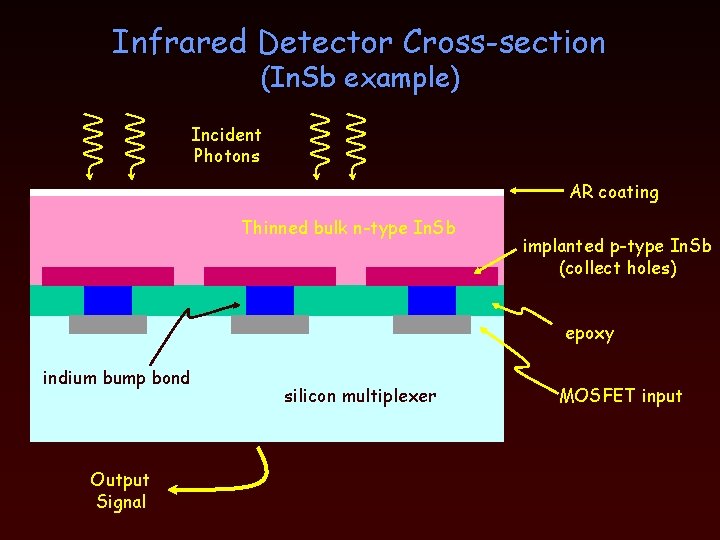
Infrared Detector Cross-section (In. Sb example) Incident Photons AR coating Thinned bulk n-type In. Sb implanted p-type In. Sb (collect holes) epoxy indium bump bond Output Signal silicon multiplexer MOSFET input
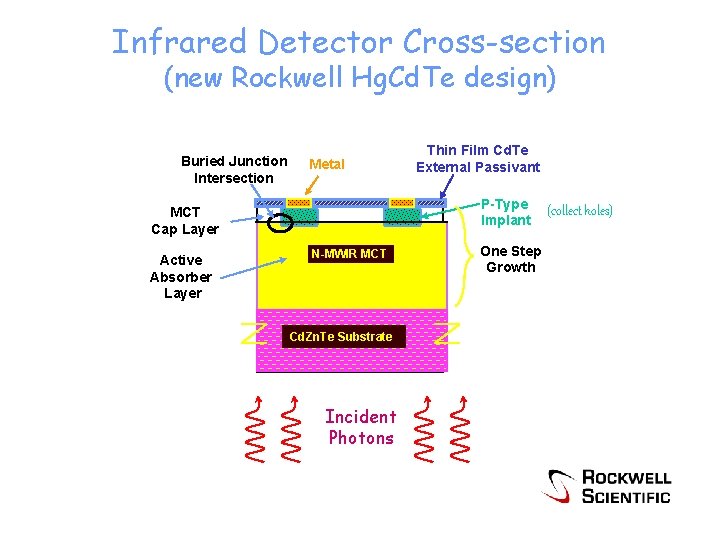
Infrared Detector Cross-section (new Rockwell Hg. Cd. Te design) Buried Junction Intersection Metal P-Type Implant MCT Cap Layer Active Absorber Layer Thin Film Cd. Te External Passivant N-MWIR MCT Cd. Zn. Te Substrate Incident Photons One Step Growth (collect holes)
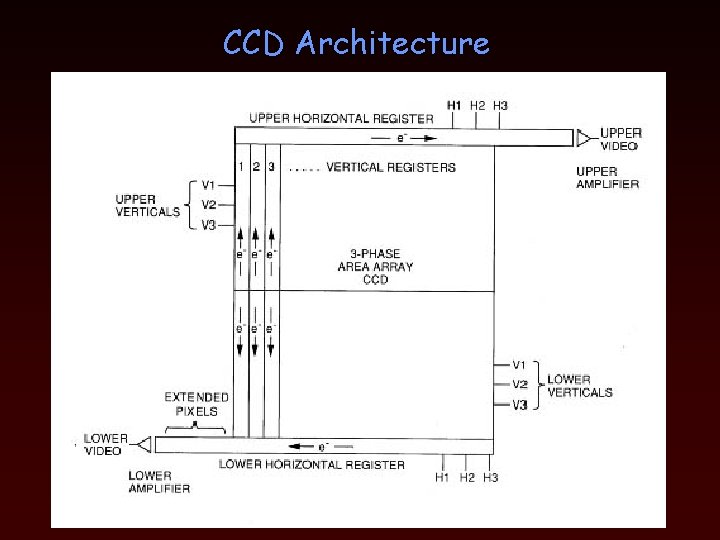
CCD Architecture
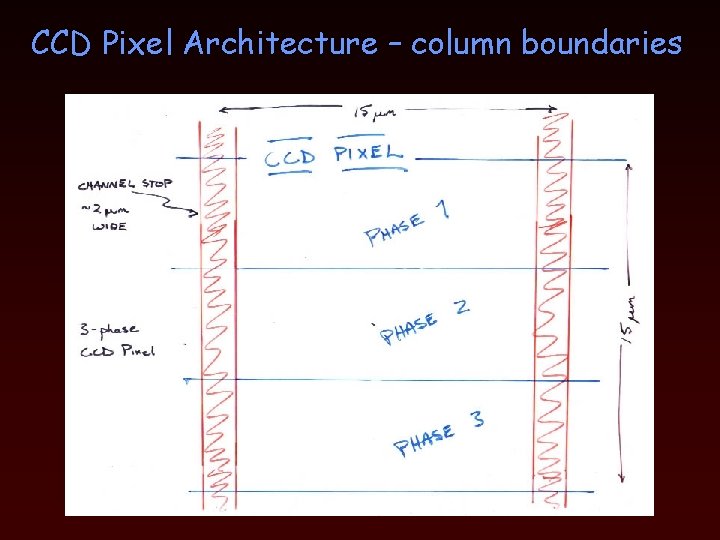
CCD Pixel Architecture – column boundaries
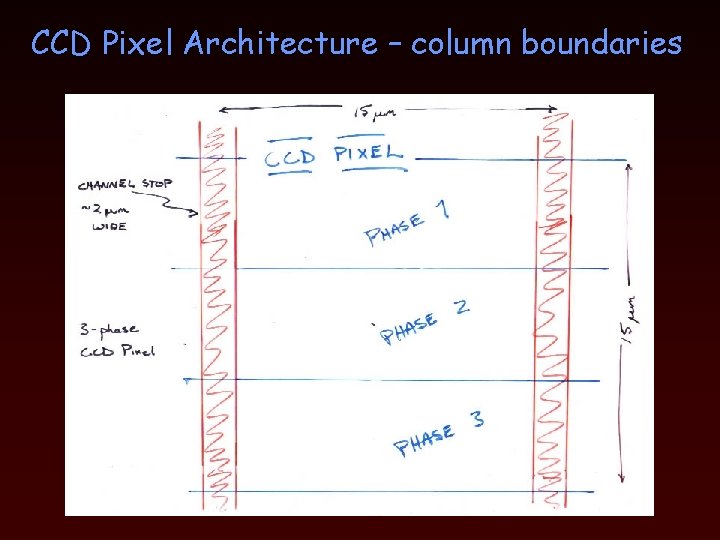
CCD Pixel Architecture – column boundaries
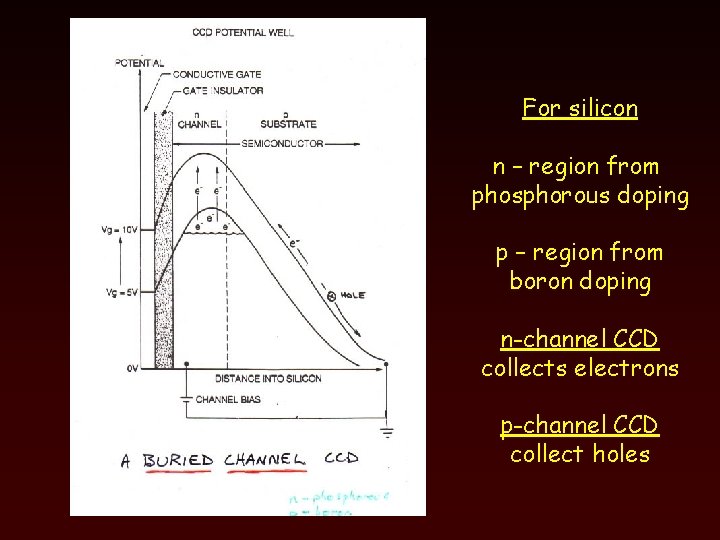
For silicon n – region from phosphorous doping p – region from boron doping n-channel CCD collects electrons p-channel CCD collect holes
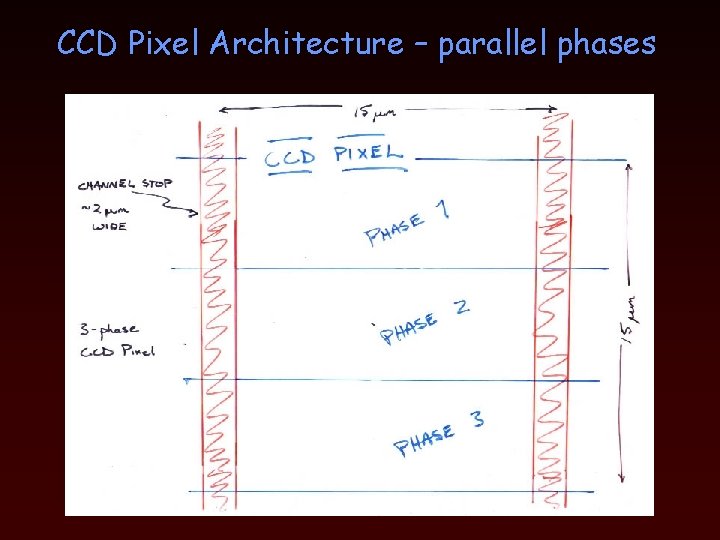
CCD Pixel Architecture – parallel phases
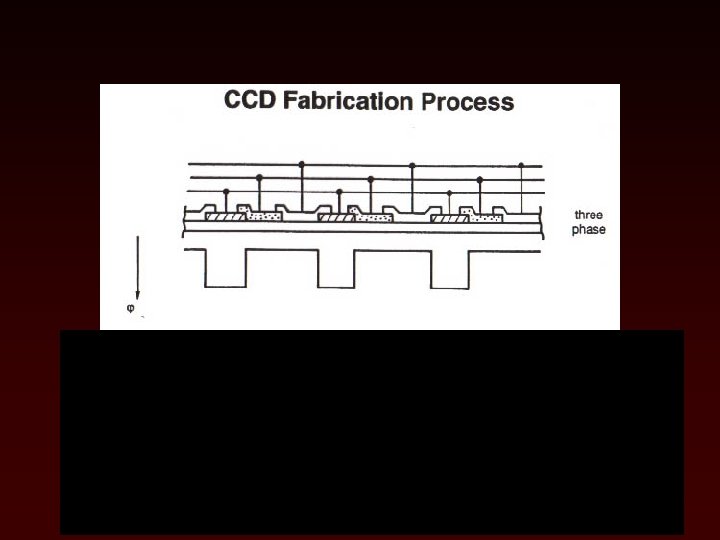
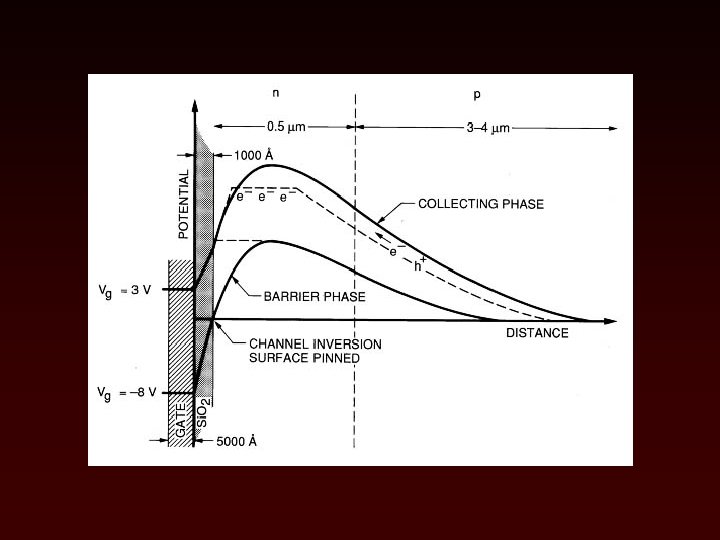
Step 4: Charge transfer • • IR detectors have amplifier at each pixel, so no need for charge transfer. CCDs must move charge across the focal plane array to the readout amplifier.

CCD Architecture
CCD Charge transfer The good, the bad & the ugly • • “Bad & ugly” aspects of charge transfer – – – Takes time Can blur image if no shutter used Can lose / blur charge during move Can bleed charge from saturated pixel up/down column Can have a blocked column Can have a hot pixel that releases charge into all passing pixels – – Can bin charge “on-chip” – noiseless process Can charge shift for tip/tilt correction or to eliminate systematic errors (“va-et-vient”, “nod-and-shuffle”) Can build special purpose designs that integrate different areas depending on application (curvature wavefront sensing, Shack. Hartmann laser guide star wavefront sensing) Can do drift scanning “Good” aspects of charge transfer – – – Have space to build a great low noise amplifier !
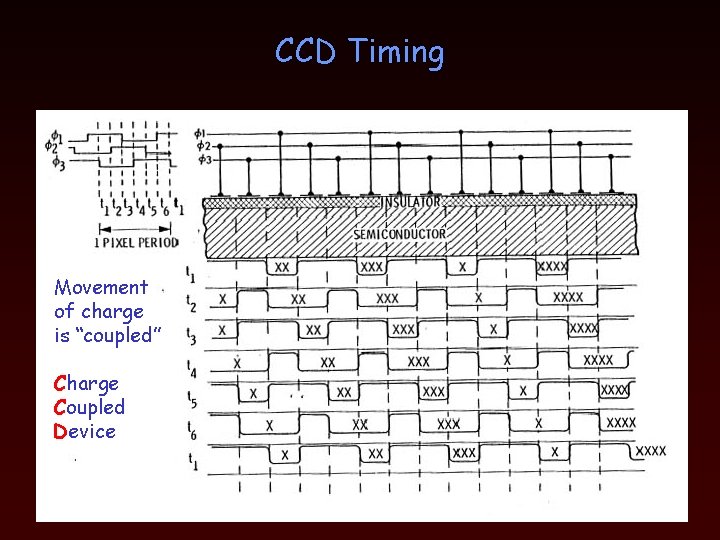
CCD Timing Movement of charge is “coupled” Charge Coupled Device
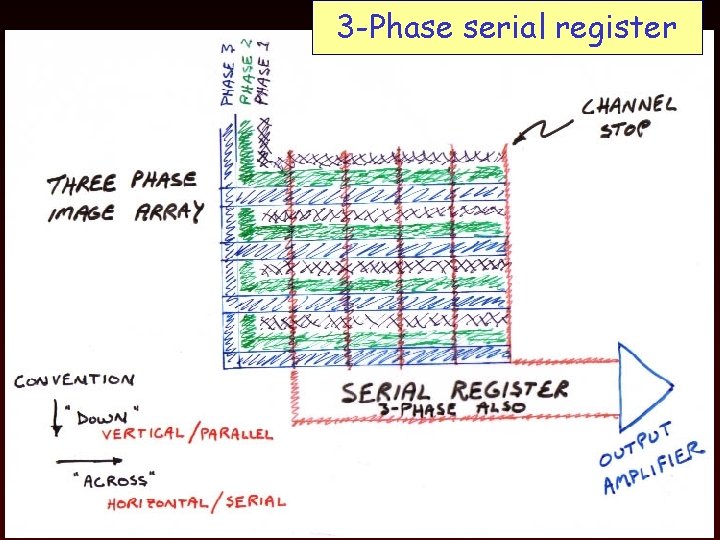
3 -Phase serial register
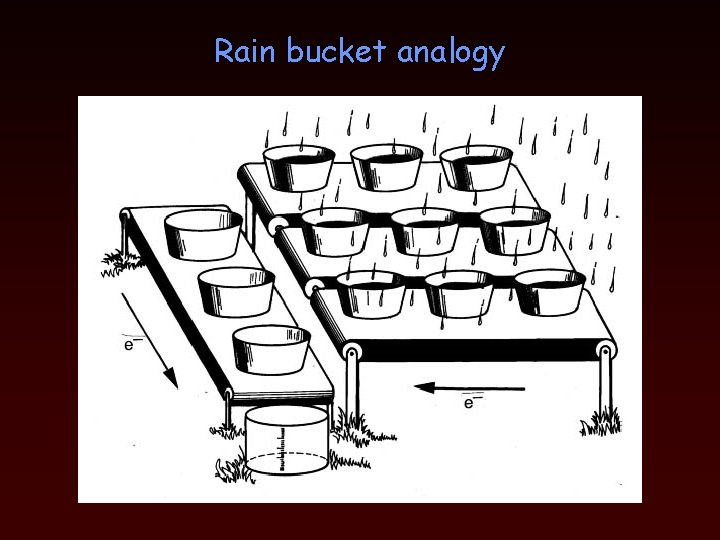
Rain bucket analogy
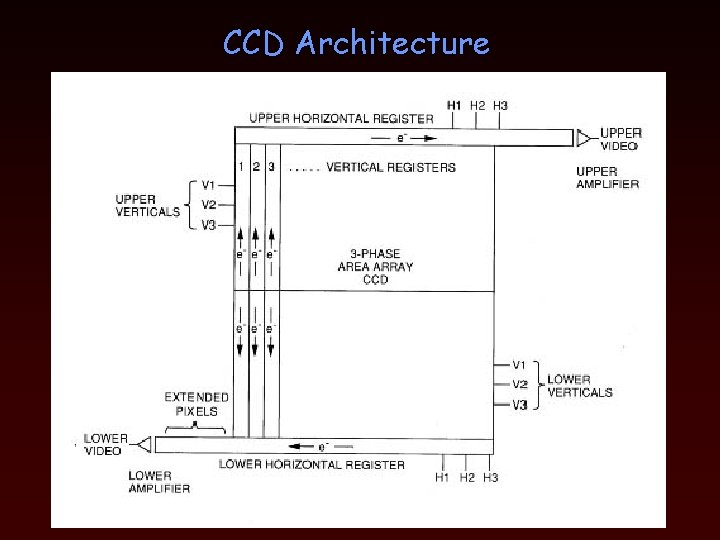
CCD Architecture
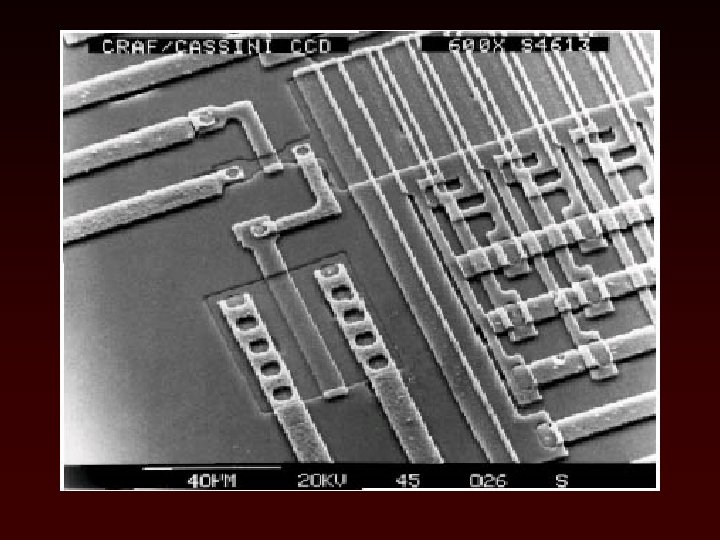
Step 5: Charge amplification • • • Similar for CCDs and IR detectors. Both use MOSFETs (metal-oxide-silicon field effect transistors) to amplify the signal. Show CCD amplifier first and then relate to IR pixel.
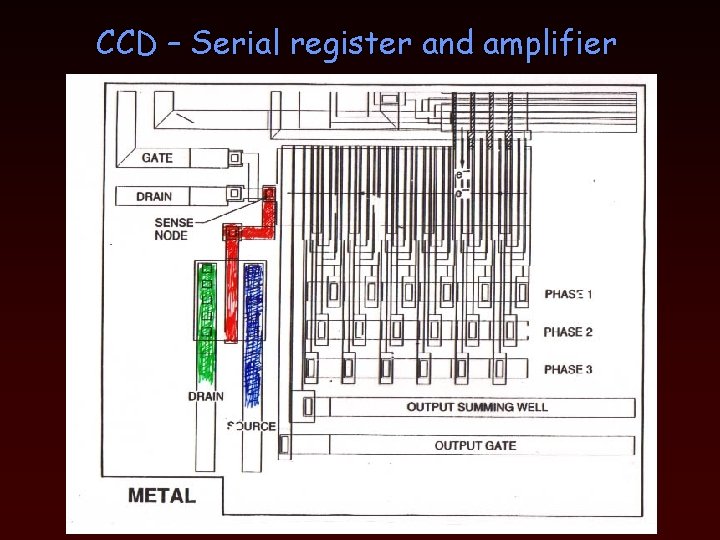
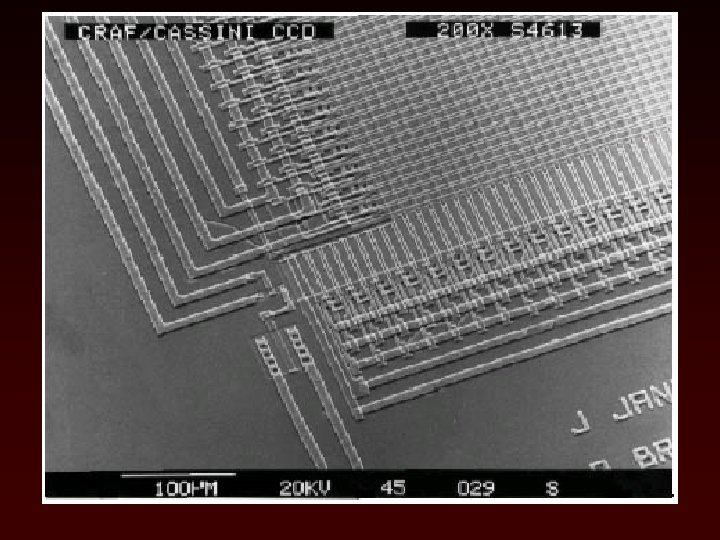
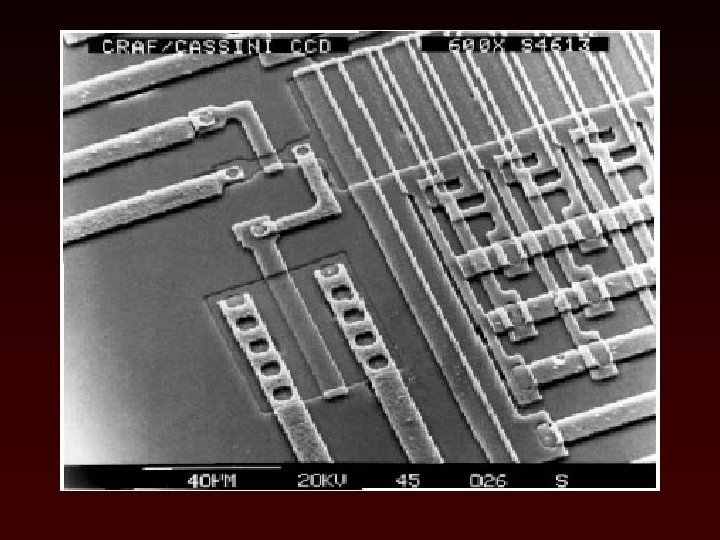
CCD – Serial register and amplifier
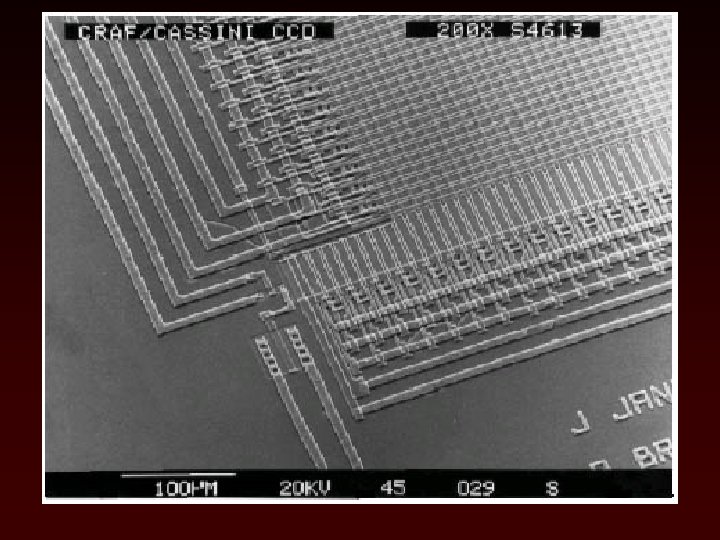
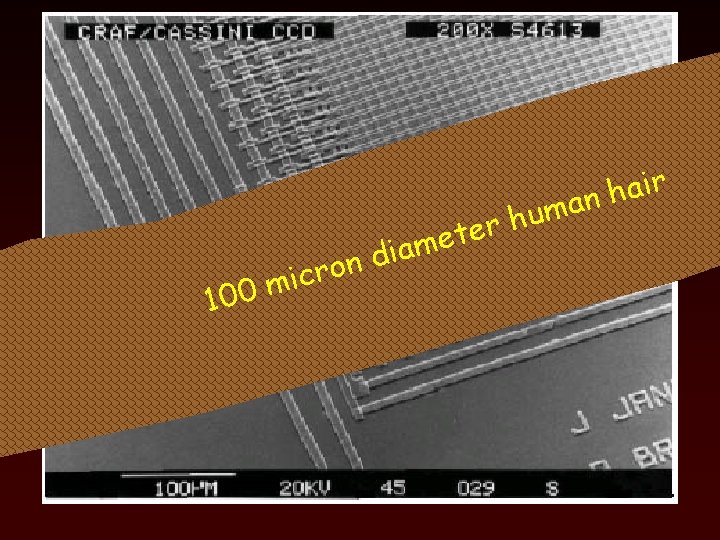
10 o r c i 0 m e m a i nd m u h ter r i a h an
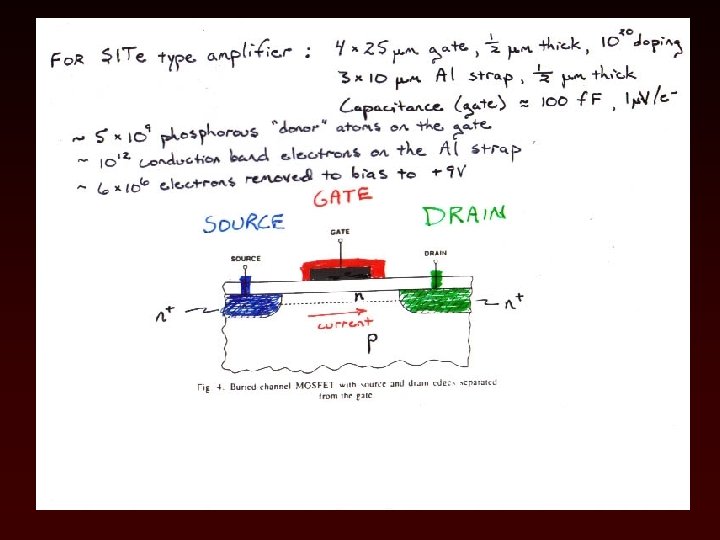
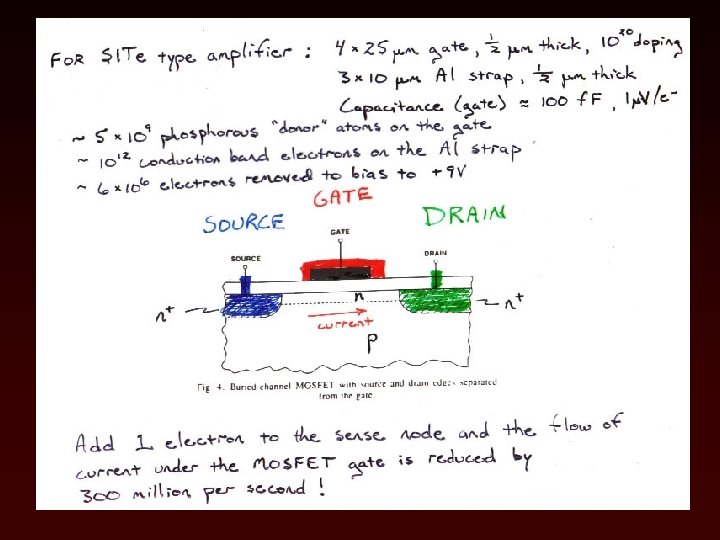
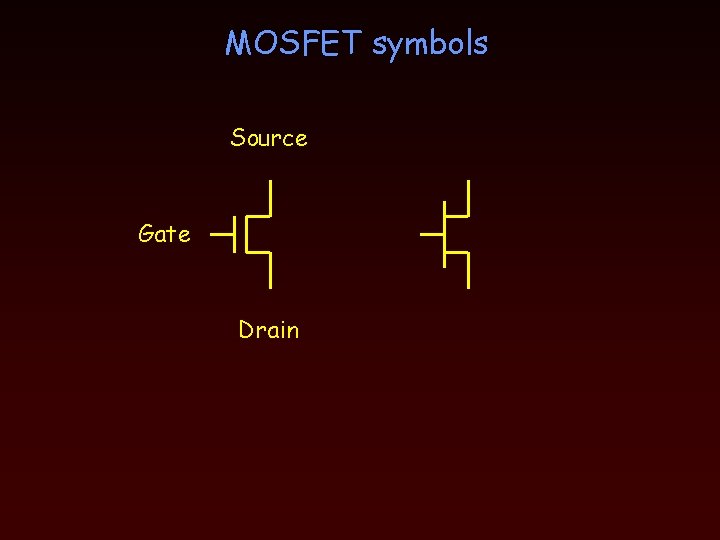
MOSFET symbols Source Gate Drain
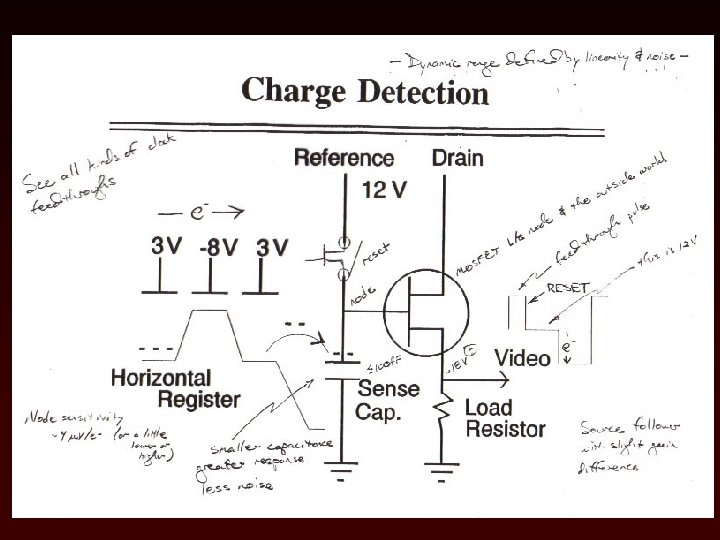
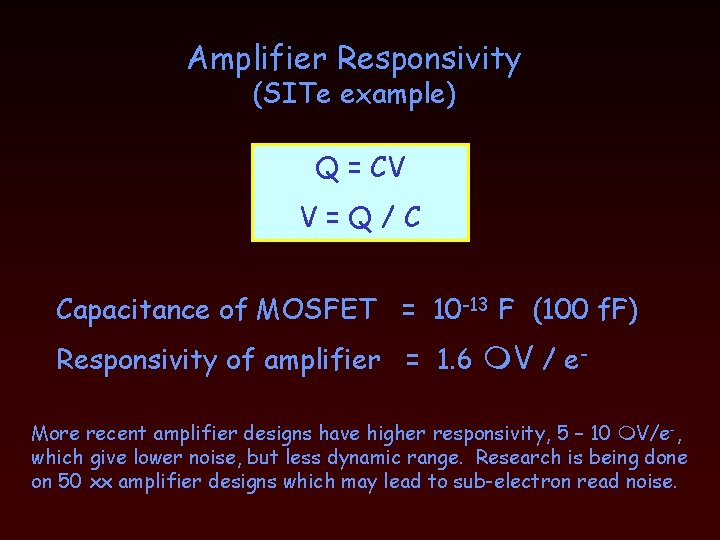
Amplifier Responsivity (SITe example) Q = CV V=Q/C Capacitance of MOSFET = 10 -13 F (100 f. F) Responsivity of amplifier = 1. 6 V / e. More recent amplifier designs have higher responsivity, 5 – 10 V/e-, which give lower noise, but less dynamic range. Research is being done on 50 xx amplifier designs which may lead to sub-electron read noise.
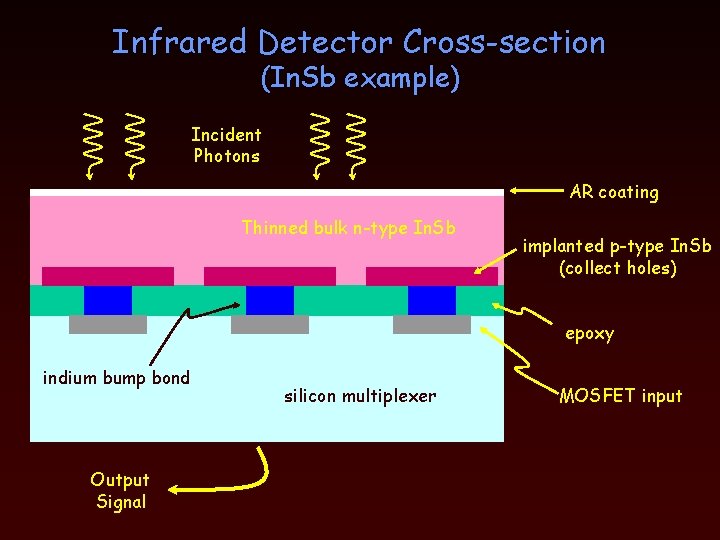
Infrared Detector Cross-section (In. Sb example) Incident Photons AR coating Thinned bulk n-type In. Sb implanted p-type In. Sb (collect holes) epoxy indium bump bond Output Signal silicon multiplexer MOSFET input
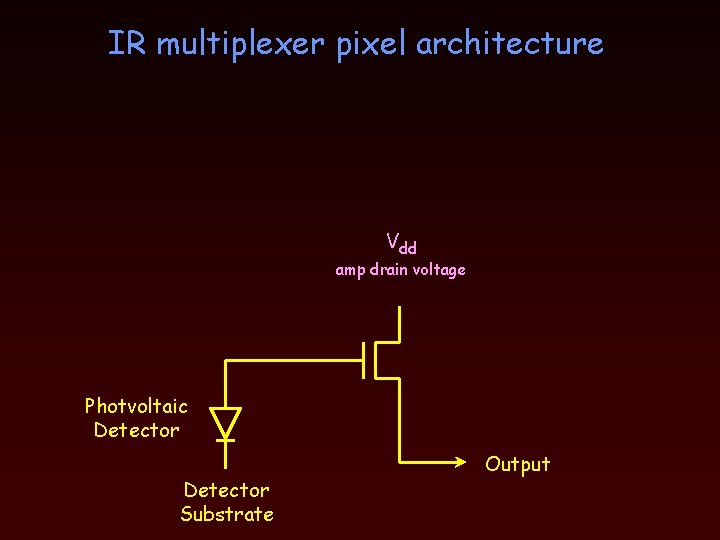
IR multiplexer pixel architecture Vdd amp drain voltage Photvoltaic Detector Substrate Output
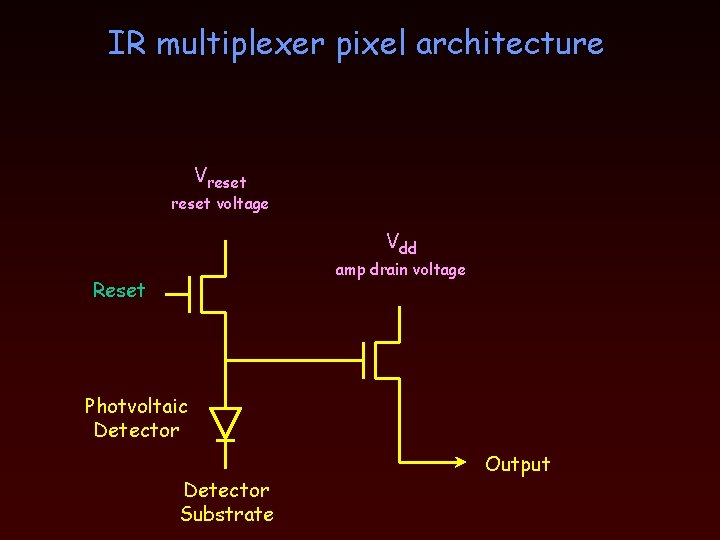
IR multiplexer pixel architecture Vreset voltage Vdd amp drain voltage Reset Photvoltaic Detector Substrate Output
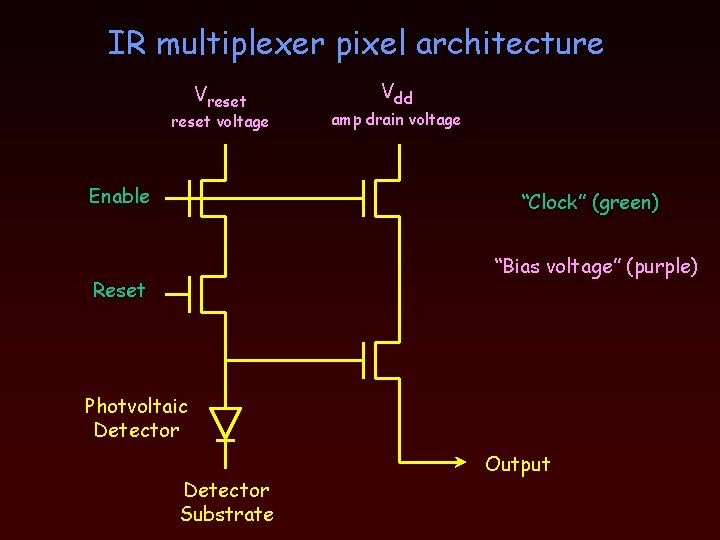
IR multiplexer pixel architecture Vreset voltage Enable Vdd amp drain voltage “Clock” (green) “Bias voltage” (purple) Reset Photvoltaic Detector Substrate Output
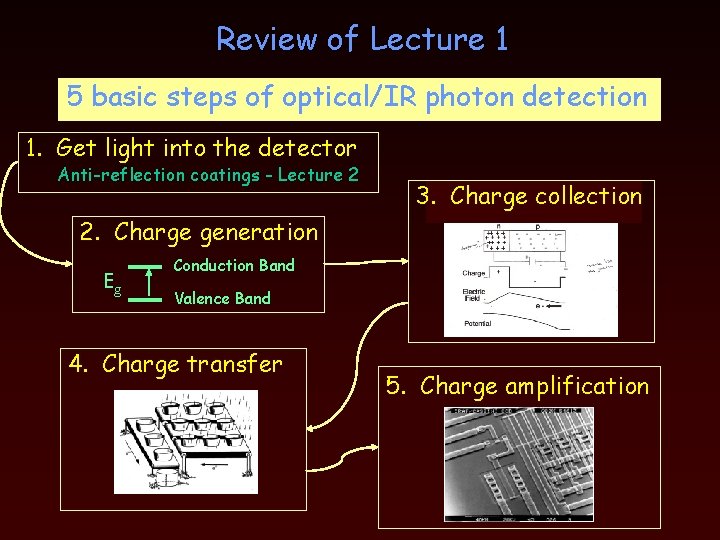
Review of Lecture 1 Detectors 5 basic steps are of theoptical/IR most important photontechnology! detection 1. Get light into the detector Anti-reflection coatings - Lecture 2 3. Charge collection 2. Charge generation Eg Conduction Band Valence Band 4. Charge transfer 5. Charge amplification
- Slides: 64