
Opportunities and Challenges with the new USMCA Agreement
- Slides: 23
Opportunities and Challenges with the new USMCA Agreement as viewed by Ports to Plains. Local to Global Forum March 8, 2019 Medicine Hat, AB
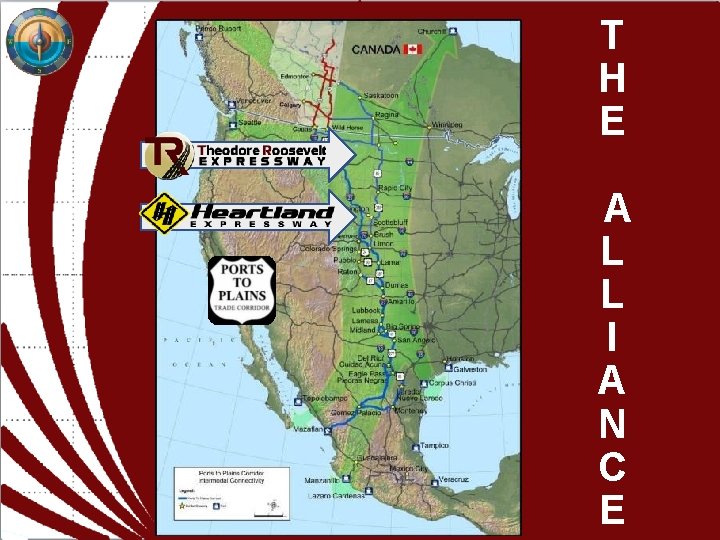
T H E A L L I A N C E
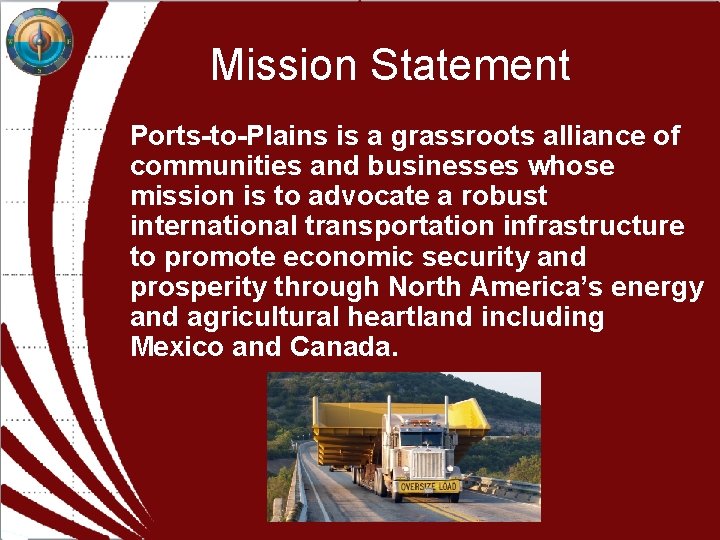
Mission Statement Ports-to-Plains is a grassroots alliance of communities and businesses whose mission is to advocate a robust international transportation infrastructure to promote economic security and prosperity through North America’s energy and agricultural heartland including Mexico and Canada.
A Corridor of National Significance • A Congressionally-Designated High Priority Corridor • An Energy Corridor • An Agricultural Corridor • An International Trade Corridor • A Jobs and Economic Development Corridor • A Connectivity Corridor • A Congestion Relief Corridor (For I-25 and I-35)
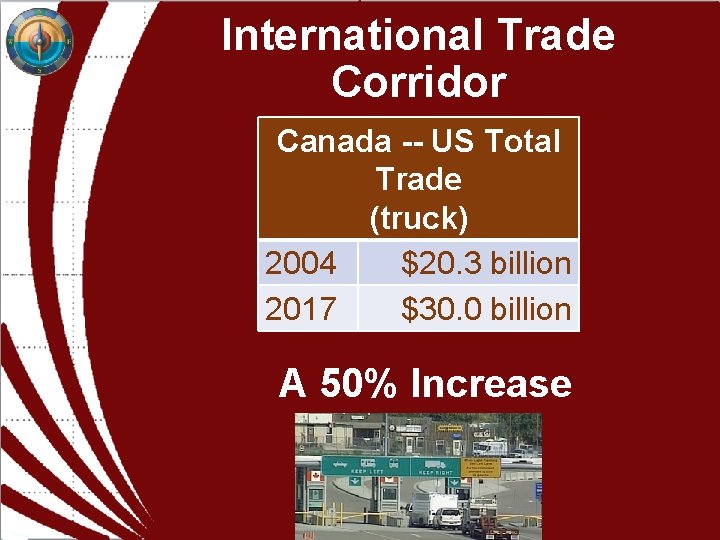
International Trade Corridor Canada -- US Total Trade (truck) 2004 $20. 3 billion 2017 $30. 0 billion A 50% Increase
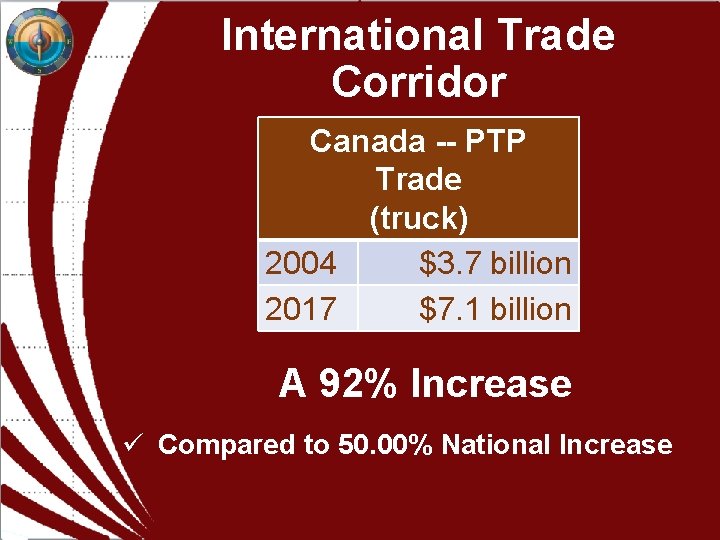
International Trade Corridor Canada -- PTP Trade (truck) 2004 $3. 7 billion 2017 $7. 1 billion A 92% Increase ü Compared to 50. 00% National Increase
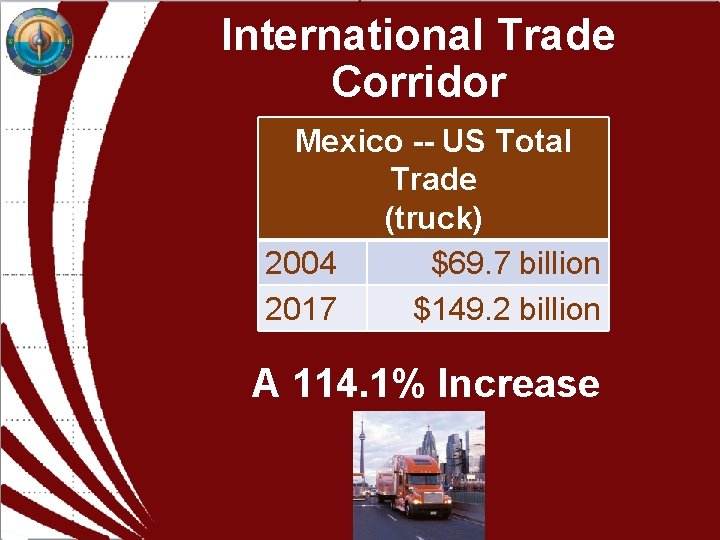
International Trade Corridor Mexico -- US Total Trade (truck) 2004 $69. 7 billion 2017 $149. 2 billion A 114. 1% Increase
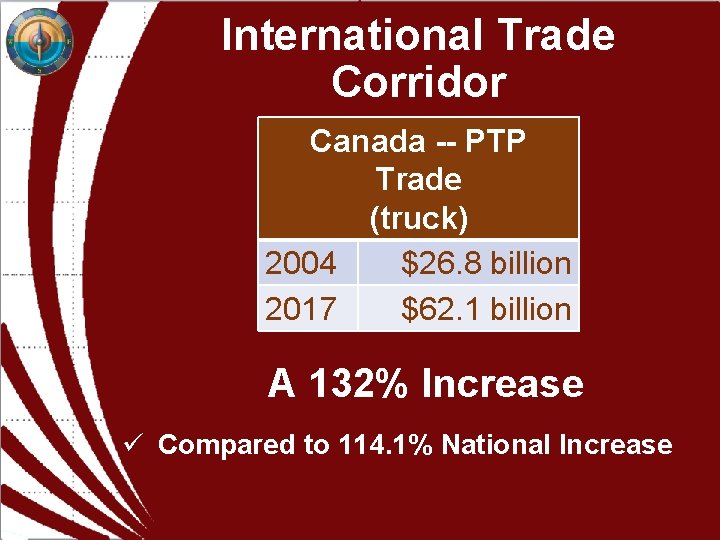
International Trade Corridor Canada -- PTP Trade (truck) 2004 $26. 8 billion 2017 $62. 1 billion A 132% Increase ü Compared to 114. 1% National Increase
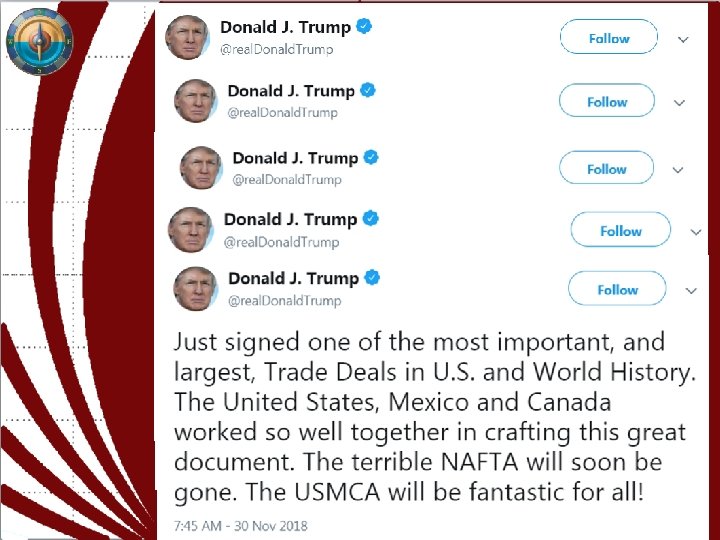
UNITED STATES-MEXICO -CANADA AGREEMENT (USMCA) Over 1800 pages Most Public Understanding based on a series of 140 character tweets
Big Changes for Cars • Starting in 2020, to qualify for zero tariffs, a car or truck must have 75 percent of its components manufactured in Canada, Mexico or the United States • Substantial boost from the current 62. 5 percent requirement.
Big Changes for Cars • Starting in 2020, cars and trucks should have at least 30 percent of the work on the vehicle done by workers earning $16 an hour. • That gradually moves up to 40 percent for cars by 2023.
Big Changes for Cars Winners -- Upside • Union Labor • Increased Wages Help North American Workers Losers - Downside • Consumer • Increased Vehicle Costs
Milk Market • Canada opens up its milk market to U. S. farmers • Canada to eliminate the pricing scheme for what are known as Class 7 dairy products. That means U. S. dairy farmers can probably send a lot more milk protein concentrate, skim milk powder and infant formula to Canada (and those products are relatively easy to transport and store)
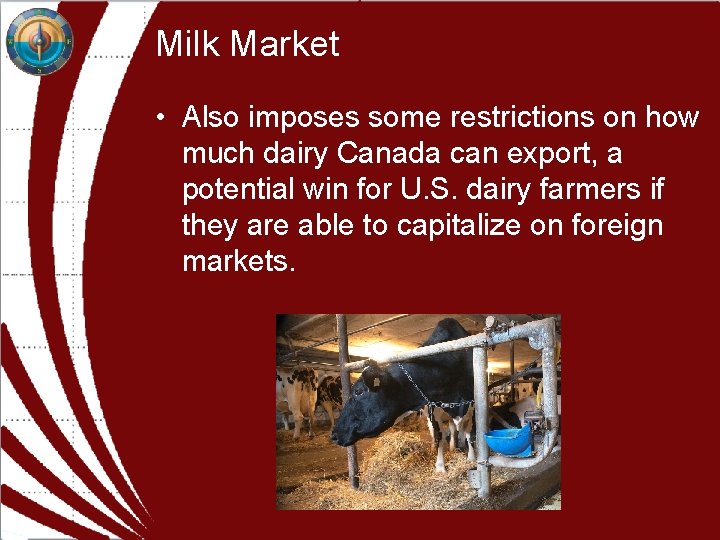
Milk Market • Also imposes some restrictions on how much dairy Canada can export, a potential win for U. S. dairy farmers if they are able to capitalize on foreign markets.
Milk Market Winners -- Upside • U. S. Dairy Farmers Losers - Downside • Canada Dairy Farmers
Chapter 19, Special Dispute Process • Stays Intact • Allows Canada, Mexico and the United States to challenge one another’s antidumping and countervailing duties in front of a panel of representatives from each country.
Chapter 19, Special Dispute Process Winners -- Upside • Canada Losers - Downside • United States? ? ?
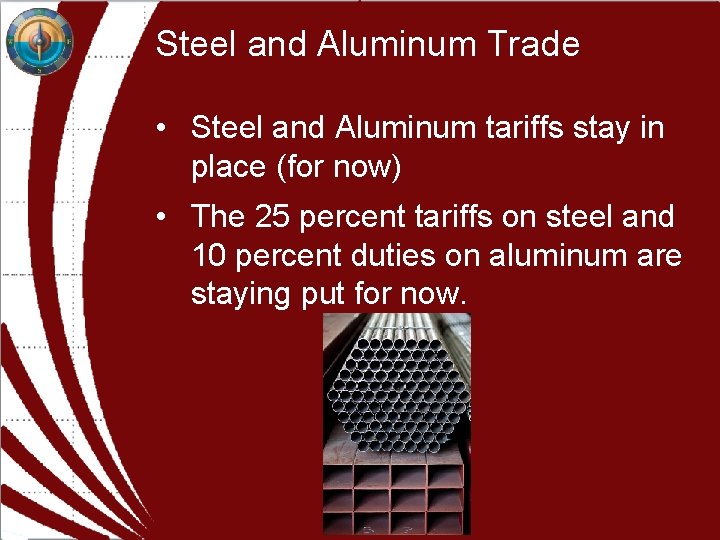
Steel and Aluminum Trade • Steel and Aluminum tariffs stay in place (for now) • The 25 percent tariffs on steel and 10 percent duties on aluminum are staying put for now.
Steel and Aluminum Trade Winners -- Upside • U. S Steel and Aluminum Producers Losers - Downside • Canada Steel Producers • U. S. Consumers • Stumbling Block to Ratification
Ratification • United States • Agriculture Pushing Congress • Mexico • Steel and Aluminum Tariffs are a Stumbling Block • Canada • Steel and Aluminum Tariffs are a Stumbling Block
What Happens if Ratification Fails? • Trade between U. S. , Canada and Mexico will continue • Consumers in the U. S. , Canada and Mexico will pay the price
Thank You Joe Kiely Vice President of Operations