
OPM Workshop Evaluating Leadership Development Programs Easing into

- Slides: 54
OPM Workshop Evaluating Leadership Development Programs: Easing into Levels 3 & 4 Presenters: Cheryl Ndunguru & Yadira Guerrero Senior Executive Resources and Performance Management, Work-Life and Leadership and Executive Development UNITED STATES OFFICE OF PERSONNEL MANAGEMENT
Workshop Purpose and Objectives • Purpose—To empower participants to competently execute results-focused evaluations for their agency leadership development program. • Objectives—Participants will: • Articulate the importance of training evaluation • Effectively address barriers to conducting level 3 & 4 • Create a logic model that focuses on training effectiveness
What’s Your Evaluation Experience?
Introduction to Evaluation
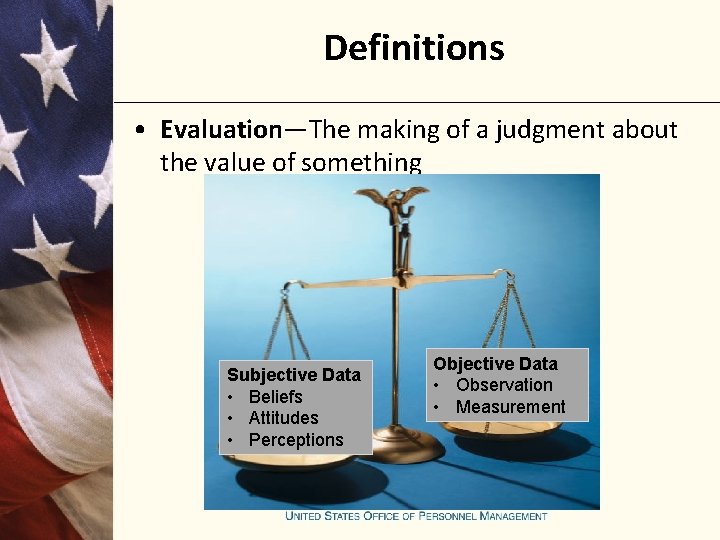
Definitions • Evaluation—The making of a judgment about the value of something Subjective Data • Beliefs • Attitudes • Perceptions Objective Data • Observation • Measurement
Definitions cont. • Inputs—Resources • Activity—What you do/Target audience • Output—What you produce (immediate result of the activity) • • # of participants who completed the course # courses offered # of training hours % participant satisfaction with the training 6
Definitions Cont. • Outcome—The difference/impact made by what you produced (result of the output) • • Everyone loved the training, so what? The class was full, so what? The instructor was outstanding, so what? Everyone learned something, so what? • Measurable—Specific, observable, and quantifiable characteristics • • Timeliness Quality Quantity Cost-effectiveness
Pre-Work • Complete the Linking and Developing Measurable SES Results-Focused Performance Requirements course • Complete a Logic Model for your Program • Review your Agency Strategic Plan • Read the Training Evaluation Field Guide Case Study (National Museums Agency) • Review the Training Evaluation Field Guide
Common Challenges to Training Evaluation
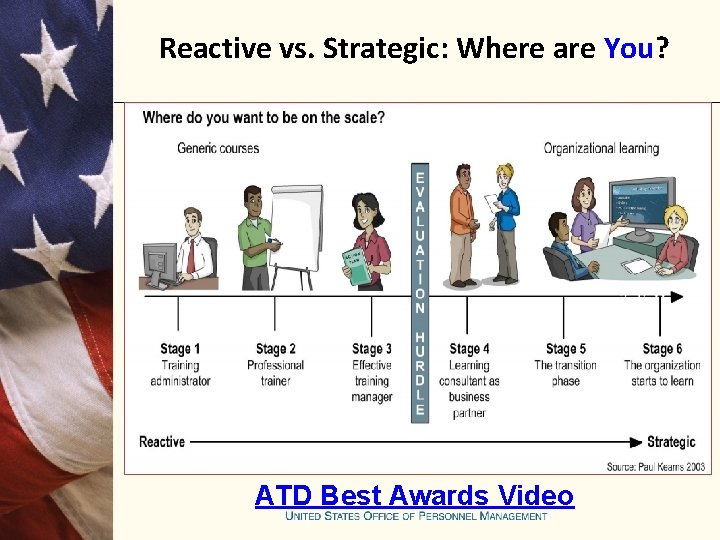
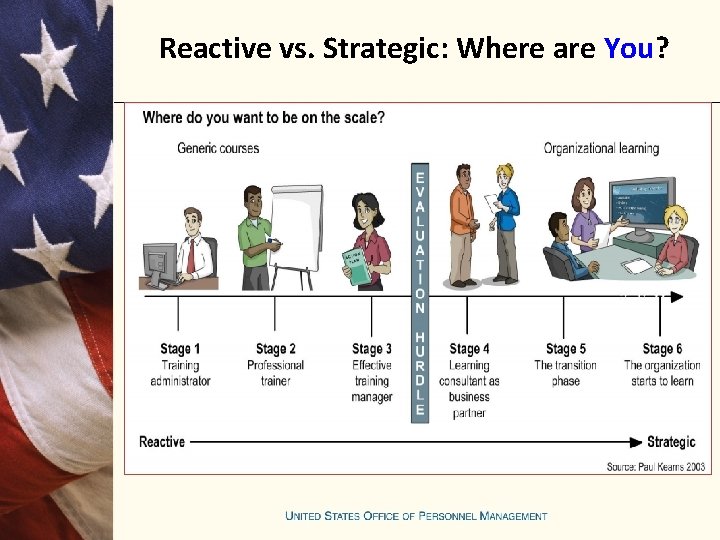
Reactive vs. Strategic: Where are You? ATD Best Awards Video
Program Evaluation vs. Training Evaluation 5 CFR 410. 202 Responsibilities for Evaluating Training • Agencies must evaluate their training programs annually to determine how well such plans and programs contribute to mission accomplishment and meet organizational performance goals.
Program Evaluation Program evaluations are individual systematic studies conducted periodically…to assess how well a program is working. They are often conducted by experts external to the program, …, as well as by program managers. A program evaluation typically examines achievement of program objectives in the context of other aspects of program performance… to learn the benefits of a program or how to improve it. (GAO)
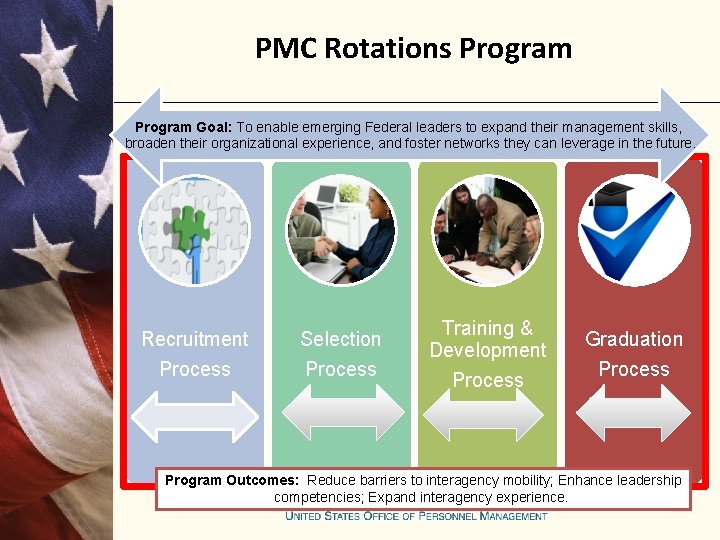
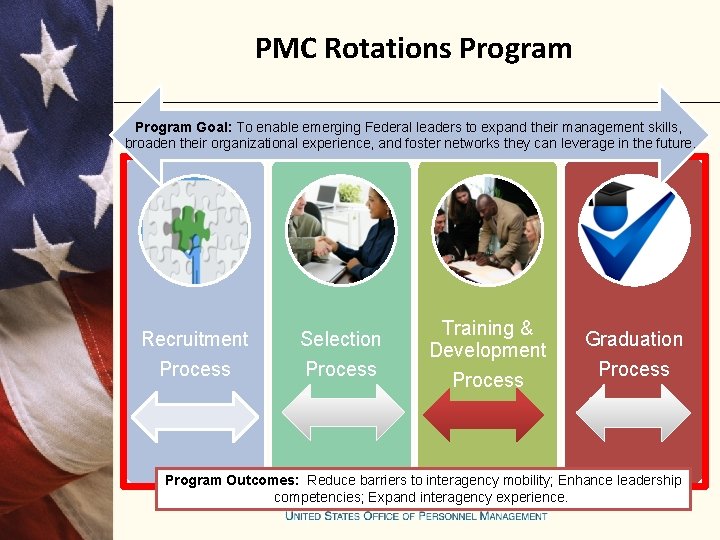
PMC Rotations Program Goal: To enable emerging Federal leaders to expand their management skills, broaden their organizational experience, and foster networks they can leverage in the future. Recruitment Process Selection Process Training & Development Process Graduation Process Program Outcomes: Reduce barriers to interagency mobility; Enhance leadership competencies; Expand interagency experience.
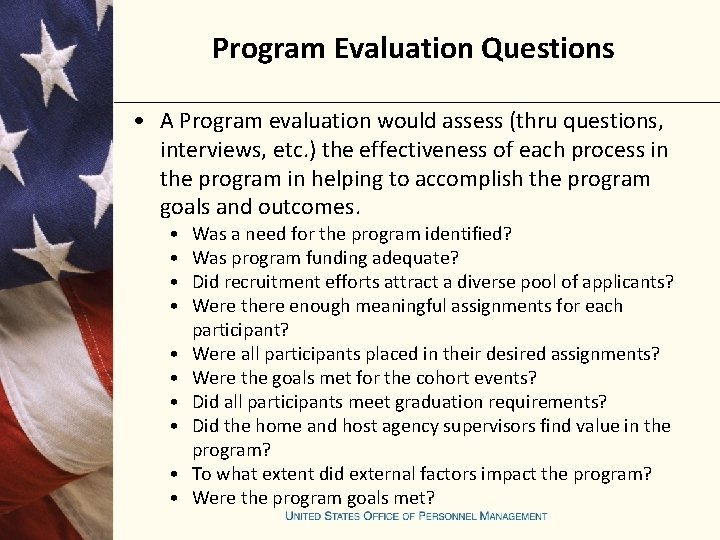
Program Evaluation Questions • A Program evaluation would assess (thru questions, interviews, etc. ) the effectiveness of each process in the program in helping to accomplish the program goals and outcomes. • • • Was a need for the program identified? Was program funding adequate? Did recruitment efforts attract a diverse pool of applicants? Were there enough meaningful assignments for each participant? Were all participants placed in their desired assignments? Were the goals met for the cohort events? Did all participants meet graduation requirements? Did the home and host agency supervisors find value in the program? To what extent did external factors impact the program? Were the program goals met?
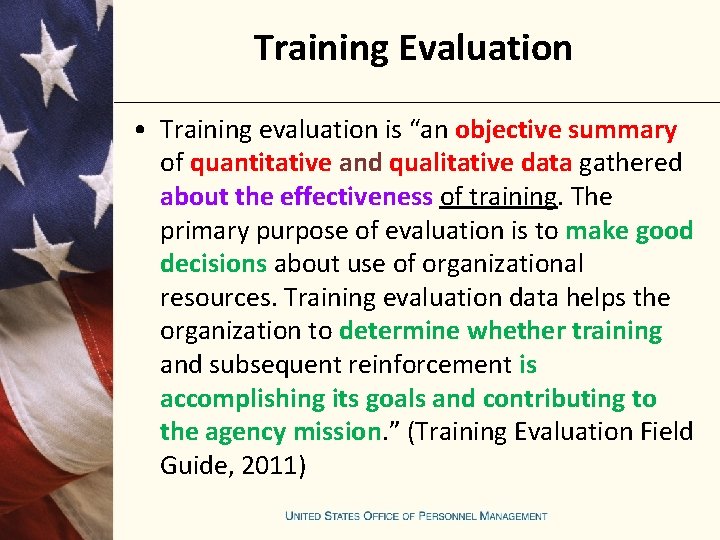
Training Evaluation • Training evaluation is “an objective summary of quantitative and qualitative data gathered about the effectiveness of training. The primary purpose of evaluation is to make good decisions about use of organizational resources. Training evaluation data helps the organization to determine whether training and subsequent reinforcement is accomplishing its goals and contributing to the agency mission. ” (Training Evaluation Field Guide, 2011)
PMC Rotations Program Goal: To enable emerging Federal leaders to expand their management skills, broaden their organizational experience, and foster networks they can leverage in the future. Recruitment Process Selection Process Training & Development Process Graduation Process Program Outcomes: Reduce barriers to interagency mobility; Enhance leadership competencies; Expand interagency experience.
Pre-Work Activity
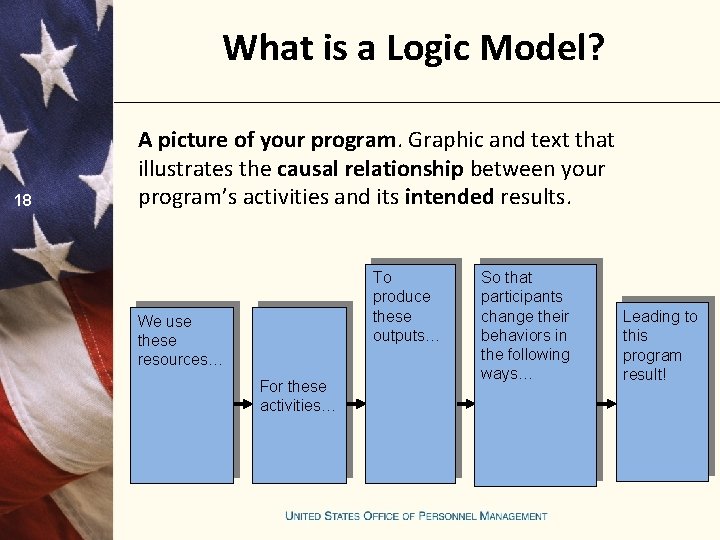
What is a Logic Model? 18 A picture of your program. Graphic and text that illustrates the causal relationship between your program’s activities and its intended results. To produce these outputs… We use these resources… For these activities… So that participants change their behaviors in the following ways… Leading to this program result!
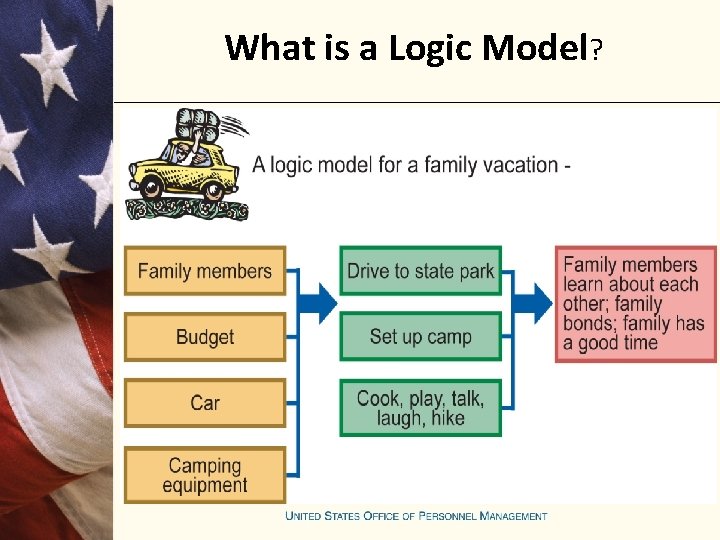
What is a Logic Model?
Training Evaluation
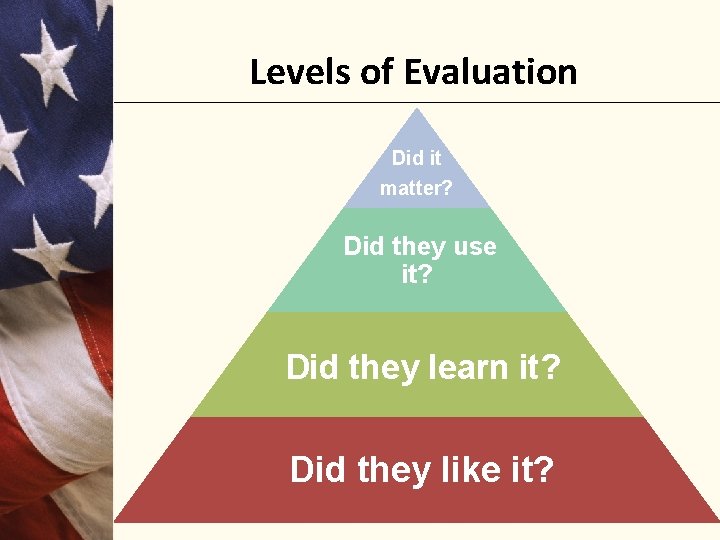
Levels of Evaluation Did it matter? Did they use it? Did they learn it? Did they like it?
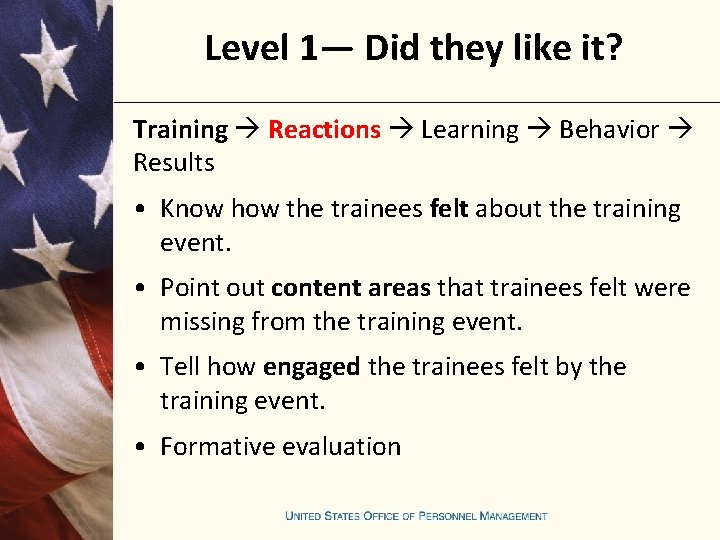
Level 1— Did they like it? Training Reactions Learning Behavior Results • Know how the trainees felt about the training event. • Point out content areas that trainees felt were missing from the training event. • Tell how engaged the trainees felt by the training event. • Formative evaluation
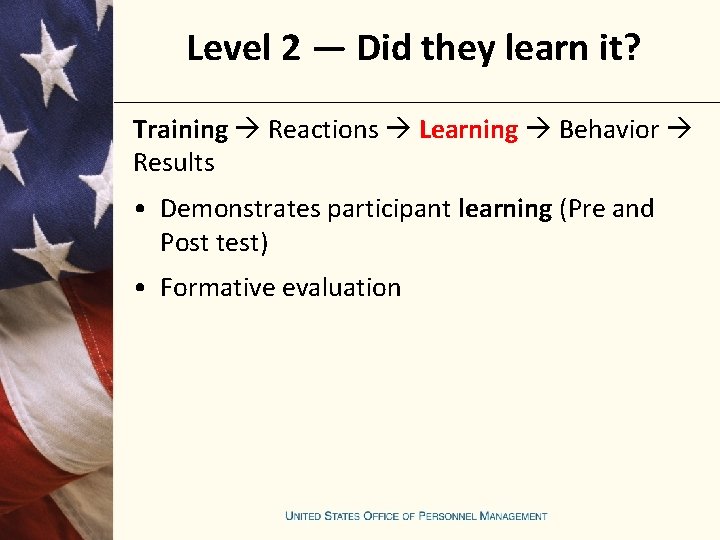
Level 2 — Did they learn it? Training Reactions Learning Behavior Results • Demonstrates participant learning (Pre and Post test) • Formative evaluation
Training Effectiveness • Level 3—Did they use it • Level 4—Did it matter
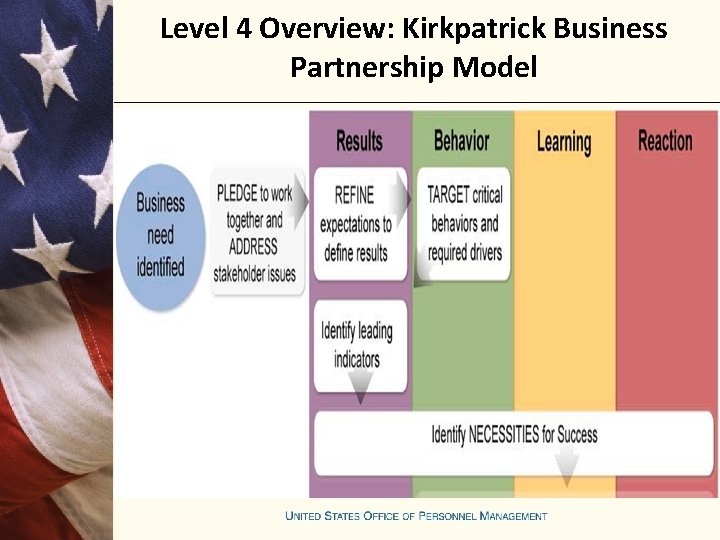
Level 4 Overview: Kirkpatrick Business Partnership Model
Pre-Work Activity: National Museums Agency (NMA) Leadership Development Program
NMA Strategic Goals • Build and maintain a strong agency leadership pipeline and talent pool for leadership continuity and viability • Develop future leaders who are ready to step into higher positions • Enhance and grow and strong pan-institutional leadership team
Situation • a front-page expose of funds misuse by one museum director, reduced donations and lack of a consistent succession plan across the organization. Finally, there was an apparent lack of pan-institutional cooperation among the museums. Competition between museums had reached a level that surpassed friendly competition. What situation or opportunity was/is the catalyst for your LDP?
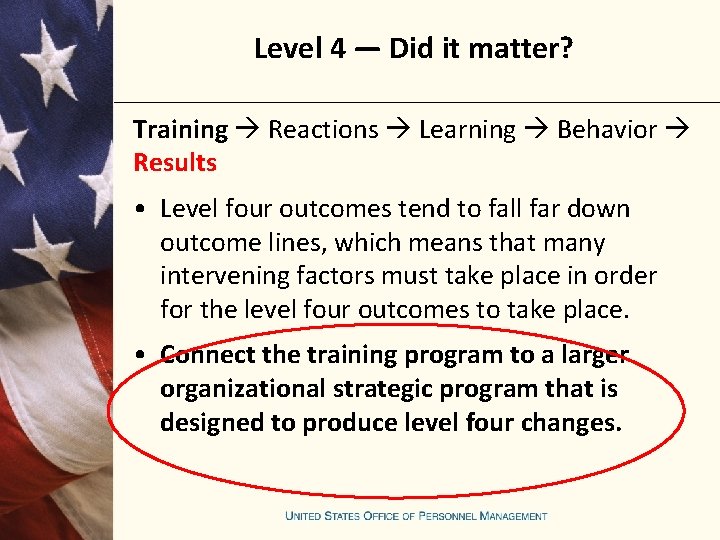
Level 4 — Did it matter? Training Reactions Learning Behavior Results • Level four outcomes tend to fall far down outcome lines, which means that many intervening factors must take place in order for the level four outcomes to take place. • Connect the training program to a larger organizational strategic program that is designed to produce level four changes.
NMA: Level 4 Business Need • Maximize and demonstrate impact from donations. • Create leadership pipeline for sustained institutional success. • Build a pan-institutional culture where decisions are made with the betterment of the entire NMA in mind.
Level 4: Pitfalls to Avoid • Creating a training program without first identifying stakeholders that will judge its success • Trying to please everyone instead of identifying the few, most critical group of stakeholders that need to be satisfied • Assuming that business/organizational leaders have expectations and targeted results in mind when they make a training request
Level 4: How to Avoid the Pitfalls • Get Involved • Obtain leadership support
Reactive vs. Strategic: Where are You?
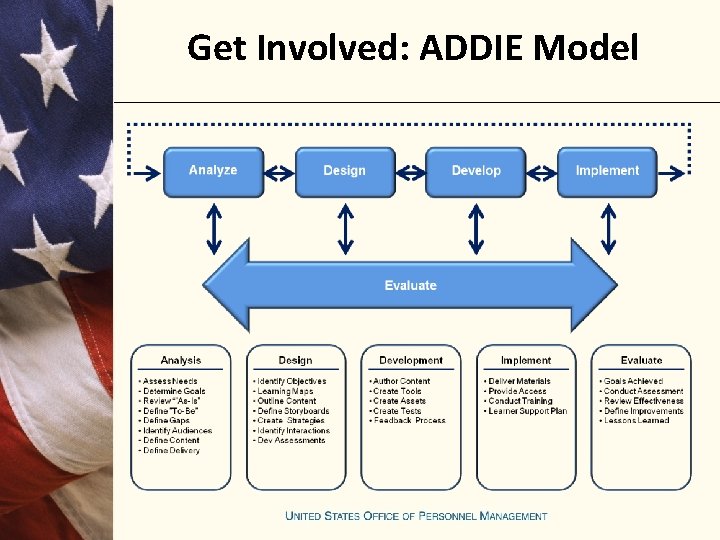
Get Involved: ADDIE Model
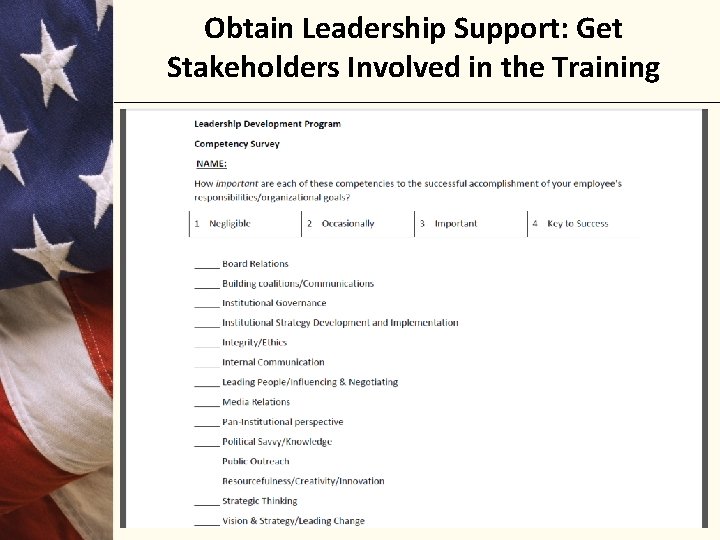
Obtain Leadership Support: Get Stakeholders Involved in the Training
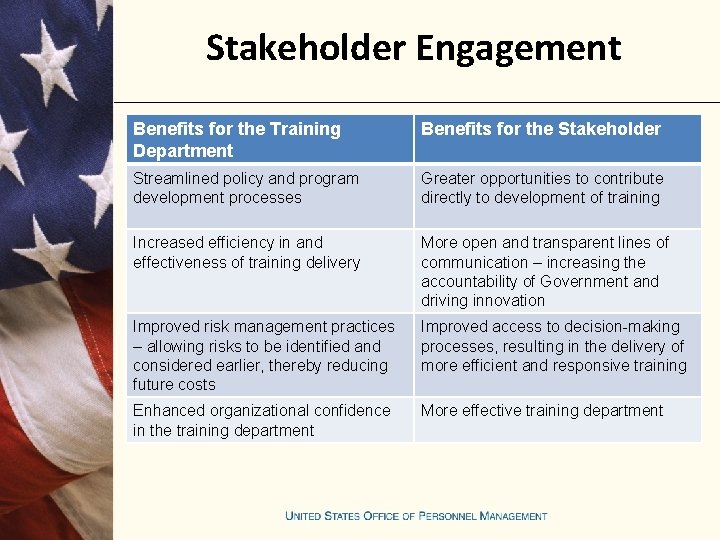
Stakeholder Engagement Benefits for the Training Department Benefits for the Stakeholder Streamlined policy and program development processes Greater opportunities to contribute directly to development of training Increased efficiency in and effectiveness of training delivery More open and transparent lines of communication – increasing the accountability of Government and driving innovation Improved risk management practices – allowing risks to be identified and considered earlier, thereby reducing future costs Improved access to decision-making processes, resulting in the delivery of more efficient and responsive training Enhanced organizational confidence in the training department More effective training department
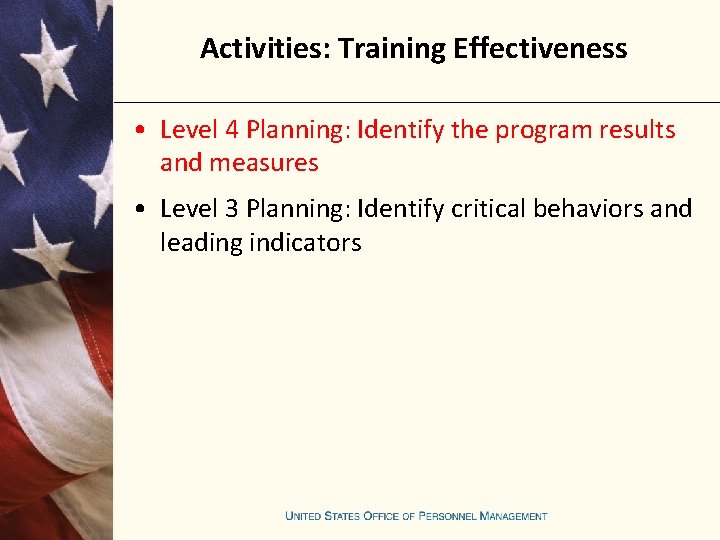
Activities: Training Effectiveness • Level 4 Planning: Identify the program results and measures • Level 3 Planning: Identify critical behaviors and leading indicators
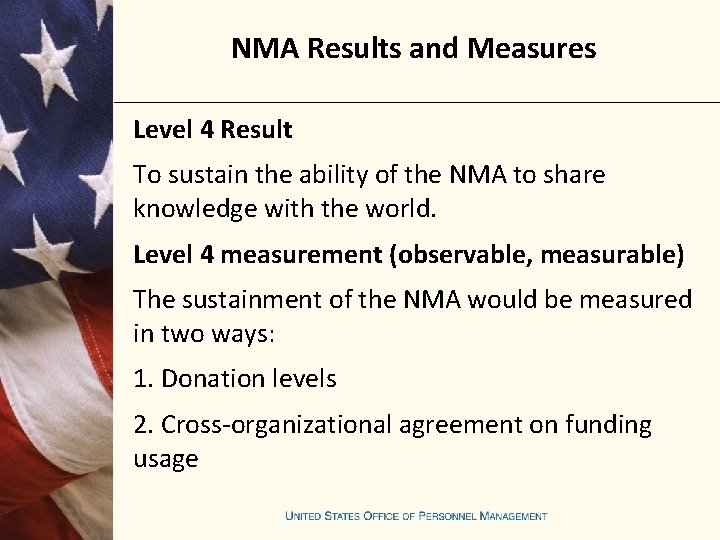
NMA Results and Measures Level 4 Result To sustain the ability of the NMA to share knowledge with the world. Level 4 measurement (observable, measurable) The sustainment of the NMA would be measured in two ways: 1. Donation levels 2. Cross-organizational agreement on funding usage
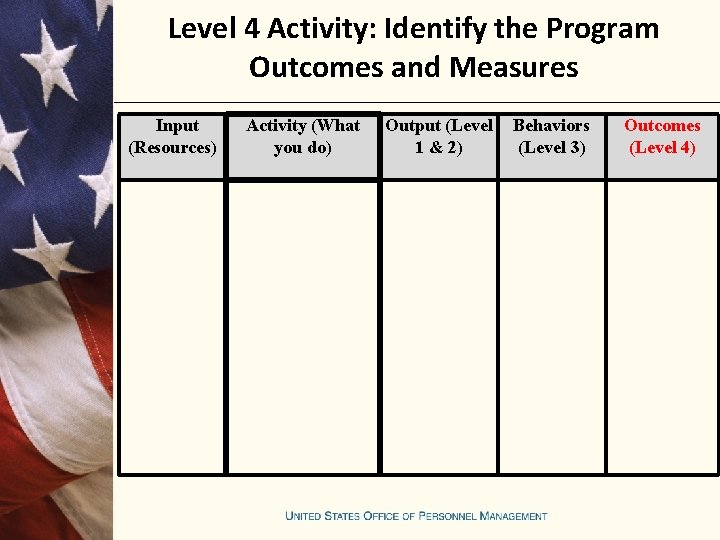
Level 4 Activity: Identify the Program Outcomes and Measures Input (Resources) Activity (What you do) Output (Level 1 & 2) Behaviors (Level 3) Outcomes (Level 4)
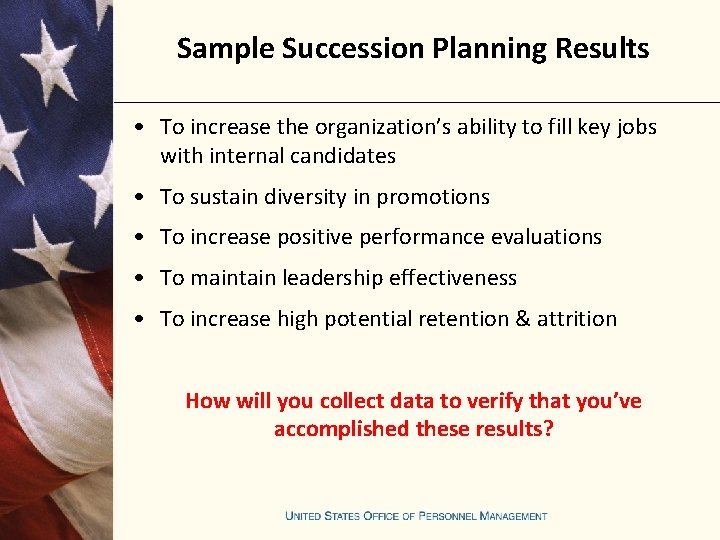
Sample Succession Planning Results • To increase the organization’s ability to fill key jobs with internal candidates • To sustain diversity in promotions • To increase positive performance evaluations • To maintain leadership effectiveness • To increase high potential retention & attrition How will you collect data to verify that you’ve accomplished these results?
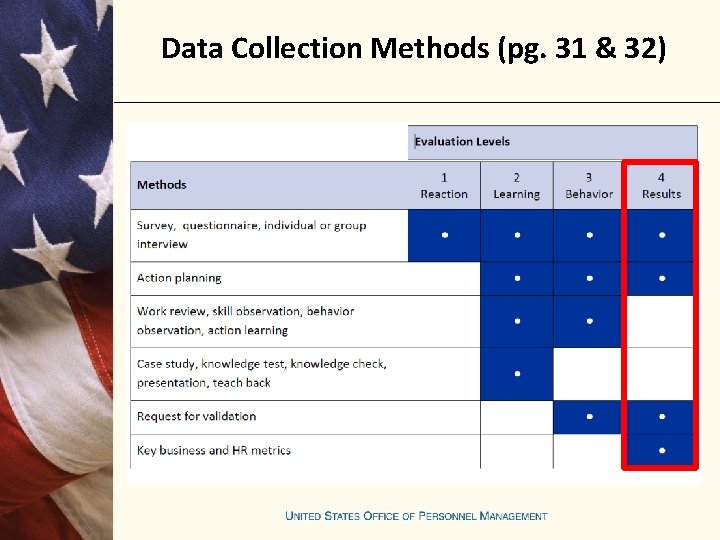
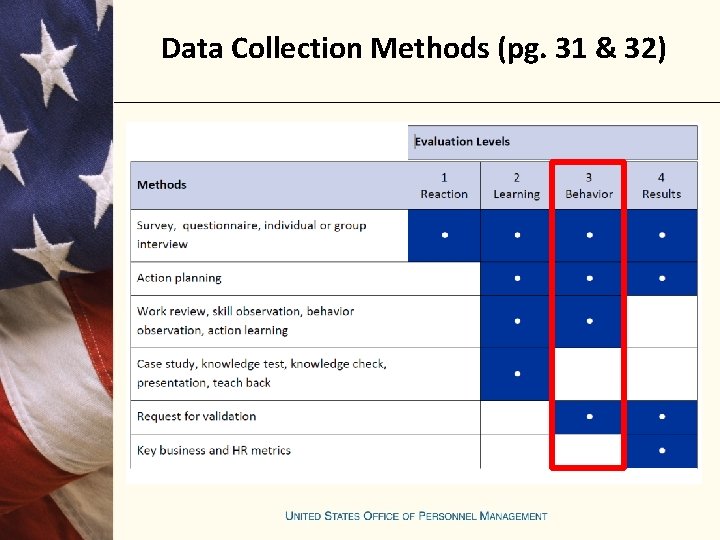
Data Collection Methods (pg. 31 & 32)
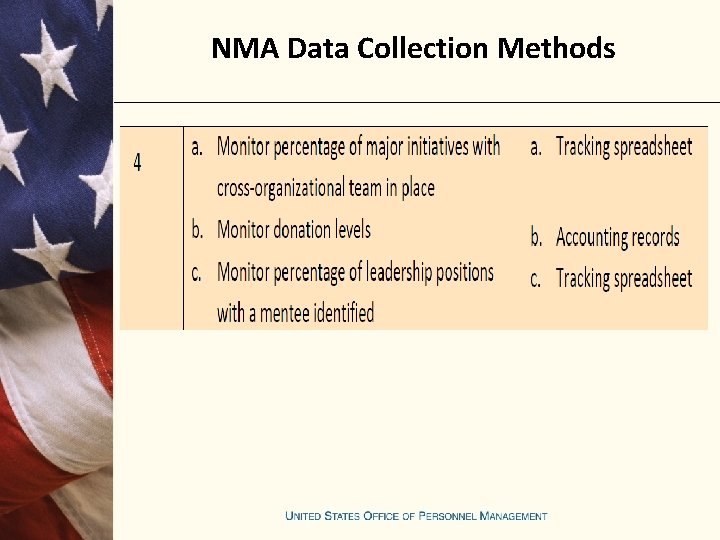
NMA Data Collection Methods
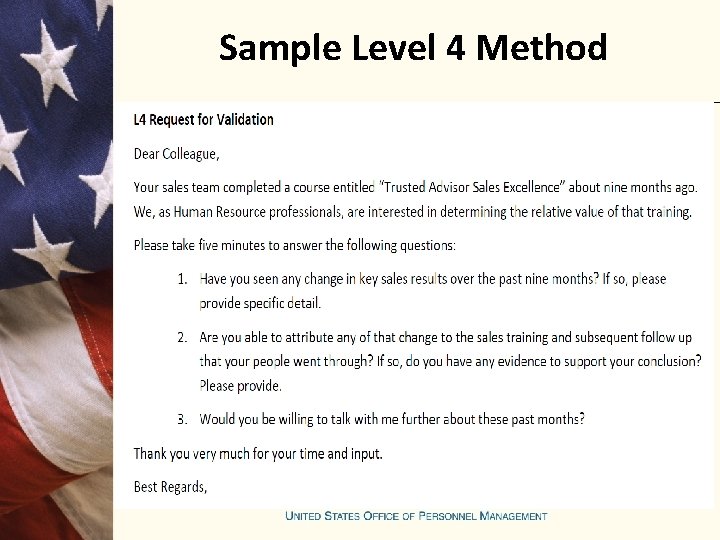
Sample Level 4 Method
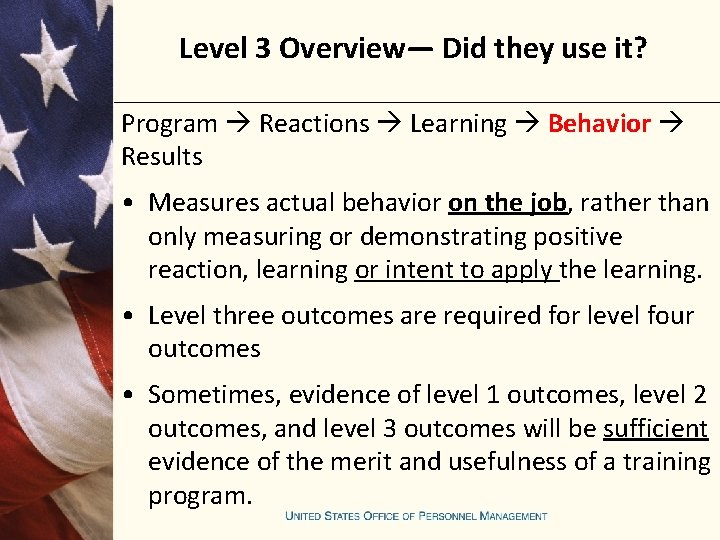
Level 3 Overview— Did they use it? Program Reactions Learning Behavior Results • Measures actual behavior on the job, rather than only measuring or demonstrating positive reaction, learning or intent to apply the learning. • Level three outcomes are required for level four outcomes • Sometimes, evidence of level 1 outcomes, level 2 outcomes, and level 3 outcomes will be sufficient evidence of the merit and usefulness of a training program.
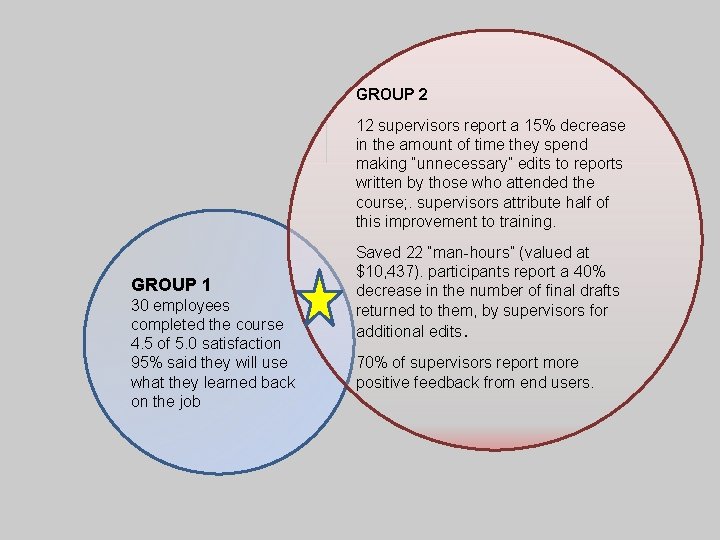
GROUP 2 12 supervisors report a 15% decrease in the amount of time they spend making “unnecessary” edits to reports written by those who attended the course; . supervisors attribute half of this improvement to training. GROUP 1 30 employees completed the course 4. 5 of 5. 0 satisfaction 95% said they will use what they learned back on the job Saved 22 “man-hours” (valued at $10, 437). participants report a 40% decrease in the number of final drafts returned to them, by supervisors for additional edits. 70% of supervisors report more positive feedback from end users.
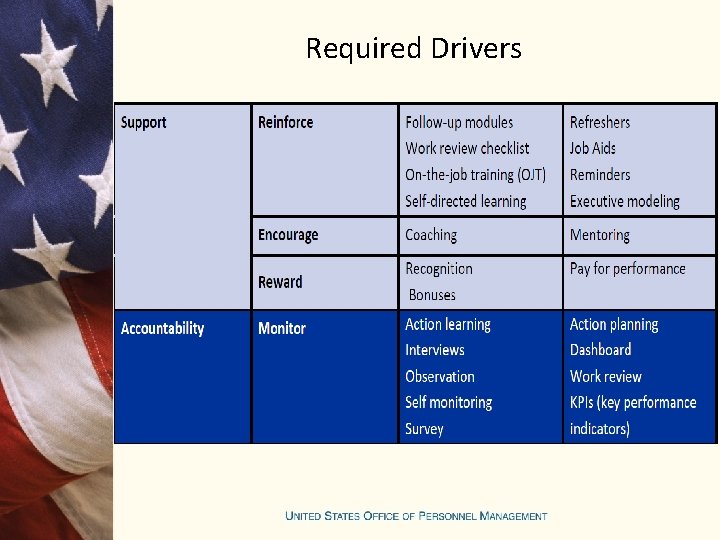
Required Drivers
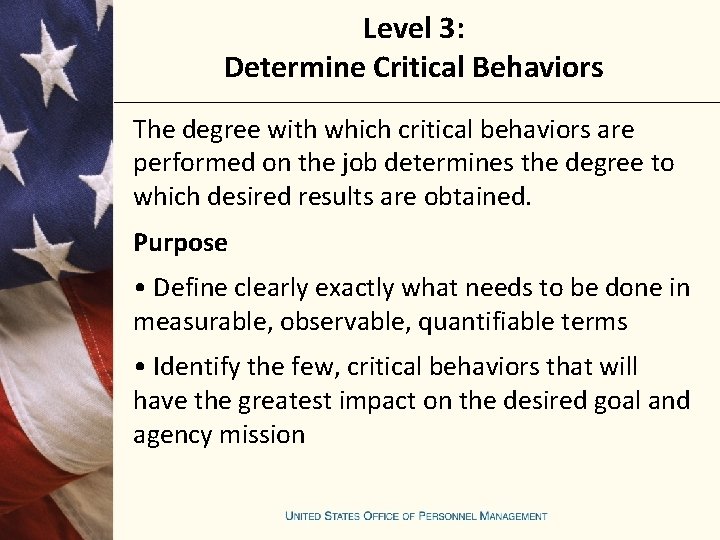
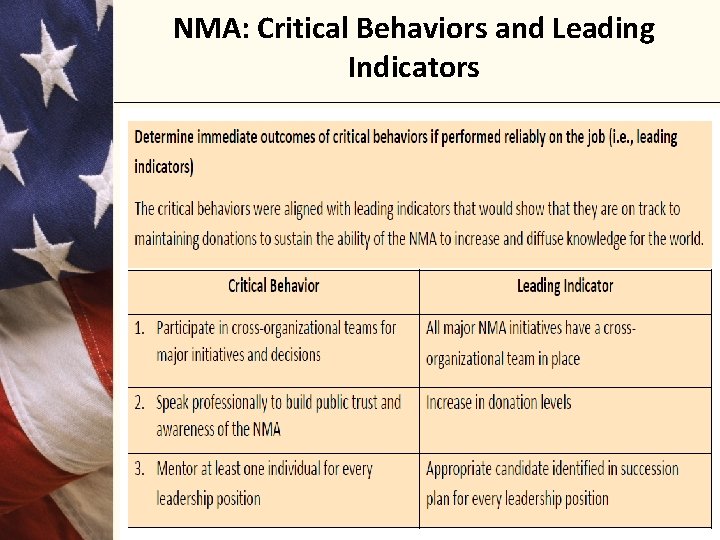
Level 3: Determine Critical Behaviors The degree with which critical behaviors are performed on the job determines the degree to which desired results are obtained. Purpose • Define clearly exactly what needs to be done in measurable, observable, quantifiable terms • Identify the few, critical behaviors that will have the greatest impact on the desired goal and agency mission
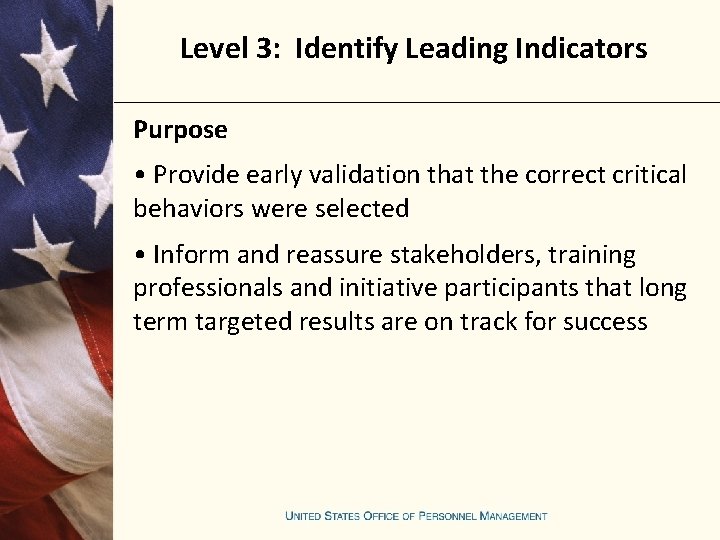
Level 3: Identify Leading Indicators Purpose • Provide early validation that the correct critical behaviors were selected • Inform and reassure stakeholders, training professionals and initiative participants that long term targeted results are on track for success
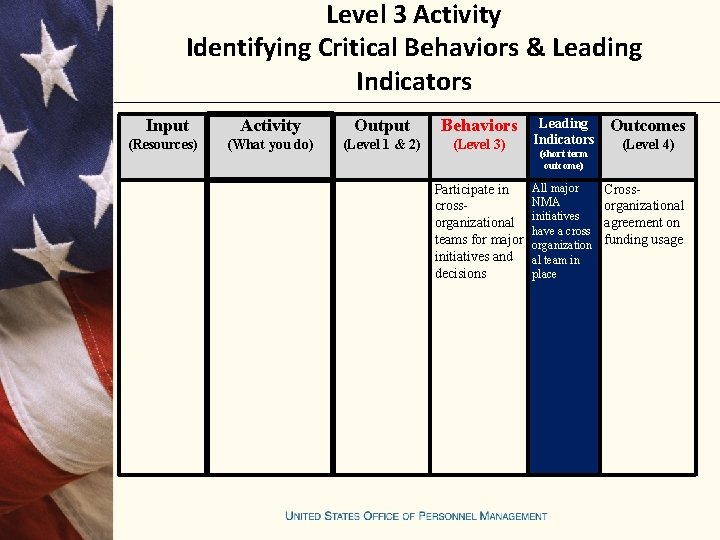
Level 3 Activity Identifying Critical Behaviors & Leading Indicators Input (Resources) Activity Output Behaviors (What you do) (Level 1 & 2) (Level 3) Leading Indicators Participate in crossorganizational teams for major initiatives and decisions All major NMA initiatives have a cross organization al team in place (short term outcome) Outcomes (Level 4) Crossorganizational agreement on funding usage
NMA: Critical Behaviors and Leading Indicators
Data Collection Methods (pg. 31 & 32)
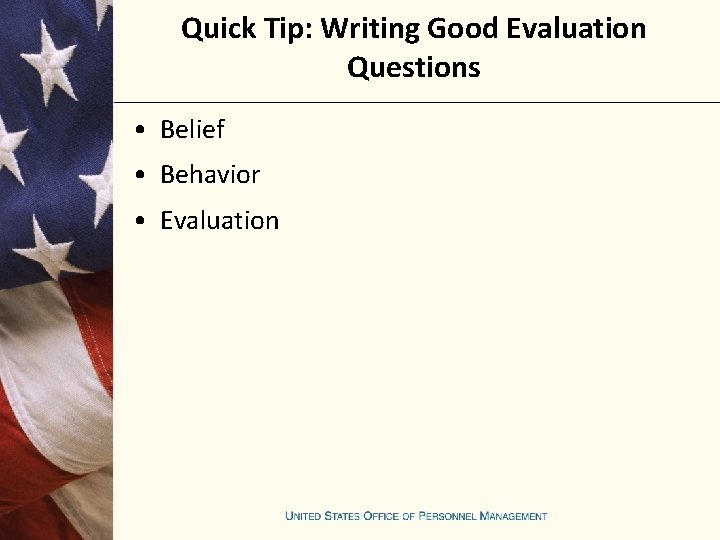
Quick Tip: Writing Good Evaluation Questions • Belief • Behavior • Evaluation
Action Planning Activity • Now that you’ve created measurable Level 3 and Level 4 outcomes and measurements how will you proceed to effectively evaluate your program at these levels? • • Stakeholder support Get involved in the process Create relevant questions Ensure drivers are in place • Individual action planning
OPM Contacts • Cheryl Ndunguru (Cheryl. Ndunguru@opm. gov) • Yadira Guerrero (Yadira. Guerrero@opm. gov)