
Opioids and the Courts The Honorable Carolina Lamas
Opioids and the Courts The Honorable Carolina Lamas 4 th Judicial District, Hennepin County, Minnesota
Opioids and the Courts
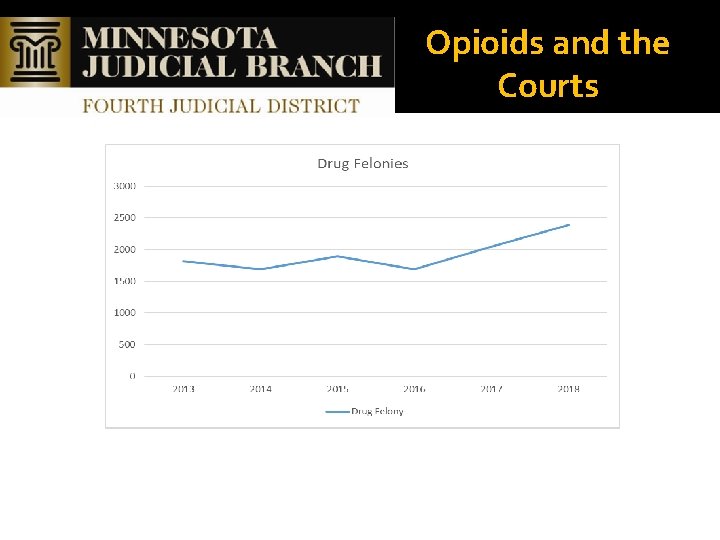
Opioids and the Courts In 2017, Drug Felonies were 28. 8% of all Felony filings. § In 2018, Drug Felonies, were 33. 5% of all Felonies. § A 16. 5% increase over one year. §
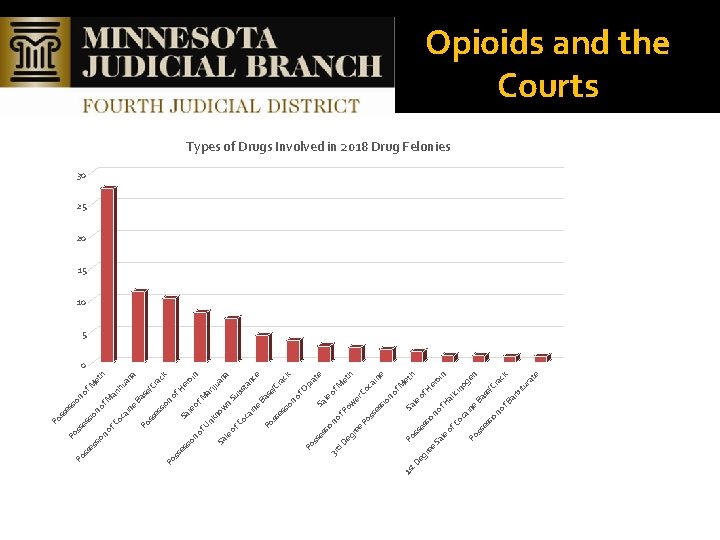
of n ss io le o f M oi n ac k H er of ss io n Sa ss e Po na ih ua h et M as e/ Cr B ai ne oc M ar of of ss io n n ss io C of ss io n ss e U ar nk iju no an Sa w a le n o Su f C b st oc an ai ne ce B as Po e/ ss Cr es ac sio k n of O Po pi at ss e Sa es sio le of n 3 r M of d P De et ow h gr er ee C P oc os ai se ne ss io n of M et 1 s S P h al os t D e s o eg es f H sio re er e S n oi o al f H n e o a f C llc in oc og ai en n Po e B ss a es se sio /C ra n ck of B ar bi tu ra te ss e Po Po Po Opioids and the Courts Types of Drugs Involved in 2018 Drug Felonies 30 25 20 15 10 5 0
Opioids and the Courts Treatment Courts in MN 65 total treatment courts � Adult Drug Courts – 26 � DWI Court – 14 � Veterans Treatment Court – 8 � Drug/DWI Hybrid – 6 � Mental Health Court – 4 � Family Dependency Treatment Court – 3 � Tribal Healing to Wellness Court – 2 � Juvenile Drug Court – 1 � Drug/DWI/FDTC Hybrid – 1
Opioids and the Courts
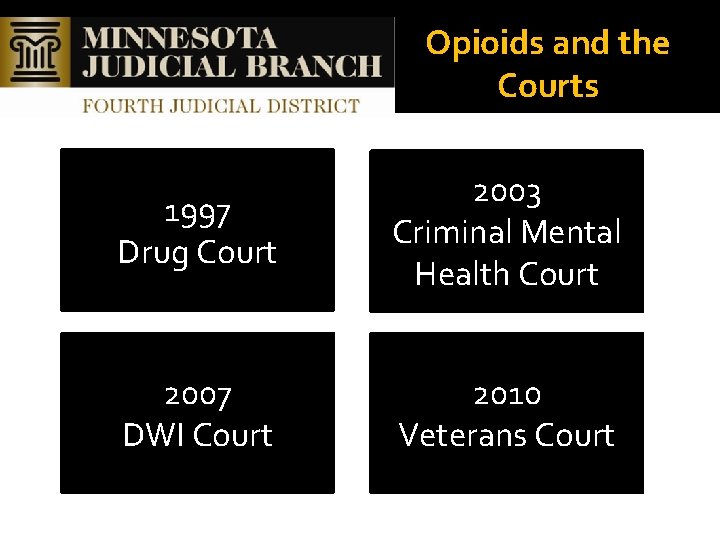
Opioids and the Courts 1997 Drug Court 2003 Criminal Mental Health Court 2007 DWI Court 2010 Veterans Court
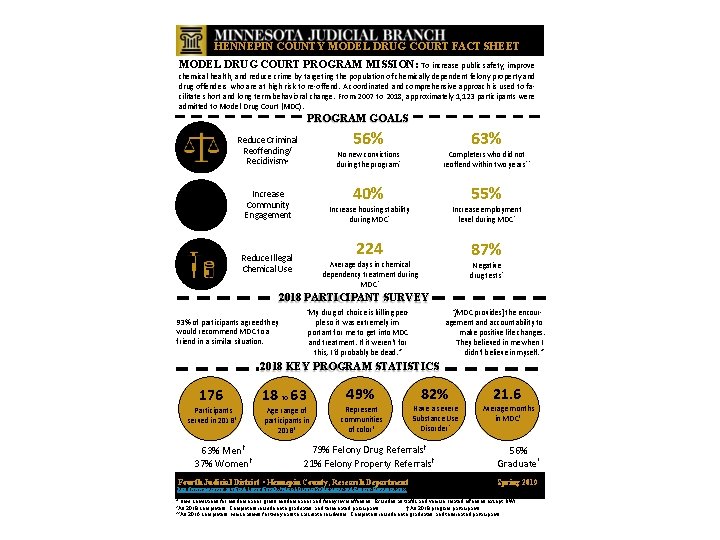
HENNEPIN COUNTY MODEL DRUG COURT FACT SHEET MODEL DRUG COURT PROGRAM MISSION: To increase public safety, improve chemical health, and reduce crime by targeting the population of chemically dependent felony property and drug offenders who are at high risk to re-offend. A coordinated and comprehensive approach is used to facilitate short and long term behavioral change. From 2007 to 2018, approximately 1, 123 participants were admitted to Model Drug Court (MDC). PROGRAM GOALS Reduce Criminal Reoffending/ RecidivismΔ 56% 63% No new convictions during the program* Completers who did not reoffend within two years** Increase Community Engagement 40% 55% Increase housing stability during MDC* Increase employment level during MDC* 224 87% Average days in chemical dependency treatment during MDC* Negative drug tests* Reduce Illegal Chemical Use 2018 PARTICIPANT SURVEY 93% of participants agreed they would recommend MDC to a friend in a similar situation. “My drug of choice is killing peo- “[MDC provides] the encouragement and accountability to make positive life changes. They believed in me when I didn’t believe in myself. ” ple so it was extremely important for me to get into MDC and treatment. If it weren't for this, I’d probably be dead. ” 2018 KEY PROGRAM STATISTICS 176 18 to 63 Participants served in 2018† Age range of participants in 2018† 63% Men† 37% Women† 49% 82% Represent communities of color† Have a severe Substance Use Disorder* 79% Felony Drug Referrals† 21% Felony Property Referrals† Fourth Judicial District • Hennepin County, Research Department 21. 6 Average months in MDC† 56% Graduate* Spring 2019 http: //www. mncourts. gov/Find-Courts/Fourth-Judicial-District/Publications-and-Reports-Hennepin. aspx Δ New convictions for misdemeanor, gross misdemeanor and felony level offenses. Excludes all traffic and vehicle related offenses except DWI. *All 2018 completers. Completers include both graduates and terminated participants. † All 2018 program participants. **All 2016 completers, which allows for two years to calculate recidivism. Completers include both graduates and terminated participants.
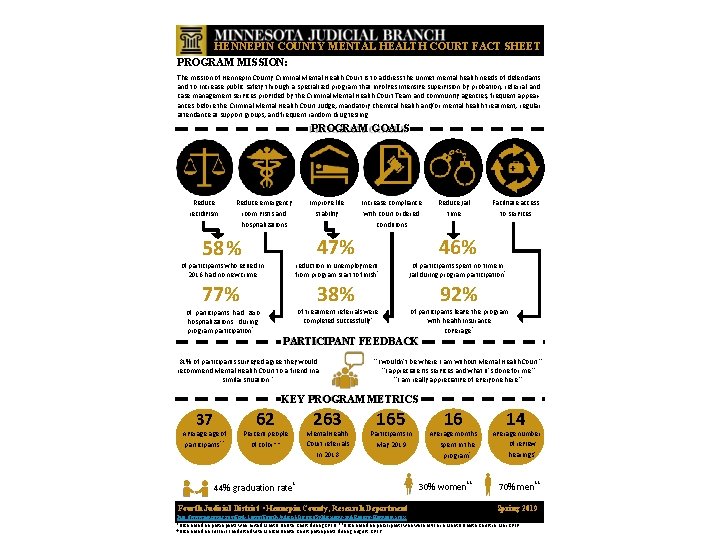
HENNEPIN COUNTY MENTAL HEALTH COURT FACT SHEET PROGRAM MISSION: The mission of Hennepin County Criminal Mental Health Court is to address the unmet mental health needs of defendants and to increase public safety through a specialized program that involves intensive supervision by probation, referral and case management services provided by the Criminal Mental Health Court Team and community agencies, frequent appearances before the Criminal Mental Health Court Judge, mandatory chemical health and/or mental health treatment, regular attendance at support groups, and frequent random drug testing. PROGRAM GOALS Reduce recidivism Improve life stability Reduce emergency room visits and hospitalizations Increase compliance with court ordered conditions Reduce jail time Facilitate access to services 58 % 47% 46% of participants who exited in 2016 had no new crime reduction in unemployment from program start to finish* of participants spent no time in jail during program participation* 77% 38% 92% of participants had zero hospitalizations during program participation* of treatment referrals were completed successfully* of participants leave the program with health insurance coverage* PARTICIPANT FEEDBACK 81% of participants surveyed agree they would recommend Mental Health Court to a friend in a similar situation. † “I wouldn’t be where I am without Mental Health Court. ” “I appreciate its services and what it’s done for me. ” “I am really appreciative of everyone here. ” KEY PROGRAM METRICS 37 Average of participants** 62 Percent people of color** 263 Mental Health Court referrals in 2018 165 Participants in May 2019 44% graduation rate* Fourth Judicial District • Hennepin County, Research Department 16 Average months spent in the program* 30% women** 14 Average number of review hearings* 70% men** Spring 2019 http: //www. mncourts. gov/Find-Courts/Fourth-Judicial-District/Publications-and-Reports-Hennepin. aspx *Data based on participants who exited Mental Health Court during 2018; **Data based on participants who were active in Mental Health Court in May 2019 †Data based on surveys conducted with Mental Health Court participants during August, 2017
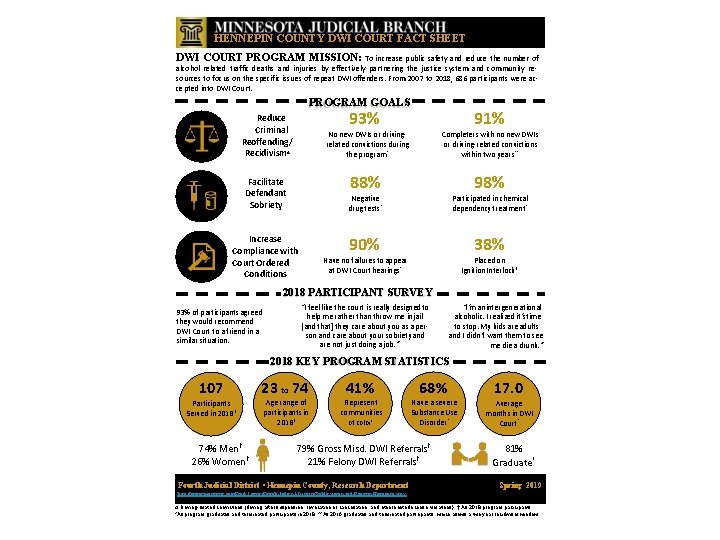
HENNEPIN COUNTY DWI COURT FACT SHEET DWI COURT PROGRAM MISSION: To increase public safety and reduce the number of alcohol related traffic deaths and injuries by effectively partnering the justice system and community resources to focus on the specific issues of repeat DWI offenders. From 2007 to 2018, 686 participants were accepted into DWI Court. PROGRAM GOALS Reduce Criminal Reoffending/ RecidivismΔ Facilitate Defendant Sobriety Increase Compliance with Court Ordered Conditions 93% 91% No new DWIs or drivingrelated convictions during the program* Completers with no new DWIs or driving-related convictions within two years** 88% 98% Negative drug tests* Participated in chemical dependency treatment* 90% 38% Have no failures to appear at DWI Court hearings* Placed on Ignition Interlock† 2018 PARTICIPANT SURVEY 93% of participants agreed they would recommend DWI Court to a friend in a similar situation. “I feel like the court is really designed to help me rather than throw me in jail [and that] they care about you as a person and care about your sobriety and are not just doing a job. ” “I’m an intergenerational alcoholic. I realized it’s time to stop. My kids are adults and I didn’t want them to see me die a drunk. ” 2018 KEY PROGRAM STATISTICS 107 23 to 74 41% 68% 17. 0 Participants Served in 2018† Age range of participants in 2018† Represent communities Have a severe Substance Use Disorder* Average months in DWI Court* 74% Men† 26% Women† of color† 79% Gross Misd. DWI Referrals† 21% Felony DWI Referrals† Fourth Judicial District • Hennepin County, Research Department 81% Graduate* Spring 2019 http: //www. mncourts. gov/Find-Courts/Fourth-Judicial-District/Publications-and-Reports-Hennepin. aspx Δ Driving-related convictions (driving after suspension, revocation or cancellation, and other limited license violations); † All 2018 program participants; *All program graduates and terminated participants in 2018; **All 2016 graduates and terminated participants, which allows a two year recidivism window.
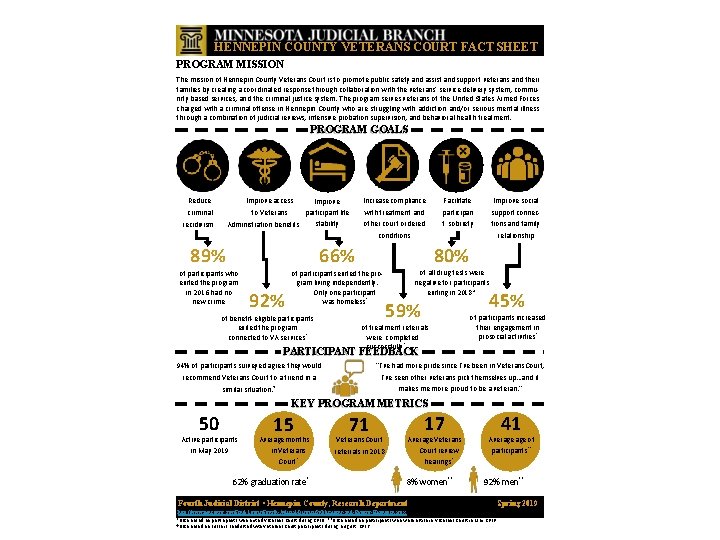
HENNEPIN COUNTY VETERANS COURT FACT SHEET PROGRAM MISSION The mission of Hennepin County Veterans Court is to promote public safety and assist and support veterans and their families by creating a coordinated response through collaboration with the veterans’ service delivery system, community based services, and the criminal justice system. The program serves veterans of the United States Armed Forces charged with a criminal offense in Hennepin County who are struggling with addiction and/or serious mental illness through a combination of judicial reviews, intensive probation supervision, and behavioral health treatment. PROGRAM GOALS Reduce criminal Improve access to Veterans Improve participant life stability Administration benefits recidivism Increase compliance with treatment and other court ordered conditions Improve social support connections and family Facilitate participan t sobriety relationship 89% 66% 80% of participants who exited the program in 2016 had no new crime of participants exited the program living independently. Only one participant was homeless* of all drug tests were negative for participants exiting in 2018* 92% of benefit-eligible participants exited the program connected to VA services* 59% of treatment referrals were completed successfully* 45% of participants increased their engagement in prosocial activities * PARTICIPANT FEEDBACK “I’ve had more pride since I’ve been in Veterans Court, I’ve seen other veterans pick themselves up. . . and it makes me more proud to be a veteran. ” 94% of participants surveyed agree they would recommend Veterans Court to a friend in a similar situation. † KEY PROGRAM METRICS 50 Active participants in May 2019 15 Average months in Veterans Court* 62% graduation rate* 71 Veterans Court referrals in 2018 17 Average Veterans Court review hearings* 8% women** 41 Average of participants ** 92% men** Fourth Judicial District • Hennepin County, Research Department http: //www. mncourts. gov/Find-Courts/Fourth-Judicial-District/Publications-and-Reports-Hennepin. aspx *Data based on participants who exited Veterans Court during 2018; **Data based on participants who were active in Veterans Court in May 2019 †Data based on surveys conducted with Veterans Court participants during August, 2017 Spring 2019
Opioids and the Courts
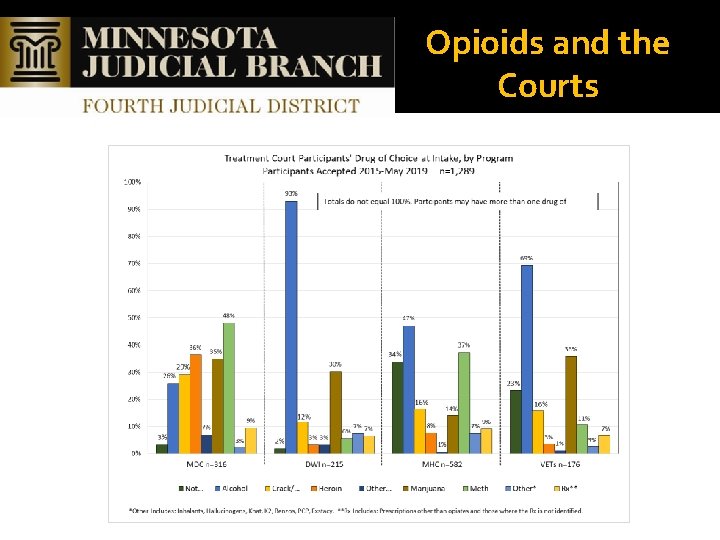
Opioids and the Courts
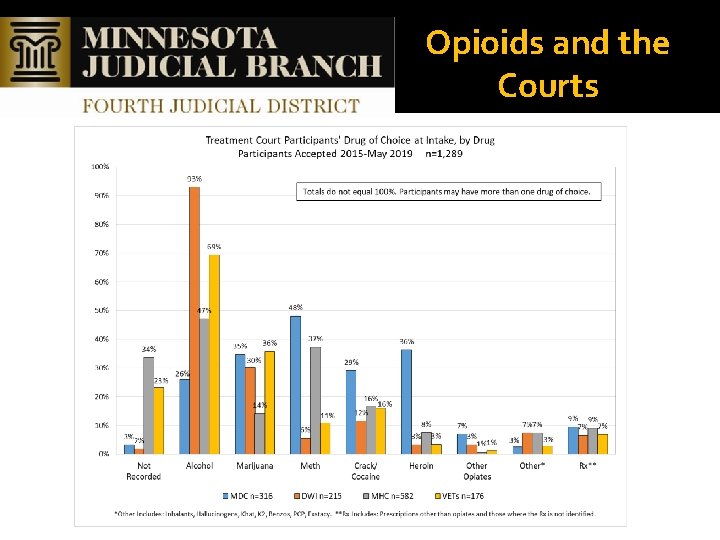
Opioids and the Courts
Opioids and the Courts �In 2019, the Hennepin County Medical Center received a State Opioid Response Grant from SAMHSA. �A portion of this grant works with our Drug Court to increase access to Medication Assisted Treatment and increasing patient capacity. �Instead of relying on methadone treatment solely, access to buprenorphine is increased through office-based opioid treatment.
Opioids and the Courts �The Fourth District is also adding Peer Recovery Navigators to our Treatment Court teams, as an additional resource for those individuals struggling with Substance Use Disorder. �These Navigators can help make connections to the recovery community and assist participants’ engagement in the program.
- Slides: 16