
Opioid Use Disorder OUD understanding OUD through a

- Slides: 23
Opioid Use Disorder (OUD) understanding OUD through a trauma-informed lens Christopher Abert
disclosures Acknowledgment: This CME event is not supported by any commercial entity. Disclosure: Alison Essary, DHSc, MHPE, PA-C discloses that she has received grant/research support from BCBS Mobilize AZ Grant Program and is a shareholder with Denali. Adrienne White, MS discloses that she has received grant/research support from BCBS Mobilize AZ Grant Program. All other speakers and members of the planning committee have no relevant financial relationships with a commercial interest to disclose. Accreditation Statement: This activity has been planned and implemented in accordance with the accreditation requirements and policies of the Arizona Medical Association (Ar. MA) through the joint providership of Honor. Health and Arizona State University. Honor. Health is accredited by Ar. MA to provide continuing medical education for physicians. Credit Statement: Honor. Health designates this live activity for a maximum of _1_ AMA PRA Category 1 Credits™. Physicians should only claim credit commensurate with the extent of their participation in the activity. Funding Statement: This activity has been funded by research grants from SAMHSA and BC/BS Mobilize AZ initiative.
Instructor Christopher Abert Executive Director, Southwest Recovery Alliance
learning objectives Following this presentation, you should be able to: • Describe the DSM 5 criteria for an opioid use disorder. • Classify the various etiologies of the development of an opioid use disorder or other risky substance use. • Explain the role adverse childhood events play in one’s susceptibility to developing an opioid use disorder. • Compare and contrast the various treatment options for opioid use disorder.
DSM 5 & opioid use disorder
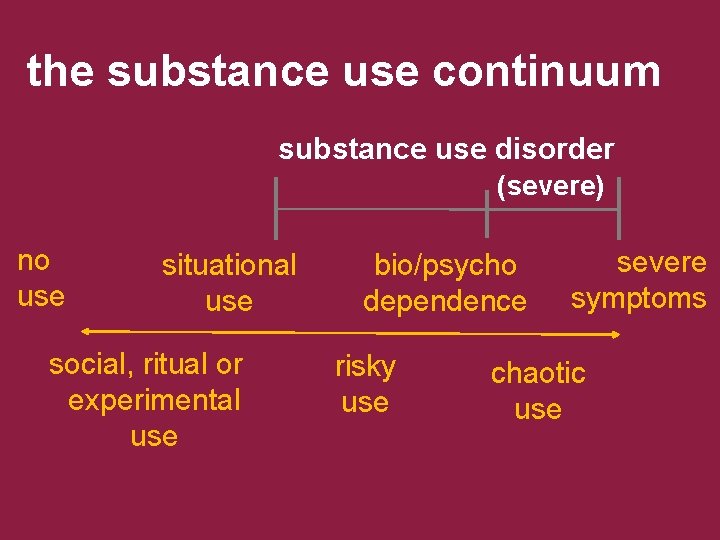
the substance use continuum substance use disorder (severe) no use situational use social, ritual or experimental use bio/psycho dependence risky use severe symptoms chaotic use
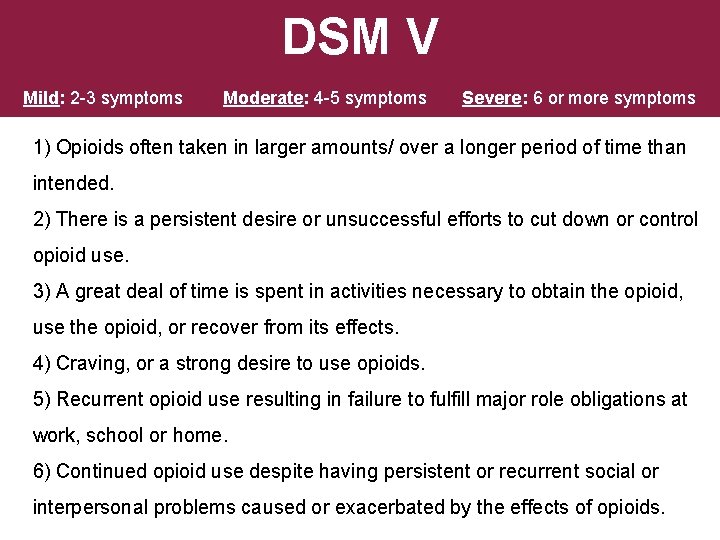
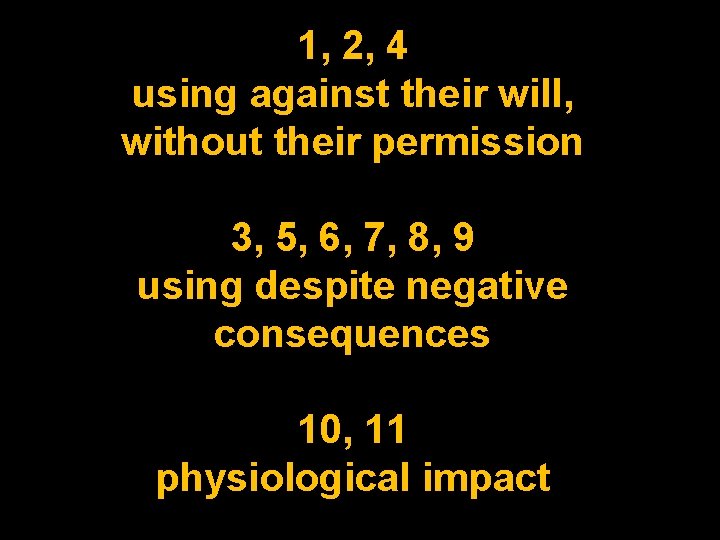
DSM V Mild: 2 -3 symptoms Moderate: 4 -5 symptoms Severe: 6 or more symptoms 1) Opioids often taken in larger amounts/ over a longer period of time than intended. 2) There is a persistent desire or unsuccessful efforts to cut down or control opioid use. 3) A great deal of time is spent in activities necessary to obtain the opioid, use the opioid, or recover from its effects. 4) Craving, or a strong desire to use opioids. 5) Recurrent opioid use resulting in failure to fulfill major role obligations at work, school or home. 6) Continued opioid use despite having persistent or recurrent social or interpersonal problems caused or exacerbated by the effects of opioids.
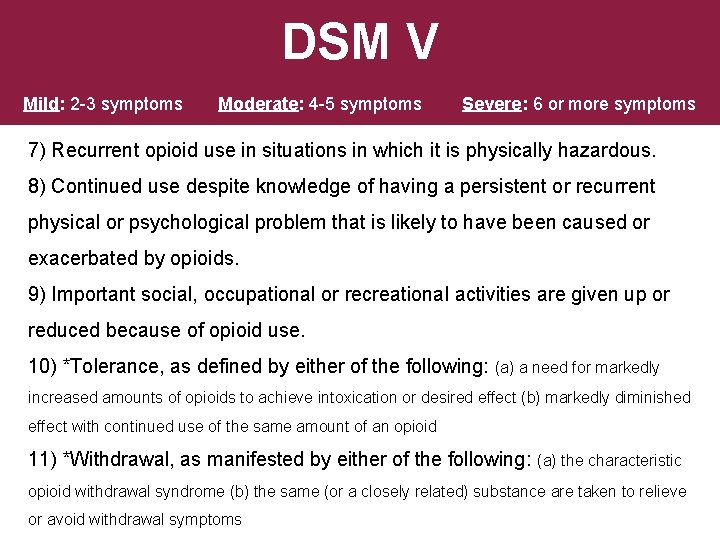
DSM V Mild: 2 -3 symptoms Moderate: 4 -5 symptoms Severe: 6 or more symptoms 7) Recurrent opioid use in situations in which it is physically hazardous. 8) Continued use despite knowledge of having a persistent or recurrent physical or psychological problem that is likely to have been caused or exacerbated by opioids. 9) Important social, occupational or recreational activities are given up or reduced because of opioid use. 10) *Tolerance, as defined by either of the following: (a) a need for markedly increased amounts of opioids to achieve intoxication or desired effect (b) markedly diminished effect with continued use of the same amount of an opioid 11) *Withdrawal, as manifested by either of the following: (a) the characteristic opioid withdrawal syndrome (b) the same (or a closely related) substance are taken to relieve or avoid withdrawal symptoms
1, 2, 4 using against their will, without their permission 3, 5, 6, 7, 8, 9 using despite negative consequences 10, 11 physiological impact
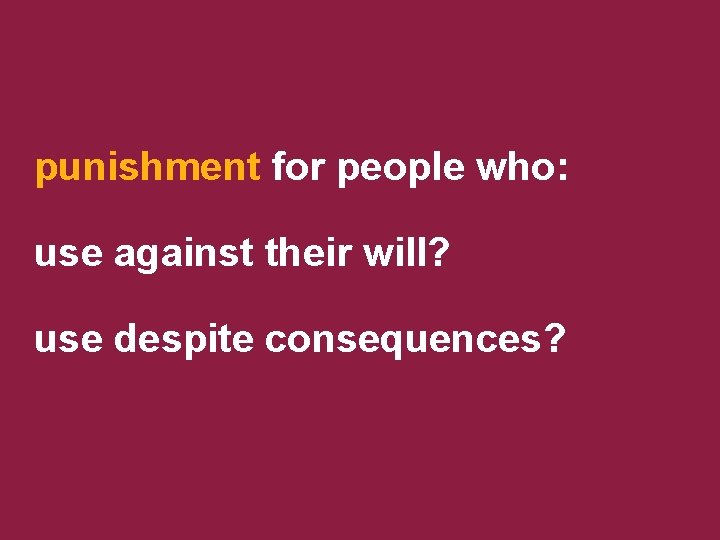
punishment for people who: use against their will? use despite consequences?
OUD causes
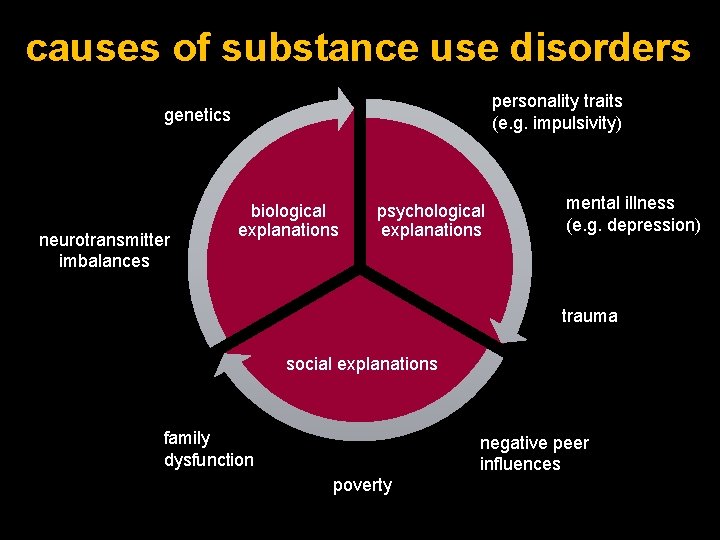
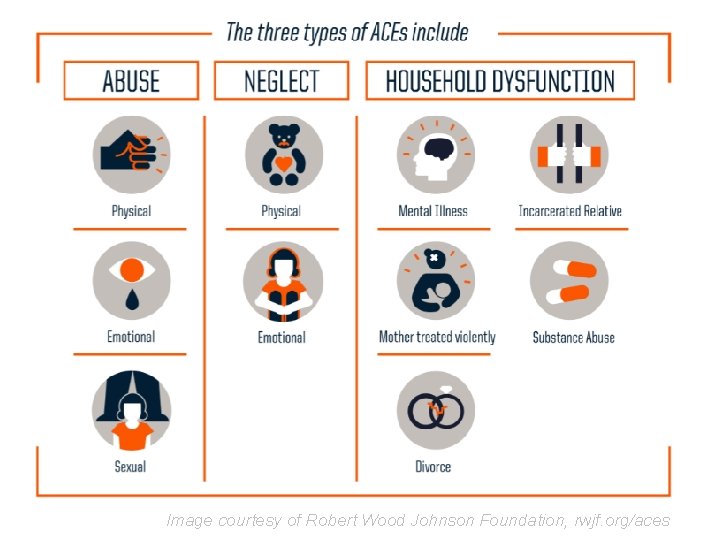
causes of substance use disorders personality traits (e. g. impulsivity) genetics neurotransmitter imbalances biological explanations psychological explanations mental illness (e. g. depression) trauma social explanations family dysfunction negative peer influences poverty
Image courtesy of Robert Wood Johnson Foundation, rwjf. org/aces
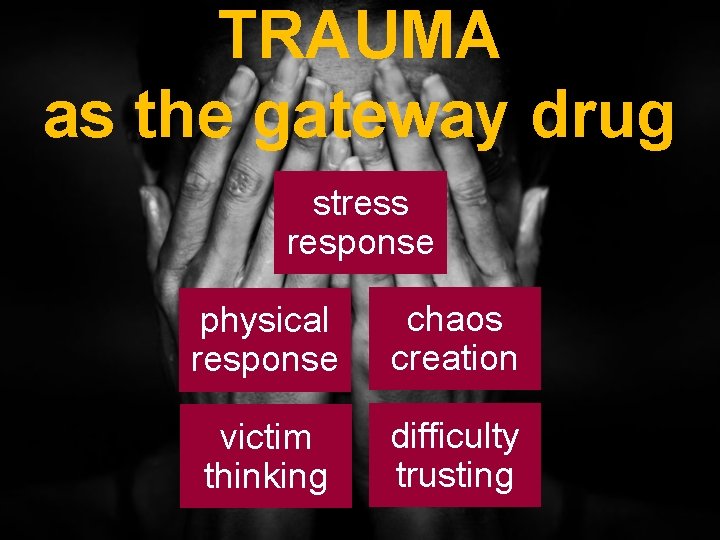
TRAUMA as the gateway drug stress response physical response chaos creation victim thinking difficulty trusting
compassion understanding dignity
OUD treatment
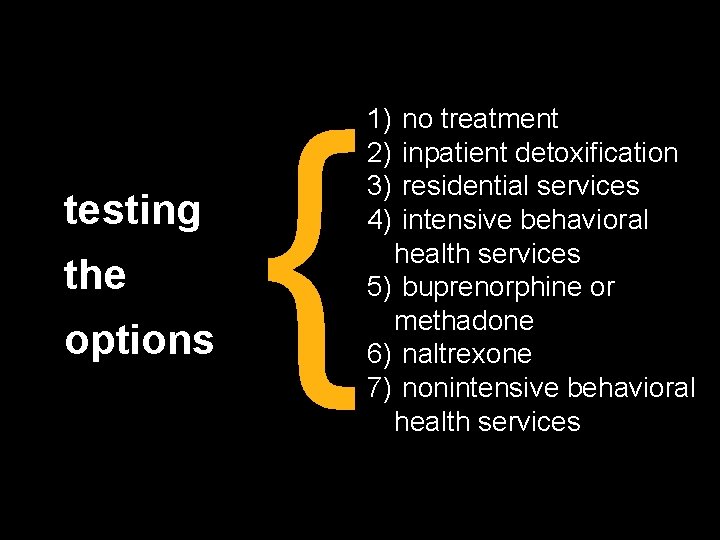
testing the options { 1) 2) 3) 4) no treatment inpatient detoxification residential services intensive behavioral health services 5) buprenorphine or methadone 6) naltrexone 7) nonintensive behavioral health services
and the winner is: M. A. T.
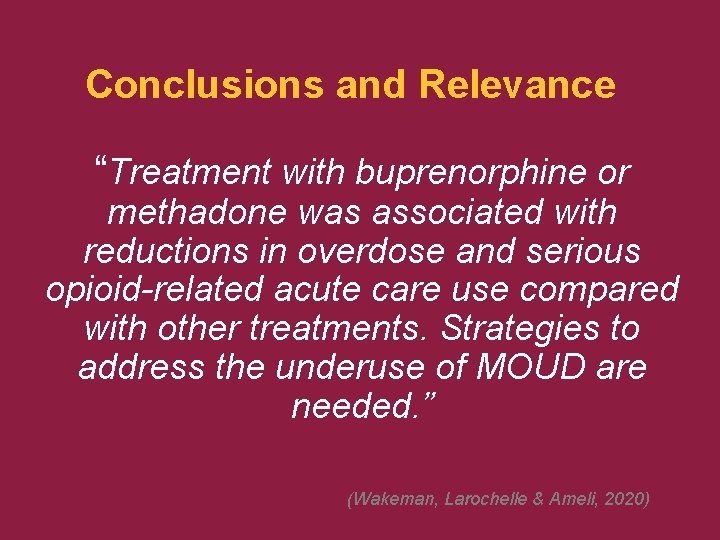
Conclusions and Relevance “Treatment with buprenorphine or methadone was associated with reductions in overdose and serious opioid-related acute care use compared with other treatments. Strategies to address the underuse of MOUD are needed. ” (Wakeman, Larochelle & Ameli, 2020)
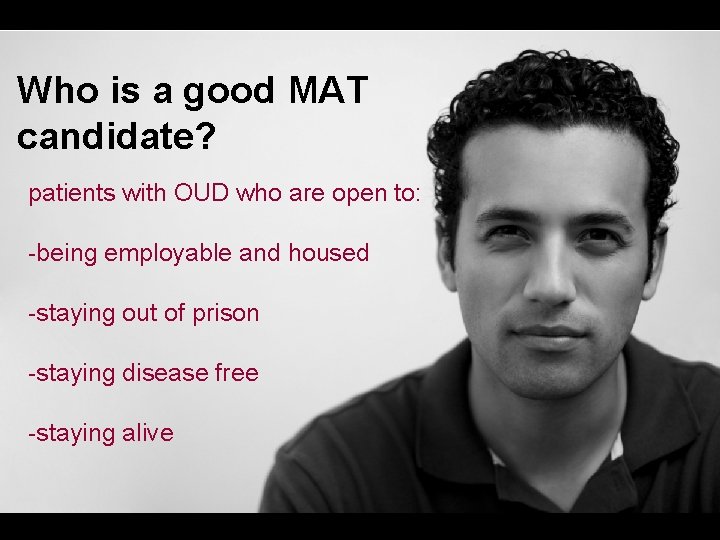
Who is a good MAT candidate? patients with OUD who are open to: -being employable and housed -staying out of prison -staying disease free -staying alive
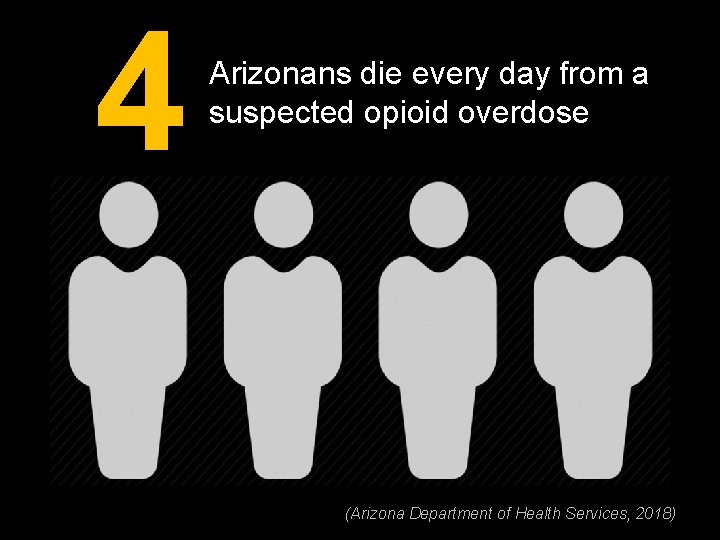
4 Arizonans die every day from a suspected opioid overdose (Arizona Department of Health Services, 2018)
additional resources • • • Harm Reduction Coalition harmreduction. org Robert Wood Johnson Foundation https: //www. rwjf. org/en/library/collections/aces. html American Psychiatric Association (2013). Diagnostic and Statistical Manual of Mental Disorders (5 th ed. ). Washington, DC: author. ASU Center for Applied Behavioral Health MAT Pocket Guide: https: //cabhp. asu. edu/sites/default/files/mat_printable_guide. pdf CDC opioid prescribing guidelines: https: //www. cdc. gov/mmwr/volumes/65/rr/rr 6501 e 1. htm Arizona Opioid Prescribing Guidelines (Arizona Department of Health Services): http: //www. azdhs. gov/documents/audiences/clinicians/clinical-guidelinesrecommendations/prescribing-guidelines/az-opiod-prescribing-guidelines. pdf Provider Clinical Support System MAT waiver training: https: //pcssnow. org/education-training/mat-training/ Arizona Department of Health Services opioid dashboard: https: //www. azdhs. gov/prevention/womens-childrens-health/injury-prevention/ opioid-prevention/index. php Southwest Recovery Alliance southwestrecoveryalliance. org
Thank you! Christopher Abert Director, Southwest Recovery Alliance 812 -320 -7525 cabert@southwestrecoveryalliance. org