
OPIOID ANALGESICS Dr Naila Abrar LEARNING OBJECTIVES After
OPIOID ANALGESICS Dr. Naila Abrar
LEARNING OBJECTIVES After this session, you should be able to: ü Classify opioids ü Describe opioid receptor distribution and the mechanism of action of opioid analgesics ü Discuss pharmacological effects, adverse effects and contraindications of opioids ü Outline salient features of various opioid agonists, partial agonists and opioid antagonist.
TERMINOLOGIES Opium • derived from Greek word “opos” for juice (exudate from poppy) • Contains many alkaloids (opiates) Opiates • drugs derived from opium • Include morphine, codeine, thebaine & semisynthetic derivatives Opioids • all compounds related to opium- a natural or synthetic drug that binds to opioid receptors producing agonist effects
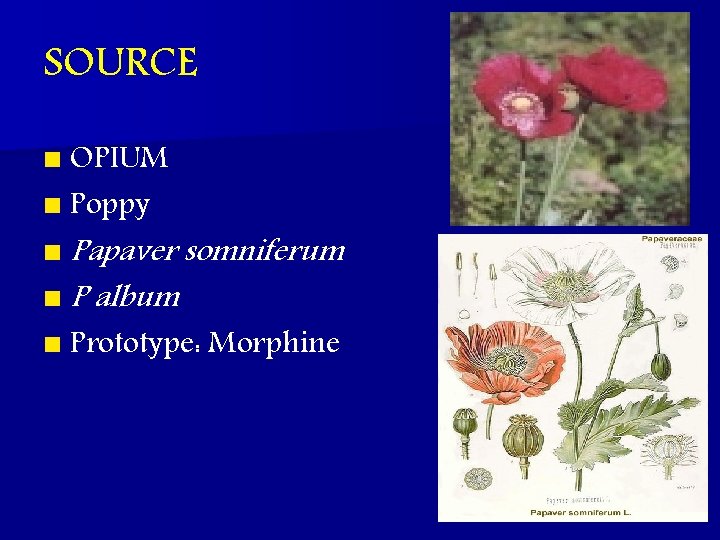
SOURCE n OPIUM n Poppy n Papaver somniferum n P album n Prototype: Morphine
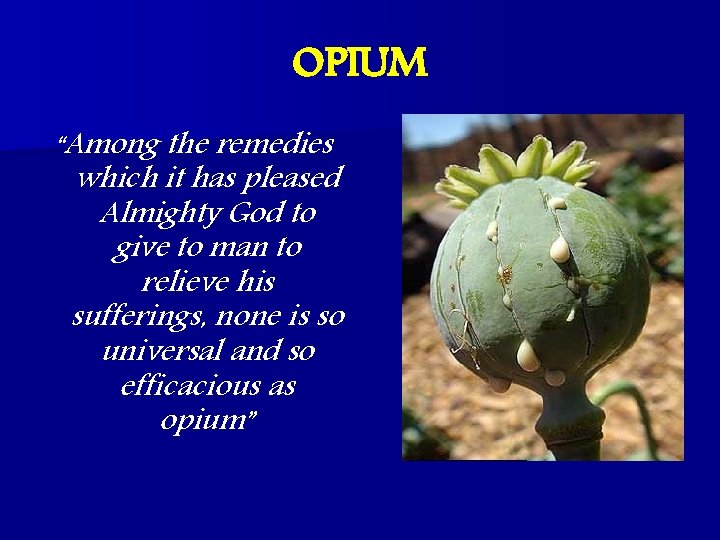
OPIUM “Among the remedies which it has pleased Almighty God to give to man to relieve his sufferings, none is so universal and so efficacious as opium”
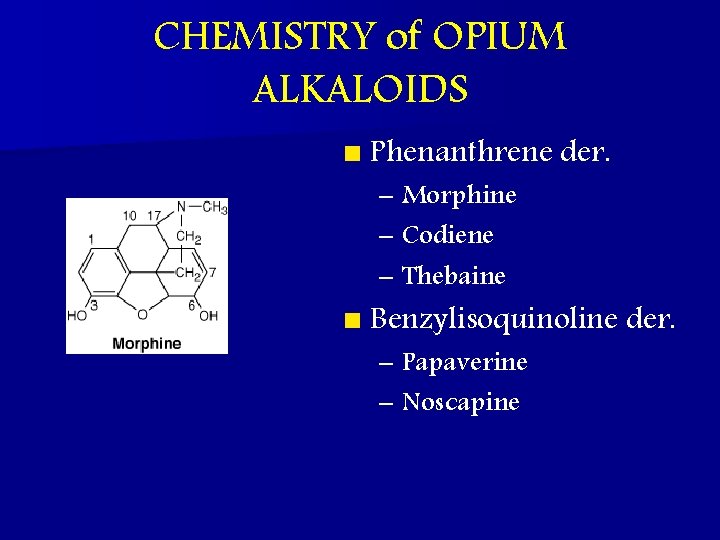
CHEMISTRY of OPIUM ALKALOIDS n Phenanthrene der. – Morphine – Codiene – Thebaine n Benzylisoquinoline der. – Papaverine – Noscapine
CLASSIFICATION (Based on source) Naturally Occurring Opium Alkaloids: Ø Morphine, Codeine Semisynthetic Derivatives: Ø Diamorphine (Heroin), Etorphine, Buprenorphine, Hydromorphone, Oxymorphone, Hydrocodone, Oxycodone (phenanthrenes)
Synthetic Morphine Substitutes: Ø Phenylpiperidine series: • Pethidine • Fentanyl, sufentanil, alfentanil, remifentanil • Diphenoxylate, Loperamide Ø Phenylheptylamines • Methadone, d– Propoxyphene Ø Morphinans • Levorphanol, levallorphan Ø Benzomorphan compounds • Pentazocine, Cyclazocine
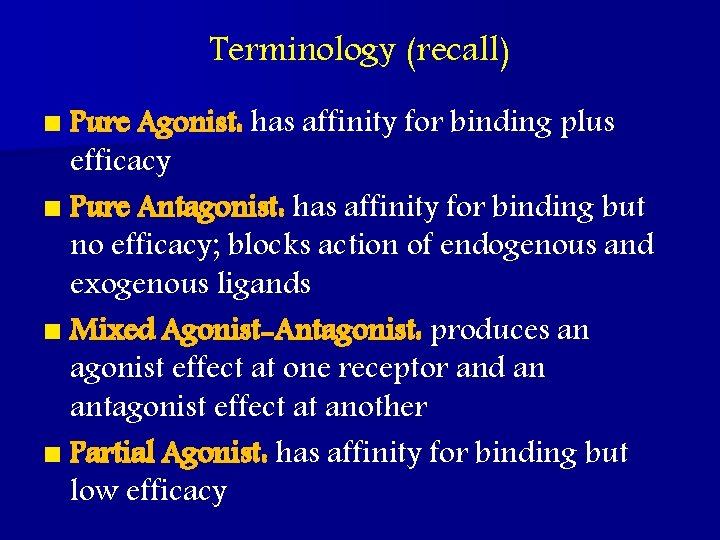
Terminology (recall) n Pure Agonist: has affinity for binding plus efficacy n Pure Antagonist: has affinity for binding but no efficacy; blocks action of endogenous and exogenous ligands n Mixed Agonist-Antagonist: produces an agonist effect at one receptor and an antagonist effect at another n Partial Agonist: has affinity for binding but low efficacy

CLASSIFICATION OF OPIOID ANALGESICS OPIOID AGONISTS - Morphine Methadone Levorphanol Fentanyl gp- sufentanil, remifentanil Hydromorphone Meperidine Tramadol
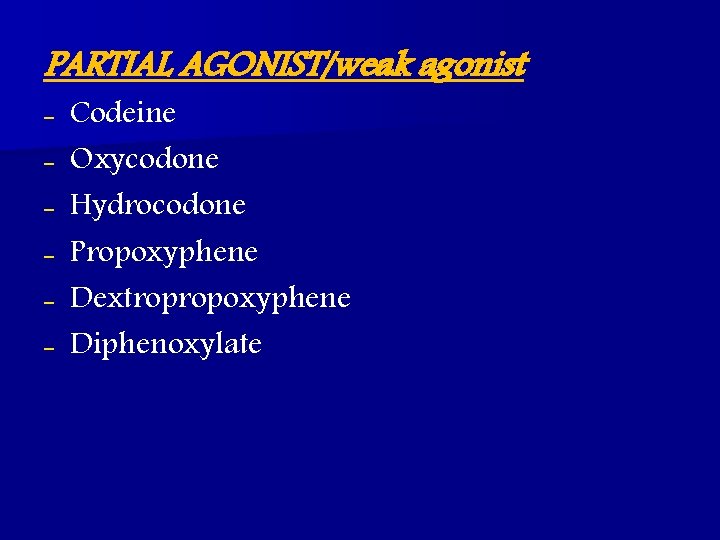
PARTIAL AGONIST/weak agonist - Codeine Oxycodone Hydrocodone Propoxyphene Dextropropoxyphene Diphenoxylate
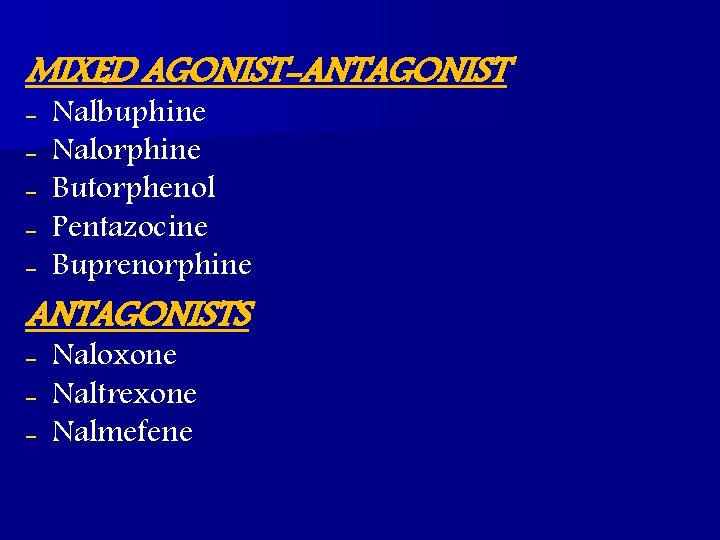
MIXED AGONIST-ANTAGONIST - Nalbuphine Nalorphine Butorphenol Pentazocine Buprenorphine - Naloxone Naltrexone Nalmefene ANTAGONISTS
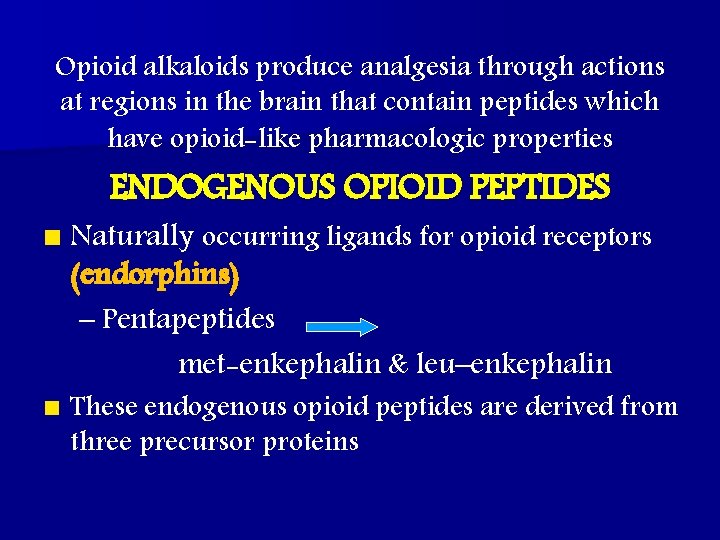
Opioid alkaloids produce analgesia through actions at regions in the brain that contain peptides which have opioid-like pharmacologic properties ENDOGENOUS OPIOID PEPTIDES n Naturally occurring ligands for opioid receptors (endorphins) – Pentapeptides met-enkephalin & leu–enkephalin n These endogenous opioid peptides are derived from three precursor proteins
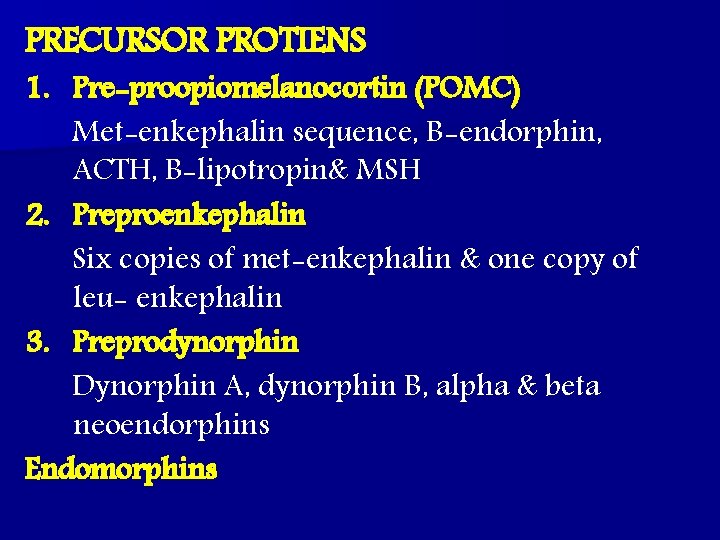
PRECURSOR PROTIENS 1. Pre-proopiomelanocortin (POMC) Met-enkephalin sequence, B-endorphin, ACTH, B-lipotropin& MSH 2. Preproenkephalin Six copies of met-enkephalin & one copy of leu- enkephalin 3. Preprodynorphin Dynorphin A, dynorphin B, alpha & beta neoendorphins Endomorphins
PHARMACOKINETICS ABSORPTION – Well absorbed – First-pass metabolism than parenteral dose DISTRIBUTION oral dose higher – Bind to plasma proteins but rapidly leave the blood and localize in highest concentrations in tissues that are highly perfused
METABOLISM – Polar metabolites excreted by kidneys – Morphine conjugated to morphine-3 glucuronide (neuroexcitatory) – 10% metabolized to morphine-6 glucoronide(more potent analgesic) – Esters hydrolyzed by common tissue esterase – Heroin hydrolyzed by common tissue esterases to monoacetylmorphine (contd. )
– Phenylpiperidines hepatic oxidative metabolism – Meperidine is demethylated to normeperidine (seizures in high conc. ) – Codiene-CYP 2 D 6 (genetic polymorphism) EXCRETION – Polar metabolites, including glucuronide conjugates are excreted mainly in the urine
PHARMACODYNAMICS MECHANISM OF ACTION – Opioid agonists produce analgesia by binding to specific GPCRs – Located primarily in brain & spinal cord regions involved in the transmission and modulation of pain
Mechanism of action n Activation of peripheral nociceptive fibersrelease of substance P and other pain-signaling neurotransmitters from nerve terminals in the dorsal horn of the spinal cord n Release of pain-signaling neurotransmitters is regulated by endogenous endorphins or by exogenous opioid agonists by acting presynaptically to inhibit substance P release, causing analgesia
CELLULAR EFFECTS of Opioid Receptor Activation n Inhibition of neurotransmission due to opioid- induced presynaptic inhibition of neurotransmitter release n Involves changes in transmembrane ion conductance 1. Close voltage-gated Ca 2+ channels on pre-synaptic nerve terminals reduce transmitter release 2. Open K+ channels thus hyperpolarize and inhibit postsynaptic neurons
RECEPTOR TYPES Ø Three major classes 1. mu ( ) 2. kappa (k) 3. delta (d) Ø GPCRs
n Majority of the opioid analgesics act primarily at the receptors n Analgesia, euphoria, respiratory depression & physical dependence properties of morphine result principally from actions at the receptor n Endogenous opioid peptides have more affinity for the k & d receptors n Reduced incidence for respiratory depression and addiction & dependence with k receptors but dysphoric effects
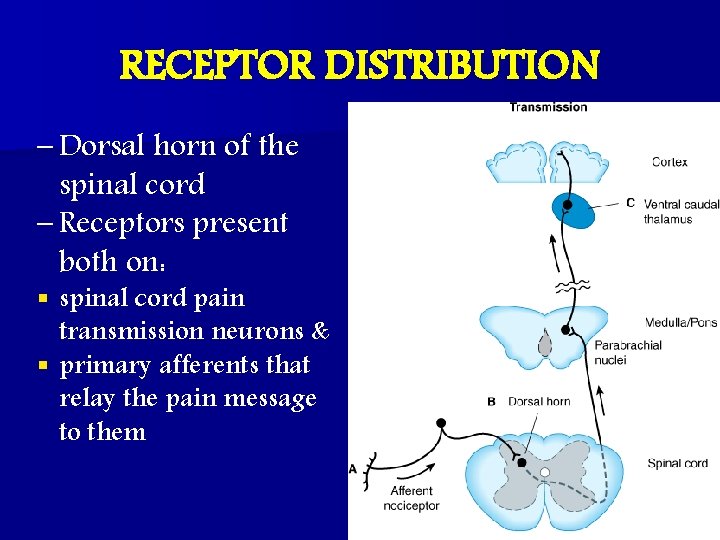
RECEPTOR DISTRIBUTION – Dorsal horn of the spinal cord – Receptors present both on: § spinal cord pain transmission neurons & § primary afferents that relay the pain message to them
NEUROANATOMY OF PAIN 1. Afferent pathways a) nociceptors (pain receptors) b) afferent nerve fibres c) spinal cord network 2. CNS-limbic system, reticular formation, thalamus, hypothalamus and cortex 3. Efferent pathways- fibres connecting the reticular formation, midbrain & substantia gelatinosa (responsible for pain modulation)
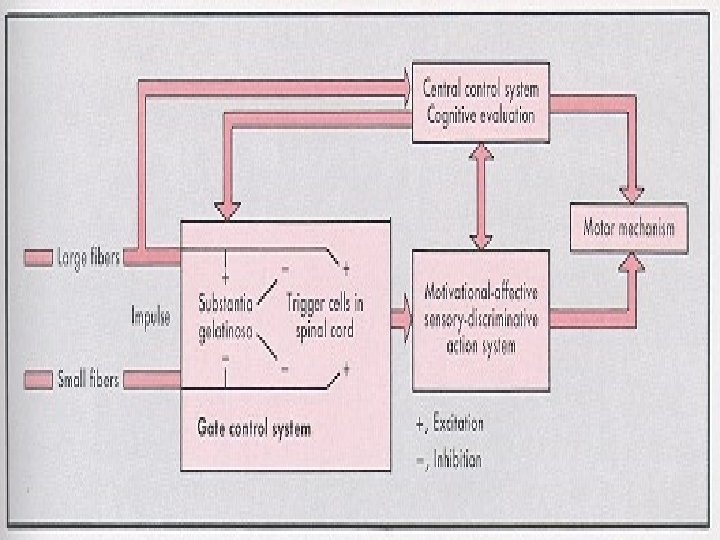
Theory of pain production and modulation Gate control theory (created by Melzack and Wall) n Nociceptive impulses are transmitted to the spinal cord through large A- delta & small Cfibers n Synapses in the SG n Cells in this structure function as a gate, regulating transmission of impulses to CNS n
Theory of pain production and modulation (contd. ) Ø Stimulation of larger nerve fibers (Aa, Ab) causes the cells in SG to "close the gate“ Ø A closed gate decreases stimulation of 2 nd afferent neuron, which decreases the transmission of impulses, & diminishes pain perception
Theory of pain production and modulation (contd. ) Stimulation of small fiber input inhibits cells in SG and "open the gate". Ø An open gate increases the stimulation of 2 nd order neuron cells & increases transmission of impulses and enhances pain perception Ø In addition to gate control through large and small fibers stimulation, the CNS, through efferent pathways, may close, partially close, or open gate Ø Cognitive functioning may thus modulate pain perception Ø
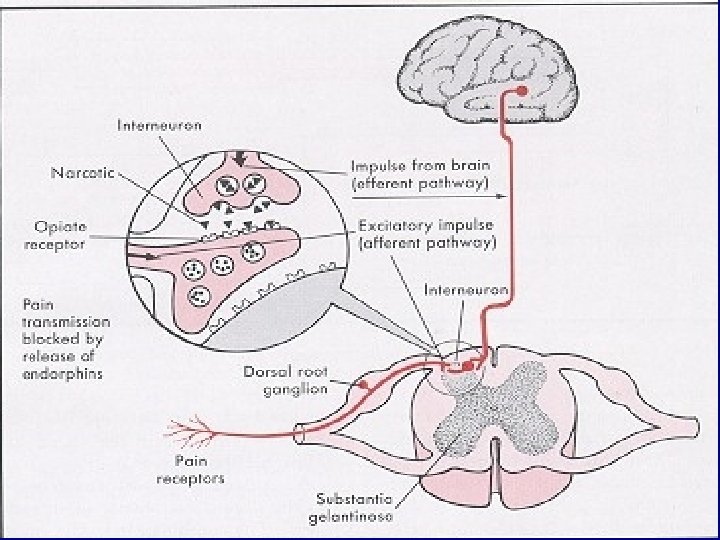
NEURAL MECHANISM OF ANALGESIA – Opioid agonists inhibit the release of excitatory transmitters from the primary afferents that relay the pain message to them – They directly inhibit the dorsal horn pain transmission neurons – Thus opioids exert a powerful analgesic effect directly on the spinal cord (contd. )
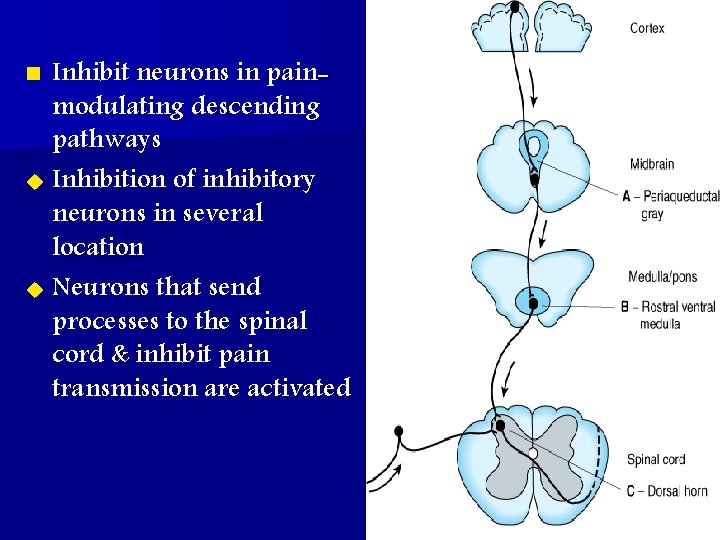
Inhibit neurons in painmodulating descending pathways u Inhibition of inhibitory neurons in several location u Neurons that send processes to the spinal cord & inhibit pain transmission are activated n
ORGAN SYSTEM EFFECTS OF MORPHINE & ITS SURROGATES CNS EFFECTS – Principal effects of opioid analgesics with affinity for receptors are on CNS – Analgesia, euphoria, sedation & respiratory depression, cough suppression, miosis, truncal rigidity, nausea vomiting, temperature
MIOSIS – Valuable in the diagnosis of opioid overdose (no tolerance) – Can be blocked by opioid antagonists – Mediated in part by parasympathetic pathways
TRUNCAL RIGIDITY – Increase in tone of the large trunk muscles – Reduces thoracic compliance & thus interferes with ventilation – Prevented by concomitant use of neuromuscular blocking agents
NAUSEA & vomiting – Activate brainstem CTZ TEMPERATURE - Homeostatic regulation of body temperature is mediated in part by endogenous opioid peptides – Hypothermia
PERIPHERAL EFFECTS CARDIOVASCULAR SYSTEM – No significant direct effect on the heart & cardiac rhythm except bradycardia – Meperidine may result in tachycardia due to its antimuscarinic action – Blood pressure is usually well maintained unless the CVS is stressed, in which case hypotension may occur (due to peripheral arterial & venous dilation)
GASTROINTESTINAL TRACT – Constipation – Tolerance does not develop – Opioid receptors present in high density – Stomach motility decreases but tone increases – Nonpropulsive contractions of intestine – Delayed passage of fecal mass
BILIARY TRACT – Constrict biliary smooth muscle, which may result in biliary colic – Sphincter of Oddi may constrict, resulting in reflux of biliary & pancreatic secretions and elevated plasma amylase & lipase levels
RENAL – – – Renal function is depressed Due to decreased renal plasma flow Opioids have an anti-diuretic effect Enhance renal tubular sodium absorption Ureteral & bladder tone are increased Increased sphincter tone
UTERUS – May prolong labor NEUROENDOCRINE – Stimulate release of ADH, prolactin, & somatotropin – Inhibit release of LH PRURITIS – Flushing & warming of the skin accompanied sometimes by sweating & itching
MISCELLANEOUS – Modulate the actions of the immune system – Natural killer cell cytolytic activity & lymphocyte proliferative responses usually inhibited – Mediated by the sympathetic NS in acute administration & by the hypothalamicpituitary-adrenal system in prolonged administration
CLINICAL USE OF OPIOID ANALGESICS A. Analgesia – Severe, constant pain – Sharp, intermittent pain is not as effectively controlled – Useful in the management of pain associated with cancer & other terminal illnesses – Used during obstetric labor (meperidine)
B. Acute pulmonary edema – Remarkable relief in dyspnea from pulmonary edema associated with left ventricular failure – Involves reduced perception of shortness of breath & reduced patient anxiety as well as reduced cardiac preload (reduced venous return) and afterload (decreased peripheral resistance) – Useful in treating painful myocardial ischemia with pulmonary edema – morphine
Relief of anxiety & apprehension in pts with MI, internal bleeding n They are NOT anxiolytics or hypnotics CARDIAC ASTHMA OR acute LVF Ø Reduce preload & after load – VD Ø Shift blood from pulm to systemic circuit Ø Relieves air hunger by depressing resp centre Ø Calms pt - decreases symp response – decrease workload
C. Cough – Suppression of cough (obtained at doses lower than those needed for analgesia) – Both central & peripheral effects – Codeine, dextromethorphan, levopropoxyphene, noscapine D. Diarrhea – Diarrhea from any cause – Crude opium preparations used in the past – Synthetic surrogates with more selective GI effects & few or no CNS effects are used (diphenoxylate, loperamide)
E. Anesthesia – Frequently used as preanesthetic medication because of their sedative, anxiolytic, and analgesic properties – Also used intra-operatively both as adjuncts to other anesthetic agents and in high doses – Fentanyl, as a primary component of anesthetic regimen, most commonly in cardiovascular surgery – Neuroleptanesthesia ( contd. )
– Used as regional analgesics due to their direct action on the neurons of the spinal cord dorsal horn- epidural or subarachnoid space – Morphine is most frequently used – Adverse effects are less common – Respiratory depression, pruritis, nausea & vomiting may occur and can be reversed with naloxone – Fentanyl + LA- pain management – Post op shivering-meperidine used
PATIENT CONTROL ANALGESIA (PCA) Parenteral infusion device controlled by the patient by pressing a button to deliver a programmed dose of the desired opioid analgesic
TOXICITY & UNDESIRED EFFECTS n Direct toxic effects are extensions of their pharmacologic actions n Include respiratory depression, nausea, vomiting & constipation n Tolerance & dependence n Overdosage ( diagnosis & treatment) n Contraindications
n Stupor------- coma n RR low------- apnea, cyanosis n Hypotension n Pinpoint pupil n Hypothermia n Death due to resp. failure n TRIAD of pinpoint pupils, coma & resp. depression strongly suggests opioid poisoning
TOLERANCE – With frequently repeated administration of therapeutic doses of morphine or its surrogate, there is a gradual loss in effectiveness – To reproduce the original response, a larger dose must be administered – Develops most readily when large doses are given at short intervals & is minimized by giving small amounts of drug with longer intervals between doses
– Opioid rotation – Receptor uncoupling CROSS TOLERANCE – Patient tolerant to morphine show a reduction in analgesic response to other agonist opioids
PHYSICAL DEPENDENCE – Occurrence of a characteristic withdrawal or abstinence syndrome when the drug is stopped or an antagonist is administered – Signs & symptoms of withdrawal include rhinorrhea, lacrimation, yawning, chills, gooseflesh (piloerection), hyperventilation, hyperthermia, mydriasis, muscular aches, vomiting, diarrhea, anxiety & hostility
– Methadone is used in the detoxification of heroin addicts as the slower subsidence of effects is associated with a less intense immediate syndrome – Buprenorphine+ naloxone also used in maintenance treatment plans – Antagonist-precipitated withdrawal
PSYCHOLOGIC DEPENDENCE Compulsive use promoted due to: – Euphoria – Indifference to stimuli – Sedation – Abdominal symptoms
DIAGNOSIS & TREATMENT OF OPIOID OVERDOSAGE – Known addict, needle marks, miosis – Difficult to diagnose in comatose patients – I/V injection of naloxone reverses coma due to opioid overdose but not that due to other CNS depressants
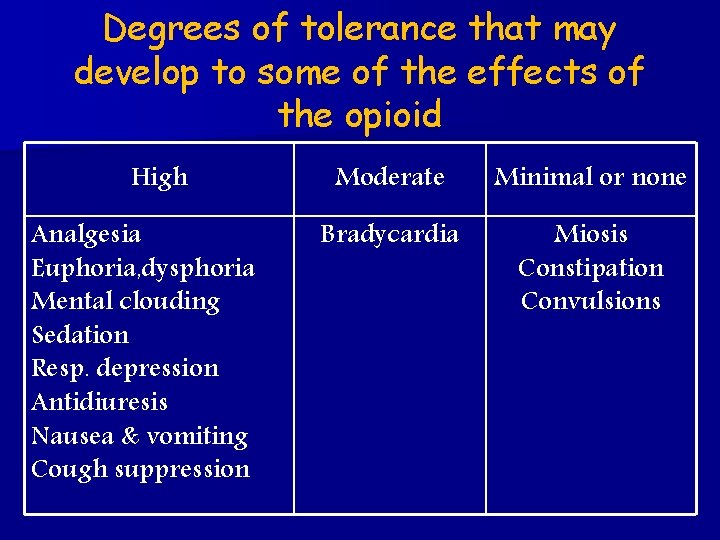
Degrees of tolerance that may develop to some of the effects of the opioid High Analgesia Euphoria, dysphoria Mental clouding Sedation Resp. depression Antidiuresis Nausea & vomiting Cough suppression Moderate Minimal or none Bradycardia Miosis Constipation Convulsions
CONTRAINDICATIONS & CAUTIONS IN THERAPY 1. Use of pure agonists with weak partial agonists 2. Use in patients with head injuries 3. Use in patients with endocrine disease 4. Use in patients with impaired pulmonary functions 5. Use in patients with impaired hepatic or renal function
6. Ø Ø Ø Use during pregnancy Fetus may become physically dependent in utero & manifest withdrawal symptoms in the early postpartum period signs & symptoms of withdrawal syndrome in the infant include irritability, shrill crying, diarrhea or even seizures treated with diazepam in mild withdrawal Camphorated tincture of opium is given in severe withdrawal Oral methadone is also used
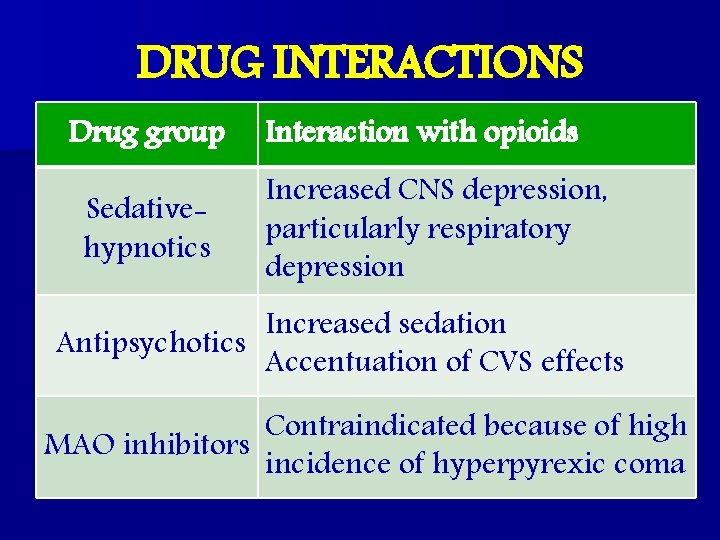
DRUG INTERACTIONS Drug group Sedativehypnotics Interaction with opioids Increased CNS depression, particularly respiratory depression Increased sedation Antipsychotics Accentuation of CVS effects Contraindicated because of high MAO inhibitors incidence of hyperpyrexic coma
METHADONE Ø Long acting MOR agonist Ø potent & clinically useful analgesic (oral BA better than morphine) Ø Relieves difficult to treat pain Ø Used in the treatment of opioid abuse (long t 1/2) Ø OPIOID ROTATION to methadone provides superior analgesia Ø For detoxification of a heroin-dependent addict, low doses of methadone(5 -10 mg) are given two or three times daily for 2 to 3 days
FENTANYL n Synthetic n Sufentanil > fentanyl >alfentanyl n Short time to peak analgesic effect, rapid termination, minimal direct myocardium depressant effect, reduce dosing requirement for the volatile agents– useful in anesthesia n Remifentanyl – ester – short t 1/2, more rapid onset, 1 -1. 5 mins after I/V –
CODEINE n Semisynthetic opioid - Methyl morphine n Converted to morphine by CYP 2 D 6 which is responsible for analgesic action n Used in cough n Less efficacious than morphine & adverse effects limit dose n Oxycodone more potent – prescribed in higher doses - abuse
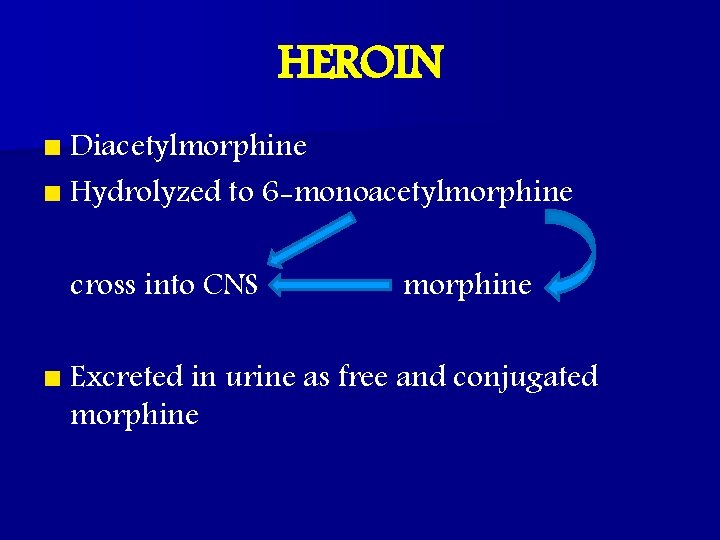
HEROIN n Diacetylmorphine n Hydrolyzed to 6 -monoacetylmorphine cross into CNS morphine n Excreted in urine as free and conjugated morphine
MEPERIDINE (Pethedine) Ø Potent MOR agonist – strong analgesic effects Ø Antimuscarinic effects Ø Inhibits catecholamine re-uptake Ø Contraindicated with tachycardia Ø Negative inotropic effect on the heart Ø Seizures with normeperidine Ø Serotonin syndrome with MAO inhibitors Ø Used in post anesthetic shivering
DIPHENOXYLATE & LOPERAMIDE n NOT for analgesia n TREATMENT of DIARRHEA n Diphenoxylate – metabolite difenoxin n Poorly soluble (even salts are insoluble in aqueous solution) so parenteral use is limited n + atropine to reduce likelihood of abuse n Loperamide – limited access to brain so abuse potential very low
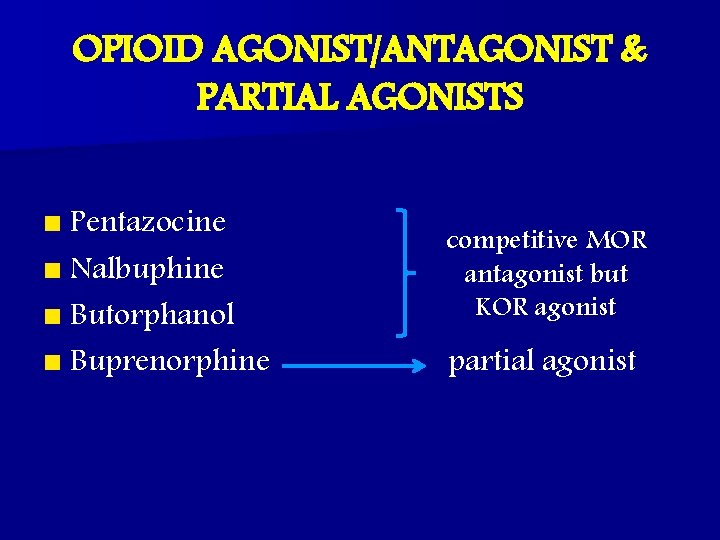
OPIOID AGONIST/ANTAGONIST & PARTIAL AGONISTS n Pentazocine n Nalbuphine competitive MOR antagonist but KOR agonist n Buprenorphine partial agonist n Butorphanol
PENTAZOCINE n KOR agonist n Weak MOR antagonist or partial agonist n Orally or parenterally but causes irritation so not used S/C n Morphine like CNS effects - analgesia, sedation, respiratory depression. n High dose – dysphoric effects n CVS increase BP & HR
NALBUPHINE n Strong KOP agonist n MOR antagonist n Less likely to produce dysphoric effects otherwise similar to pentazocine n Ceiling effect- increases in dose beyond 30 mg produces no further respiratory depression or analgesia n Safer in patients with cardiac disease than pentazocine
n Precipitates abstinence syndrome in subjects dependent on low doses of morphine n Prolonged use can produce physical dependence n Parenteral only
BUPRENORPHINE n Buprenorphine- potent long acting partial MOR agonist and KOR antagonist n 25 -50 X more potent than morphine] n 0. 4 mg = 10 mg morphine n S/L to avoid 1 st pass n Resistant to naloxone reversal n Opioid dependence n Slow dissociation from receptors
BUTORPHANOL n Similar to pentazocine & nalbuphine n Predominantly KOR agonist n MOR antagonist n Used for relief of acute post-op pain n Equal analgesia as nalbuphine but more sedation n Increase BP & HR n incidence of psychotomimetic effects lower than pentazocine but still present
TRAMADOL & TRAPENTADOL n Synthetic codeine analog n Weak MOR agonist n Analgesic effect predominantly due to inhibition of reuptake of NE & 5 HT n As effective as morphine & meperidine in mild to moderate pain n Oral & I/M n Active metabolite formed in liver by CYP 2 D 6 n t 1/2= 6 -8 hrs n Max dose 400 mg
Adverse effects: Ø Nausea, vomiting, dizziness, dry mouth, sedation and headache Ø Seizures Ø Respiratory depression but less than morphine Ø Not to be used in patients taking MAO inhibitors, SSRIs or drugs that lower seizure threshold
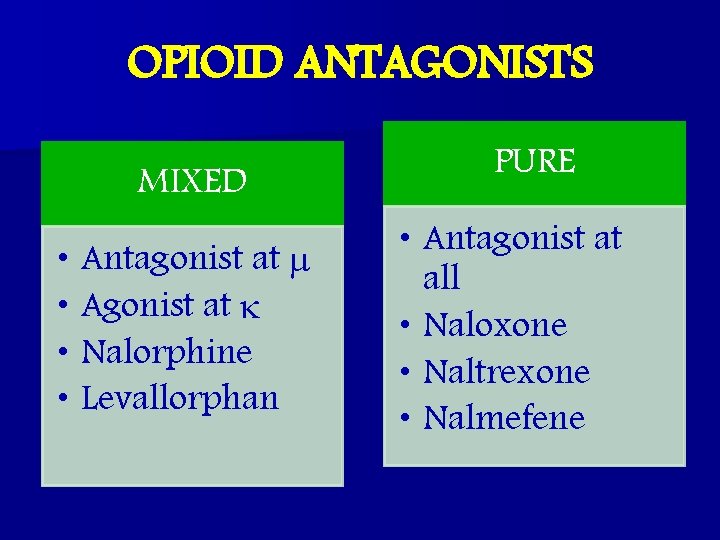
OPIOID ANTAGONISTS MIXED • • Antagonist at Agonist at k Nalorphine Levallorphan PURE • Antagonist at all • Naloxone • Naltrexone • Nalmefene
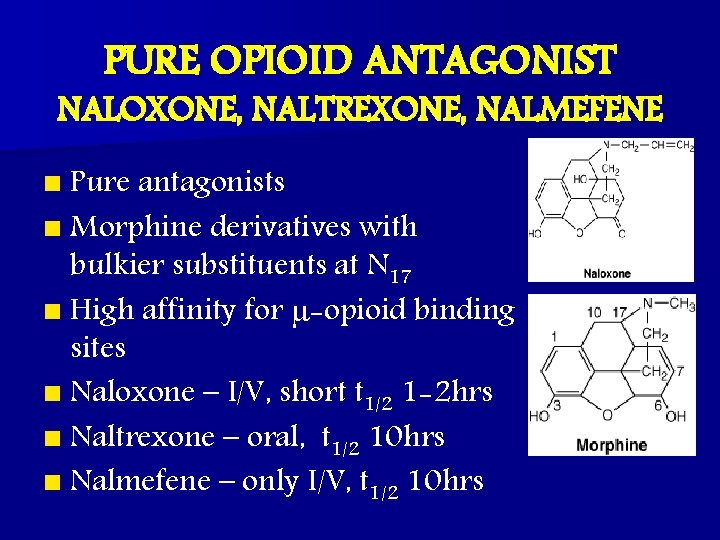
PURE OPIOID ANTAGONIST NALOXONE, NALTREXONE, NALMEFENE n Pure antagonists n Morphine derivatives with bulkier substituents at N 17 n High affinity for -opioid binding sites n Naloxone – I/V, short t 1/2 1 -2 hrs n Naltrexone – oral, t 1/2 10 hrs n Nalmefene – only I/V, t 1/2 10 hrs
n Absence of an agonist – inert completely reverse opioid effects in 1 -3 mins n Acute overdose – Normalizes respiration, level of consciousness, pupil size, bowel activity, & awareness of pain n Dependent subjects – precipitate abstinence syndrome
n Treatment of acute opioid overdose n 1 mg naloxone = 25 mg heroin n Keep in mind the short duration of action n Initial dose is 0. 1 -0. 4 mg I/V (neonates 10 ug/kg) n Maintenance with 0. 4 -0. 8 mg I/V repeat as required n Low dose 0. 04 mg – treatment of adverse effects associated with I/V or epidural opioids n Methylnaltrexone & alvimopan
n NALTREXONE – maintenance drug for addicts n Decreases alcohol craving in chronic alcoholics by increasing baseline bendorphins n Facilitates abstinence from nicotine with reduced weight gain
- Slides: 79