
OPIOID ANALGESICS Chapter 9 Shannan Crumpler Andrea Matteliano


- Slides: 46
OPIOID ANALGESICS Chapter 9 Shannan Crumpler Andrea Matteliano Beverly Sessanna Ericka Sullivan Galen Westmoore
History of Opioids • Opium is extracted from poppy seeds (Paper somniforum) • Used for thousands of years to produce: – Euphoria – Analgesia – Sedation – Relief from diarrhea – Cough suppression
History cont’d • Used medicinally and recreationally from early Greek and Roman times • Opium and laudanum (opium combined with alcohol) were used to treat almost all known diseases • Morphine was isolated from opium in the early 1800’s and since then has been the most effective treatment for severe pain
History and Background • Invention of the hypodermic needle in 1856 produced drug abusers who self administered opioids by injection • Controlling the widespread use of opioids has been unsuccessful because of the euphoria, tolerance and physiological dependence that opioids produce
Terminology • “opium” is a Greek word meaning “juice, ” or the exudate from the poppy • “opiate” is a drug extracted from the exudate of the poppy • “opioid” is a natural or synthetic drug that binds to opioid receptors producing agonist effects
Natural opioids occur in 2 places: • 1) In the juice of the opium poppy (morphine and codeine) • 2) As endogenous endorphins • All other opioids are prepared from either morphine (semisynthetic opioids such as heroin) or they are synthesized from precursor compounds (synthetic opioids such as fentanyl)
Pharmacological Effects • Sedation and anxiolysis – – Drowsiness and lethargy Apathy Cognitive impairment Sense of tranquility • Depression of respiration – Main cause of death from opioid overdose – Combination of opioids and alcohol is especially dangerous • Cough suppression – Opioids suppress the “cough center” in the brain • Pupillary constriction – pupillary constriction in the presence of analgesics is characteristic of opioid use
Pharmacological effects cont’d. • Nausea and vomiting – Stimulation of receptors in an area of the medulla called the chemoreceptor trigger zone causes nausea and vomiting – Unpleasant side effect, but not life threatening • Gastrointestinal symptoms – Opioids relieve diarrhea as a result of their direct actions on the intestines • Other effects – Opioids can release histamines causing itching or more severe allergic reactions including bronchoconstriction – Opioids can affect white blood cell function and immune function
Mechanism of action • Activation of peripheral nociceptive fibers causes release of substance P and other pain-signaling neurotransmitters from nerve terminals in the dorsal horn of the spinal cord • Release of pain-signaling neurotransmitters is regulated by endogenous endorphins or by exogenous opioid agonists by acting presynaptically to inhibit substance P release, causing analgesia
Primary Effect of Opioid Receptor Activation • Reduction or inhibition of neurotransmission, due largely to opioid-induced presynaptic inhibition of neurotransmitter release • Involves changes in transmembrane ion conductance – Increase potassium conductance (hyperpolarization) – Inactivation of calcium channels
Three Opioid Receptors • Mu • Kappa • Delta
Delta Receptor • It is unclear what delta’s responsible for. • Delta agonists show poor analgesia and little addictive potential • May regulate mu receptor activity
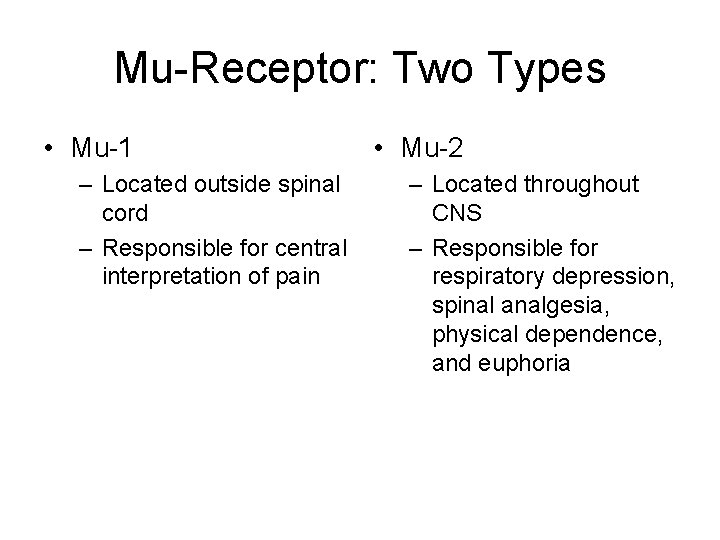
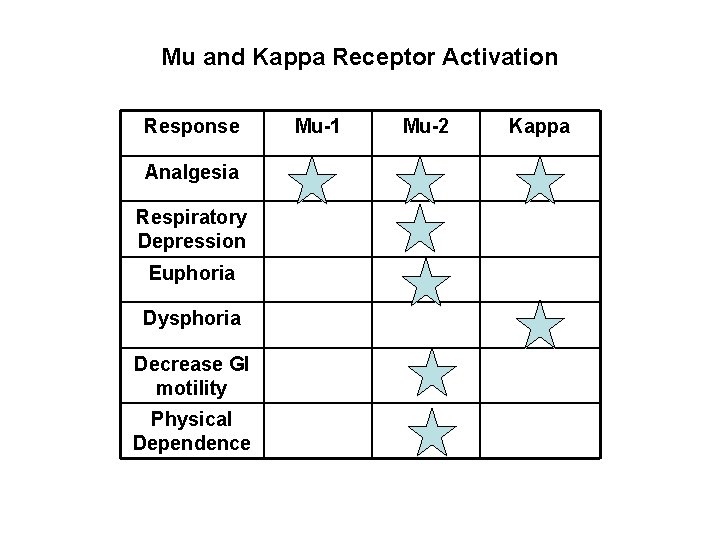
Mu-Receptor: Two Types • Mu-1 – Located outside spinal cord – Responsible for central interpretation of pain • Mu-2 – Located throughout CNS – Responsible for respiratory depression, spinal analgesia, physical dependence, and euphoria
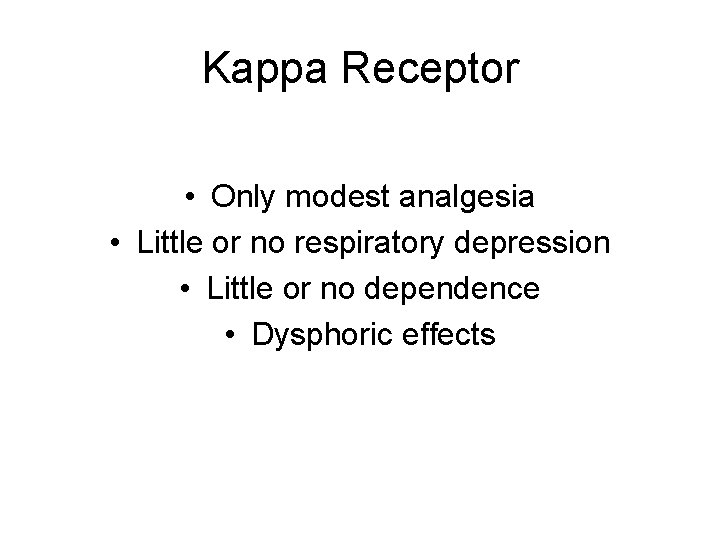
Kappa Receptor • Only modest analgesia • Little or no respiratory depression • Little or no dependence • Dysphoric effects
Mu and Kappa Receptor Activation Response Analgesia Respiratory Depression Euphoria Dysphoria Decrease GI motility Physical Dependence Mu-1 Mu-2 Kappa
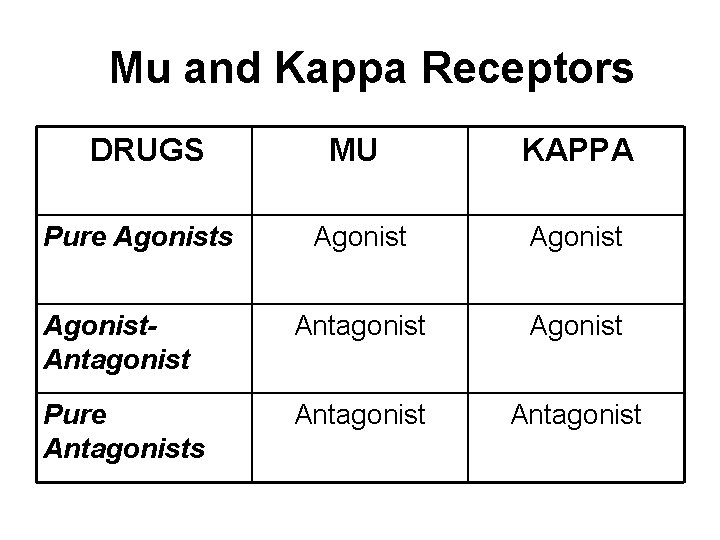
Mu and Kappa Receptors DRUGS MU KAPPA Agonist. Antagonist Agonist Pure Antagonists Antagonist Pure Agonists
Terminology • Pure Agonist: has affinity for binding plus efficacy • Pure Antagonist: has affinity for binding but no efficacy; blocks action of endogenous and exogenous ligands • Mixed Agonist-Antagonist: produces an agonist effect at one receptor and an antagonist effect at another • Partial Agonist: has affinity for binding but low efficacy
AGONISTS *Morphine *Heroin *Hydromorphone *Fentanyl *Codeine
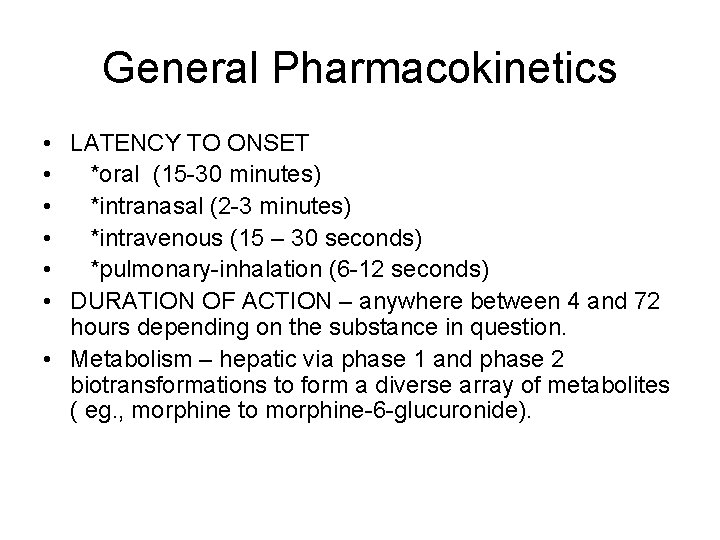
General Pharmacokinetics • LATENCY TO ONSET • *oral (15 -30 minutes) • *intranasal (2 -3 minutes) • *intravenous (15 – 30 seconds) • *pulmonary-inhalation (6 -12 seconds) • DURATION OF ACTION – anywhere between 4 and 72 hours depending on the substance in question. • Metabolism – hepatic via phase 1 and phase 2 biotransformations to form a diverse array of metabolites ( eg. , morphine to morphine-6 -glucuronide).
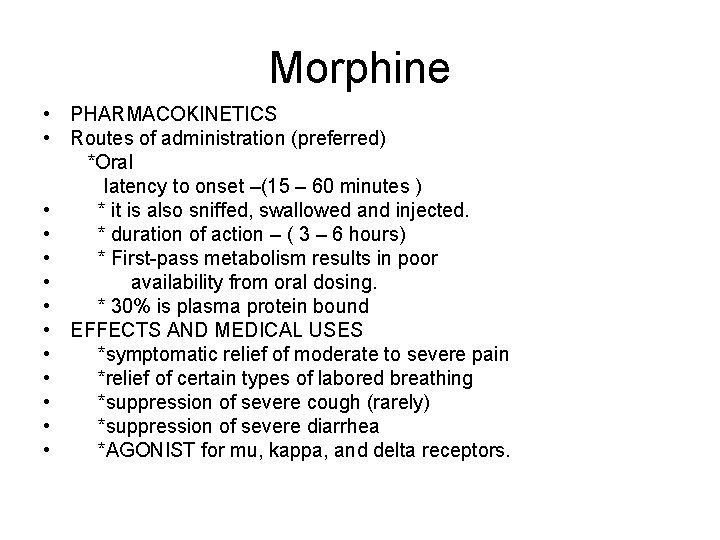
Morphine • PHARMACOKINETICS • Routes of administration (preferred) *Oral latency to onset –(15 – 60 minutes ) • * it is also sniffed, swallowed and injected. • * duration of action – ( 3 – 6 hours) • * First-pass metabolism results in poor • availability from oral dosing. • * 30% is plasma protein bound • EFFECTS AND MEDICAL USES • *symptomatic relief of moderate to severe pain • *relief of certain types of labored breathing • *suppression of severe cough (rarely) • *suppression of severe diarrhea • *AGONIST for mu, kappa, and delta receptors.
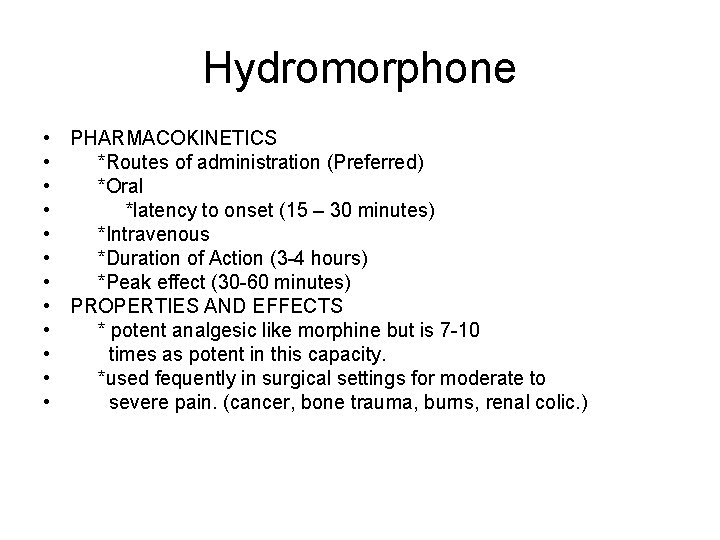
Hydromorphone • PHARMACOKINETICS • *Routes of administration (Preferred) • *Oral • *latency to onset (15 – 30 minutes) • *Intravenous • *Duration of Action (3 -4 hours) • *Peak effect (30 -60 minutes) • PROPERTIES AND EFFECTS • * potent analgesic like morphine but is 7 -10 • times as potent in this capacity. • *used fequently in surgical settings for moderate to • severe pain. (cancer, bone trauma, burns, renal colic. )
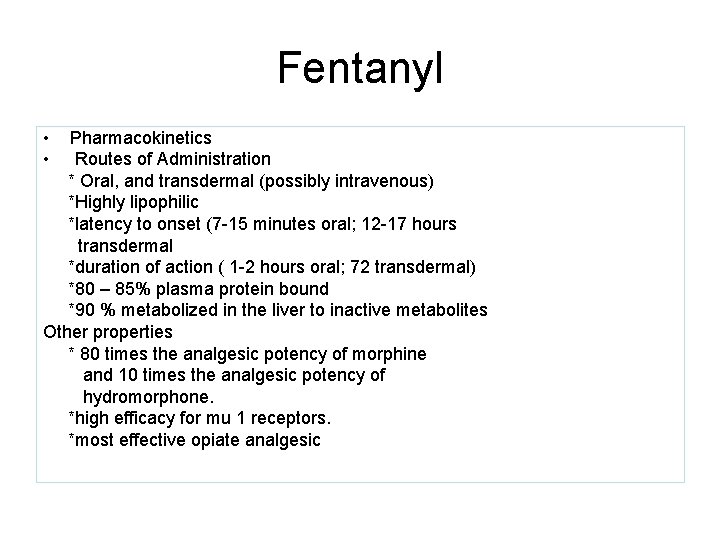
Fentanyl • • Pharmacokinetics Routes of Administration * Oral, and transdermal (possibly intravenous) *Highly lipophilic *latency to onset (7 -15 minutes oral; 12 -17 hours transdermal *duration of action ( 1 -2 hours oral; 72 transdermal) *80 – 85% plasma protein bound *90 % metabolized in the liver to inactive metabolites Other properties * 80 times the analgesic potency of morphine and 10 times the analgesic potency of hydromorphone. *high efficacy for mu 1 receptors. *most effective opiate analgesic
Antagonists • • Naloxone Naltrexone
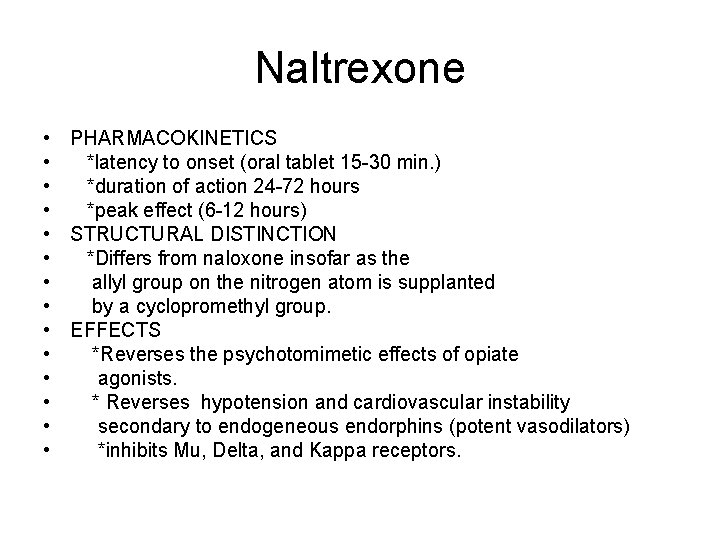
Naltrexone • PHARMACOKINETICS • *latency to onset (oral tablet 15 -30 min. ) • *duration of action 24 -72 hours • *peak effect (6 -12 hours) • STRUCTURAL DISTINCTION • *Differs from naloxone insofar as the • allyl group on the nitrogen atom is supplanted • by a cyclopromethyl group. • EFFECTS • *Reverses the psychotomimetic effects of opiate • agonists. • * Reverses hypotension and cardiovascular instability • secondary to endogeneous endorphins (potent vasodilators) • *inhibits Mu, Delta, and Kappa receptors.
Tolerance and Dependence
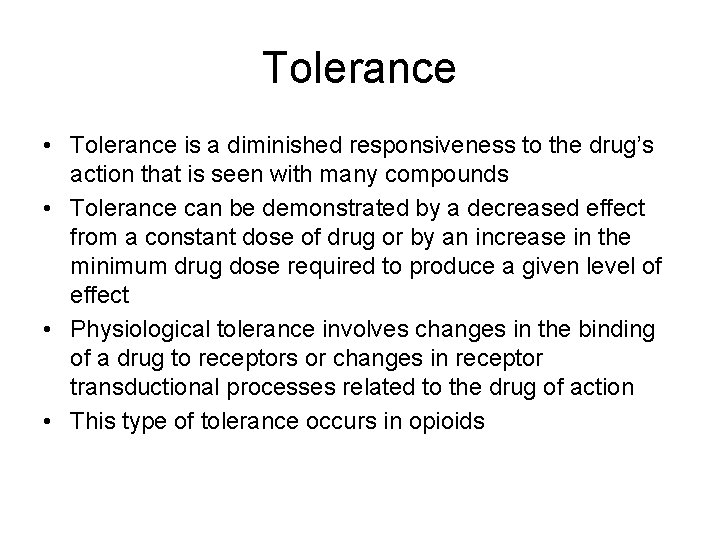
Tolerance • Tolerance is a diminished responsiveness to the drug’s action that is seen with many compounds • Tolerance can be demonstrated by a decreased effect from a constant dose of drug or by an increase in the minimum drug dose required to produce a given level of effect • Physiological tolerance involves changes in the binding of a drug to receptors or changes in receptor transductional processes related to the drug of action • This type of tolerance occurs in opioids
Tolerance continued • Molecular basis of tolerance involves glutaminergic mechanisms (glutamate-excitatory amino acid neurotransmitter) • 1997, Gies and colleagues stated that activation of glutamate NMDA receptors correlates with resistance to opioids and the development of tolerance • Mu-receptor m. RNA levels are regulated by activation of these receptors • NMDA receptor blocker ketamine prevented the development of this late-onset and long-lasting enhancement in pain sensitivity after the initial analgesia effect dissipated
Tolerance continued • Thus, glutaminergic NMDA receptors MAY regulate mureceptor m. RNA, accounting for the development of tolerance to the continuous presence of opioid • Cross-tolerance is the condition where tolerance for one drug produces tolerance for another drug – person who is tolerant to morphine will also be tolerant to the analgesic effect of fentanyl, heroin, and other opioids • * note that a subject may be physically dependent on heroin can also be administered another opioid such as methadone to prevent withdrawl reactions • Methadone has advantages of being more orally effective and of lasting longer than morphine or heroin
Tolerance continued • Methadone maintenance programs allow heroin users the opportunity to maintain a certain level of functioning without the withdrawl reactions • Although most opioid effects show tolerance, locomotor stimulation shows sensitization with repeated opioid administration • Toxic effects of opioids are primarily from their respiratory depressant action and this effect shows tolerance with repeated opioid use • Opioids might be considered “safer” in that a heroin addicts drug dose would be fatal in a first-time heroin user
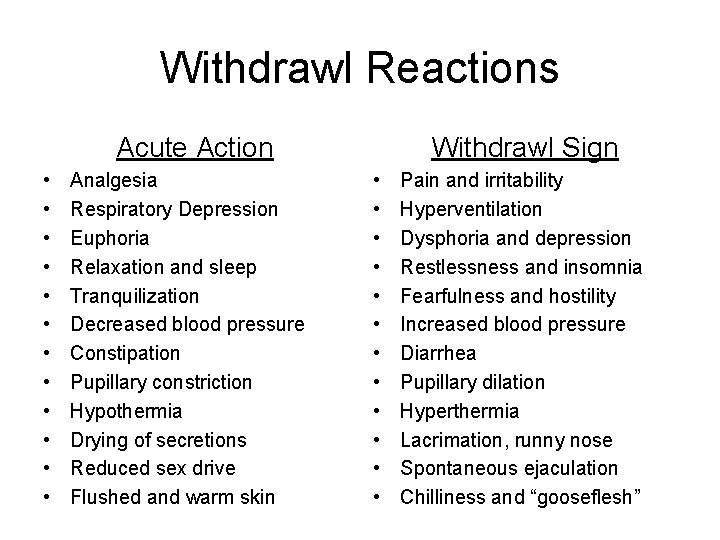
Dependence • Physiological dependence occurs when the drug is necessary for normal physiological functioning – this is demonstrated by the withdrawl reactions • Withdrawl reactions are usually the opposite of the physiological effects produced by the drug
Withdrawl Reactions Acute Action • • • Analgesia Respiratory Depression Euphoria Relaxation and sleep Tranquilization Decreased blood pressure Constipation Pupillary constriction Hypothermia Drying of secretions Reduced sex drive Flushed and warm skin Withdrawl Sign • • • Pain and irritability Hyperventilation Dysphoria and depression Restlessness and insomnia Fearfulness and hostility Increased blood pressure Diarrhea Pupillary dilation Hyperthermia Lacrimation, runny nose Spontaneous ejaculation Chilliness and “gooseflesh”
Dependence continued • Acute withdrawl can be easily precipitated in drug dependent individuals by injecting an opioid antagonist such as naloxone or naltrexone – rapid opioid detoxification or rapid anesthesia aided detoxification • The objective is to enable the patient to tolerate high doses of an opioid antagonist and undergo complete detox in a matter of hours while unconscious • After awakening, the person is maintained on orally administered naltrexone to reduce opioid craving
Chapter 10: Nonnarcotic, Anti. Inflammatory Analgesics Treatment for: mild to moderate pain, fever, inflammation, stroke/heart attack prevention, arthritis, *? prevention of Alzheimer’s Dementia
Aspirin and related NSAIDs • display a ceiling effect for analgesia (not as effective as opioids) • can be used in combination with opiate analgesics (summation effect)
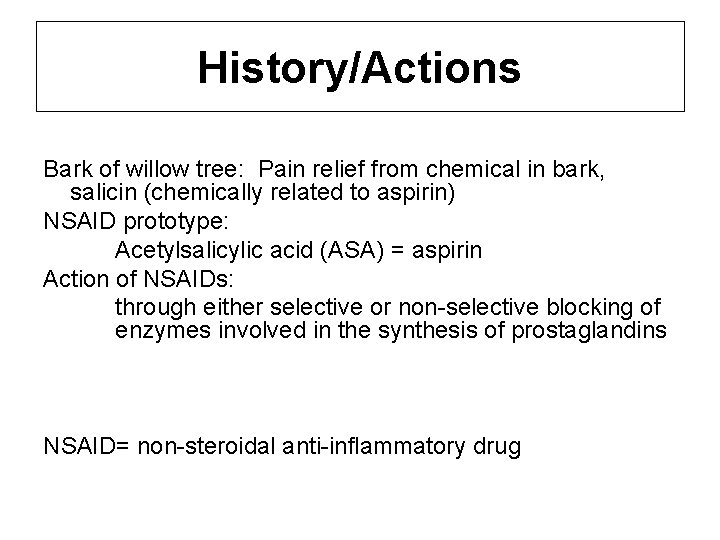
History/Actions Bark of willow tree: Pain relief from chemical in bark, salicin (chemically related to aspirin) NSAID prototype: Acetylsalicylic acid (ASA) = aspirin Action of NSAIDs: through either selective or non-selective blocking of enzymes involved in the synthesis of prostaglandins NSAID= non-steroidal anti-inflammatory drug
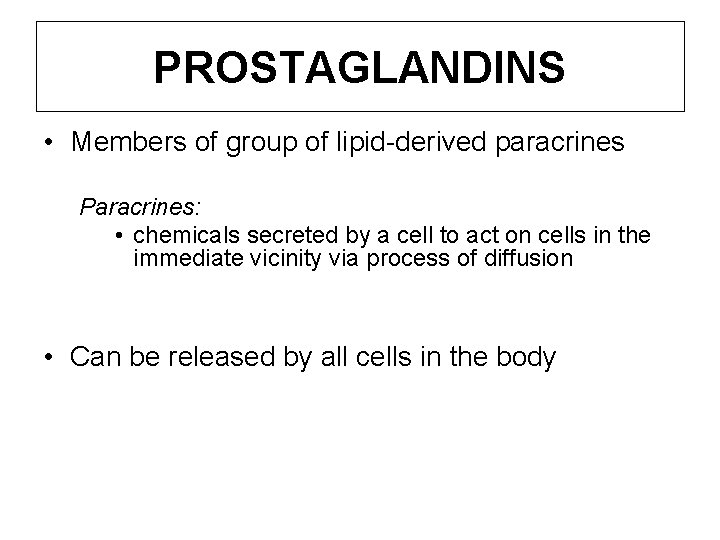
PROSTAGLANDINS • Members of group of lipid-derived paracrines Paracrines: • chemicals secreted by a cell to act on cells in the immediate vicinity via process of diffusion • Can be released by all cells in the body
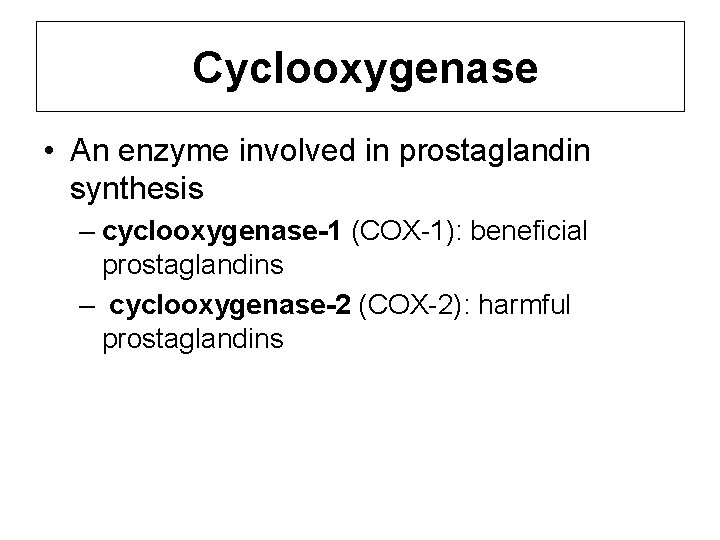
Cyclooxygenase • An enzyme involved in prostaglandin synthesis – cyclooxygenase-1 (COX-1): beneficial prostaglandins – cyclooxygenase-2 (COX-2): harmful prostaglandins
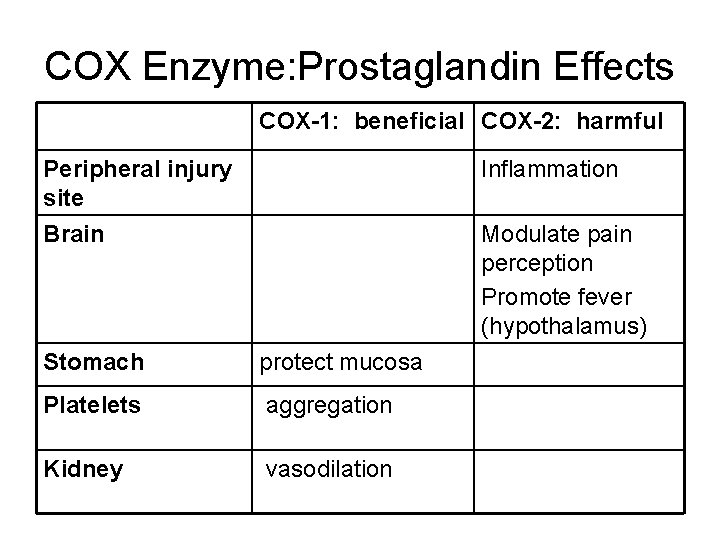
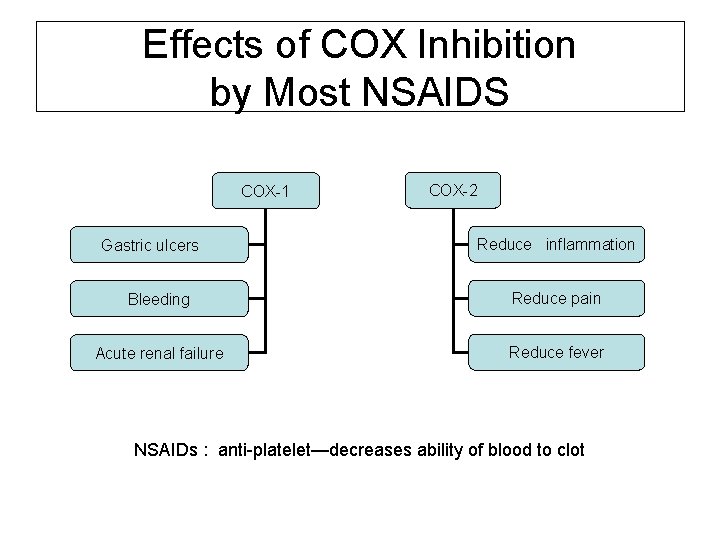
COX Enzyme: Prostaglandin Effects COX-1: beneficial COX-2: harmful Peripheral injury site Inflammation Brain Modulate pain perception Promote fever (hypothalamus) Stomach protect mucosa Platelets aggregation Kidney vasodilation
Effects of COX Inhibition by Most NSAIDS COX-1 Gastric ulcers COX-2 Reduce inflammation Bleeding Reduce pain Acute renal failure Reduce fever NSAIDs : anti-platelet—decreases ability of blood to clot
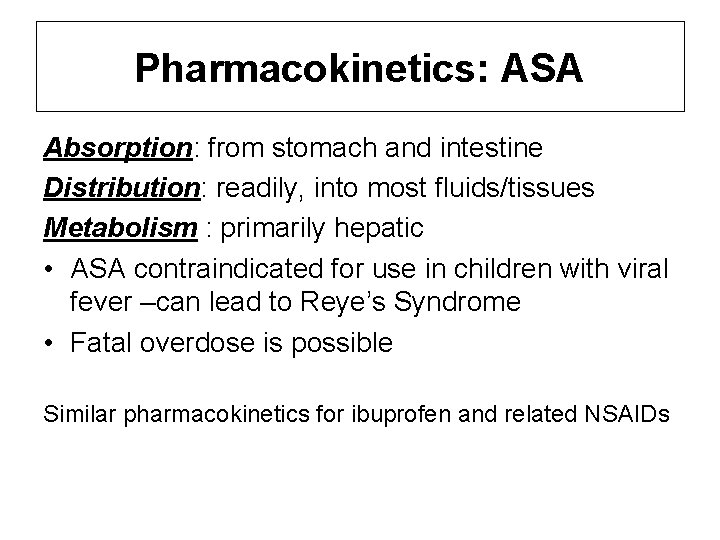
Pharmacokinetics: ASA Absorption: from stomach and intestine Distribution: readily, into most fluids/tissues Metabolism : primarily hepatic • ASA contraindicated for use in children with viral fever –can lead to Reye’s Syndrome • Fatal overdose is possible Similar pharmacokinetics for ibuprofen and related NSAIDs
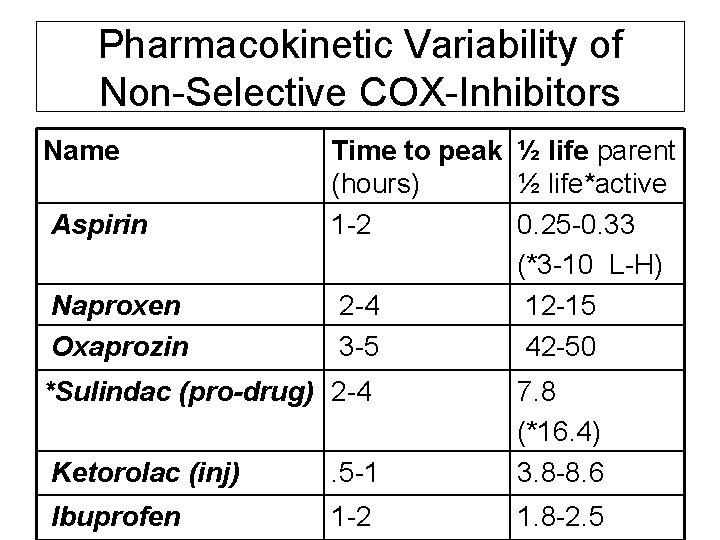
Pharmacokinetic Variability of Non-Selective COX-Inhibitors Name Aspirin Naproxen Oxaprozin Time to peak ½ life parent (hours) ½ life*active 1 -2 0. 25 -0. 33 (*3 -10 L-H) 2 -4 12 -15 3 -5 42 -50 *Sulindac (pro-drug) 2 -4 Ketorolac (inj) . 5 -1 7. 8 (*16. 4) 3. 8 -8. 6 Ibuprofen 1 -2 1. 8 -2. 5
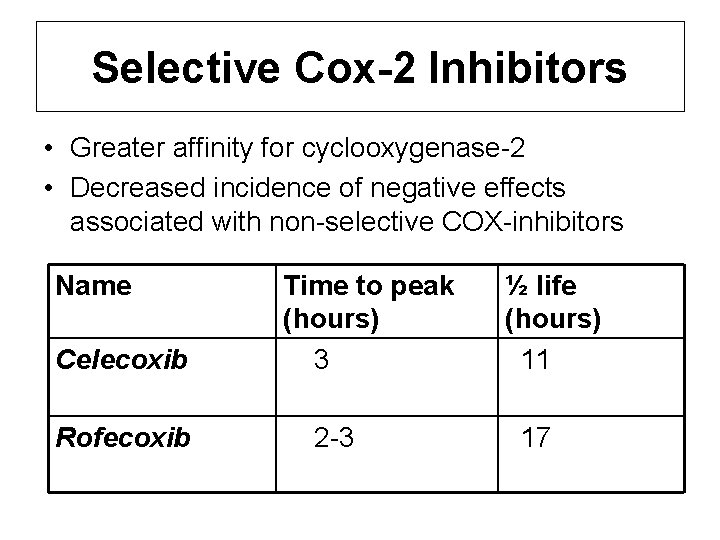
Selective Cox-2 Inhibitors • Greater affinity for cyclooxygenase-2 • Decreased incidence of negative effects associated with non-selective COX-inhibitors Name Celecoxib Rofecoxib Time to peak (hours) 3 2 -3 ½ life (hours) 11 17
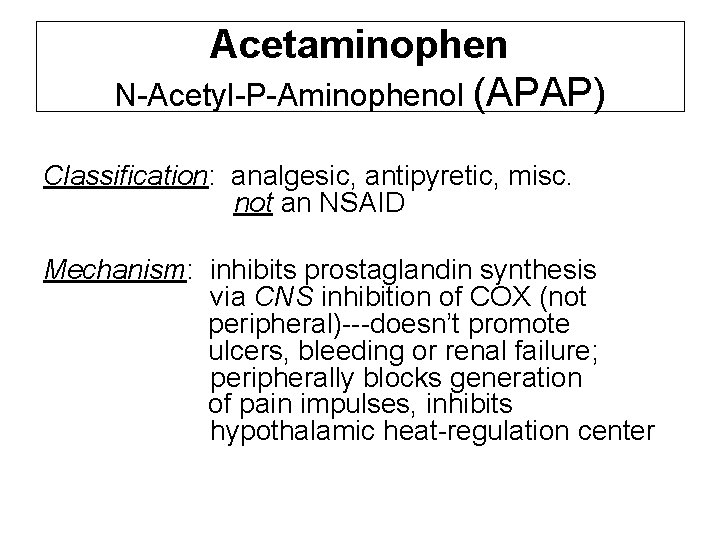
Acetaminophen N-Acetyl-P-Aminophenol (APAP) Classification: analgesic, antipyretic, misc. not an NSAID Mechanism: inhibits prostaglandin synthesis via CNS inhibition of COX (not peripheral)---doesn’t promote ulcers, bleeding or renal failure; peripherally blocks generation of pain impulses, inhibits hypothalamic heat-regulation center
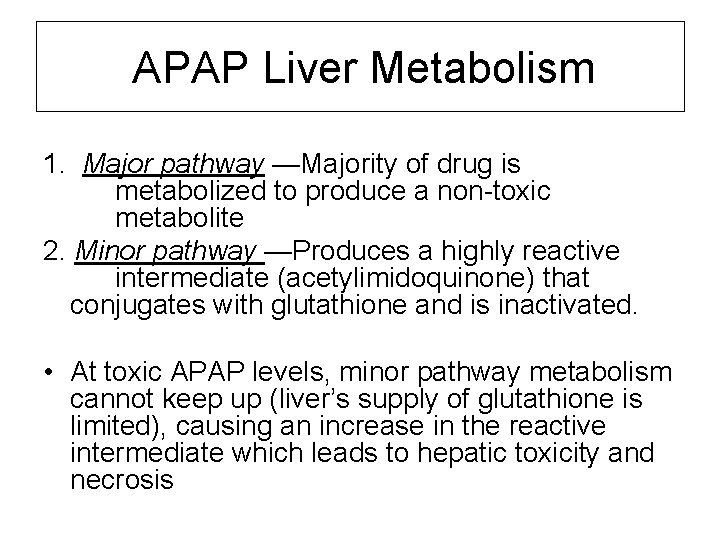
APAP Liver Metabolism 1. Major pathway —Majority of drug is metabolized to produce a non-toxic metabolite 2. Minor pathway —Produces a highly reactive intermediate (acetylimidoquinone) that conjugates with glutathione and is inactivated. • At toxic APAP levels, minor pathway metabolism cannot keep up (liver’s supply of glutathione is limited), causing an increase in the reactive intermediate which leads to hepatic toxicity and necrosis
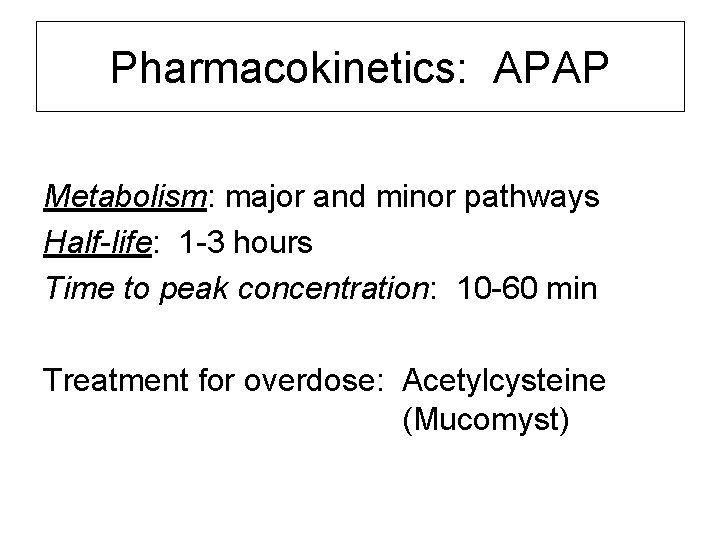
Pharmacokinetics: APAP Metabolism: major and minor pathways Half-life: 1 -3 hours Time to peak concentration: 10 -60 min Treatment for overdose: Acetylcysteine (Mucomyst)
See “New Approach…Pain” • http: //www. drugabuse. gov/NIDA_Notes/N NVol 15 N 5/Approach. html