
Opinion Dynamics with Marked Temporal Point Processes TPPs
- Slides: 22
Opinion Dynamics with Marked Temporal Point Processes (TPPs) HUMAN-CENTERED MACHINE LEARNING http: //courses. mpi-sws. org/hcml-ws 18/
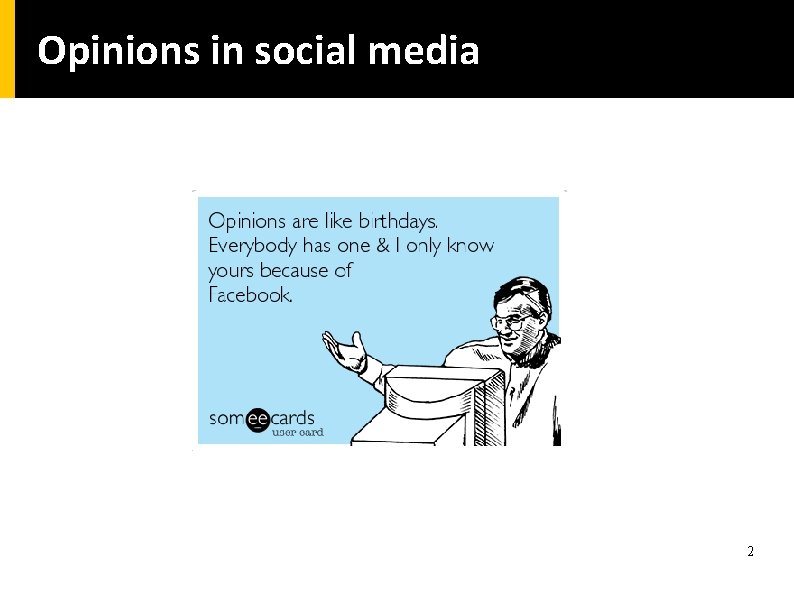
Opinions in social media 2
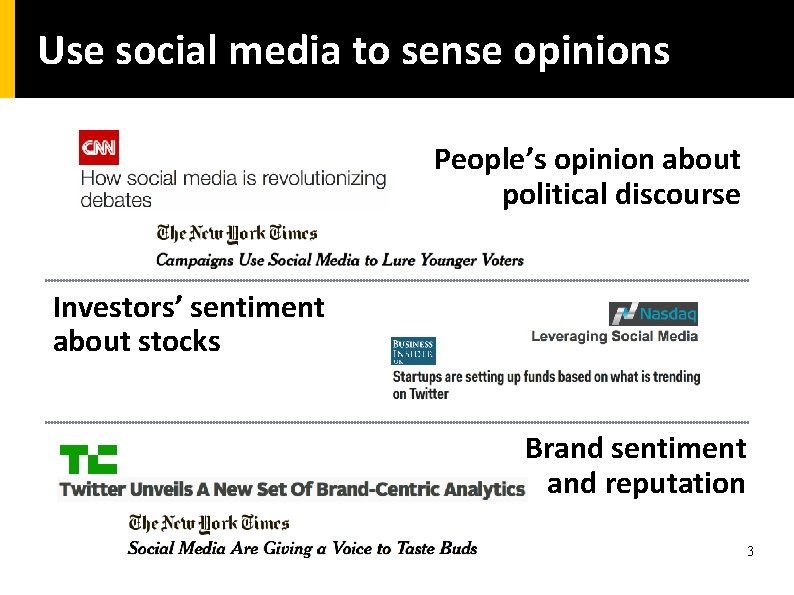
Use social media to sense opinions People’s opinion about political discourse Investors’ sentiment about stocks Brand sentiment and reputation 3
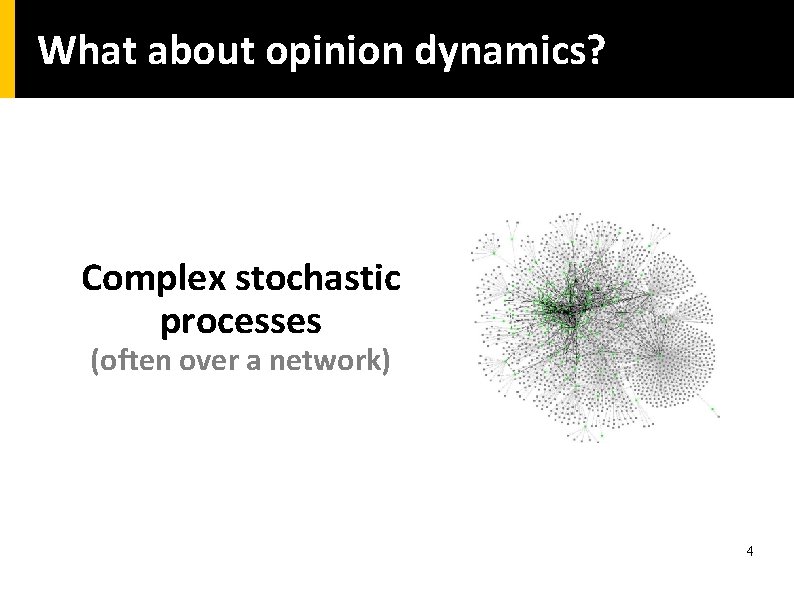
What about opinion dynamics? Complex stochastic processes (often over a network) 4
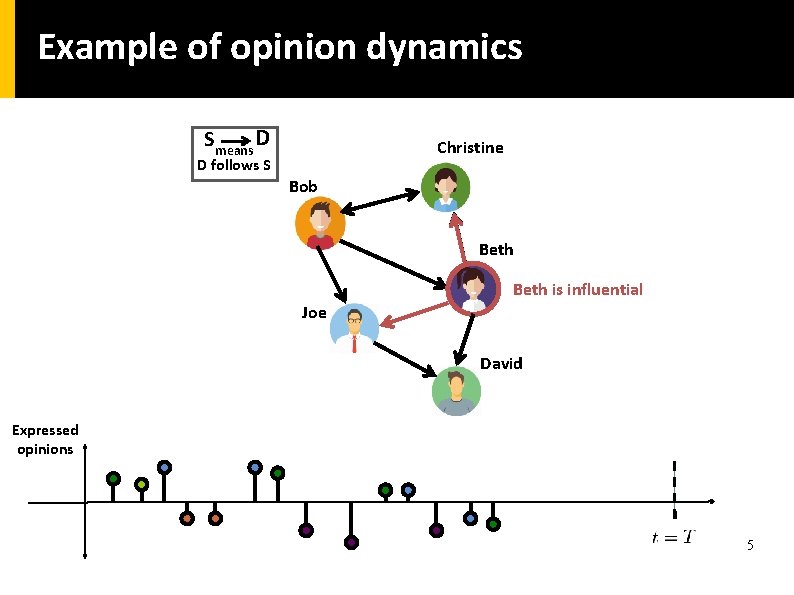
Example of opinion dynamics S means D Christine D follows S Bob Beth is influential Joe David Expressed opinions 5
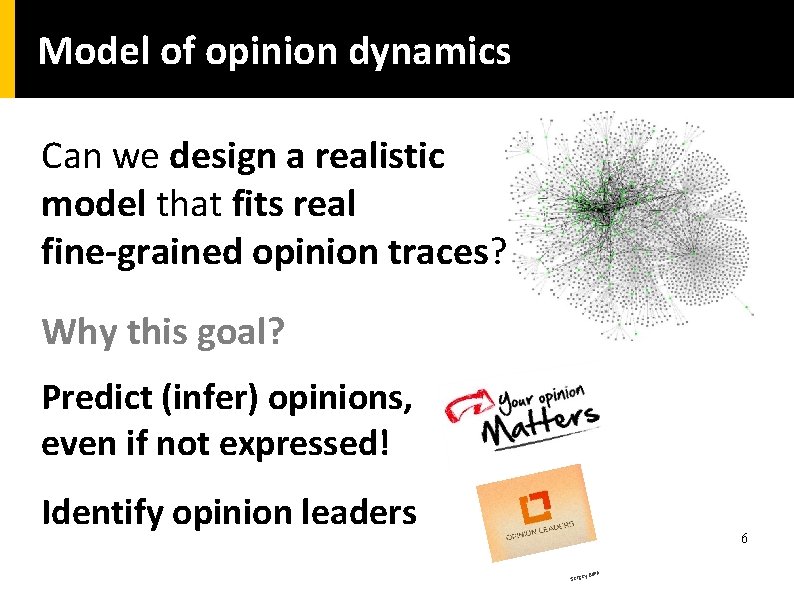
Model of opinion dynamics Can we design a realistic model that fits real fine-grained opinion traces? Why this goal? Predict (infer) opinions, even if not expressed! Identify opinion leaders 6 k y Bila Serge
Traditional models of opinion dynamics There a lot of theoretical models of opinion dynamics, but… 1. Do not distinguish between latent and expressed opinions 2. Opinions are updated sequentially in discrete time 3. Difficult to learn from fine-grained data and thus inaccurate predictions 4. Focus on steady state, neglecting transient behavior 7
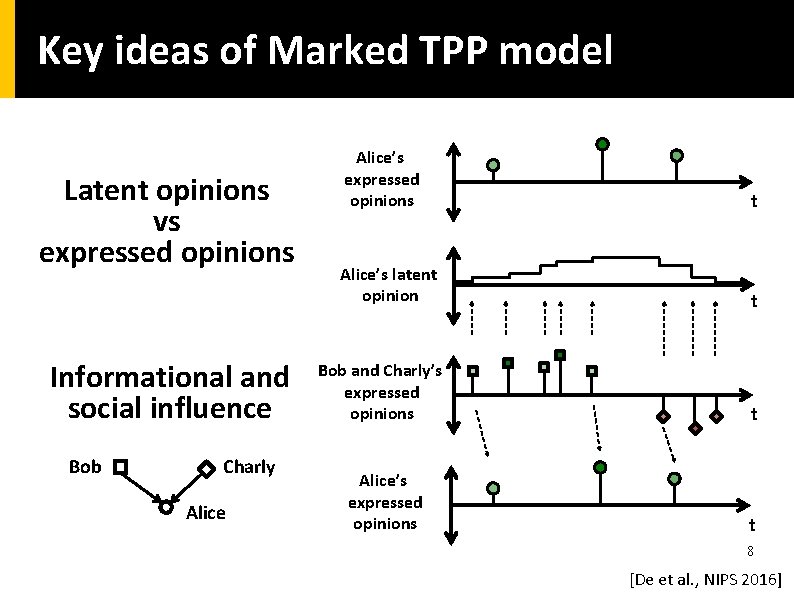
Key ideas of Marked TPP model Latent opinions vs expressed opinions Informational and social influence Bob Charly Alice’s expressed opinions t Alice’s latent opinion t Bob and Charly’s expressed opinions t Alice’s expressed opinions t 8 [De et al. , NIPS 2016]
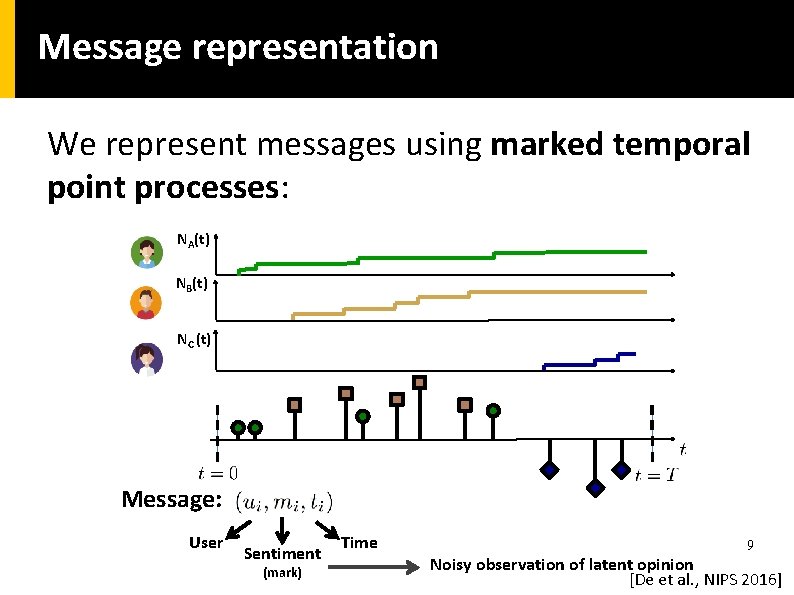
Message representation We represent messages using marked temporal point processes: NA(t) NB(t) NC (t) Message: User Sentiment (mark) Time 9 Noisy observation of latent opinion [De et al. , NIPS 2016]
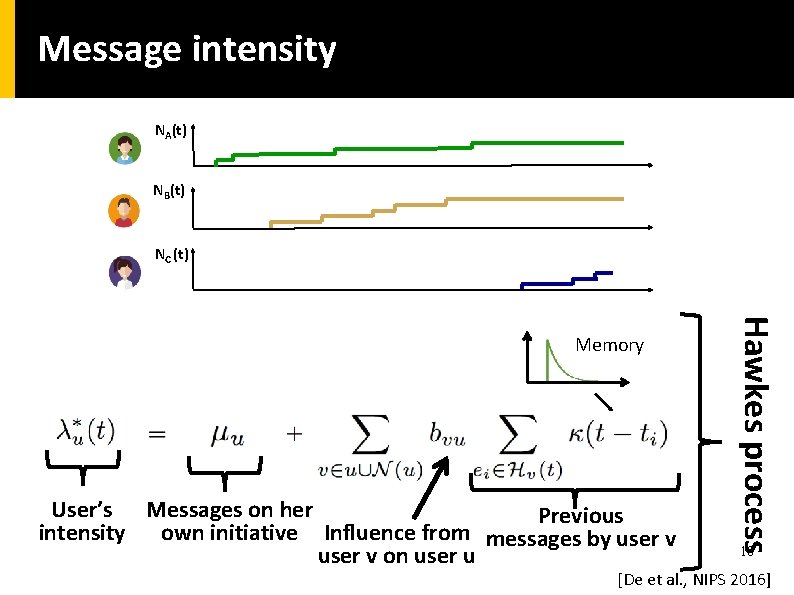
Message intensity NA(t) NB(t) NC (t) User’s Messages on her Previous intensity own initiative Influence from messages by user v on user u Hawkes process Memory 10 [De et al. , NIPS 2016]
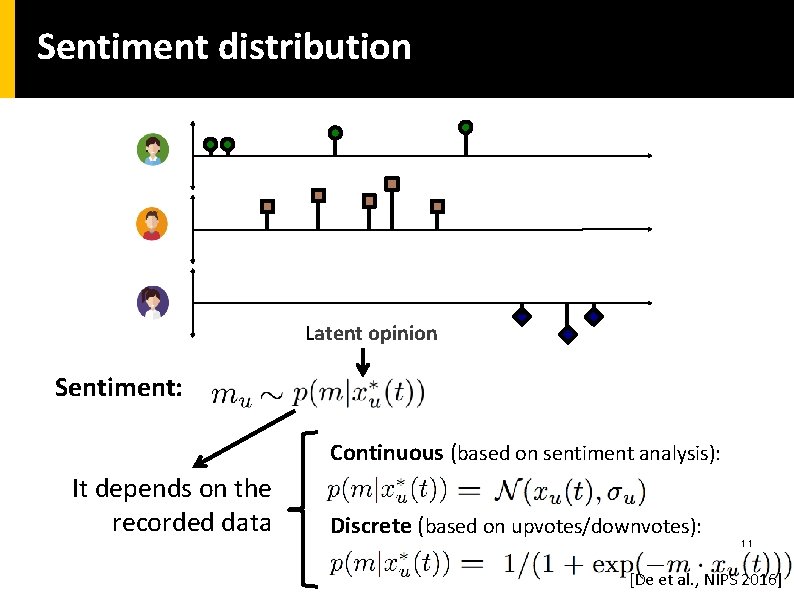
Sentiment distribution Latent opinion Sentiment: Continuous (based on sentiment analysis): It depends on the recorded data Discrete (based on upvotes/downvotes): 11 [De et al. , NIPS 2016]
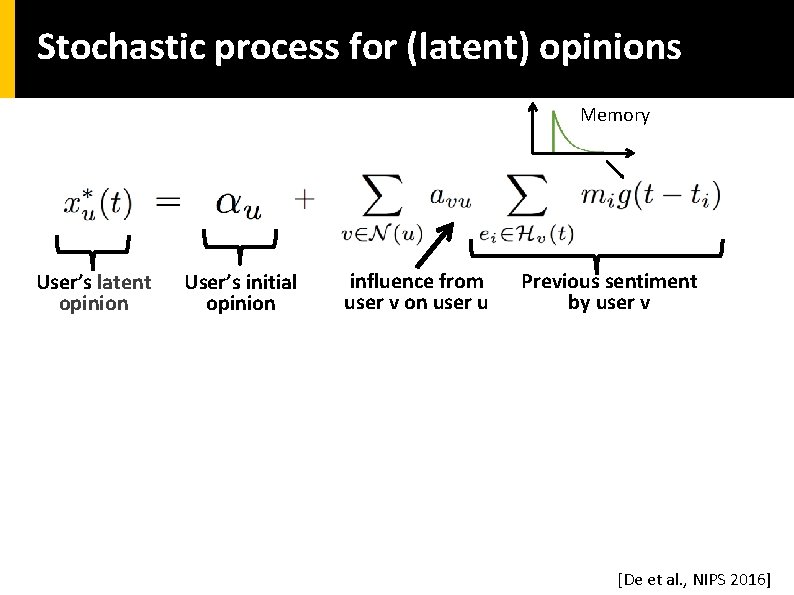
Stochastic process for (latent) opinions Memory User’s latent opinion x. Alice(t) influence from user v on user u User’s initial opinion <0, disagree Bob m(t) Christine >0, agree Alice a. Christine, Alicem 2 αAlice Previous sentiment by user v a. Bob, Alicem 1 m 3 m 2 12 [De et al. , NIPS 2016]
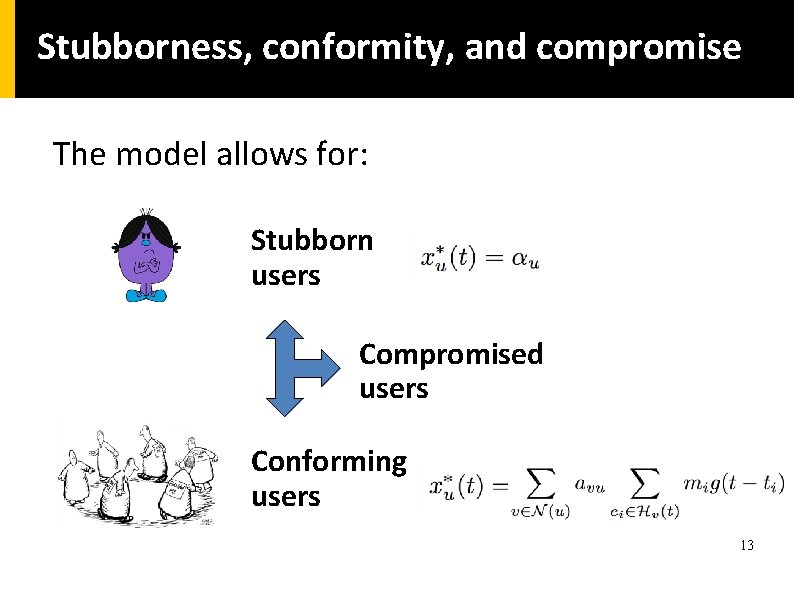
Stubborness, conformity, and compromise The model allows for: Stubborn users Compromised users Conforming users 13
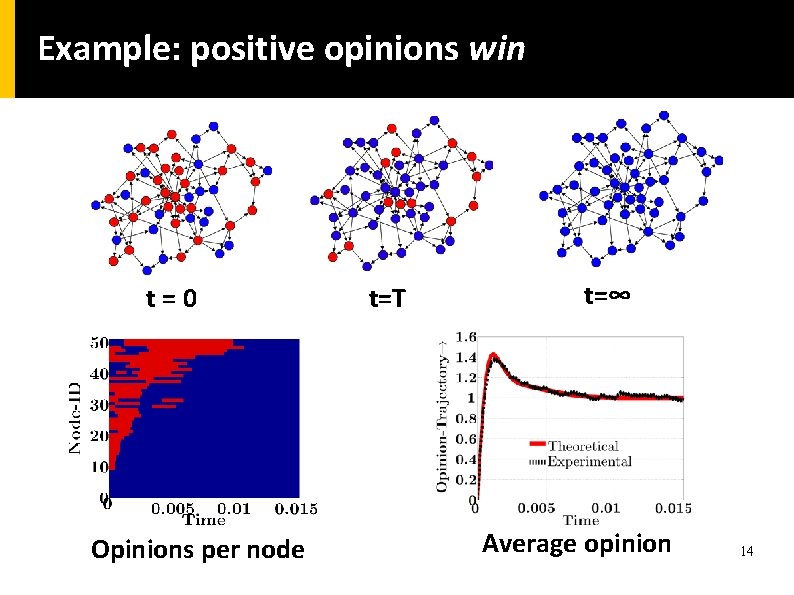
Example: positive opinions win t=0 Opinions per node t=T t=∞ Average opinion 14
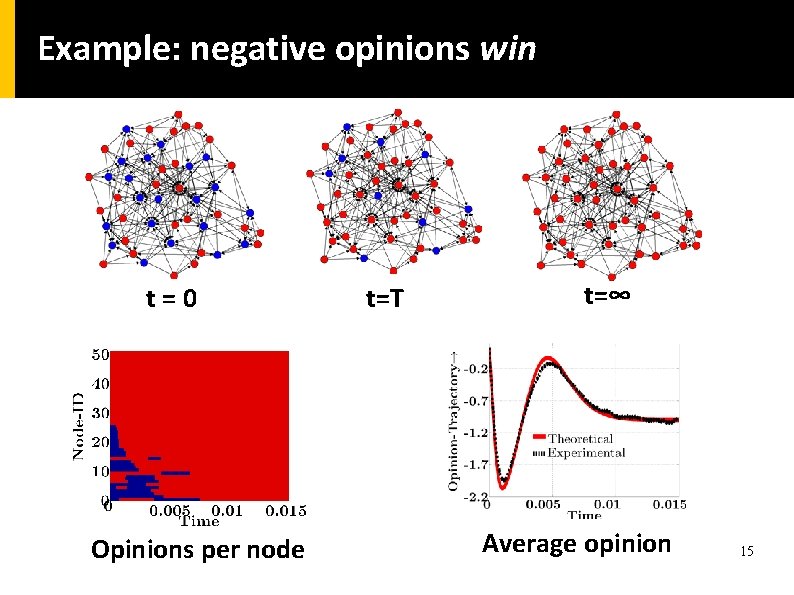
Example: negative opinions win t=0 Opinions per node t=T t=∞ Average opinion 15
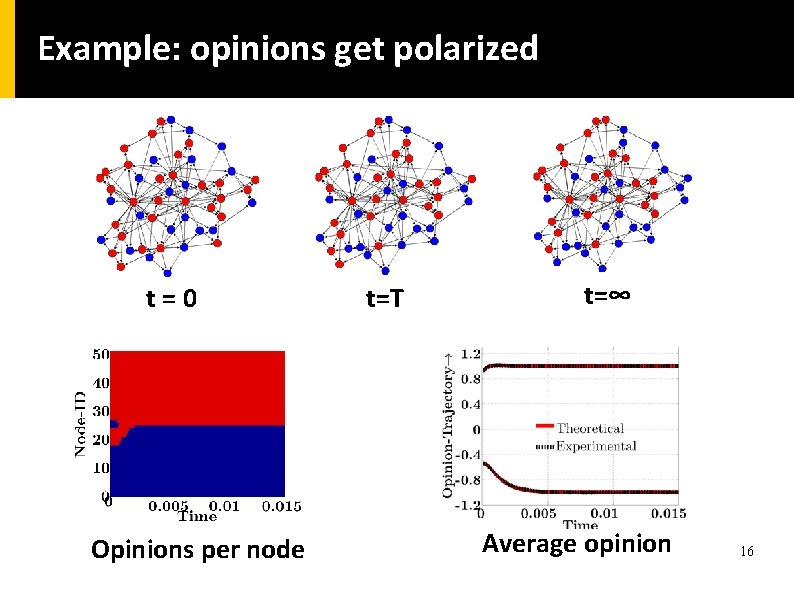
Example: opinions get polarized t=0 Opinions per node t=T t=∞ Average opinion 16
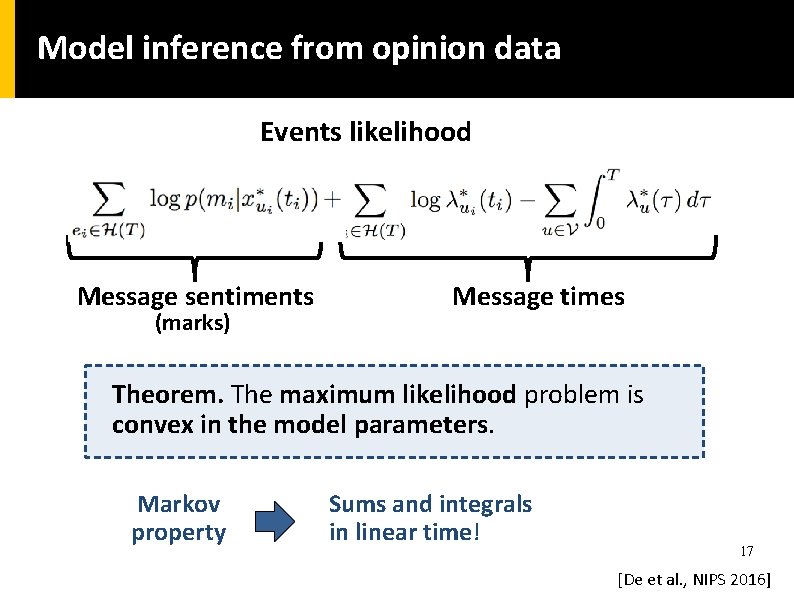
Model inference from opinion data Events likelihood Message sentiments (marks) Message times Theorem. The maximum likelihood problem is convex in the model parameters. Markov property Sums and integrals in linear time! 17 [De et al. , NIPS 2016]
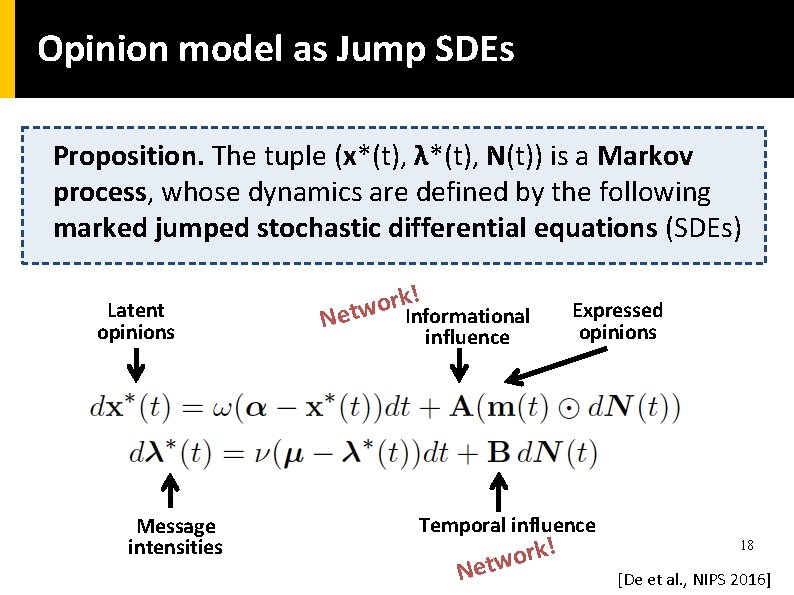
Opinion model as Jump SDEs Proposition. The tuple (x*(t), λ*(t), N(t)) is a Markov process, whose dynamics are defined by the following marked jumped stochastic differential equations (SDEs) Latent opinions Message intensities ! k r o Netw Informational influence Expressed opinions Temporal influence ! k r o Netw 18 [De et al. , NIPS 2016]
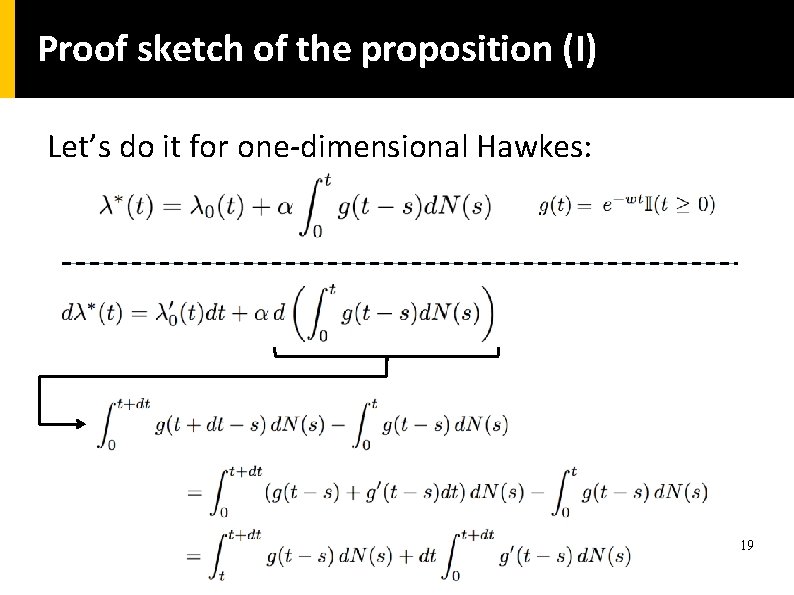
Proof sketch of the proposition (I) Let’s do it for one-dimensional Hawkes: 19
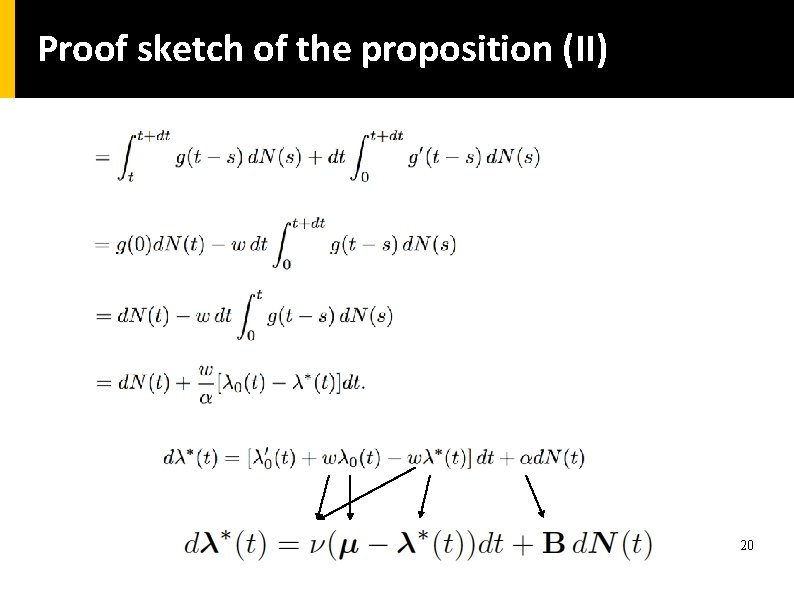
Proof sketch of the proposition (II) 20
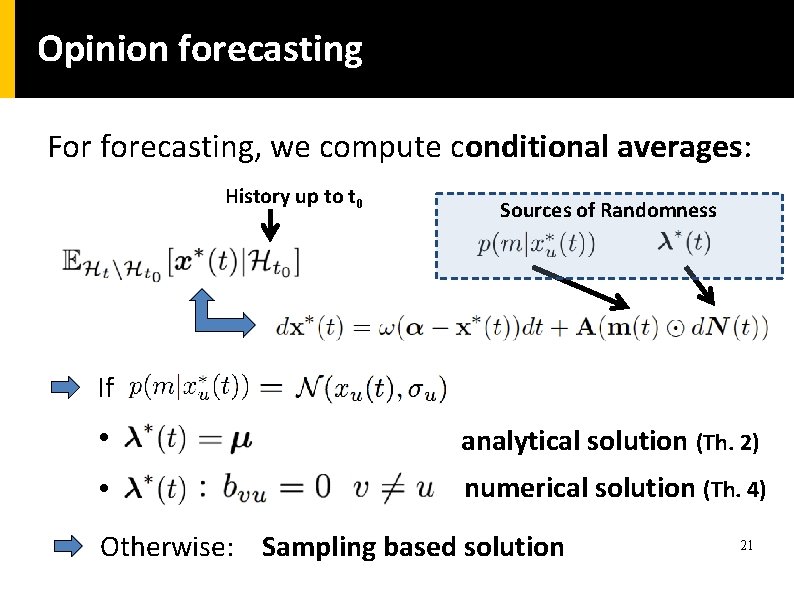
Opinion forecasting For forecasting, we compute conditional averages: History up to t 0 Sources of Randomness If • • analytical solution (Th. 2) numerical solution (Th. 4) Otherwise: Sampling based solution 21
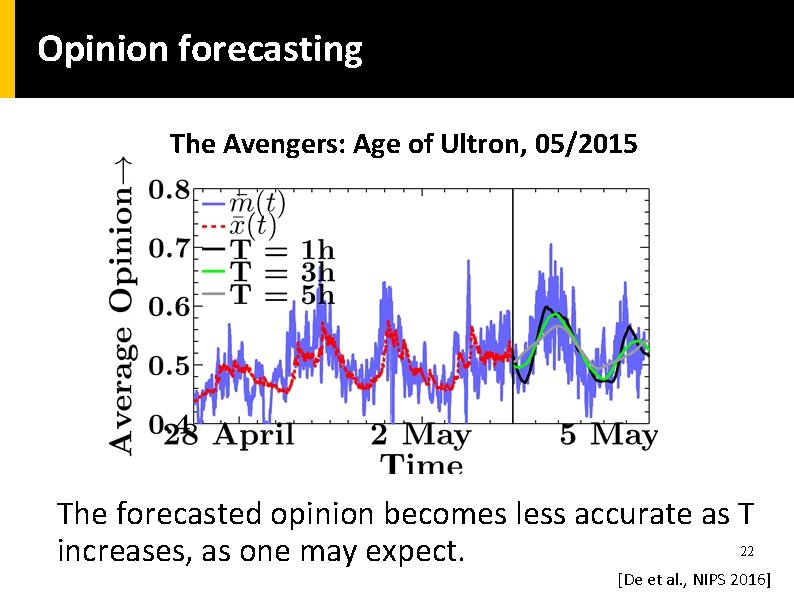
Opinion forecasting The Avengers: Age of Ultron, 05/2015 The forecasted opinion becomes less accurate as T 22 increases, as one may expect. [De et al. , NIPS 2016]