
OPHIOTOXINS OPHIDIA SNAKE FAMILY TOXINS POISONS First medicine
- Slides: 31
OPHIOTOXINS �OPHIDIA = SNAKE FAMILY �TOXINS = POISONS �First medicine proved – Lachesis trigonocephalus �CN – SURU KUKU Snake �Proved by Dr. Constantine Hering � Ophidia group consists of medicines taken from snakes venoms which is modified saliva �Ophidia comes under Class Reptilia, which comes under Phylum Chordata
MEDICINES FROM OPHIOTOXINS �CROTALUS HORRIDUS �CROTALUS CASCAVELLA �NAJA TRIPUDIANS �ELAPS CORALLINUS �BOTHROPS LANCEOLATUS �CENCHRIS CONTORTRIX �VIPERA BERUS �HYDROPHIS CYANOCINCTUS �TOXICOPHIS
SNAKE POISON CONSTITUENTS �FIBRINOLYSIN �PROTEOLYSIN �NEUROTOXIN �CHOLINE ESTERASE �HEMOLYSIN �THROMBOPLASTIN �CARDIOTOXIN �COAGULASE HYALURONIDASE
SNAKE VENOM �The Snake Venom is the modified saliva. The venom contains nine enzymes such as �(i) Phosphatidases �(ii) Proteases �(iii) Cholinesterases �(iv) Hyaluronidases �(v) Ribonucleases �(vi) Deoxyribonucleases �(vii) Ophioxidase �(viii) Lecithinase �(ix) Crepsins
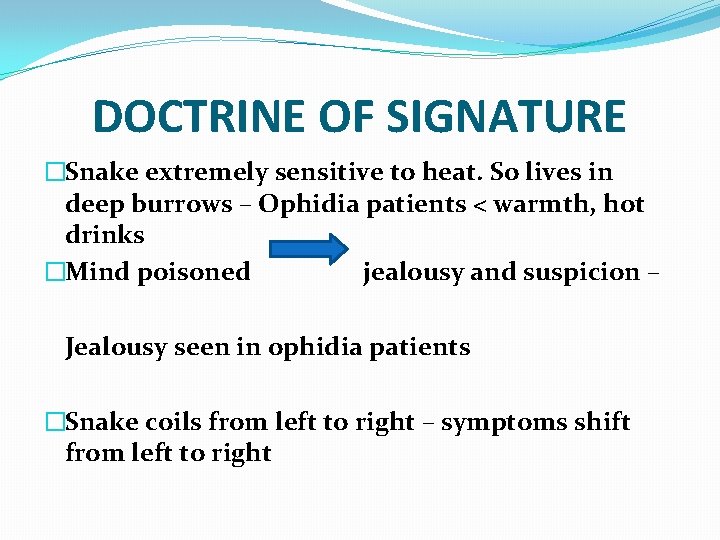
DOCTRINE OF SIGNATURE �Snake extremely sensitive to heat. So lives in deep burrows – Ophidia patients < warmth, hot drinks �Mind poisoned jealousy and suspicion – Jealousy seen in ophidia patients �Snake coils from left to right – symptoms shift from left to right
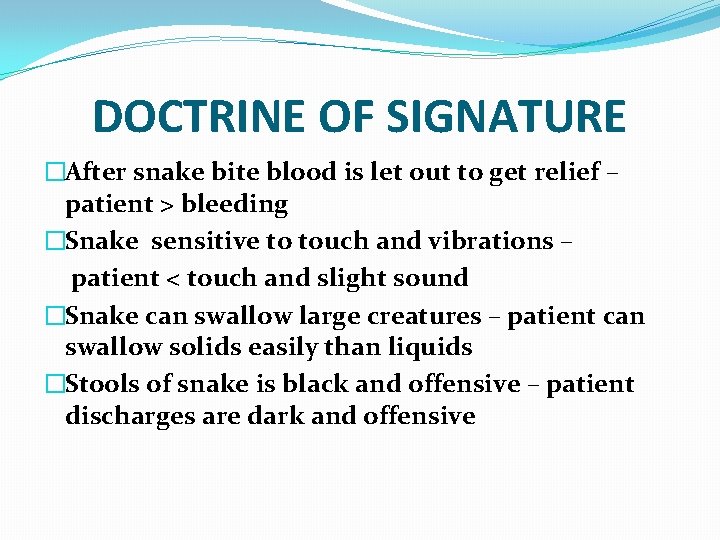
DOCTRINE OF SIGNATURE �After snake bite blood is let out to get relief – patient > bleeding �Snake sensitive to touch and vibrations – patient < touch and slight sound �Snake can swallow large creatures – patient can swallow solids easily than liquids �Stools of snake is black and offensive – patient discharges are dark and offensive
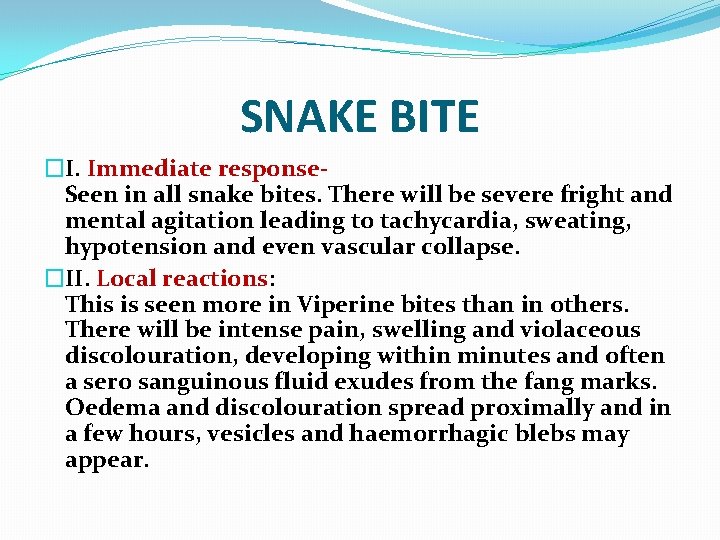
SNAKE BITE �I. Immediate response. Seen in all snake bites. There will be severe fright and mental agitation leading to tachycardia, sweating, hypotension and even vascular collapse. �II. Local reactions: This is seen more in Viperine bites than in others. There will be intense pain, swelling and violaceous discolouration, developing within minutes and often a sero sanguinous fluid exudes from the fang marks. Oedema and discolouration spread proximally and in a few hours, vesicles and haemorrhagic blebs may appear.
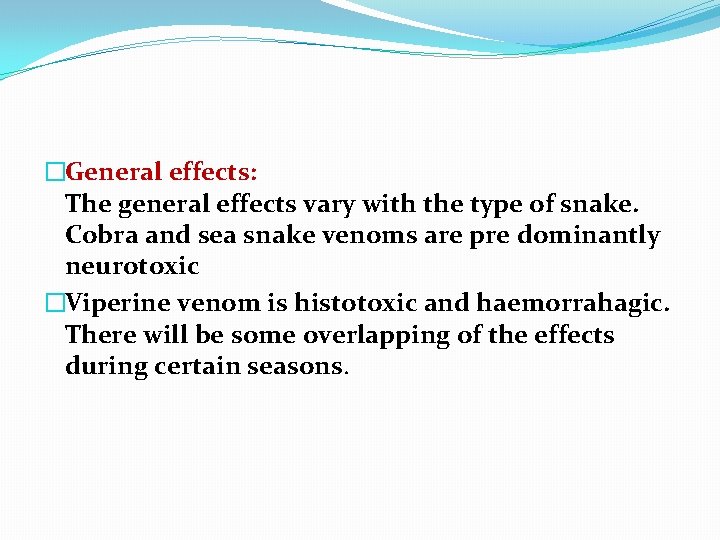
�General effects: The general effects vary with the type of snake. Cobra and sea snake venoms are pre dominantly neurotoxic �Viperine venom is histotoxic and haemorrahagic. There will be some overlapping of the effects during certain seasons.
�IV. Cobra and Krait bites: They are neurotoxic. Soon after the bite, the patient complains of a sinking feeling, drowsiness, blurring of vision, diplopia, dysphagia and dyspnoea. There will be paralysis of palate, tongue, pharynx and respiratory muscles. There’ll be a flaccid paralysis of the limbs, associated with hypotonia and a diminution in the tendon reflexes. Coma and death can happen due to respiratory failure or shock in 6 -48 hrs.
�V. Viperine bites: It is histotoxic and haemorrhagic. Within 3 -4 hours of bite there will occur the following features. �(ii) Haemorrhagic manifestations, which appear as extensive bruises, bleeding from the bitten parts, bleeding from gums, epistaxis, blotchy purpura haemorrhagica, haématemesis and malena. Bleeding can lead to shock. Cardiac manifestations occur as tachycardia, myocarditis and cardiac failure.
�(iii) Rarely, there’ll be optic neuritis lead ing to partial or complete blindness in 2 -7 days. Renal changes occur as proteinuria and haematuria. A dreaded complication due to direct nephrotoxicity is anuric renal failure, the lesions of which are acute tubulonecrosis, haemorrhagic interstitial nephritis and acute glomerulonephritis. Death in Viperine bite occur due to shock, haemorrhages, secondary infection, renal failure or cardiac failure.
�VI. Krait venom is neurotoxic. They present with symptoms similar to co bra bite but is most lethal. Local reaction is minimal. �VII. Sea Snakes- Their venom is neurotoxic and nephrotoxic. There’ll be pain and stiffness of muscles of neck, back and proximal part of limbs. Trismus, ptosis, etc. Ophthalmoplegia and paralysis and the symptoms may lead to respiratory failure. Proteinuria and myoglobinuria occurs. Death is due to respiratory paralysis and renal failure
PATHOPHYSIOLOGICAL ACTION 1. NEUROTOXIC VENOM – Muscular weakness and paralysis of muscles of face, throat, respiration. Acts on pneumogastric nerve producing constriction of throat, bronchus and heart 2. VASCULOTOXIC VENOM–Enzymatic destruction of cell walls, coagulation disorders, destruction of endothelium of blood vessels 3. MYOTOXIC VENOM – Generalised muscular pains, myoglobinuria, respiratory failure
4 5 6 7 BLOOD – Decomposes blood, produces non coagulable fluid blood and hemorrhage HEMOLYTIC VENOM – Breakdown of RBC, decreased oxygen carrying capacity of blood, cyanosis and jaundice LOCAL EFFECT – Inflammation, agonising pain, swelling at the site of injury, gangrene, cellulitis, erysepelas, foul ulcers SYSTEMIC EFFECT – Absorption by lymphatics and veins producing septaemia
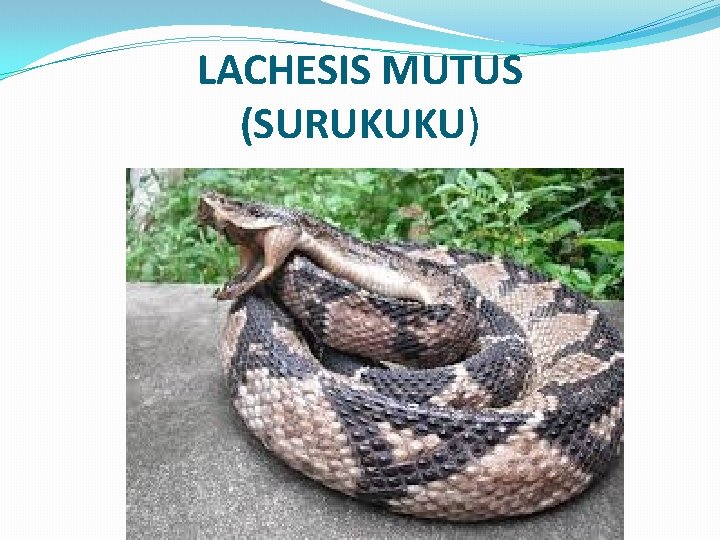
LACHESIS MUTUS (SURUKUKU)
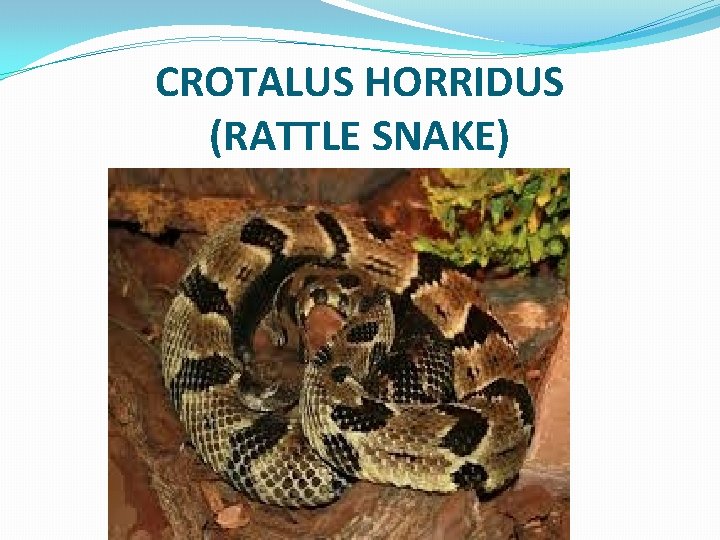
CROTALUS HORRIDUS (RATTLE SNAKE)
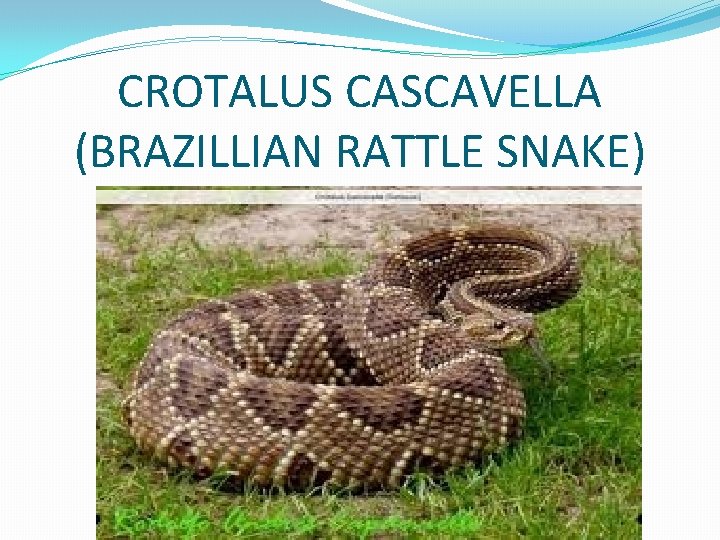
CROTALUS CASCAVELLA (BRAZILLIAN RATTLE SNAKE)
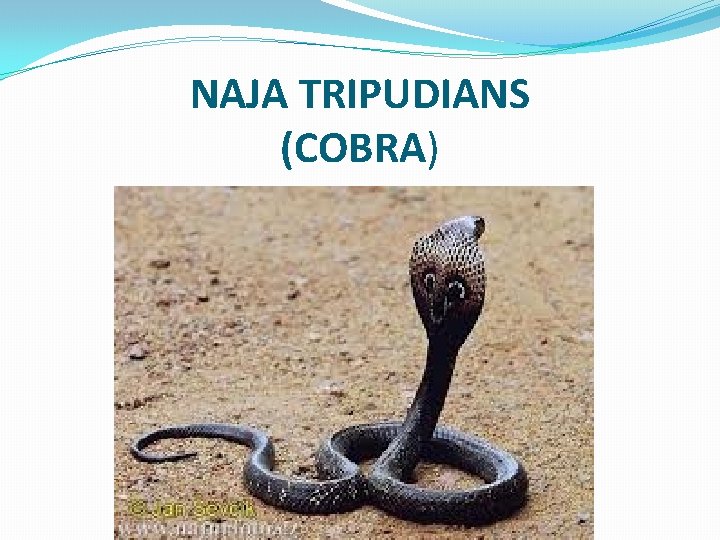
NAJA TRIPUDIANS (COBRA)
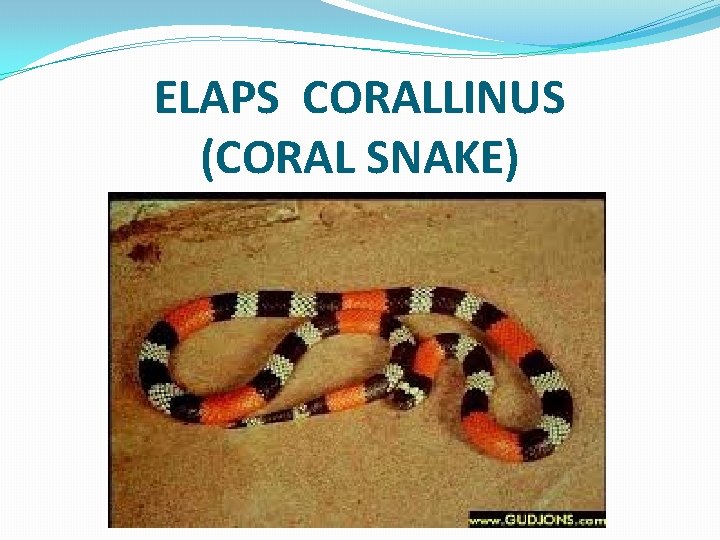
ELAPS CORALLINUS (CORAL SNAKE)
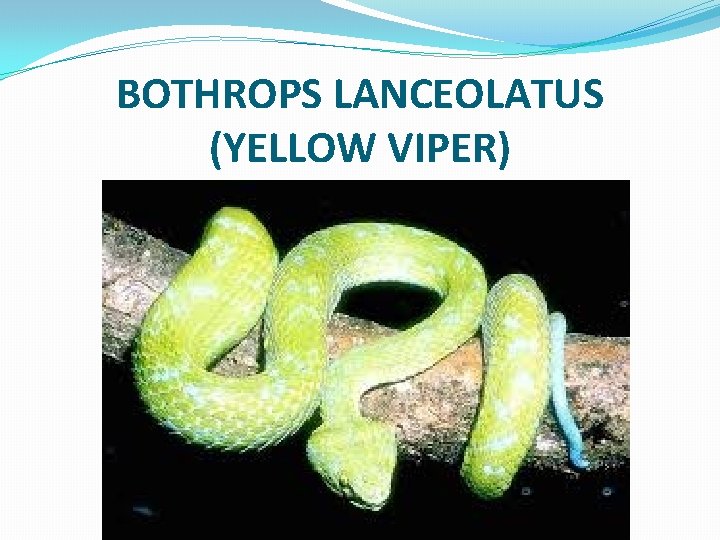
BOTHROPS LANCEOLATUS (YELLOW VIPER)
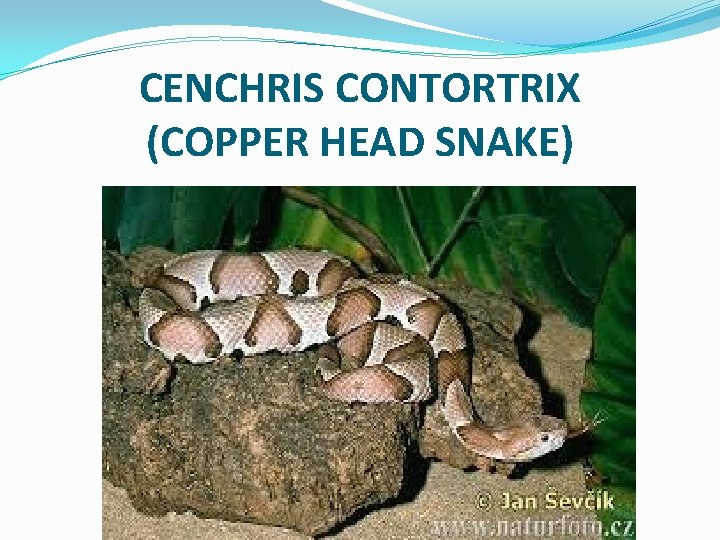
CENCHRIS CONTORTRIX (COPPER HEAD SNAKE)
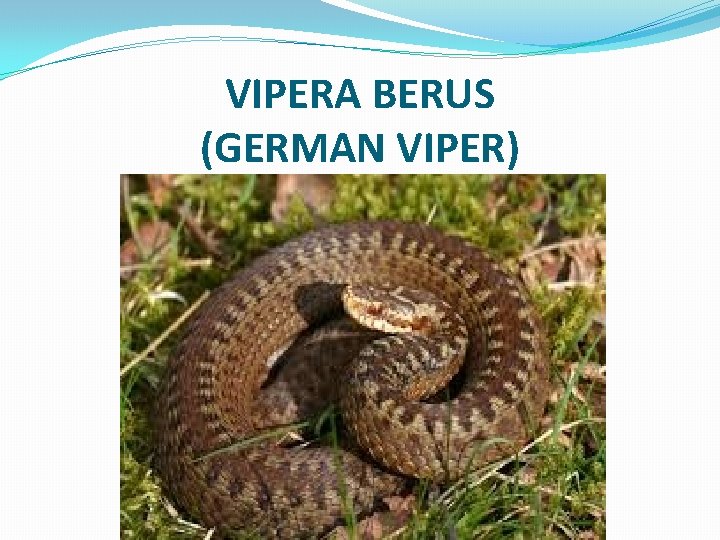
VIPERA BERUS (GERMAN VIPER)
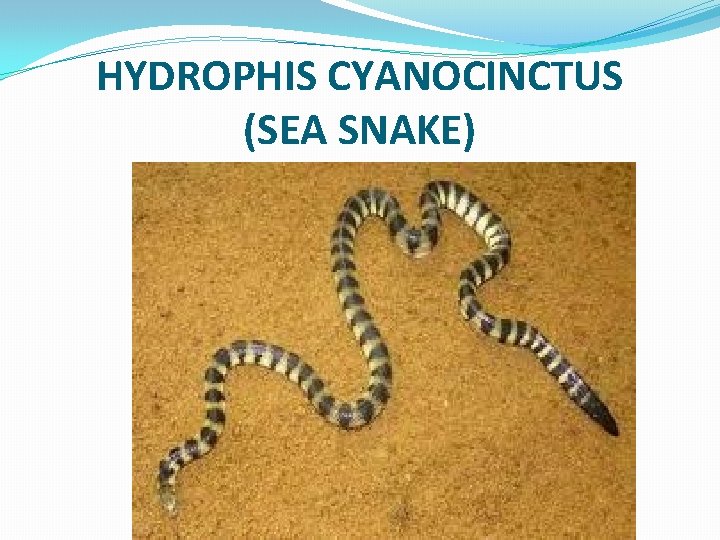
HYDROPHIS CYANOCINCTUS (SEA SNAKE)
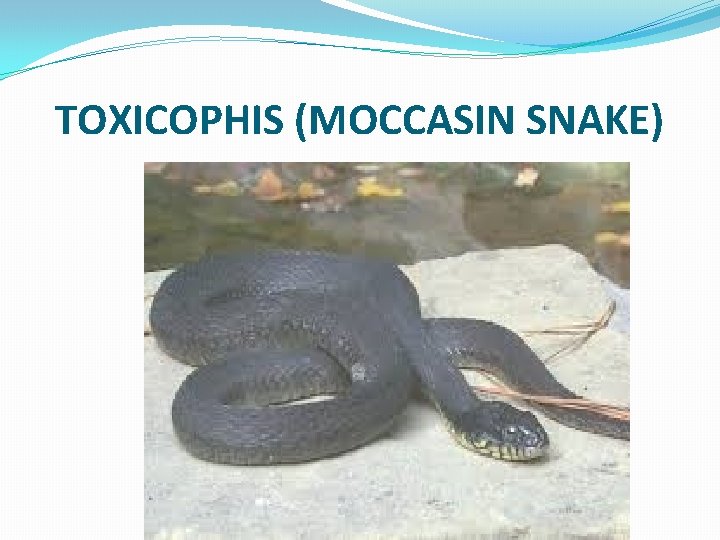
TOXICOPHIS (MOCCASIN SNAKE)
COMMON CHARACTERISTICS OF OPHIDIA �I. Paralysis Features of typical bulbar paralysis occur in Naja. The paralysis of Ophidia group occur in right side as well as left side. � II. Constriction of throat – larynx & sphincters �III. Haemorrhages of dark, non-coagulable decomposed black blood oozing from all orifices of the body with ecchymosed
�IV. Inflammations and fevers of low destructive type Eg: gangrene, cellulitis, malignant ul cerations, diphther. Ia and typhoid etc. v). Nerves, specially affected by snake poisons (I) Vagus nerve (ii) Spinal accessory nerve , So, characteristically we get symptoms of larynx, respiration and heart. Ophidia medicines cause choking constrictive sensation due to pneumogastric nerve irritation. Weak heart, cold feet and trembling. All the medicines have dyspnoea and cardiac symptoms
�VI. Yellow staining or colour of skin Most marked in Cortalus horridus, less in Lachesis and Vipera communis and Vipera torva. �VII. Action on heart-Produce palpitation, dyspnoea and valvular lesions. VIII. Appearance of face Sickly, pale, anxious, bloated swollen, dark red or bluish, especially in Lachesis, Bothrops, Vipera. The face is yellow in Lachesis and Crotalus.
�IX. Alteration of spinal reflexes- Dimness of vision, excitability of brain or spinal cord resulting in mental restless ness and physical sensitiveness Torpidity, numbness twitching and formication. �X. Initial anxiety, mental excitability and over sensitiveness Hallucinations and fear, followed by nervous depression which varies from debility to confusion, stupor, delirium and paralysis.
�XI. Periodicity: Vipera : Symptoms return annually for years �XII. Swelling Naja: No haemorrhage; only oedema. �XIII Climacteric ailments: Lachesis: Haemorrhages, haemorrhoids; hot flushes, hot per spiration; burning in vertex, headache at or after menopause.
�XIV. Mental Symptoms: (i) Fear of rain: Elaps, Naja (ii) Dreams of dead persons: Elaps, Cro talus horridus, Crotalus cascavella (iii) Dreads to be left alone: Elaps, Naja �XV. Action on liver – Hepatomegaly and Jaundice (i) Lachesis- Liver regions sensitive. Can’t tolerate clothing around waist (ii) Crotalus- Haemolytic jaundice; yellow conjunctiva and skin
�XVI. Sleep aggravation (i) Lachesis: As soon as the patient falls asleep, breathing stops �XVII. Dysarthria: (i) Bothrops: Hemiplegia with aphasia; in ability to articulate without any affect tion to tongue.