
Operator Skill Strategy Identification in Process Industry Doc
- Slides: 13
Operator Skill & Strategy Identification in Process Industry Doc. student research seminar 4. 4. 2011 Janne Pietilä
Objective • Despite a high level of automation, the human operator nevertheless has a significant role in controlling industrial processes • The objective is to survey the performance and operating practices of different operators, using databased analysis methods • The industrial plant in case is a flotation process of the Pyhäsalmi mine in central Finland • Results are useful in e. g. operator training or transfer of latent knowledge
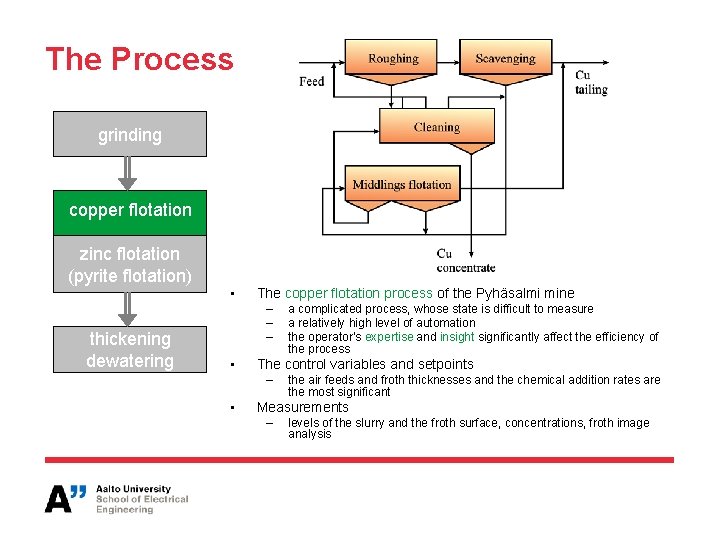
The Process grinding copper flotation zinc flotation (pyrite flotation) thickening dewatering • The copper flotation process of the Pyhäsalmi mine – – – • The control variables and setpoints – • a complicated process, whose state is difficult to measure a relatively high level of automation the operator’s expertise and insight significantly affect the efficiency of the process the air feeds and froth thicknesses and the chemical addition rates are the most significant Measurements – levels of the slurry and the froth surface, concentrations, froth image analysis
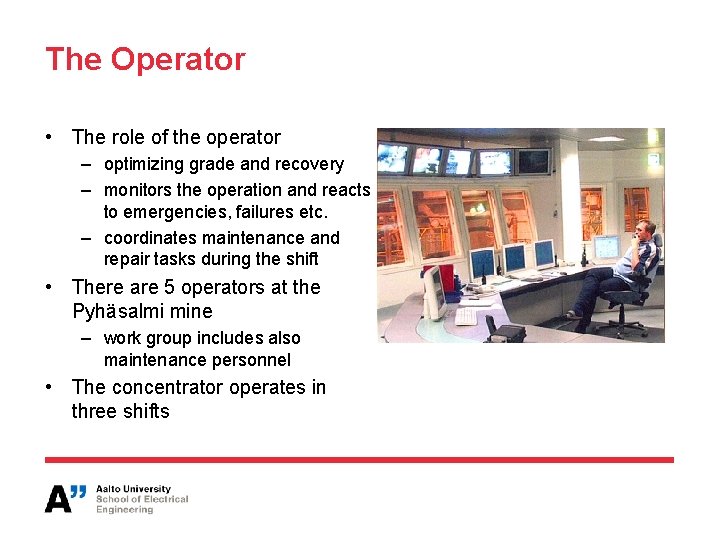
The Operator • The role of the operator – optimizing grade and recovery – monitors the operation and reacts to emergencies, failures etc. – coordinates maintenance and repair tasks during the shift • There are 5 operators at the Pyhäsalmi mine – work group includes also maintenance personnel • The concentrator operates in three shifts
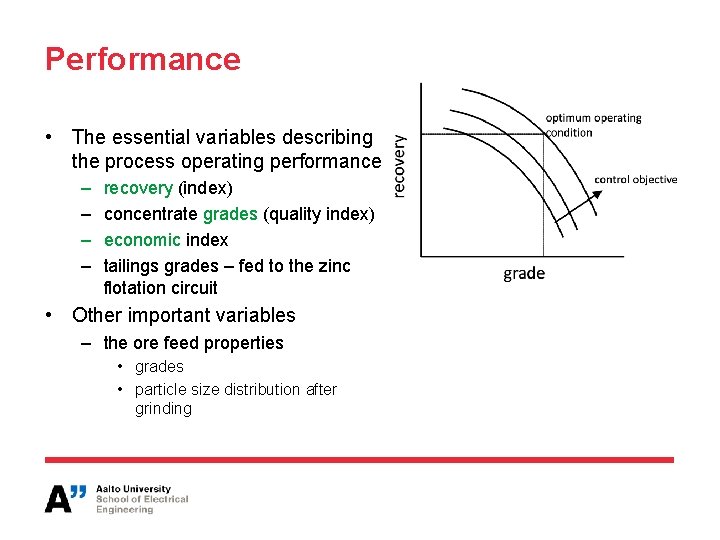
Performance • The essential variables describing the process operating performance – – recovery (index) concentrate grades (quality index) economic index tailings grades – fed to the zinc flotation circuit • Other important variables – the ore feed properties • grades • particle size distribution after grinding
The data • Gathered from the process automation system’s database • The sampling time of the data is 1 minute, and from this data – the outliers and measurement errors are removed – hourly averages are calculated – the data is grouped according to the operating shifts • The time span for the comparison analysis is e. g. 2 -3 weeks • The compared variables are the recovery, grades and production indices
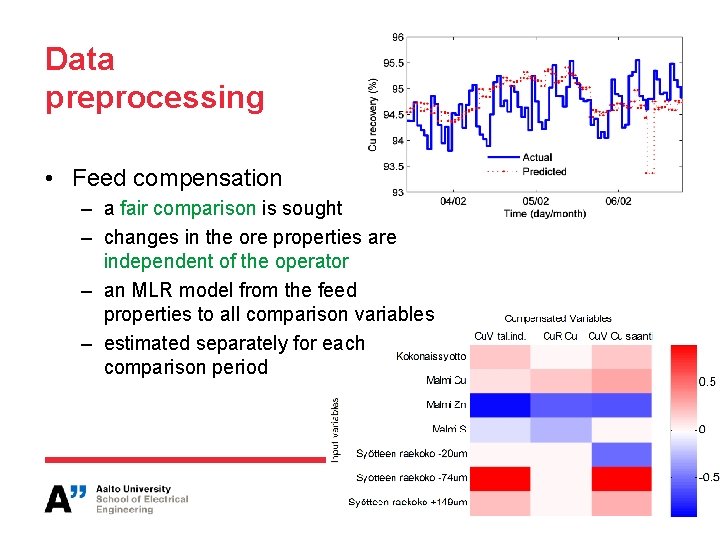
Data preprocessing • Feed compensation – a fair comparison is sought – changes in the ore properties are independent of the operator – an MLR model from the feed properties to all comparison variables – estimated separately for each comparison period
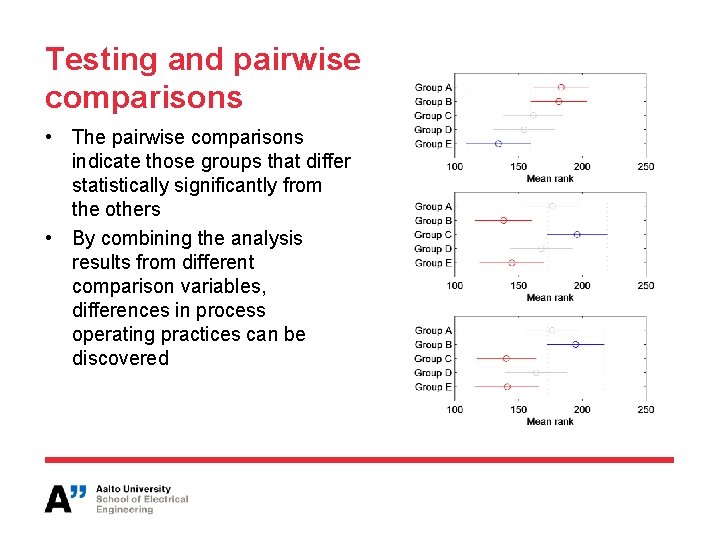
Testing and pairwise comparisons • The pairwise comparisons indicate those groups that differ statistically significantly from the others • By combining the analysis results from different comparison variables, differences in process operating practices can be discovered
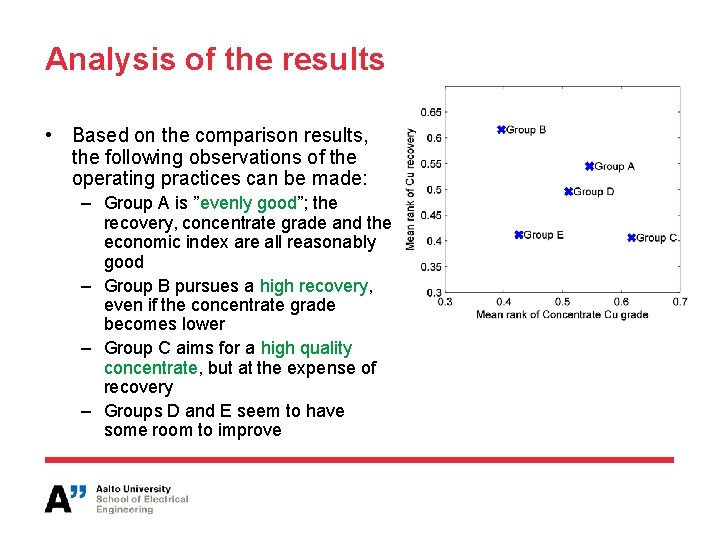
Analysis of the results • Based on the comparison results, the following observations of the operating practices can be made: – Group A is ”evenly good”; the recovery, concentrate grade and the economic index are all reasonably good – Group B pursues a high recovery, even if the concentrate grade becomes lower – Group C aims for a high quality concentrate, but at the expense of recovery – Groups D and E seem to have some room to improve
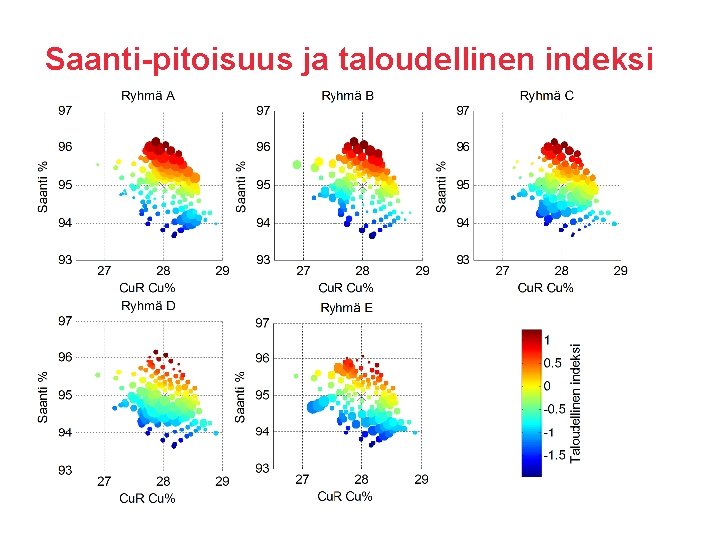
Saanti-pitoisuus ja taloudellinen indeksi
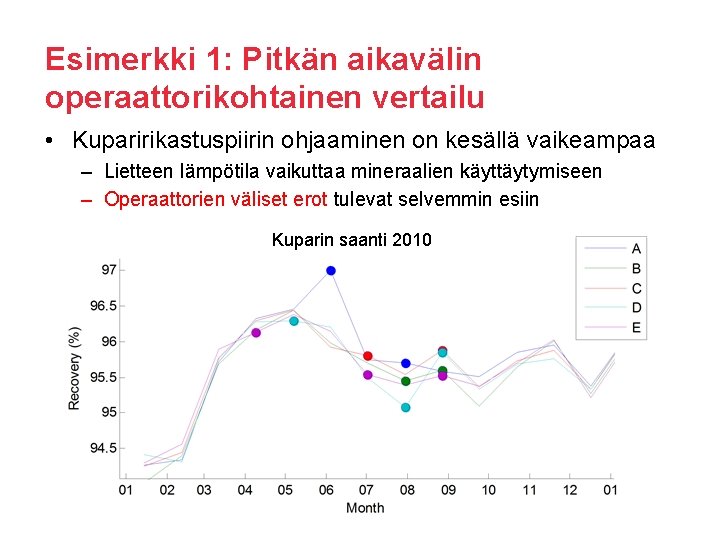
Esimerkki 1: Pitkän aikavälin operaattorikohtainen vertailu • Kuparirikastuspiirin ohjaaminen on kesällä vaikeampaa – Lietteen lämpötila vaikuttaa mineraalien käyttäytymiseen – Operaattorien väliset erot tulevat selvemmin esiin Kuparin saanti 2010
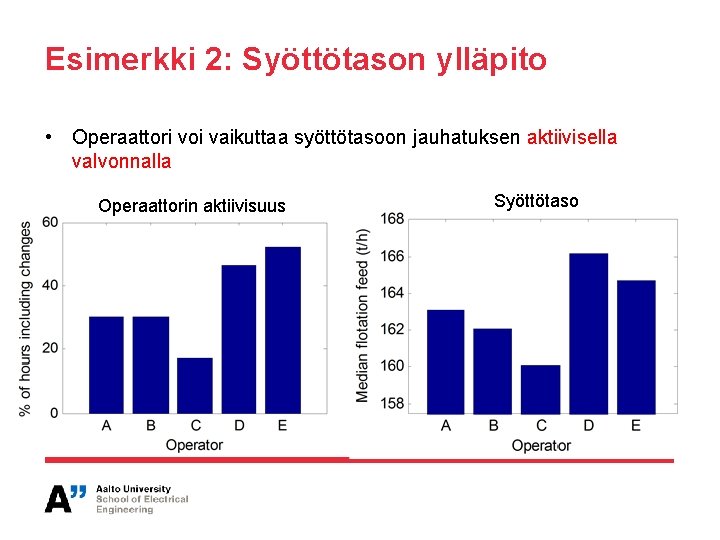
Esimerkki 2: Syöttötason ylläpito • Operaattori voi vaikuttaa syöttötasoon jauhatuksen aktiivisella valvonnalla Operaattorin aktiivisuus Syöttötaso
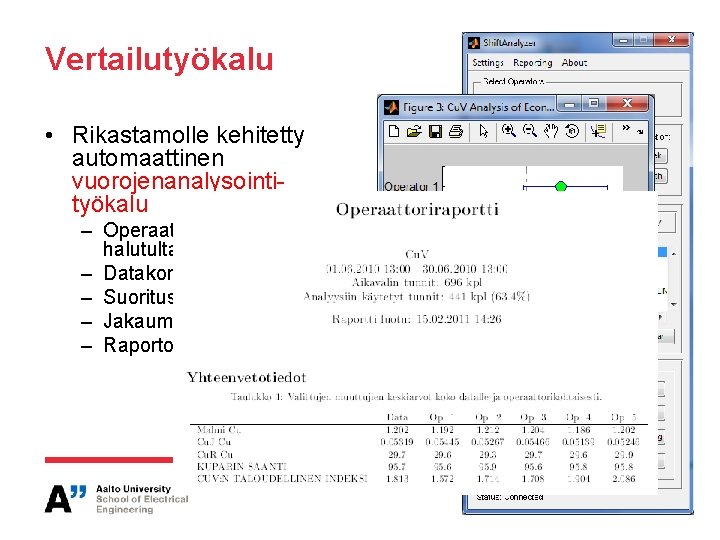
Vertailutyökalu • Rikastamolle kehitetty automaattinen vuorojenanalysointityökalu – Operaattorien vertailu halutulta ajanjaksolta – Datakompensointi – Suoritusindeksit – Jakaumat – Raportointi