
Operative Surgery of the Gallbladder and Biliary Tree
Operative Surgery of the Gallbladder and Biliary Tree
Benign Disease n Cholecystectomy – laparoscopic - open Exploration of the common bile duct n ? Cholecystotomy n
n n General principles of operation Clinical indications Complications/dangers/pitfalls Use in clinical practice
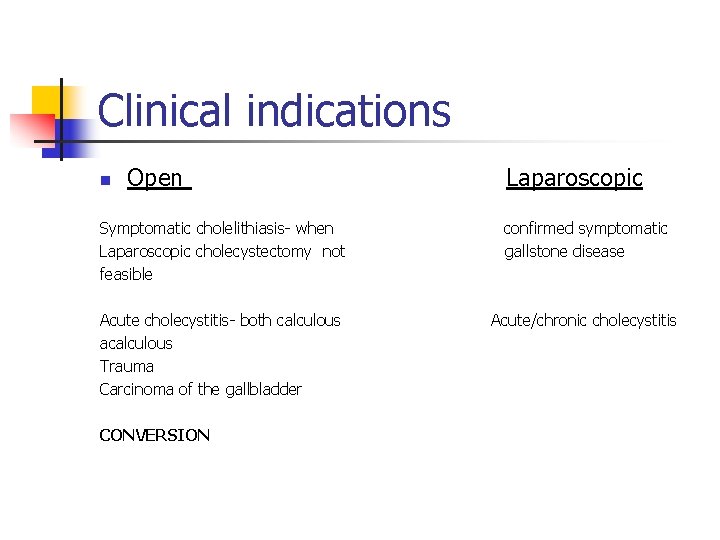
Clinical indications n Open Laparoscopic Symptomatic cholelithiasis- when Laparoscopic cholecystectomy not feasible confirmed symptomatic gallstone disease Acute cholecystitis- both calculous acalculous Trauma Carcinoma of the gallbladder Acute/chronic cholecystitis CONVERSION

Contraindications Open Laparoscopic prior major surgery to upper abdomen cirrhosis and bleeding disorders
Preoperative preparation n n Diagnostic confirmation of gallbladder disease – Adequate resuscitation Pre operative antibiotics Nasogastric tube Anticoagulation
Laparoscopic cholecystectomy
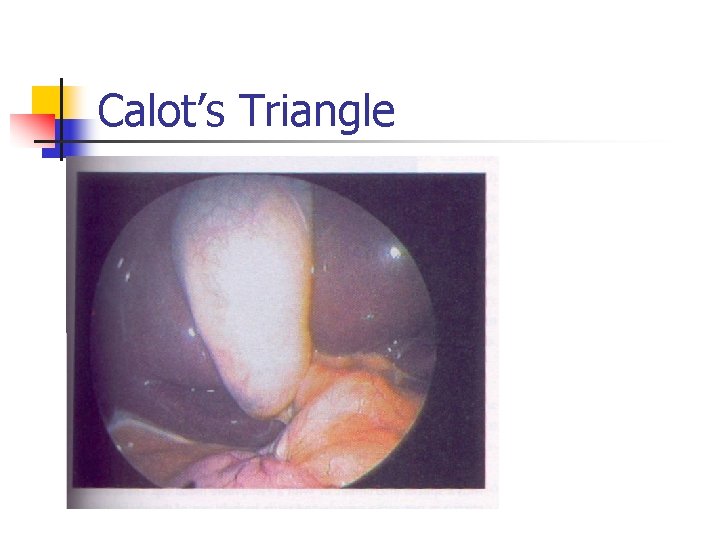
Calot’s Triangle
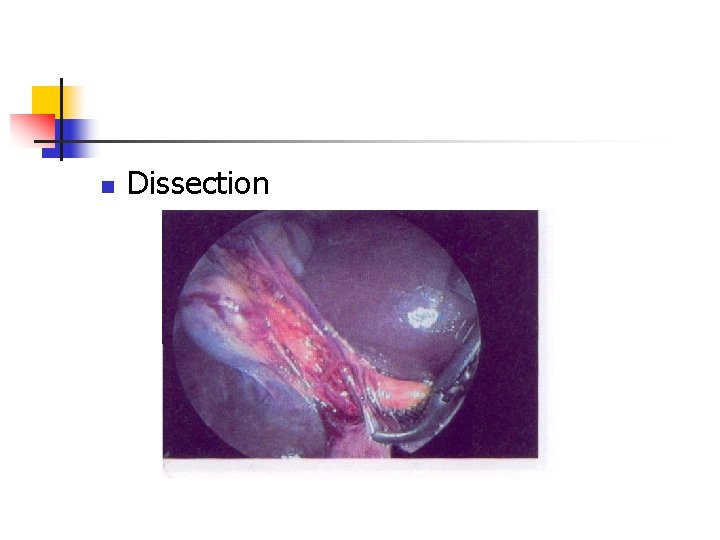
n Dissection
Pitfalls/dangers n n n Damage to intra-abdominal structures during trocar insertion Damage to CBD/CHD -long strictures caused by diathermy -anatomic anomolies/variants (eg. short cystic duct) Bleeding
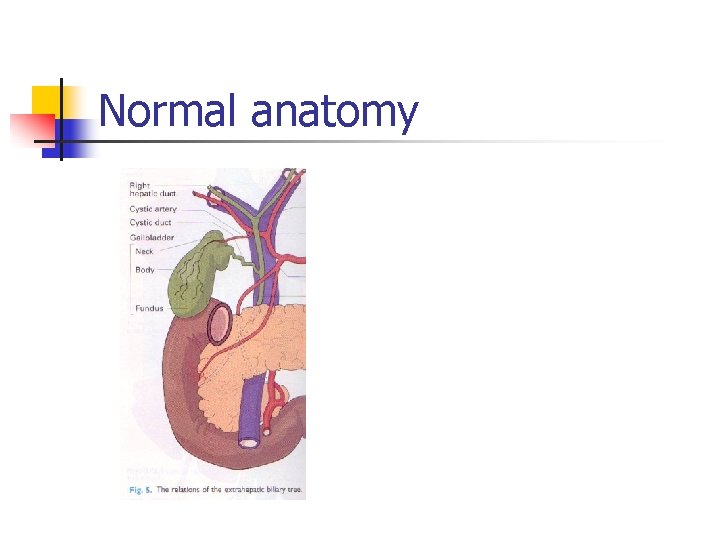
Normal anatomy
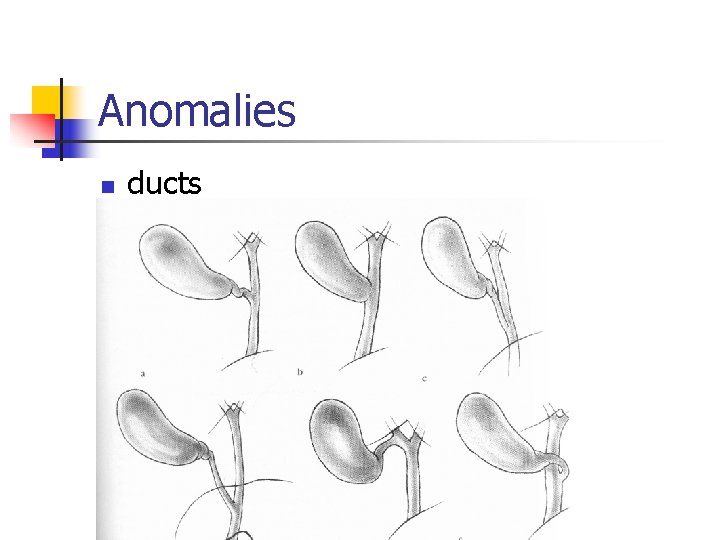
Anomalies n ducts
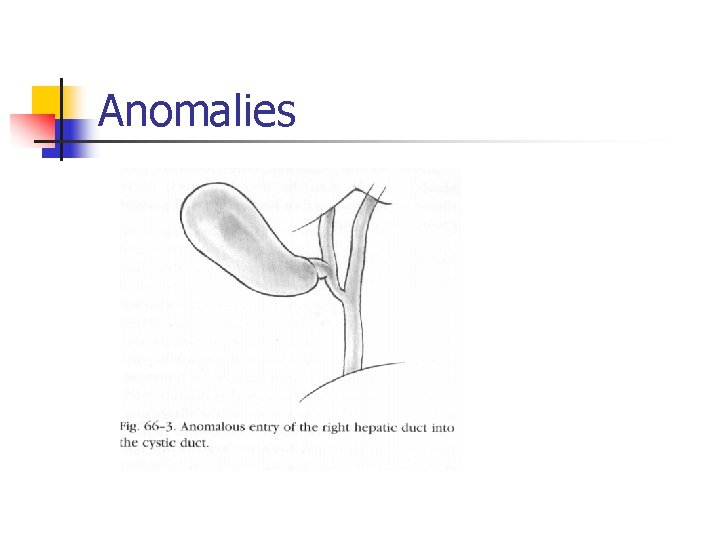
Anomalies
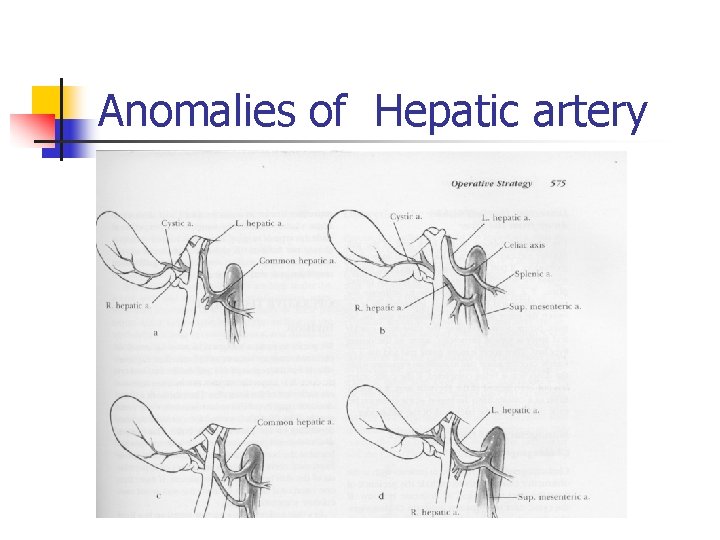
Anomalies of Hepatic artery

Pitfalls/dangers n n Damage to intra-abdominal structures during trocar insertion Damage to CBD? /CHD- long strictures caused by diathermy Short cystic duct (? ? increased risk of misidentification) Bleeding
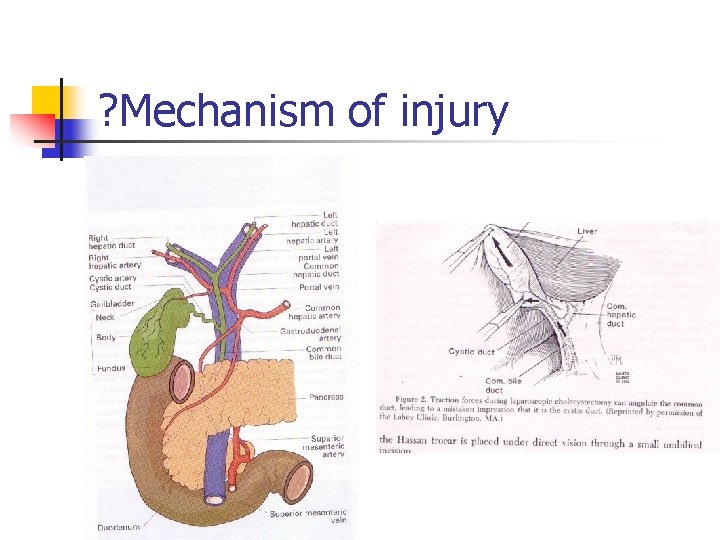
? Mechanism of injury
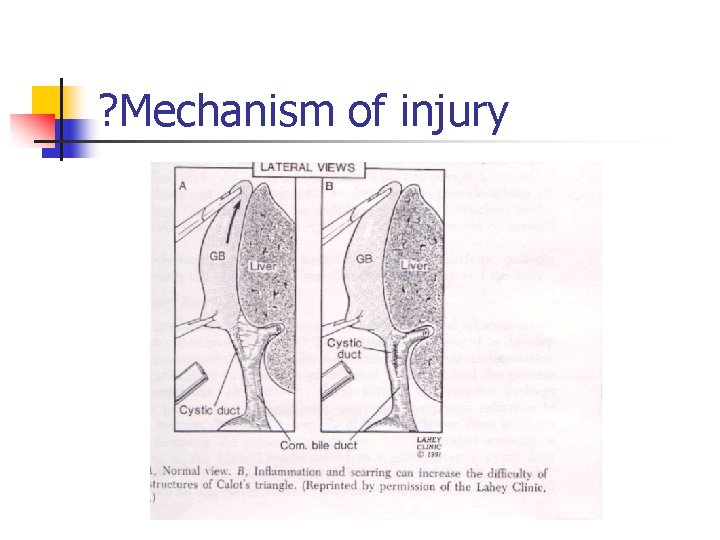
? Mechanism of injury
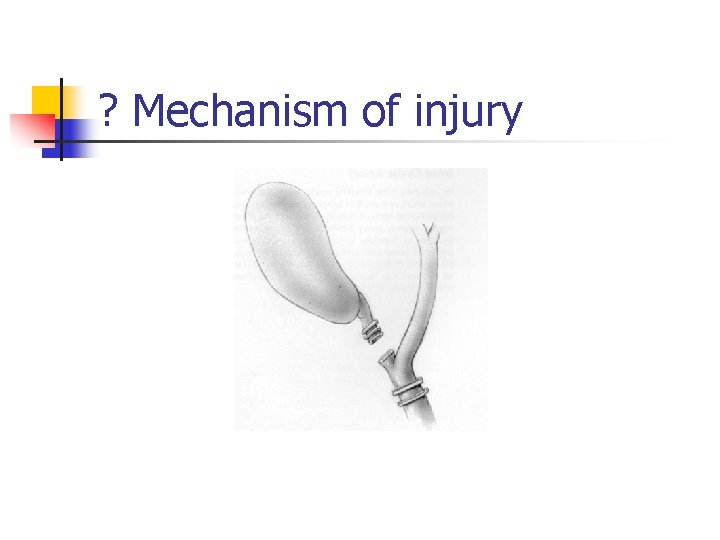
? Mechanism of injury
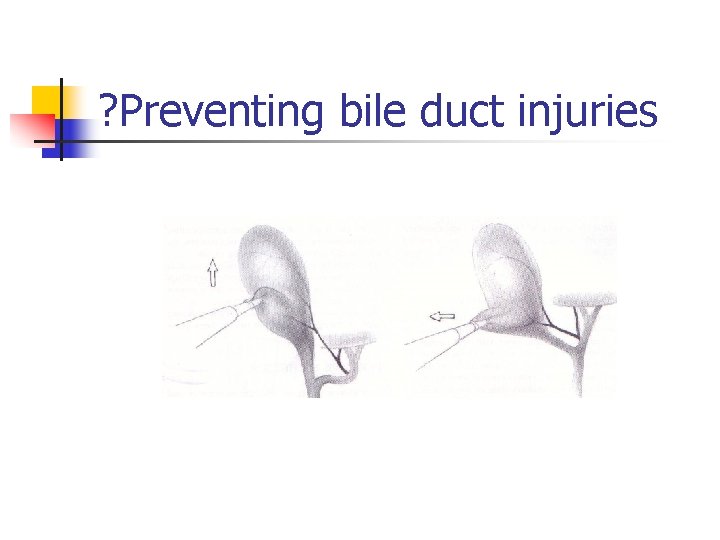
? Preventing bile duct injuries
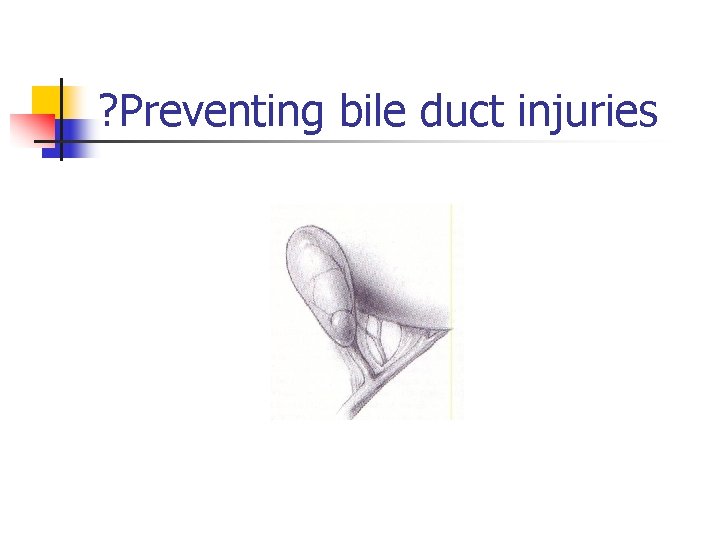
? Preventing bile duct injuries
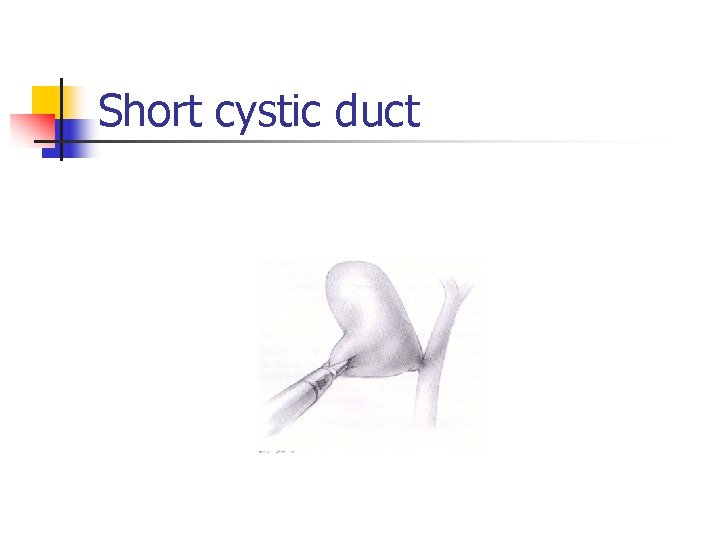
Short cystic duct

Open Cholecystectomy
Operative Technique Incision – right subcostal , right transverse / ? midline n ( long subcostal – best exposure of the biliary tract when difficulties are expected) n Dissection of Calot’s triangle. Retraction of liver upwards Traction anteriorly and to the right on the neck of the gallbladder Two wet packs – to retract colon and the duodenum ? Aspiration of contents if gallbladder tense n
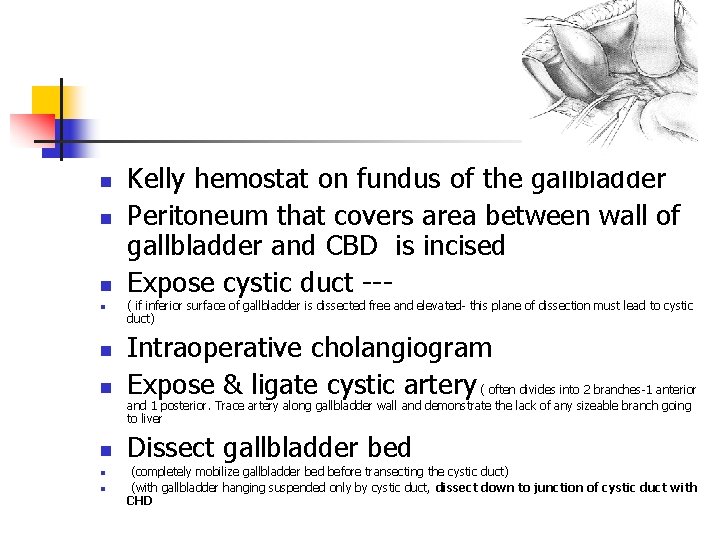
n n n Kelly hemostat on fundus of the gallbladder Peritoneum that covers area between wall of gallbladder and CBD is incised Expose cystic duct --( if inferior surface of gallbladder is dissected free and elevated- this plane of dissection must lead to cystic duct) Intraoperative cholangiogram Expose & ligate cystic artery ( often divides into 2 branches-1 anterior and 1 posterior. Trace artery along gallbladder wall and demonstrate the lack of any sizeable branch going to liver n n n Dissect gallbladder bed (completely mobilize gallbladder bed before transecting the cystic duct) (with gallbladder hanging suspended only by cystic duct, dissect down to junction of cystic duct with CHD
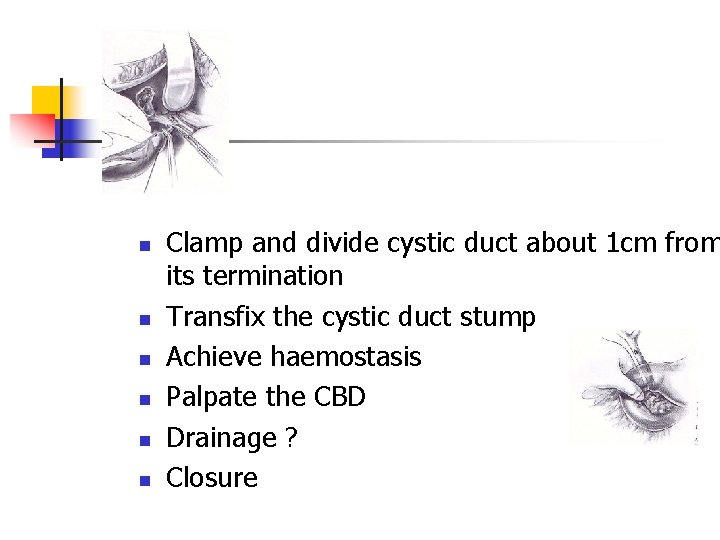
n n n Clamp and divide cystic duct about 1 cm from its termination Transfix the cystic duct stump Achieve haemostasis Palpate the CBD Drainage ? Closure
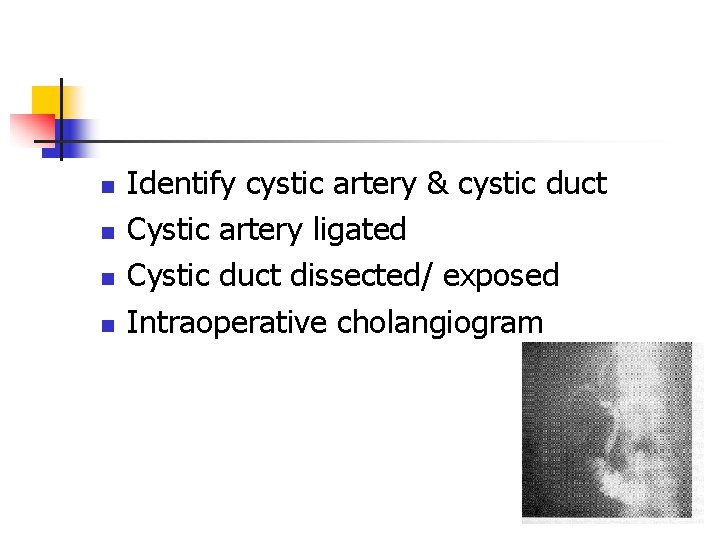
n n Identify cystic artery & cystic duct Cystic artery ligated Cystic duct dissected/ exposed Intraoperative cholangiogram
Avoiding phone calls to MDAV n n How can you avoid injury to bile ducts? Always divide cystic duct as last step in cholecystectomy Most serious injuries of bile ducts are iatrogenic – not related to congenital anomalies or unusual and severe pathology Diameter of the CBD 2 -15 mm Can easily clamp, divide and ligate a small CBD as the first step in Cholecystectomy under the impression that it is cystic duct--THEN – Must divide common hepatic duct before the gallbladder is freed from all its attachments
Exploration of the CBD
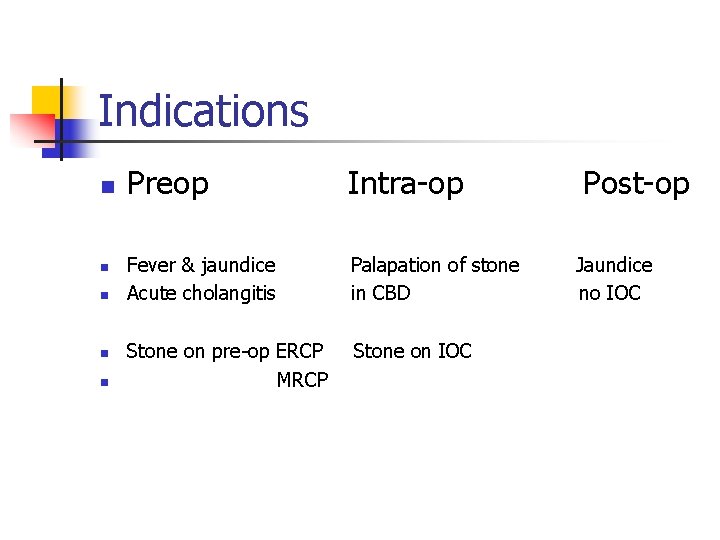
Indications n n n Preop Intra-op Fever & jaundice Acute cholangitis Palapation of stone in CBD Stone on pre-op ERCP MRCP Stone on IOC Post-op Jaundice no IOC
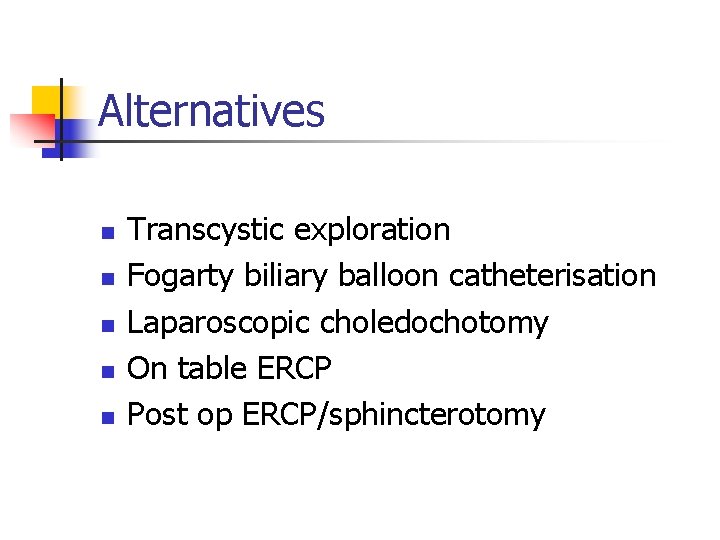
Alternatives n n n Transcystic exploration Fogarty biliary balloon catheterisation Laparoscopic choledochotomy On table ERCP Post op ERCP/sphincterotomy
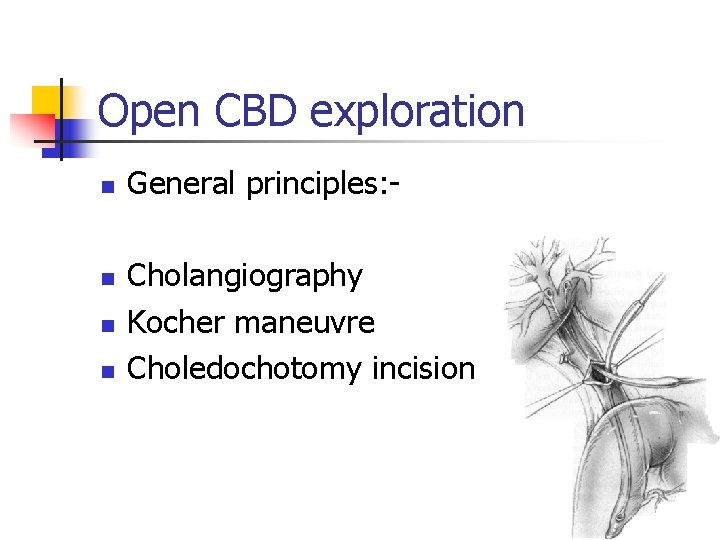
Open CBD exploration n n General principles: Cholangiography Kocher maneuvre Choledochotomy incision

n n n Exploring the CBD Choledochoscopy Insertion of T-tube Completion cholangiogram Drainage & closure
Post operative care n n n T tube on free drainage T tube cholangiography Removal at 3 weeks if cholangiogram negative
Complications n n n Bile leak and bile peritonitis Post operative acute pancreatitis Increasing jaundice Haemorrhage ? Residual CBD stone
Cholecystostomy n n n Indications patients with acute cholecystitis when cholecystectectomy is unsafe when cholecystectomy attempted but too difficult Contraindications acute cholangitis gangrenous gallbladder
Cholecystostomy n Radiological n Open n Laparoscopic
Pre operative preparation n n Adequate resuscitation Preoperative antibiotics

Operative Technique n n n Open General anaesthesia Subcostal incision Identify plane between adherent omentum and inflamed gallbladder Clear omentum from gallbladder by blunt dissection Empty gallbladder
n n n Gram stain Enlarge stab wound in gallbladder Remove gallbladder calculi Insert a straight catheter into gallbladder Close defect in gallbladder wall with two purse string sutures ? cholangiogram
References n Concepts in Hepatobiliary Surgery. In Scott Conner CEH Chassin’s Operative Strategy in General Surgery. An expositive Atas, 3 rd edition, New York, Springer 2002
- Slides: 40