
OPERATIONS WITHIN A TRANSPORT BUSINESS TOPIC 2 OPERATIONS
OPERATIONS WITHIN A TRANSPORT BUSINESS TOPIC 2
OPERATIONS STRUCTURE OF A BUSINESS OPERATIONS are all activities performed in each department of a transport business.

GENERIC SUPERVISION ■ ■ ■ Vehicle control Driver control Packing Dispatching Loading and offloading
TECHNICAL ■ ■ ■ Loading and offloading Vehicle maintenance Vehicle selection Vehicle replacement Contracts and outsourcing Business requirements
SUPPORT ■ Finance ■ Procurement ■ cleaning ■ customer services
CONTROL ■ Information Technology ■ Security
OTHER GENERIC OPERATIONS ARE : ■ INDUSTRIAL RELATIONS ■ HUMAN RESOURCES ■ MARKETING AND SALES
SPECIFIC Are activities done in SOME transport businesses AND includes all GENERIC activities.

ROAD TRANSPORT ■ ■ ■ Routing and scheduling Maintenance Driver control Freight handling In transit care of freight

RAIL TRANSPORT ■ Scheduling ■ Maintenance ■ Driver control ■ Freight handling ■ In transit care of freight
PIPELINE TRANSPORT ■ Maintenance ■ Freight handling
WATER TRANSPORT ■ Maintenance ■ Driver control ■ Freight handling ■ In transit care of freight
AIR TRANSPORT ■ Maintenance ■ Driver control ■ Freight handling ■ In transit care of freight
OPERATIONS MANAGER The Operations Manager makes sure that all operations in a transport business work together as one. He is the glue that sticks all operations together.
DUTIES OF THE OPERATIONS MANAGER ■ Supervise all day to day operations (core, control and support operations). ■ Supervise loading and offloading operations. ■ Supervise staff workloads, staff schedules and staff duties. ■ Manage all the databases ( I T equipment )
DUTIES OF THE OPERATIONS MANAGER ■ Manage staff times and attendance. ■ Ensure safety standards are followed. ■ Ensure vehicles are maintained. ■ Ensure that all operations are cost effective. ■ Ensure all staff follow policy, procedures, processes and legislation. ■ Build customer relations.
FLEET MANAGEMENT Fleet management is to manage and control the company’s vehicles and drivers.
OBJECTIVES of Fleet Management: ■ To control vehicle maintenance costs. ■ To control the growth of the fleet. ■ To make sure that the fleet is standardized. ■ To budget for maintenance and repairs. ■ To monitor fuel consumption. ■ To schedule vehicle maintenance ■ To make sure drivers’ licenses and vehicle licenses are renewed on time.
DUTIES OF THE FLEET MANAGER
■ ■ ■ VEHICLE CONTROL Extends the life of vehicles. Controls growth of the fleet. Makes sure that the fleet is standardized. Budgets for maintenance and repairs of vehicles. Monitors diesel consumption. Sends vehicles for maintenance when needed. Calculates the depreciation of vehicles. Knows the resale price of vehicles. Knows the cost to repair and maintain older vehicles. Controls vehicle keys. Controls vehicle log books.
DRIVER CONTROL ■ Allocates vehicles to drivers. ■ Ensures vehicles are clean and tidy. ■ Trains new and inexperienced drivers. ■ Arranges driver safety meetings. ■ Makes sure drivers to follow legislation. ■ Checks driver behavior by monitoring tachographs and vehicle Performance Management Systems. ■ Monitors hours driven by drivers. ■ Checks driver logs. ■ Ensures drivers’ licenses, vehicle licenses, PDP’s are valid.
FLEET CONTROL INFORMATION TECHNOLOGY EQUIPMENT USED TO MANAGE VEHICLES AND DRIVERS
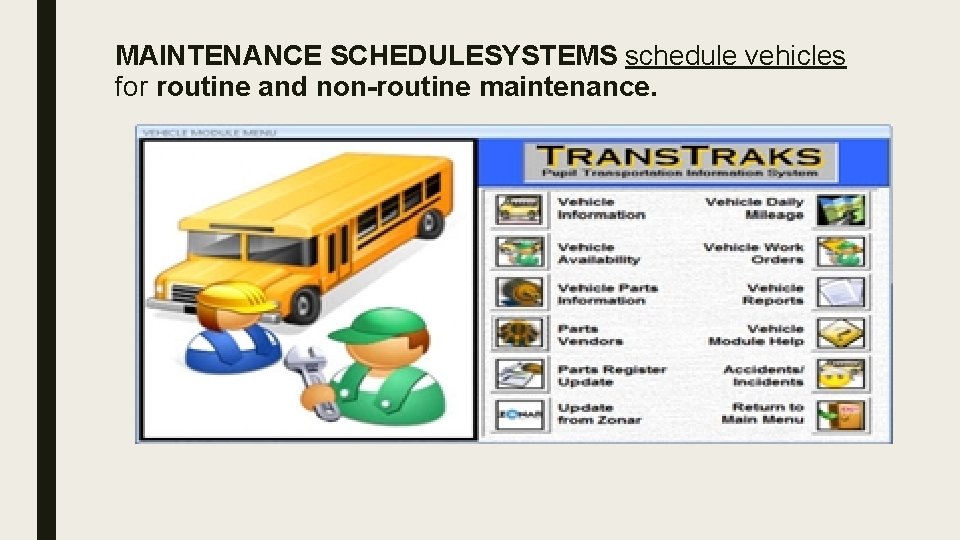
MAINTENANCE SCHEDULESYSTEMS schedule vehicles for routine and non-routine maintenance.
MODULES control vehicle spare parts (stock) Deals with: stock inquiries, stock location, stock reports and stock orders

FLEET ADMINISTRATION SYSTEMS ■ Tells you when to renew driver licenses and permits, and due dates for fleet reports and insurance reports.

FLEET COSTING SYSTEMS ■ Tells you how profitable vehicles in the fleet are. Fleet Costing Systems do a: ■ vehicle cost analysis ■ driver cost analysis and ■ an overall costs analysis.
TACHOGRAPH ■ The Tachograph records: ■ Speed of vehicles and speeding offences ■ Driver time spent driving and driver rest periods ■ Opening of doors ■ Time the vehicle is stationary ■ Vehicle braking
DRIVER CONTROL ■ Driver Control is managing the records of drivers such as address, ID's, licenses and PDP's, AARTO demerit points, traffic offences, accidents, insurance etc
HOW TO CONTROL DRIVERS: 1. Train drivers to use new vehicles and equipment. 2. Ensure drivers have valid licenses and PDP's. 3. Manage driver hours (make sure they take rest periods). 4. Manage driver behaviour from information received from tachographs. 5. Have driver development plans to up-skill and correct driver behaviour.
- Slides: 30