
Operations Management Process Strategy Process Strategies Involves determining
- Slides: 17
Operations Management Process Strategy
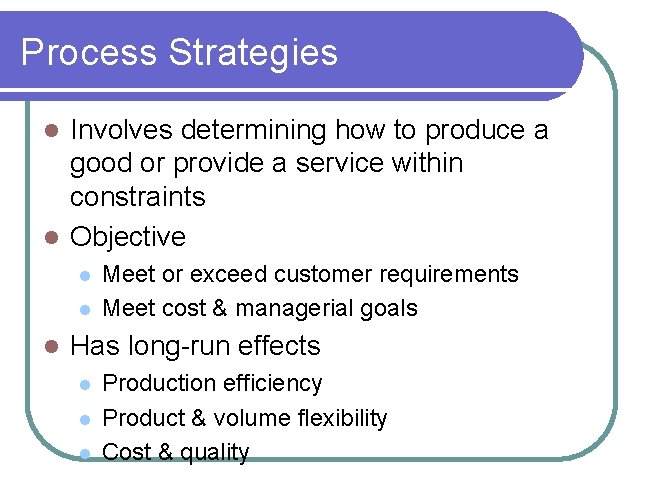
Process Strategies Involves determining how to produce a good or provide a service within constraints l Objective l l Meet or exceed customer requirements Meet cost & managerial goals Has long-run effects l l l Production efficiency Product & volume flexibility Cost & quality
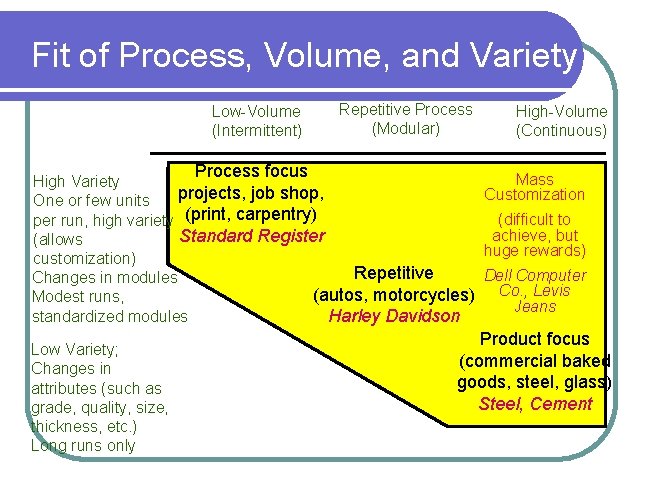
Fit of Process, Volume, and Variety Low-Volume (Intermittent) Repetitive Process (Modular) High-Volume (Continuous) Process focus Mass High Variety projects, job shop, Customization One or few units (difficult to per run, high variety (print, carpentry) achieve, but Standard Register (allows huge rewards) customization) Repetitive Dell Computer Changes in modules (autos, motorcycles) Co. , Levis Modest runs, Jeans standardized modules Harley Davidson Low Variety; Changes in attributes (such as grade, quality, size, thickness, etc. ) Long runs only Product focus (commercial baked goods, steel, glass) Steel, Cement
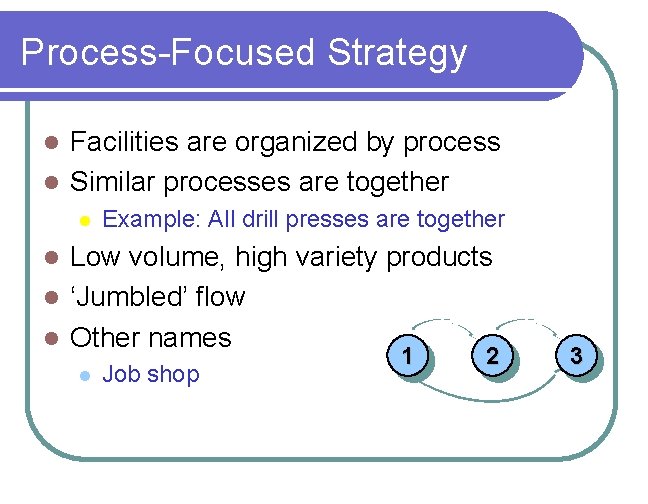
Process-Focused Strategy Facilities are organized by process l Similar processes are together l l Example: All drill presses are together Low volume, high variety products l ‘Jumbled’ flow Product A Operatio l Other names l l Job shop n 1 2 Product B 3
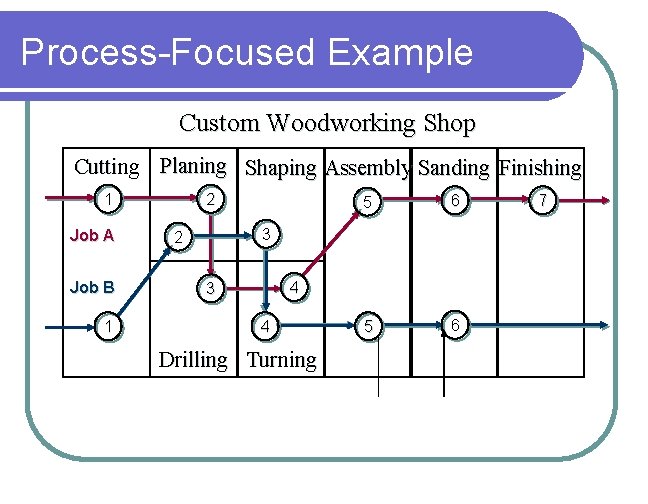
Process-Focused Example Custom Woodworking Shop Cutting Planing Shaping Assembly Sanding Finishing 1 Job A Job B 1 2 5 6 3 2 4 3 4 Drilling Turning 7
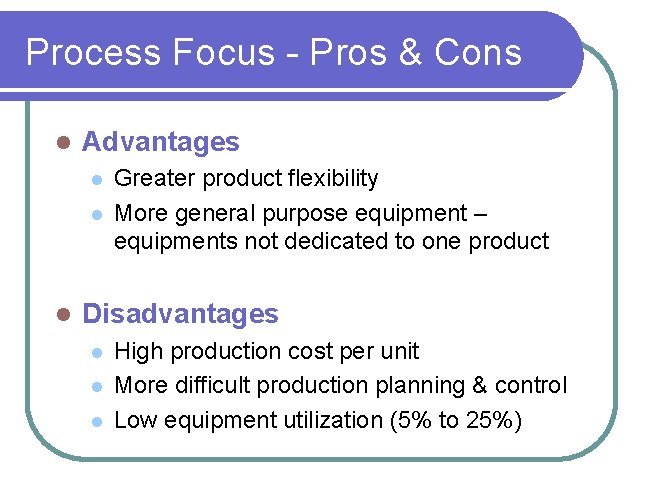
Process Focus - Pros & Cons l Advantages l l l Greater product flexibility More general purpose equipment – equipments not dedicated to one product Disadvantages l l l High production cost per unit More difficult production planning & control Low equipment utilization (5% to 25%)
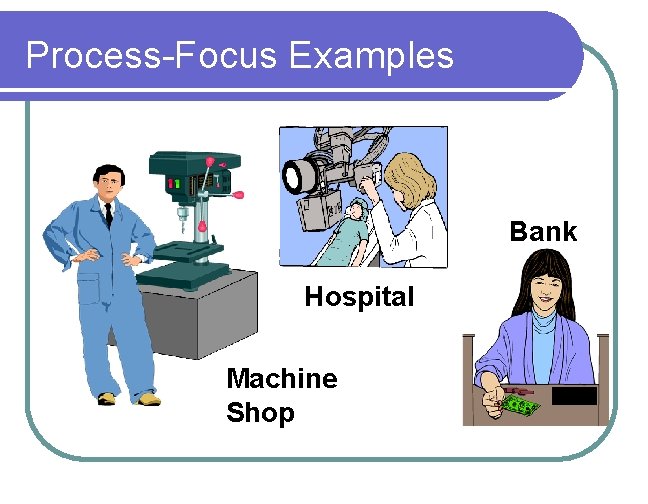
Process-Focus Examples Bank Hospital Machine Shop
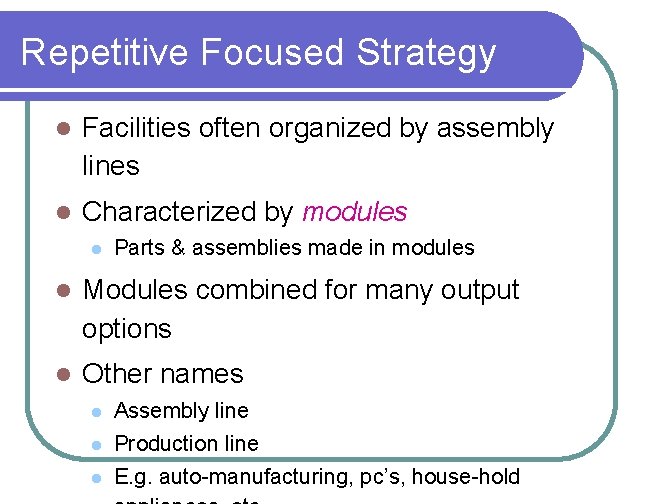
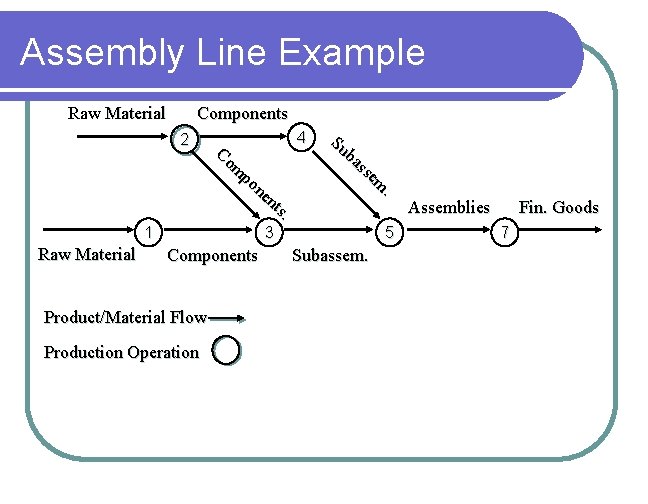
Repetitive Focused Strategy l Facilities often organized by assembly lines l Characterized by modules l Parts & assemblies made in modules l Modules combined for many output options l Other names l Assembly line l Production line l E. g. auto-manufacturing, pc’s, house-hold
Assembly Line Example Raw Material Components 2 Co m po ne nt s. 1 Raw Material 4 Su ba ss em. 3 Components Product/Material Flow Production Operation 5 Subassem. Assemblies Fin. Goods 7
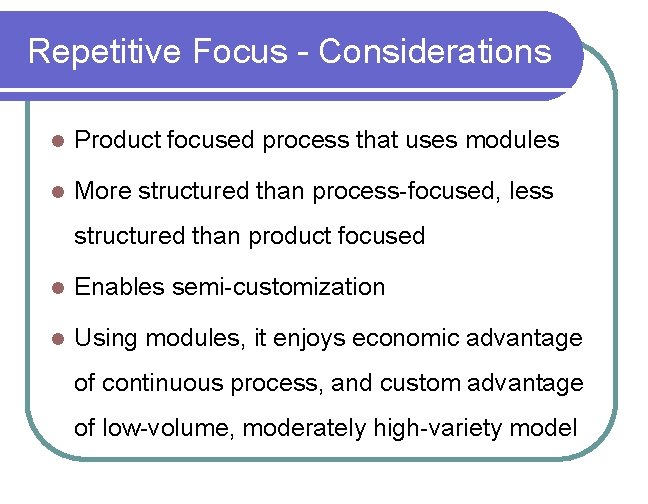
Repetitive Focus - Considerations l Product focused process that uses modules l More structured than process-focused, less structured than product focused l Enables semi-customization l Using modules, it enjoys economic advantage of continuous process, and custom advantage of low-volume, moderately high-variety model
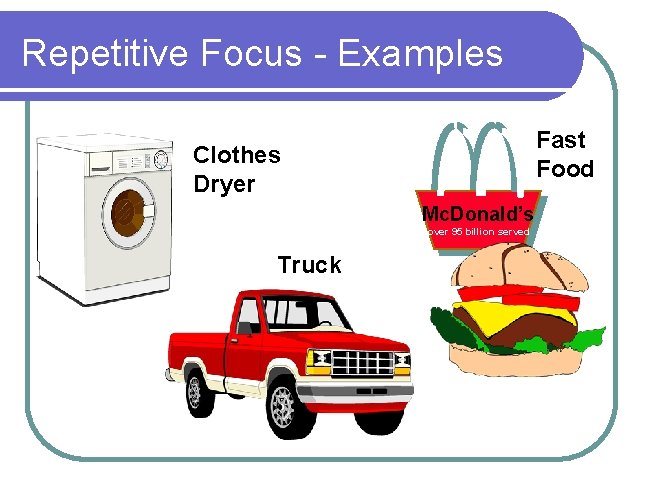
Repetitive Focus - Examples Fast Food Clothes Dryer Mc. Donald’s over 95 billion served Truck
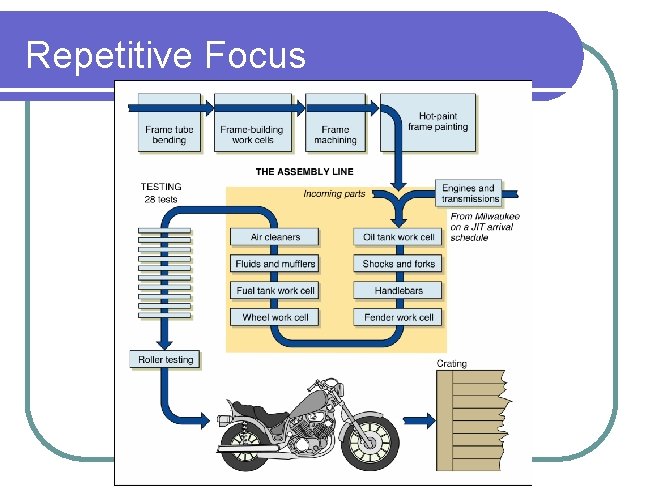
Repetitive Focus
Product-Focused Strategy l Facilities are organized by product l High volume, low variety l Conversion or further processing of undifferentiated materials such as petroleum, chemicals, or beer l Follows a predetermined sequence of steps, but flow is continuous rather than discrete – highly standardized l Other names l Line flow production
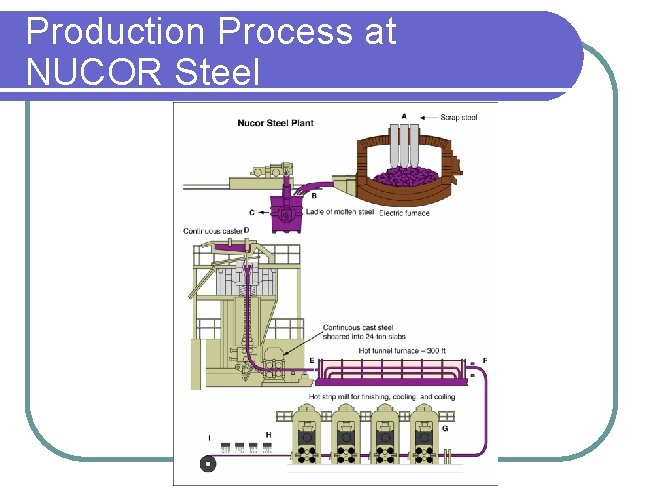
Production Process at NUCOR Steel
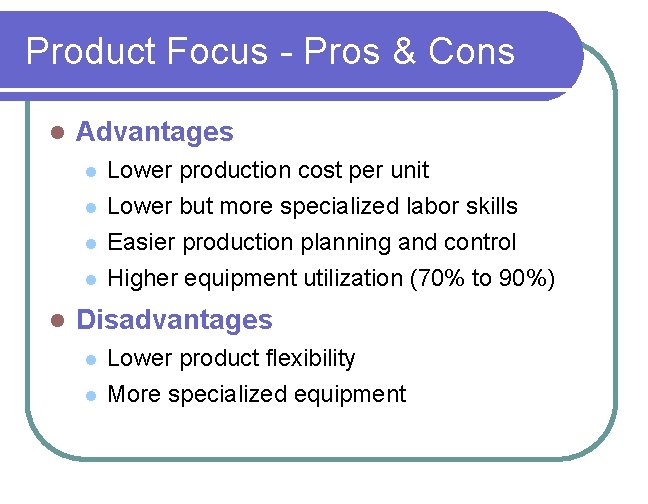
Product Focus - Pros & Cons l Advantages l Lower production cost per unit Lower but more specialized labor skills l Easier production planning and control l Higher equipment utilization (70% to 90%) l l Disadvantages l l Lower product flexibility More specialized equipment
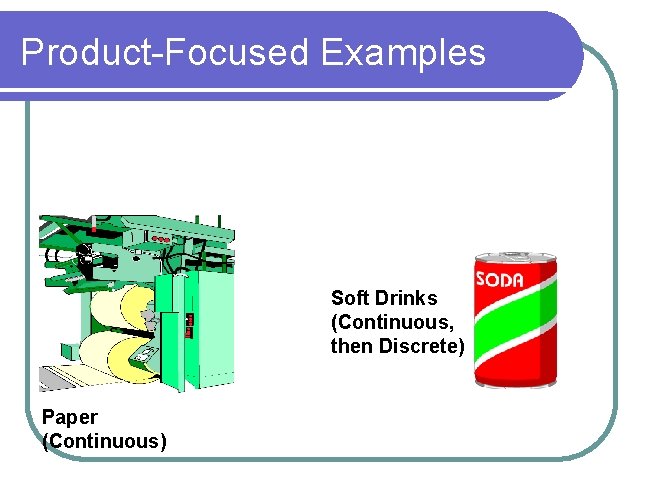
Product-Focused Examples Soft Drinks (Continuous, then Discrete) Paper (Continuous)
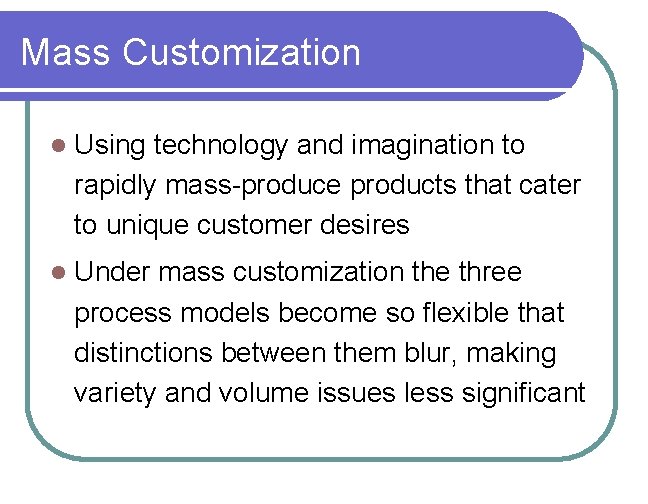
Mass Customization l Using technology and imagination to rapidly mass-produce products that cater to unique customer desires l Under mass customization the three process models become so flexible that distinctions between them blur, making variety and volume issues less significant