
Operations Management Performance Modeling Operations Strategy Process Analysis

- Slides: 23
Operations Management & Performance Modeling ¬ ® ¯ ° Operations Strategy Process Analysis Lean Operations Supply Chain Management Capacity Management in Services ± Quality Management – Class 7 b: Quality & the Voice of the Customer – Class 8 a: Control Charts & Voice of the Process – Class 8 b: Paradigms for Continuous Improvement » Process Capability » Analog Devices & Continuous Improvement » Introduce National Printing Company OM&PM/Class 8 b 1
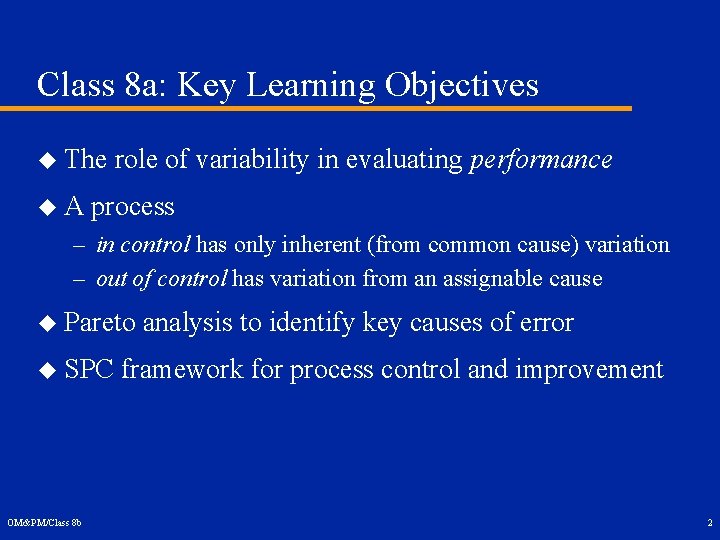
Class 8 a: Key Learning Objectives u The u. A role of variability in evaluating performance process – in control has only inherent (from common cause) variation – out of control has variation from an assignable cause u Pareto u SPC OM&PM/Class 8 b analysis to identify key causes of error framework for process control and improvement 2
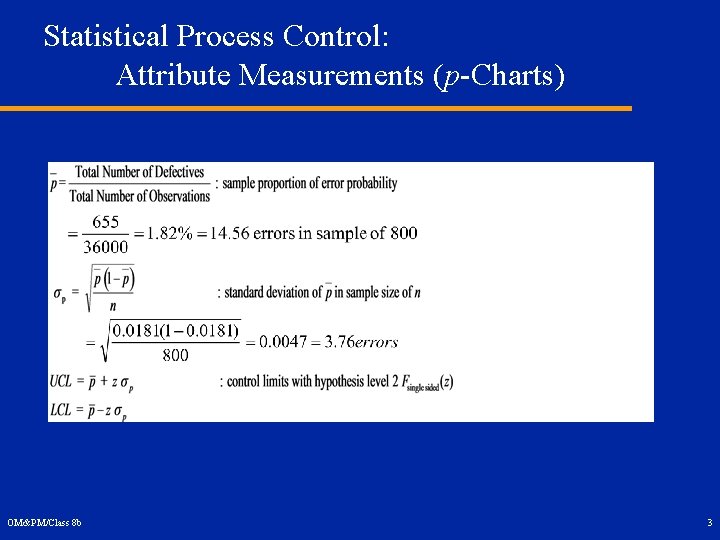
Statistical Process Control: Attribute Measurements (p-Charts) OM&PM/Class 8 b 3
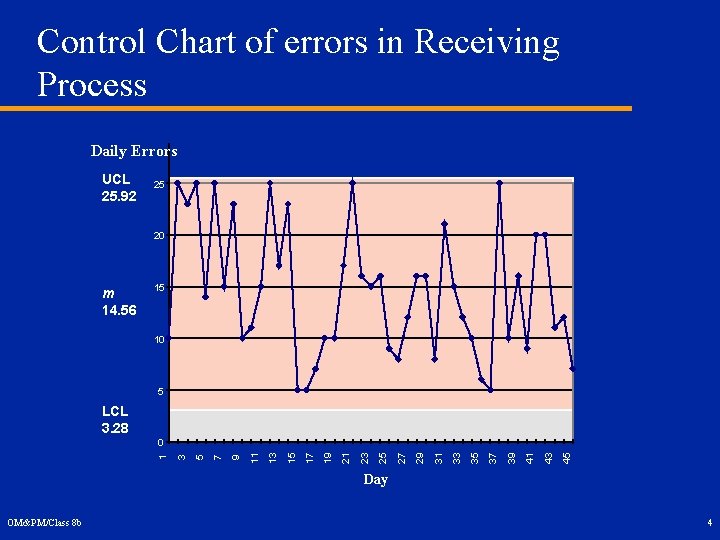
Control Chart of errors in Receiving Process Daily Errors UCL 25. 92 25 20 m 14. 56 15 10 5 LCL 3. 28 45 43 41 39 37 35 33 31 29 27 25 23 21 19 17 15 13 11 9 7 5 3 1 0 Day OM&PM/Class 8 b 4
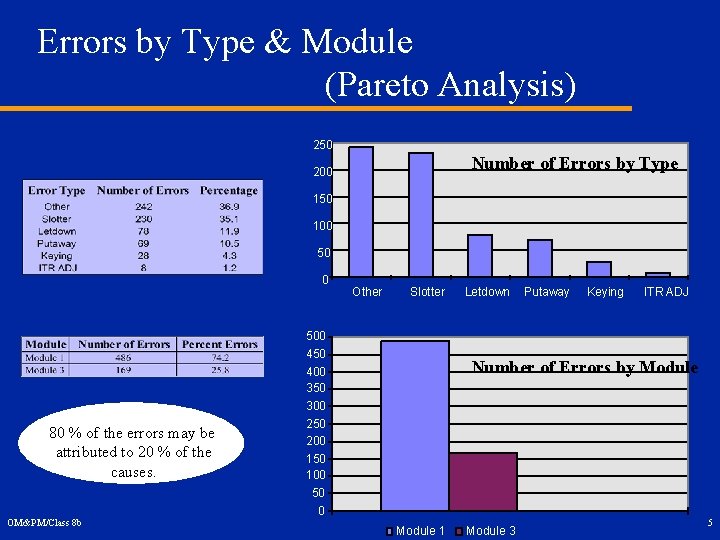
Errors by Type & Module (Pareto Analysis) 250 Number of Errors by Type 200 150 100 50 0 80 % of the errors may be attributed to 20 % of the causes. OM&PM/Class 8 b Other Slotter 500 450 400 350 300 250 200 150 100 50 0 Letdown Putaway Keying ITR ADJ Number of Errors by Module 1 Module 3 5
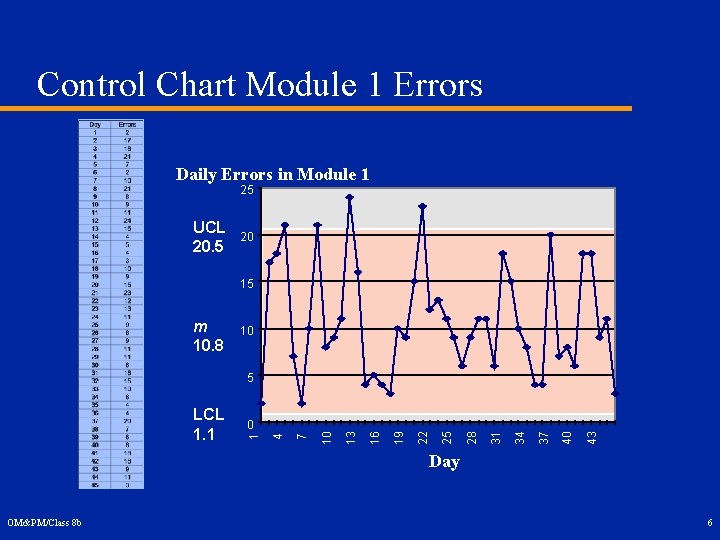
Control Chart Module 1 Errors Daily Errors in Module 1 25 UCL 20. 5 20 15 m 10. 8 10 43 40 37 34 31 28 25 22 19 16 13 7 4 0 1 LCL 1. 1 10 5 Day OM&PM/Class 8 b 6
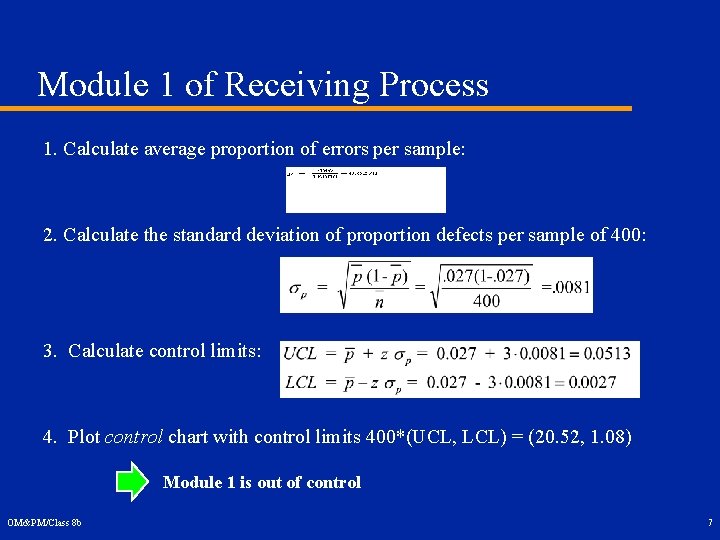
Module 1 of Receiving Process 1. Calculate average proportion of errors per sample: 2. Calculate the standard deviation of proportion defects per sample of 400: 3. Calculate control limits: 4. Plot control chart with control limits 400*(UCL, LCL) = (20. 52, 1. 08) Module 1 is out of control OM&PM/Class 8 b 7
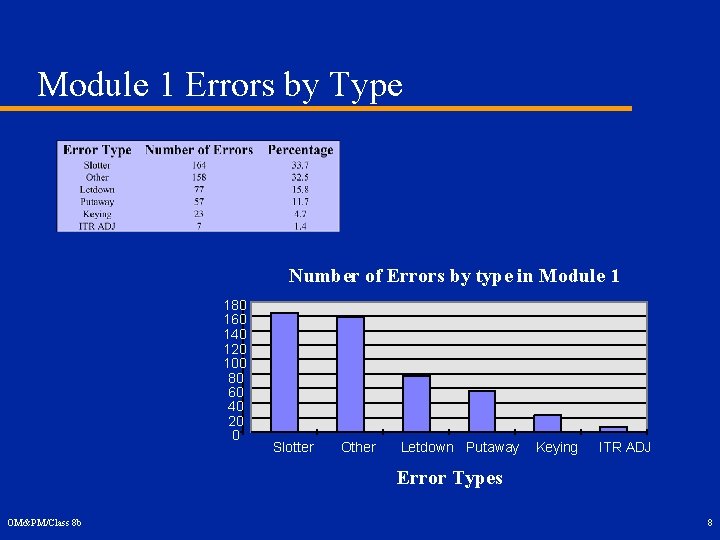
Module 1 Errors by Type Number of Errors by type in Module 1 180 160 140 120 100 80 60 40 20 0 Slotter Other Letdown Putaway Keying ITR ADJ Error Types OM&PM/Class 8 b 8
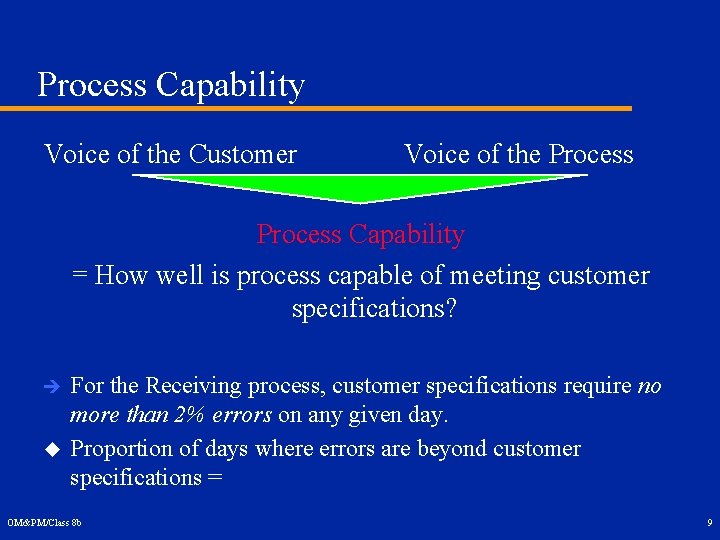
Process Capability Voice of the Customer Voice of the Process Capability = How well is process capable of meeting customer specifications? è u For the Receiving process, customer specifications require no more than 2% errors on any given day. Proportion of days where errors are beyond customer specifications = OM&PM/Class 8 b 9
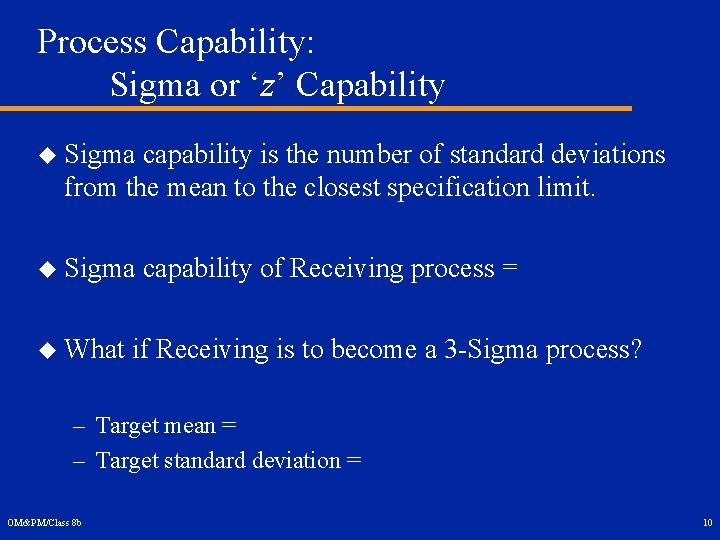
Process Capability: Sigma or ‘z’ Capability u Sigma capability is the number of standard deviations from the mean to the closest specification limit. u Sigma u What capability of Receiving process = if Receiving is to become a 3 -Sigma process? – Target mean = – Target standard deviation = OM&PM/Class 8 b 10
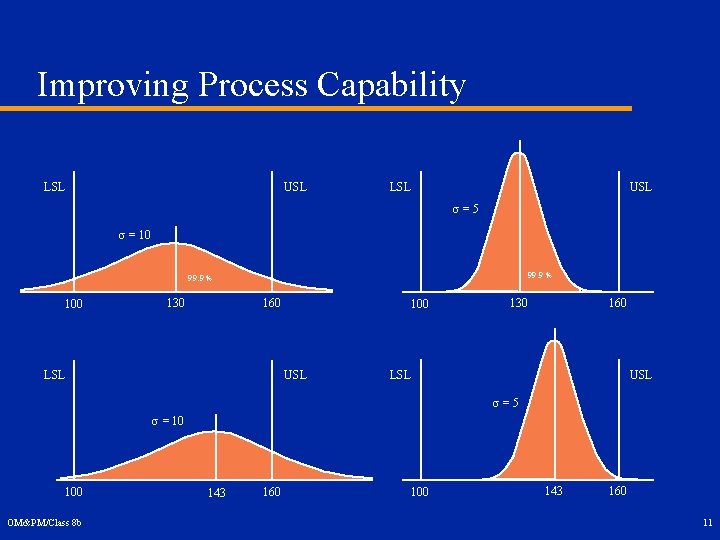
Improving Process Capability LSL USL s=5 s = 10 99. 9 % 100 130 160 LSL 100 USL 130 160 LSL USL s=5 s = 10 100 OM&PM/Class 8 b 143 160 100 143 160 11
Magnitude of Difference Between Sigma Levels OM&PM/Class 8 b 12
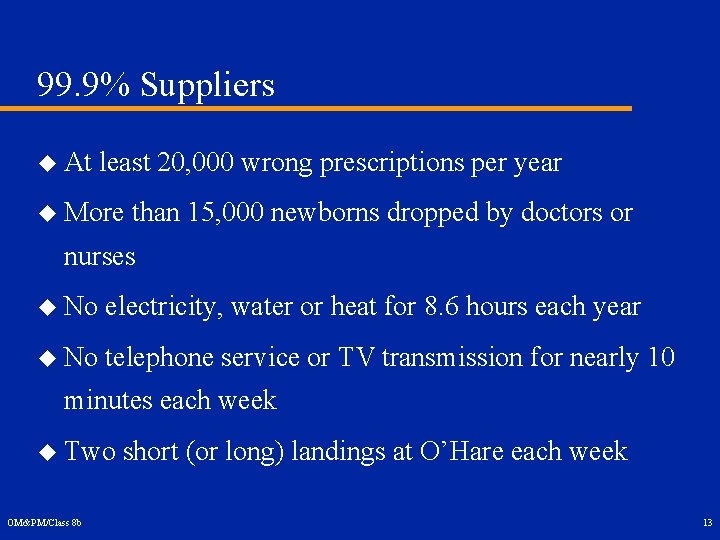
99. 9% Suppliers u At least 20, 000 wrong prescriptions per year u More than 15, 000 newborns dropped by doctors or nurses u No electricity, water or heat for 8. 6 hours each year u No telephone service or TV transmission for nearly 10 minutes each week u Two OM&PM/Class 8 b short (or long) landings at O’Hare each week 13
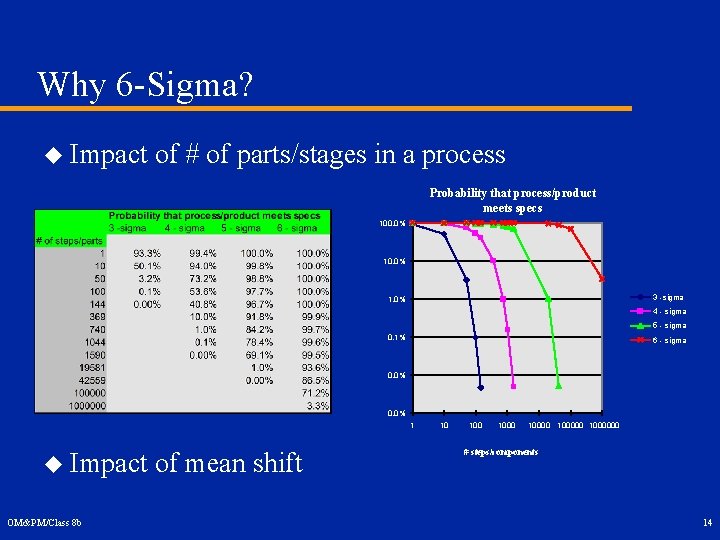
Why 6 -Sigma? u Impact of # of parts/stages in a process Probability that process/product meets specs 100. 0% 10. 0% 3 -sigma 1. 0% 4 - sigma 5 - sigma 0. 1% 6 - sigma 0. 0% 1 u Impact OM&PM/Class 8 b of mean shift 10 100000 1000000 # steps/components 14
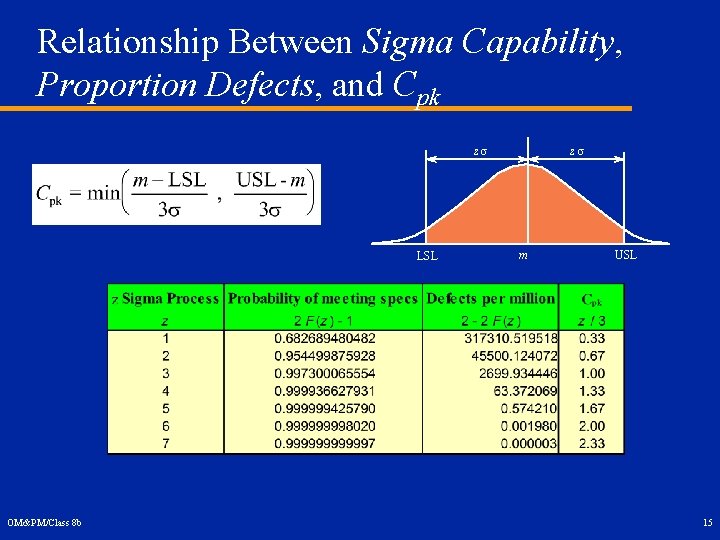
Relationship Between Sigma Capability, Proportion Defects, and Cpk zs LSL OM&PM/Class 8 b zs m USL 15
OM&PM/Class 8 b 16
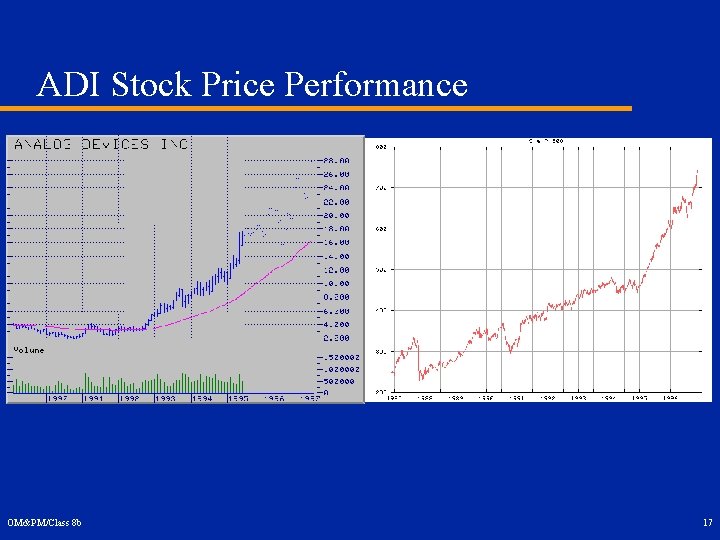
ADI Stock Price Performance OM&PM/Class 8 b 17
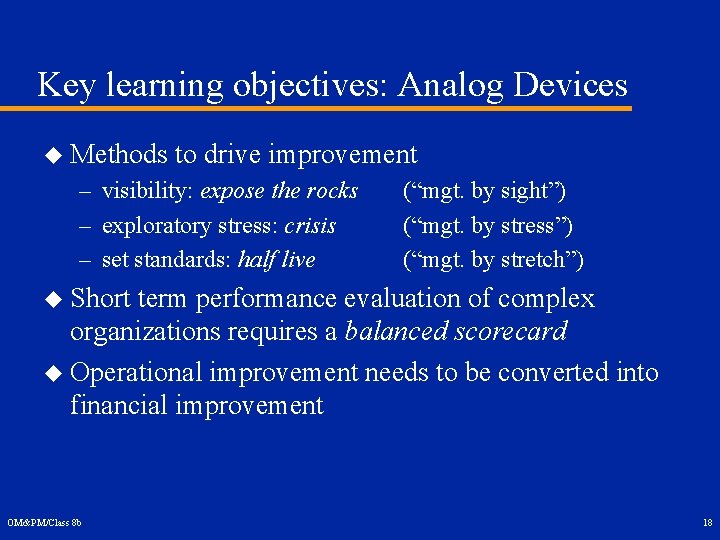
Key learning objectives: Analog Devices u Methods to drive improvement – visibility: expose the rocks – exploratory stress: crisis – set standards: half live (“mgt. by sight”) (“mgt. by stress”) (“mgt. by stretch”) u Short term performance evaluation of complex organizations requires a balanced scorecard u Operational improvement needs to be converted into financial improvement OM&PM/Class 8 b 18
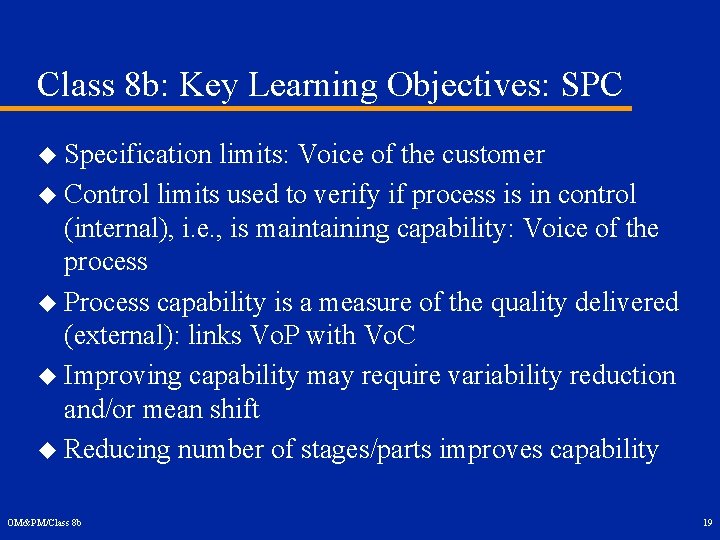
Class 8 b: Key Learning Objectives: SPC u Specification limits: Voice of the customer u Control limits used to verify if process is in control (internal), i. e. , is maintaining capability: Voice of the process u Process capability is a measure of the quality delivered (external): links Vo. P with Vo. C u Improving capability may require variability reduction and/or mean shift u Reducing number of stages/parts improves capability OM&PM/Class 8 b 19
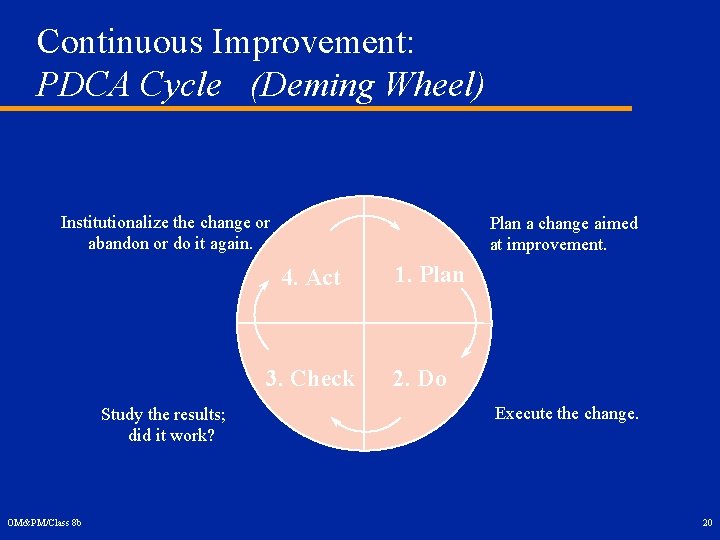
Continuous Improvement: PDCA Cycle (Deming Wheel) Institutionalize the change or abandon or do it again. Plan a change aimed at improvement. 4. Act 3. Check Study the results; did it work? OM&PM/Class 8 b 1. Plan 2. Do Execute the change. 20
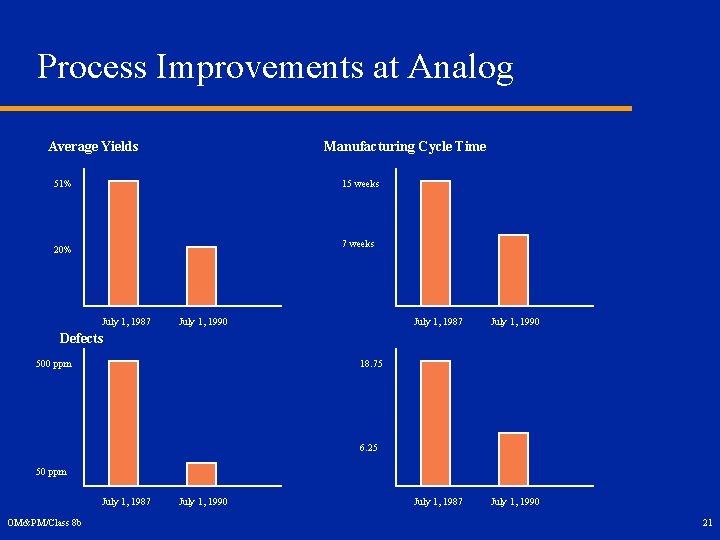
Process Improvements at Analog Average Yields Manufacturing Cycle Time 15 weeks 51% 7 weeks 20% July 1, 1987 July 1, 1990 Defects 500 ppm 18. 75 6. 25 50 ppm July 1, 1987 OM&PM/Class 8 b July 1, 1990 21
Target Half-Lives OM&PM/Class 8 b 22
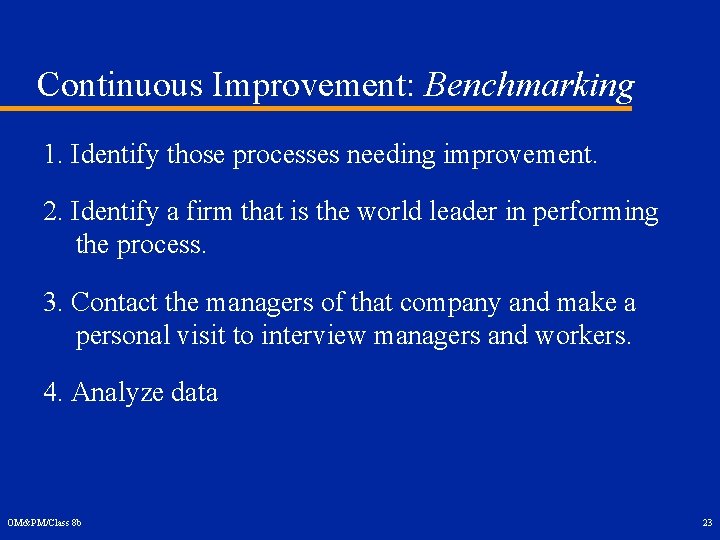
Continuous Improvement: Benchmarking 1. Identify those processes needing improvement. 2. Identify a firm that is the world leader in performing the process. 3. Contact the managers of that company and make a personal visit to interview managers and workers. 4. Analyze data OM&PM/Class 8 b 23