
Operational NCEP Global Ocean Data Assimilation System at
Operational NCEP Global Ocean Data Assimilation System at NCEP: the impact of TOPEX/Jason-1 altimetry D W Behringer NOAA/NCEP 4 th JCSDA Science Workshop Greenbelt Marriott Hotel, Greenbelt, MD May 31 - June 1, 2006
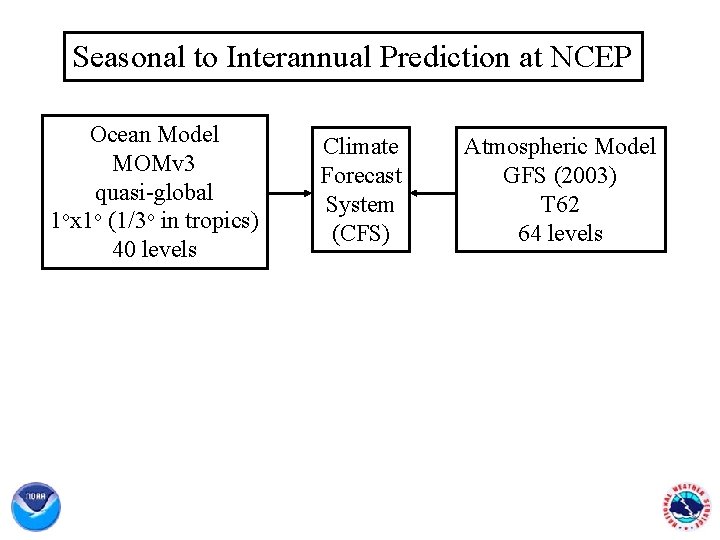
Seasonal to Interannual Prediction at NCEP Ocean Model MOMv 3 quasi-global 1 ox 1 o (1/3 o in tropics) 40 levels Climate Forecast System (CFS) Atmospheric Model GFS (2003) T 62 64 levels
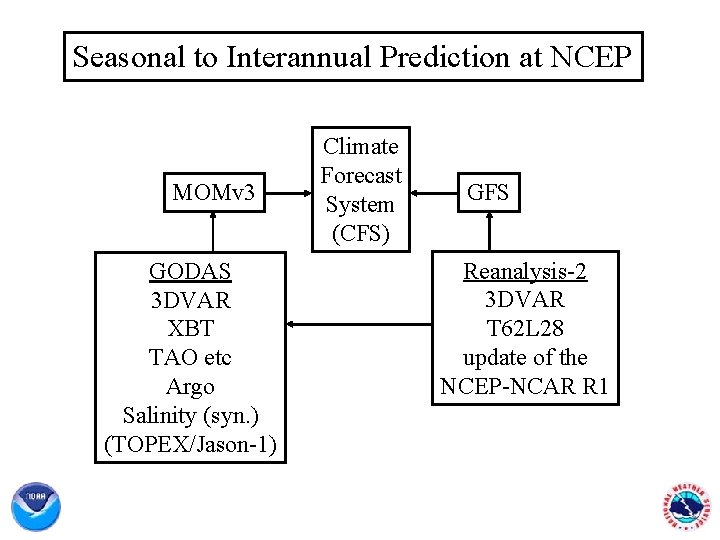
Seasonal to Interannual Prediction at NCEP MOMv 3 GODAS 3 DVAR XBT TAO etc Argo Salinity (syn. ) (TOPEX/Jason-1) Climate Forecast System (CFS) GFS Reanalysis-2 3 DVAR T 62 L 28 update of the NCEP-NCAR R 1
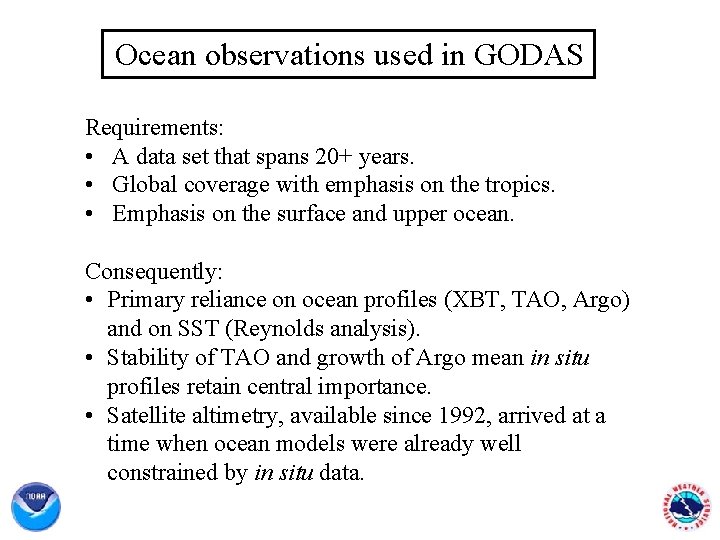
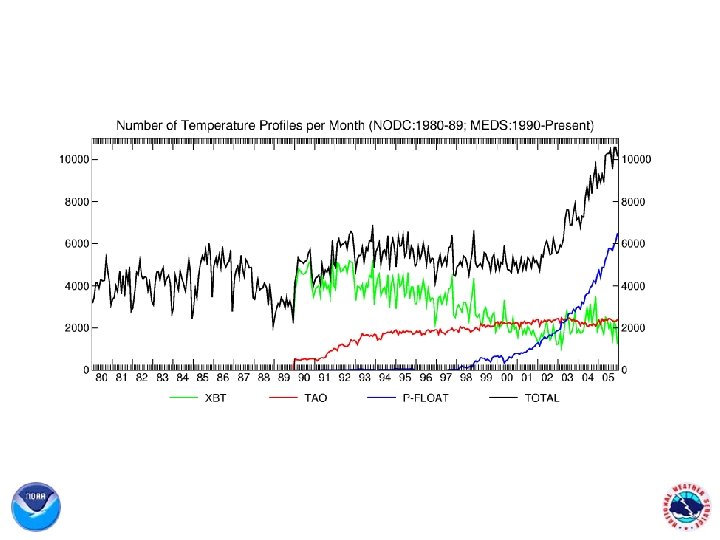
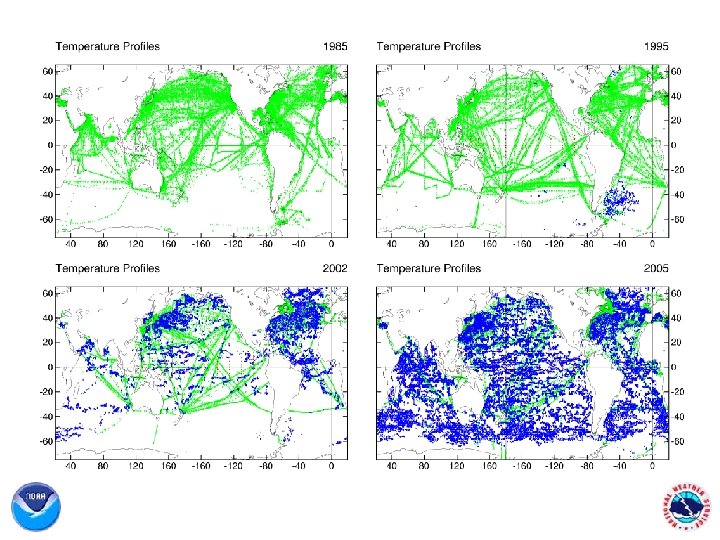
Ocean observations used in GODAS Requirements: • A data set that spans 20+ years. • Global coverage with emphasis on the tropics. • Emphasis on the surface and upper ocean. Consequently: • Primary reliance on ocean profiles (XBT, TAO, Argo) and on SST (Reynolds analysis). • Stability of TAO and growth of Argo mean in situ profiles retain central importance. • Satellite altimetry, available since 1992, arrived at a time when ocean models were already well constrained by in situ data.
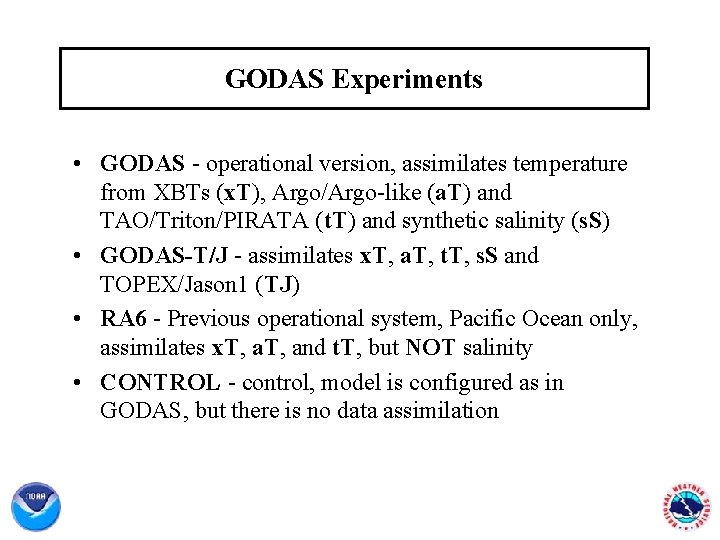
GODAS Experiments • GODAS - operational version, assimilates temperature from XBTs (x. T), Argo/Argo-like (a. T) and TAO/Triton/PIRATA (t. T) and synthetic salinity (s. S) • GODAS-T/J - assimilates x. T, a. T, t. T, s. S and TOPEX/Jason 1 (TJ) • RA 6 - Previous operational system, Pacific Ocean only, assimilates x. T, and t. T, but NOT salinity • CONTROL - control, model is configured as in GODAS, but there is no data assimilation
30 K/mo 12 / 28 / 1997 - 1 / 07 / 1998
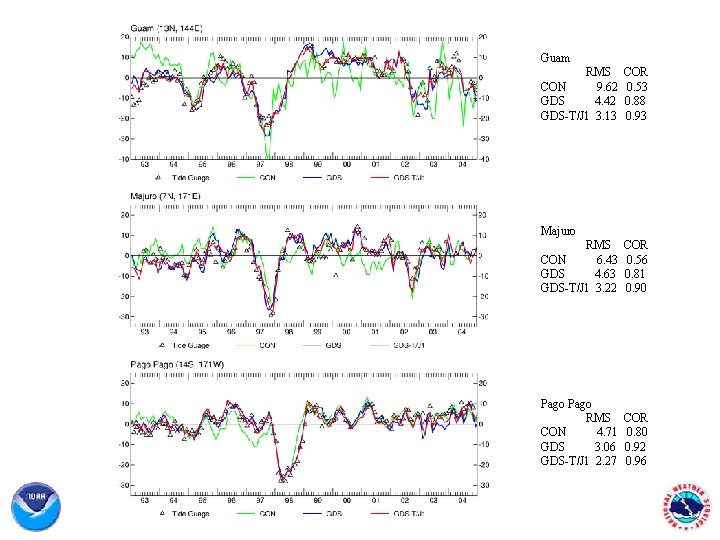
Guam RMS CON 9. 62 GDS 4. 42 GDS-T/J 1 3. 13 COR 0. 53 0. 88 0. 93 Majuro RMS CON 6. 43 GDS 4. 63 GDS-T/J 1 3. 22 COR 0. 56 0. 81 0. 90 Pago RMS CON 4. 71 GDS 3. 06 GDS-T/J 1 2. 27 COR 0. 80 0. 92 0. 96
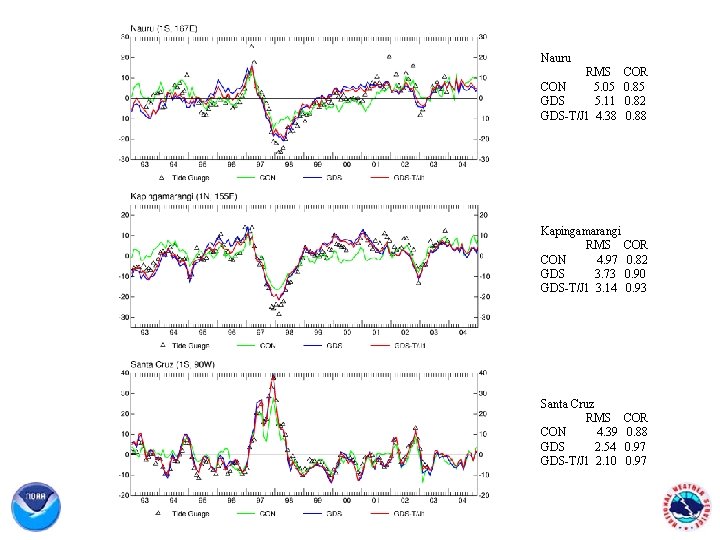
Nauru RMS CON 5. 05 GDS 5. 11 GDS-T/J 1 4. 38 COR 0. 85 0. 82 0. 88 Kapingamarangi RMS COR CON 4. 97 0. 82 GDS 3. 73 0. 90 GDS-T/J 1 3. 14 0. 93 Santa Cruz RMS CON 4. 39 GDS 2. 54 GDS-T/J 1 2. 10 COR 0. 88 0. 97
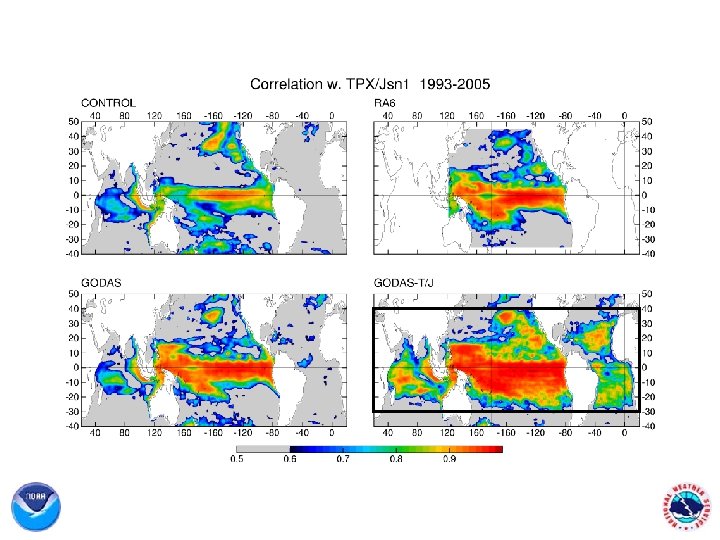
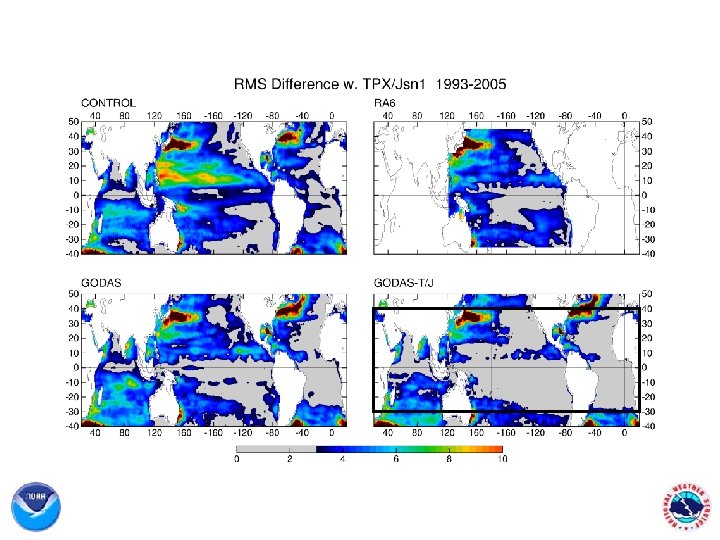
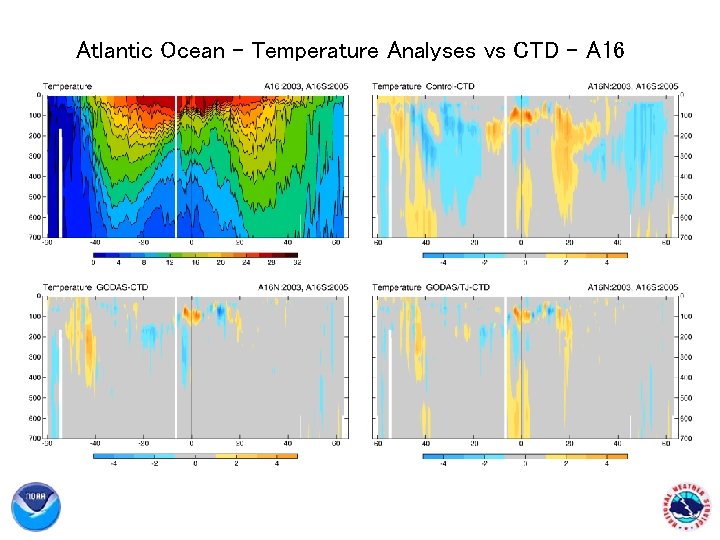
Atlantic Ocean - Temperature Analyses vs CTD - A 16
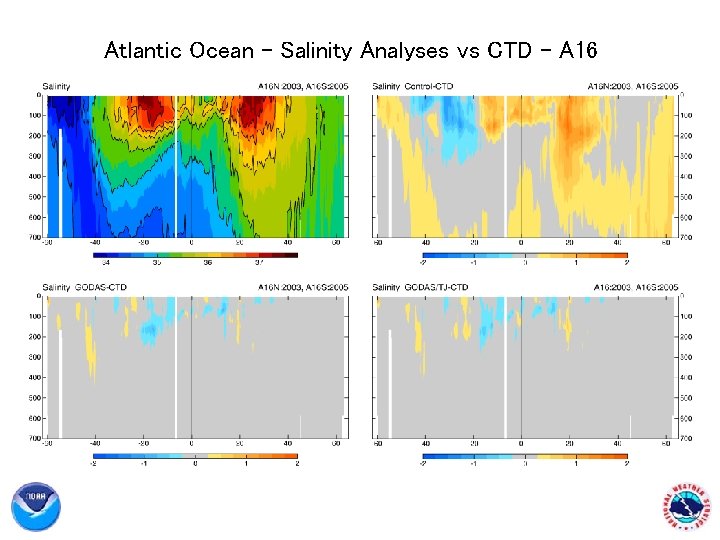
Atlantic Ocean - Salinity Analyses vs CTD - A 16
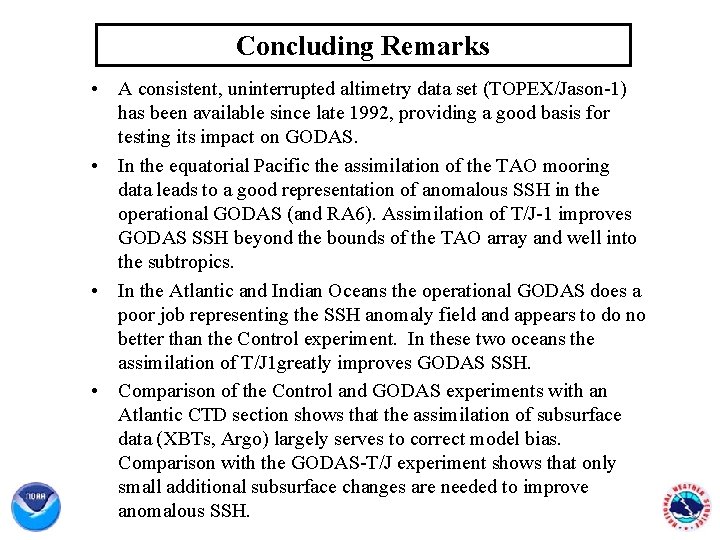
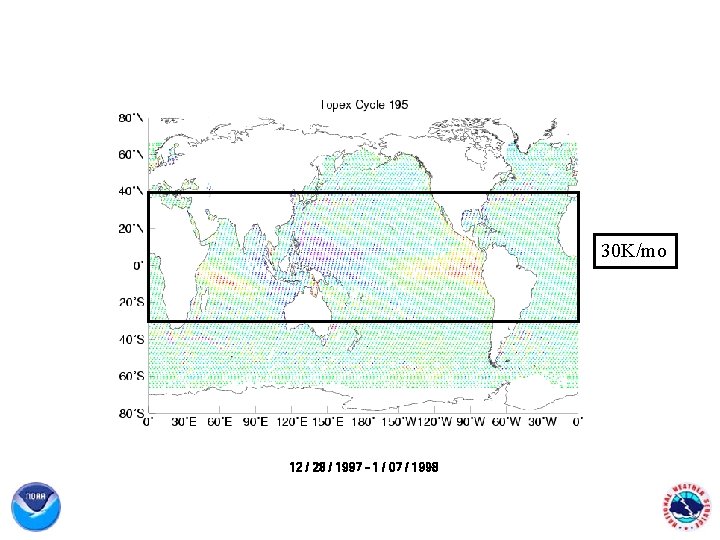
Concluding Remarks • A consistent, uninterrupted altimetry data set (TOPEX/Jason-1) has been available since late 1992, providing a good basis for testing its impact on GODAS. • In the equatorial Pacific the assimilation of the TAO mooring data leads to a good representation of anomalous SSH in the operational GODAS (and RA 6). Assimilation of T/J-1 improves GODAS SSH beyond the bounds of the TAO array and well into the subtropics. • In the Atlantic and Indian Oceans the operational GODAS does a poor job representing the SSH anomaly field and appears to do no better than the Control experiment. In these two oceans the assimilation of T/J 1 greatly improves GODAS SSH. • Comparison of the Control and GODAS experiments with an Atlantic CTD section shows that the assimilation of subsurface data (XBTs, Argo) largely serves to correct model bias. Comparison with the GODAS-T/J experiment shows that only small additional subsurface changes are needed to improve anomalous SSH.
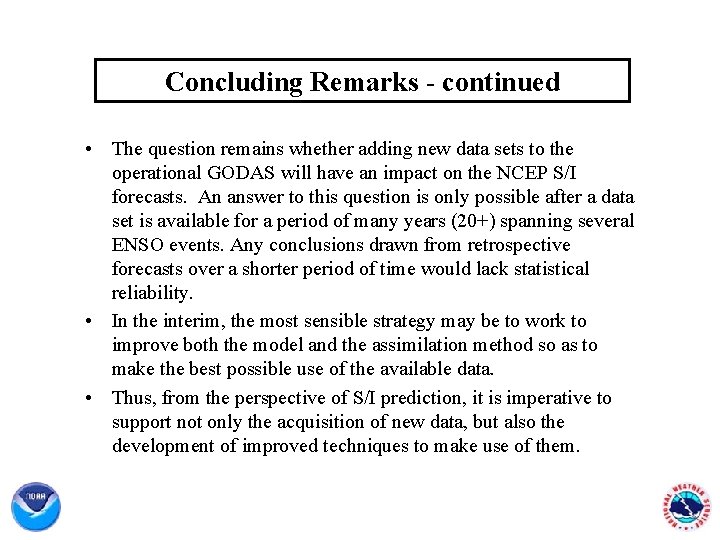
Concluding Remarks - continued • The question remains whether adding new data sets to the operational GODAS will have an impact on the NCEP S/I forecasts. An answer to this question is only possible after a data set is available for a period of many years (20+) spanning several ENSO events. Any conclusions drawn from retrospective forecasts over a shorter period of time would lack statistical reliability. • In the interim, the most sensible strategy may be to work to improve both the model and the assimilation method so as to make the best possible use of the available data. • Thus, from the perspective of S/I prediction, it is imperative to support not only the acquisition of new data, but also the development of improved techniques to make use of them.
The End cfs. ncep. noaa. gov/cfs/godas www. cpc. ncep. noaa. gov/products/GODAS
- Slides: 17