
Operational Meteorology for Natural Disaster Prevention and Mitigation
- Slides: 32
Operational Meteorology for Natural Disaster Prevention and Mitigation Alexander Gusev Acting President of the WMO Commission for Basic Systems 1
Every year, disasters caused by weather-, climate- and waterrelated hazards impact communities around the world, leading to loss of human life, destruction of social and economic infrastructure and degradation of ecosystems. 2
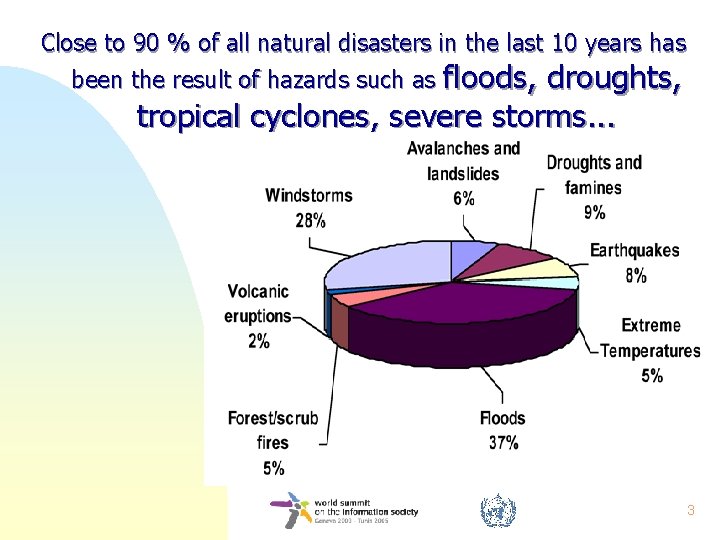
Close to 90 % of all natural disasters in the last 10 years has been the result of hazards such as floods, droughts, tropical cyclones, severe storms. . . 3
The presentation shows how the WMO Operational meteorological systems, and in particular the World Weather Watch (WWW), provide support to Prevention and Mitigation of Natural Disaster related to Weather, Water and Climate. 4
WWW - what does it mean? 5
The World Weather Watch consists of observing systems, telecommunication facilities, and data-processing and forecasting centres - owned and run by WMO Members countries - to generate and distribute meteorological and related geophysical observations, forecasts and early warnings 6
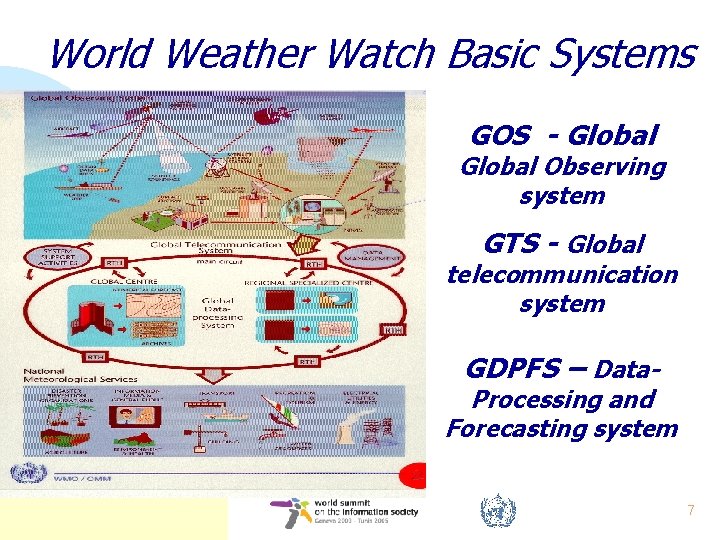
World Weather Watch Basic Systems GOS - Global Observing system GTS - Global telecommunication system GDPFS – Data- Processing and Forecasting system 7
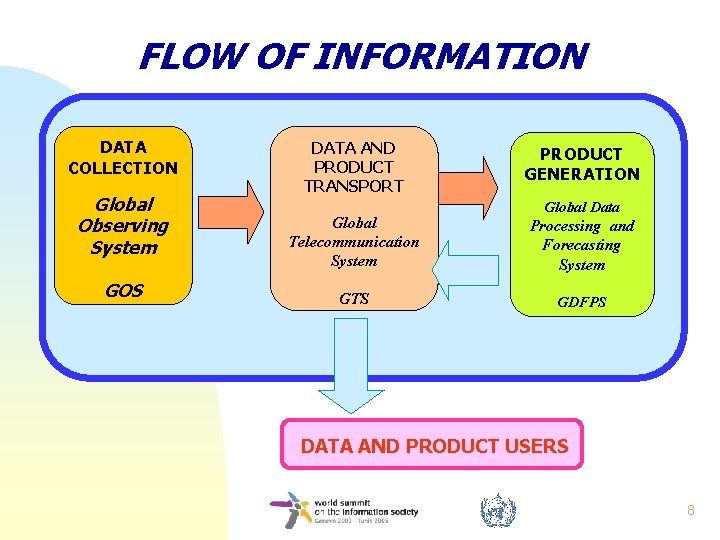
FLOW OF INFORMATION DATA COLLECTION Global Observing System GOS DATA AND PRODUCT TRANSPORT PRODUCT GENERATION Global Data Global Telecommunication System Processing and Forecasting System GTS GDFPS DATA AND PRODUCT USERS 8
Data, forecasts, warnings are the WWW outputs for Natural Disaster Prevention and Mitigation 9
Global Observing System 10
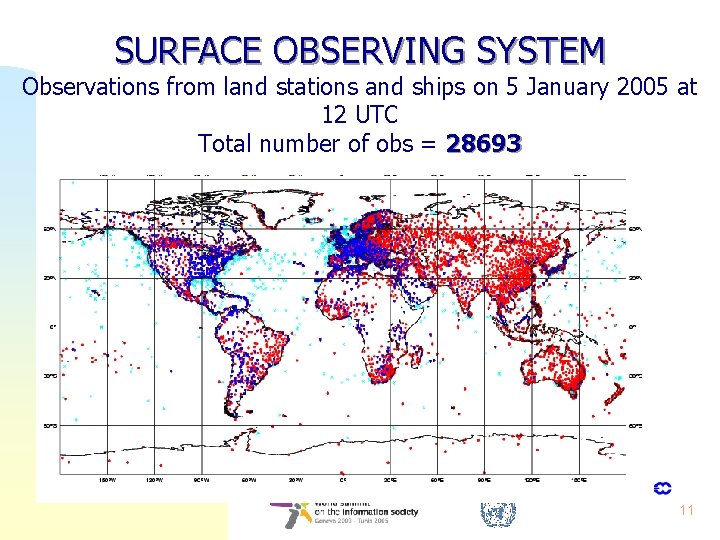
SURFACE OBSERVING SYSTEM Observations from land stations and ships on 5 January 2005 at 12 UTC Total number of obs = 28693 11
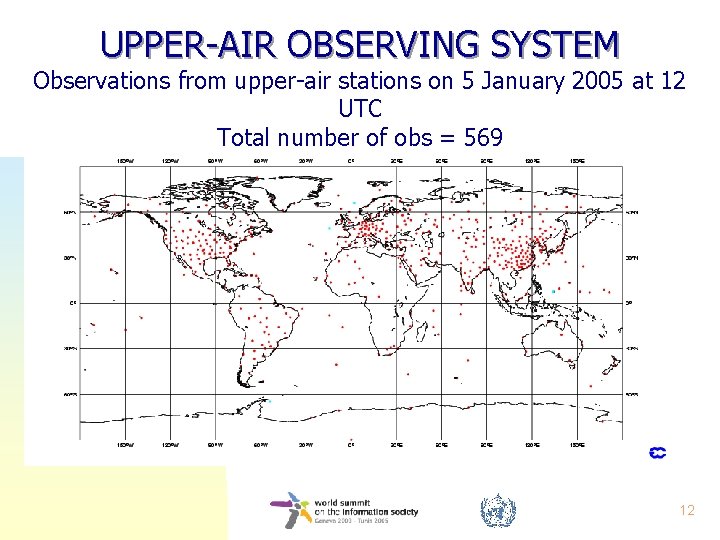
UPPER-AIR OBSERVING SYSTEM Observations from upper-air stations on 5 January 2005 at 12 UTC Total number of obs = 569 12
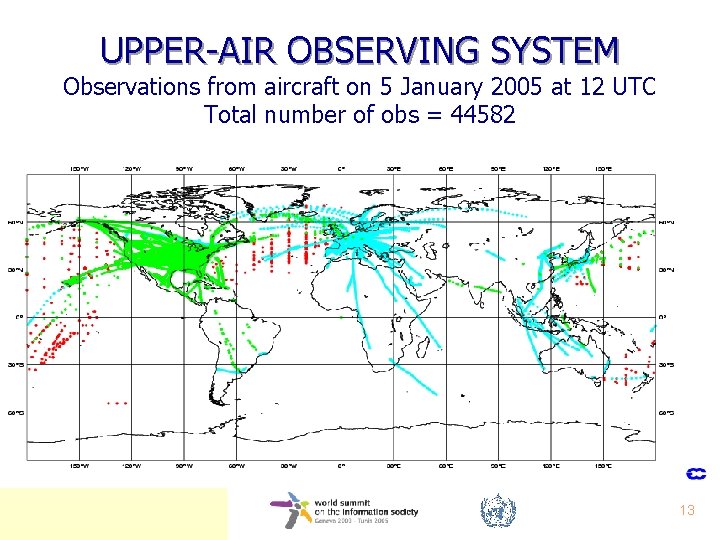
UPPER-AIR OBSERVING SYSTEM Observations from aircraft on 5 January 2005 at 12 UTC Total number of obs = 44582 13
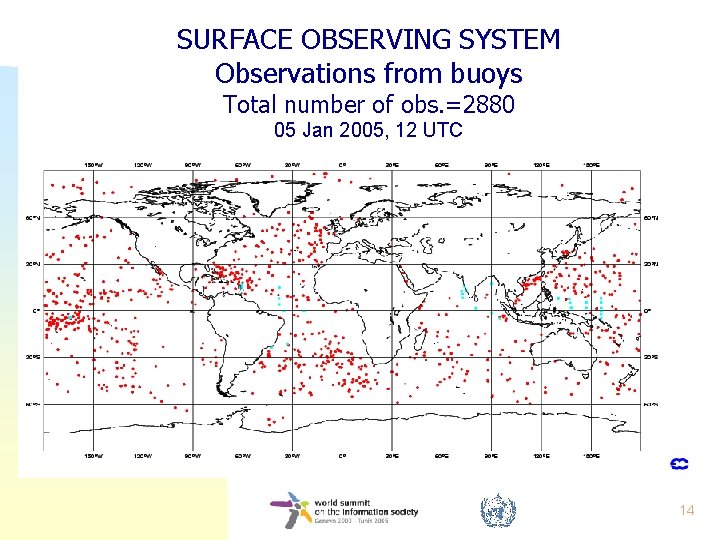
SURFACE OBSERVING SYSTEM Observations from buoys Total number of obs. =2880 05 Jan 2005, 12 UTC 14
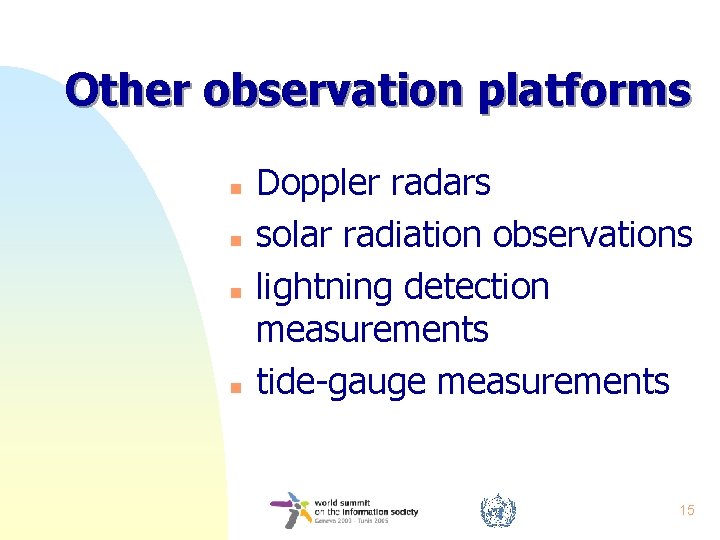
Other observation platforms n n Doppler radars solar radiation observations lightning detection measurements tide-gauge measurements 15
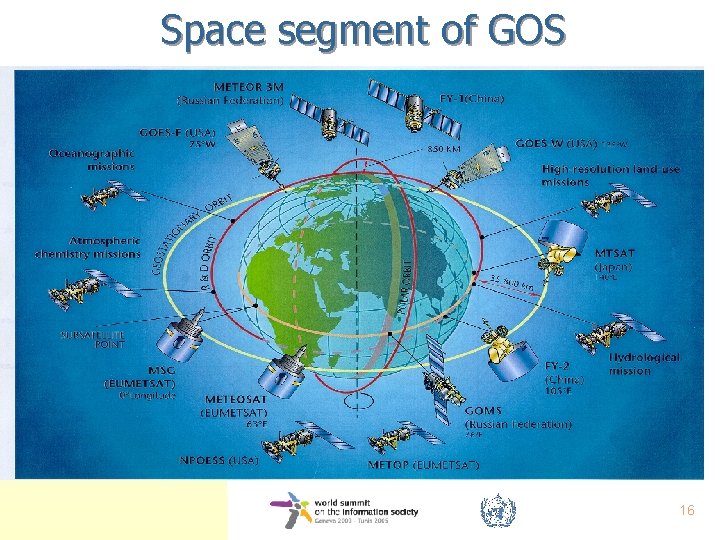
Space segment of GOS 16
Global Telecommunicat ion System 17
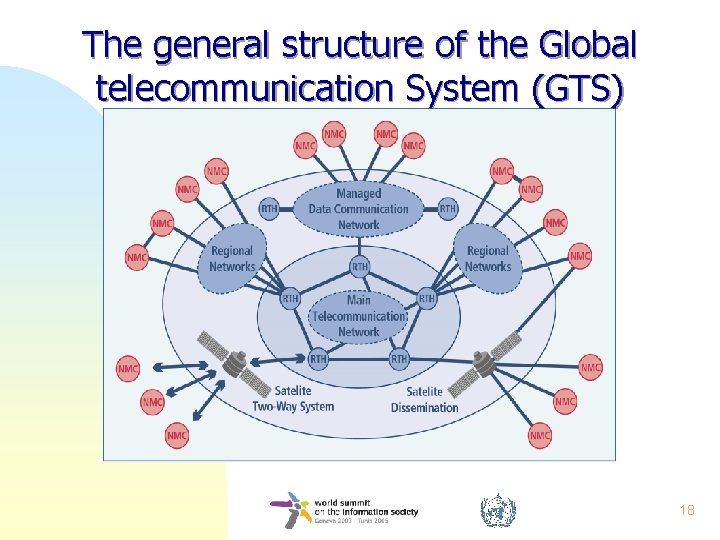
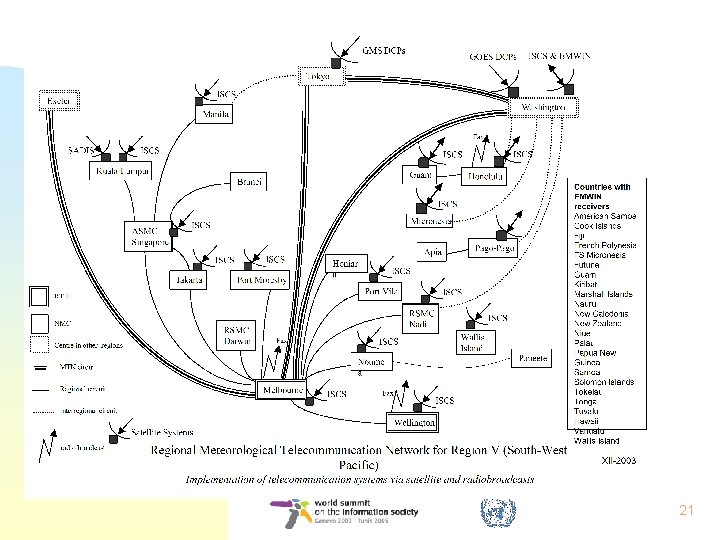
The general structure of the Global telecommunication System (GTS) 18
19
20
21
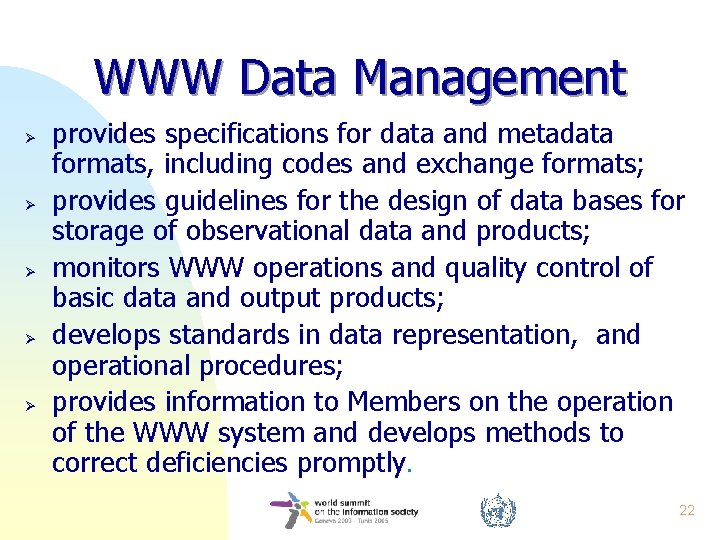
WWW Data Management Ø Ø Ø provides specifications for data and metadata formats, including codes and exchange formats; provides guidelines for the design of data bases for storage of observational data and products; monitors WWW operations and quality control of basic data and output products; develops standards in data representation, and operational procedures; provides information to Members on the operation of the WWW system and develops methods to correct deficiencies promptly. 22
Global Data Processing and Forecasting System 23
World Meteorological Centres (WMCs) ØMelbourne ØMoscow ØWashington 24
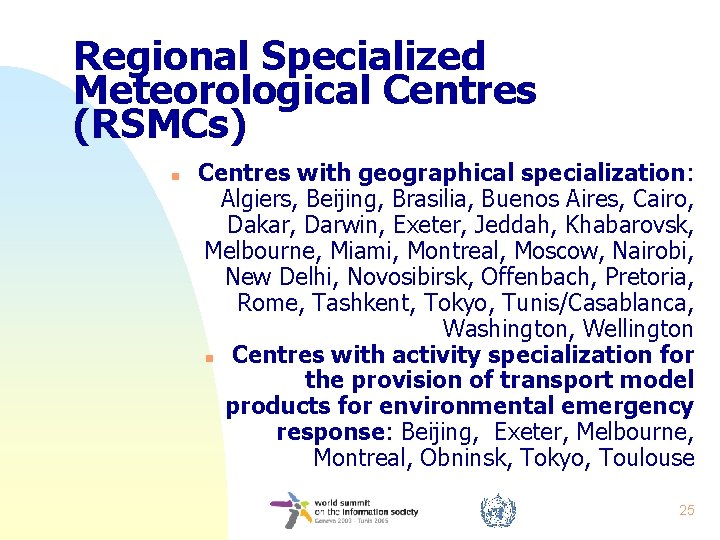
Regional Specialized Meteorological Centres (RSMCs) n Centres with geographical specialization: Algiers, Beijing, Brasilia, Buenos Aires, Cairo, Dakar, Darwin, Exeter, Jeddah, Khabarovsk, Melbourne, Miami, Montreal, Moscow, Nairobi, New Delhi, Novosibirsk, Offenbach, Pretoria, Rome, Tashkent, Tokyo, Tunis/Casablanca, Washington, Wellington n Centres with activity specialization for the provision of transport model products for environmental emergency response: Beijing, Exeter, Melbourne, Montreal, Obninsk, Tokyo, Toulouse 25
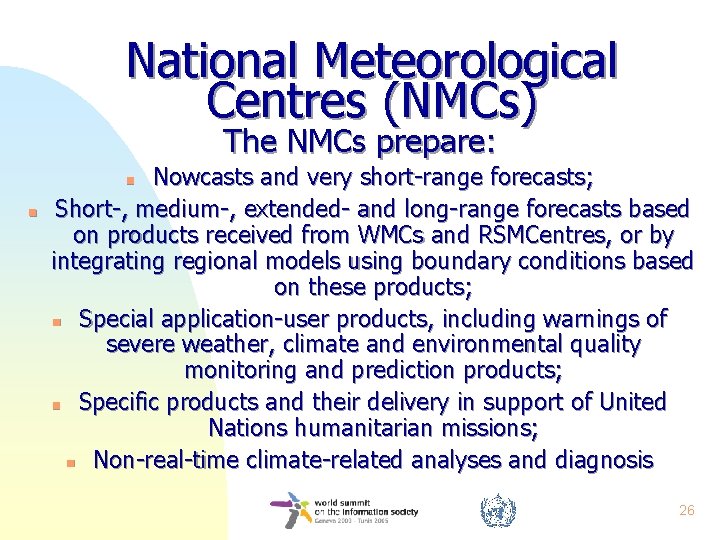
National Meteorological Centres (NMCs) The NMCs prepare: Nowcasts and very short-range forecasts; Short-, medium-, extended- and long-range forecasts based on products received from WMCs and RSMCentres, or by integrating regional models using boundary conditions based on these products; n Special application-user products, including warnings of severe weather, climate and environmental quality monitoring and prediction products; n Specific products and their delivery in support of United Nations humanitarian missions; n Non-real-time climate-related analyses and diagnosis n n 26
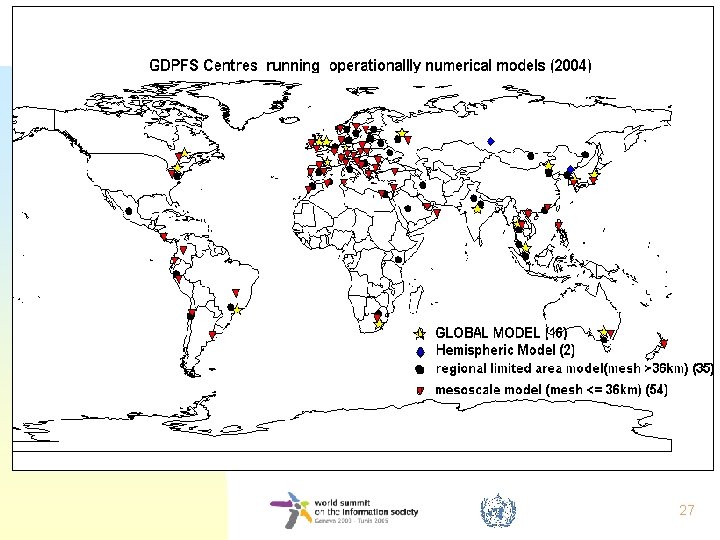
27
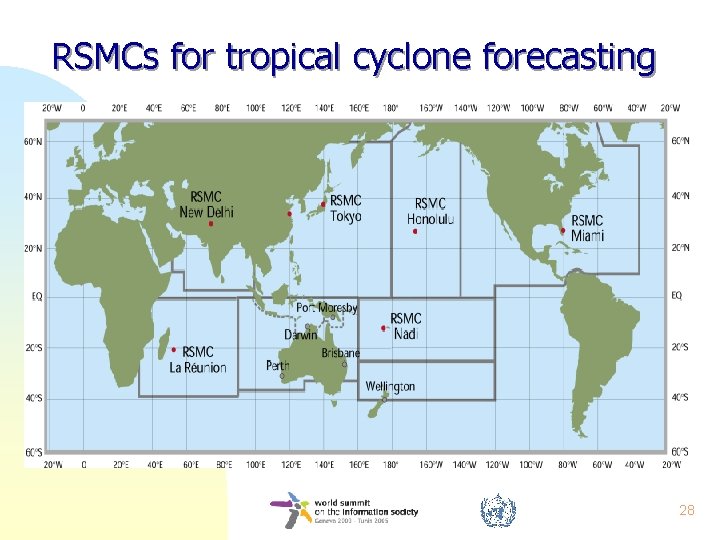
RSMCs for tropical cyclone forecasting 28
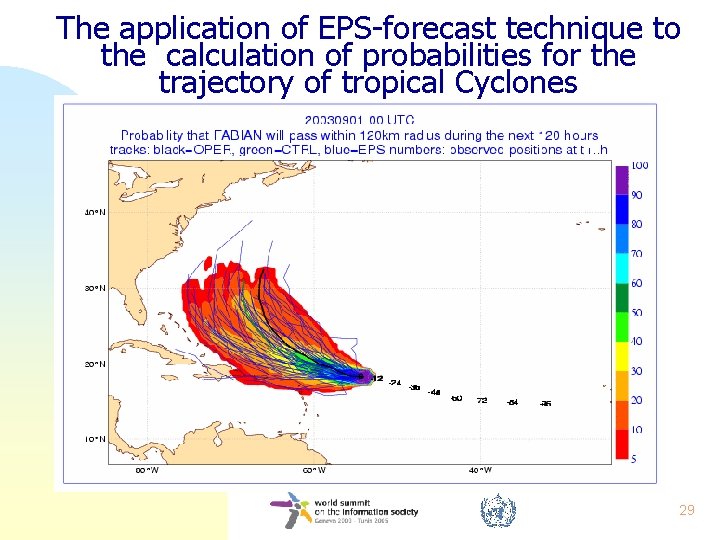
The application of EPS-forecast technique to the calculation of probabilities for the trajectory of tropical Cyclones 29
WWW is advancing global capabilities for land- and space-based observing systems and is playing a key role in the international initiative for developing the Global Earth Observation System of Systems (GEOSS). 30
The World Weather Watch (WWW) system is a crossroad of meteorological sciences and operational technology, based on international cooperation, where Information and Communication Technology has a crucial role. 31
Thank You ! 32