
Operational Analysis What Does It Mean To The
- Slides: 20
Operational Analysis – What Does It Mean To The Project Manager? NIH Project Management Community of Excellence » December 14, 2011/Office of the NIH CIO
Today’s Objectives » Establish a mutual understand of Operational Analysis • What it isn’t • Why we do it » Understand how to leverage the NIH Operational Analysis Management Framework (NIH OAMF) » Understand the relationship between Project Management and Operational Analysis December 14, 2011 /Office of the NIH CIO 1
OPERATIONAL ANALYSIS WHY DO IT? December 14, 2011 /Office of the NIH CIO 2
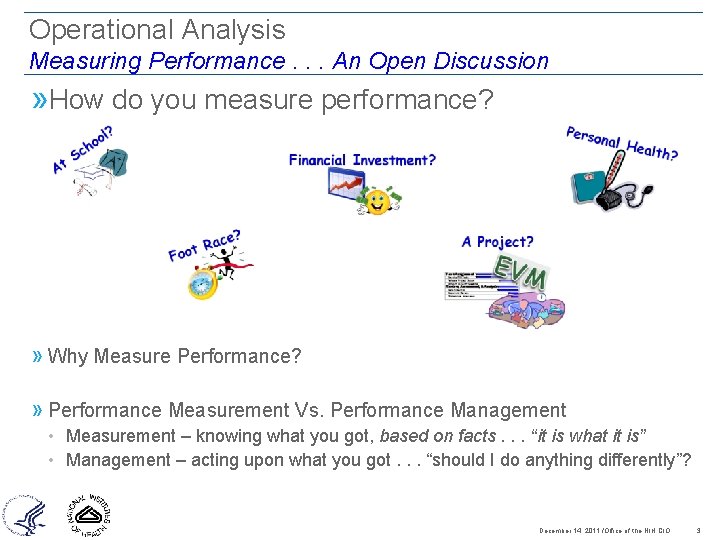
Operational Analysis Measuring Performance. . . An Open Discussion » How do you measure performance? » Why Measure Performance? » Performance Measurement Vs. Performance Management • Measurement – knowing what you got, based on facts. . . “it is what it is” • Management – acting upon what you got. . . “should I do anything differently”? December 14, 2011 /Office of the NIH CIO 3
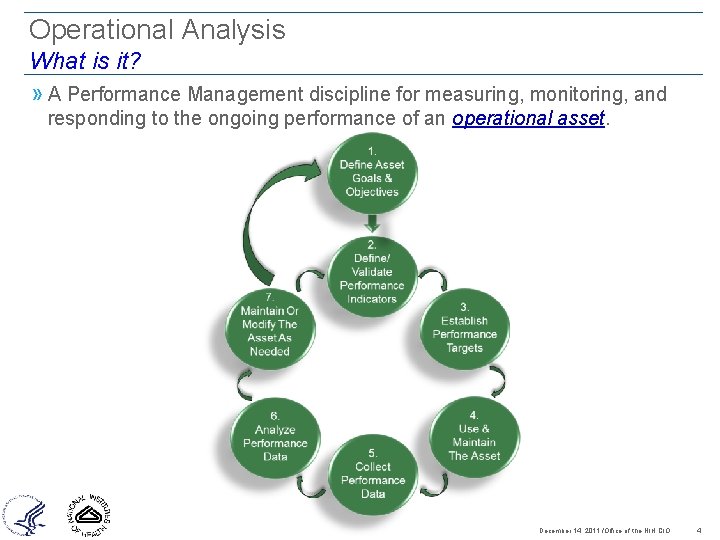
Operational Analysis What is it? » A Performance Management discipline for measuring, monitoring, and responding to the ongoing performance of an operational asset. December 14, 2011 /Office of the NIH CIO 4
Operational Analysis Why Do It? » The primary objective of performing an OA is to determine if an investment is still delivering value, and if the cost to maintain it is appropriate • • • Are we realizing the benefits we expected to achieve? . . . this is why we funded it! Does the investment still meet our needs? . . . is it doing what it’s supposed to do? Is it performing at required operational performance levels? Is risk under control? Are we spending more than we should? Is it time to retire and/or replace? » This is achieved through actual, objective performance data to inform both ongoing life cycle investment management and operations management decisions. • Determine what changes, if any, are needed in order to keep the asset aligned with organization or program priorities and needs. Ø Ø Stay the course? Course correct? Develop a retirement/replacement strategy and plan? Address other non-IT related programmatic issues? December 14, 2011 /Office of the NIH CIO 5
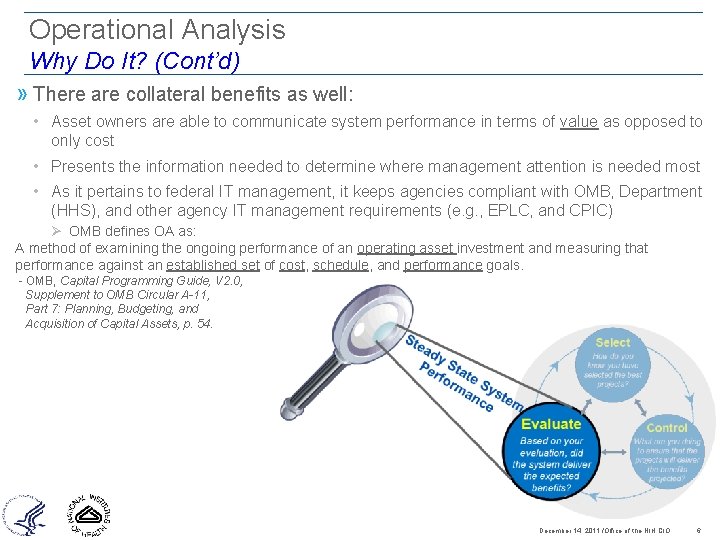
Operational Analysis Why Do It? (Cont’d) » There are collateral benefits as well: • Asset owners are able to communicate system performance in terms of value as opposed to only cost • Presents the information needed to determine where management attention is needed most • As it pertains to federal IT management, it keeps agencies compliant with OMB, Department (HHS), and other agency IT management requirements (e. g. , EPLC, and CPIC) Ø OMB defines OA as: A method of examining the ongoing performance of an operating asset investment and measuring that performance against an established set of cost, schedule, and performance goals. - OMB, Capital Programming Guide, V 2. 0, Supplement to OMB Circular A-11, Part 7: Planning, Budgeting, and Acquisition of Capital Assets, p. 54. December 14, 2011 /Office of the NIH CIO 6
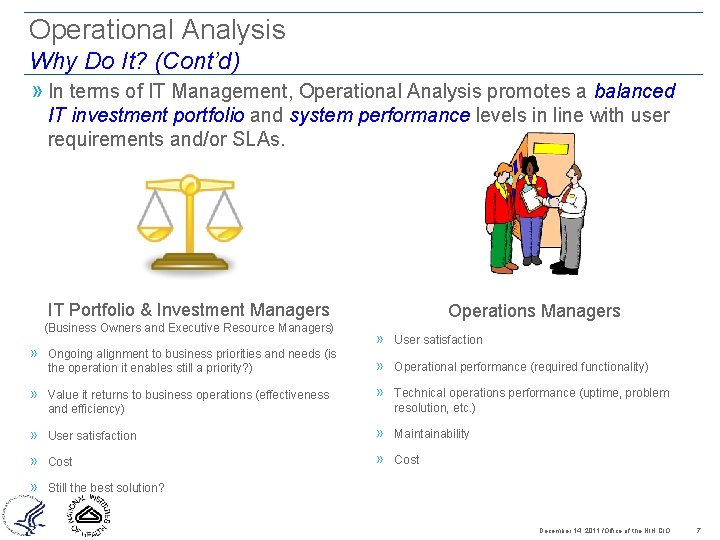
Operational Analysis Why Do It? (Cont’d) » In terms of IT Management, Operational Analysis promotes a balanced IT investment portfolio and system performance levels in line with user requirements and/or SLAs. IT Portfolio & Investment Managers (Business Owners and Executive Resource Managers) » Ongoing alignment to business priorities and needs (is the operation it enables still a priority? ) » Value it returns to business operations (effectiveness and efficiency) Operations Managers » User satisfaction » Operational performance (required functionality) » Technical operations performance (uptime, problem resolution, etc. ) » User satisfaction » Maintainability » Cost » Still the best solution? December 14, 2011 /Office of the NIH CIO 7
The NIH Operational Analysis Management Framework NIH OAMF December 14, 2011 /Office of the NIH CIO 8
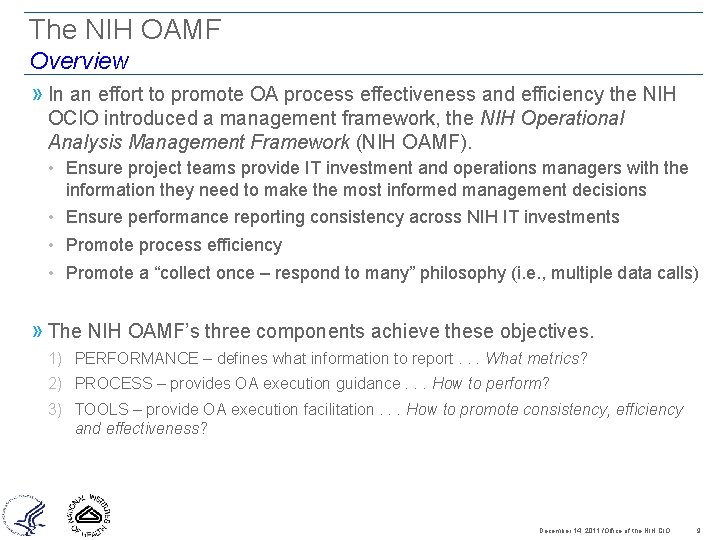
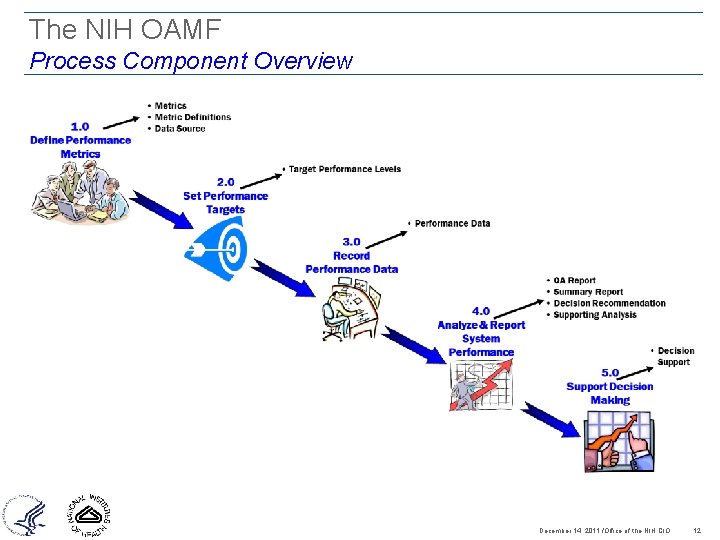
The NIH OAMF Overview » In an effort to promote OA process effectiveness and efficiency the NIH OCIO introduced a management framework, the NIH Operational Analysis Management Framework (NIH OAMF). • Ensure project teams provide IT investment and operations managers with the information they need to make the most informed management decisions • Ensure performance reporting consistency across NIH IT investments • Promote process efficiency • Promote a “collect once – respond to many” philosophy (i. e. , multiple data calls) » The NIH OAMF’s three components achieve these objectives. 1) PERFORMANCE – defines what information to report. . . What metrics? 2) PROCESS – provides OA execution guidance. . . How to perform? 3) TOOLS – provide OA execution facilitation. . . How to promote consistency, efficiency and effectiveness? December 14, 2011 /Office of the NIH CIO 9
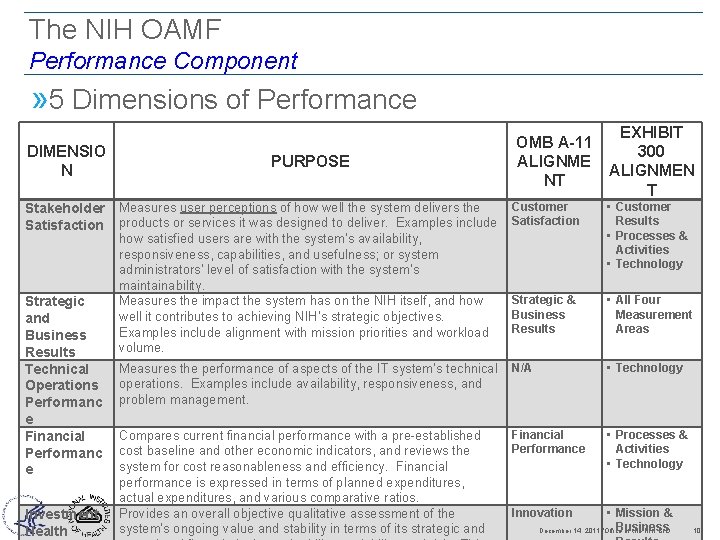
The NIH OAMF Performance Component » 5 Dimensions of Performance DIMENSIO N Stakeholder Satisfaction Strategic and Business Results Technical Operations Performanc e Financial Performanc e Investment Health PURPOSE OMB A-11 ALIGNME NT EXHIBIT 300 ALIGNMEN T Measures user perceptions of how well the system delivers the products or services it was designed to deliver. Examples include how satisfied users are with the system’s availability, responsiveness, capabilities, and usefulness; or system administrators’ level of satisfaction with the system’s maintainability. Measures the impact the system has on the NIH itself, and how well it contributes to achieving NIH’s strategic objectives. Examples include alignment with mission priorities and workload volume. Customer Satisfaction • Customer Results • Processes & Activities • Technology Strategic & Business Results • All Four Measurement Areas Measures the performance of aspects of the IT system’s technical operations. Examples include availability, responsiveness, and problem management. N/A • Technology Compares current financial performance with a pre-established cost baseline and other economic indicators, and reviews the system for cost reasonableness and efficiency. Financial performance is expressed in terms of planned expenditures, actual expenditures, and various comparative ratios. Provides an overall objective qualitative assessment of the system’s ongoing value and stability in terms of its strategic and Financial Performance • Processes & Activities • Technology • Mission & Business December 14, 2011 /Office of the NIH CIO Innovation 10
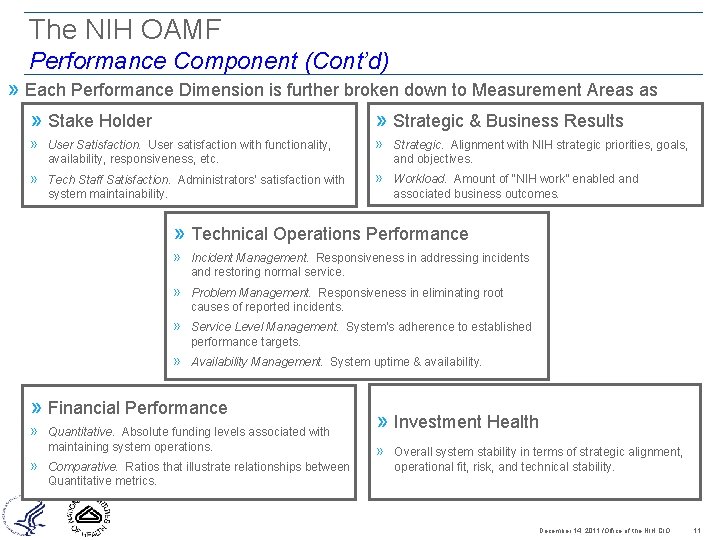
The NIH OAMF Performance Component (Cont’d) » Each Performance Dimension is further broken down to Measurement Areas as follows » Strategic & Business Results » Stake Holder » User Satisfaction. User satisfaction with functionality, availability, responsiveness, etc. » Tech Staff Satisfaction. Administrators’ satisfaction with » Strategic. Alignment with NIH strategic priorities, goals, and objectives. » Workload. Amount of “NIH work” enabled and associated business outcomes. system maintainability. » Technical Operations Performance » Incident Management. Responsiveness in addressing incidents and restoring normal service. » Problem Management. Responsiveness in eliminating root causes of reported incidents. » Service Level Management. System’s adherence to established performance targets. » Availability Management. System uptime & availability. » Financial Performance » Quantitative. Absolute funding levels associated with maintaining system operations. » Comparative. Ratios that illustrate relationships between » Investment Health » Overall system stability in terms of strategic alignment, operational fit, risk, and technical stability. Quantitative metrics. December 14, 2011 /Office of the NIH CIO 11
The NIH OAMF Process Component Overview December 14, 2011 /Office of the NIH CIO 12
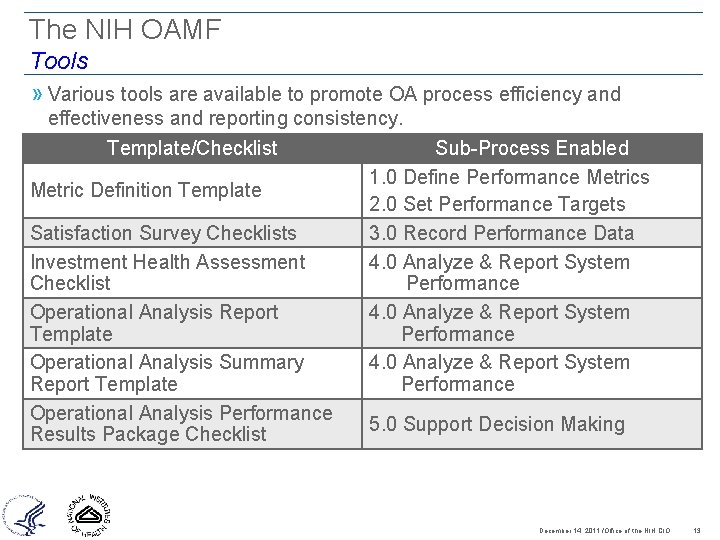
The NIH OAMF Tools » Various tools are available to promote OA process efficiency and effectiveness and reporting consistency. Template/Checklist Sub-Process Enabled 1. 0 Define Performance Metrics Metric Definition Template 2. 0 Set Performance Targets Satisfaction Survey Checklists 3. 0 Record Performance Data Investment Health Assessment 4. 0 Analyze & Report System Checklist Performance Operational Analysis Report 4. 0 Analyze & Report System Template Performance Operational Analysis Summary 4. 0 Analyze & Report System Report Template Performance Operational Analysis Performance 5. 0 Support Decision Making Results Package Checklist December 14, 2011 /Office of the NIH CIO 13
Project Management & Operational Analysis WHERE’S THE LINK? December 14, 2011 /Office of the NIH CIO 14
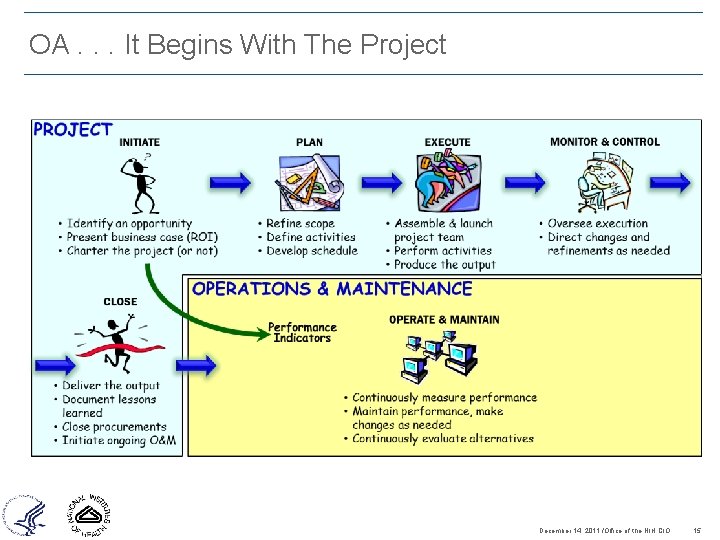
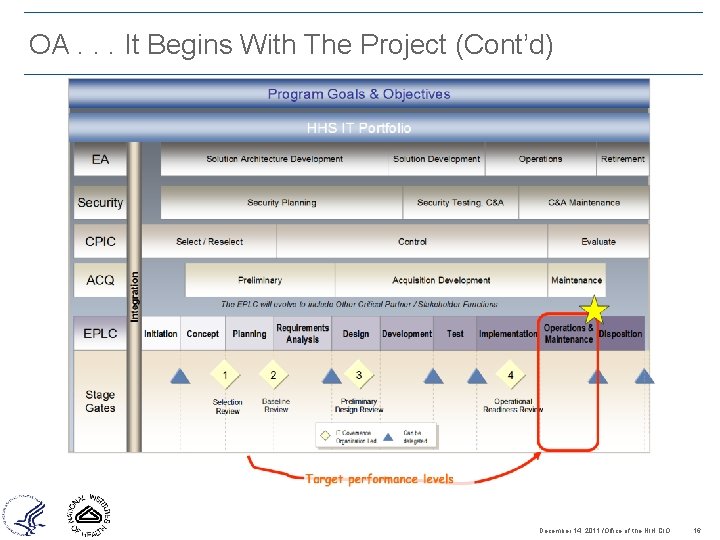
OA. . . It Begins With The Project December 14, 2011 /Office of the NIH CIO 15
OA. . . It Begins With The Project (Cont’d) December 14, 2011 /Office of the NIH CIO 16
Successful OA Key Roles & Responsibilities » Project Manager • Coordinate resources needed to collect performance data and report performance results • Provide information that Business Owners and other investment management bodies need to make informed investment management decisions • Provide information that Operations Managers need to maintain ongoing performance at required performance levels » Business Owners* • Review, provide feedback to, and approve metrics and performance targets • Review OA results and determine if any changes to the investment are needed (in coordination with other investment governance entities as applicable) • Refine information requirements on an ongoing basis * This includes other governance entities as applicable. December 14, 2011 /Office of the NIH CIO 17
Open Discussion December 14, 2011 /Office of the NIH CIO 18
Key Information » NIH Operational Analysis Framework » E-mail • OA-Framework@mail. nih. gov • Jane Small – jane. small@nih. gov • Debbie Sinmao – Debbie. Sinmao@nih. gov or dsinmao@icfi. com • Stan Maoury – maourys@nih. gov or smaoury@icfi. com December 14, 2011 /Office of the NIH CIO 19