
Operation Repair Maintenance MAJOR PARTS OF A SMALL







- Slides: 40
Operation, Repair & Maintenance
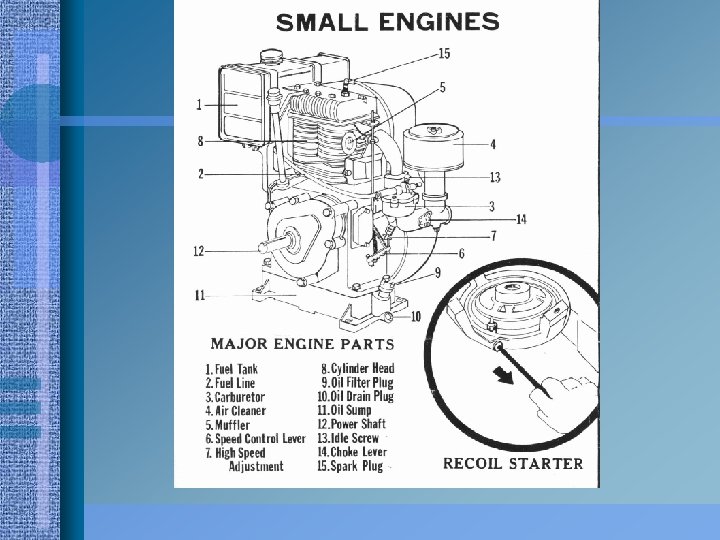
MAJOR PARTS OF A SMALL ENGINE
ENGINE OPERATING PRINCIPLES • The internal combustion engine is defined as an engine where air and fuel are burned with the release of energy taking place within the engine.
ENGINE OPERATING PRINCIPLES • • Small Engines are designed for a variety of uses in different settings. In order to understand them, it is important to understand how small engines may be classified. They are classified by two things; The position of their crankshaft The number of power strokes
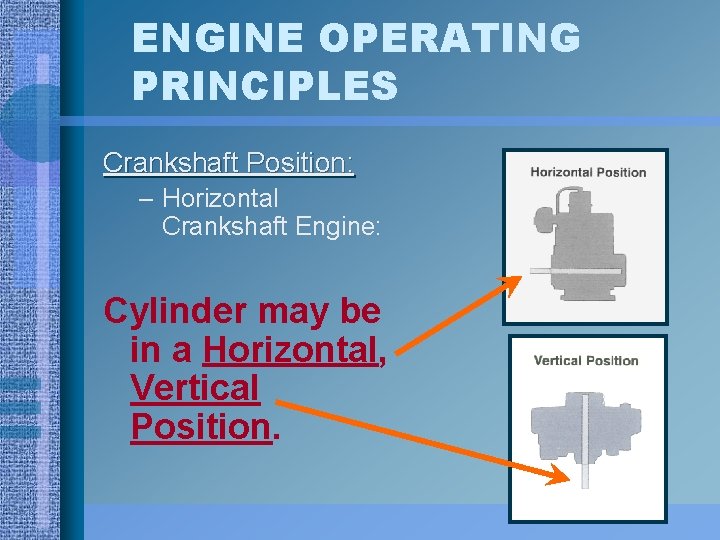
ENGINE OPERATING PRINCIPLES Crankshaft Position: – Horizontal Crankshaft Engine: Cylinder may be in a Horizontal, Vertical Position.
# of Power Strokes Small engines are broken down into two styles of strokes or cycles. 1. FOUR-STROKE ENGINES 2. TWO-STROKE ENGINES Their operational principles are divided into; v Compression v Ignition v Carburetion
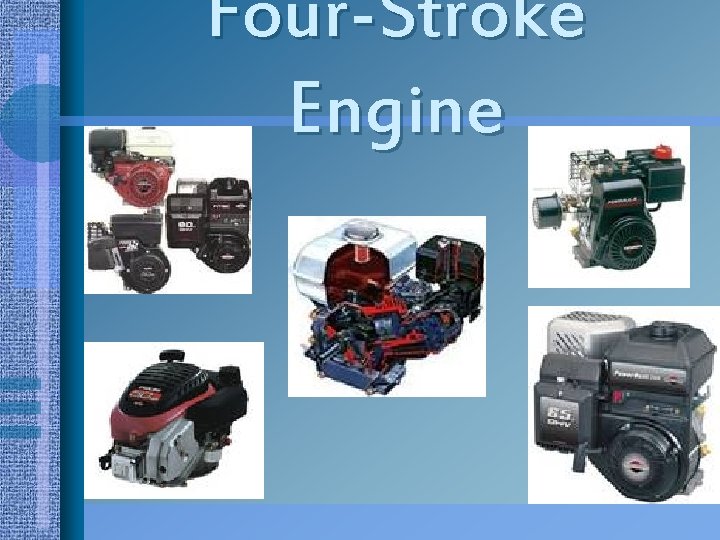
Four-Stroke Engine
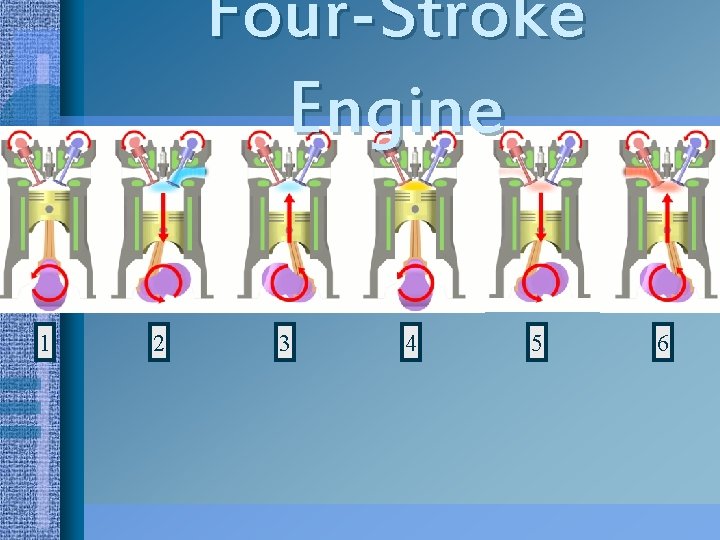
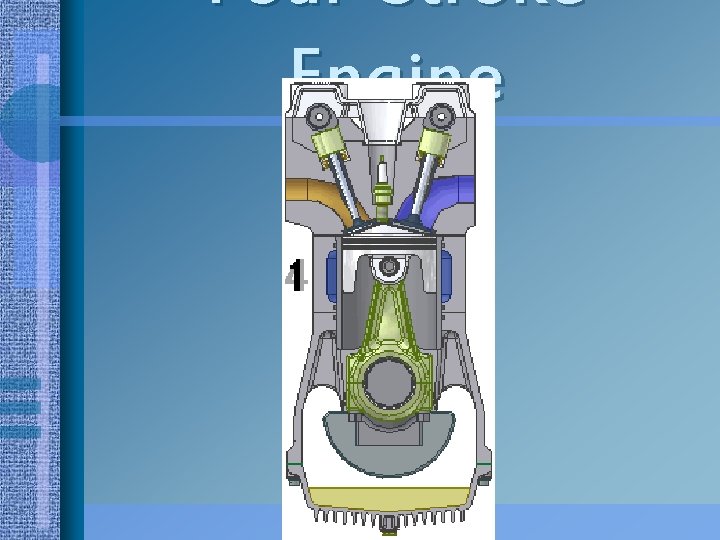
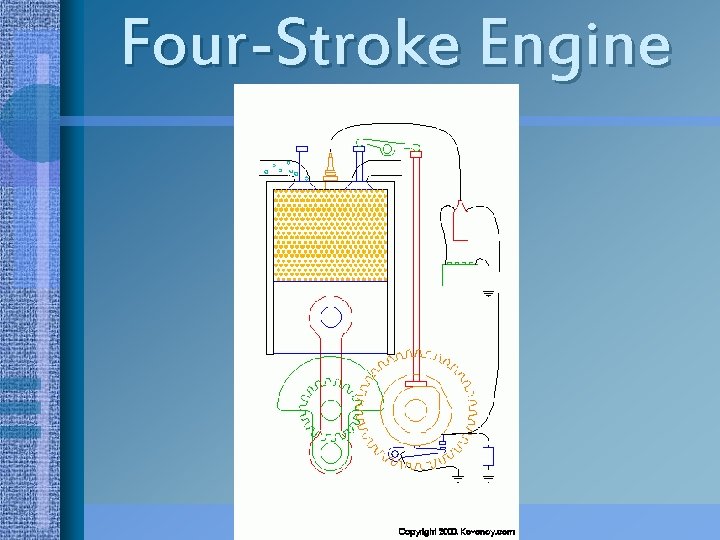
• • Four-Stroke Engine Operates on a series of four strokes to a cycle. The four (4) events in the operation are: a) Intake b) Compression c) Power d) Exhaust
Four-Stroke Engine • Each event occurs with a linear movement of the piston which is called a Stroke. • The cycle of events is completed during two revolutions of the crankshaft 720° degrees, which accounts for the name: FOUR – STROKE CYCLE ENGINE
Four-Stroke Engine
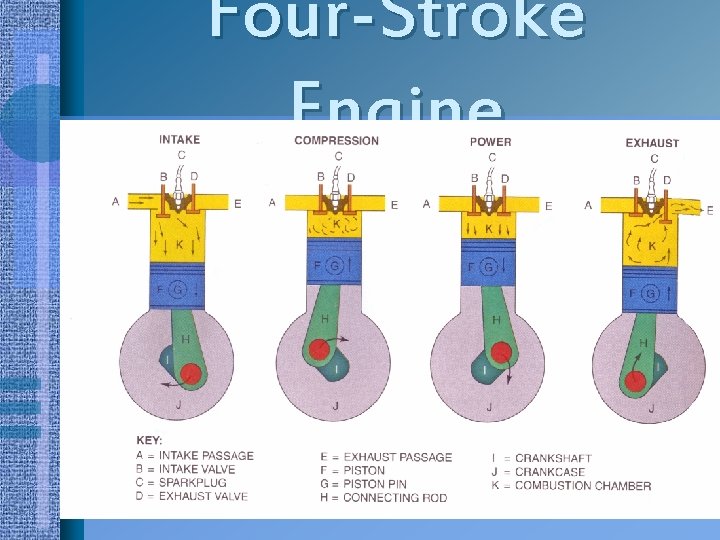
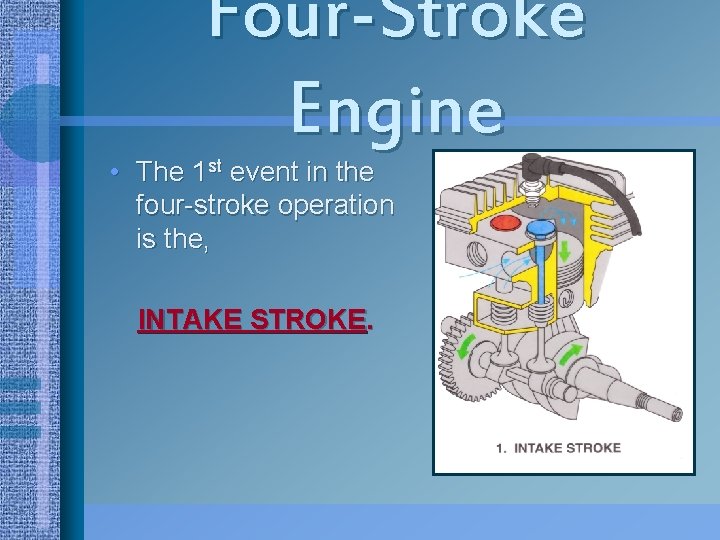
Four-Stroke Engine • The 1 st event in the four-stroke operation is the, INTAKE STROKE.
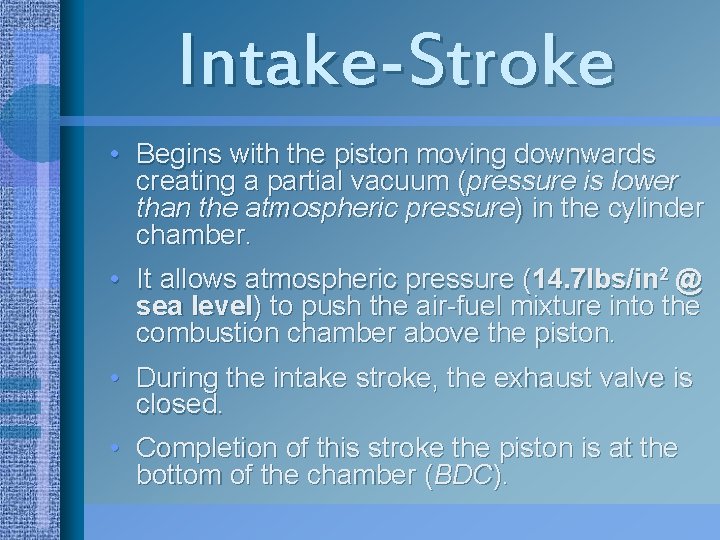
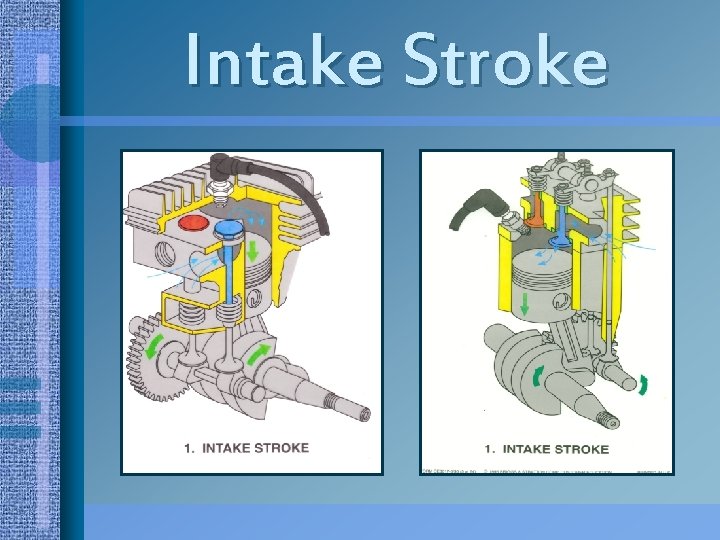
Intake-Stroke • Begins with the piston moving downwards creating a partial vacuum (pressure is lower than the atmospheric pressure) in the cylinder chamber. • It allows atmospheric pressure (14. 7 lbs/in 2 @ sea level) to push the air-fuel mixture into the combustion chamber above the piston. • During the intake stroke, the exhaust valve is closed. • Completion of this stroke the piston is at the bottom of the chamber (BDC).
Intake Stroke
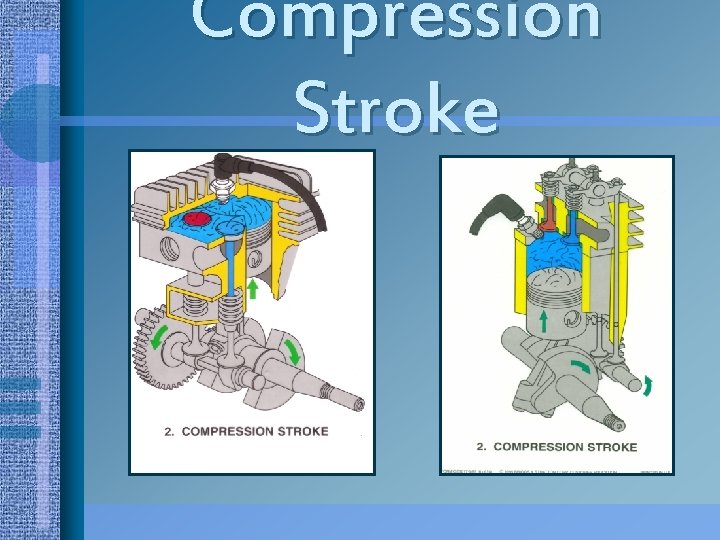
Compression. Stroke • 2 nd operational event in a four-stroke engine. • Both intake and exhaust valves are closed and the piston moves upward compressing the airfuel mixture between the piston and cylinder head. • Compression increases the temperature of the mixture making it easier to ignite. • Volume of the cylinder & the Volume of the combustion chamber at the beginning and end of the compression stroke is known as the compression ratio. Small gasoline engines (6: 1).
Compression Stroke
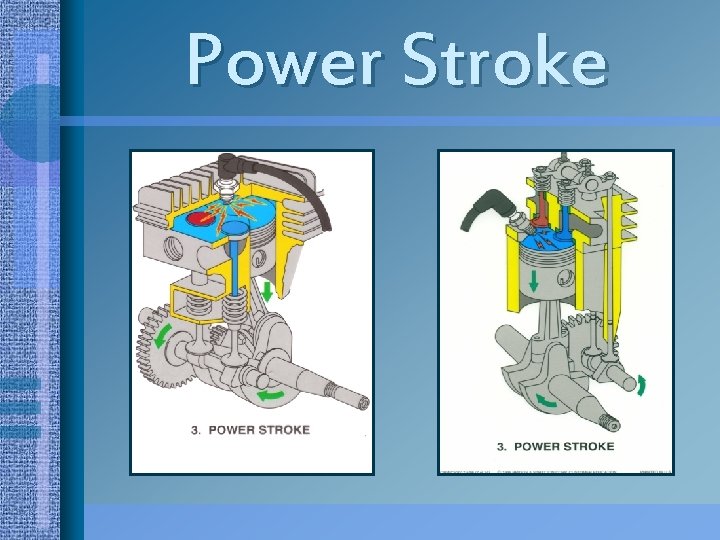
Power-Stroke • 3 rd operational event in a four-stroke engine. • Both the intake and exhaust valves are closed. • Top of the stroke (TDC), a spark jumps the spark plug gap igniting the heated and compressed air-fuel mixture and the explosion pushes the piston downward. • Ignition timing is very crucial in relationship to the position of the piston.
Power Stroke
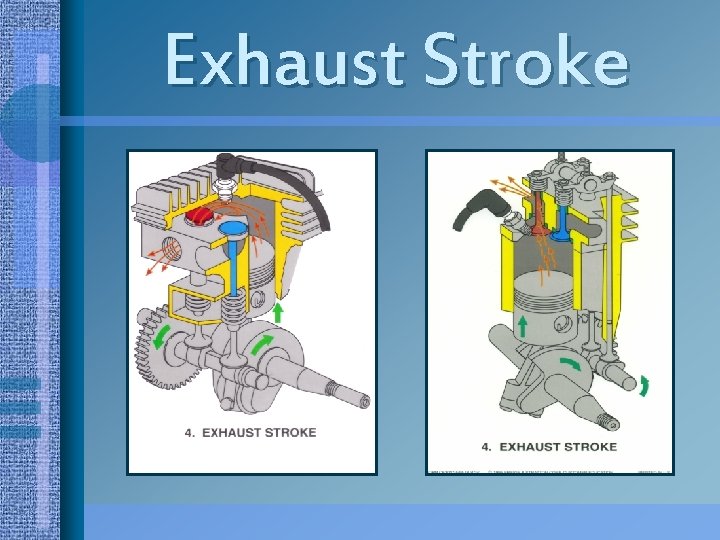
Exhaust-Stroke • 4 th operational event in a four-stroke engine. • When the power stroke is complete, momentum of the flywheel and crankshaft moves the piston up the cylinder. • The exhaust valve opens, forcing the exhaust gases out of the chamber by the piston to the exhaust passage. • Once the piston hits Top Dead Center (TDC) the intake valve opens and a new cycle begins.
Exhaust Stroke
Four-Stroke Engine 1 2 3 4 5 6
Four-Stroke Engine
Four-Stroke Engine
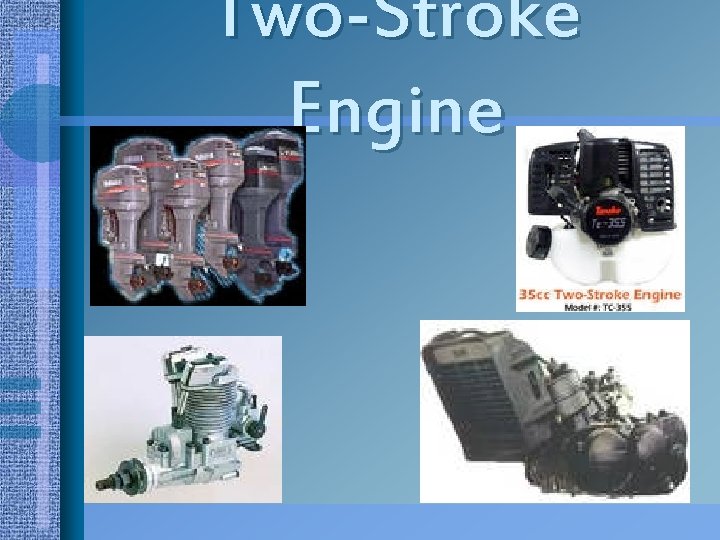
Two-Stroke Engine
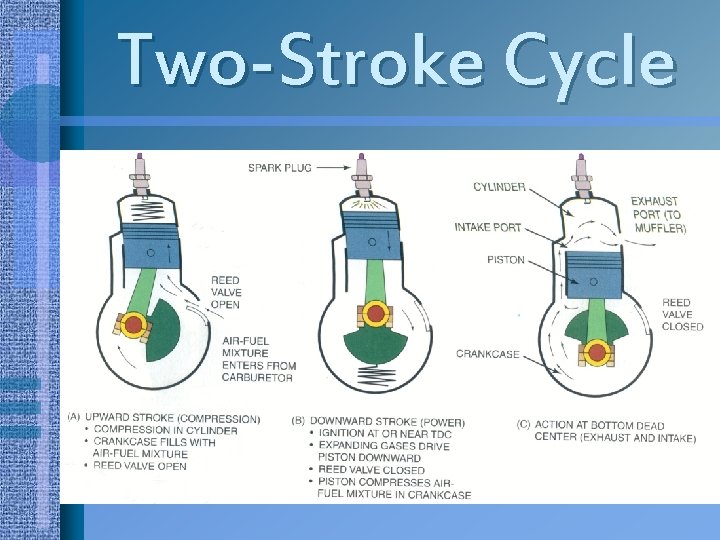
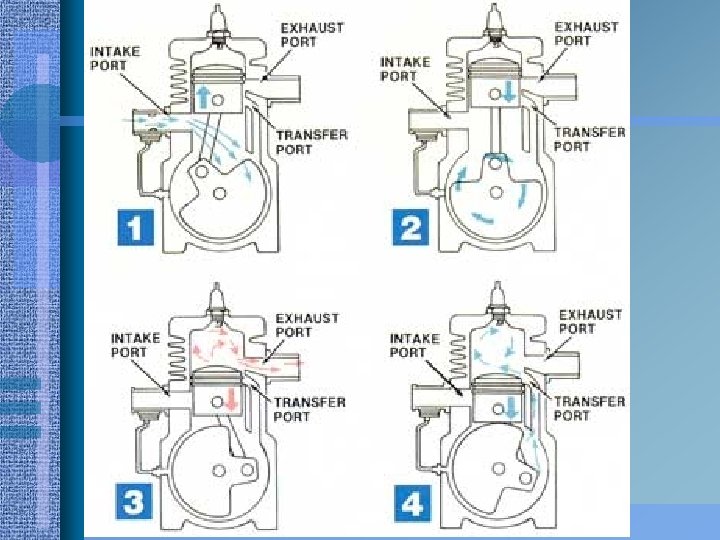
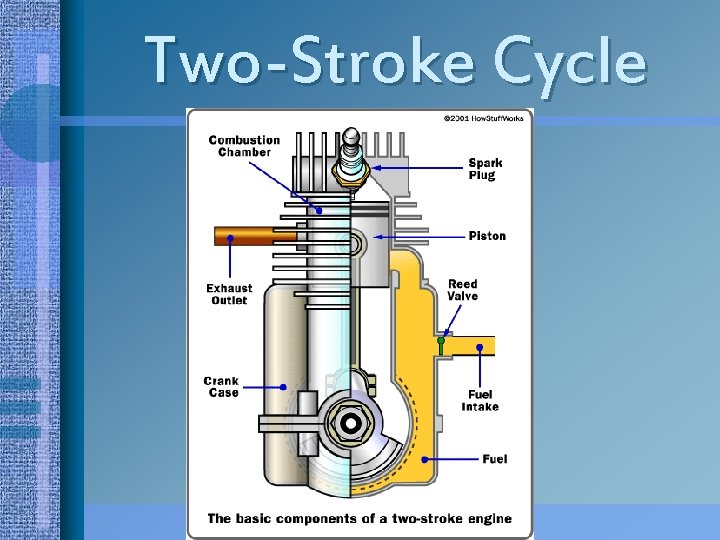
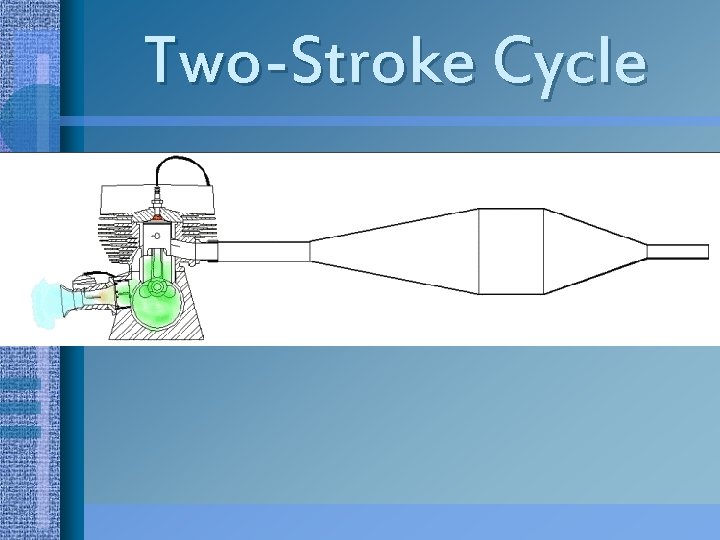
Two-Stroke Cycle • In a two-stroke cycle, the four events are: intake, compression, power, and exhaust. • All must occur, but more than one event takes place during each stroke. • The four events (one cycle) are completed in two strokes making one revolution of 360° degrees, which accounts for the name. TWO-STROKE CYCLE ENGINE
Two-Stroke Cycle
Two-Stroke Cycle
Two-Stroke Cycle
ENGINE OPERATING PRINCIPLES • An understanding of the general concepts of how small engines operate as discussed in this unit and explained in other units, will help you do a better job of maintenance, minor repair and complete engine overhaul. • Engines have three (3) basic systems: 1. Ignition 2. Compression 3. Carburetion
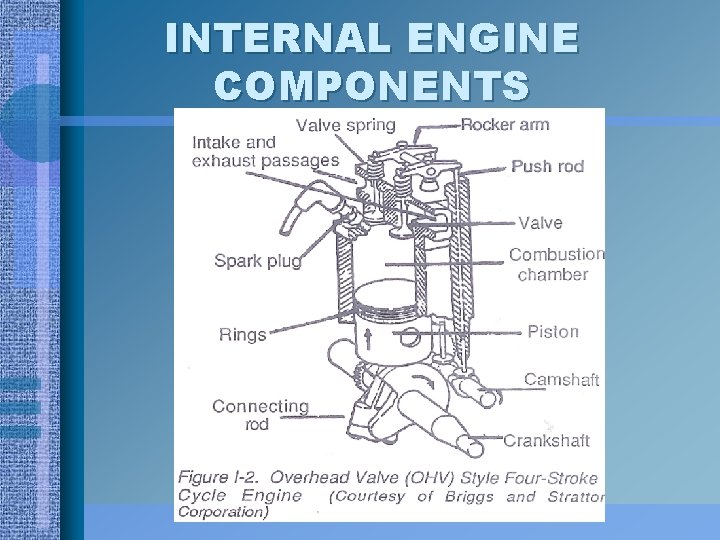
INTERNAL ENGINE COMPONENTS
ENGINE OPERATING PRINCIPLES • All three (3) systems must work in harmony with each other. • When a student has an understanding of engine theories of operation, a general knowledge of using measuring instruments, skill in use of mechanic's tools, access to specialized tools, equipment for working on specific engines, the service and repair literature, and with patience and practice, a good job of working on small engines can be reached.