
Operation of Flight Systems Static System Instruments Gyroscopic
- Slides: 28
Operation of Flight Systems Static System Instruments Gyroscopic Instruments Turn Indicators Compass
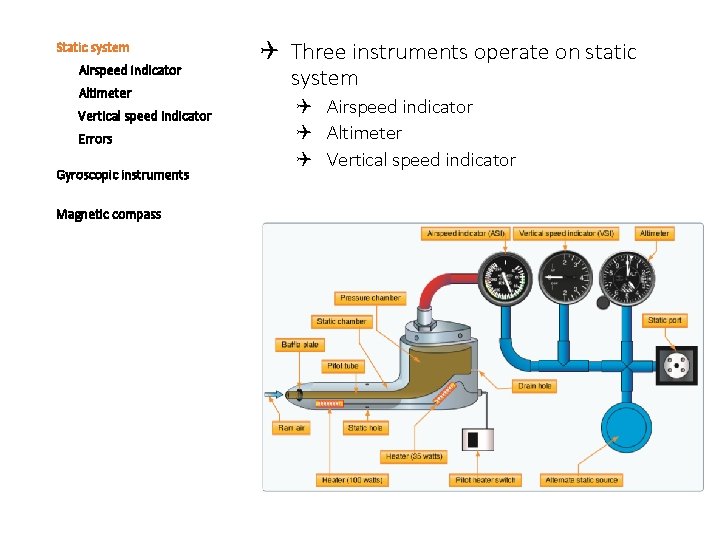
Static system Airspeed indicator Altimeter Vertical speed indicator Errors Gyroscopic instruments Magnetic compass Three instruments operate on static system Airspeed indicator Altimeter Vertical speed indicator
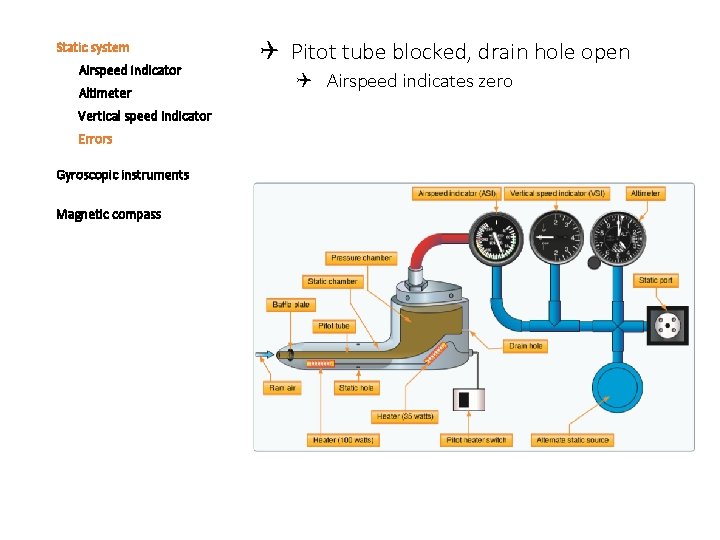
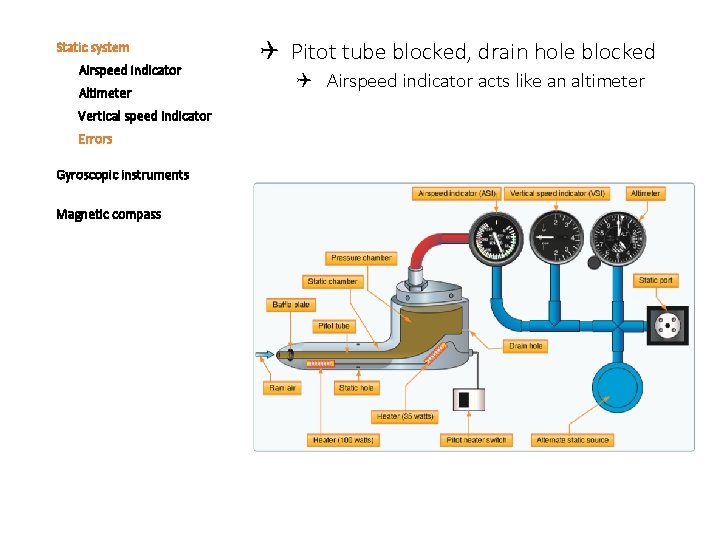
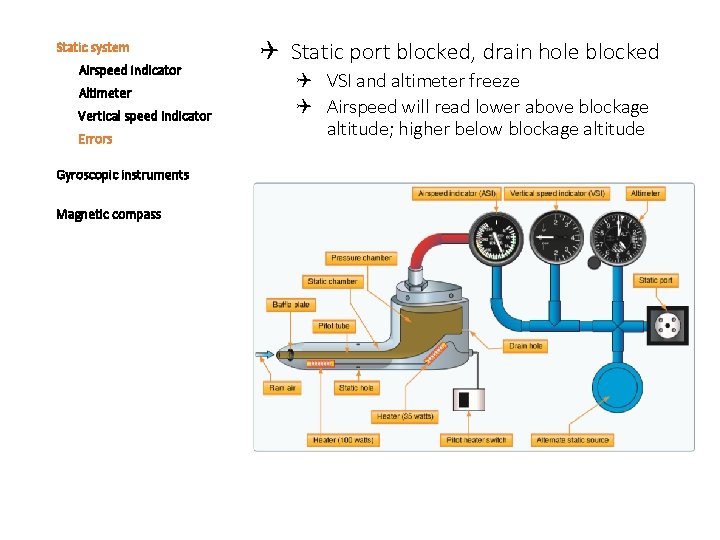
Static system Airspeed indicator Altimeter Vertical speed indicator Errors Gyroscopic instruments Magnetic compass Pitot tube—mounted on left wing Provides ram air pressure Heated through heating element (pitot heat rocker arm switch) Static ports—on sides of fuselage (x 2) Provide static air pressure Alternate static pressure source beneath panel; activated by push/pull knob Lower pressure in cabin—momentary rise in airspeed, altitude, and vertical speed
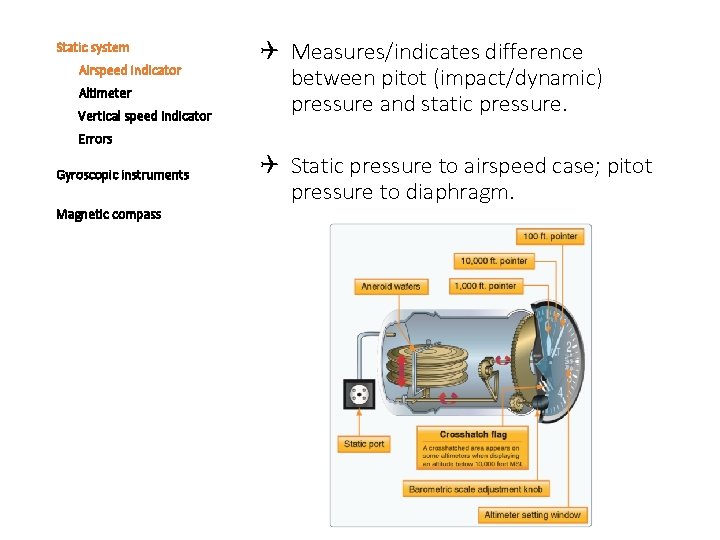
Static system Airspeed indicator Altimeter Vertical speed indicator Measures/indicates difference between pitot (impact/dynamic) pressure and static pressure. Errors Gyroscopic instruments Magnetic compass Static pressure to airspeed case; pitot pressure to diaphragm.
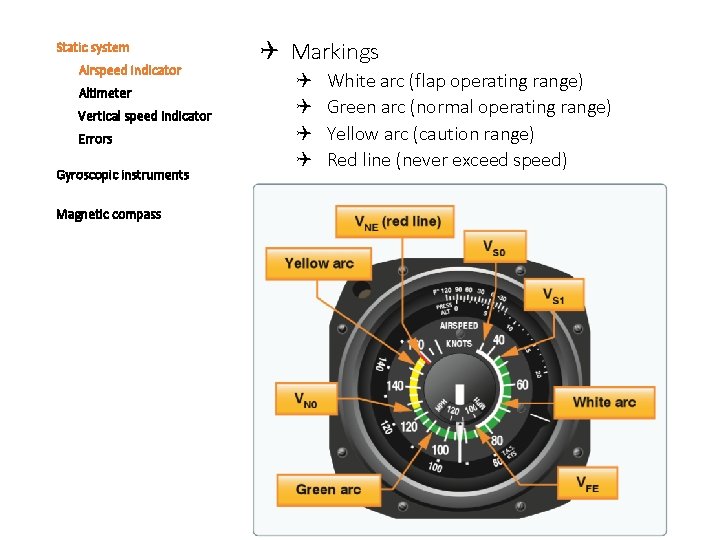
Static system Airspeed indicator Altimeter Vertical speed indicator Errors Gyroscopic instruments Magnetic compass Markings White arc (flap operating range) Green arc (normal operating range) Yellow arc (caution range) Red line (never exceed speed)
Static system Airspeed indicator Altimeter Vertical speed indicator Airspeeds Indicated airspeed (IAS) Calibrated airspeed (CAS) Errors Gyroscopic instruments Equivalent airspeed (EAS) True airspeed (TAS) Magnetic compass Groundspeed (GS)
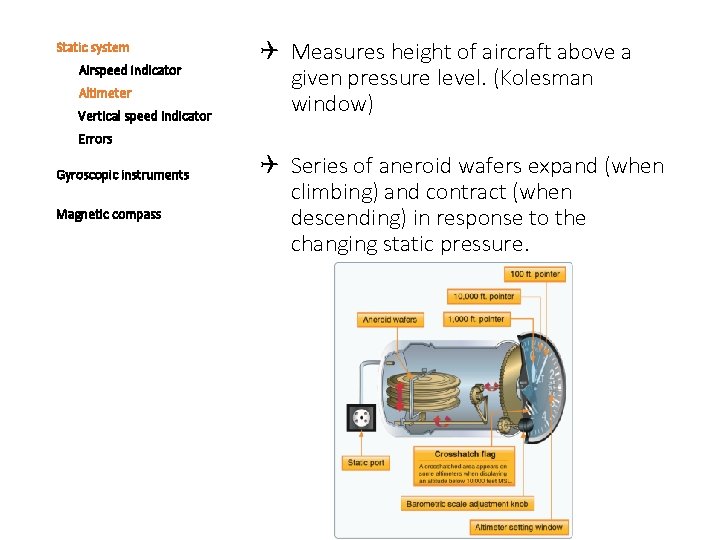
Static system Airspeed indicator Altimeter Vertical speed indicator Measures height of aircraft above a given pressure level. (Kolesman window) Errors Gyroscopic instruments Magnetic compass Series of aneroid wafers expand (when climbing) and contract (when descending) in response to the changing static pressure.
Static system Airspeed indicator Altimeter Vertical speed indicator Errors Gyroscopic instruments Altitudes Indicated altitude True altitude (MSL) Absolute altitude (AGL) Pressure altitude Density altitude Magnetic compass Errors “High to low, look out below; low to high, clear the sky. ” As the airplane enters an area of lower pressure, the altimeter will read lower than actual if setting not adjusted.
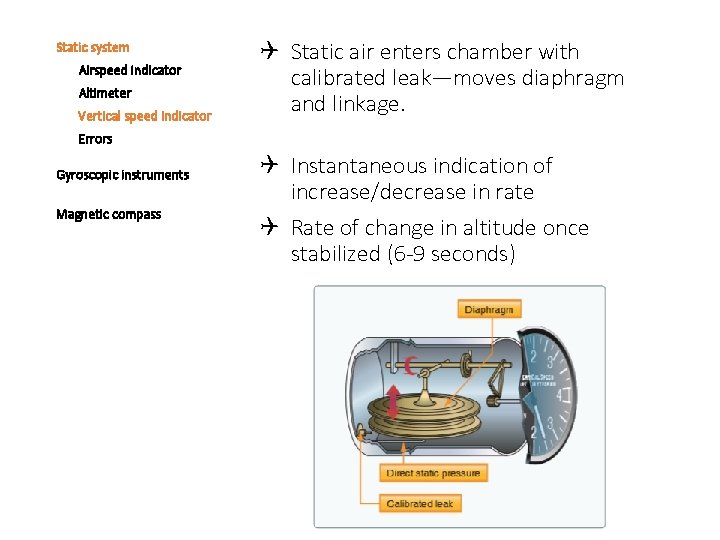
Static system Airspeed indicator Altimeter Vertical speed indicator Static air enters chamber with calibrated leak—moves diaphragm and linkage. Errors Gyroscopic instruments Magnetic compass Instantaneous indication of increase/decrease in rate Rate of change in altitude once stabilized (6 -9 seconds)
Static system Airspeed indicator Altimeter Vertical speed indicator Errors Gyroscopic instruments Magnetic compass Pitot tube blocked, drain hole open Airspeed indicates zero
Static system Airspeed indicator Altimeter Vertical speed indicator Errors Gyroscopic instruments Magnetic compass Pitot tube blocked, drain hole blocked Airspeed indicator acts like an altimeter
Static system Airspeed indicator Altimeter Vertical speed indicator Errors Gyroscopic instruments Magnetic compass Static port blocked, drain hole blocked VSI and altimeter freeze Airspeed will read lower above blockage altitude; higher below blockage altitude
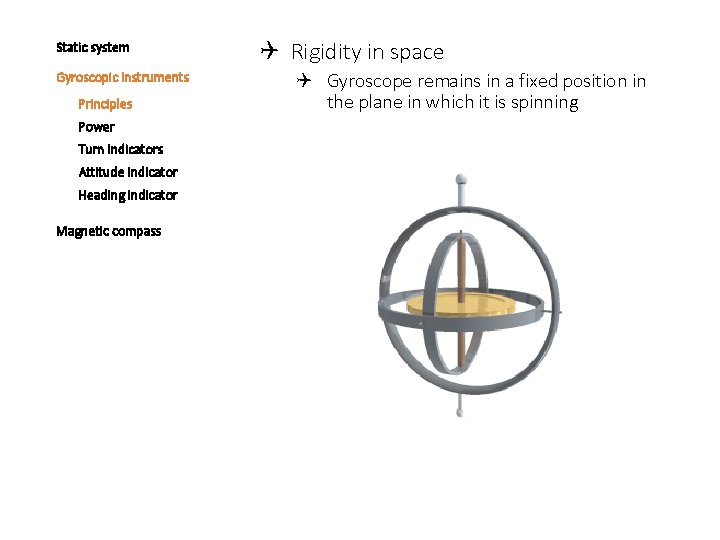
Static system Gyroscopic instruments Principles Power Turn indicators Attitude indicator Heading indicator Magnetic compass Rigidity in space Gyroscope remains in a fixed position in the plane in which it is spinning
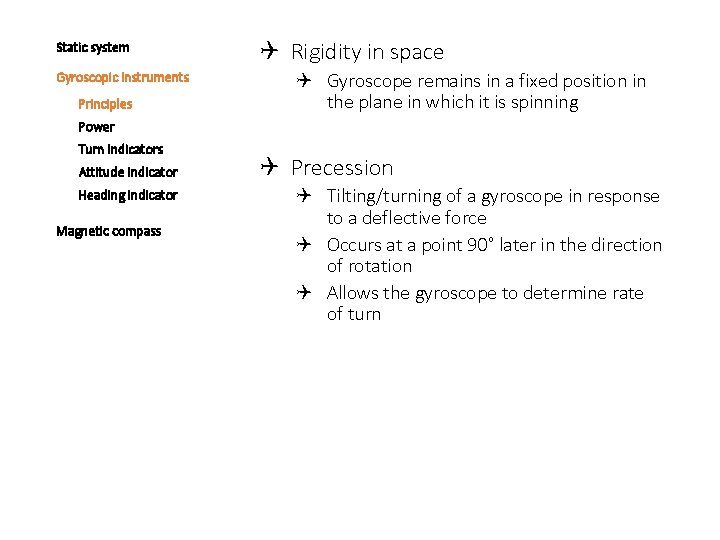
Static system Gyroscopic instruments Principles Rigidity in space Gyroscope remains in a fixed position in the plane in which it is spinning Power Turn indicators Attitude indicator Heading indicator Magnetic compass Precession Tilting/turning of a gyroscope in response to a deflective force Occurs at a point 90° later in the direction of rotation Allows the gyroscope to determine rate of turn
Static system Gyroscopic instruments Principles Power Turn indicators Attitude indicator Heading indicator Magnetic compass Electric Pressure Vacuum
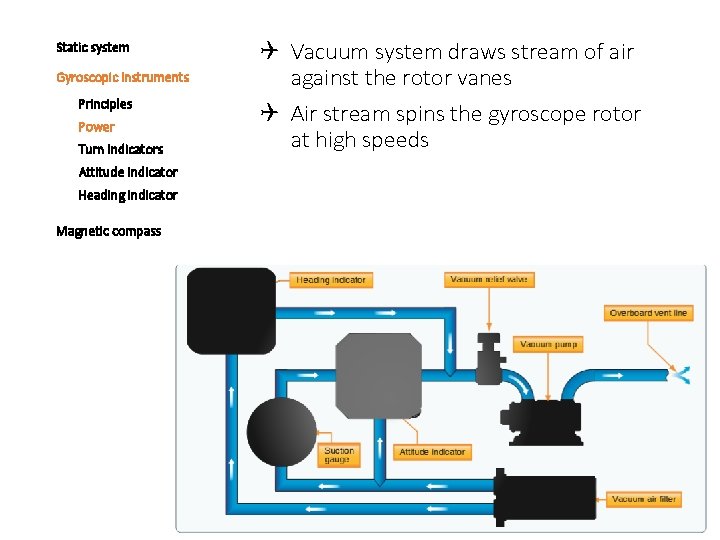
Static system Gyroscopic instruments Principles Power Turn indicators Attitude indicator Heading indicator Magnetic compass Vacuum system draws stream of air against the rotor vanes Air stream spins the gyroscope rotor at high speeds
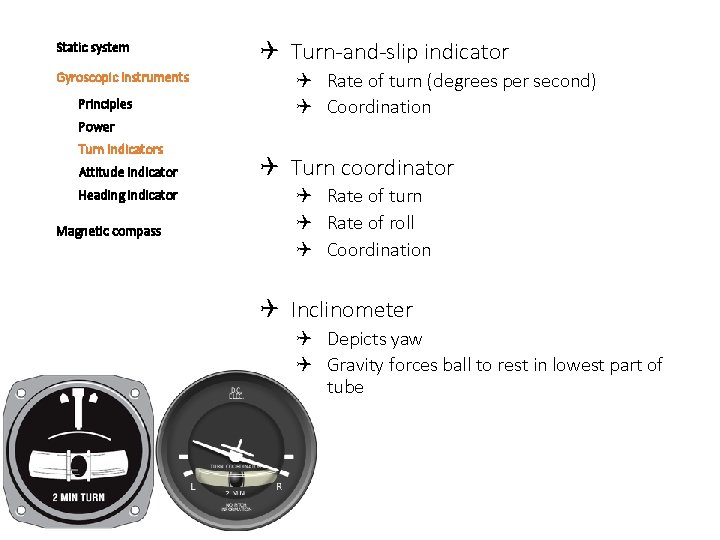
Static system Gyroscopic instruments Principles Power Turn indicators Attitude indicator Heading indicator Magnetic compass Turn-and-slip indicator Rate of turn (degrees per second) Coordination Turn coordinator Rate of turn Rate of roll Coordination Inclinometer Depicts yaw Gravity forces ball to rest in lowest part of tube
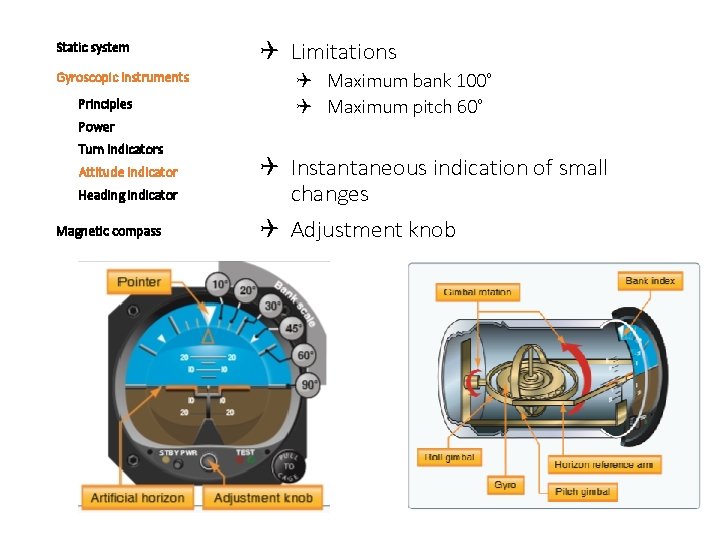
Static system Gyroscopic instruments Principles Power Turn indicators Attitude indicator Heading indicator Magnetic compass Limitations Maximum bank 100° Maximum pitch 60° Instantaneous indication of small changes Adjustment knob
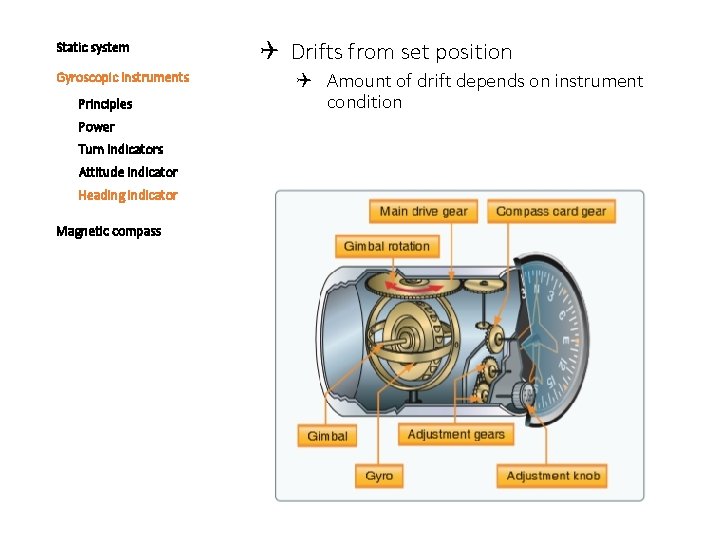
Static system Gyroscopic instruments Principles Power Turn indicators Attitude indicator Heading indicator Magnetic compass Drifts from set position Amount of drift depends on instrument condition
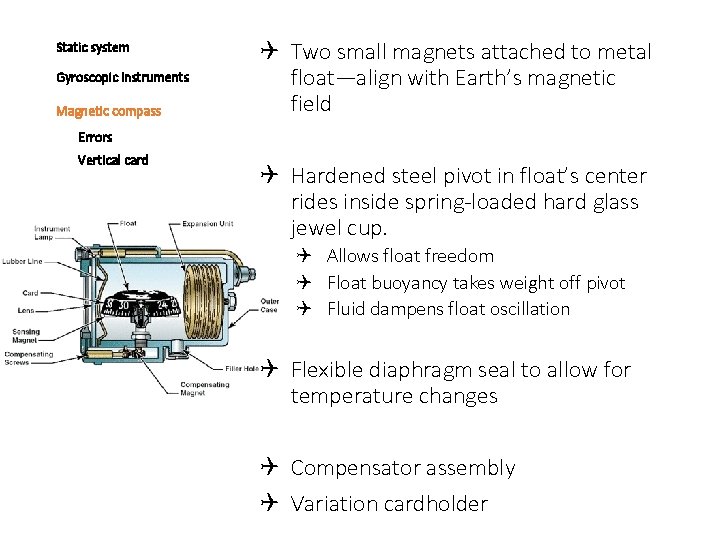
Static system Gyroscopic instruments Magnetic compass Two small magnets attached to metal float—align with Earth’s magnetic field Errors Vertical card Hardened steel pivot in float’s center rides inside spring-loaded hard glass jewel cup. Allows float freedom Float buoyancy takes weight off pivot Fluid dampens float oscillation Flexible diaphragm seal to allow for temperature changes Compensator assembly Variation cardholder
Static system Gyroscopic instruments Magnetic compass Errors Vertical card Variation Deviation Magnetic dip error Oscillation error
Static system Gyroscopic instruments Magnetic compass Errors Vertical card Variation Also known as declination Difference between true and magnetic North Deviation Magnetic dip error Oscillation error
Static system Gyroscopic instruments Magnetic compass Errors Vertical card Variation Deviation Local magnetic fields cause compass error Differ for each heading Not affected by geographic location Swinging the compass/cardholder Magnetic dip error Oscillation error
Static system Gyroscopic instruments Magnetic compass Errors Vertical card Variation Deviation Magnetic dip error Magnets align with magnetic flux lines— near the poles, they dip (tilt) the float Dip-compensating weight that dampens the effect of dip causes other errors Northerly turning error Acceleration error Oscillation error
Static system Gyroscopic instruments Magnetic compass Errors Vertical card Variation Deviation Magnetic dip error Northerly turning error (UNOS) Vertical component of Earth’s magnetic field pulls north-seeking end of magnet toward the Earth Turning from the North to the East/West —initially indicates a turn in the opposite direction Turning from the South—turns in the same direction at a faster rate Acceleration error Oscillation error
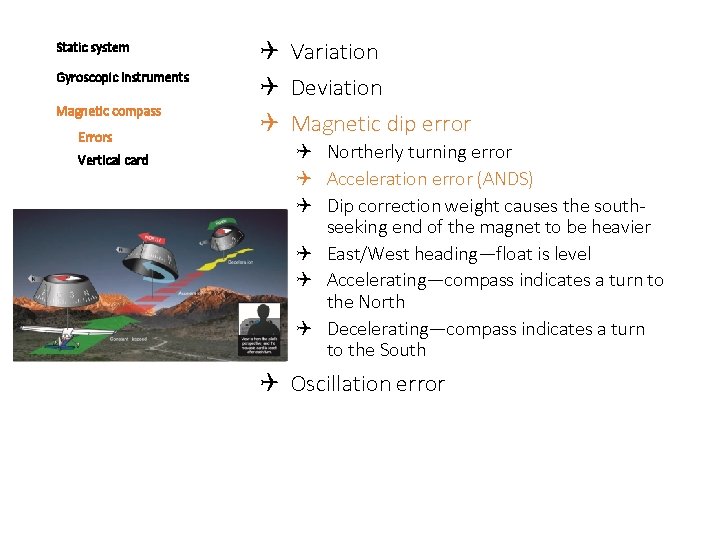
Static system Gyroscopic instruments Magnetic compass Errors Vertical card Variation Deviation Magnetic dip error Northerly turning error Acceleration error (ANDS) Dip correction weight causes the southseeking end of the magnet to be heavier East/West heading—float is level Accelerating—compass indicates a turn to the North Decelerating—compass indicates a turn to the South Oscillation error
Static system Gyroscopic instruments Magnetic compass Errors Vertical card Variation Deviation Magnetic dip error Oscillation error Combination of all errors Compass card swings back and forth around heading Use average indication between swings
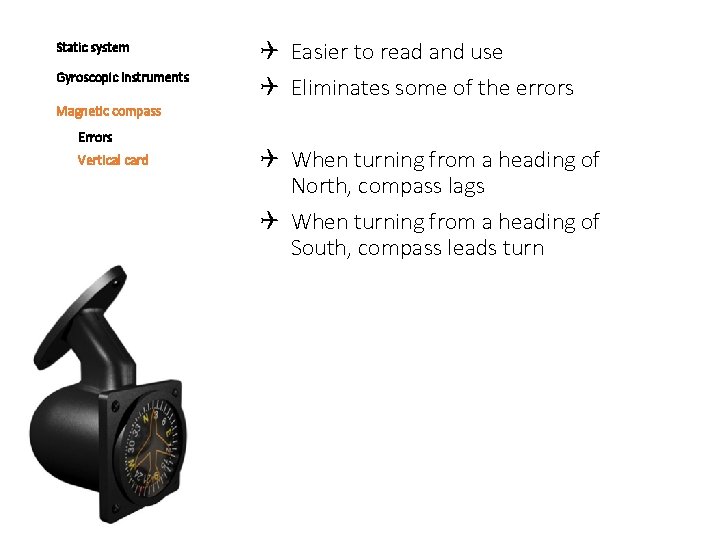
Static system Gyroscopic instruments Easier to read and use Eliminates some of the errors Magnetic compass Errors Vertical card When turning from a heading of North, compass lags When turning from a heading of South, compass leads turn