
Operating Systems Internals and Design Principles Chapter 3



- Slides: 47
Operating Systems: Internals and Design Principles Chapter 3 Process Description and Control Seventh Edition By William Stallings
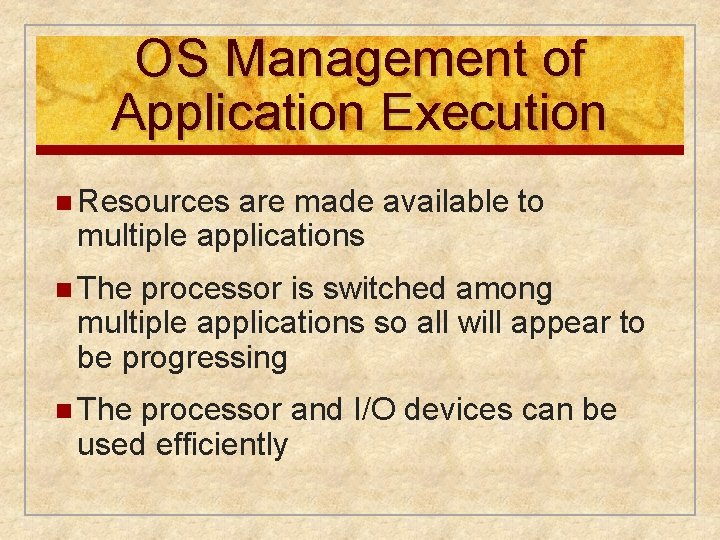
OS Management of Application Execution n Resources are made available to multiple applications n The processor is switched among multiple applications so all will appear to be progressing n The processor and I/O devices can be used efficiently
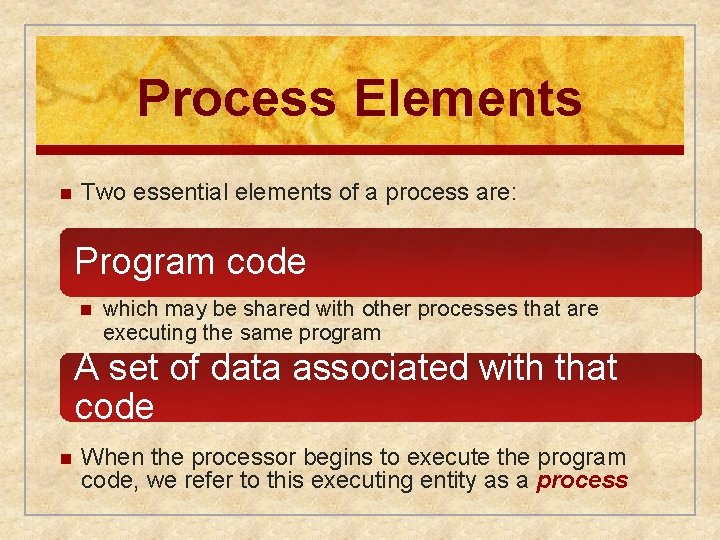
Process Elements n Two essential elements of a process are: Program code n which may be shared with other processes that are executing the same program A set of data associated with that code n When the processor begins to execute the program code, we refer to this executing entity as a process
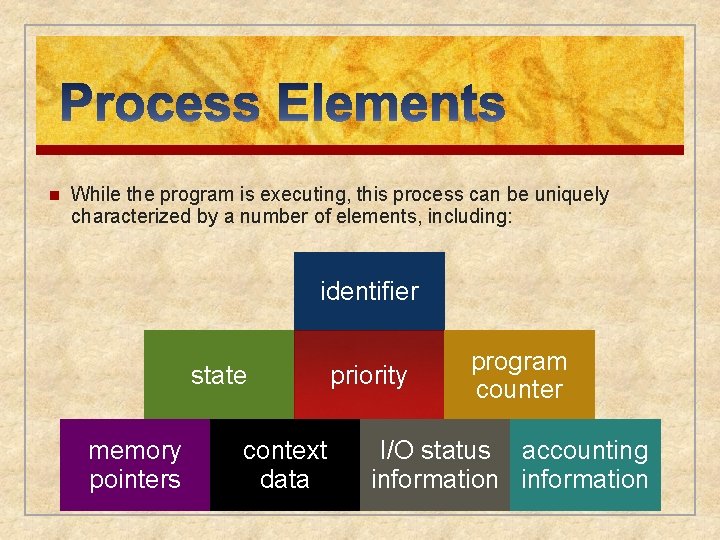
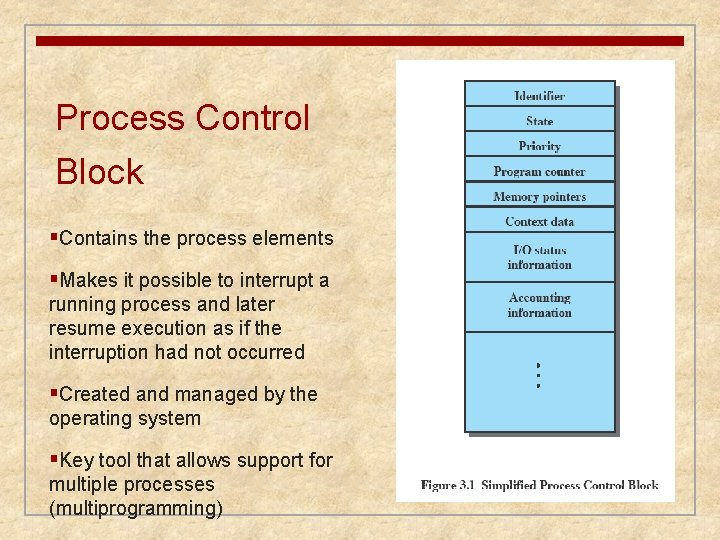
n While the program is executing, this process can be uniquely characterized by a number of elements, including: identifier state memory pointers context data priority program counter I/O status accounting information
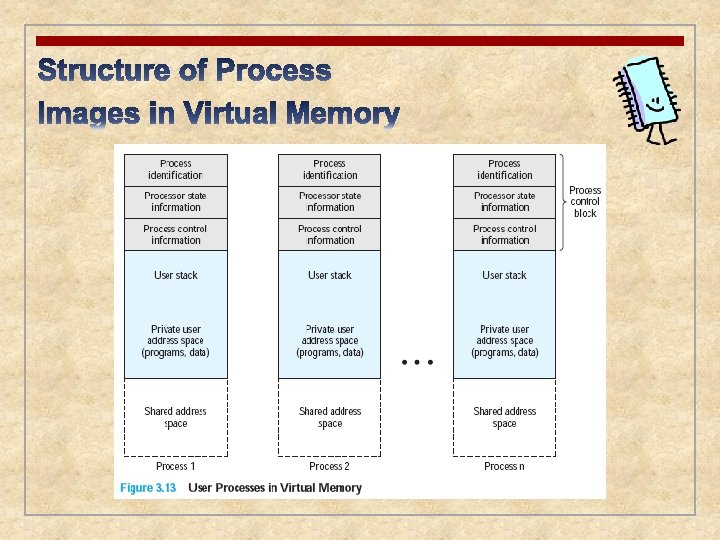
Process Control Block §Contains the process elements §Makes it possible to interrupt a running process and later resume execution as if the interruption had not occurred §Created and managed by the operating system §Key tool that allows support for multiple processes (multiprogramming)
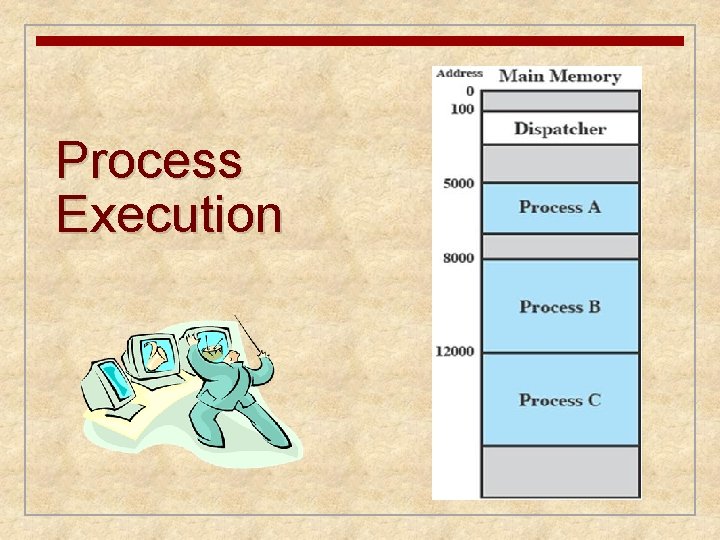
Process Execution
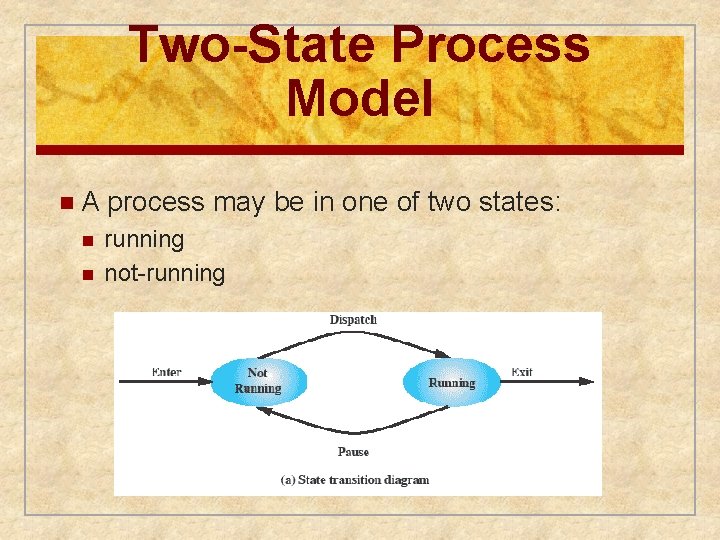
Two-State Process Model n. A n n process may be in one of two states: running not-running
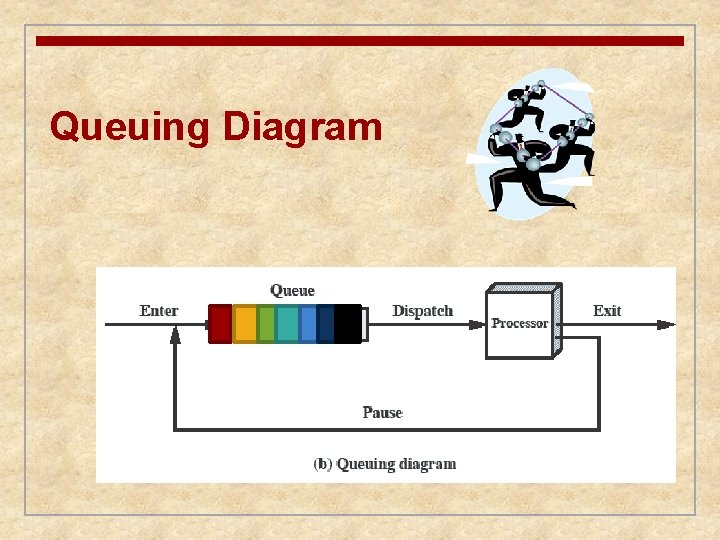
Queuing Diagram
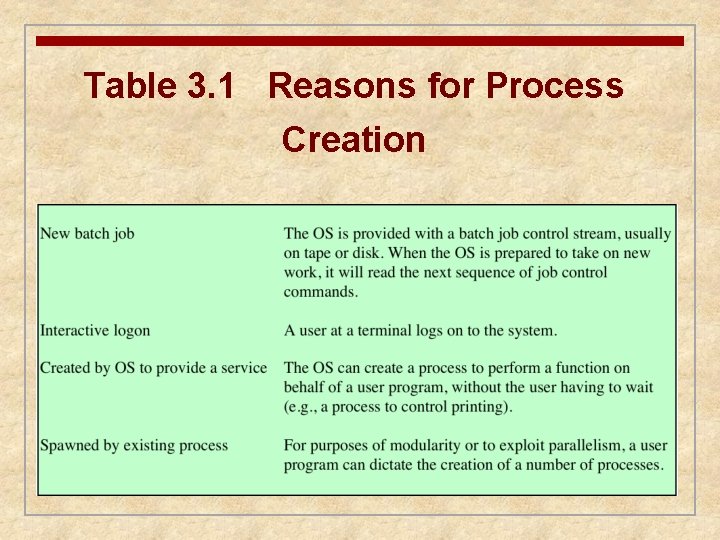
Table 3. 1 Reasons for Process Creation
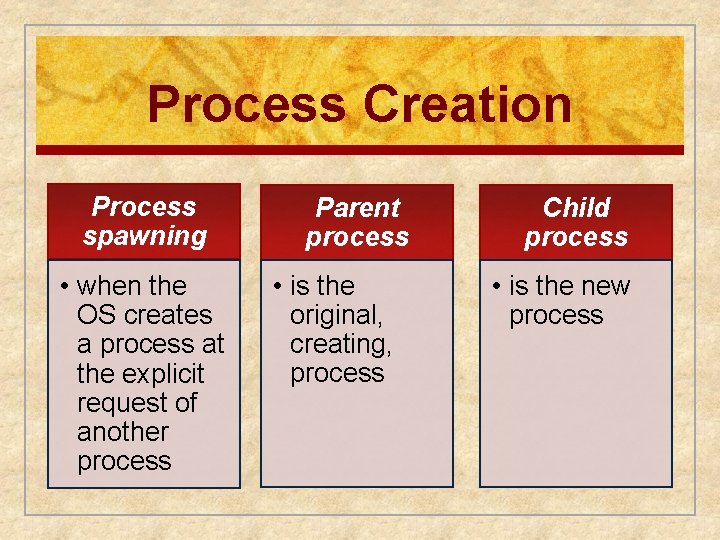
Process Creation Process spawning • when the OS creates a process at the explicit request of another process Parent process • is the original, creating, process Child process • is the new process
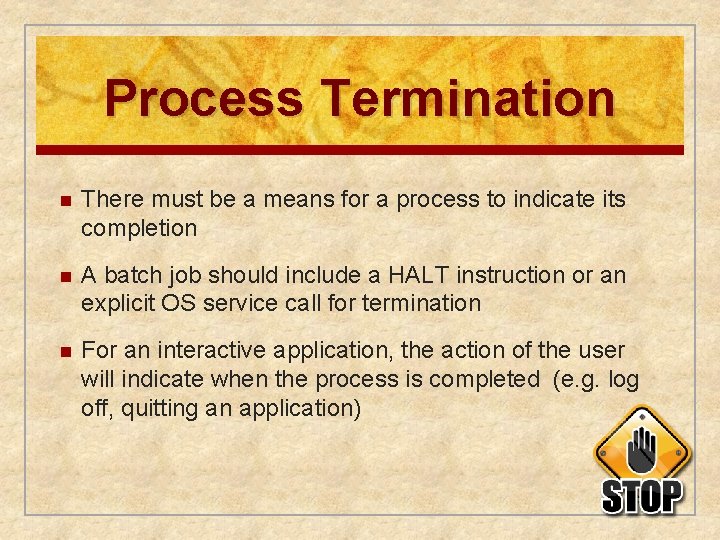
Process Termination n There must be a means for a process to indicate its completion n A batch job should include a HALT instruction or an explicit OS service call for termination n For an interactive application, the action of the user will indicate when the process is completed (e. g. log off, quitting an application)
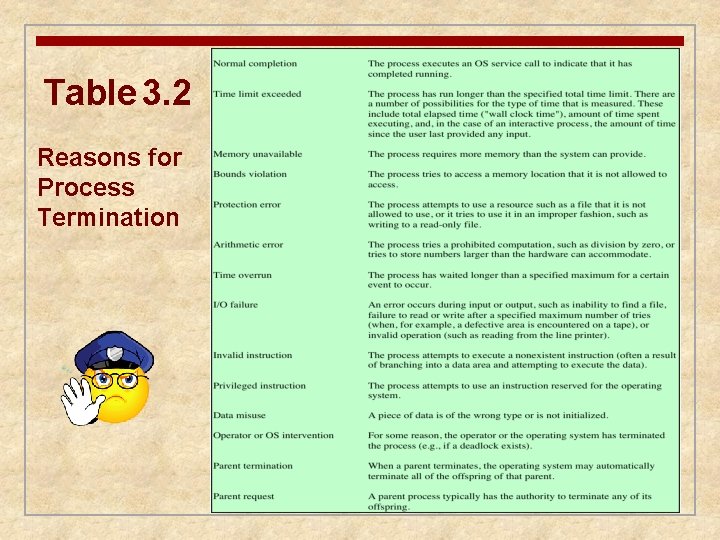
Table 3. 2 Reasons for Process Termination
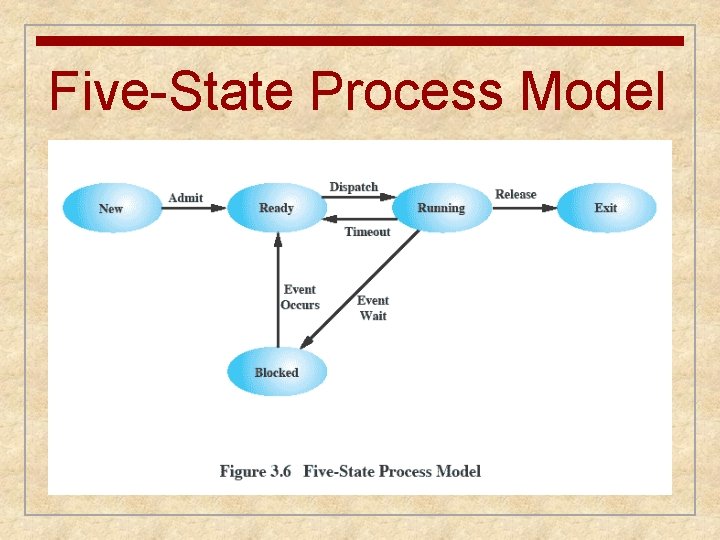
Five-State Process Model
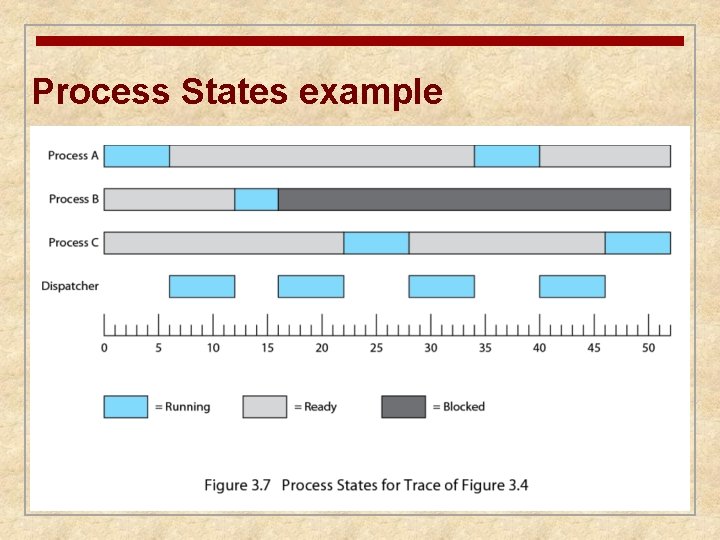
Process States example
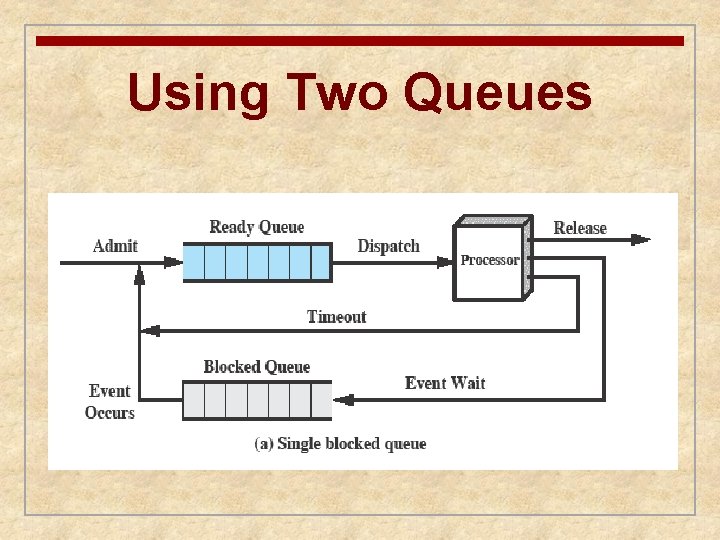
Using Two Queues
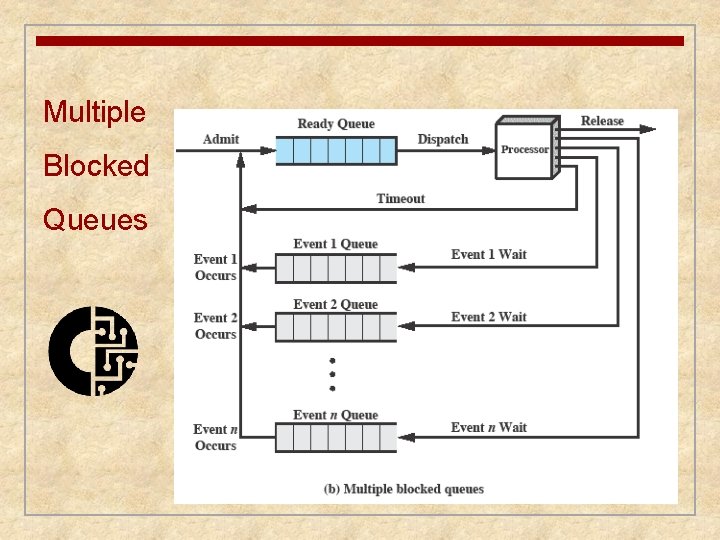
Multiple Blocked Queues
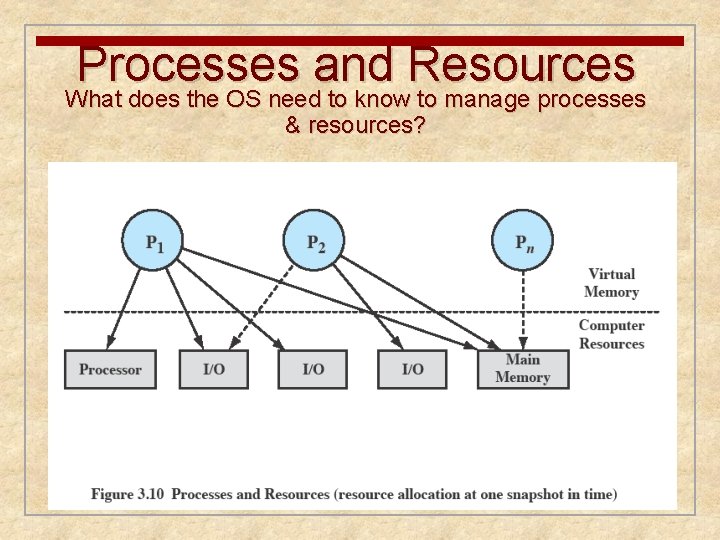
Processes and Resources What does the OS need to know to manage processes & resources?
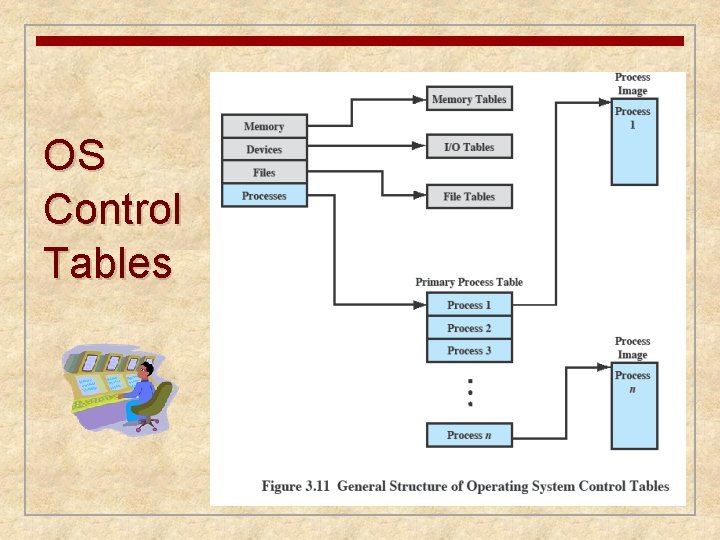
OS Control Tables
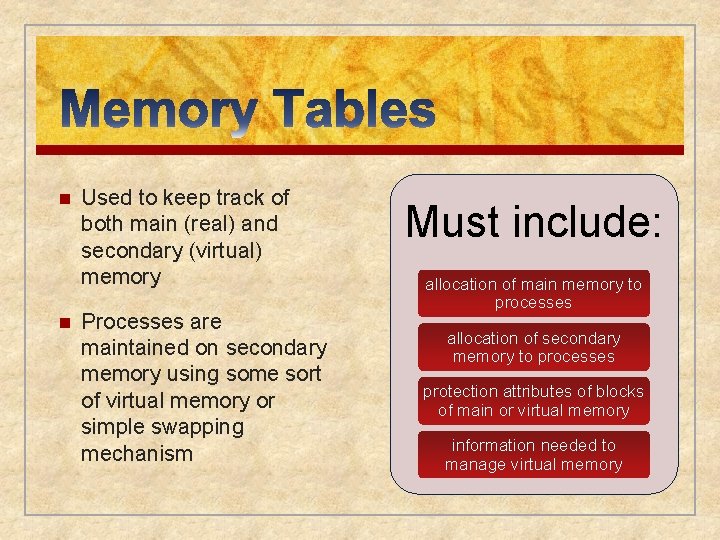
n n Used to keep track of both main (real) and secondary (virtual) memory Processes are maintained on secondary memory using some sort of virtual memory or simple swapping mechanism Must include: allocation of main memory to processes allocation of secondary memory to processes protection attributes of blocks of main or virtual memory information needed to manage virtual memory
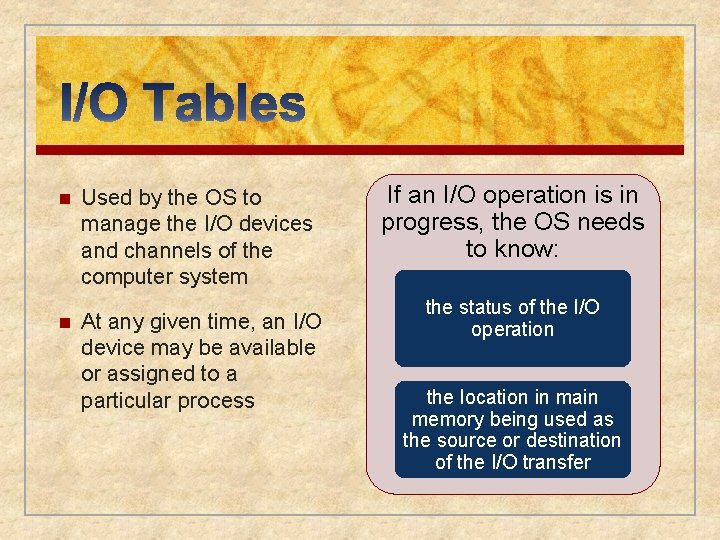
n n Used by the OS to manage the I/O devices and channels of the computer system At any given time, an I/O device may be available or assigned to a particular process If an I/O operation is in progress, the OS needs to know: the status of the I/O operation the location in main memory being used as the source or destination of the I/O transfer
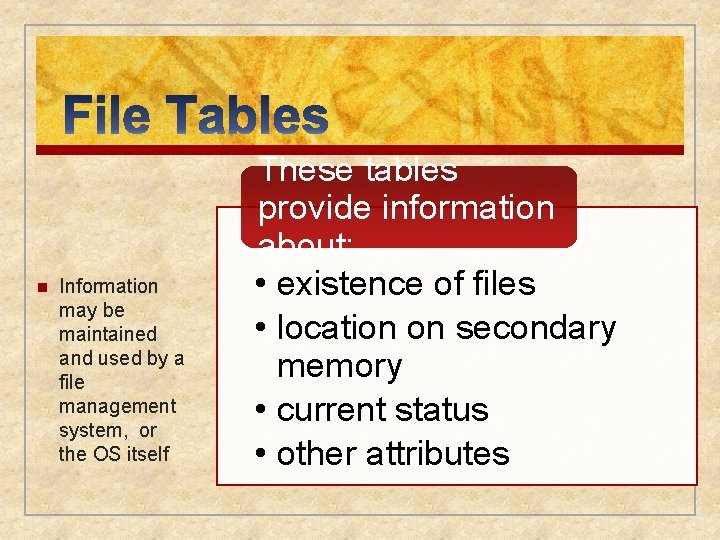
n Information may be maintained and used by a file management system, or the OS itself These tables provide information about: • existence of files • location on secondary memory • current status • other attributes
n Must be maintained to manage processes n Process tables must have some reference to memory, I/O, and file tables n e. g. , pointers from each individual process entry to its data in the other three sets of tables. n The tables themselves must be accessible by the OS and therefore are subject to memory management n Processes are represented by a process image
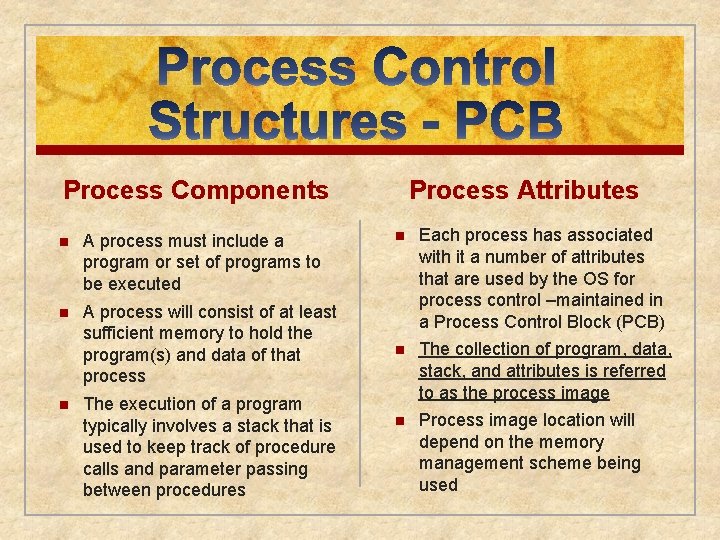
Process Components n A process must include a program or set of programs to be executed n A process will consist of at least sufficient memory to hold the program(s) and data of that process n The execution of a program typically involves a stack that is used to keep track of procedure calls and parameter passing between procedures Process Attributes n Each process has associated with it a number of attributes that are used by the OS for process control –maintained in a Process Control Block (PCB) n The collection of program, data, stack, and attributes is referred to as the process image n Process image location will depend on the memory management scheme being used
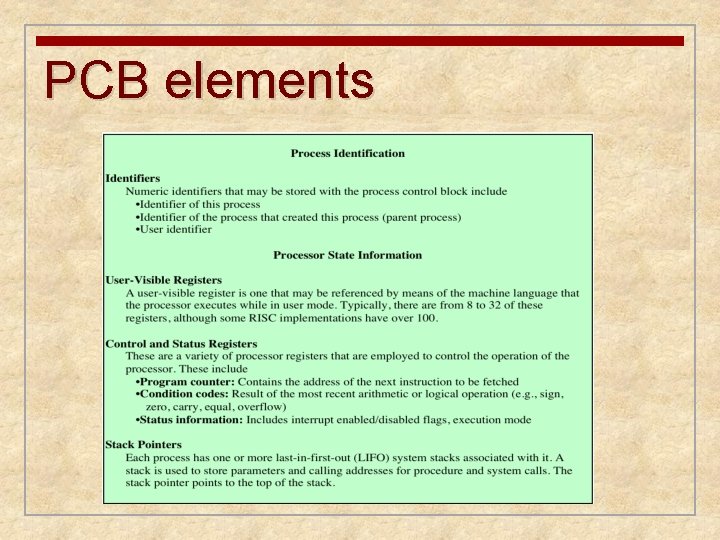
PCB elements
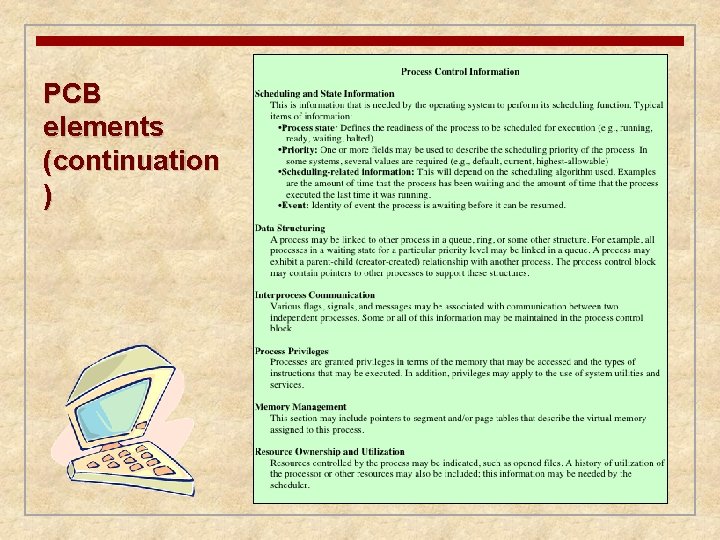
PCB elements (continuation )
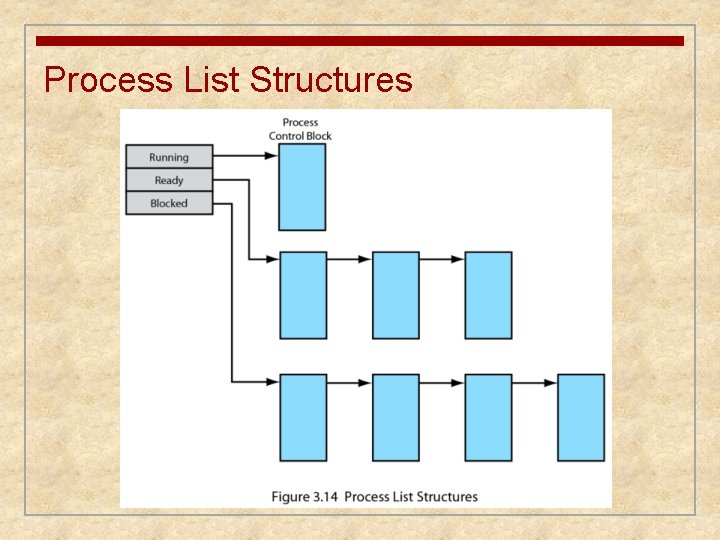
Process List Structures
n n The most important data structure in an OS n contains all of the information about a process that is needed by the OS n blocks are read and/or modified by virtually every module in the OS n defines the state of the OS Difficulty is not access, but protection n a bug in a single routine could damage process control blocks, which could destroy the system’s ability to manage the affected processes n a design change in the structure or semantics of the process control block could affect a number of modules in the OS
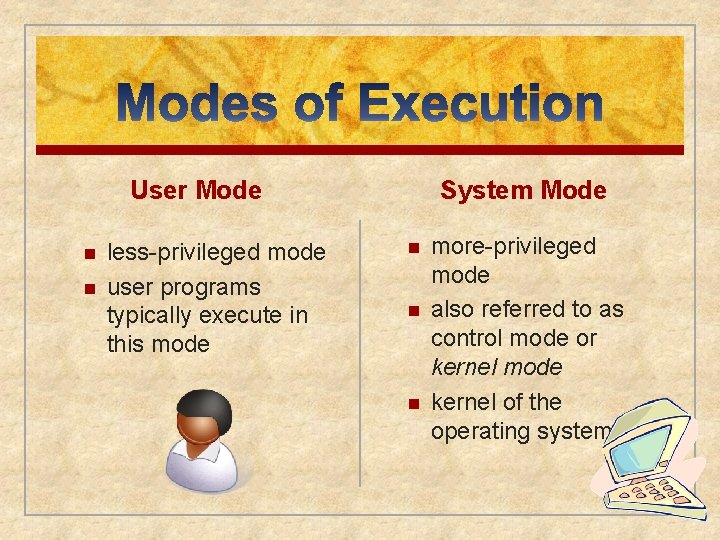
User Mode n n less-privileged mode user programs typically execute in this mode System Mode n n n more-privileged mode also referred to as control mode or kernel mode kernel of the operating system
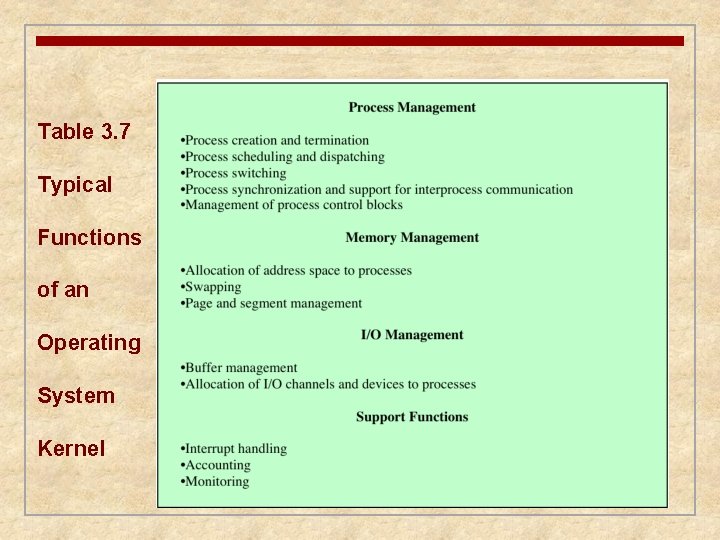
Table 3. 7 Typical Functions of an Operating System Kernel
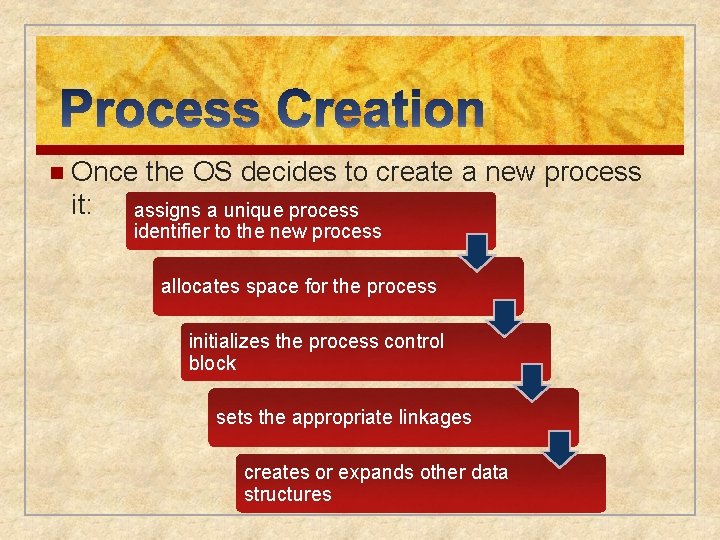
n Once it: the OS decides to create a new process assigns a unique process identifier to the new process allocates space for the process initializes the process control block sets the appropriate linkages creates or expands other data structures
Process (Context) Switching A process switch may occur any time that the OS has gained control from the currently running process. Possible events giving OS control are:
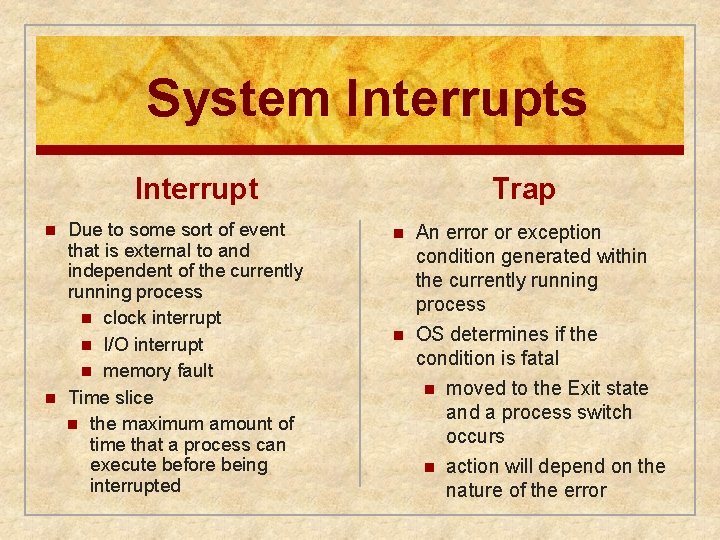
System Interrupts Interrupt n n Due to some sort of event that is external to and independent of the currently running process n clock interrupt n I/O interrupt n memory fault Time slice n the maximum amount of time that a process can execute before being interrupted Trap n n An error or exception condition generated within the currently running process OS determines if the condition is fatal n moved to the Exit state and a process switch occurs n action will depend on the nature of the error
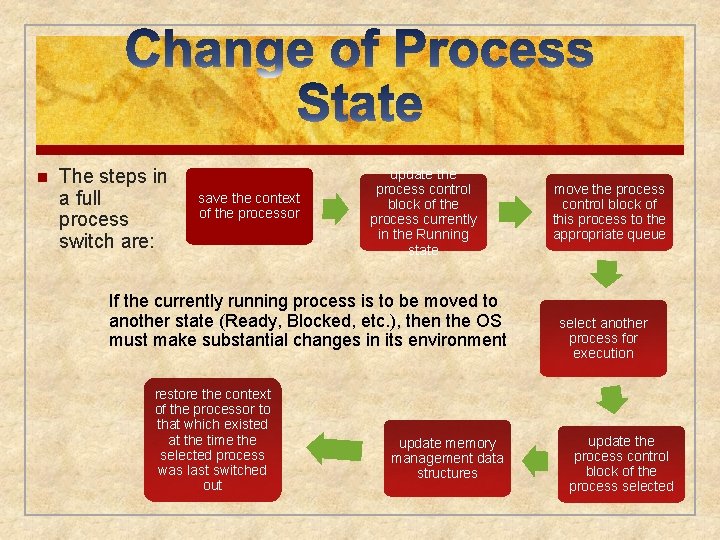
n The steps in a full process switch are: save the context of the processor update the process control block of the process currently in the Running state If the currently running process is to be moved to another state (Ready, Blocked, etc. ), then the OS must make substantial changes in its environment restore the context of the processor to that which existed at the time the selected process was last switched out update memory management data structures move the process control block of this process to the appropriate queue select another process for execution update the process control block of the process selected
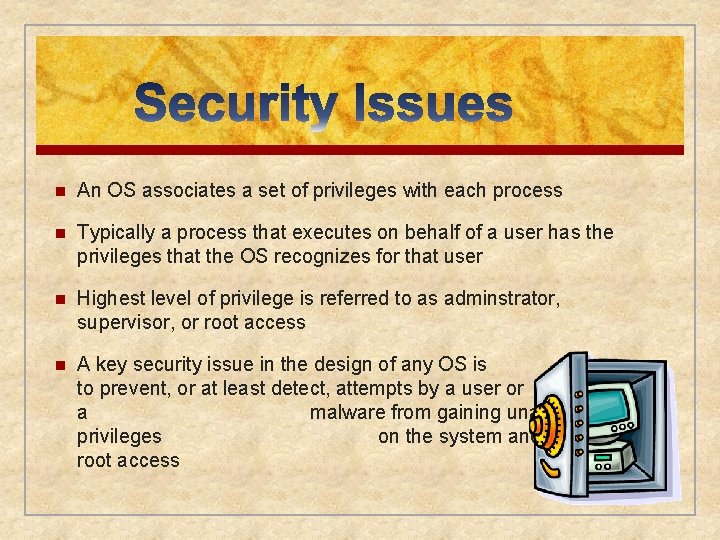
n An OS associates a set of privileges with each process n Typically a process that executes on behalf of a user has the privileges that the OS recognizes for that user n Highest level of privilege is referred to as adminstrator, supervisor, or root access n A key security issue in the design of any OS is to prevent, or at least detect, attempts by a user or a malware from gaining unauthorized privileges on the system and from gaining root access
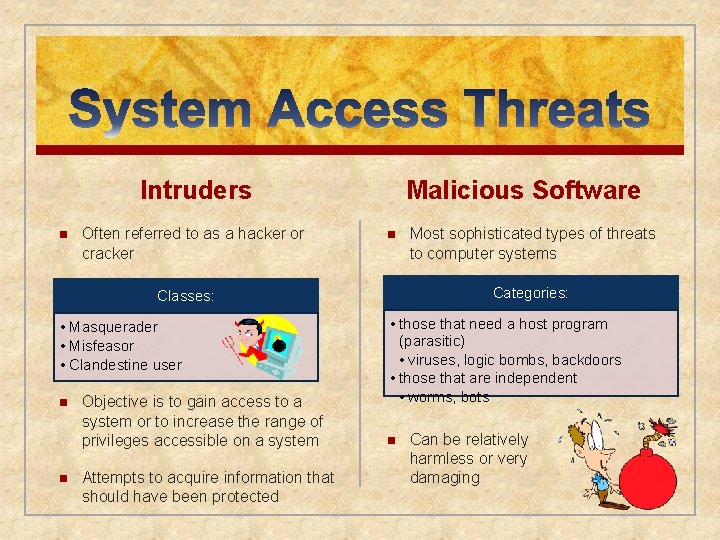
Intruders n Often referred to as a hacker or cracker Malicious Software n Categories: Classes: • Masquerader • Misfeasor • Clandestine user n n Objective is to gain access to a system or to increase the range of privileges accessible on a system Attempts to acquire information that should have been protected Most sophisticated types of threats to computer systems • those that need a host program (parasitic) • viruses, logic bombs, backdoors • those that are independent • worms, bots n Can be relatively harmless or very damaging
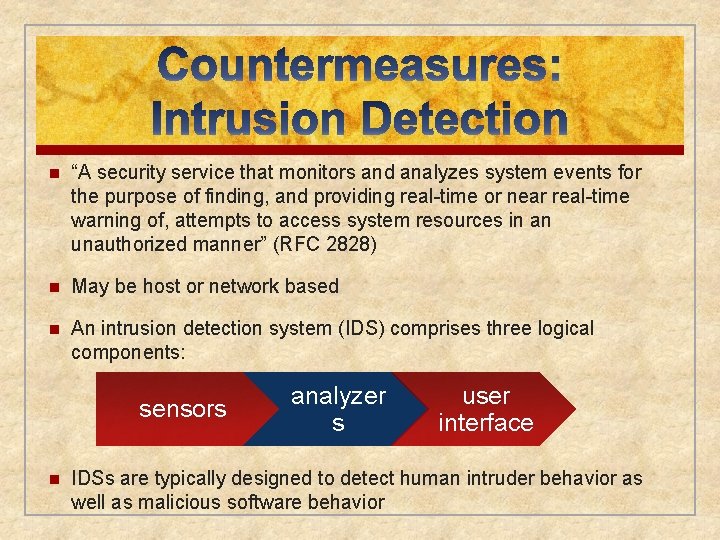
n “A security service that monitors and analyzes system events for the purpose of finding, and providing real-time or near real-time warning of, attempts to access system resources in an unauthorized manner” (RFC 2828) n May be host or network based n An intrusion detection system (IDS) comprises three logical components: sensors n analyzer s user interface IDSs are typically designed to detect human intruder behavior as well as malicious software behavior
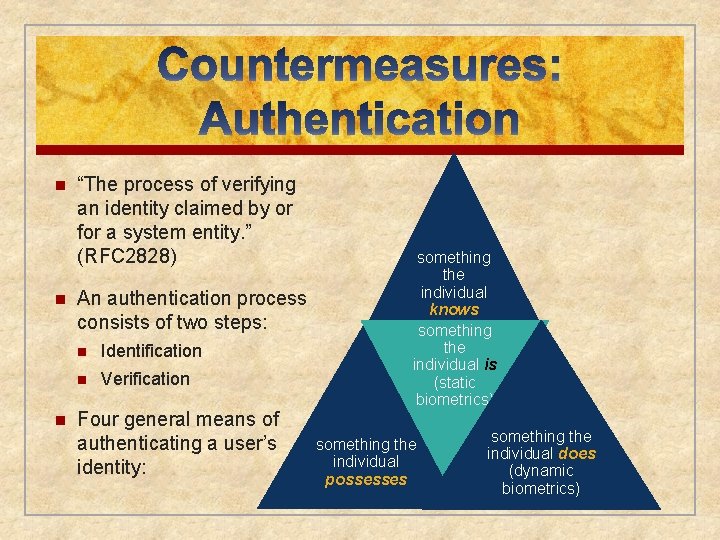
n n n “The process of verifying an identity claimed by or for a system entity. ” (RFC 2828) An authentication process consists of two steps: n Identification n Verification Four general means of authenticating a user’s identity: something the individual knows something the individual is (static biometrics) something the individual possesses something the individual does (dynamic biometrics)
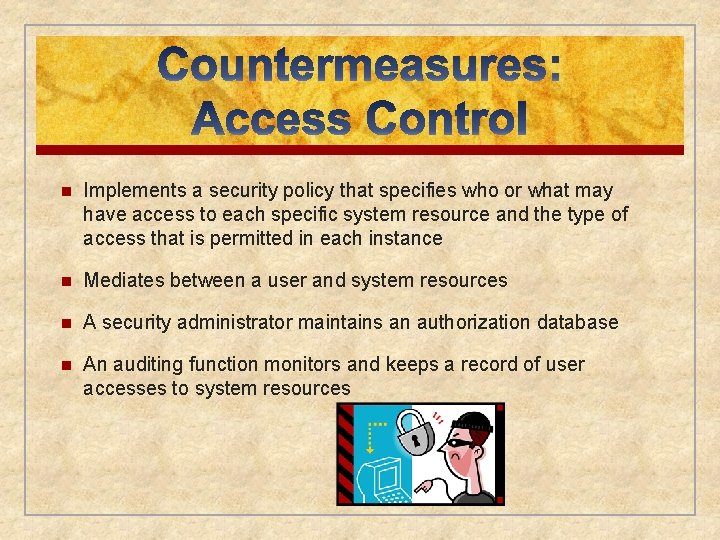
n Implements a security policy that specifies who or what may have access to each specific system resource and the type of access that is permitted in each instance n Mediates between a user and system resources n A security administrator maintains an authorization database n An auditing function monitors and keeps a record of user accesses to system resources
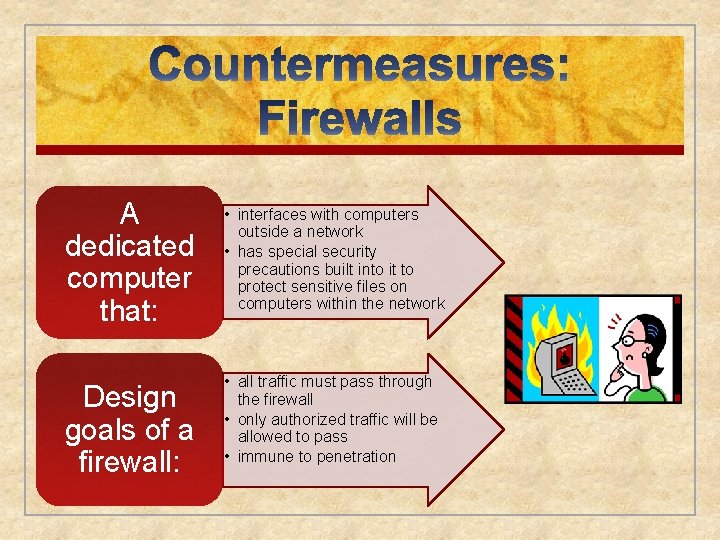
A dedicated computer that: Design goals of a firewall: • interfaces with computers outside a network • has special security precautions built into it to protect sensitive files on computers within the network • all traffic must pass through the firewall • only authorized traffic will be allowed to pass • immune to penetration
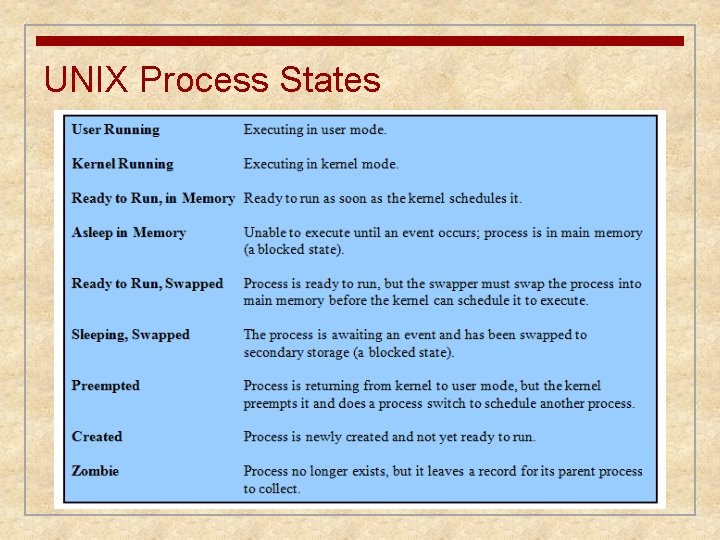
UNIX Process States
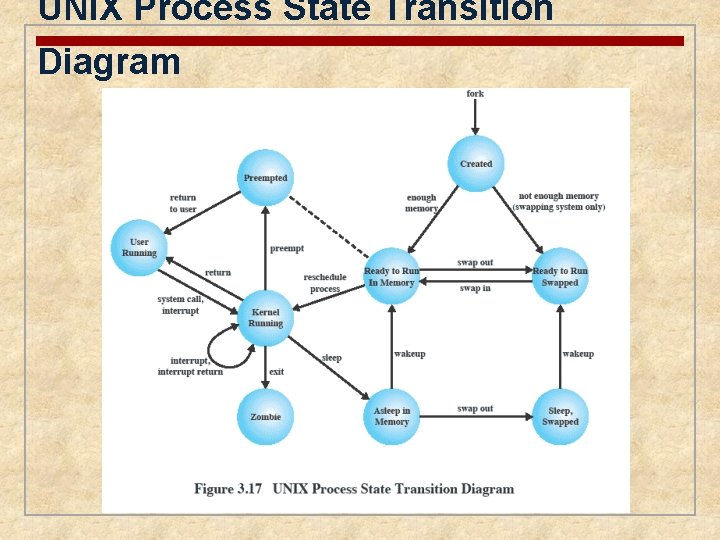
UNIX Process State Transition Diagram
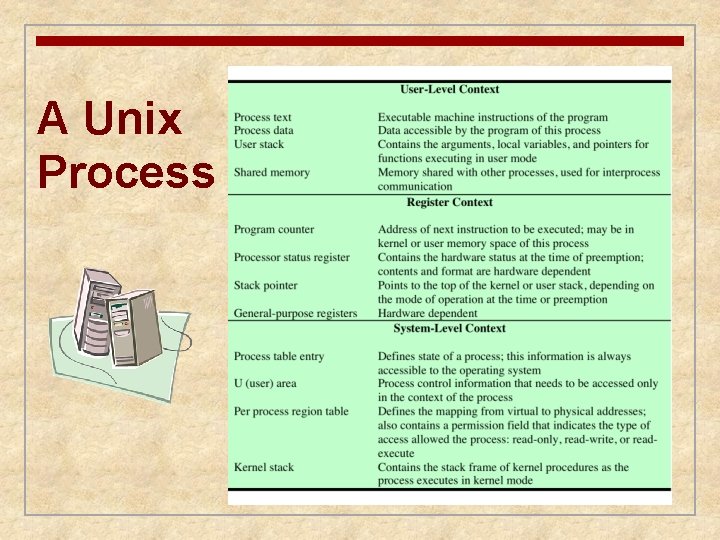
A Unix Process
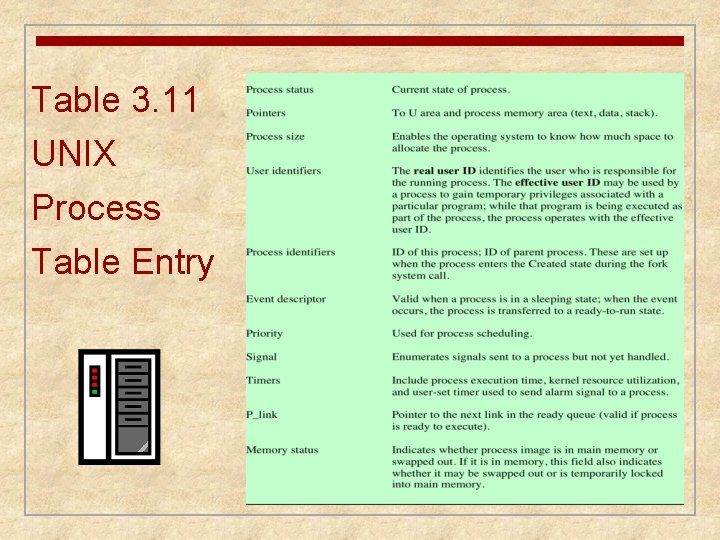
Table 3. 11 UNIX Process Table Entry
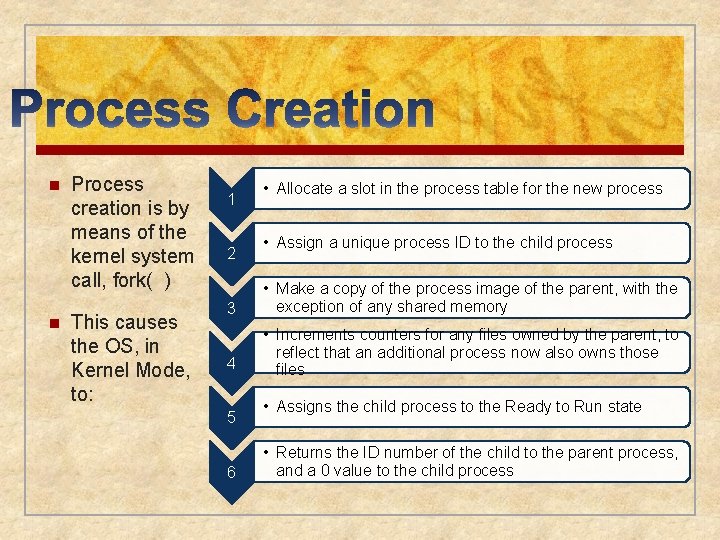
n n Process creation is by means of the kernel system call, fork( ) This causes the OS, in Kernel Mode, to: 1 2 • Allocate a slot in the process table for the new process • Assign a unique process ID to the child process 3 • Make a copy of the process image of the parent, with the exception of any shared memory 4 • Increments counters for any files owned by the parent, to reflect that an additional process now also owns those files 5 6 • Assigns the child process to the Ready to Run state • Returns the ID number of the child to the parent process, and a 0 value to the child process
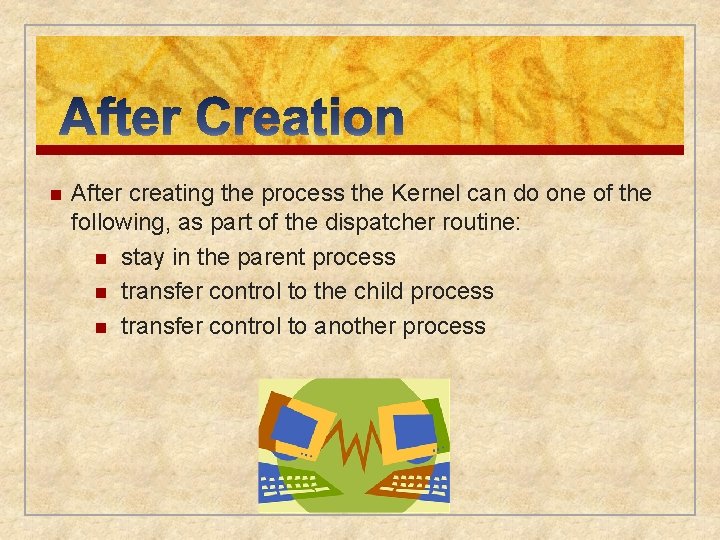
n After creating the process the Kernel can do one of the following, as part of the dispatcher routine: n stay in the parent process n transfer control to the child process n transfer control to another process
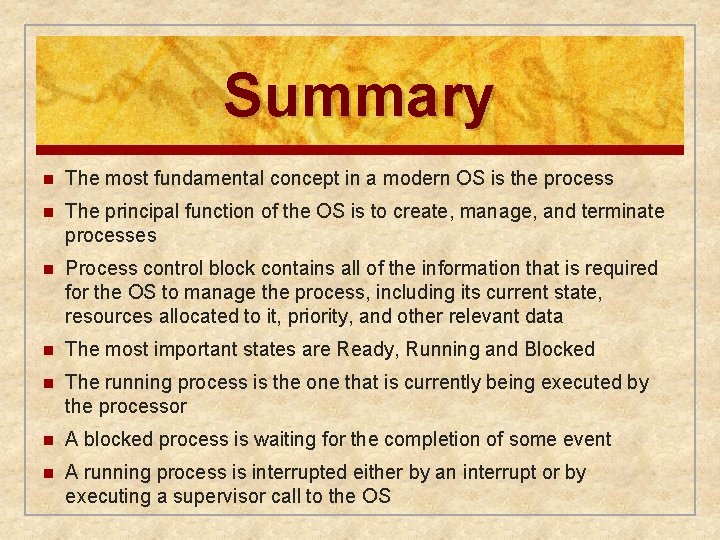
Summary n The most fundamental concept in a modern OS is the process n The principal function of the OS is to create, manage, and terminate processes n Process control block contains all of the information that is required for the OS to manage the process, including its current state, resources allocated to it, priority, and other relevant data n The most important states are Ready, Running and Blocked n The running process is the one that is currently being executed by the processor n A blocked process is waiting for the completion of some event n A running process is interrupted either by an interrupt or by executing a supervisor call to the OS