
Operating Systems Internals and Design Principles Chapter 1

- Slides: 57
Operating Systems: Internals and Design Principles Chapter 1 Computer System Overview Seventh Edition By William Stallings
Operating Systems: Internals and Design Principles “No artifact designed by man is so convenient for this kind of functional description as a digital computer. Almost the only ones of its properties that are detectable in its behavior are the organizational properties. Almost no interesting statement that one can make about on operating computer bears any particular relation to the specific nature of the hardware. A computer is an organization of elementary functional components in which, to a high approximation, only the function performed by those components is relevant to the behavior of the whole system. ” THE SCIENCES OF THE ARTIFICIAL , Herbert Simon
Operating System n Exploits the hardware resources of one or more processors (cores) n Provides a set of services (system calls) to system users n Manages devices main/secondary memory and I/O
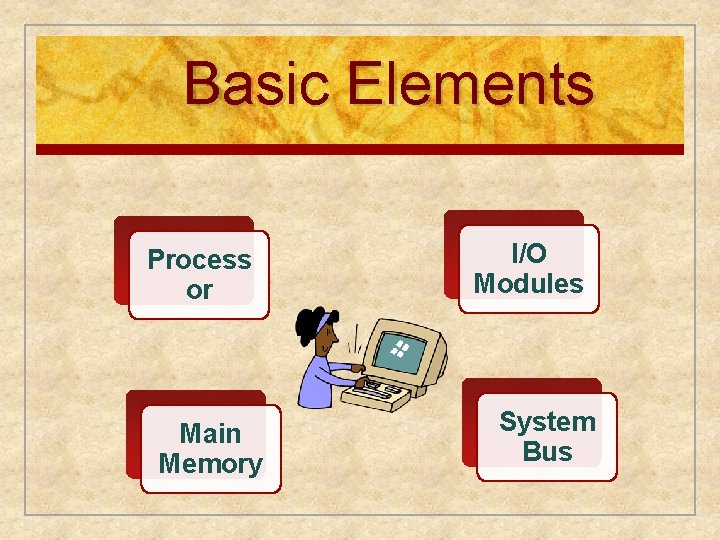
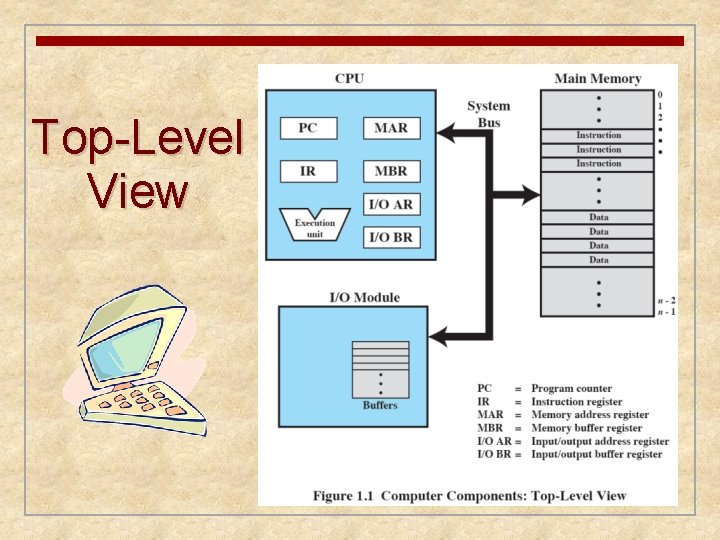
Basic Elements Process or Main Memory I/O Modules System Bus
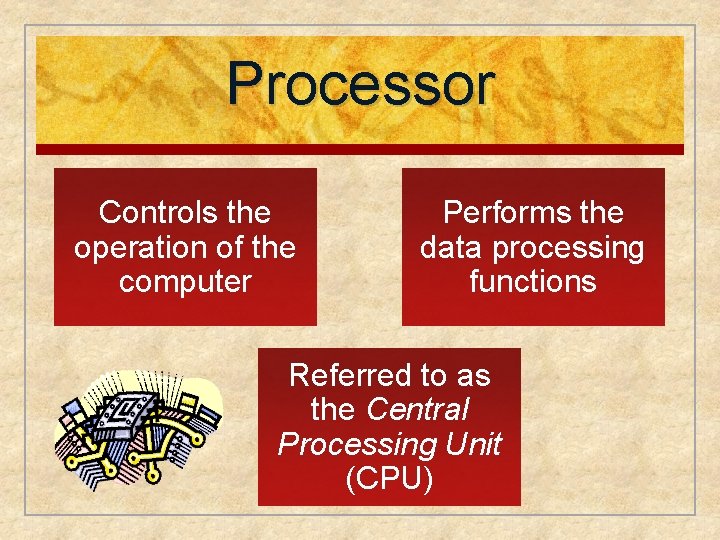
Processor Controls the operation of the computer Performs the data processing functions Referred to as the Central Processing Unit (CPU)
Main Memory n. Volatile n. Contents of the memory is lost when the computer is shut down n. Referred to as real memory or primary memory
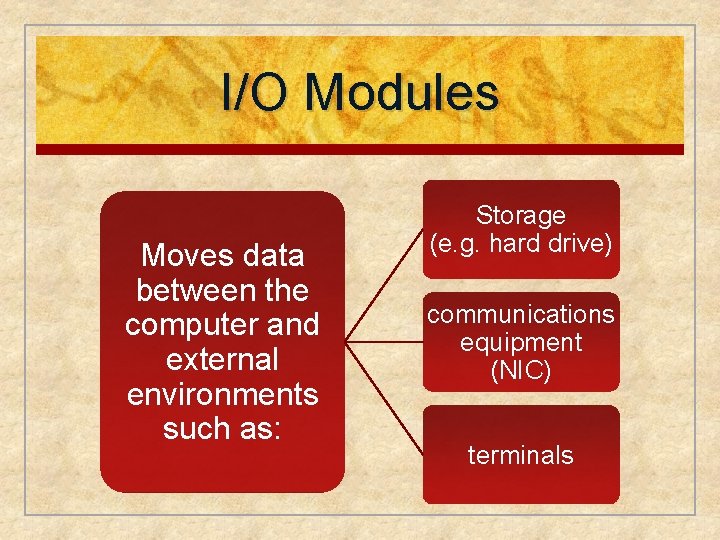
I/O Modules Moves data between the computer and external environments such as: Storage (e. g. hard drive) communications equipment (NIC) terminals
System Bus n. Provides for communication among processors, main memory, and I/O modules
Top-Level View
Microprocessor n Invention that brought about desktop and handheld computing n Processor on a single chip n Fastest general purpose processor n Multiprocessors n Each chip contains multiple processors (cores)
Graphical Processing Units (GPU’s) n Provide efficient computation on arrays of data using Single-Instruction Multiple Data (SIMD) techniques n Used for general numerical processing n Physics simulations for games n Computations on large spreadsheets G P U
Digital Signal Processors (DSPs) n Deal with streaming signals such as audio or video n Used to be embedded in devices like modems n Encoding/decoding speech and video (codecs) n Support for encryption and security D S P
System on a Chip (So. C) n To satisfy the requirements of handheld devices, the microprocessor is giving way to the So. C n Components such as DSPs, GPUs, codecs and main memory, in addition to the CPUs and caches, are on the same chip
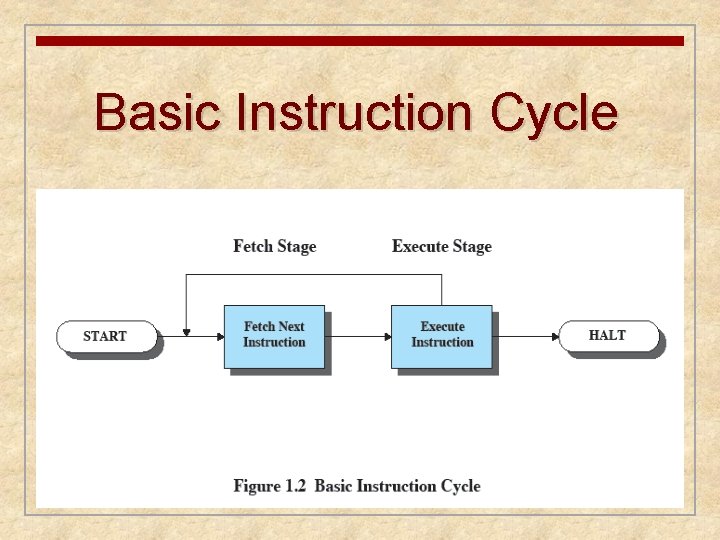
Instruction Execution n. A program consists of a set of instructions stored in memory Two steps: • processor reads (fetches) instructions from memory • processor executes each instruction
Basic Instruction Cycle
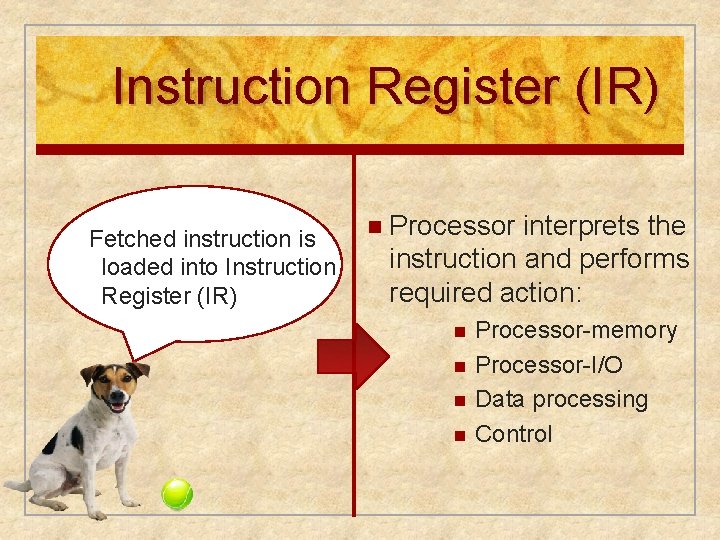
Instruction Fetch and Execute n The processor fetches the instruction from memory n Program counter (PC) holds address of the instruction to be fetched next § PC is incremented after each fetch
Instruction Register (IR) Fetched instruction is loaded into Instruction Register (IR) n Processor interprets the instruction and performs required action: n n Processor-memory Processor-I/O Data processing Control
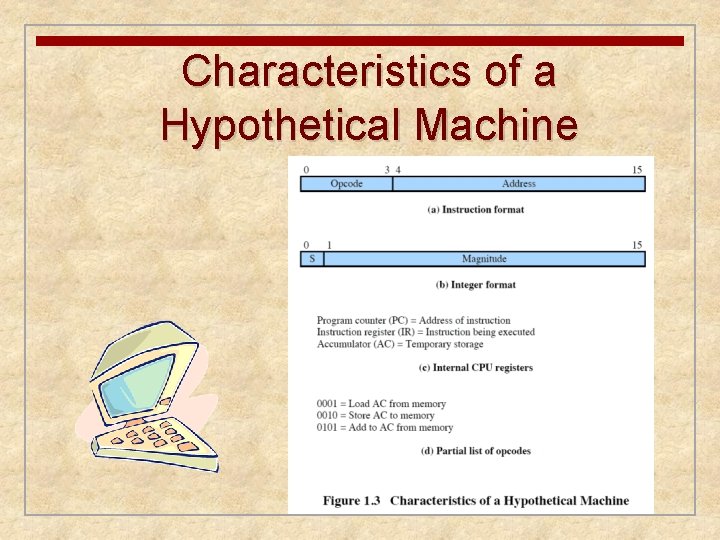
Characteristics of a Hypothetical Machine
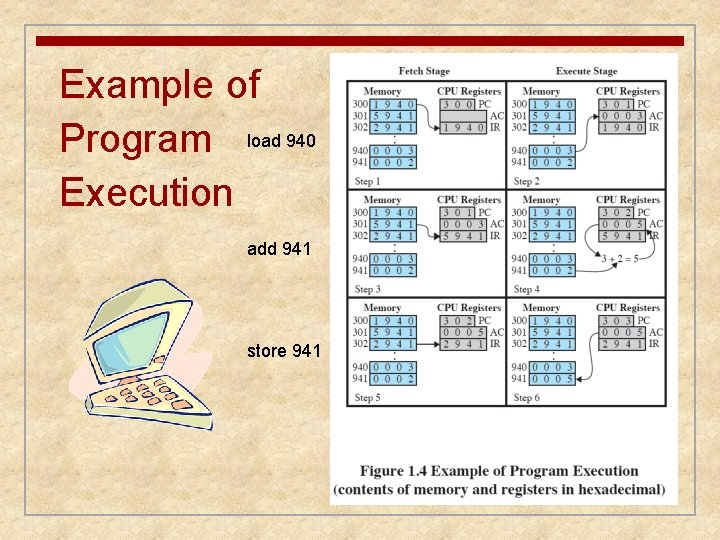
Example of Program load 940 Execution add 941 store 941
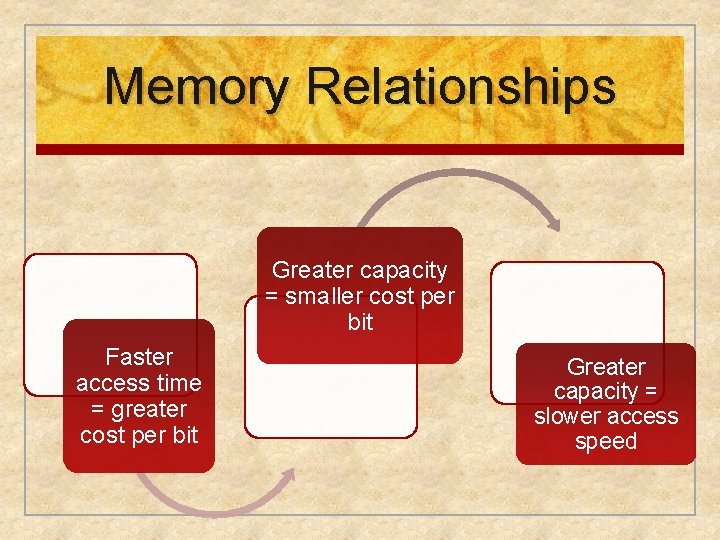
Memory Hierarchy n Major constraints in memory ◆ amount ◆ speed ◆ Expense (cost) n Memory must be able to keep up with the processor n Cost of memory must be reasonable in relationship to the other components
Memory Relationships Greater capacity = smaller cost per bit Faster access time = greater cost per bit Greater capacity = slower access speed
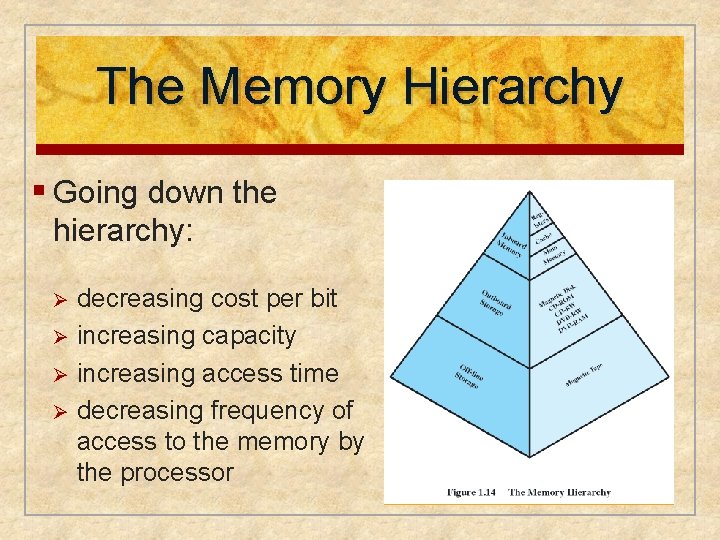
The Memory Hierarchy § Going down the hierarchy: decreasing cost per bit Ø increasing capacity Ø increasing access time Ø decreasing frequency of access to the memory by the processor Ø
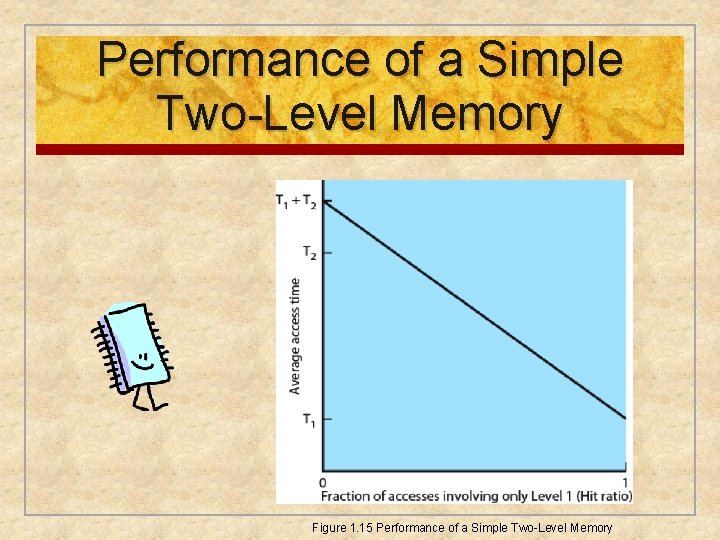
Performance of a Simple Two-Level Memory Figure 1. 15 Performance of a Simple Two-Level Memory
Principle of Locality n Memory references by the processor tend to cluster n Data is organized so that the percentage of accesses to each successively lower level is substantially less than that of the level above n Can be applied across more than two levels of memory
Types of Locality n Spatial locality: tendency of execution to involve a number of memory locations that are clustered n Temporal locality: tendency for a processor to access memory locations that have been used recently
Clicker: Locality Processor access instructions/data sequentially. . . A. Spatial locality: tendency of execution to involve a number of memory locations that are clustered B. Temporal locality: tendency for a processor to access memory locations that have been used recently
Clicker: Locality When an iteration (for) loop is executed. . . A. Spatial locality: tendency of execution to involve a number of memory locations that are clustered B. Temporal locality: tendency for a processor to access memory locations that have been used recently
How to Exploit Locality? n Spatial locality: use larger cache and prefetching n Temporal locality: keep recently used instruction/data in cache and exploit cache hierarchy
Secondar y Memory Also referred to as auxiliary memory • External • Nonvolatile • Used to store program and data files
Cache Memory n Invisible to the OS n Interacts with other memory management hardware n Processor must access memory at least once per instruction cycle n Processor execution is limited by memory cycle time n Exploit the principle of locality with a small, fast memory
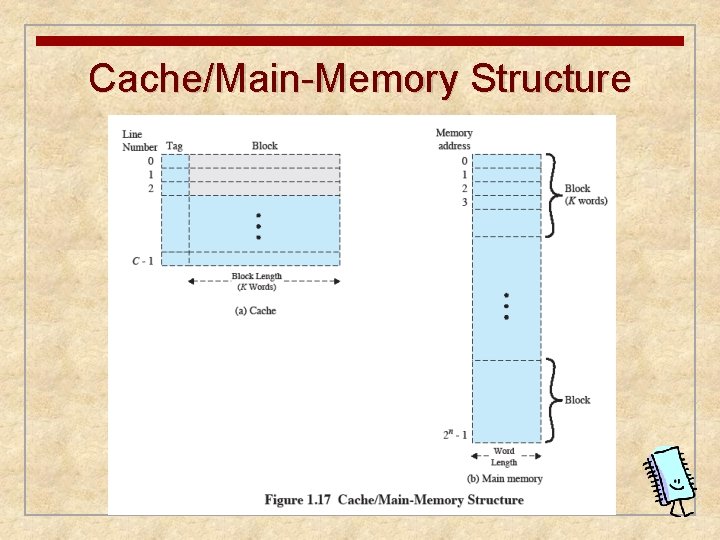
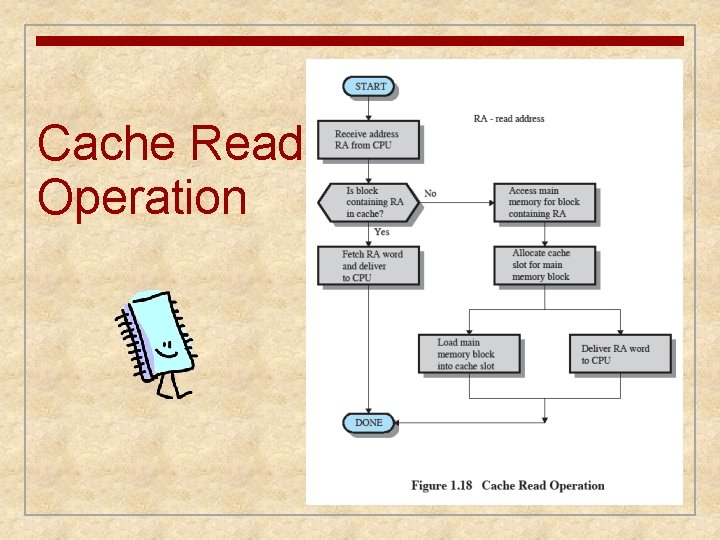
Cache Principles n Contains a copy of a portion of main memory n Processor first checks cache n If not found, a block of memory is read into cache n Because of locality of reference, it is likely that many of the future memory references will be to other bytes in the block
Cache and
Cache/Main-Memory Structure
Cache Read Operation
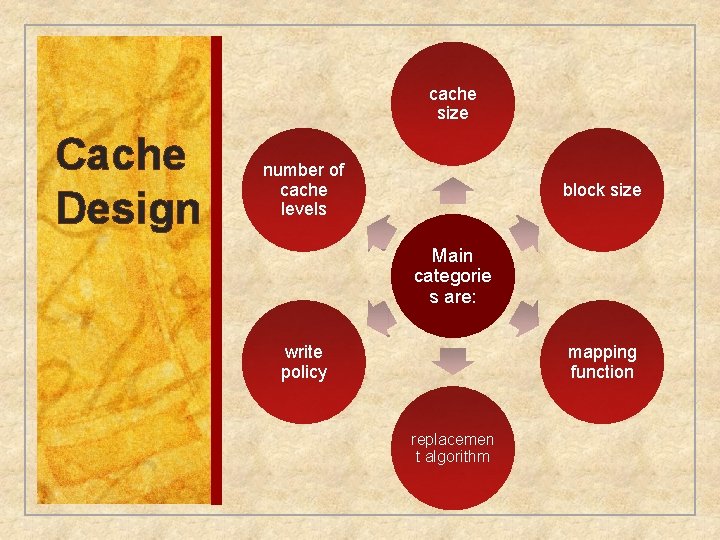
cache size Cache Design number of cache levels block size Main categorie s are: write policy mapping function replacemen t algorithm
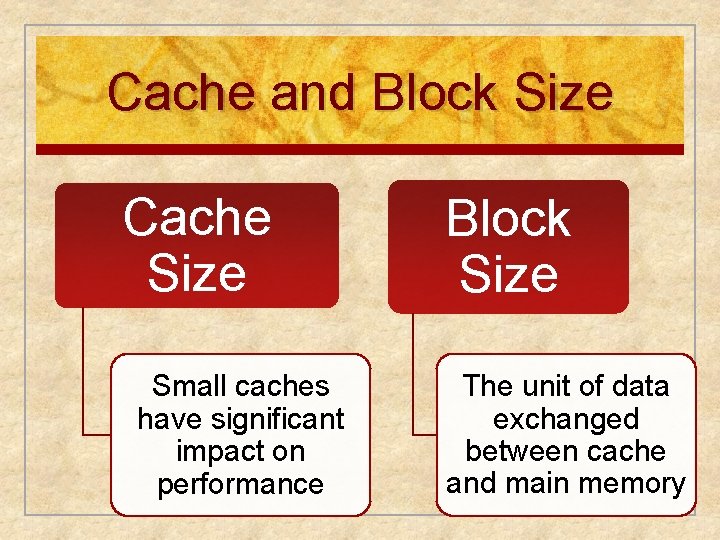
Cache and Block Size Cache Size Small caches have significant impact on performance Block Size The unit of data exchanged between cache and main memory
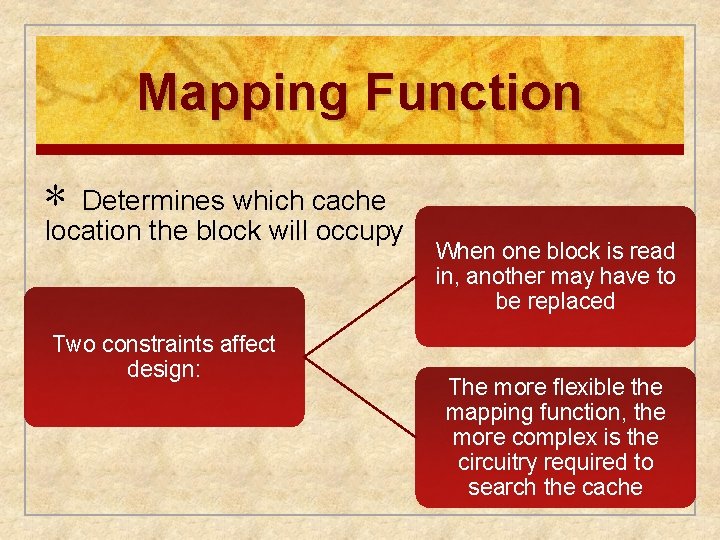
Mapping Function ∗ Determines which cache location the block will occupy Two constraints affect design: When one block is read in, another may have to be replaced The more flexible the mapping function, the more complex is the circuitry required to search the cache
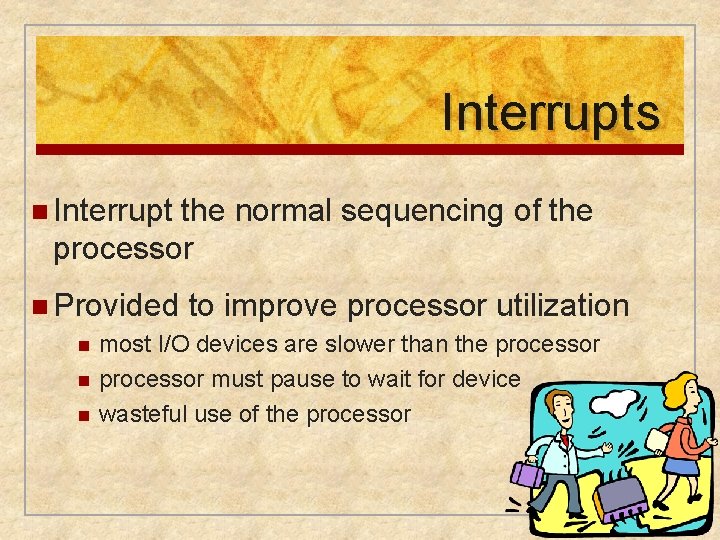
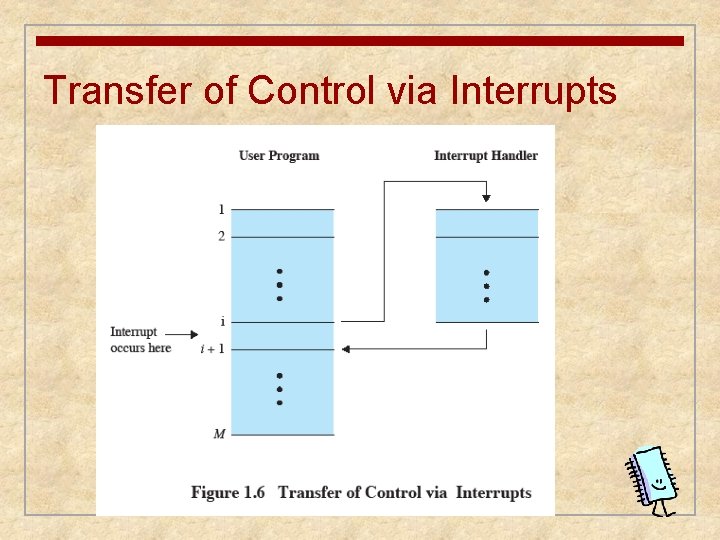
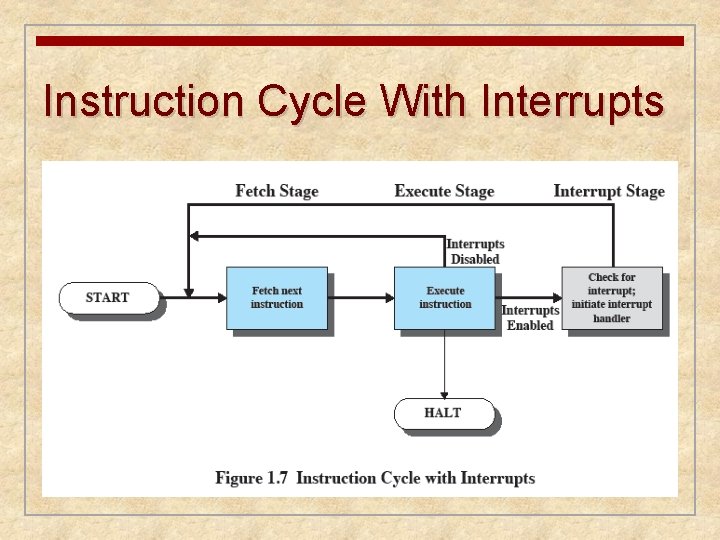
Interrupts n Interrupt the normal sequencing of the processor n Provided to improve processor utilization n most I/O devices are slower than the processor n processor must pause to wait for device n wasteful use of the processor
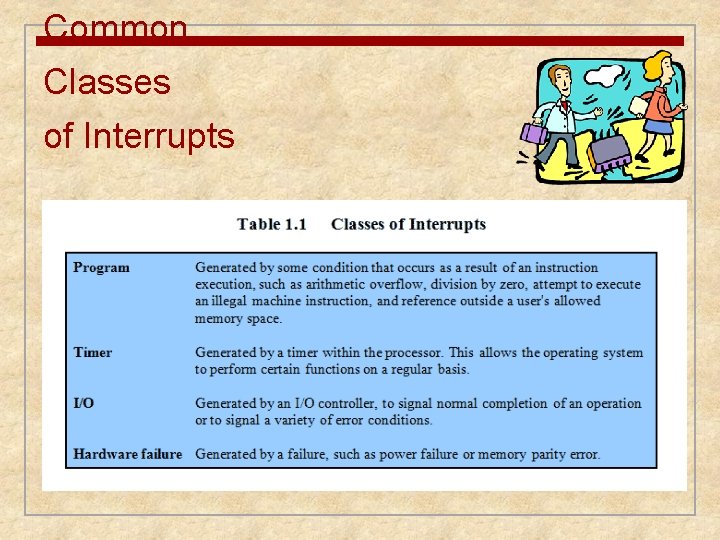
Common Classes of Interrupts
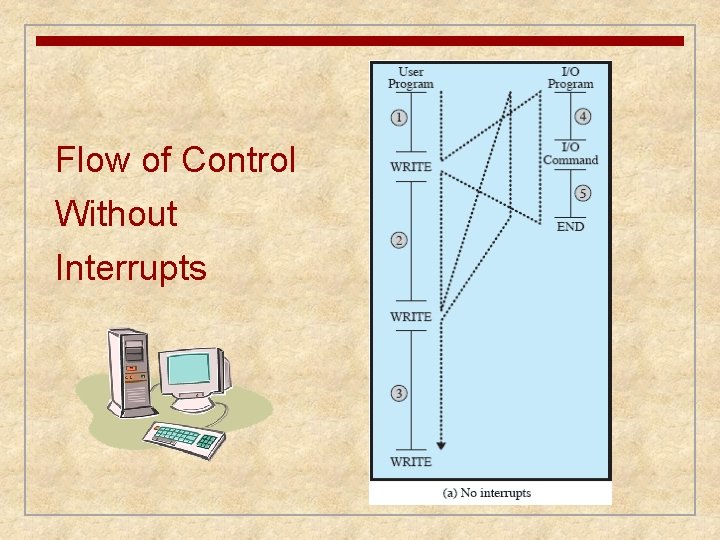
Flow of Control Without Interrupts
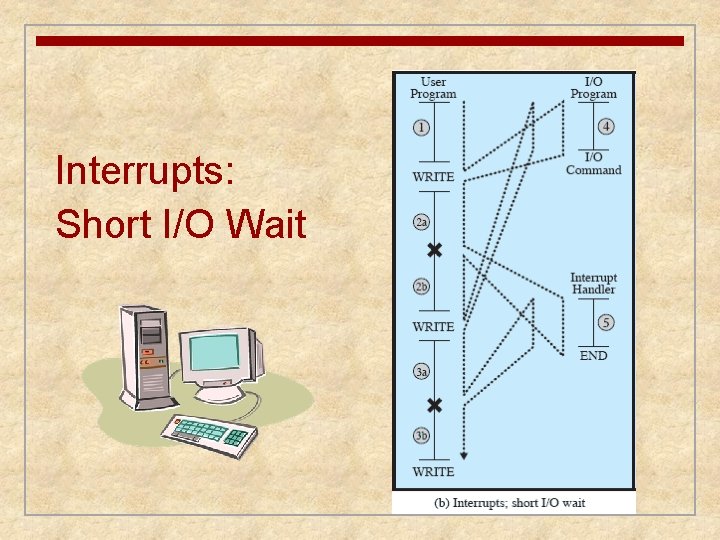
Interrupts: Short I/O Wait
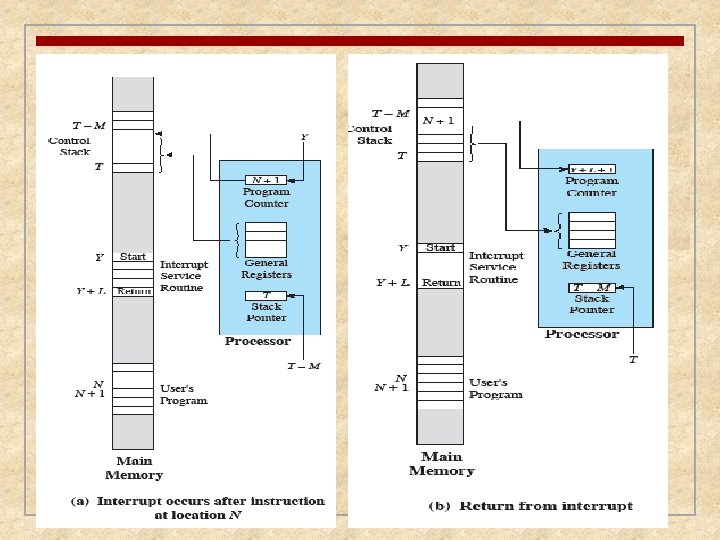
Transfer of Control via Interrupts
Instruction Cycle With Interrupts
Program Timing:
Program Timing:
Program Timing:
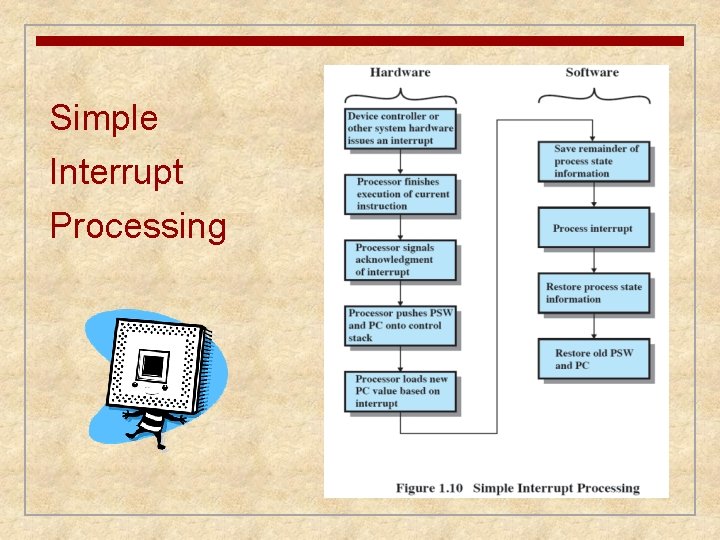
Simple Interrupt Processing
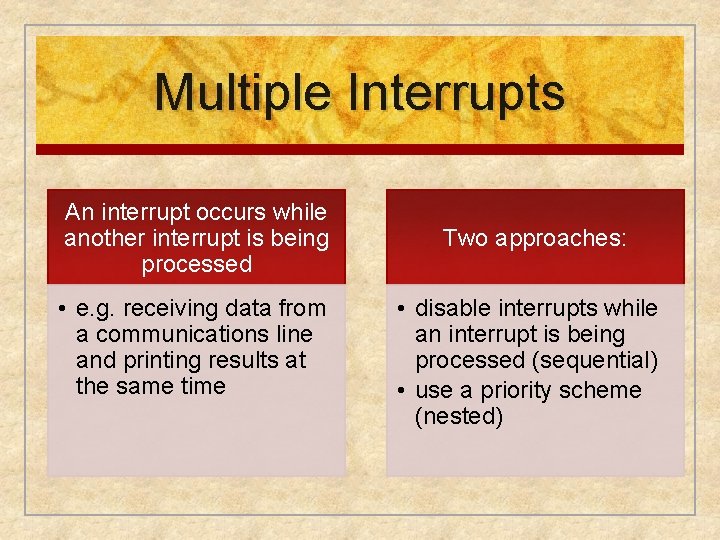
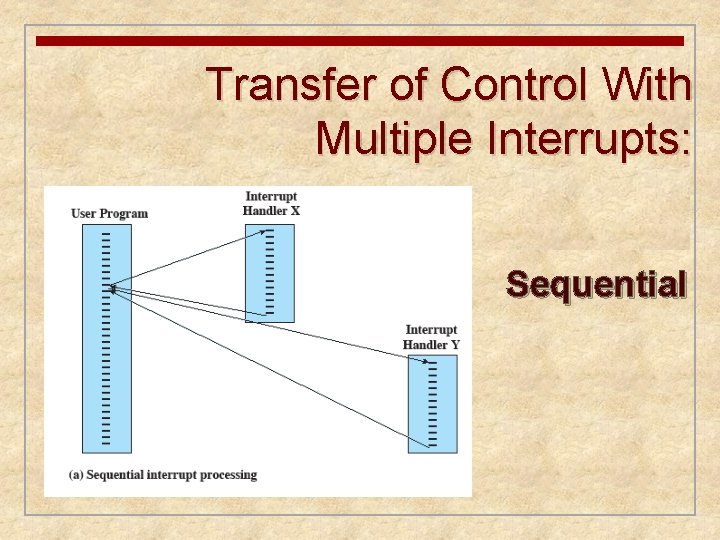
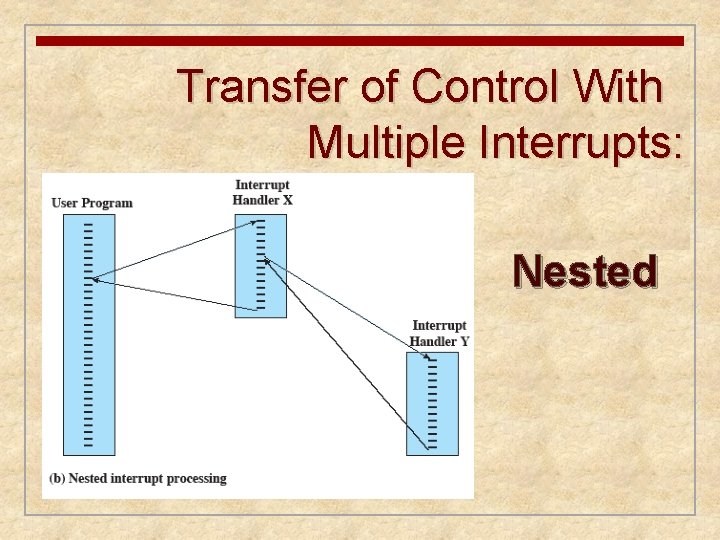
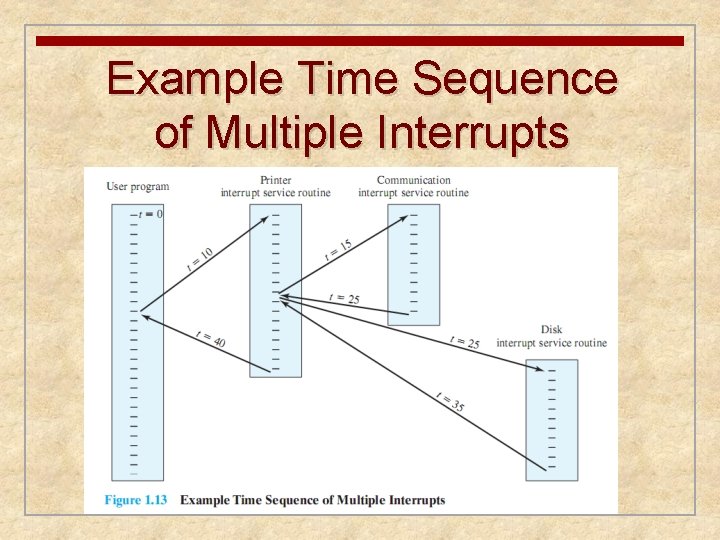
Multiple Interrupts An interrupt occurs while another interrupt is being processed • e. g. receiving data from a communications line and printing results at the same time Two approaches: • disable interrupts while an interrupt is being processed (sequential) • use a priority scheme (nested)
Transfer of Control With Multiple Interrupts: Sequential
Transfer of Control With Multiple Interrupts: Nested
Example Time Sequence of Multiple Interrupts
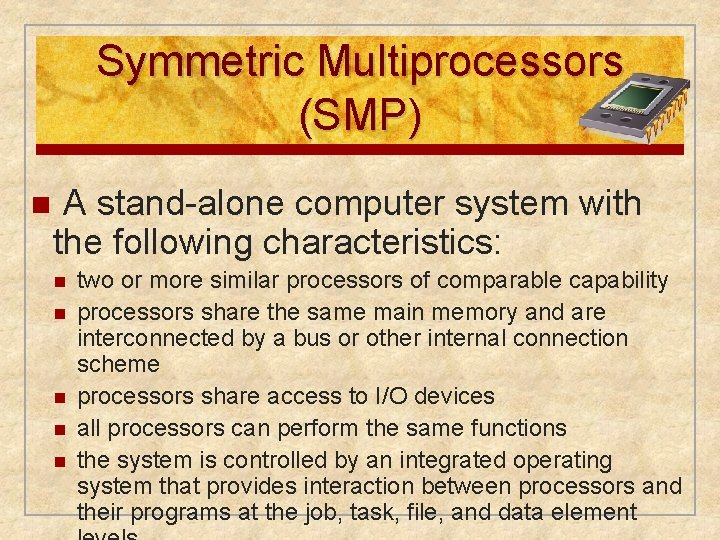
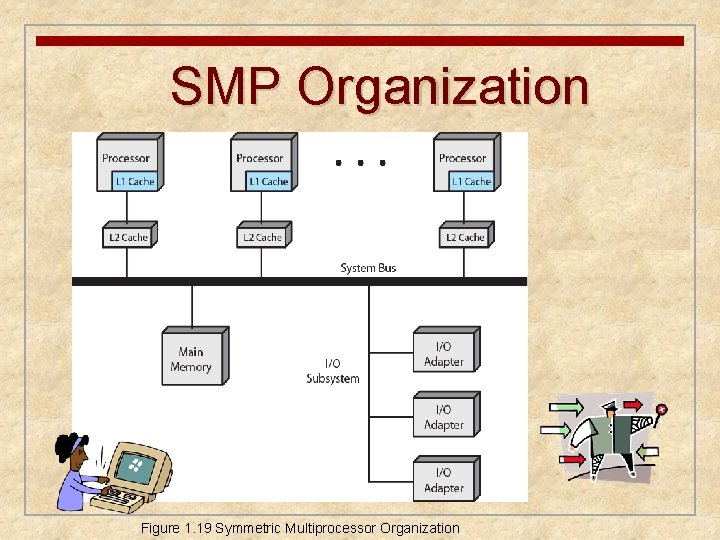
Symmetric Multiprocessors (SMP) n A stand-alone computer system with the following characteristics: n n n two or more similar processors of comparable capability processors share the same main memory and are interconnected by a bus or other internal connection scheme processors share access to I/O devices all processors can perform the same functions the system is controlled by an integrated operating system that provides interaction between processors and their programs at the job, task, file, and data element
SMP Organization Figure 1. 19 Symmetric Multiprocessor Organization
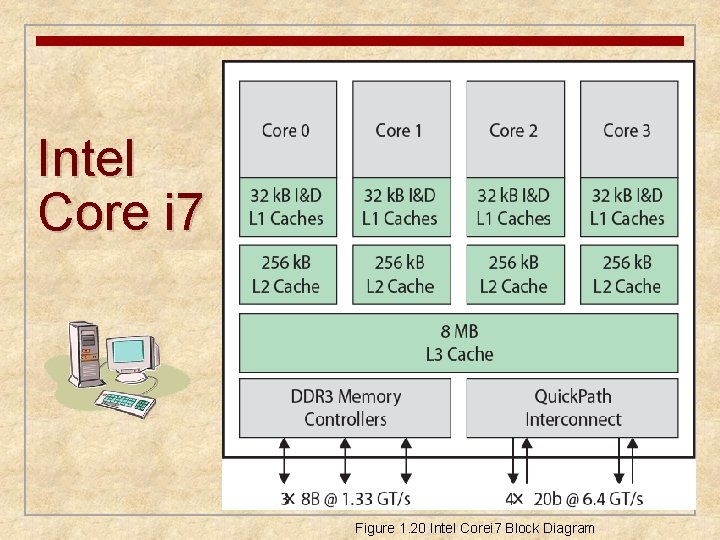
Multicore Computer n Also known as a chip multiprocessor n Combines two or more processors (cores) on a single piece of silicon (die) n n In each core consists of all of the components of an independent processor addition, multicore chips also include L 2 cache and in some cases L 3 cache
Intel Core i 7 Figure 1. 20 Intel Corei 7 Block Diagram
Summary n Basic Elements n processor, main memory, I/O modules, system bus n GPUs, SIMD, DSPs, So. C n Instruction execution n processor-memory, processor-I/O, data processing, control n Interrupt/Interrupt Processing n Memory Hierarchy n Cache/cache principles and designs n Multiprocessor/multicore