
Operating Systems Internals and Design Principles 6E William




- Slides: 48
Operating Systems: Internals and Design Principles, 6/E William Stallings Chapter 9 Uniprocessor Scheduling Patricia Roy Manatee Community College, Venice, FL © 2008, Prentice Hall
Aim of Scheduling • Assign processes to be executed by the processor(s) • Response time • Throughput • Processor efficiency
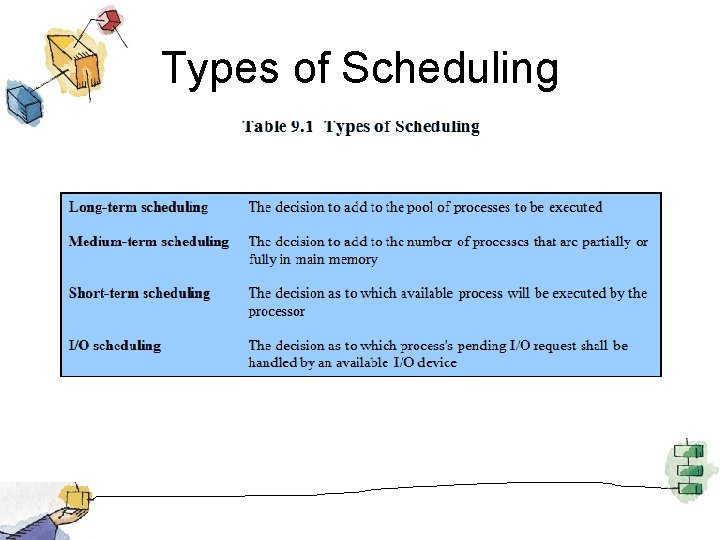
Types of Scheduling
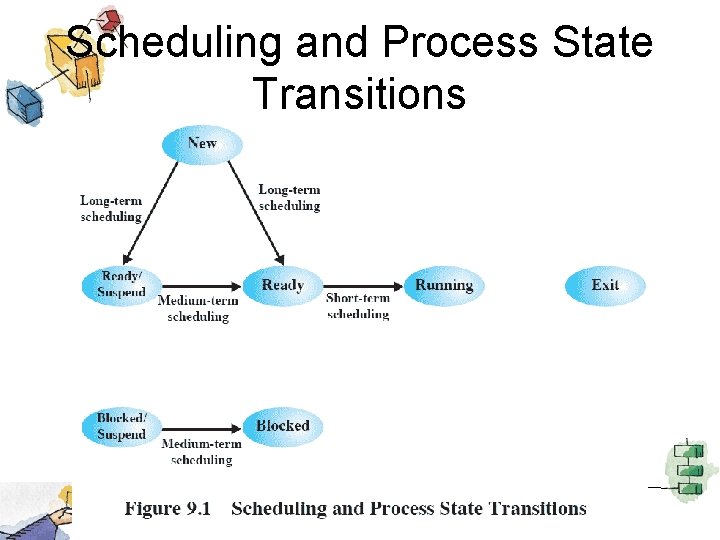
Scheduling and Process State Transitions
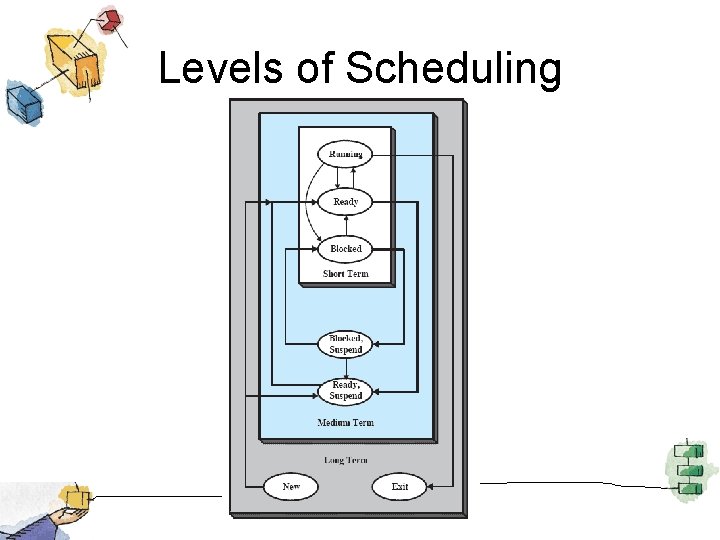
Levels of Scheduling
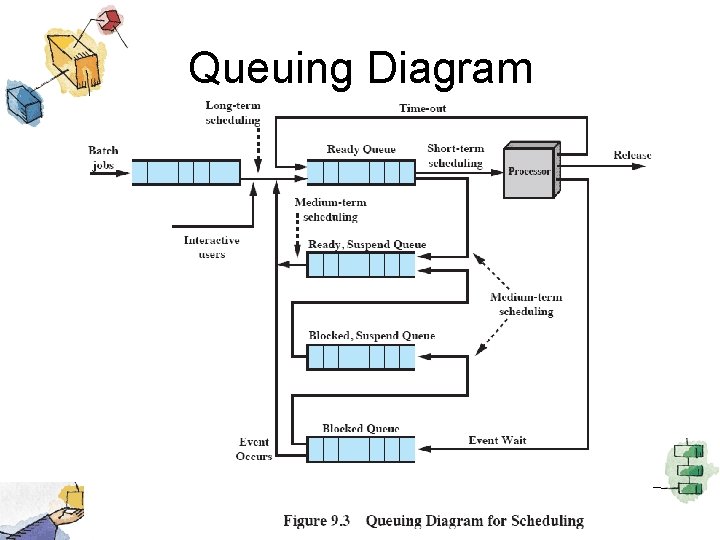
Long-Term Scheduling • Determines which programs are admitted to the system for processing • Controls the degree of multiprogramming • More processes, smaller percentage of time each process is executed
Medium-Term Scheduling • Part of the swapping function • Based on the need to manage the degree of multiprogramming
Short-Term Scheduling • Known as the dispatcher • Executes most frequently • Invoked when an event occurs – Clock interrupts – I/O interrupts – Operating system calls – Signals
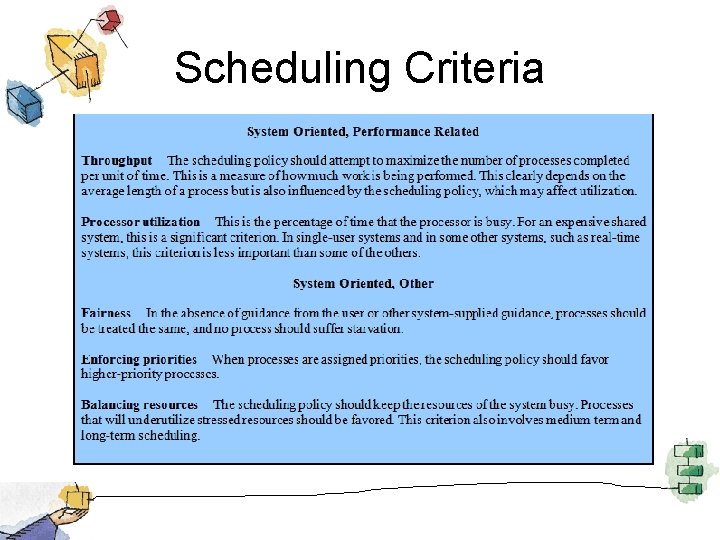
Short-Term Scheduling Criteria • User-oriented – Response Time • Elapsed time between the submission of a request until there is output. • System-oriented – Effective and efficient utilization of the processor
Short-Term Scheduling Criteria • Performance-related – Quantitative – Measurable such as response time and throughput
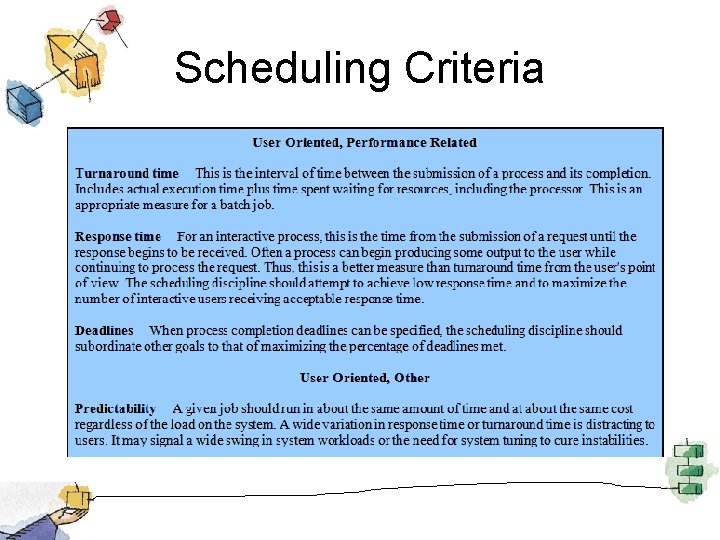
Scheduling Criteria
Scheduling Criteria
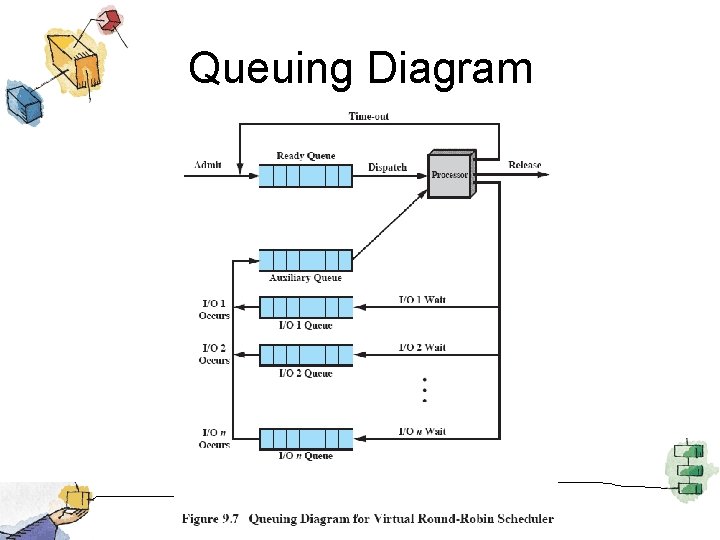
Queuing Diagram
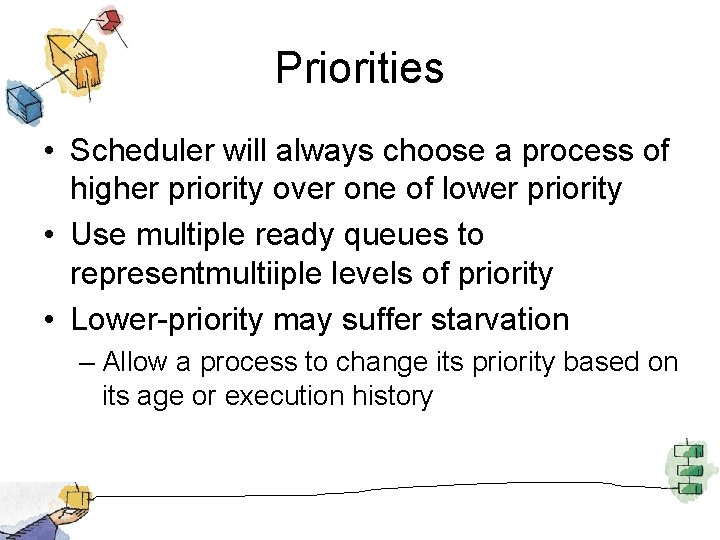
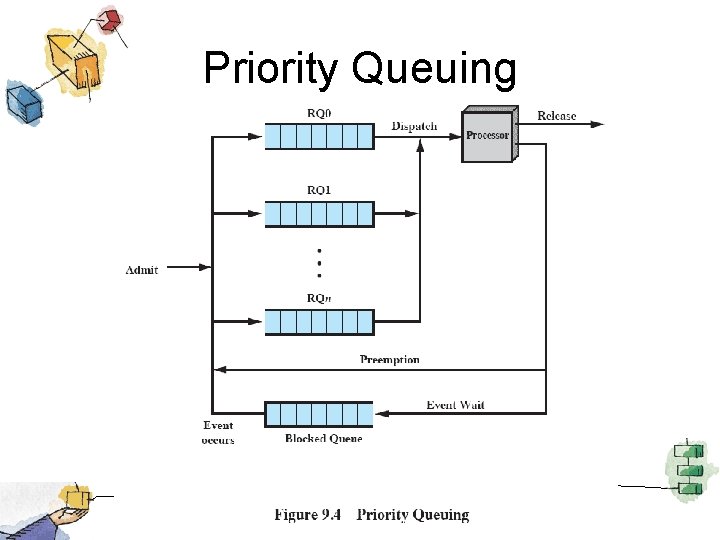
Priorities • Scheduler will always choose a process of higher priority over one of lower priority • Use multiple ready queues to representmultiiple levels of priority • Lower-priority may suffer starvation – Allow a process to change its priority based on its age or execution history
Priority Queuing
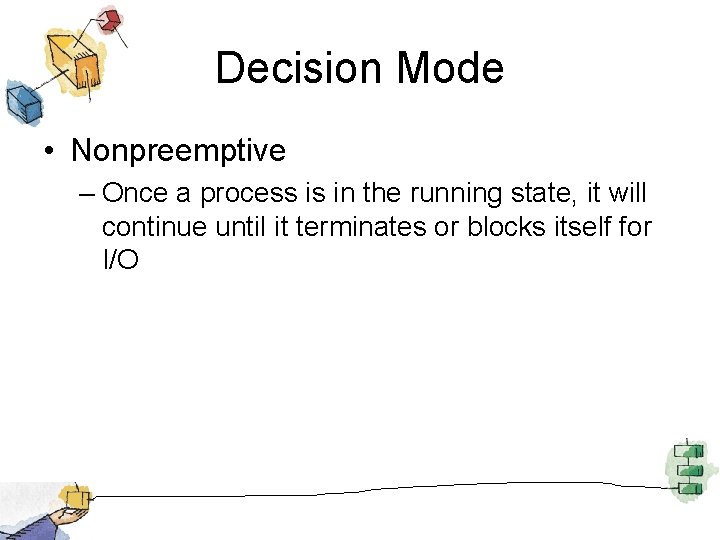
Decision Mode • Nonpreemptive – Once a process is in the running state, it will continue until it terminates or blocks itself for I/O
Decision Mode • Preemptive – Currently running process may be interrupted and moved to the Ready state by the operating system – Allows for better service since any one process cannot monopolize the processor for very long
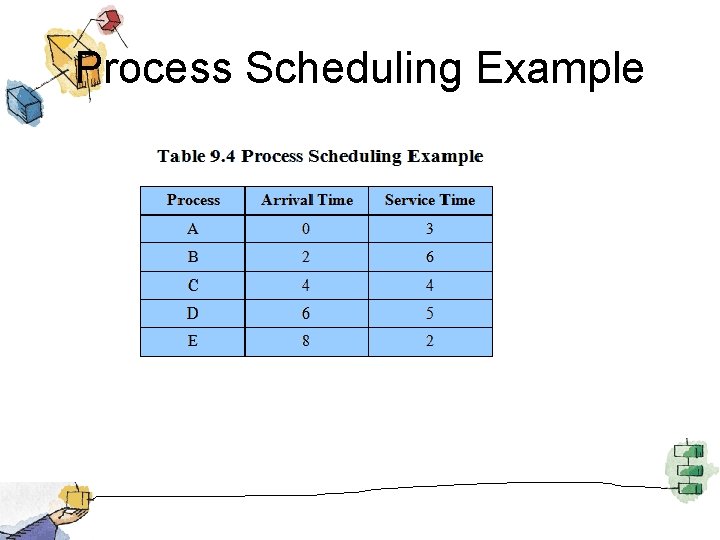
Process Scheduling Example
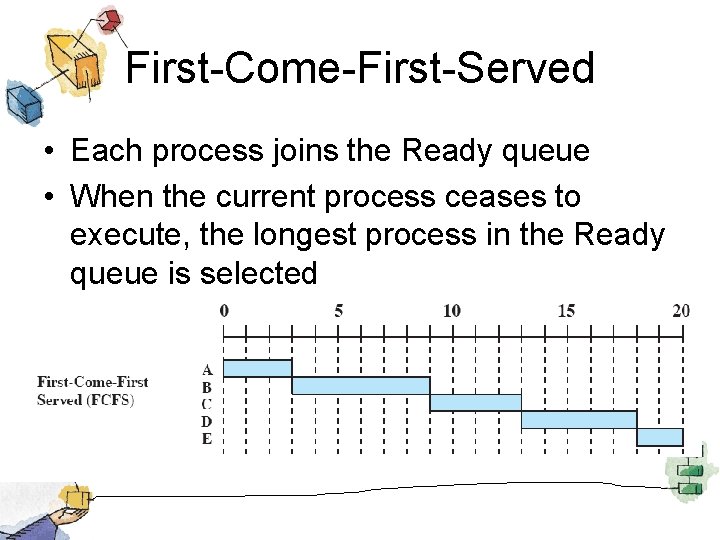
First-Come-First-Served • Each process joins the Ready queue • When the current process ceases to execute, the longest process in the Ready queue is selected
First-Come-First-Served • A short process may have to wait a very long time before it can execute • Favors CPU-bound processes – I/O processes have to wait until CPU-bound process completes
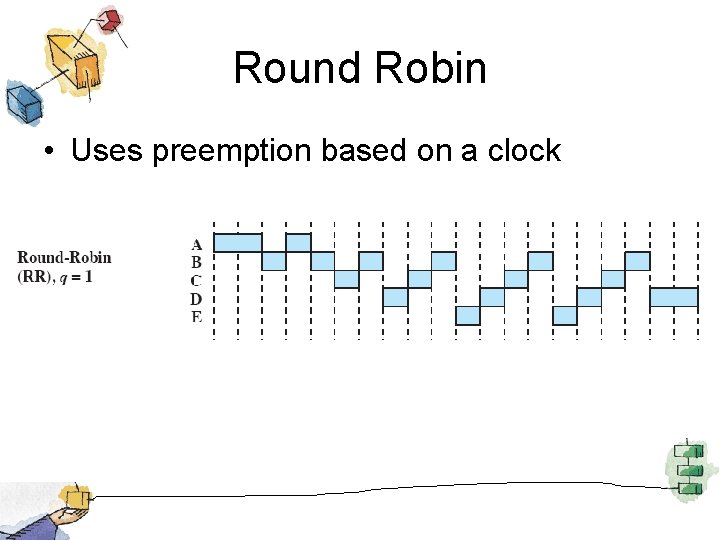
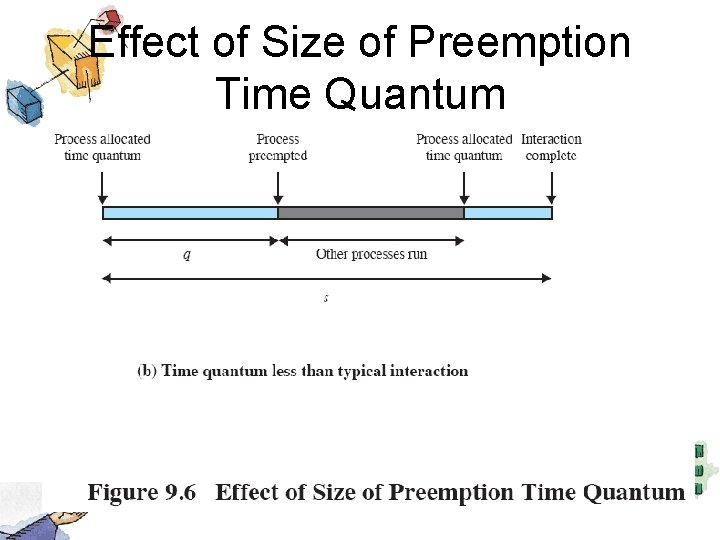
Round Robin • Uses preemption based on a clock
Round Robin • Clock interrupt is generated at periodic intervals • When an interrupt occurs, the currently running process is placed in the ready queue – Next ready job is selected • Known as time slicing
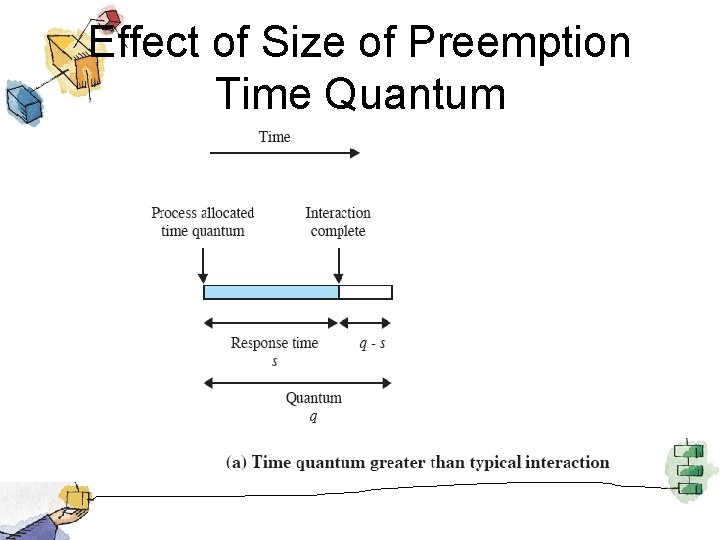
Effect of Size of Preemption Time Quantum
Effect of Size of Preemption Time Quantum
Queuing Diagram
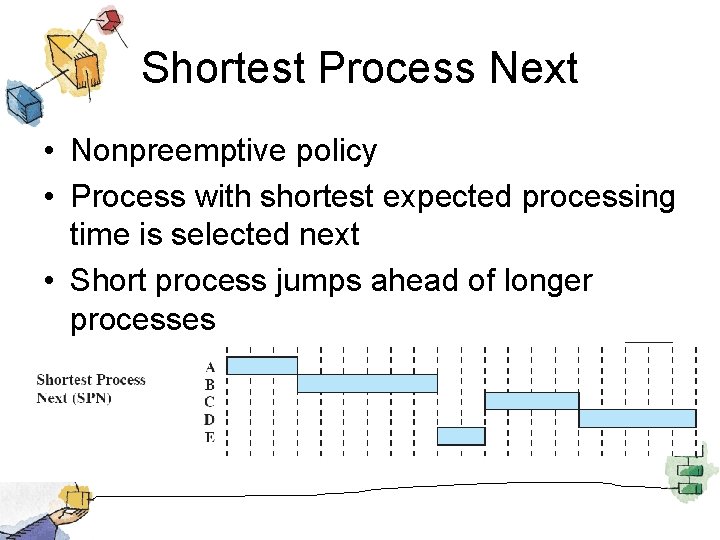
Shortest Process Next • Nonpreemptive policy • Process with shortest expected processing time is selected next • Short process jumps ahead of longer processes
Shortest Process Next • Predictability of longer processes is reduced • If estimated time for process not correct, the operating system may abort it • Possibility of starvation for longer processes
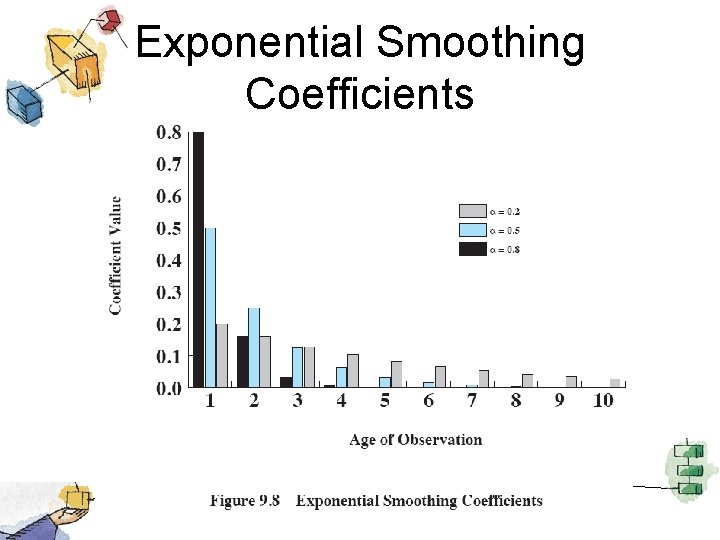
Exponential Smoothing Coefficients
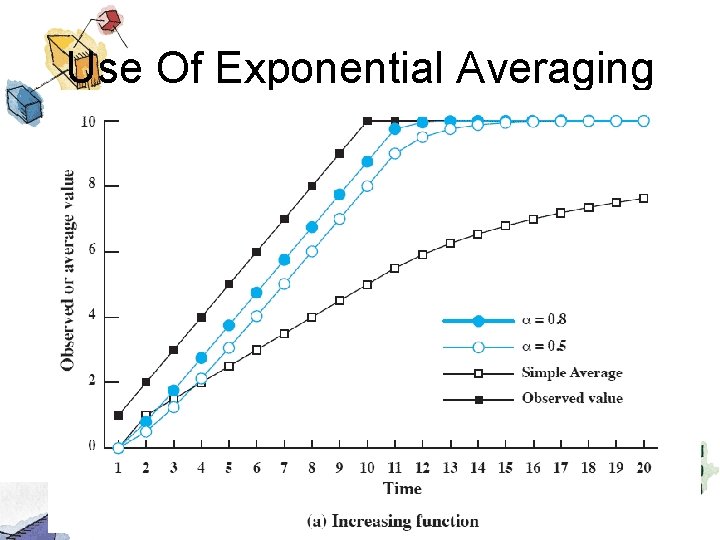
Use Of Exponential Averaging
Use Of Exponential Averaging
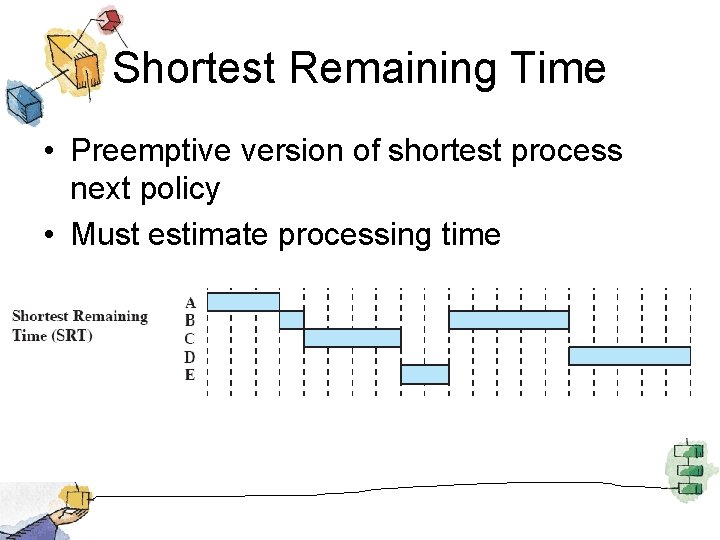
Shortest Remaining Time • Preemptive version of shortest process next policy • Must estimate processing time
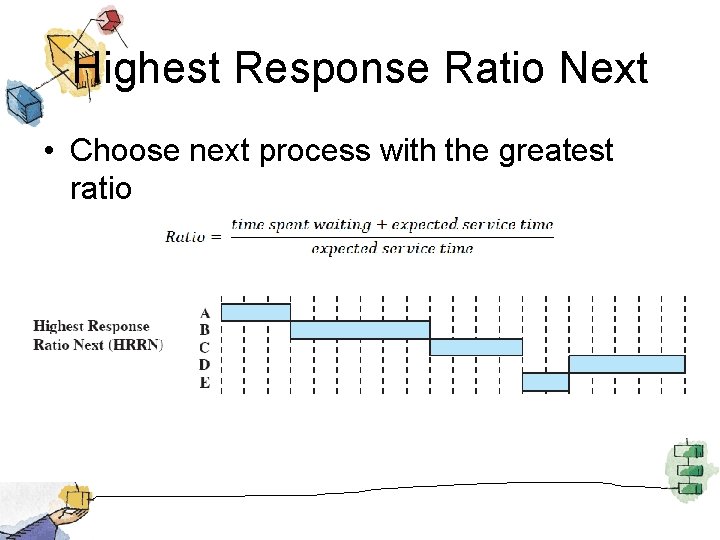
Highest Response Ratio Next • Choose next process with the greatest ratio
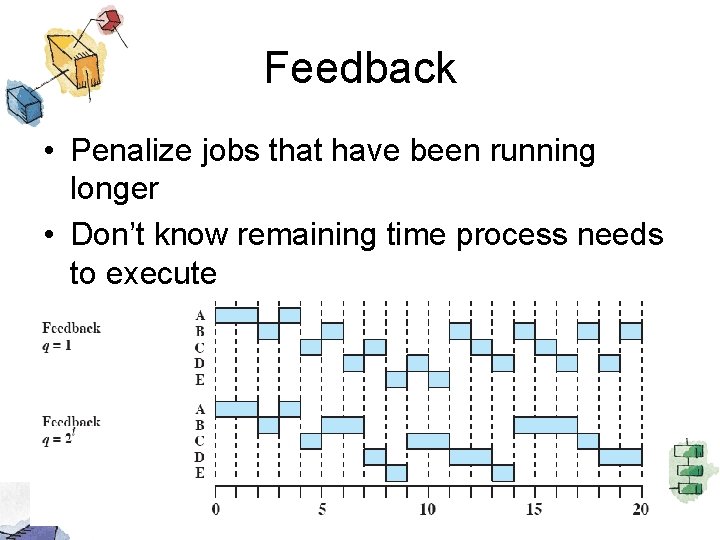
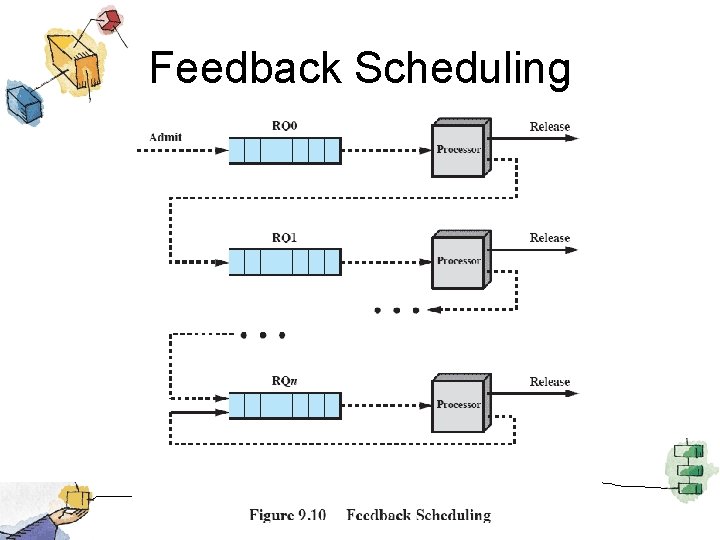
Feedback • Penalize jobs that have been running longer • Don’t know remaining time process needs to execute
Feedback Scheduling
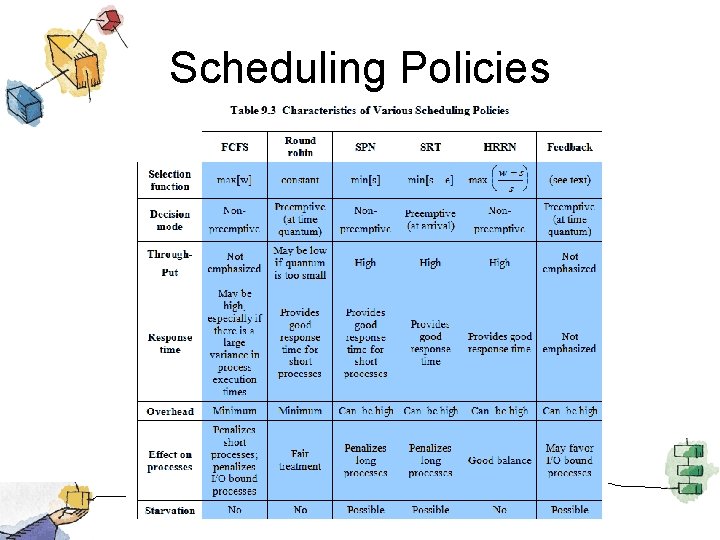
Scheduling Policies
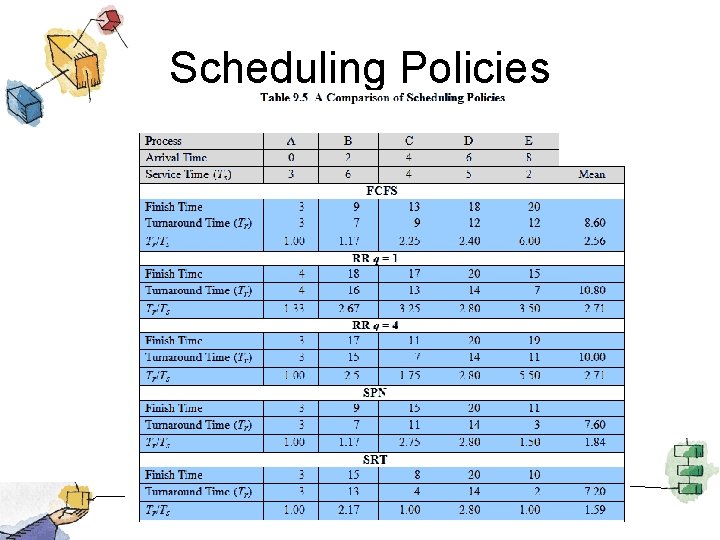
Scheduling Policies
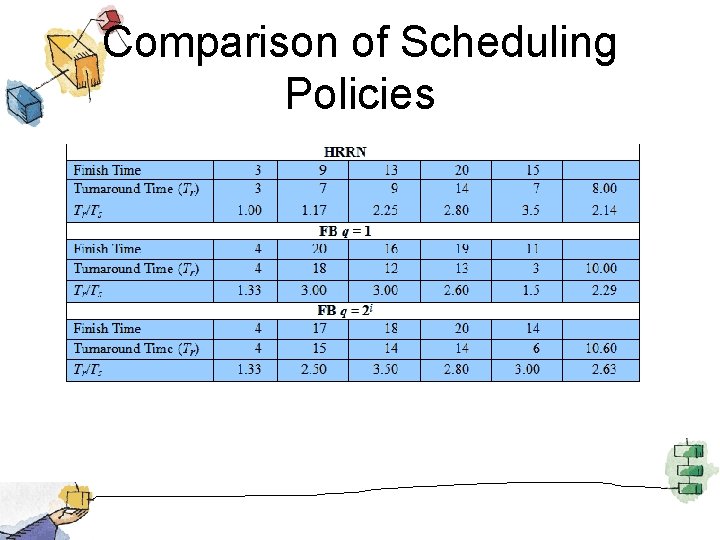
Comparison of Scheduling Policies
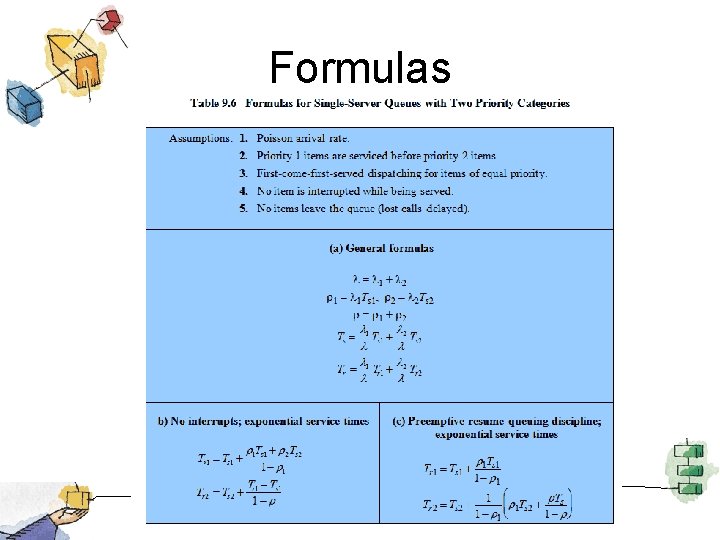
Formulas
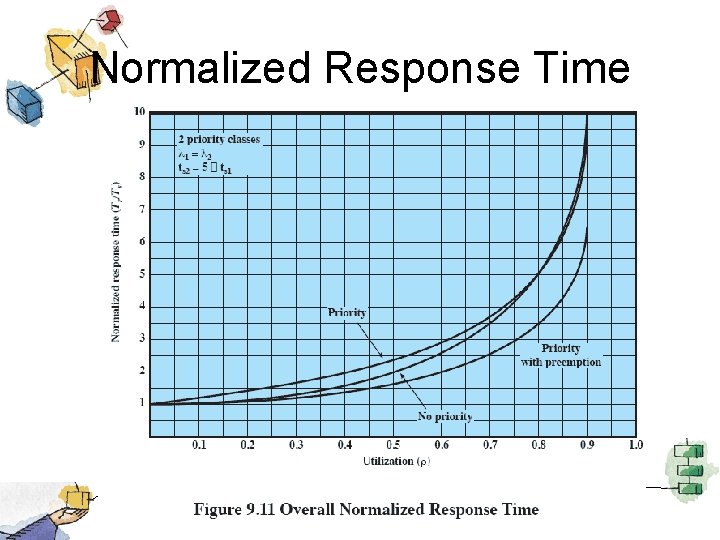
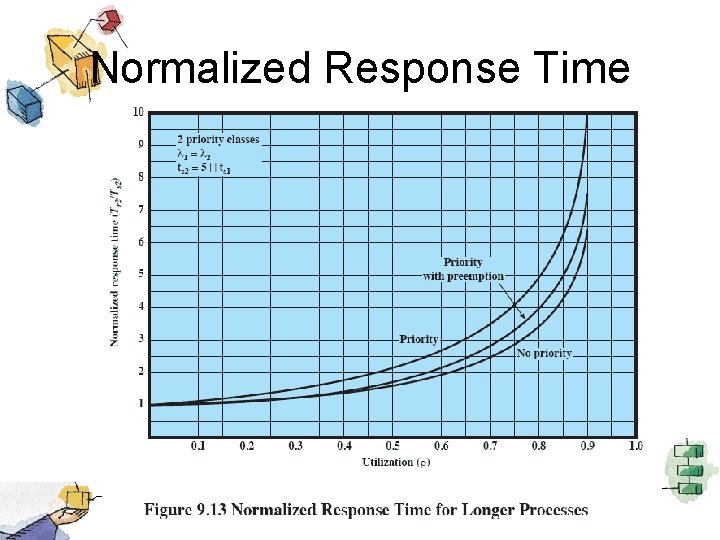
Normalized Response Time
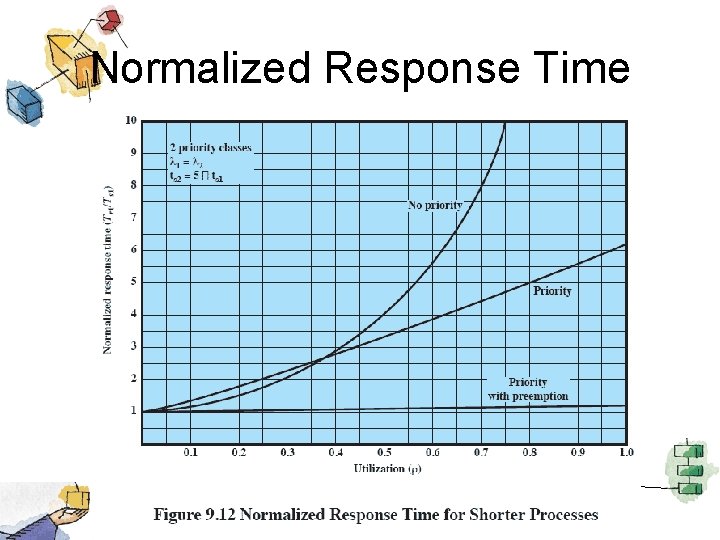
Normalized Response Time
Normalized Response Time
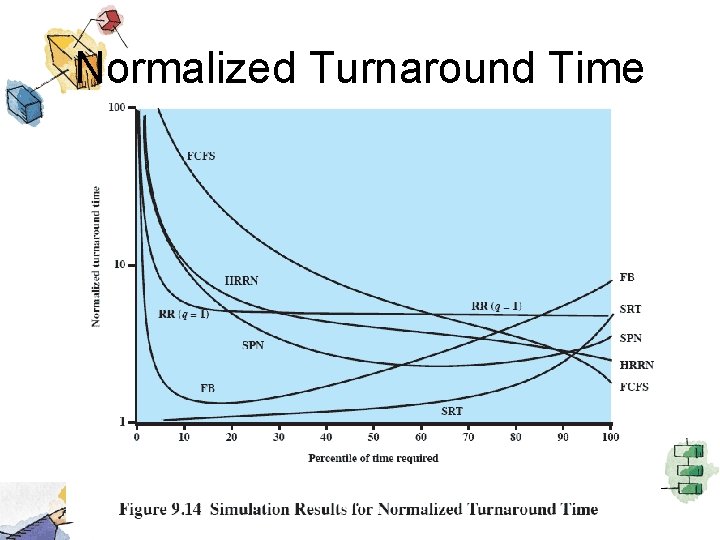
Normalized Turnaround Time
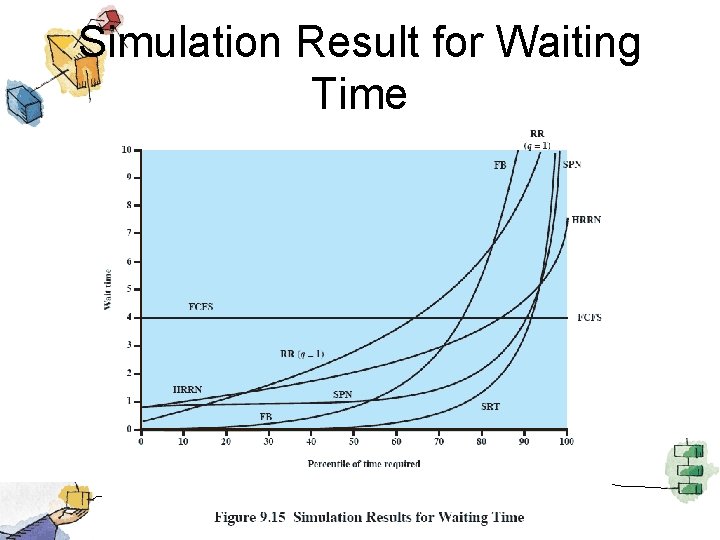
Simulation Result for Waiting Time
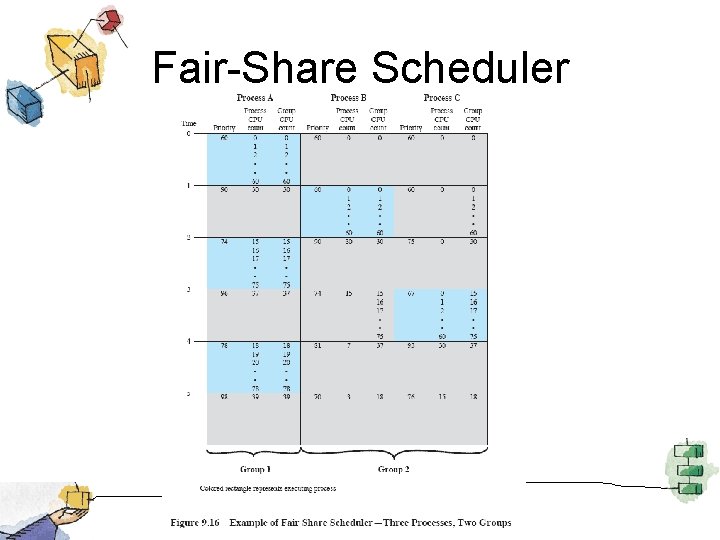
Fair-Share Scheduling • User’s application runs as a collection of processes (threads) • User is concerned about the performance of the application • Need to make scheduling decisions based on process sets
Fair-Share Scheduler
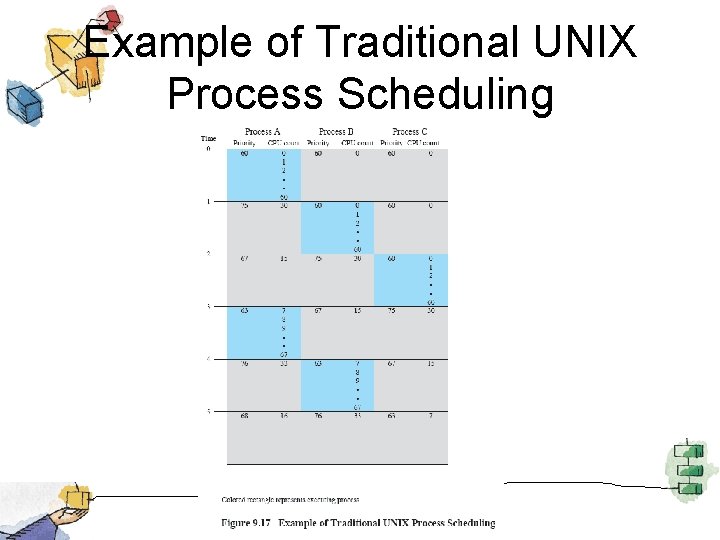
Traditional UNIX Scheduling • Multilevel feedback using round robin within each of the priority queues • If a running process does not block or complete within 1 second, it is preempted • Priorities are recomputed once per second • Base priority divides all processes into fixed bands of priority levels
Bands • Decreasing order of priority – Swapper – Block I/O device control – File manipulation – Character I/O device control – User processes
Example of Traditional UNIX Process Scheduling