
Operating Systems Internals and Design Principles 6E William
- Slides: 35
Operating Systems: Internals and Design Principles, 6/E William Stallings Chapter 14 Computer Security Threats Patricia Roy Manatee Community College, Venice, FL © 2008, Prentice Hall
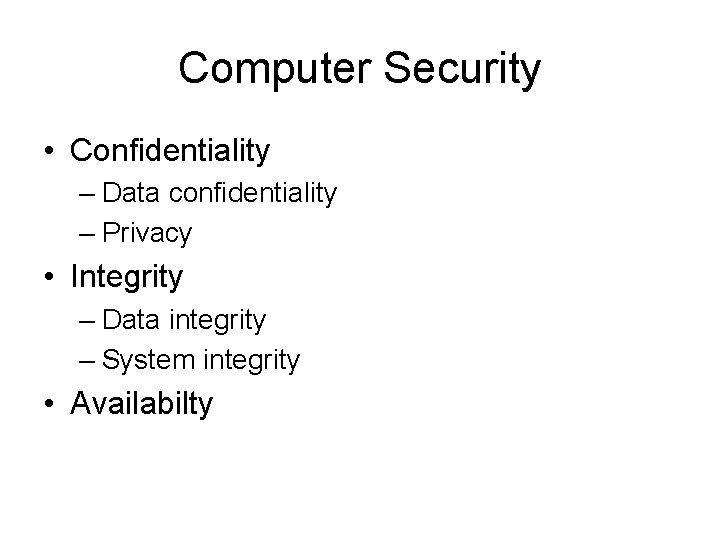
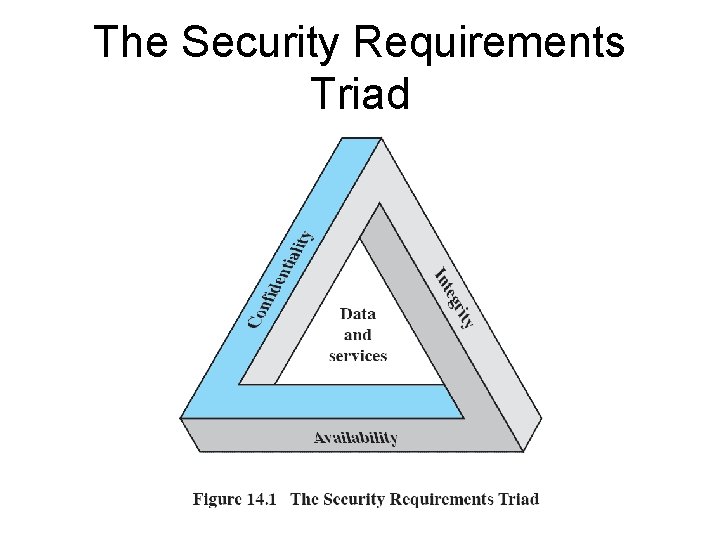
Computer Security • Confidentiality – Data confidentiality – Privacy • Integrity – Data integrity – System integrity • Availabilty
The Security Requirements Triad
Additional Concepts • Authenticity • Accountability
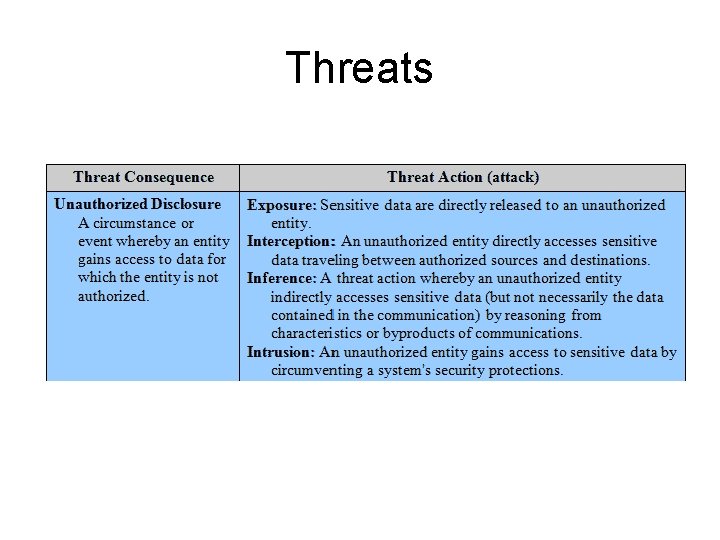
Threats
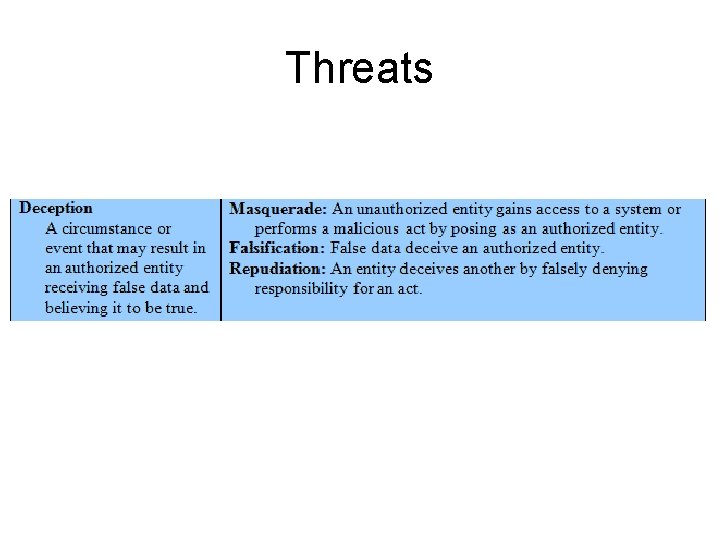
Threats
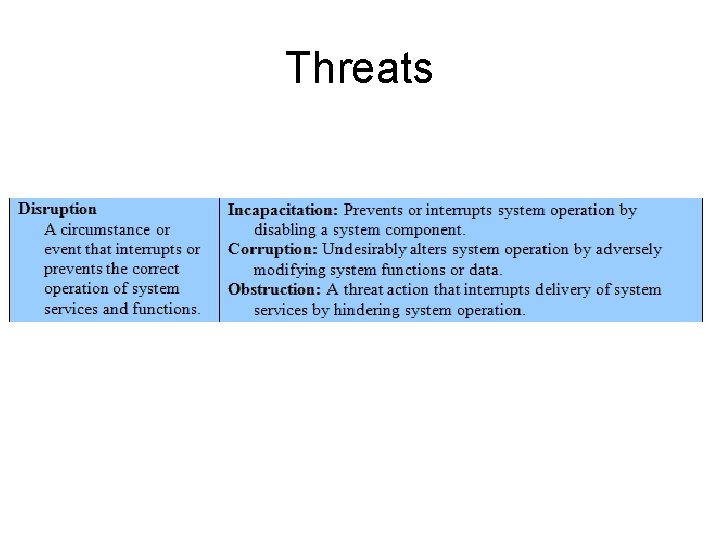
Threats
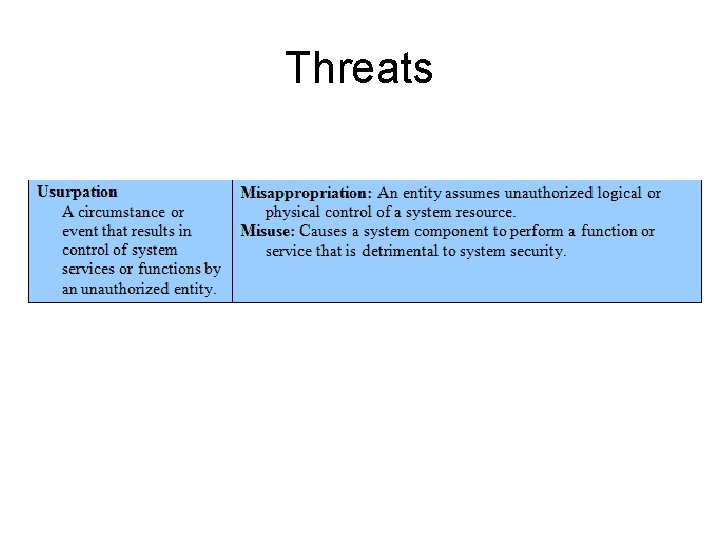
Threats
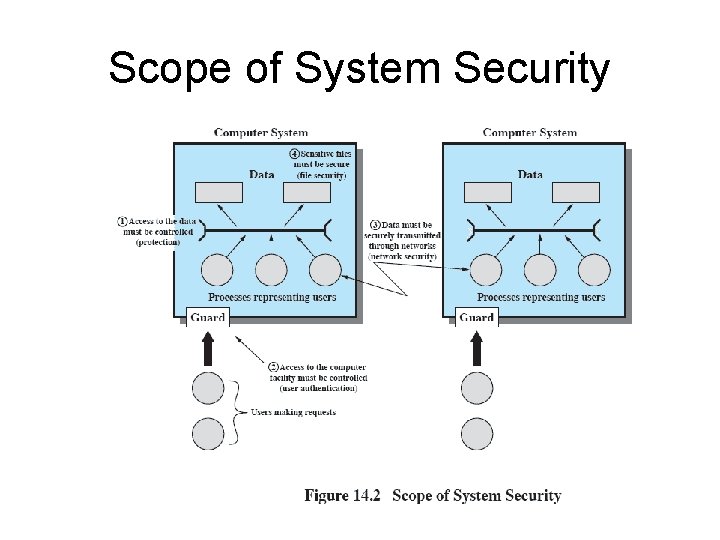
Scope of System Security
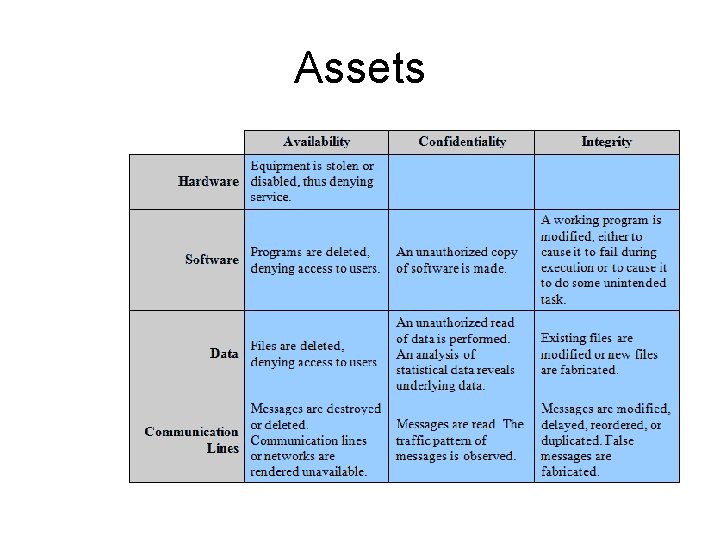
Assets
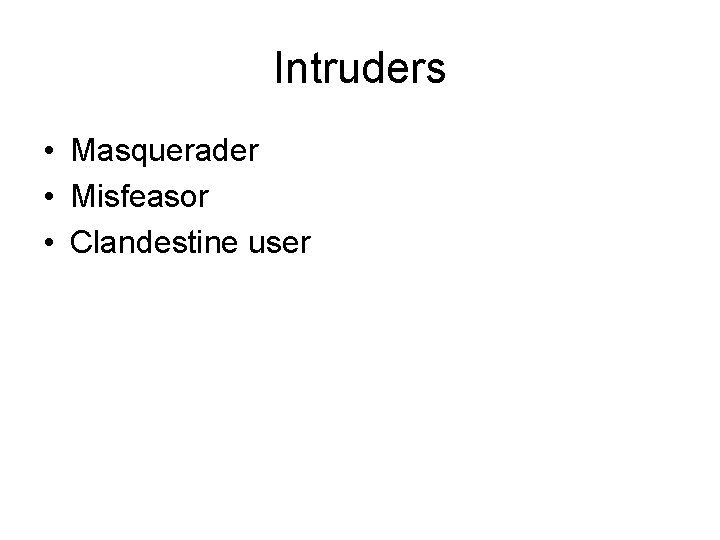
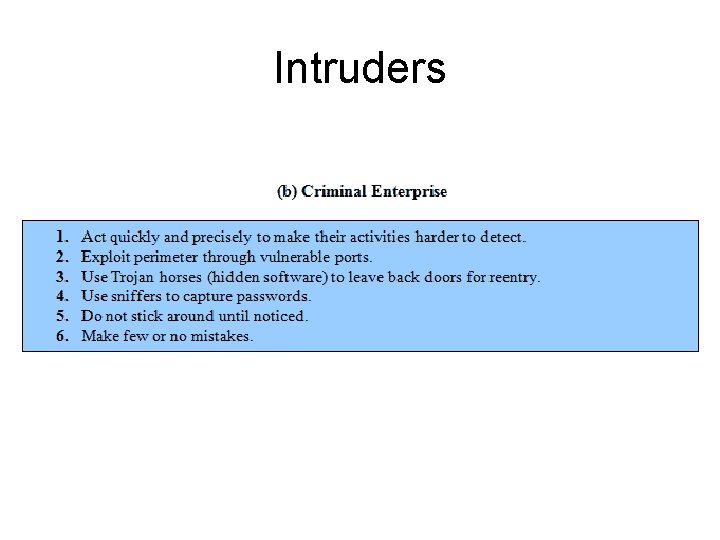
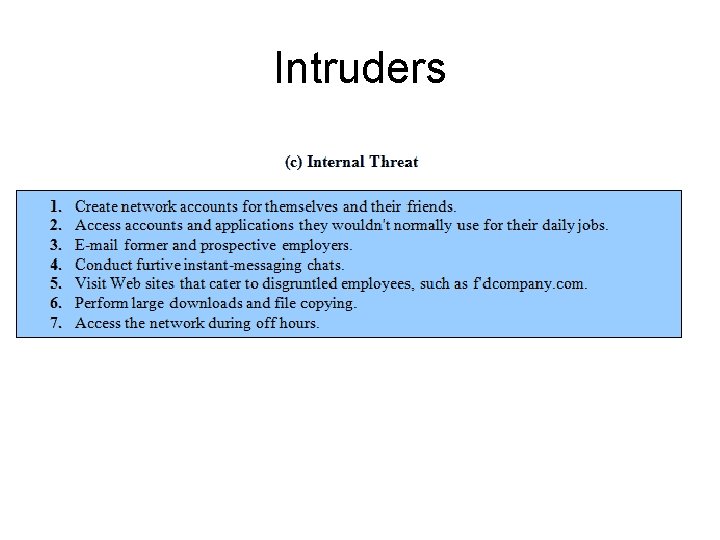
Intruders • Masquerader • Misfeasor • Clandestine user
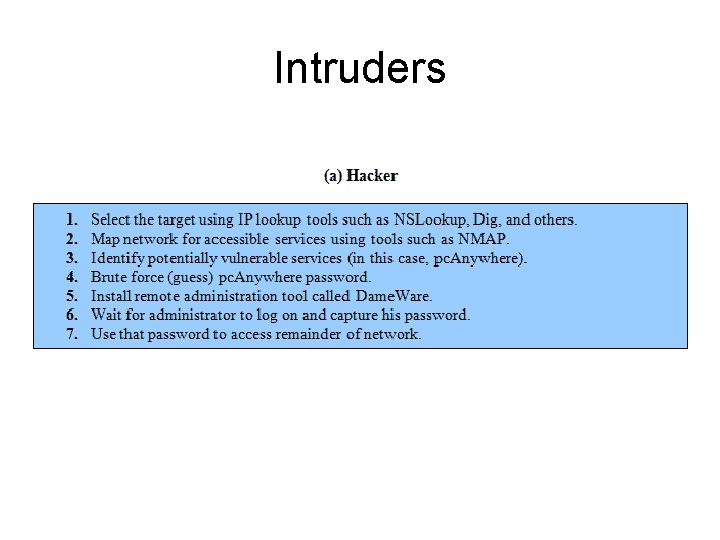
Intruders
Intruders
Intruders
Backdoor • Trapdoor • Secret entry point • Useful for debugging tool for programmers
Logic Bomb • Explodes when certain conditions are met – Presence or absence of certain files – Particular day of the week – Particular user running application
Trojan Horse • Useful program that contains hidden code that when invoked performs some unwanted or harmful function • Can be used to accomplish functions indirectly that an unauthorized user could not accomplish directly – User may set file permission so everyone has access
Mobile Code • Transmitted from remote system to local system • Executed on local system without the user’s explicit instruction
Multiple-Threat Malware • Multipartite virus infects in multiple ways • Blended attack uses multiple methods • Ex: Nimda has worm, virus, and mobile code characteristics
Parts of Virus • Infection mechanism • Trigger • Payload
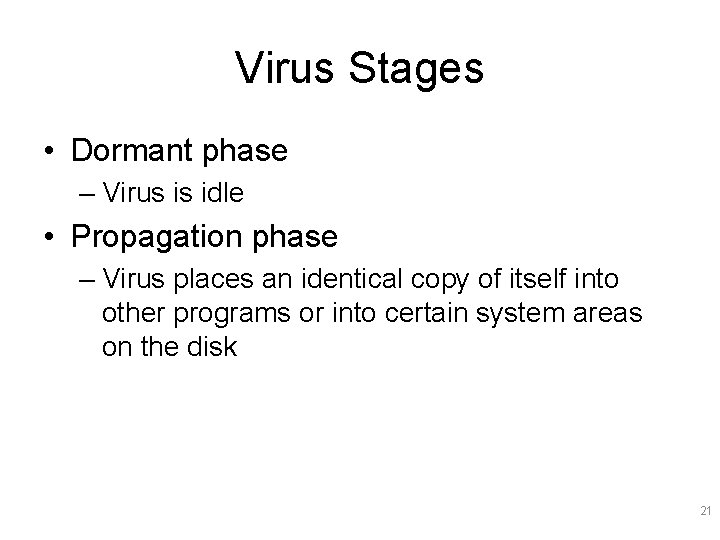
Virus Stages • Dormant phase – Virus is idle • Propagation phase – Virus places an identical copy of itself into other programs or into certain system areas on the disk 21
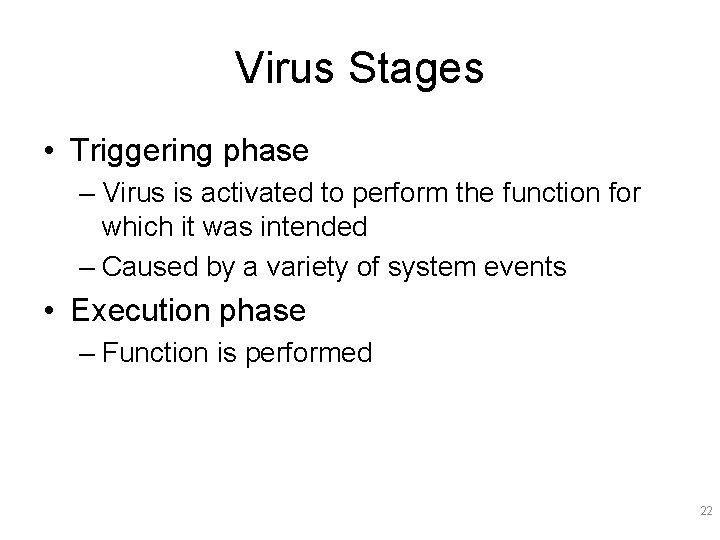
Virus Stages • Triggering phase – Virus is activated to perform the function for which it was intended – Caused by a variety of system events • Execution phase – Function is performed 22
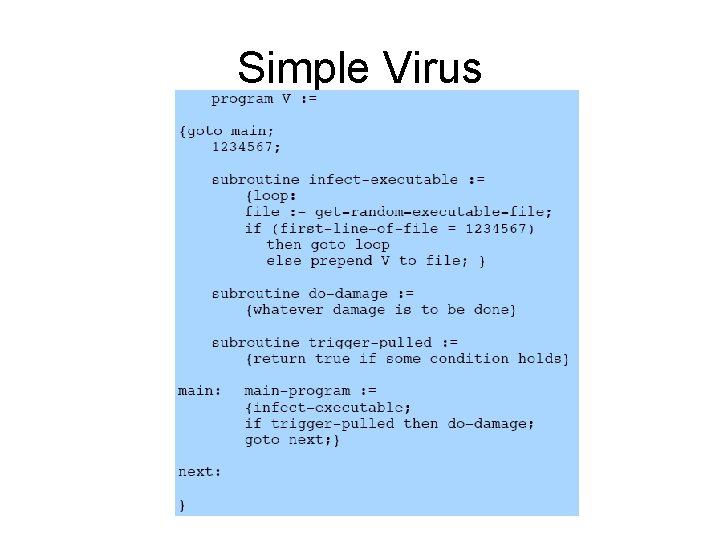
Simple Virus
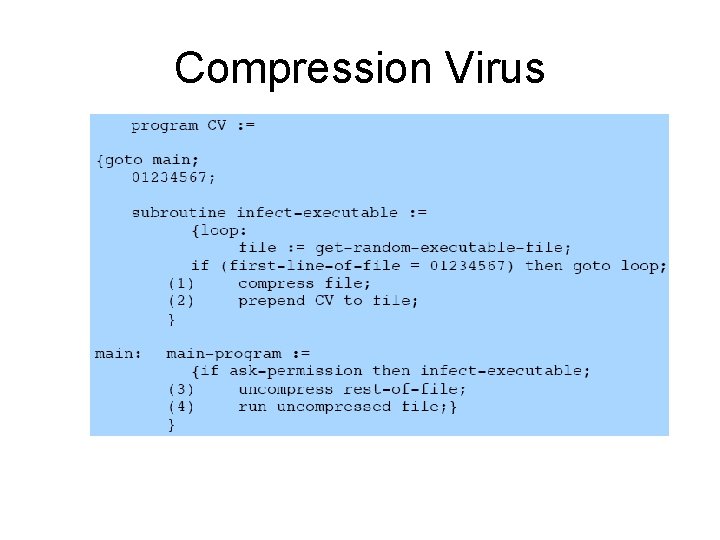
Compression Virus
Virus Classification by Target • Boot sector infector • File infector • Macro virus
Virus Classification by Concealment Strategy • Encrypted virus – Random encryption key encrypts remainder of virus • Stealth virus – Hides itself from detection of antivirus software
Virus Classification by Concealment Strategy • Polymorphic virus – Mutates with every infection • Metamorphic virus – Mutates with every infection – Rewrites itself completely after every iteration
Macro Viruses • Platform independent – Most infect Microsoft Word documents • Infect documents, not executable portions of code • Easily spread • File system access controls are of limited use in preventing spread 28
E-Mail Viruses • Attachment • Open e-mail • Uses e-mail software to replicate
Worms • Use network connections to spread from system to system • Electronic mail facility – A worm mails a copy of itself to other systems 30
Worms • Remote execution capability – A worm executes a copy of itself on another system • Remote log-in capability – A worm logs on to a remote system as a user and then uses commands to copy itself from one system to the other
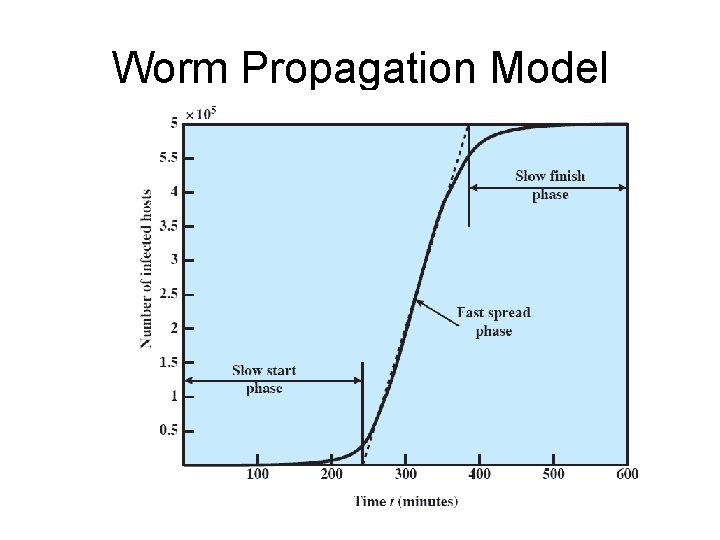
Worm Propagation Model
Bots • Zombie or drone • Program secretly takes of another Internetattached computer • Launch attacks that are difficult to trace to bot’s creator • Collection of bots is a botnet
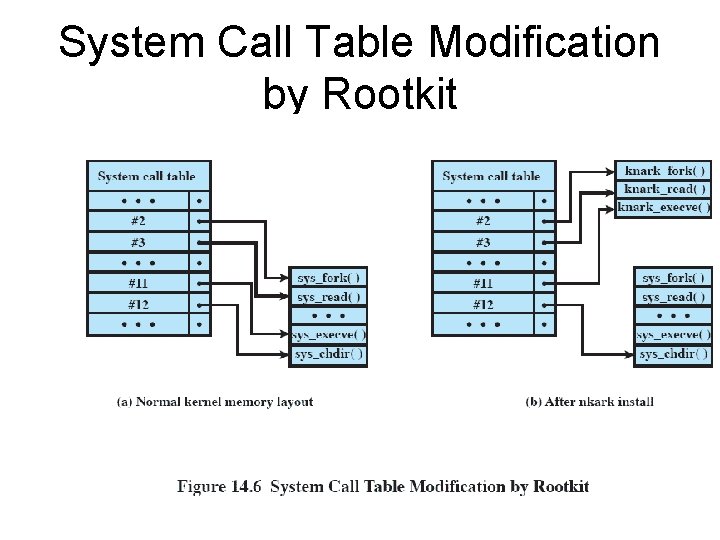
Rootkit • Set of programs installed on a system to maintain administrator (or root) access to that system • Hides its existence
System Call Table Modification by Rootkit