
Operating System Introduction Ch 1 Topics What is
- Slides: 36
Operating System Introduction (Ch 1)
Topics • What is an OS? • OS History • OS Concepts • OS Structures
Let’s Get Started! • What are some OSes you know? – Guess if you are not sure • Pick an OS you know: – What are some things you like about it? – What are some things you don’t like about it?
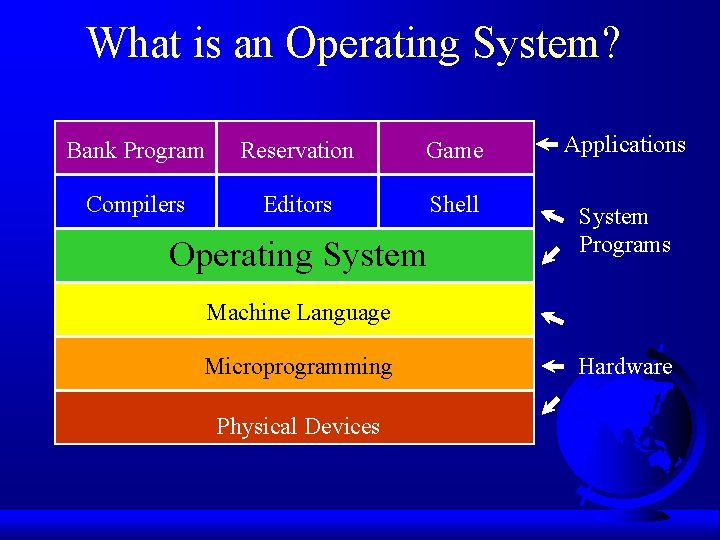
What is an Operating System? Bank Program Reservation Game Applications Compilers Editors Shell System Programs Operating System Machine Language Microprogramming Physical Devices Hardware
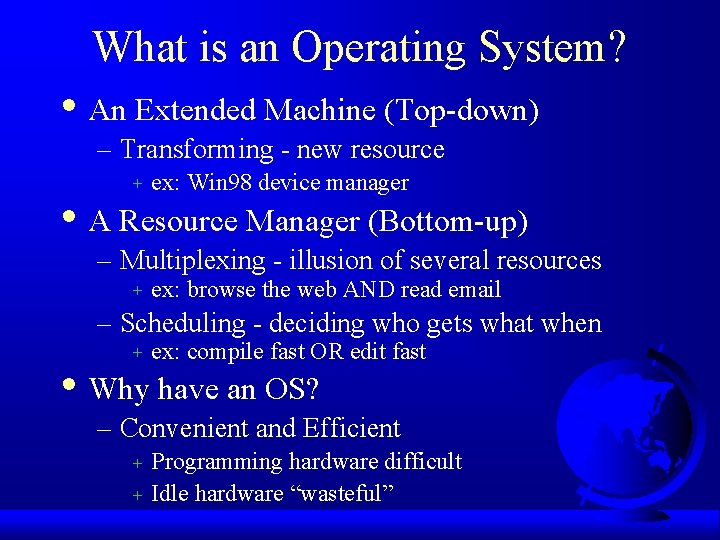
What is an Operating System? • An Extended Machine (Top-down) – Transforming - new resource + ex: Win 98 device manager • A Resource Manager (Bottom-up) – Multiplexing - illusion of several resources + ex: browse the web AND read email – Scheduling - deciding who gets what when + ex: compile fast OR edit fast • Why have an OS? – Convenient and Efficient + + Programming hardware difficult Idle hardware “wasteful”
Topics • What is an OS? • OS History • OS Concepts • OS Structures (done) (next)
Where in the Book are we? • Chapter 1 – 1. 1 overview (done) – 1. 2 history (next) – 1. 3 overview (read on your own) – 1. 4 hardware (review on your own, as needed) – 1. 5 concepts – 1. 6 structure
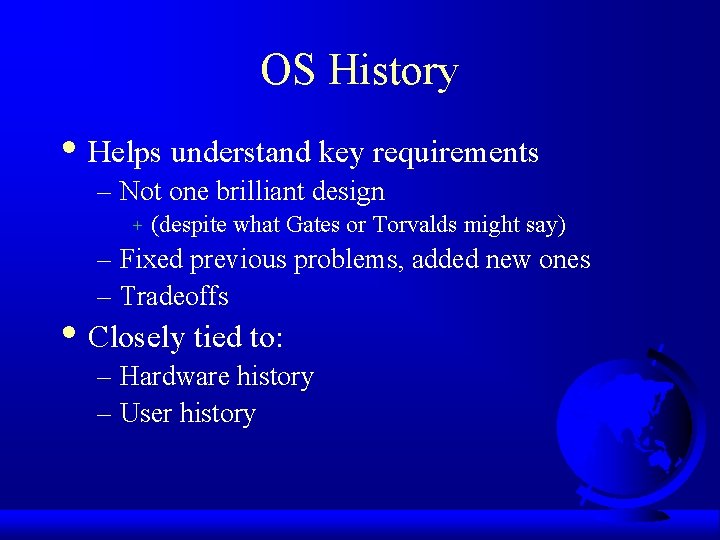
OS History • Helps understand key requirements – Not one brilliant design + (despite what Gates or Torvalds might say) – Fixed previous problems, added new ones – Tradeoffs • Closely tied to: – Hardware history – User history
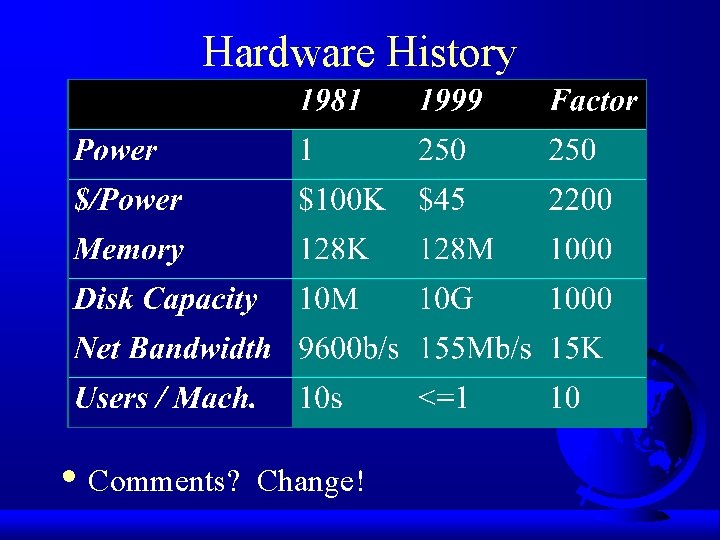
Hardware History • Comments? Change!
OS History • Supplement to book • My version is a brief narrative
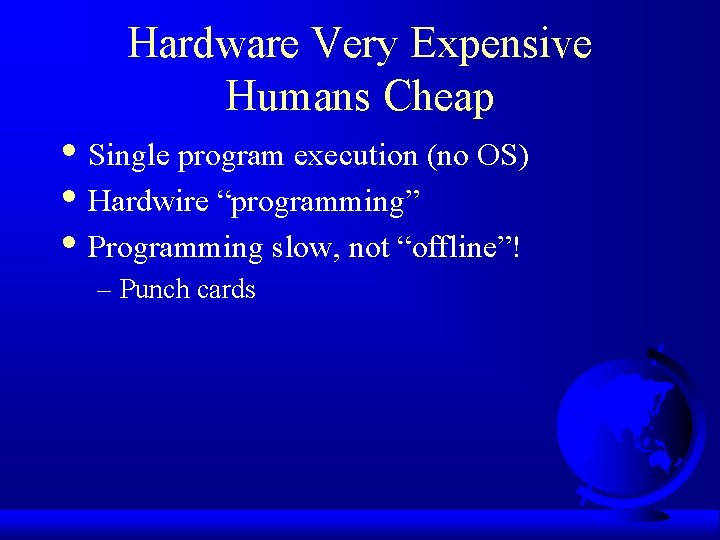
Hardware Very Expensive Humans Cheap • Single program execution (no OS) • Hardwire “programming” • Programming slow, not “offline”! – Punch cards
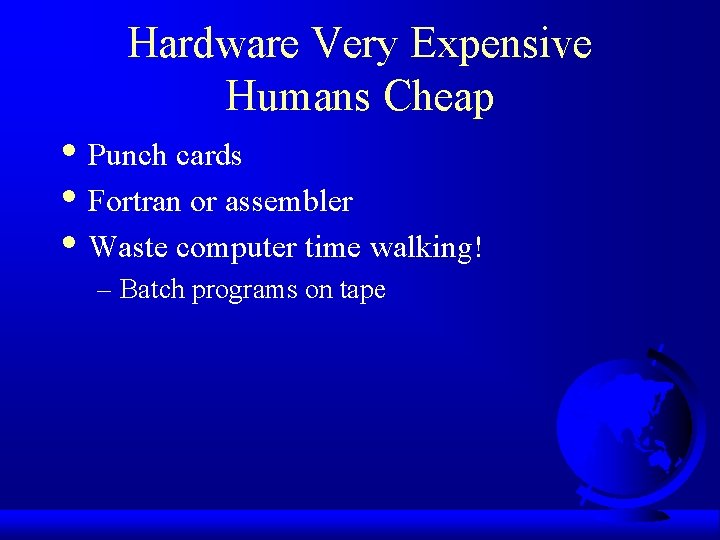
Hardware Very Expensive Humans Cheap • Punch cards • Fortran or assembler • Waste computer time walking! – Batch programs on tape
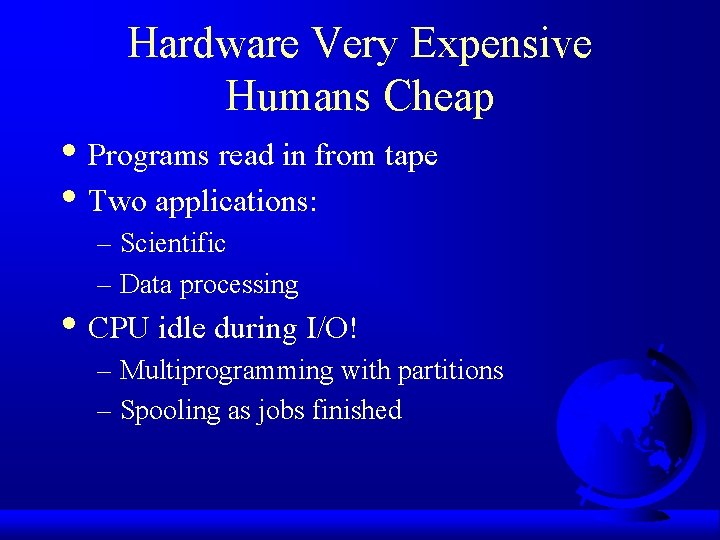
Hardware Very Expensive Humans Cheap • Programs read in from tape • Two applications: – Scientific – Data processing • CPU idle during I/O! – Multiprogramming with partitions – Spooling as jobs finished
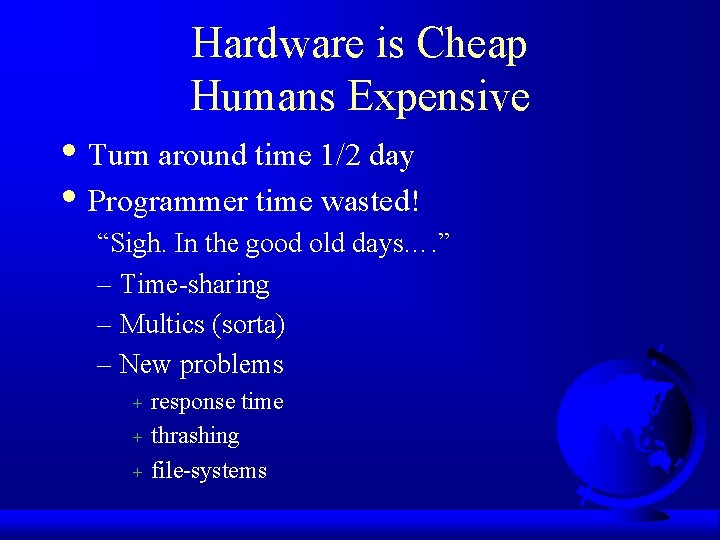
Hardware is Cheap Humans Expensive • Turn around time 1/2 day • Programmer time wasted! “Sigh. In the good old days…. ” – Time-sharing – Multics (sorta) – New problems + + + response time thrashing file-systems
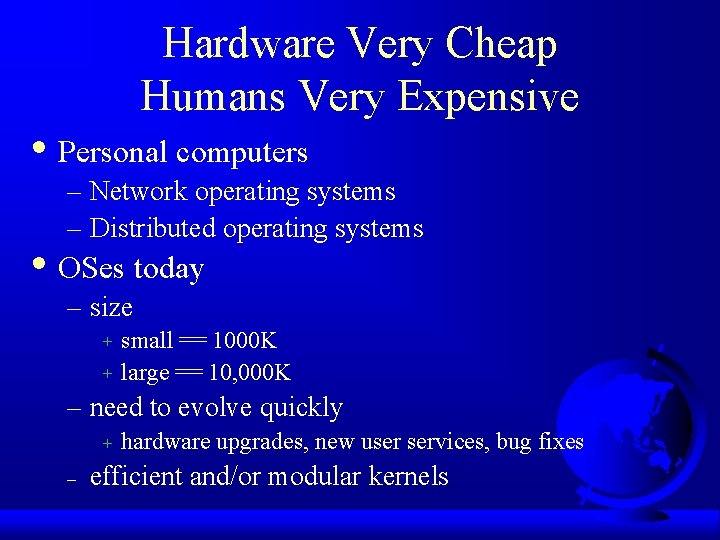
Hardware Very Cheap Humans Very Expensive • Personal computers – Network operating systems – Distributed operating systems • OSes today – size + + small == 1000 K large == 10, 000 K – need to evolve quickly + – hardware upgrades, new user services, bug fixes efficient and/or modular kernels
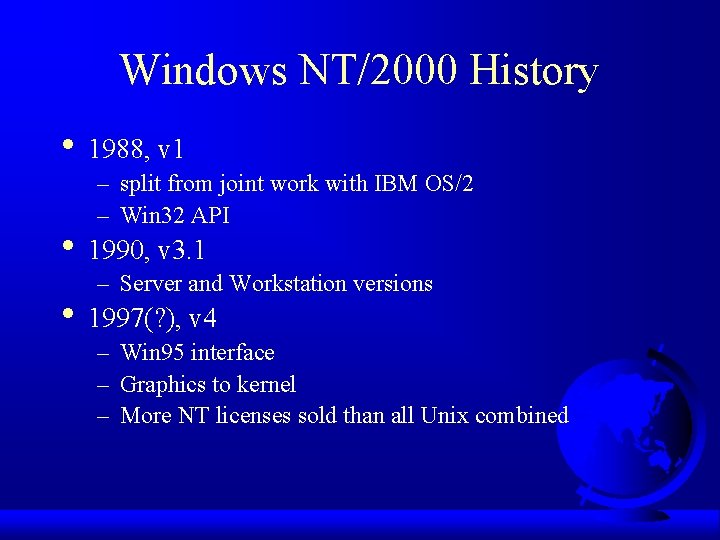
Windows NT/2000 History • 1988, v 1 – split from joint work with IBM OS/2 – Win 32 API • 1990, v 3. 1 – Server and Workstation versions • 1997(? ), v 4 – Win 95 interface – Graphics to kernel – More NT licenses sold than all Unix combined
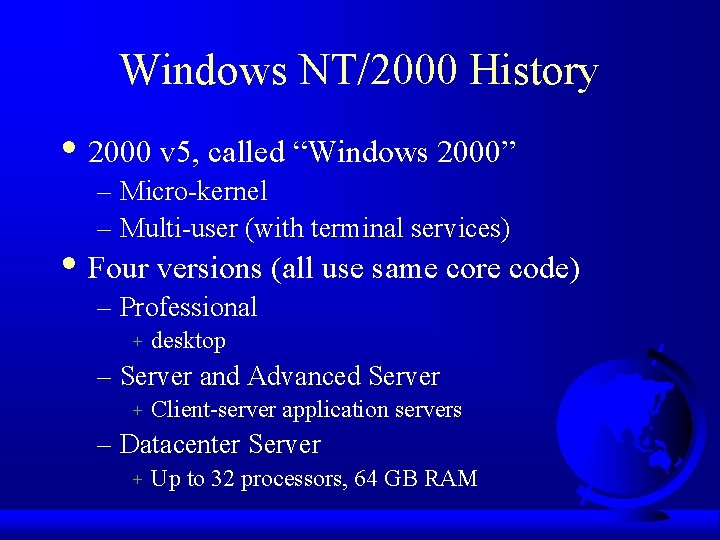
Windows NT/2000 History • 2000 v 5, called “Windows 2000” – Micro-kernel – Multi-user (with terminal services) • Four versions (all use same core code) – Professional + desktop – Server and Advanced Server + Client-server application servers – Datacenter Server + Up to 32 processors, 64 GB RAM
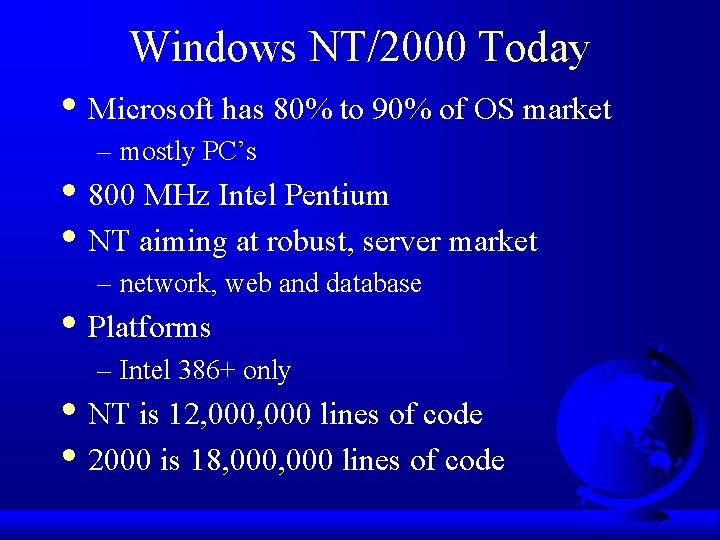
Windows NT/2000 Today • Microsoft has 80% to 90% of OS market – mostly PC’s • 800 MHz Intel Pentium • NT aiming at robust, server market – network, web and database • Platforms – Intel 386+ only • NT is 12, 000 lines of code • 2000 is 18, 000 lines of code
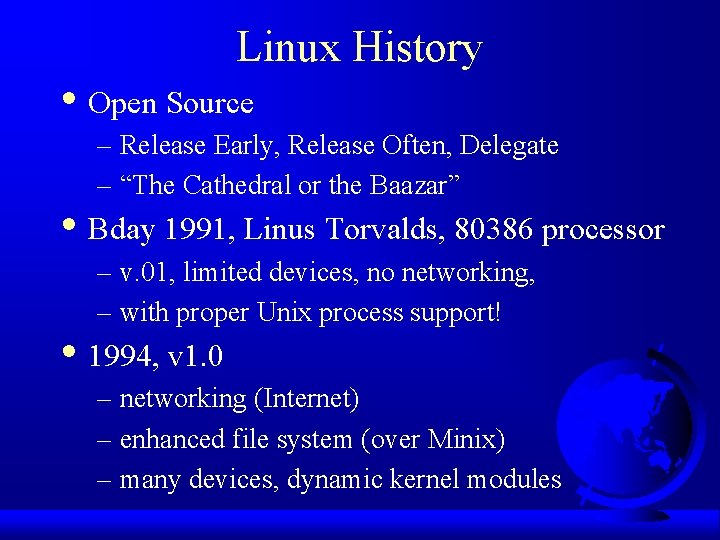
Linux History • Open Source – Release Early, Release Often, Delegate – “The Cathedral or the Baazar” • Bday 1991, Linus Torvalds, 80386 processor – v. 01, limited devices, no networking, – with proper Unix process support! • 1994, v 1. 0 – networking (Internet) – enhanced file system (over Minix) – many devices, dynamic kernel modules
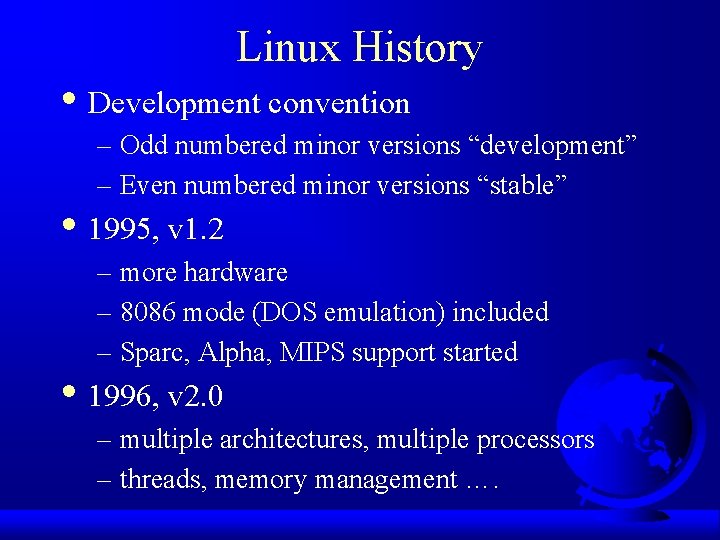
Linux History • Development convention – Odd numbered minor versions “development” – Even numbered minor versions “stable” • 1995, v 1. 2 – more hardware – 8086 mode (DOS emulation) included – Sparc, Alpha, MIPS support started • 1996, v 2. 0 – multiple architectures, multiple processors – threads, memory management ….
Linux Today • v 2. 4 • 3, 000 lines of code • 7 -10 million users • Estimated growth 25%/year through 2003 – all others, 10% combined
Outline • Operating System Concepts – Processes – Memory management – Input/Output – Files – System Calls – Shells • Operating System Structure – Simple Systems – Virtual Machines – Micro Kernels
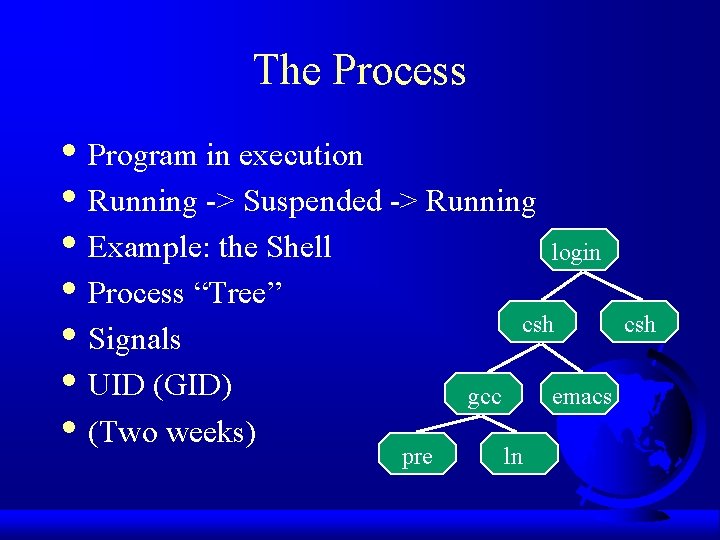
The Process • Program in execution • Running -> Suspended -> Running • Example: the Shell login • Process “Tree” csh • Signals • UID (GID) gcc emacs • (Two weeks) pre ln
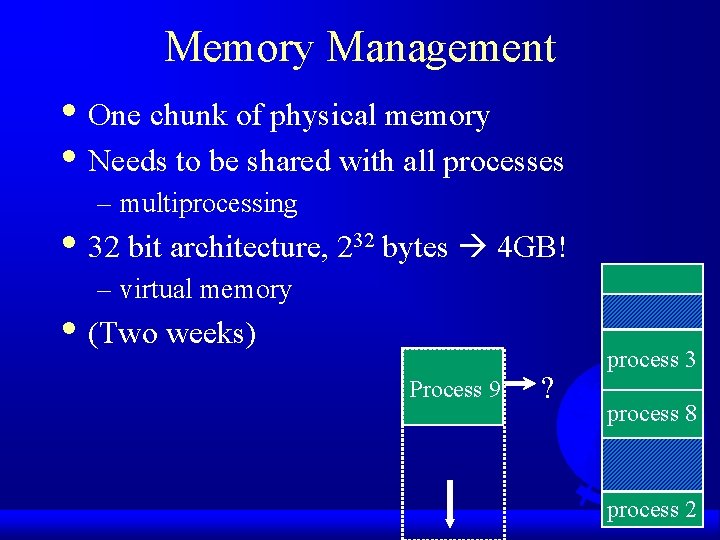
Memory Management • One chunk of physical memory • Needs to be shared with all processes – multiprocessing • 32 bit architecture, 232 bytes 4 GB! – virtual memory • (Two weeks) Process 9 ? process 3 process 8 process 2
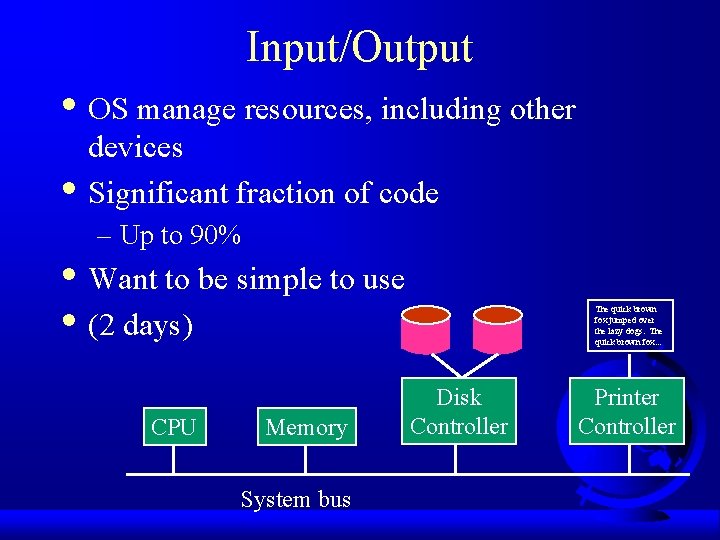
Input/Output • OS manage resources, including other • devices Significant fraction of code – Up to 90% • Want to be simple to use • (2 days) CPU Memory System bus The quick brown fox jumped over the lazy dogs. The quick brown fox. . . Disk Controller Printer Controller
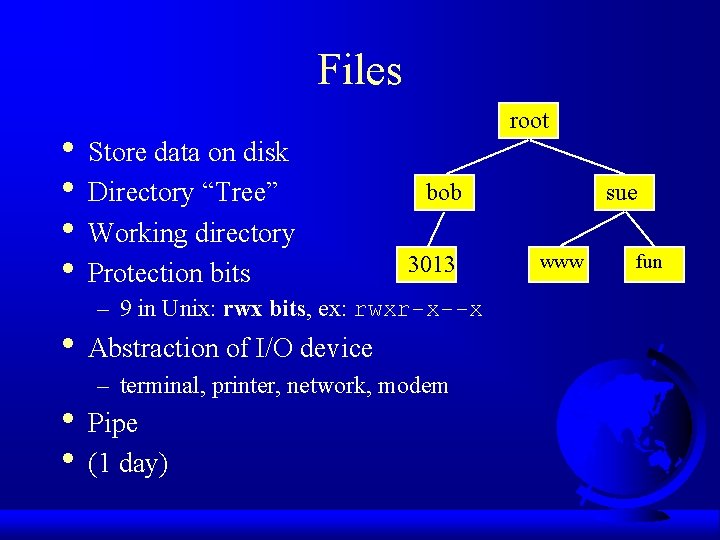
Files • Store data on disk • Directory “Tree” • Working directory • Protection bits root bob 3013 – 9 in Unix: rwx bits, ex: rwxr-x--x • Abstraction of I/O device – terminal, printer, network, modem • Pipe • (1 day) sue www fun
System Calls • Way processes communicate with OS • example: write(file, string, size) • OS specific! • POSIX (1980 s) – Portable Operating System (un. IX-ish) • (Most of the projects use them) • (One of the projects will add system calls)
Shells • User’s interface to OS • Simple commands “cd”, “cat”, “top” • Modifiers ‘&’, ‘|’, ‘>‘ • (Hey, do some process and shell examples!)
Outline • Operating System Structure – Simple Systems – Virtual Machines – Micro Kernels
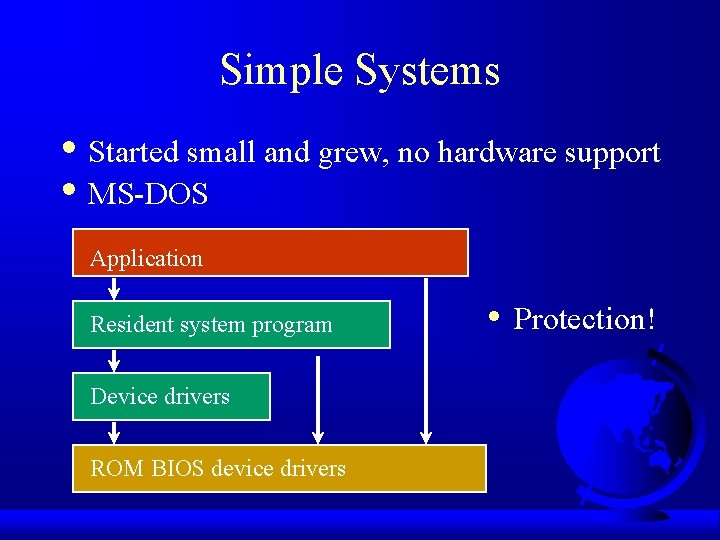
Simple Systems • Started small and grew, no hardware support • MS-DOS Application Resident system program Device drivers ROM BIOS device drivers • Protection!
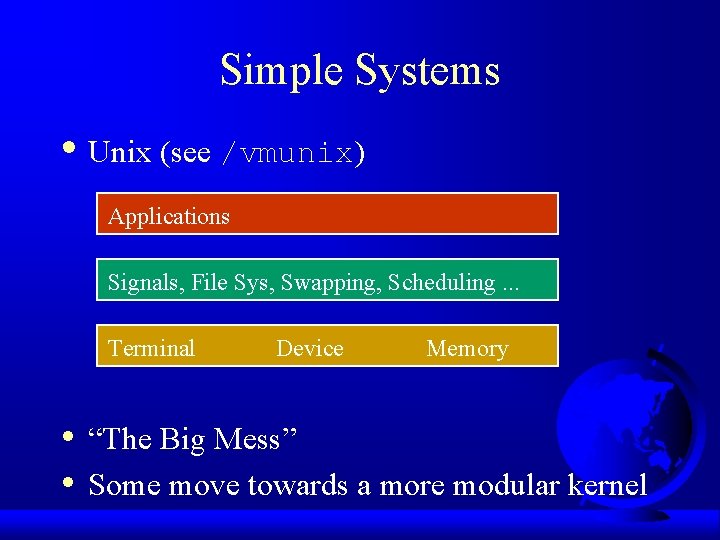
Simple Systems • Unix (see /vmunix) Applications Signals, File Sys, Swapping, Scheduling. . . Terminal • • Device Memory “The Big Mess” Some move towards a more modular kernel
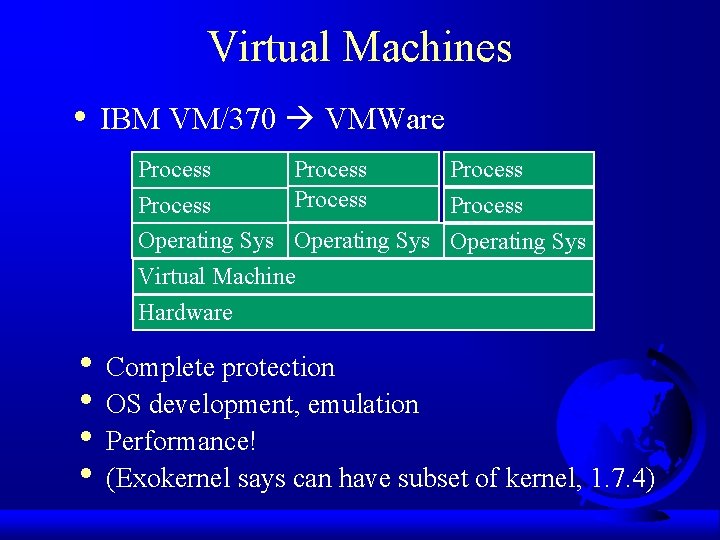
Virtual Machines • IBM VM/370 VMWare Process Process Operating Sys Virtual Machine Hardware • Complete protection • OS development, emulation • Performance! • (Exokernel says can have subset of kernel, 1. 7. 4)
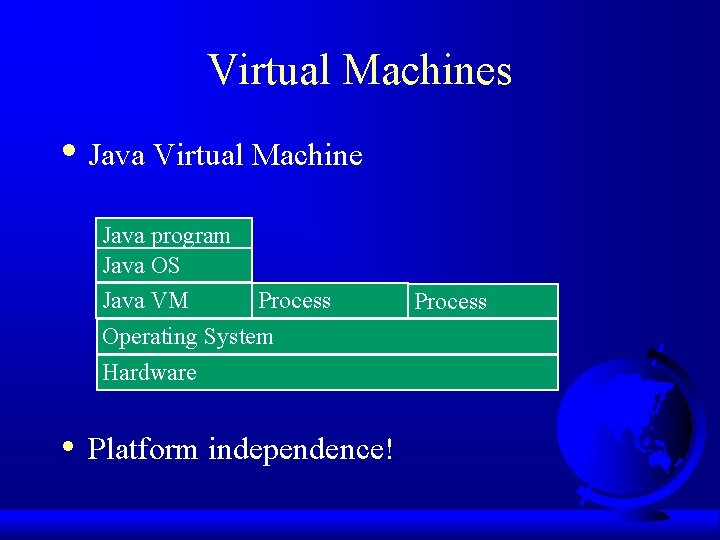
Virtual Machines • Java Virtual Machine Java program Java OS Java VM Process Operating System Hardware • Platform independence! Process
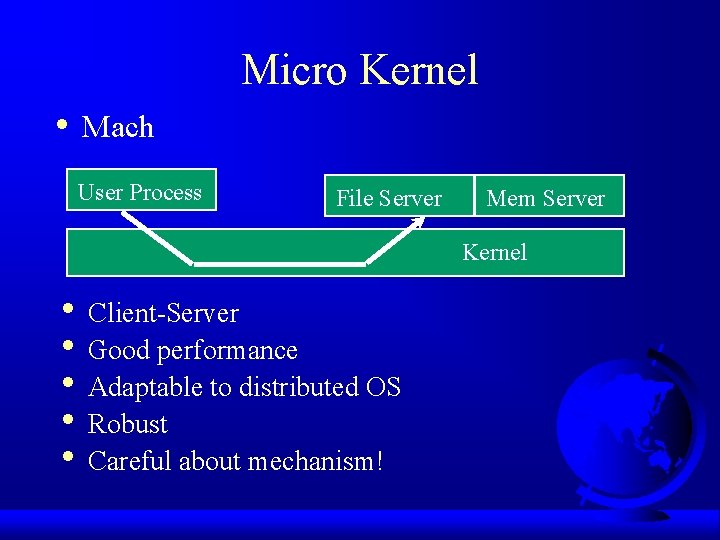
Micro Kernel • Mach User Process File Server Mem Server Kernel • Client-Server • Good performance • Adaptable to distributed OS • Robust • Careful about mechanism!
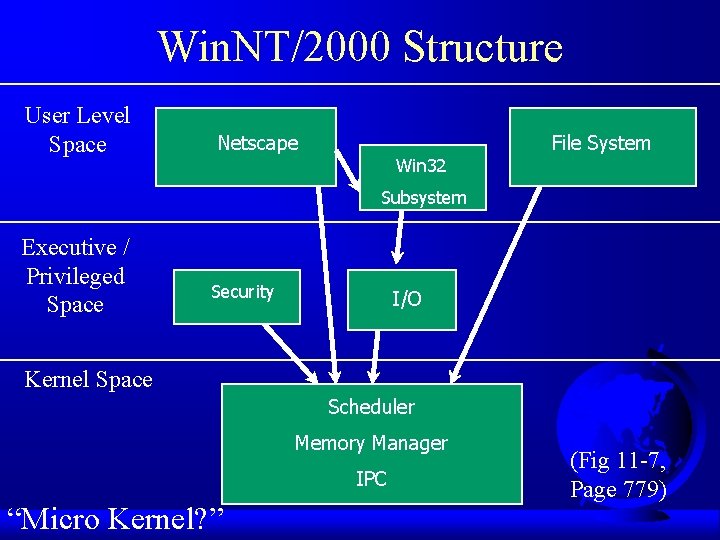
Win. NT/2000 Structure User Level Space Netscape Win 32 File System Subsystem Executive / Privileged Space Security I/O Kernel Space Scheduler Memory Manager IPC “Micro Kernel? ” (Fig 11 -7, Page 779)
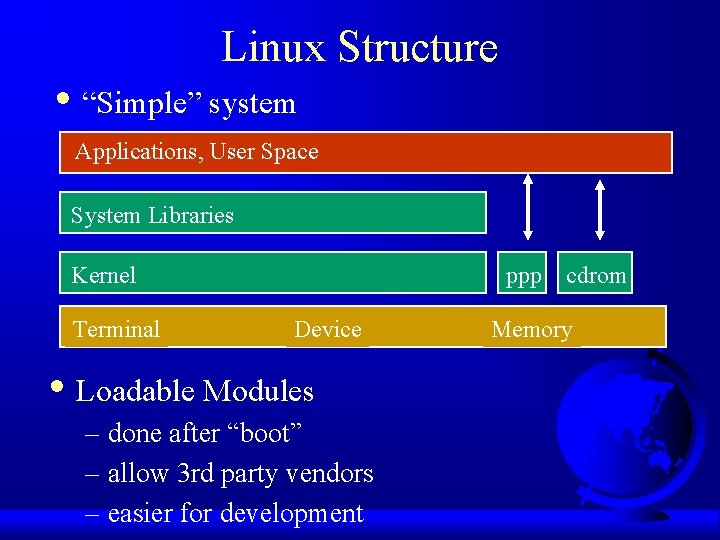
Linux Structure • “Simple” system Applications, User Space System Libraries Kernel Terminal ppp Device • Loadable Modules – done after “boot” – allow 3 rd party vendors – easier for development cdrom Memory