
Operating Leverage Financial Leverage 2002 Prentice Hall Inc





- Slides: 88
• Operating Leverage • Financial Leverage 2002, Prentice Hall, Inc.
What is Leverage?
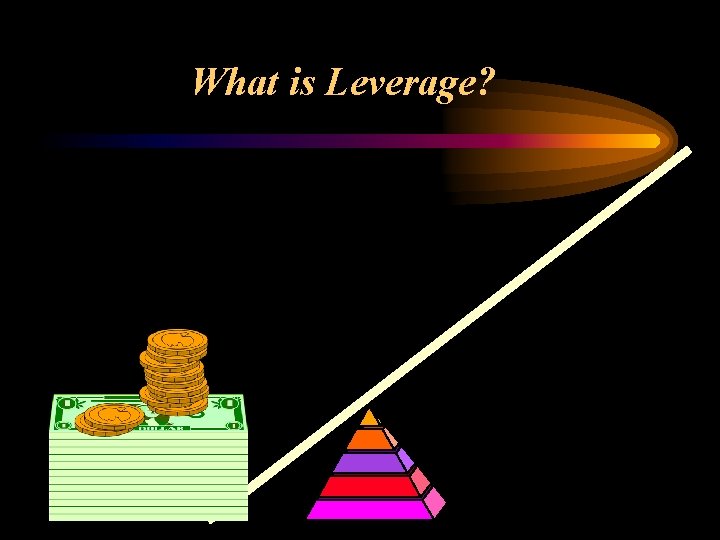
What is Leverage?
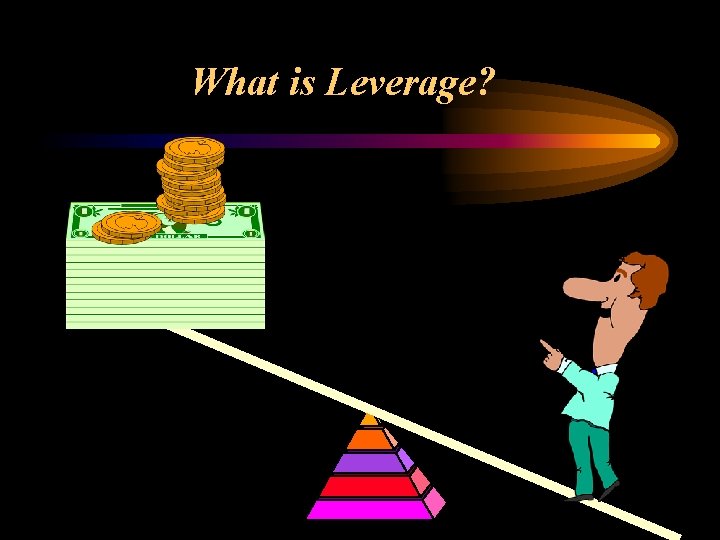
What is Leverage?
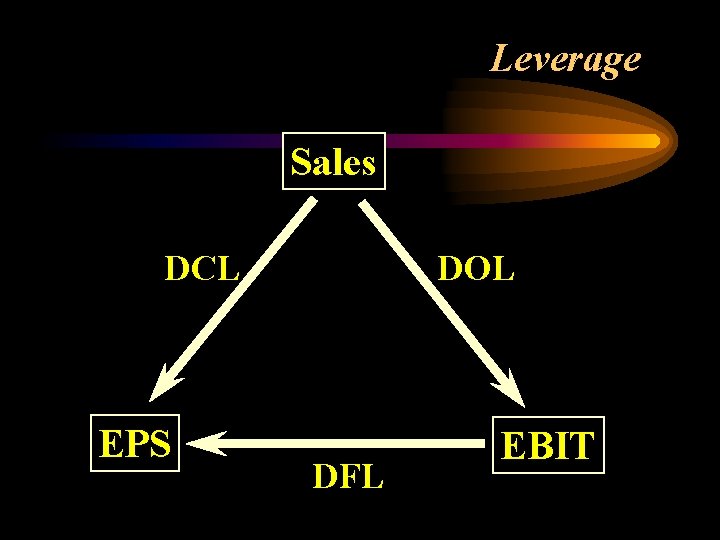
2 concepts that enhance our understanding of risk. . . 1) Operating Leverage - affects a firm’s business risk. 2) Financial Leverage - affects a firm’s financial risk.
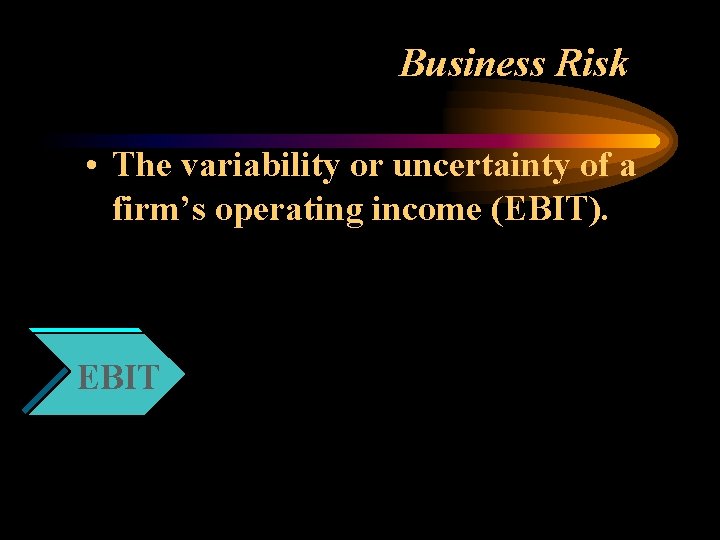
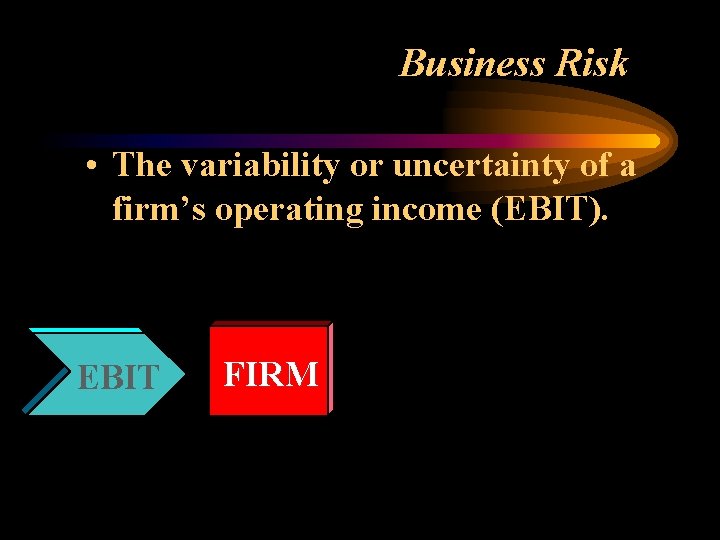
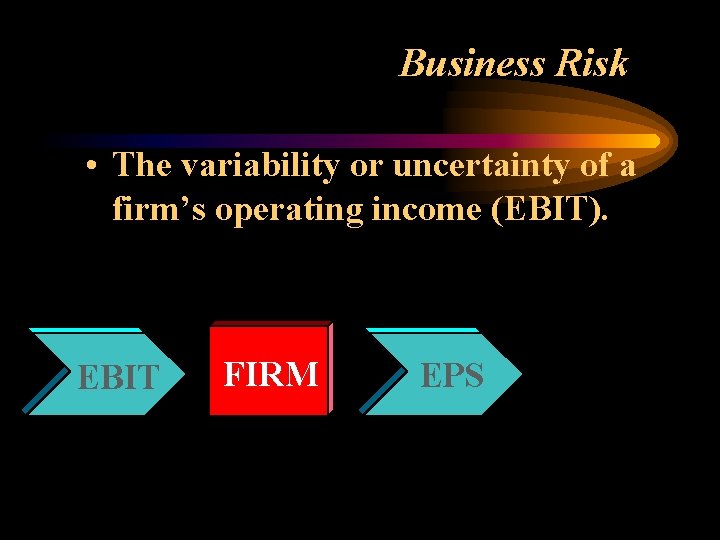
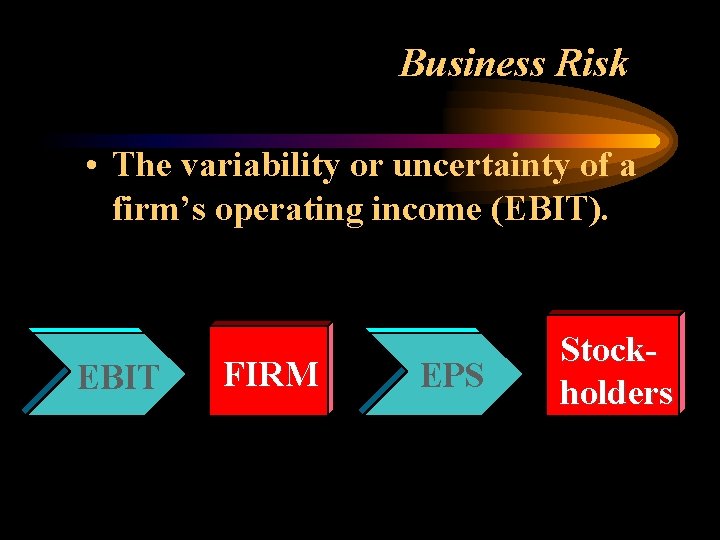
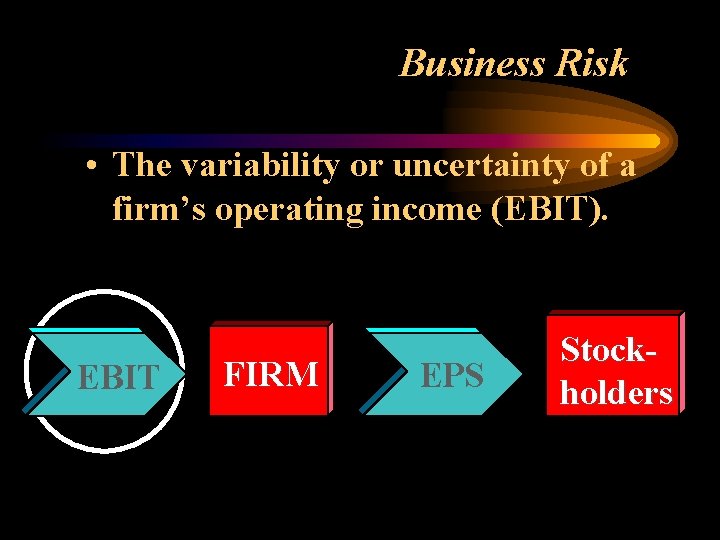
Business Risk • The variability or uncertainty of a firm’s operating income (EBIT).
Business Risk • The variability or uncertainty of a firm’s operating income (EBIT). EBIT
Business Risk • The variability or uncertainty of a firm’s operating income (EBIT). EBIT FIRM
Business Risk • The variability or uncertainty of a firm’s operating income (EBIT). EBIT FIRM EPS
Business Risk • The variability or uncertainty of a firm’s operating income (EBIT). EBIT FIRM EPS Stockholders
Business Risk • The variability or uncertainty of a firm’s operating income (EBIT). EBIT FIRM EPS Stockholders
Business Risk Affected by: • Sales volume variability • Competition • Cost variability • Product diversification • Product demand • Operating Leverage
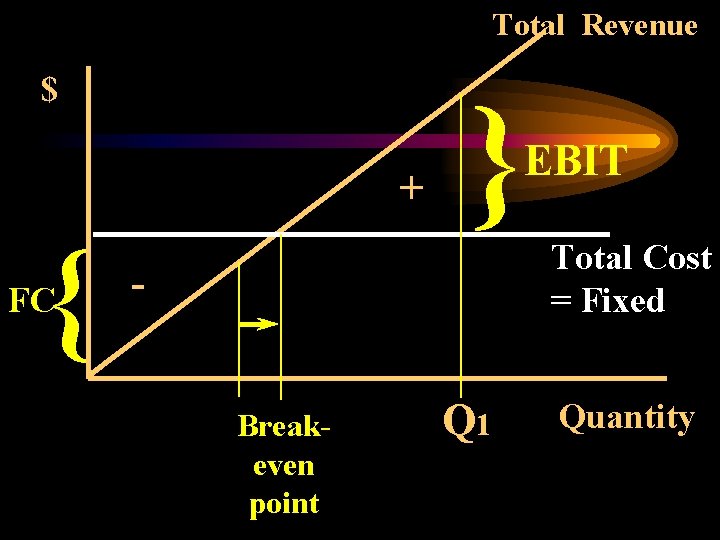
Operating Leverage • The use of fixed operating costs as opposed to variable operating costs. • A firm with relatively high fixed operating costs will experience more variable operating income if sales change.
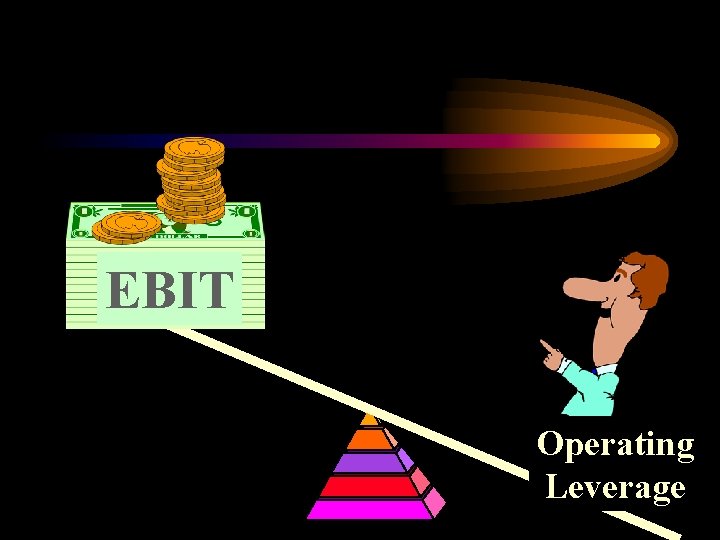
EBIT Operating Leverage
Financial Risk • The variability or uncertainty of a firm’s earnings per share (EPS) and the increased probability of insolvency that arises when a firm uses financial leverage.
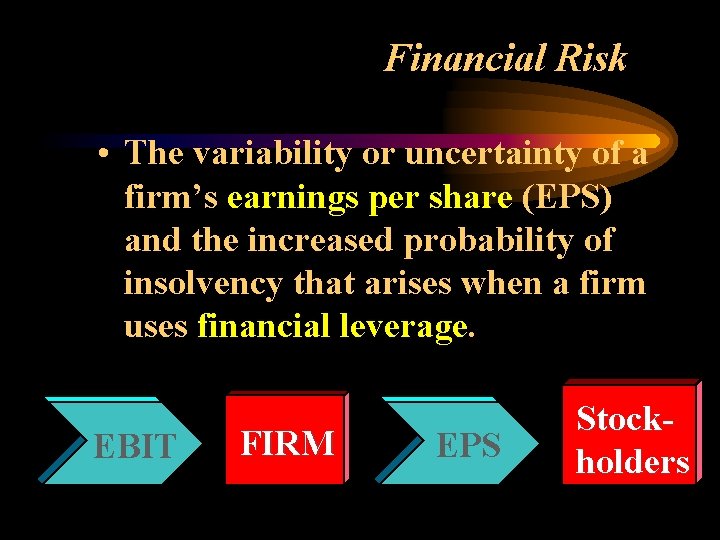
Financial Risk • The variability or uncertainty of a firm’s earnings per share (EPS) and the increased probability of insolvency that arises when a firm uses financial leverage. EBIT FIRM EPS Stockholders
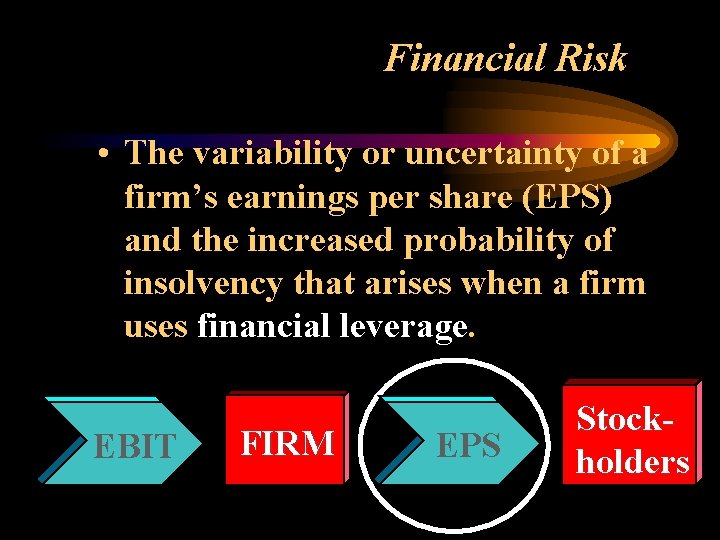
Financial Risk • The variability or uncertainty of a firm’s earnings per share (EPS) and the increased probability of insolvency that arises when a firm uses financial leverage. EBIT FIRM EPS Stockholders
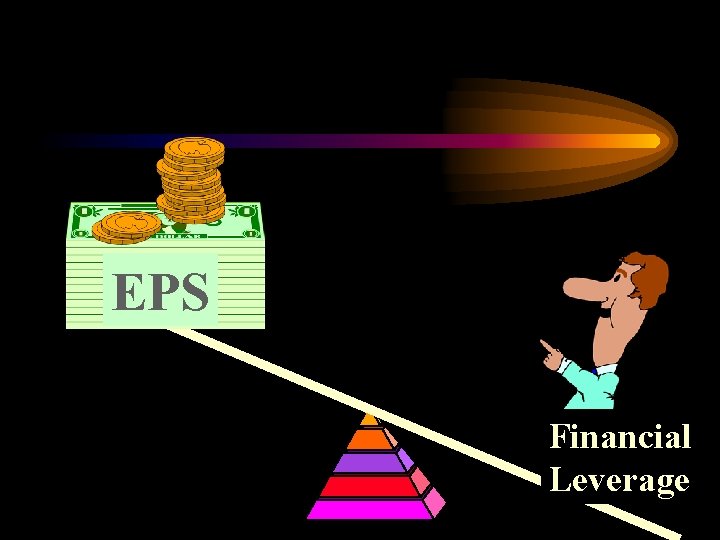
Financial Leverage • The use of fixed-cost sources of financing (debt, preferred stock) rather than variable-cost sources (common stock).
EPS Financial Leverage
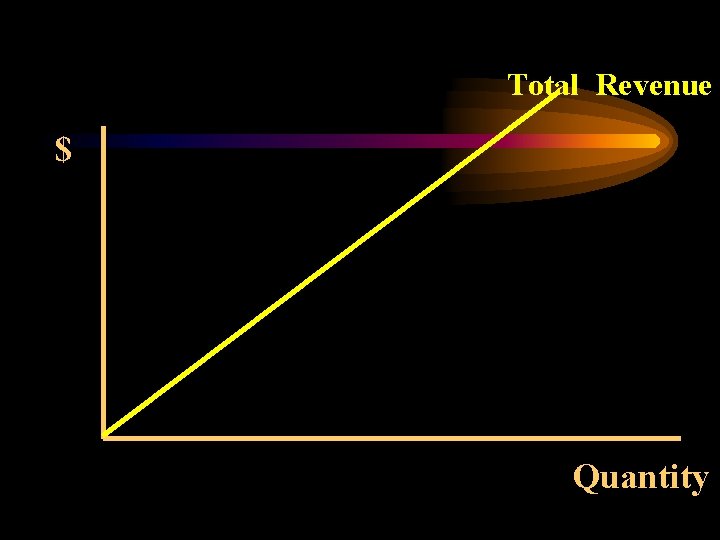
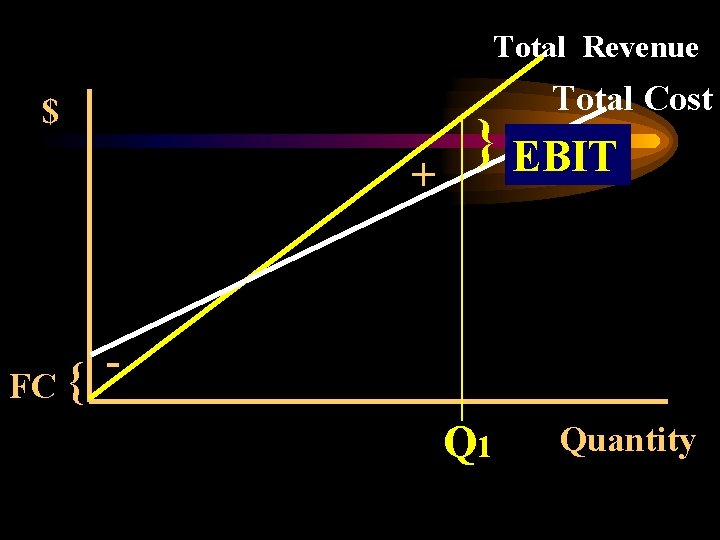
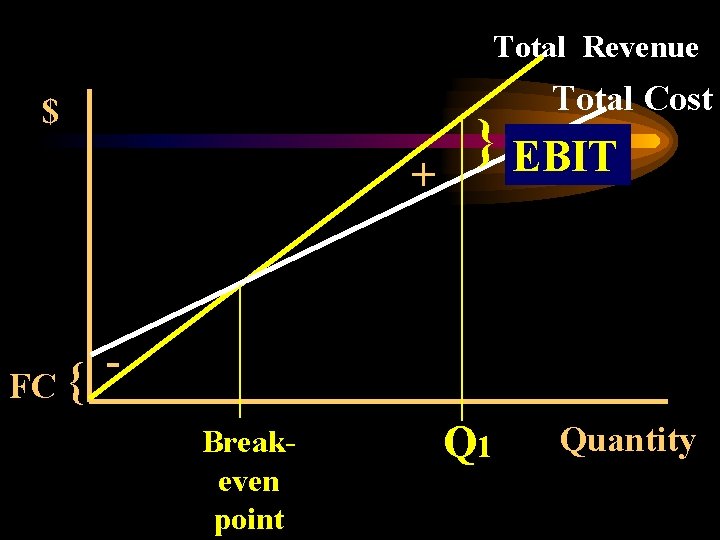
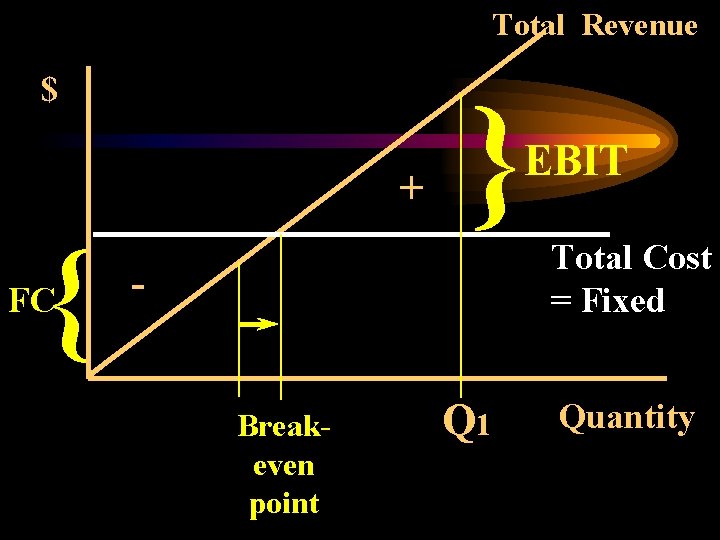
Breakeven Analysis • Illustrates the effects of operating leverage. • Useful forecasting the profitability of a firm, division or product line. • Useful for analyzing the impact of changes in fixed costs, variable costs, and sales price.
Breakeven Analysis $ Quantity
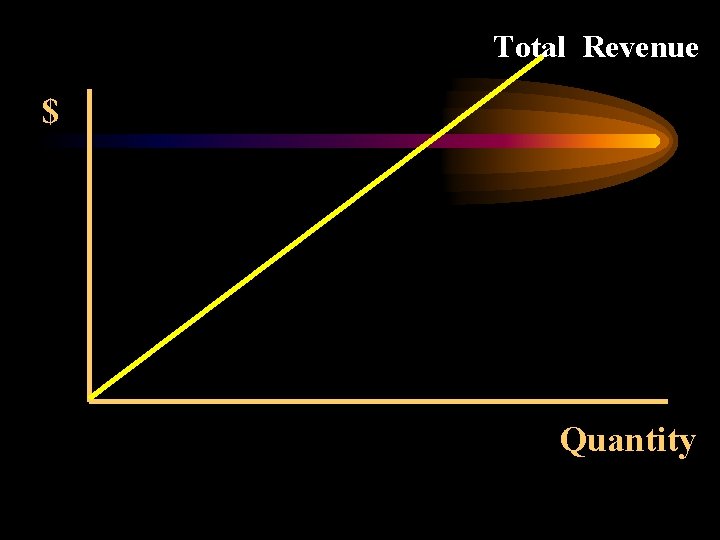
Total Revenue $ Quantity
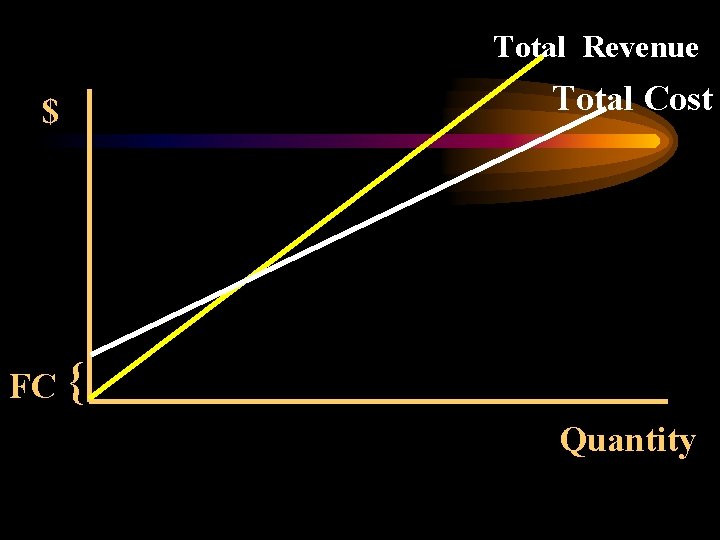
Costs • Suppose the firm has both fixed operating costs (administrative salaries, insurance, rent, property tax) and variable operating costs (materials, labor, energy, packaging, sales commissions).
Total Revenue $ Quantity
Total Revenue $ Total Cost FC { Quantity
Total Revenue Total Cost $ + } EBIT FC { Q 1 Quantity
Total Revenue Total Cost $ + } EBIT FC { Breakeven point Q 1 Quantity
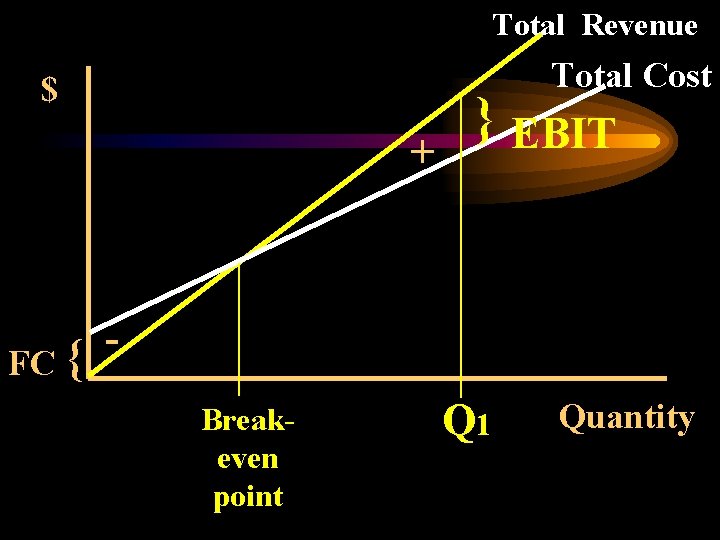
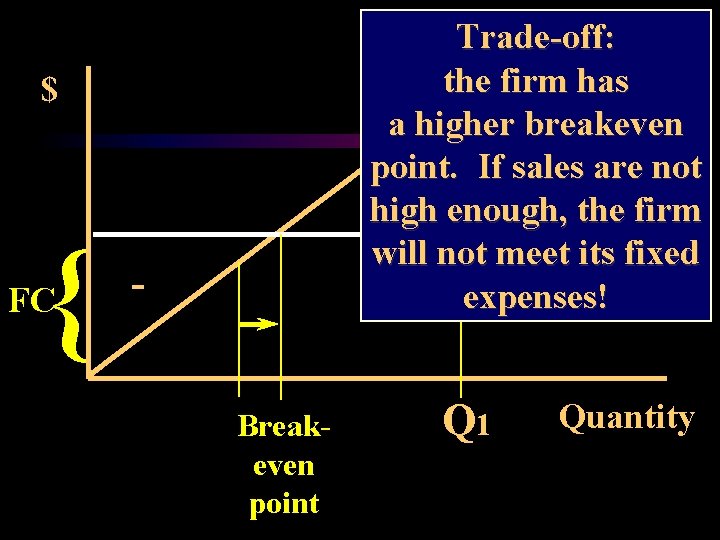
Operating Leverage • What happens if the firm increases its fixed operating costs and reduces (or eliminates) its variable costs?
Total Revenue Total Cost $ + } EBIT FC { Breakeven point Q 1 Quantity
Total Revenue $ + { FC } EBIT Total Cost = Fixed Breakeven point Q 1 Quantity
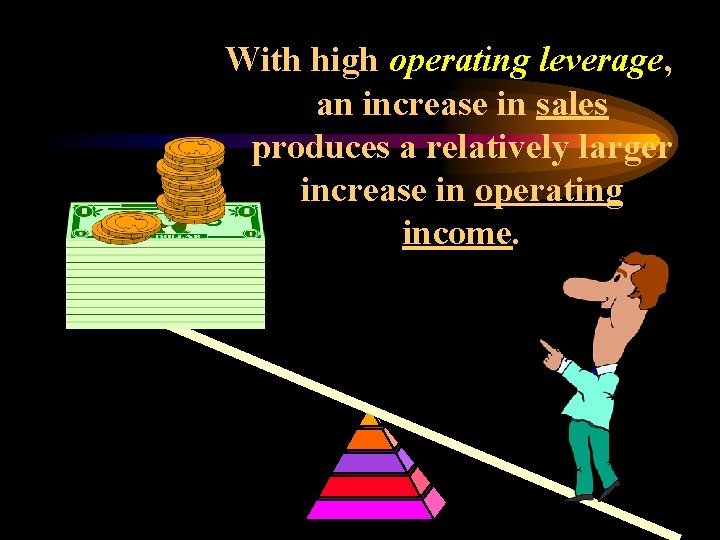
With high operating leverage, an increase in sales produces a relatively larger increase in operating income.
Total Revenue $ + { FC } EBIT Total Cost = Fixed Breakeven point Q 1 Quantity
Total Revenue Trade-off: the firm has a higher breakeven EBIT point. If sales are not + high enough, the firm will not meet its fixed Total Cost expenses! = Fixed $ { FC } Breakeven point Q 1 Quantity
Breakeven Calculations
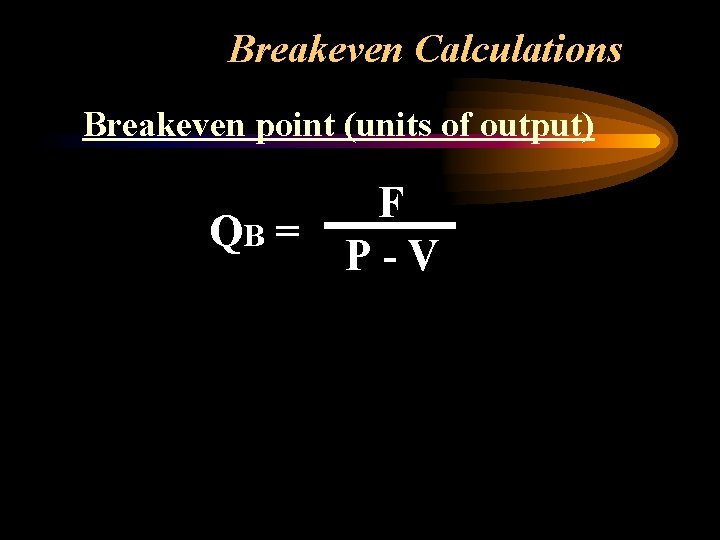
Breakeven Calculations Breakeven point (units of output) QB = F P-V
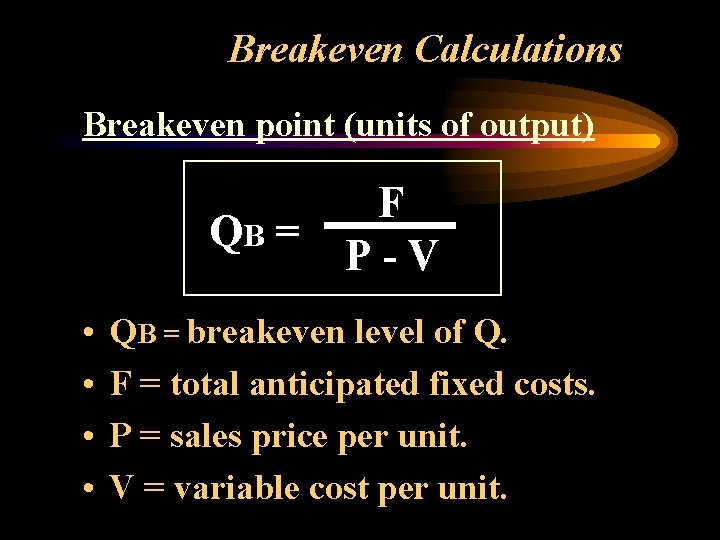
Breakeven Calculations Breakeven point (units of output) QB = • • F P-V QB = breakeven level of Q. F = total anticipated fixed costs. P = sales price per unit. V = variable cost per unit.
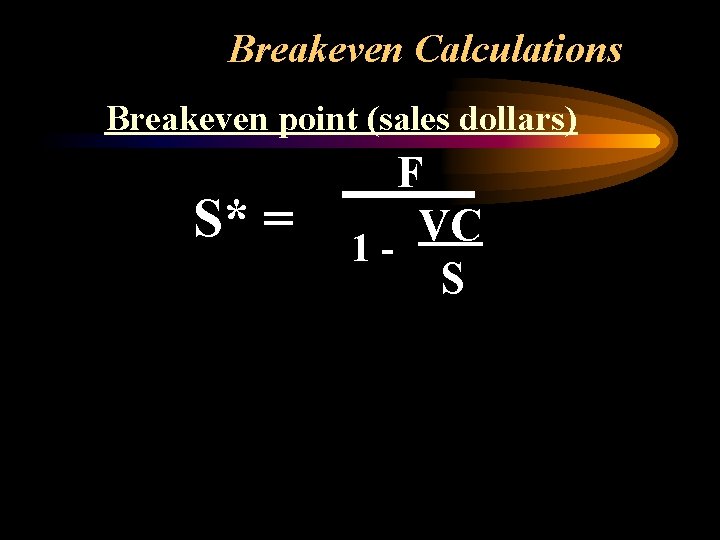
Breakeven Calculations Breakeven point (sales dollars) S* = F VC 1 S
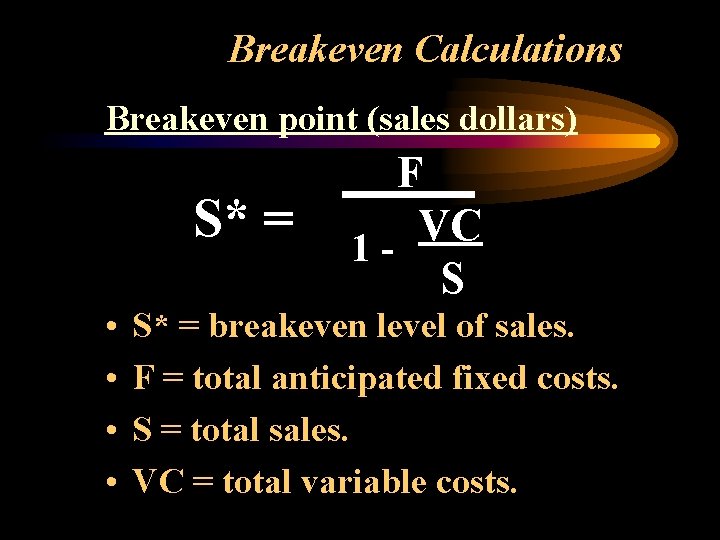
Breakeven Calculations Breakeven point (sales dollars) S* = • • F VC 1 S S* = breakeven level of sales. F = total anticipated fixed costs. S = total sales. VC = total variable costs.
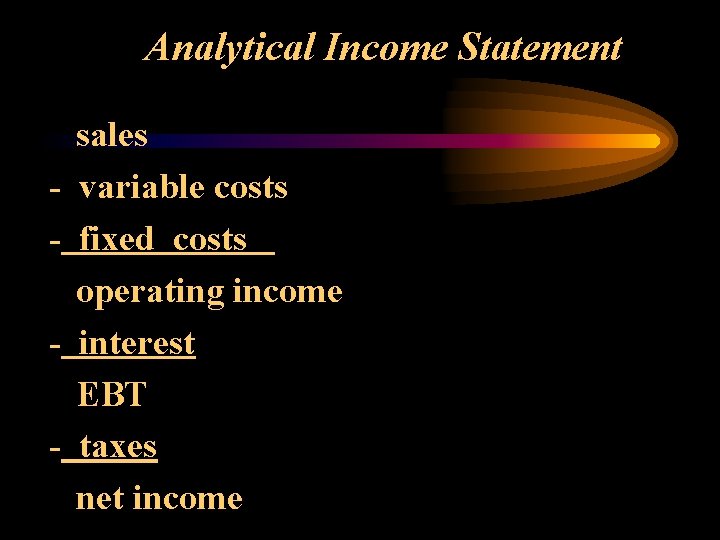
Analytical Income Statement - sales variable costs fixed costs operating income interest EBT taxes net income
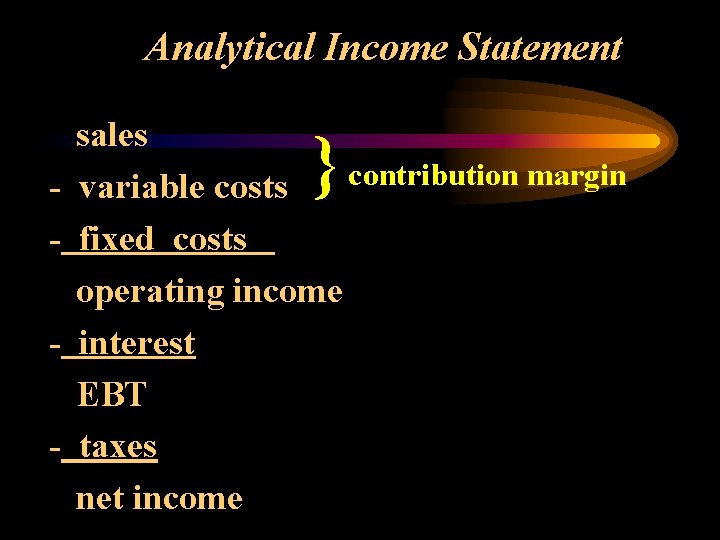
Analytical Income Statement - sales contribution margin variable costs fixed costs operating income interest EBT taxes net income }
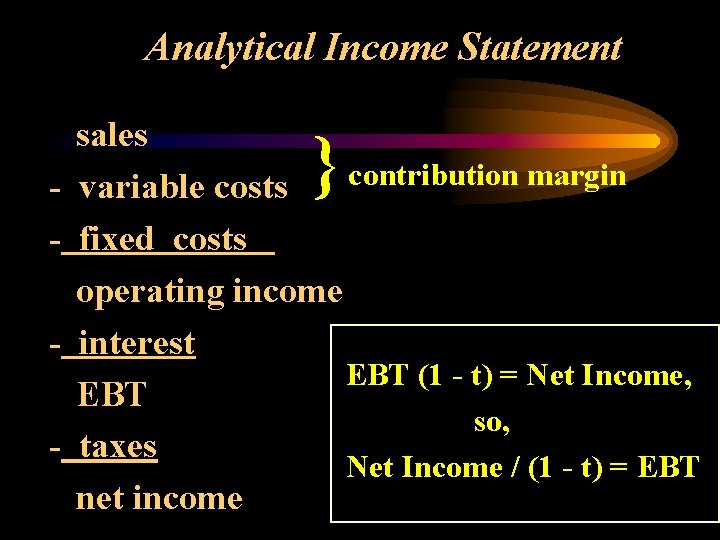
Analytical Income Statement - sales contribution margin variable costs fixed costs operating income interest EBT (1 - t) = Net Income, EBT so, taxes Net Income / (1 - t) = EBT net income }
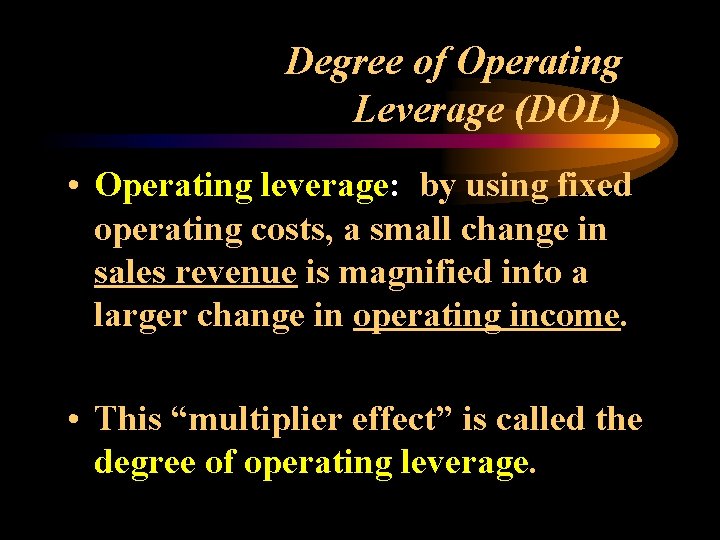
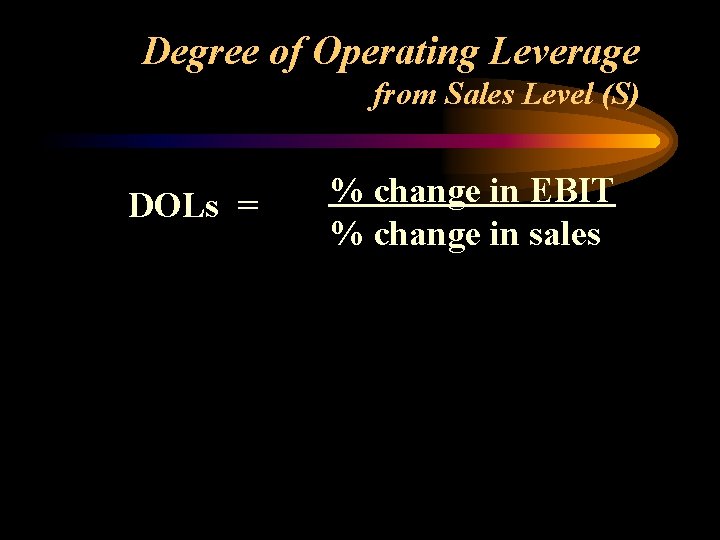
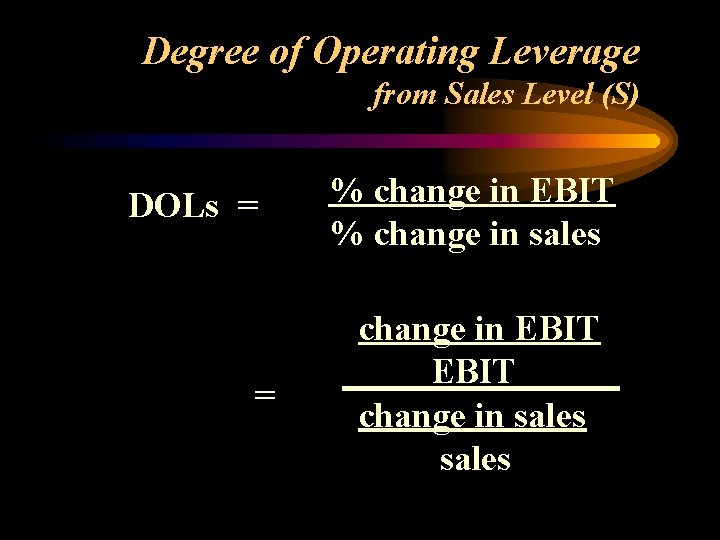
Degree of Operating Leverage (DOL) • Operating leverage: by using fixed operating costs, a small change in sales revenue is magnified into a larger change in operating income. • This “multiplier effect” is called the degree of operating leverage.
Degree of Operating Leverage from Sales Level (S) DOLs = % change in EBIT % change in sales
Degree of Operating Leverage from Sales Level (S) DOLs = = % change in EBIT % change in sales change in EBIT change in sales
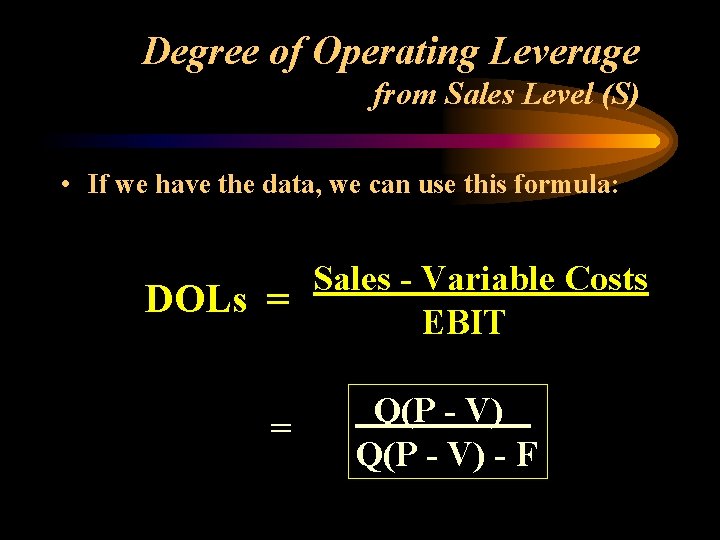
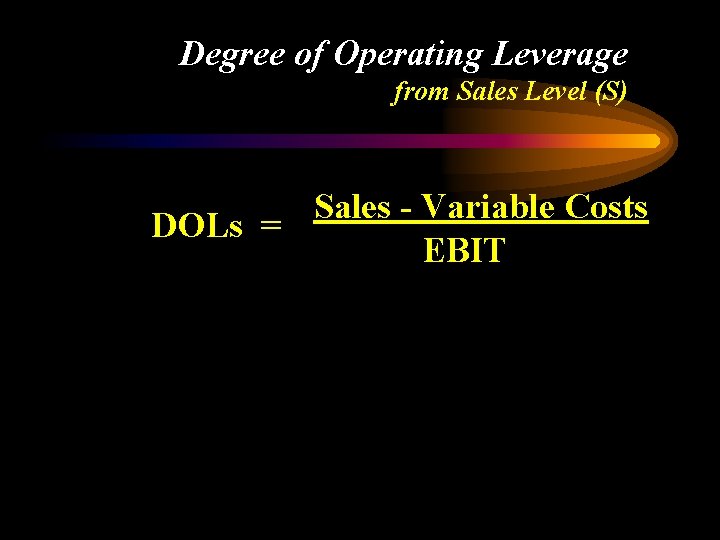
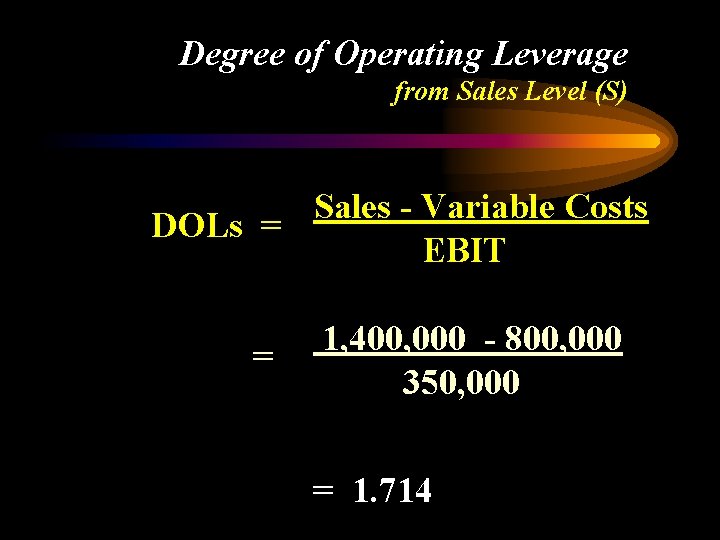
Degree of Operating Leverage from Sales Level (S) • If we have the data, we can use this formula:
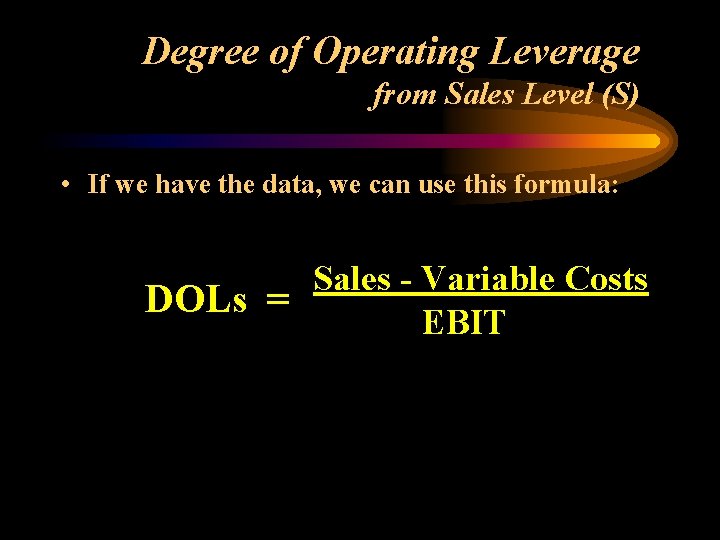
Degree of Operating Leverage from Sales Level (S) • If we have the data, we can use this formula: Sales - Variable Costs DOLs = EBIT
Degree of Operating Leverage from Sales Level (S) • If we have the data, we can use this formula: Sales - Variable Costs DOLs = EBIT = Q(P - V) - F
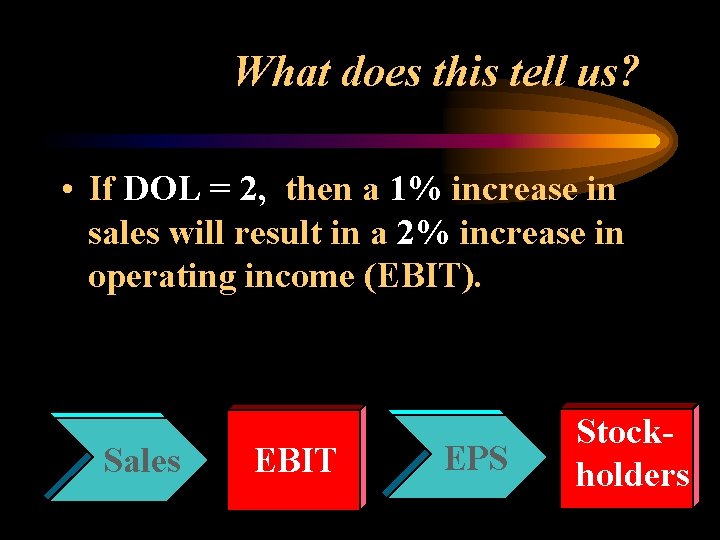
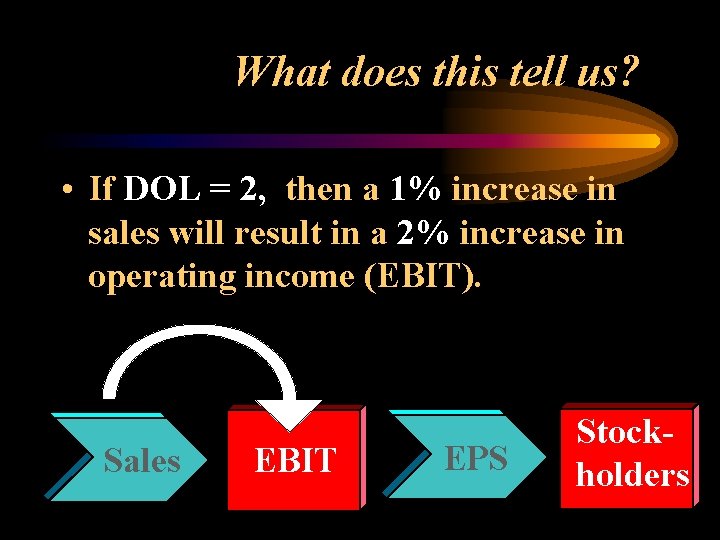
What does this tell us? • If DOL = 2, then a 1% increase in sales will result in a 2% increase in operating income (EBIT).
What does this tell us? • If DOL = 2, then a 1% increase in sales will result in a 2% increase in operating income (EBIT). Sales EBIT EPS Stockholders
What does this tell us? • If DOL = 2, then a 1% increase in sales will result in a 2% increase in operating income (EBIT). Sales EBIT EPS Stockholders
Degree of Financial Leverage (DFL) • Financial leverage: by using fixed cost financing, a small change in operating income is magnified into a larger change in earnings per share. • This “multiplier effect” is called the degree of financial leverage.
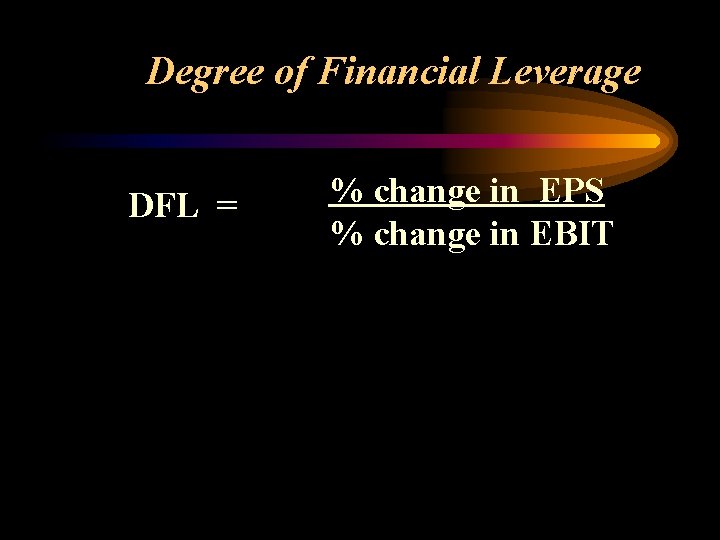
Degree of Financial Leverage DFL = % change in EPS % change in EBIT
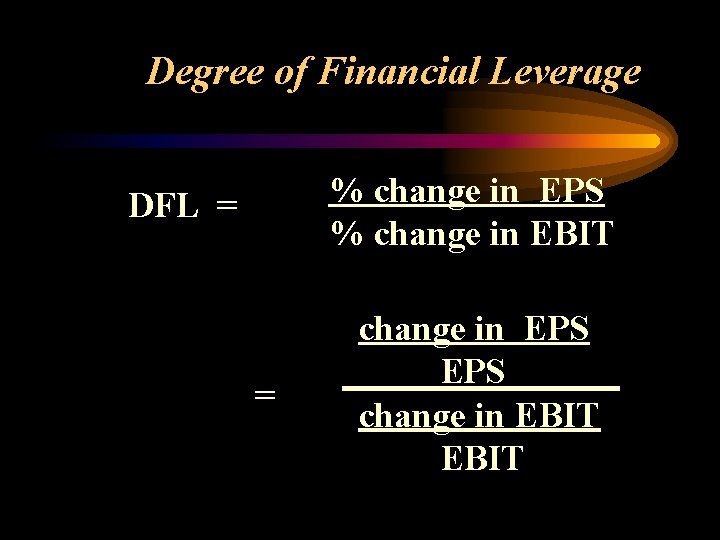
Degree of Financial Leverage % change in EPS % change in EBIT DFL = = change in EPS change in EBIT
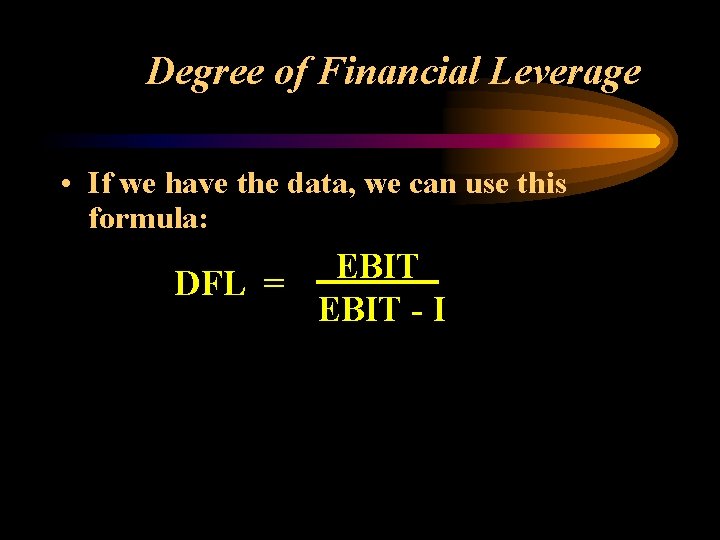
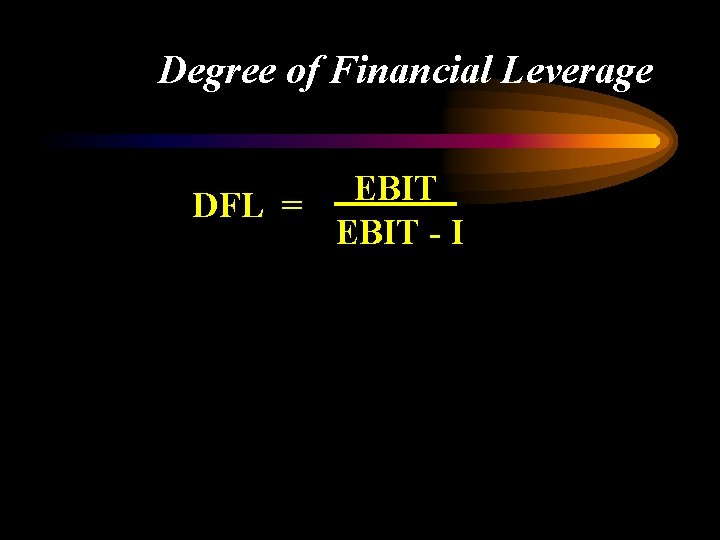
Degree of Financial Leverage • If we have the data, we can use this formula:
Degree of Financial Leverage • If we have the data, we can use this formula: EBIT DFL = EBIT - I
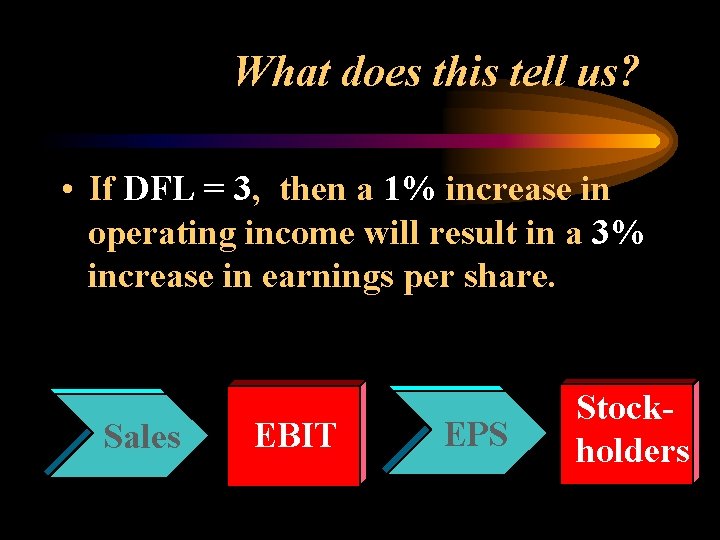
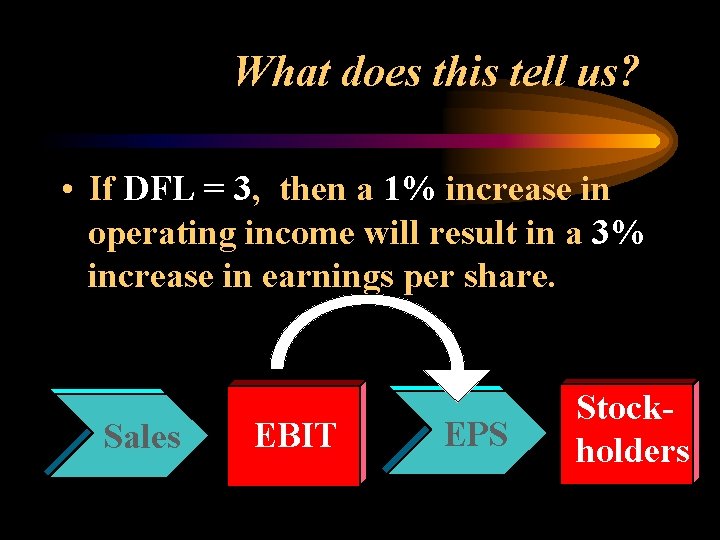
What does this tell us? • If DFL = 3, then a 1% increase in operating income will result in a 3% increase in earnings per share.
What does this tell us? • If DFL = 3, then a 1% increase in operating income will result in a 3% increase in earnings per share. Sales EBIT EPS Stockholders
What does this tell us? • If DFL = 3, then a 1% increase in operating income will result in a 3% increase in earnings per share. Sales EBIT EPS Stockholders
Degree of Combined Leverage (DCL) • Combined leverage: by using operating leverage and financial leverage, a small change in sales is magnified into a larger change in earnings per share. • This “multiplier effect” is called the degree of combined leverage.
Degree of Combined Leverage
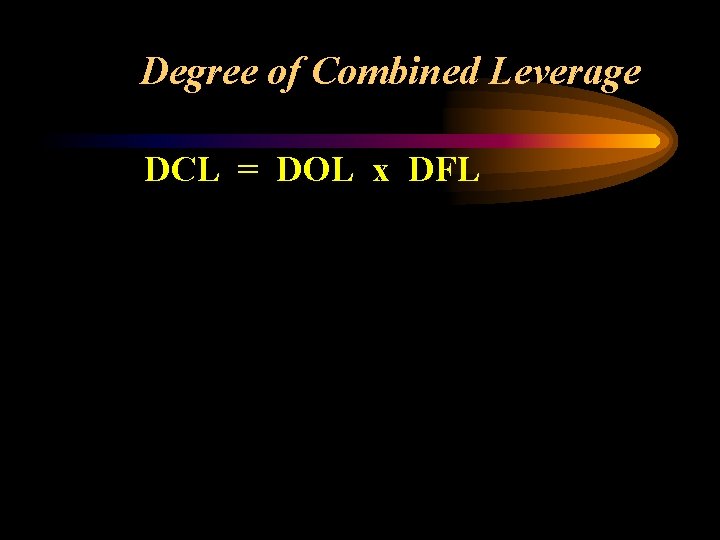
Degree of Combined Leverage DCL = DOL x DFL
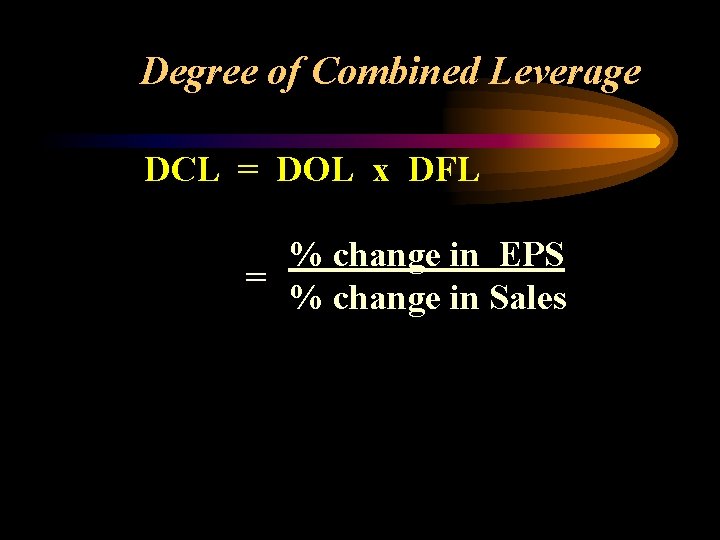
Degree of Combined Leverage DCL = DOL x DFL % change in EPS = % change in Sales
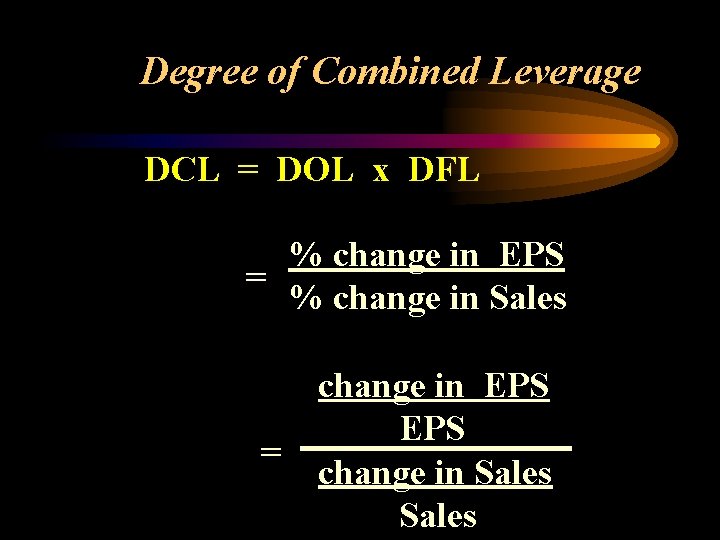
Degree of Combined Leverage DCL = DOL x DFL % change in EPS = % change in Sales = change in EPS change in Sales
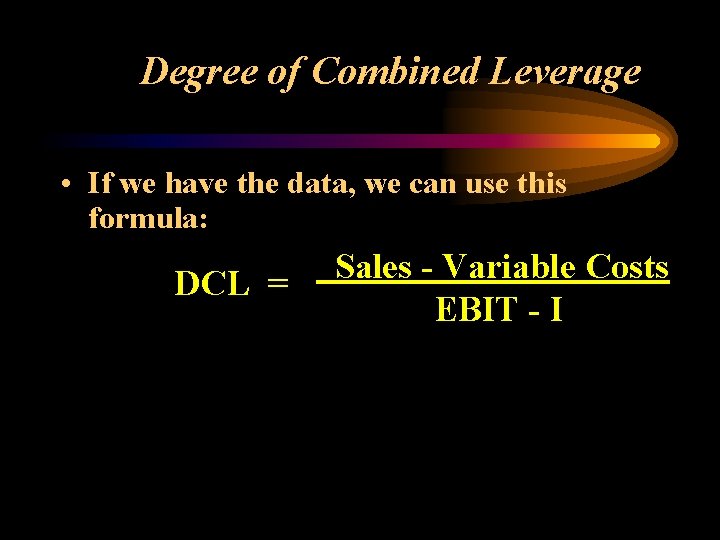
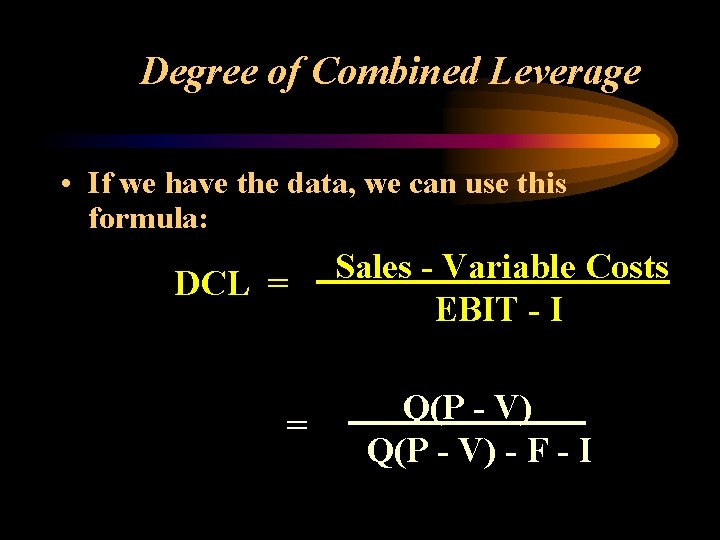
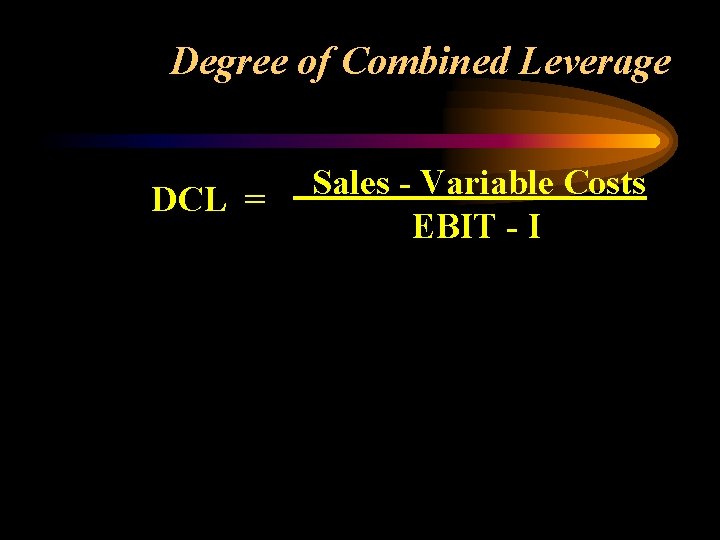
Degree of Combined Leverage • If we have the data, we can use this formula:
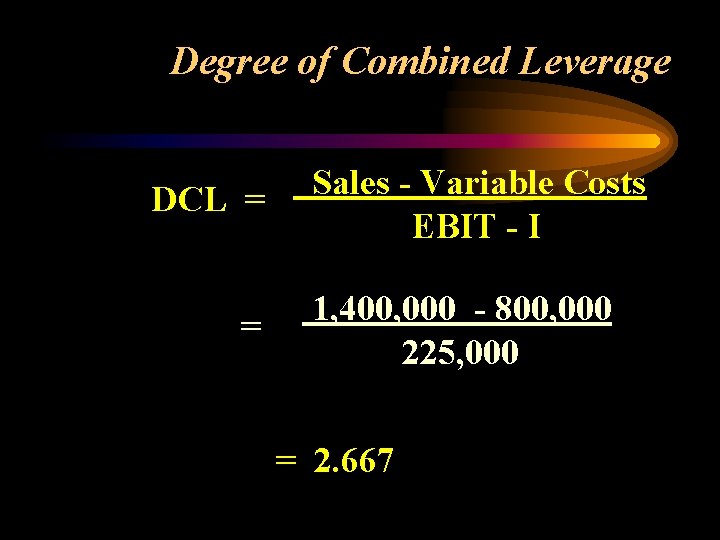
Degree of Combined Leverage • If we have the data, we can use this formula: DCL = Sales - Variable Costs EBIT - I
Degree of Combined Leverage • If we have the data, we can use this formula: DCL = = Sales - Variable Costs EBIT - I Q(P - V) - F - I
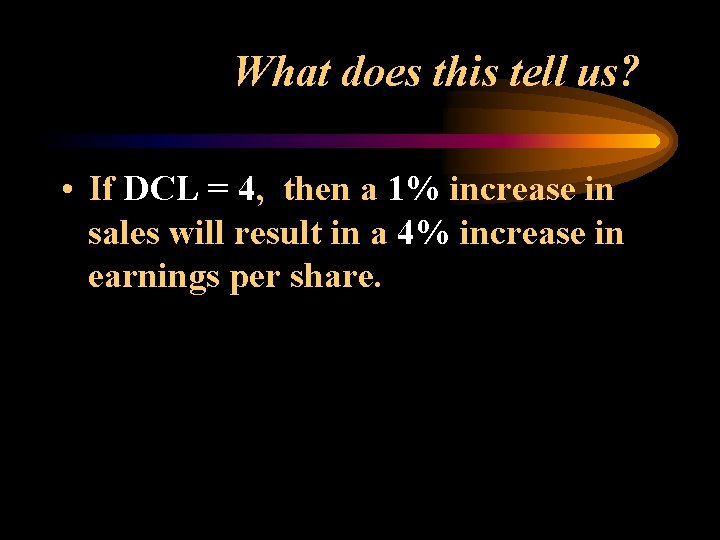
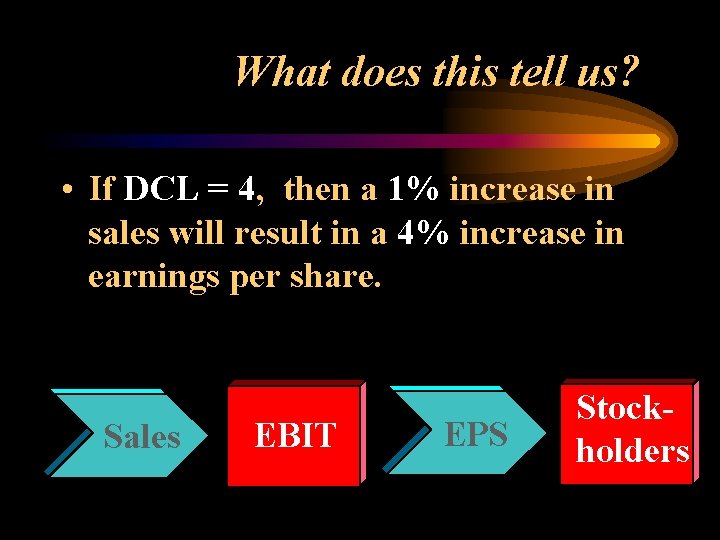
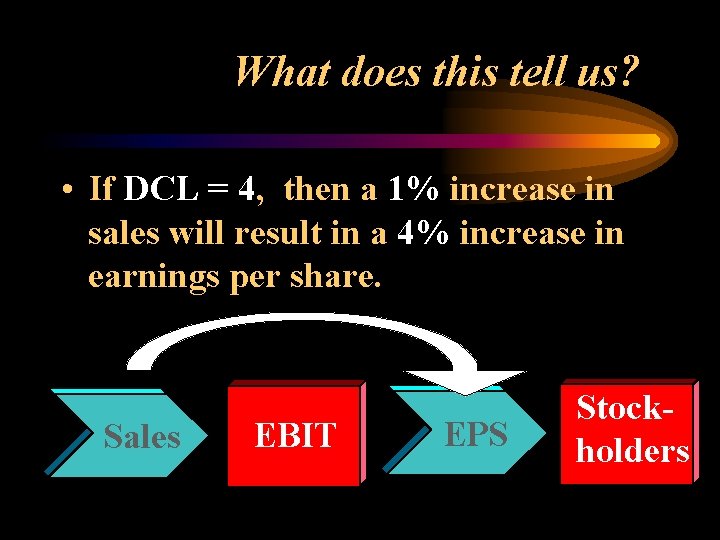
What does this tell us? • If DCL = 4, then a 1% increase in sales will result in a 4% increase in earnings per share.
What does this tell us? • If DCL = 4, then a 1% increase in sales will result in a 4% increase in earnings per share. Sales EBIT EPS Stockholders
What does this tell us? • If DCL = 4, then a 1% increase in sales will result in a 4% increase in earnings per share. Sales EBIT EPS Stockholders
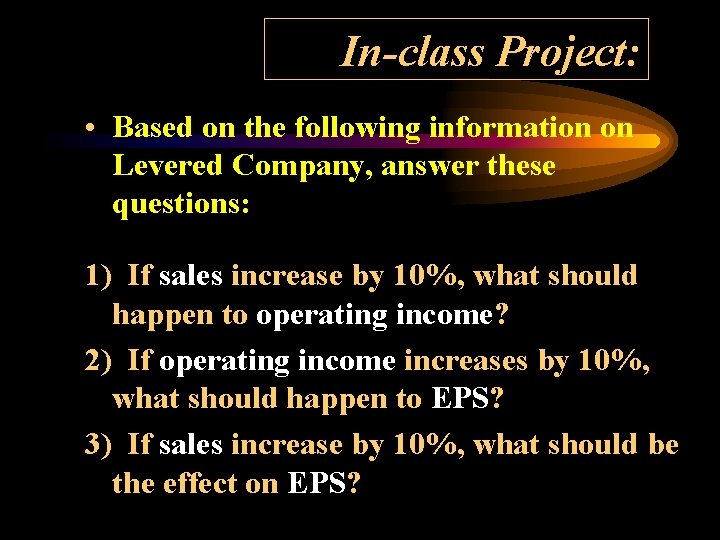
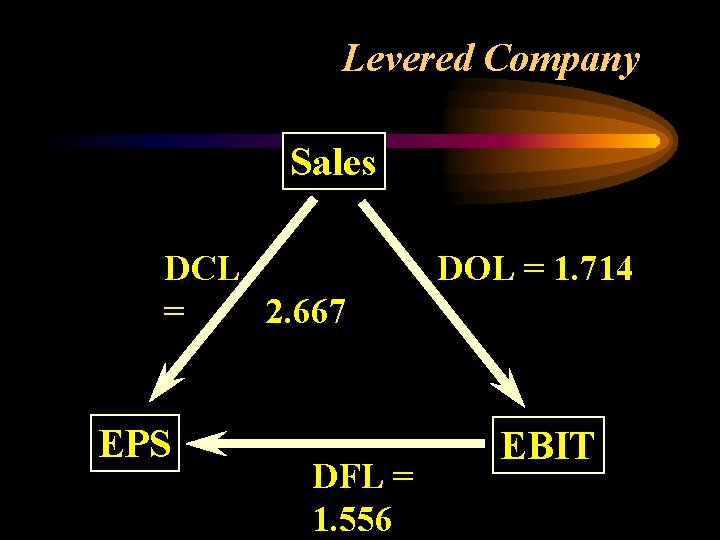
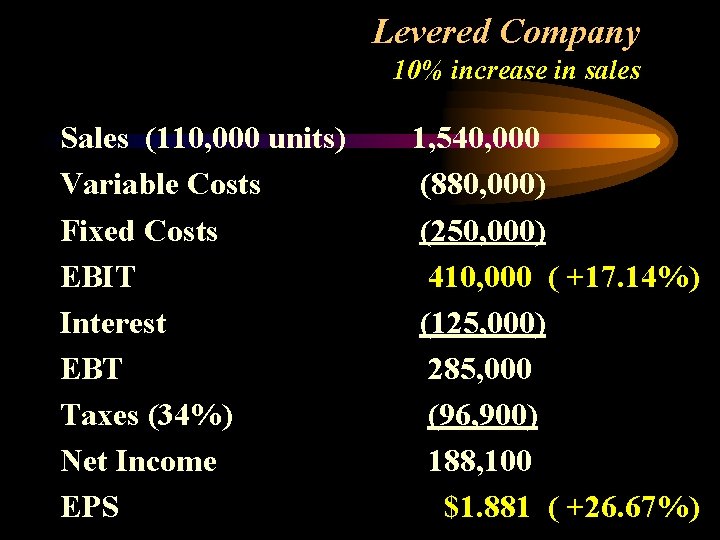
In-class Project: • Based on the following information on Levered Company, answer these questions: 1) If sales increase by 10%, what should happen to operating income? 2) If operating income increases by 10%, what should happen to EPS? 3) If sales increase by 10%, what should be the effect on EPS?
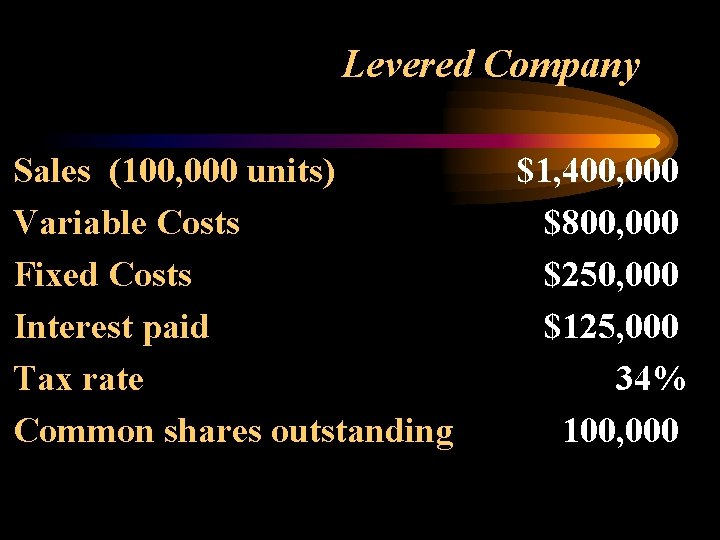
Levered Company Sales (100, 000 units) Variable Costs Fixed Costs Interest paid Tax rate Common shares outstanding $1, 400, 000 $800, 000 $250, 000 $125, 000 34% 100, 000
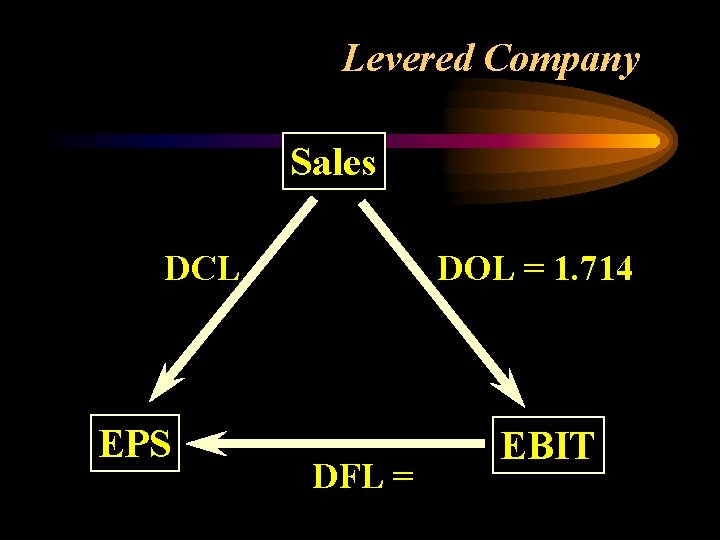
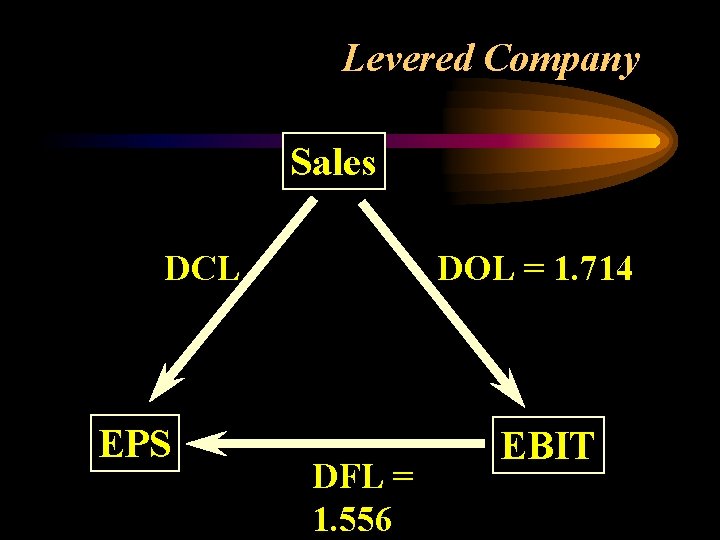
Leverage Sales DCL EPS DOL DFL EBIT
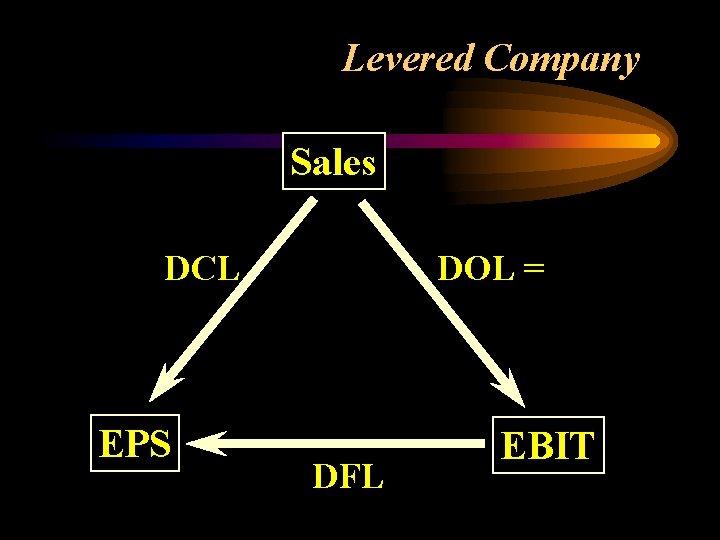
Levered Company Sales DCL EPS DOL = DFL EBIT
Degree of Operating Leverage from Sales Level (S) Sales - Variable Costs DOLs = EBIT
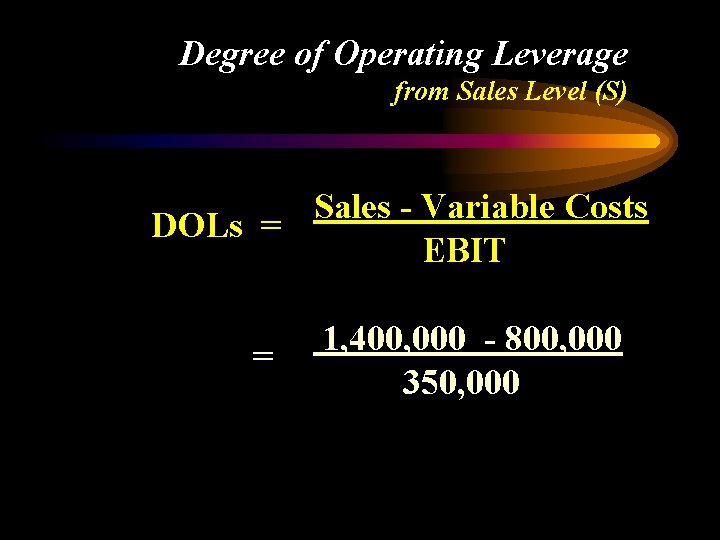
Degree of Operating Leverage from Sales Level (S) Sales - Variable Costs DOLs = EBIT = 1, 400, 000 - 800, 000 350, 000
Degree of Operating Leverage from Sales Level (S) Sales - Variable Costs DOLs = EBIT = 1, 400, 000 - 800, 000 350, 000 = 1. 714
Levered Company Sales DCL EPS DOL = 1. 714 DFL = EBIT
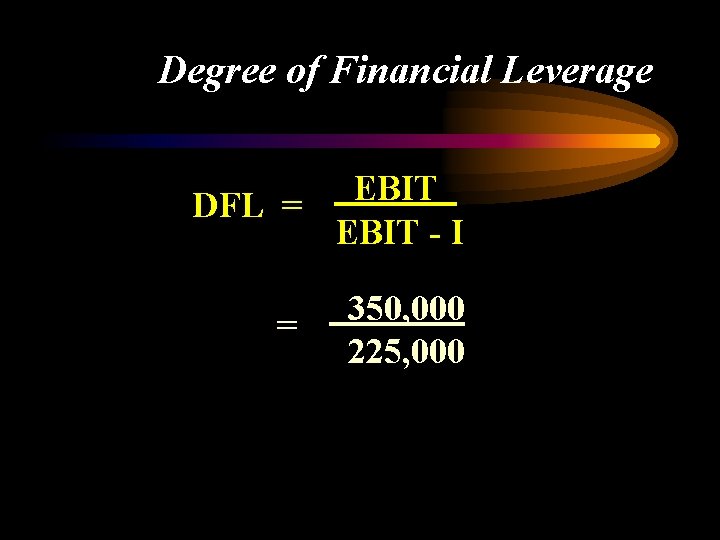
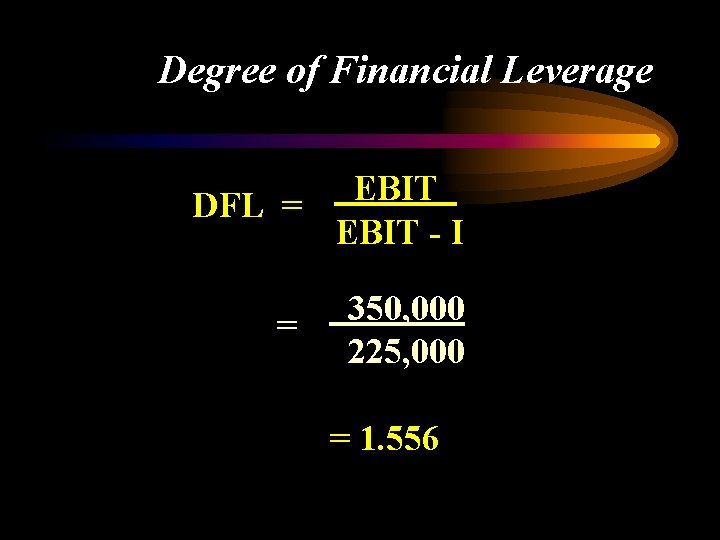
Degree of Financial Leverage EBIT DFL = EBIT - I
Degree of Financial Leverage EBIT DFL = EBIT - I = 350, 000 225, 000
Degree of Financial Leverage EBIT DFL = EBIT - I = 350, 000 225, 000 = 1. 556
Levered Company Sales DCL EPS DOL = 1. 714 DFL = 1. 556 EBIT
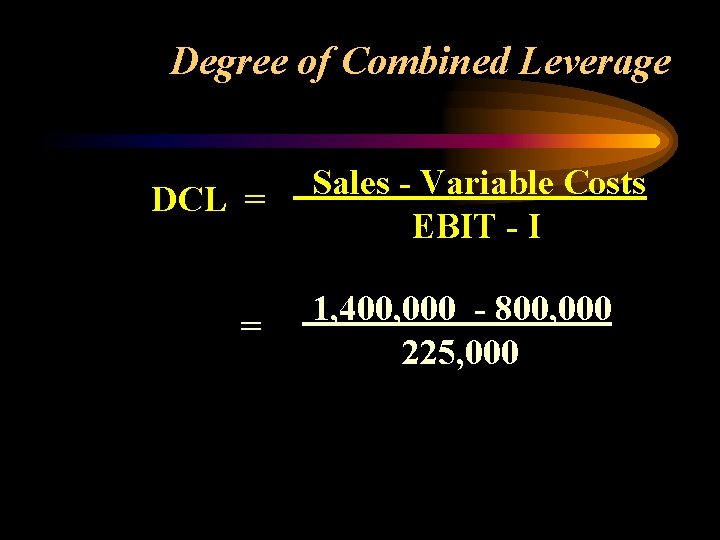
Degree of Combined Leverage DCL = Sales - Variable Costs EBIT - I
Degree of Combined Leverage DCL = = Sales - Variable Costs EBIT - I 1, 400, 000 - 800, 000 225, 000
Degree of Combined Leverage DCL = = Sales - Variable Costs EBIT - I 1, 400, 000 - 800, 000 225, 000 = 2. 667
Levered Company Sales DCL = 2. 667 EPS DFL = 1. 556 DOL = 1. 714 EBIT
Levered Company 10% increase in sales Sales (110, 000 units) Variable Costs Fixed Costs EBIT Interest EBT Taxes (34%) Net Income EPS 1, 540, 000 (880, 000) (250, 000) 410, 000 ( +17. 14%) (125, 000) 285, 000 (96, 900) 188, 100 $1. 881 ( +26. 67%)