
Operant Conditioning Works on voluntary behavior You learn
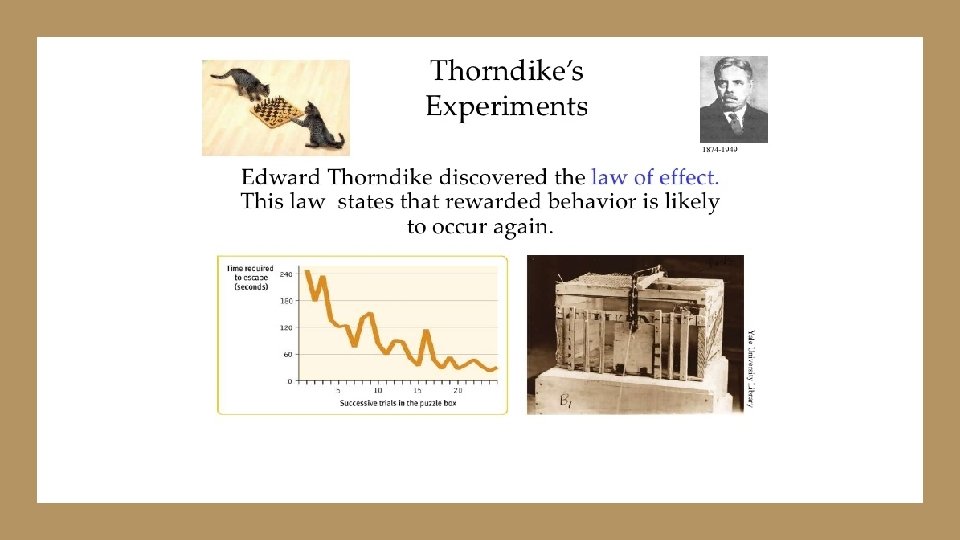

Operant Conditioning Works on voluntary behavior. You learn to do things to earn rewards and to avoid punishment

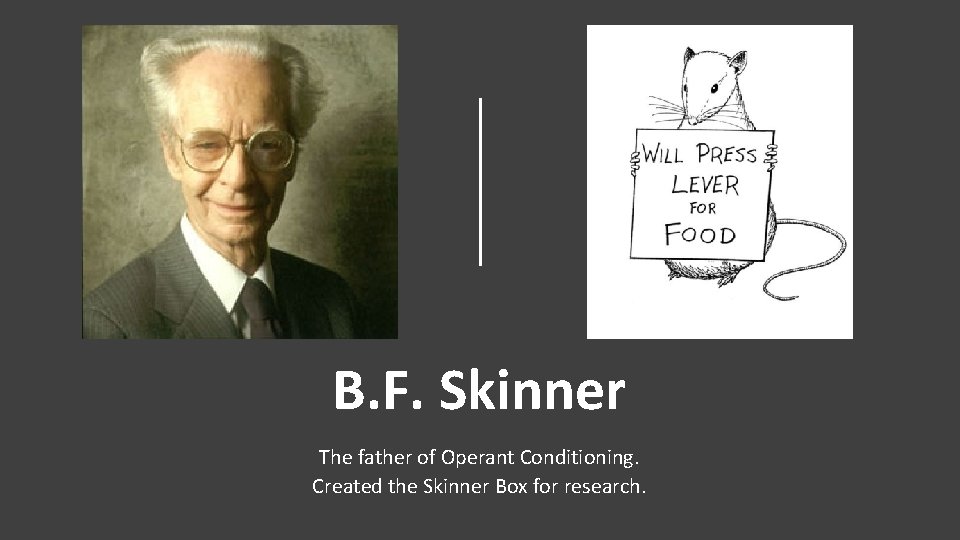
B. F. Skinner The father of Operant Conditioning. Created the Skinner Box for research.
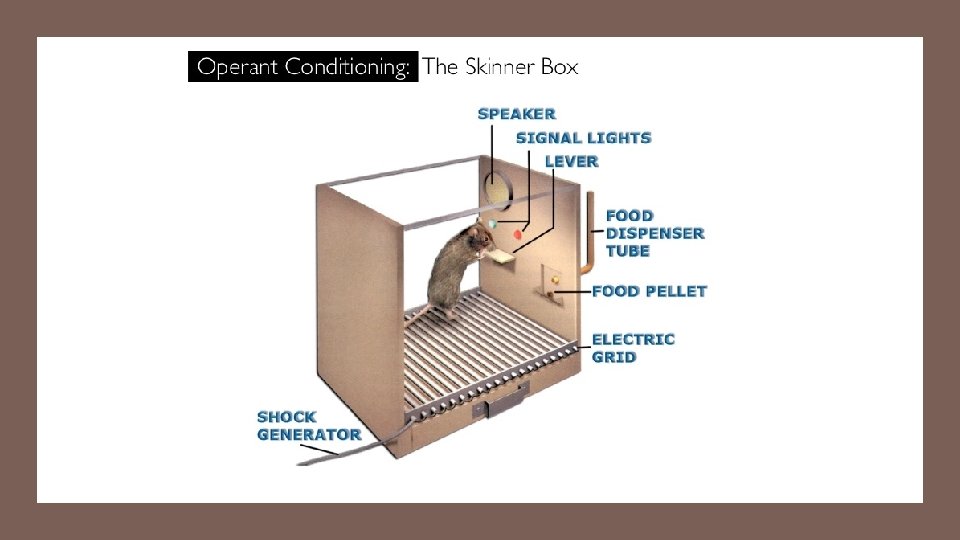
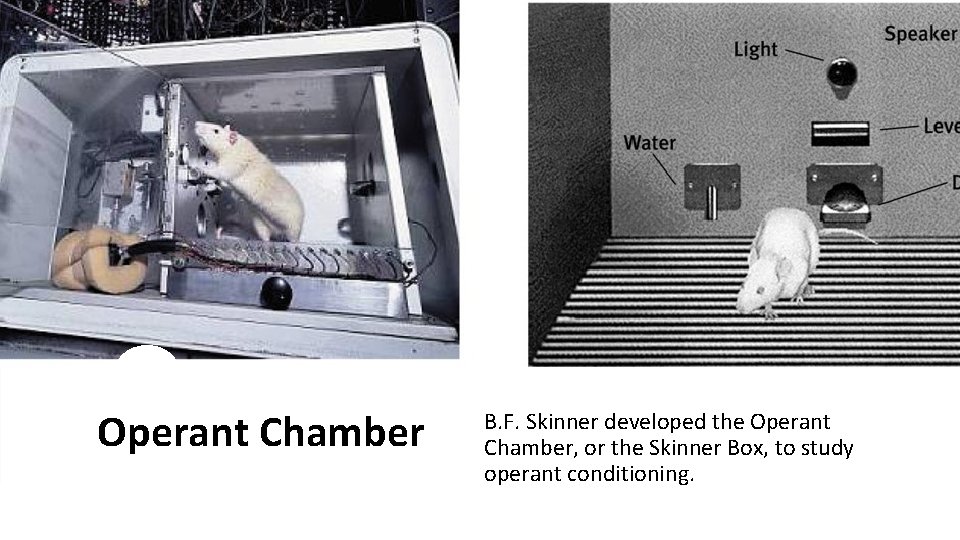
Operant Chamber B. F. Skinner developed the Operant Chamber, or the Skinner Box, to study operant conditioning.
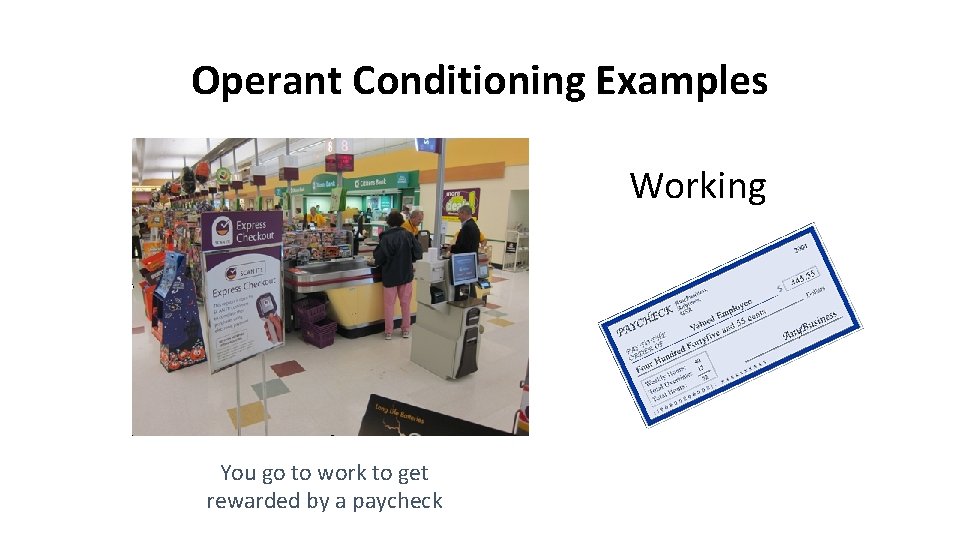
Operant Conditioning Examples Working You go to work to get rewarded by a paycheck
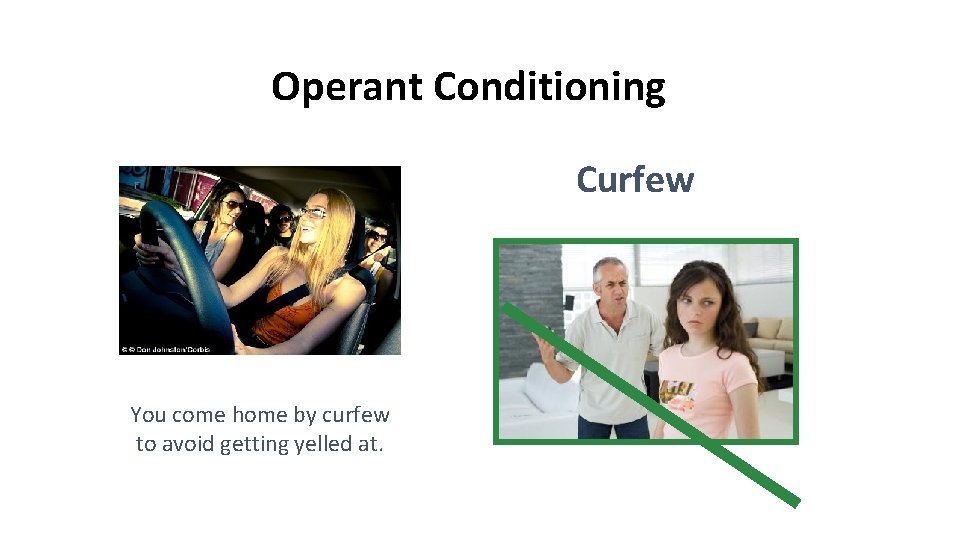
Operant Conditioning Curfew You come home by curfew to avoid getting yelled at.
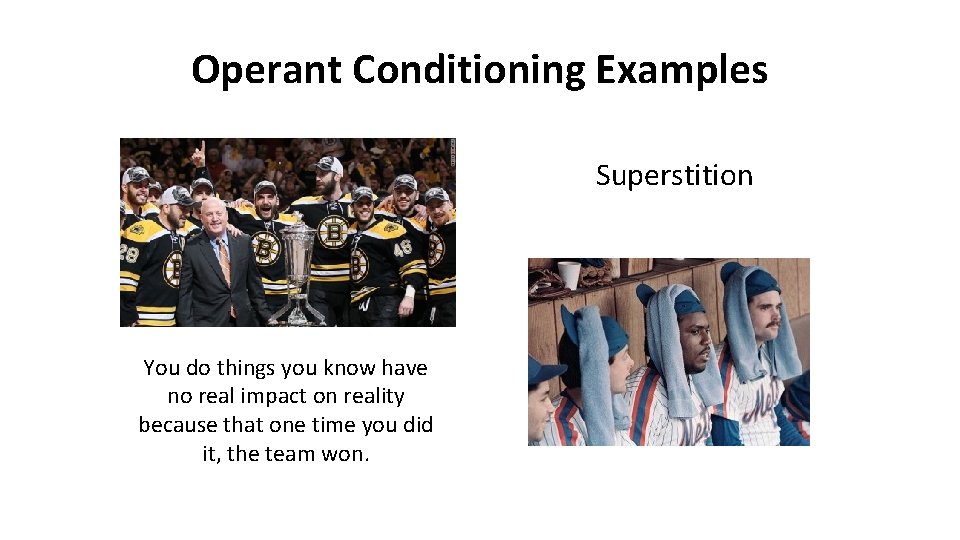
Operant Conditioning Examples Superstition You do things you know have no real impact on reality because that one time you did it, the team won.
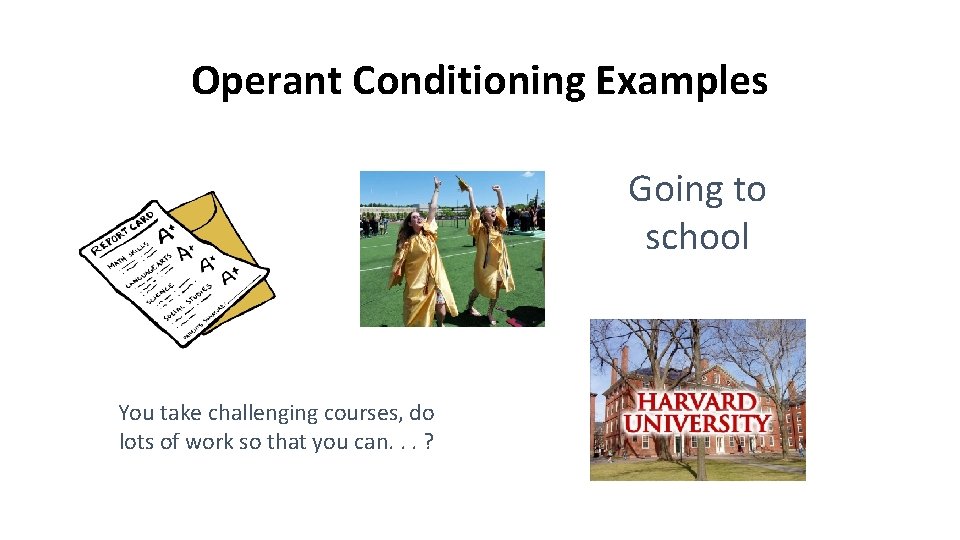
Operant Conditioning Examples Going to school You take challenging courses, do lots of work so that you can. . . ?
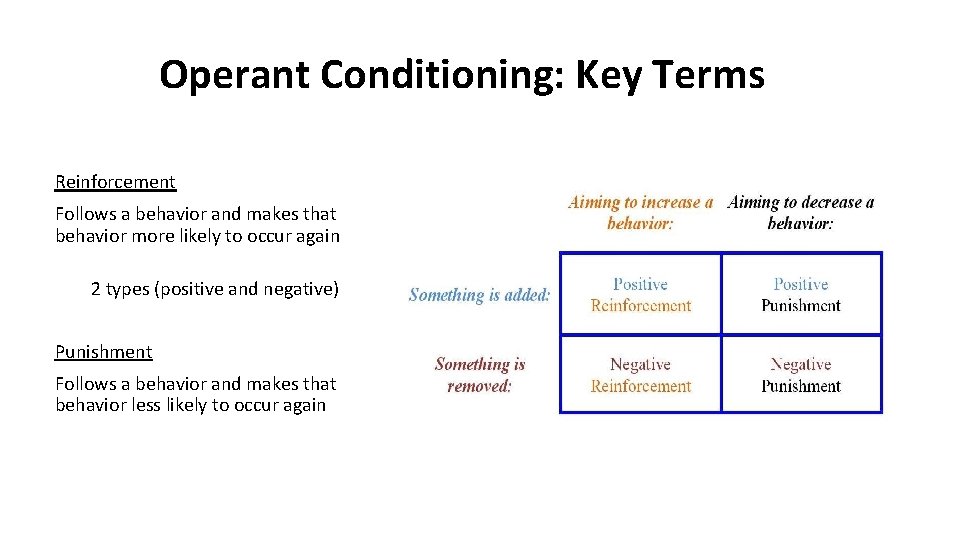
Operant Conditioning: Key Terms Reinforcement Follows a behavior and makes that behavior more likely to occur again 2 types (positive and negative) Punishment Follows a behavior and makes that behavior less likely to occur again

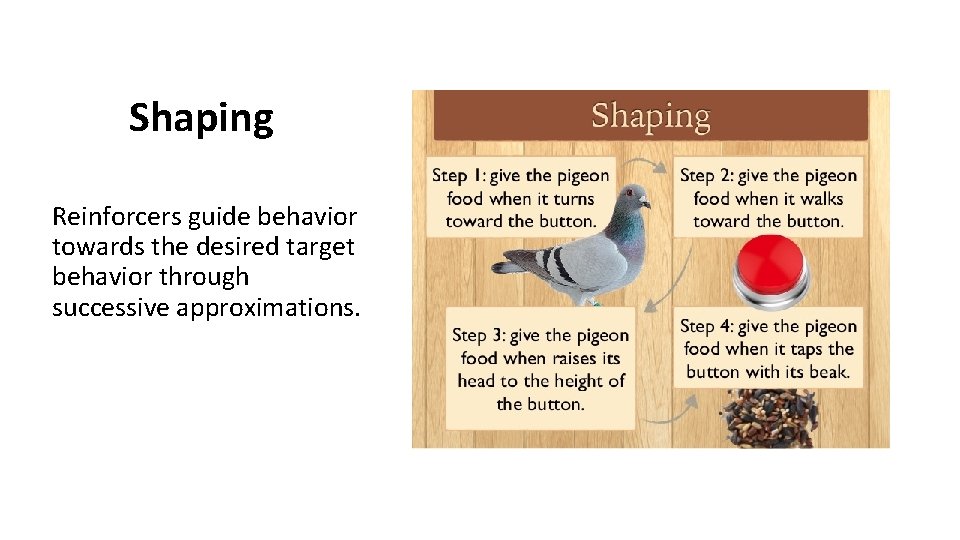
Shaping Reinforcers guide behavior towards the desired target behavior through successive approximations.
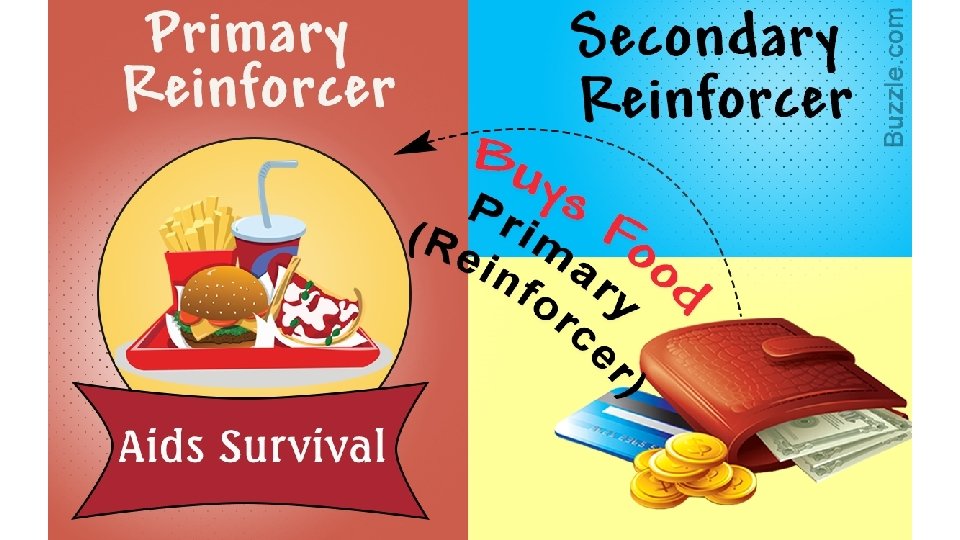
Primary & Secondary Reinforcers 1 Primary Reinforcer: An innately reinforcing stimulus like food or drink. 2 Secondary Reinforcer: A learned reinforcer that gets its power through association with the primary reinforcer.
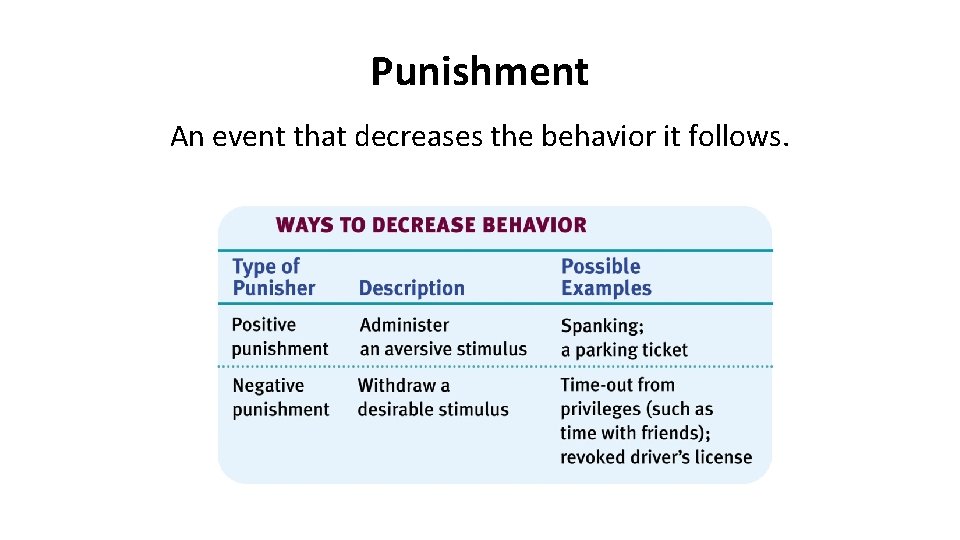
Punishment An event that decreases the behavior it follows.
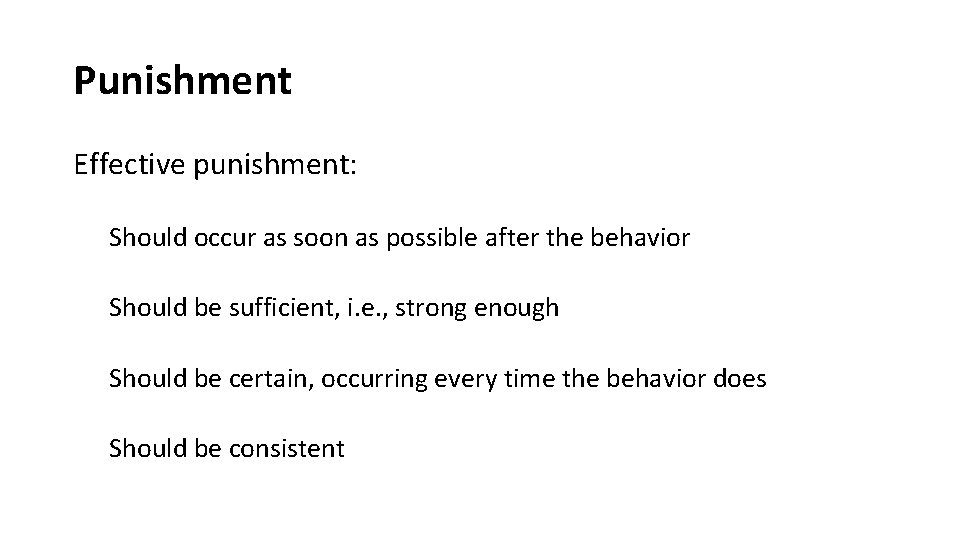
Punishment Effective punishment: Should occur as soon as possible after the behavior Should be sufficient, i. e. , strong enough Should be certain, occurring every time the behavior does Should be consistent
Punishment 1. 2. 3. 4. 5. 6. 7. Results in unwanted fears. Conveys no information to the organism. Justifies pain to others. Causes unwanted behaviors to reappear in its absence. Causes aggression towards the agent. Causes one unwanted behavior to appear in place of another. Although there may be some justification for occasional punishment (Larzelaere & Baumrind, 2002), it usually leads to negative effects.

Operant Conditioning is Selective Superstition Tendency to repeat behaviors that are followed closely by a reinforcer, even if they are not related For example, a particular pair of socks might become “lucky” if something good happened when you wore them
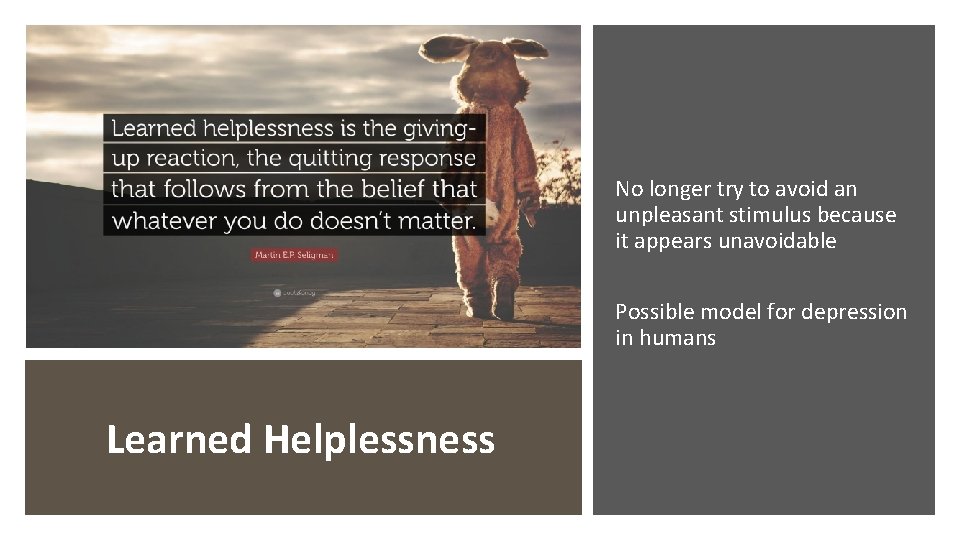
No longer try to avoid an unpleasant stimulus because it appears unavoidable Possible model for depression in humans Learned Helplessness
Behavioral Change Using Biofeedback is an operant technique that teaches people to gain voluntary control over bodily processes like heart rate and blood pressure When used to control brain activity it is called neurofeedback
- Slides: 22