
OPERANT CONDITIONING Chapter 9 Section 2 1 OPERANT
- Slides: 33
OPERANT CONDITIONING Chapter 9 Section 2 1
OPERANT CONDITIONING Learn to do, or not do, things based on the consequences of the behavior Behavior operates on, or manipulates, the environment Voluntary responses are acquired or conditioned
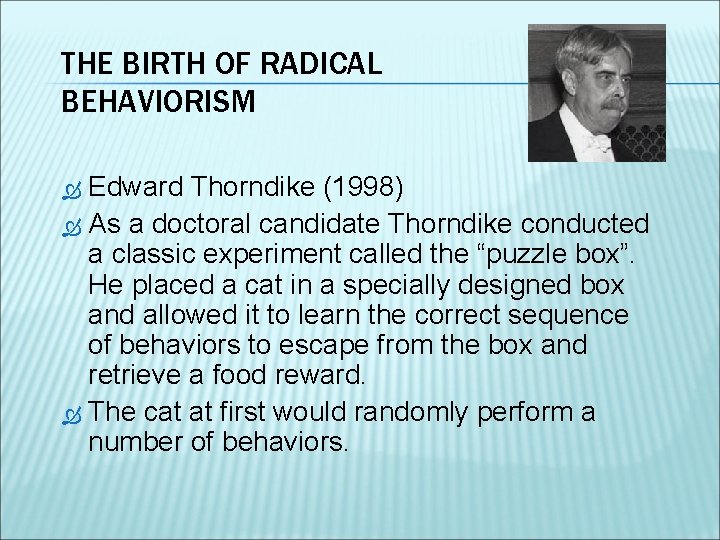
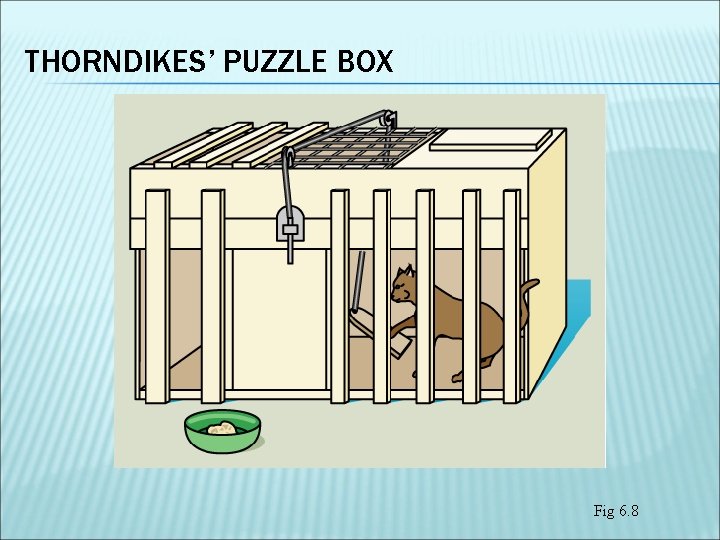
THE BIRTH OF RADICAL BEHAVIORISM Edward Thorndike (1998) As a doctoral candidate Thorndike conducted a classic experiment called the “puzzle box”. He placed a cat in a specially designed box and allowed it to learn the correct sequence of behaviors to escape from the box and retrieve a food reward. The cat at first would randomly perform a number of behaviors.
THORNDIKES’ PUZZLE BOX Fig 6. 8
LAW OF EFFECT According to the law of effect, responses followed by satisfaction are more likely to reoccur in the future. Responses that produce a discomforting effect become less likely to occur again in that situation.
THE CONSEQUENCES OF BEHAVIOR From Skinner’s perspective a response (“operant”) can result from Reinforcement Punishment
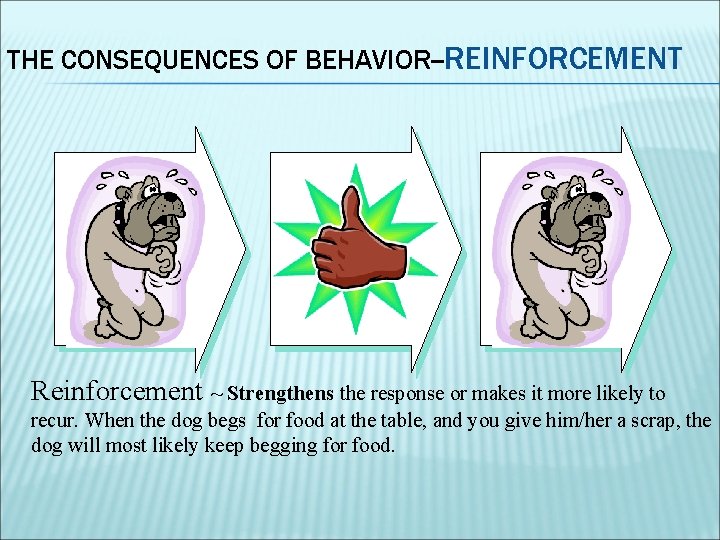
THE CONSEQUENCES OF BEHAVIOR--REINFORCEMENT Reinforcement ~ Strengthens the response or makes it more likely to recur. When the dog begs for food at the table, and you give him/her a scrap, the dog will most likely keep begging for food.
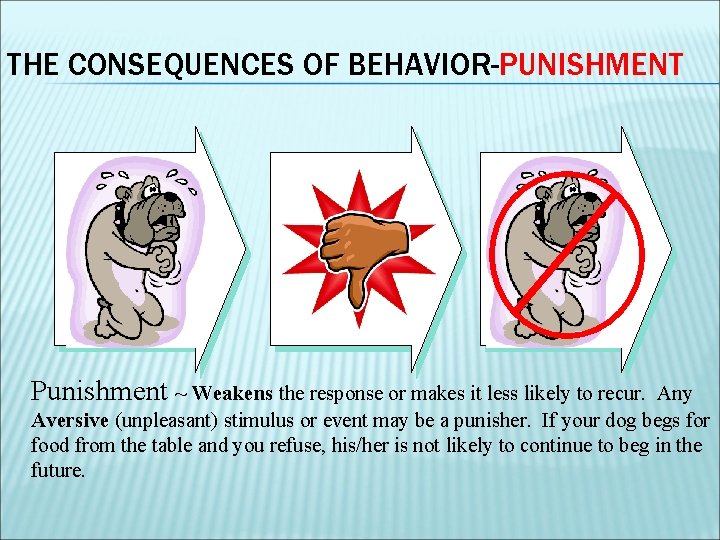
THE CONSEQUENCES OF BEHAVIOR-PUNISHMENT Punishment ~ Weakens the response or makes it less likely to recur. Any Aversive (unpleasant) stimulus or event may be a punisher. If your dog begs for food from the table and you refuse, his/her is not likely to continue to beg in the future.
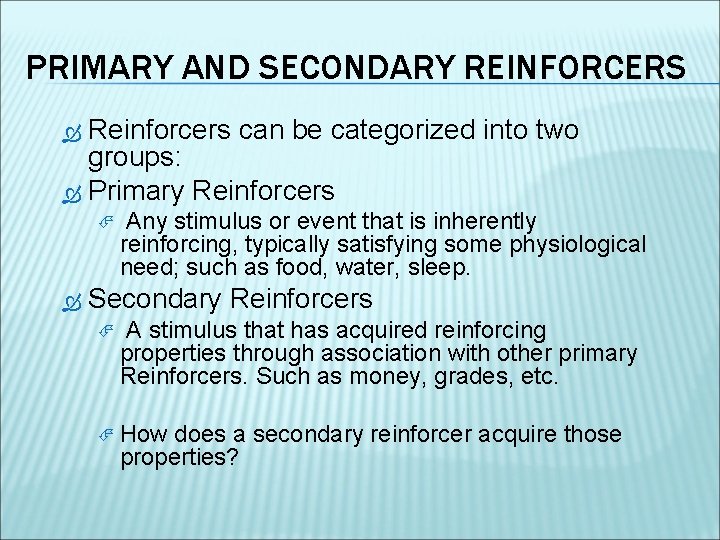
PRIMARY AND SECONDARY REINFORCERS Reinforcers can be categorized into two groups: Primary Reinforcers Any stimulus or event that is inherently reinforcing, typically satisfying some physiological need; such as food, water, sleep. Secondary Reinforcers A stimulus that has acquired reinforcing properties through association with other primary Reinforcers. Such as money, grades, etc. How does a secondary reinforcer acquire those properties?
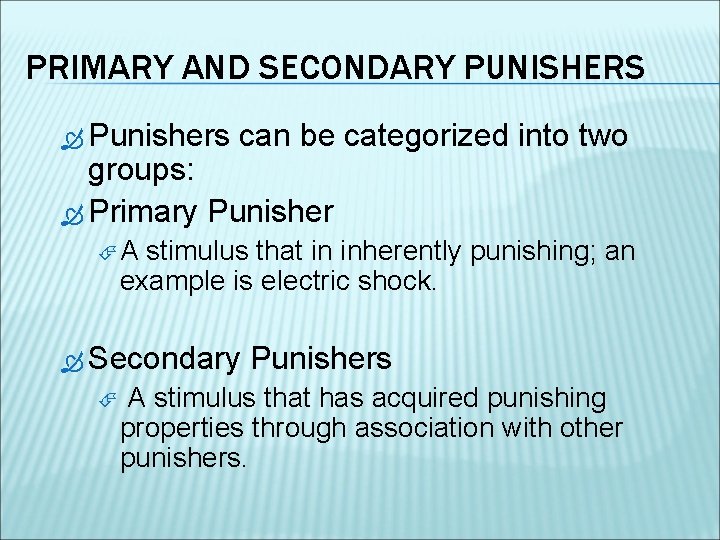
PRIMARY AND SECONDARY PUNISHERS Punishers can be categorized into two groups: Primary Punisher A stimulus that in inherently punishing; an example is electric shock. Secondary Punishers A stimulus that has acquired punishing properties through association with other punishers.
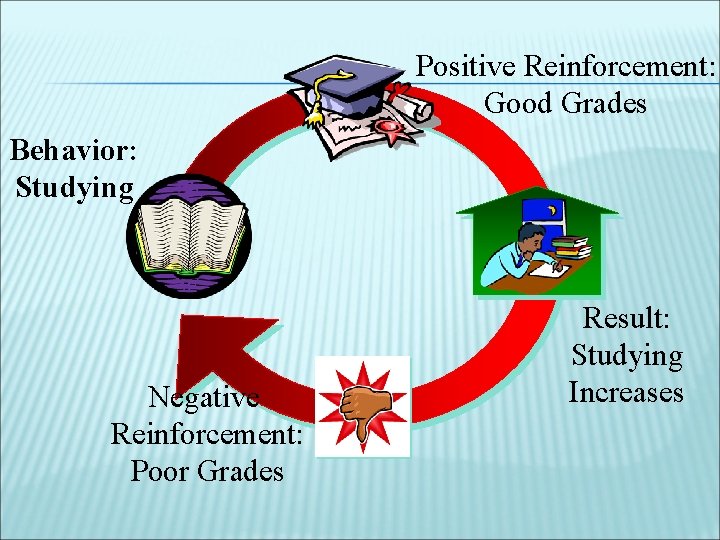
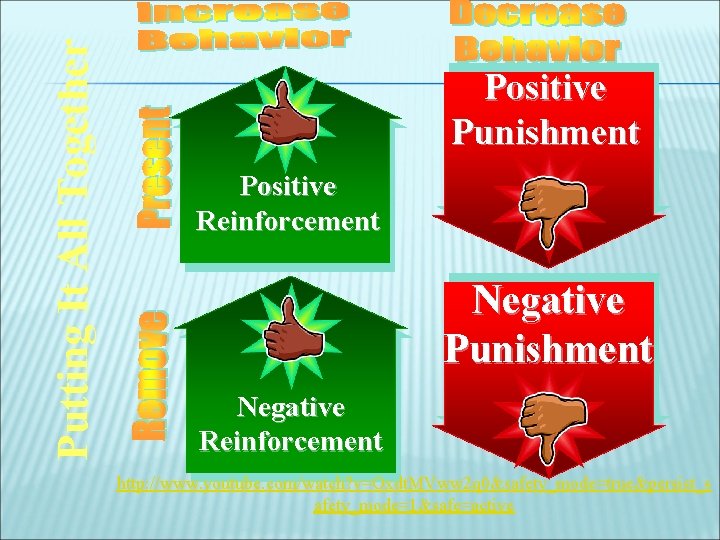
Positive Reinforcement: Good Grades Behavior: Studying Negative Reinforcement: Poor Grades Result: Studying Increases
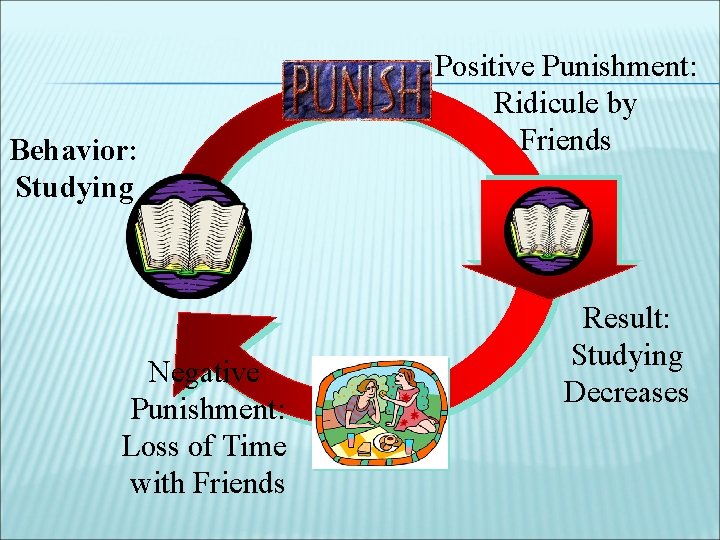
Behavior: Studying Negative Punishment: Loss of Time with Friends Positive Punishment: Ridicule by Friends Result: Studying Decreases
Putting It All Together Positive Punishment Positive Reinforcement Negative Punishment Negative Reinforcement http: //www. youtube. com/watch? v=Oxdt. MVww 2 q 0&safety_mode=true&persist_s afety_mode=1&safe=active
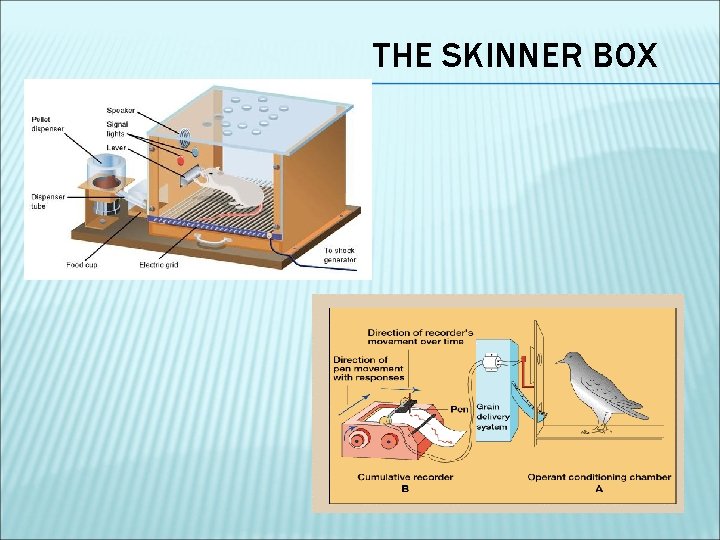
PRINCIPLES OF OPERANT CONDITIONING Early in his career Skinner (1938) used the Skinner Box to demonstrate the principles of operant conditioning. A rat that had previous learned to eat from the foodreleasing device was placed in the box Because there was no food present in the box, the rat began to engage in typical rat-like behaviors. (sniffing, random touching, scurrying etc. ) Once he hit the lever that released food, he continued to display that behavior
THE SKINNER BOX
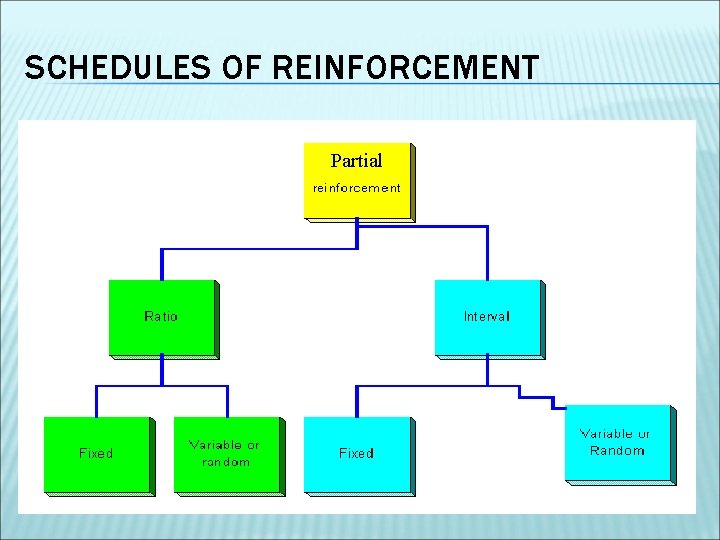
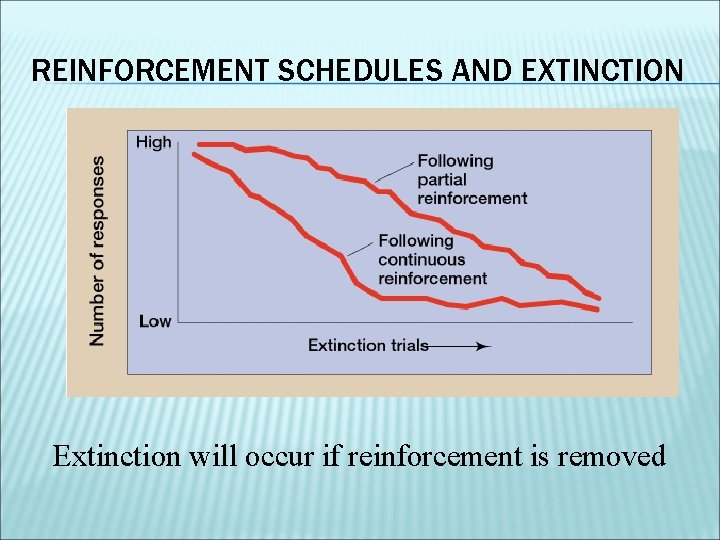
SCHEDULES OF REINFORCEMENT Timing and Frequency are very important Continuous Reinforcement Schedule in which a particular response is always reinforced after every occurrence of the target behavior. Partial Reinforcement Target Which behaviors are only reinforced sometimes. do you think lasts longer and is more stable? Why?
SCHEDULES OF REINFORCEMENT Partial
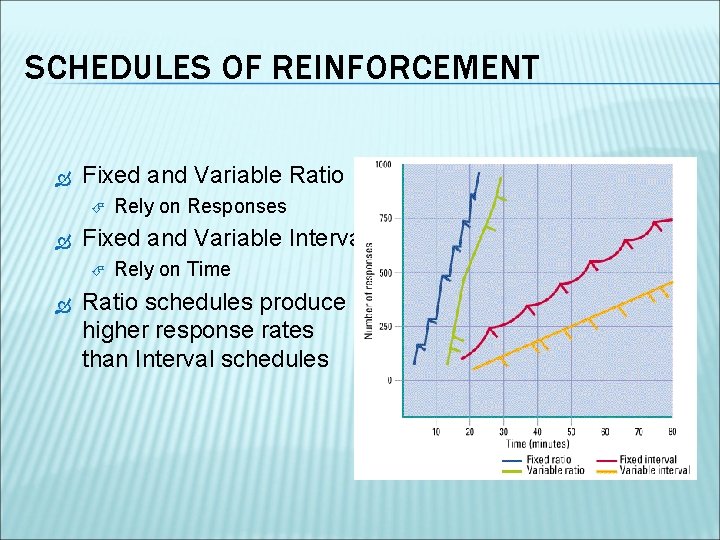
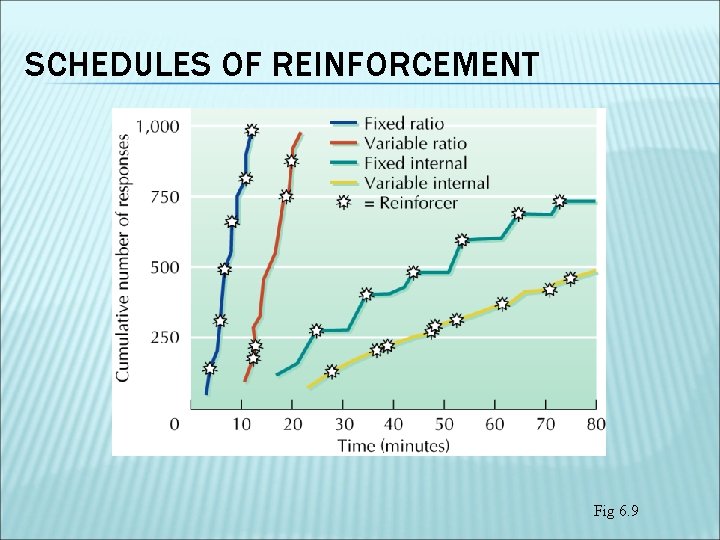
SCHEDULES OF REINFORCEMENT Fixed and Variable Ratio Fixed and Variable Interval Rely on Responses Rely on Time Ratio schedules produce higher response rates than Interval schedules
SCHEDULES OF REINFORCEMENT Fig 6. 9
REINFORCEMENT SCHEDULES AND EXTINCTION Extinction will occur if reinforcement is removed
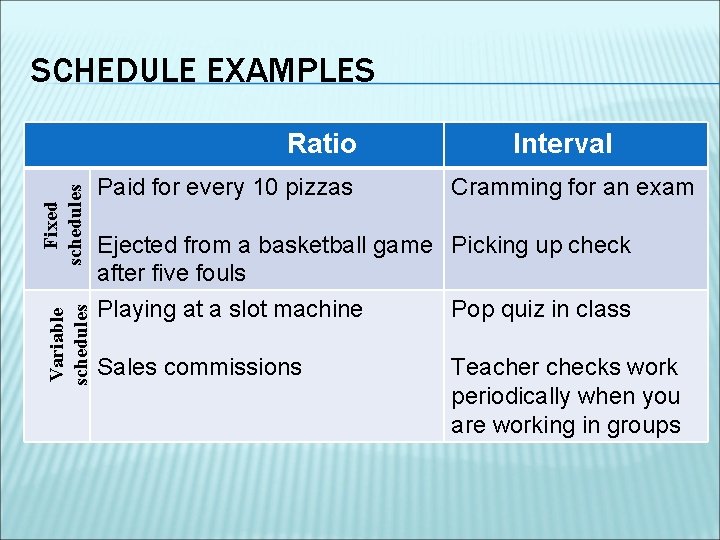
SCHEDULE EXAMPLES Variable schedules Fixed schedules Ratio Paid for every 10 pizzas Interval Cramming for an exam Ejected from a basketball game Picking up check after five fouls Playing at a slot machine Pop quiz in class Sales commissions Teacher checks work periodically when you are working in groups
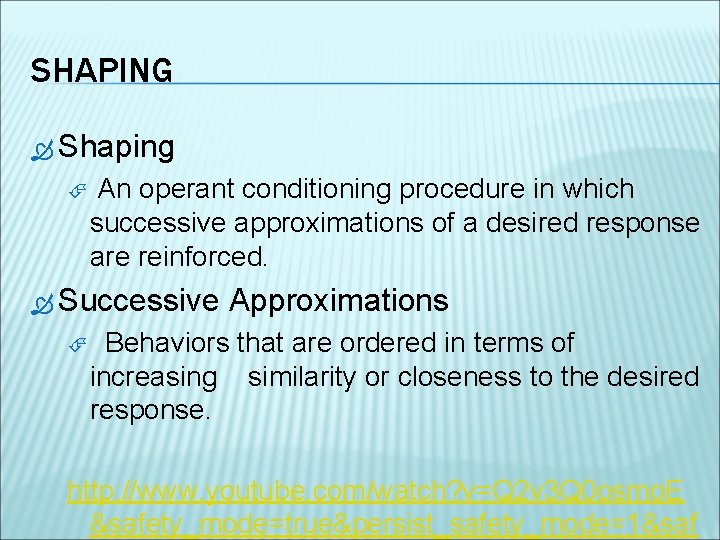
SHAPING Shaping An operant conditioning procedure in which successive approximations of a desired response are reinforced. Successive Approximations Behaviors that are ordered in terms of increasing similarity or closeness to the desired response. http: //www. youtube. com/watch? v=Q 2 v 3 Q 0 osmo. E &safety_mode=true&persist_safety_mode=1&saf
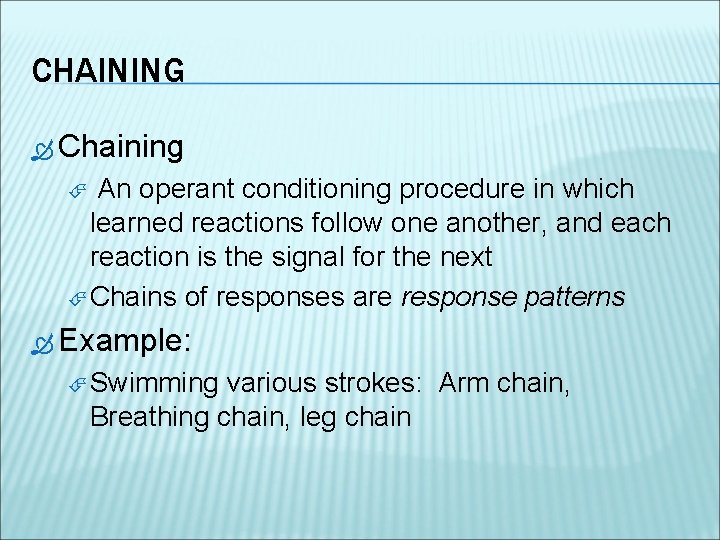
CHAINING Chaining An operant conditioning procedure in which learned reactions follow one another, and each reaction is the signal for the next Chains of responses are response patterns Example: Swimming various strokes: Arm chain, Breathing chain, leg chain
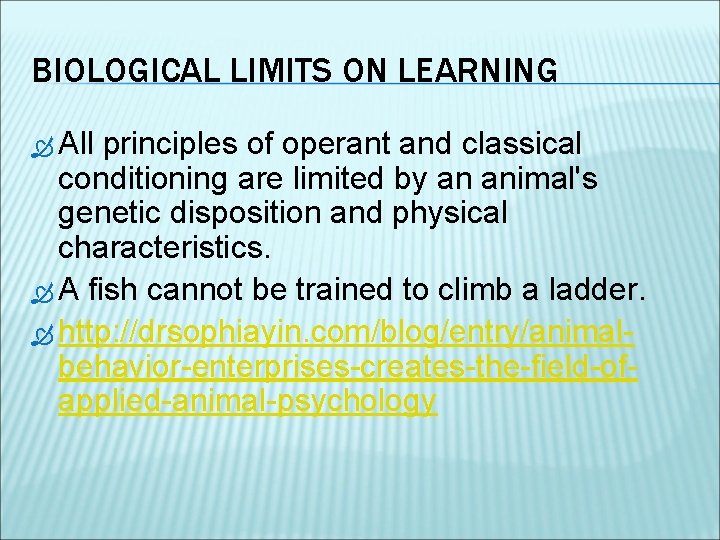
BIOLOGICAL LIMITS ON LEARNING All principles of operant and classical conditioning are limited by an animal's genetic disposition and physical characteristics. A fish cannot be trained to climb a ladder. http: //drsophiayin. com/blog/entry/animalbehavior-enterprises-creates-the-field-ofapplied-animal-psychology
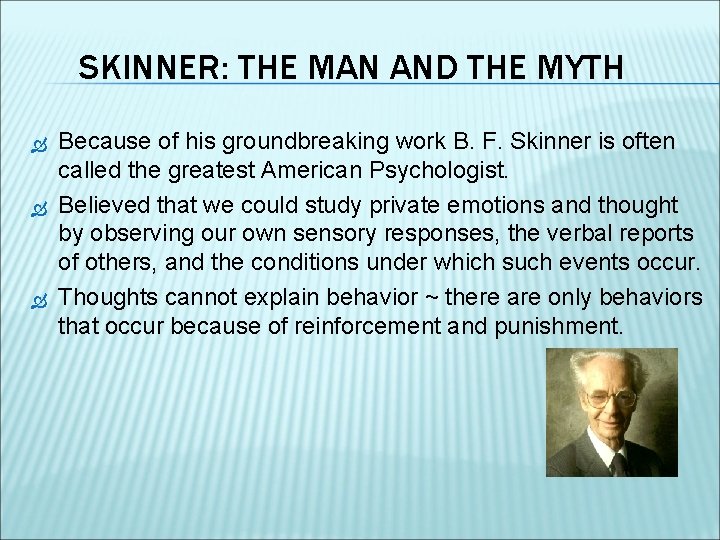
SKINNER: THE MAN AND THE MYTH Because of his groundbreaking work B. F. Skinner is often called the greatest American Psychologist. Believed that we could study private emotions and thought by observing our own sensory responses, the verbal reports of others, and the conditions under which such events occur. Thoughts cannot explain behavior ~ there are only behaviors that occur because of reinforcement and punishment.
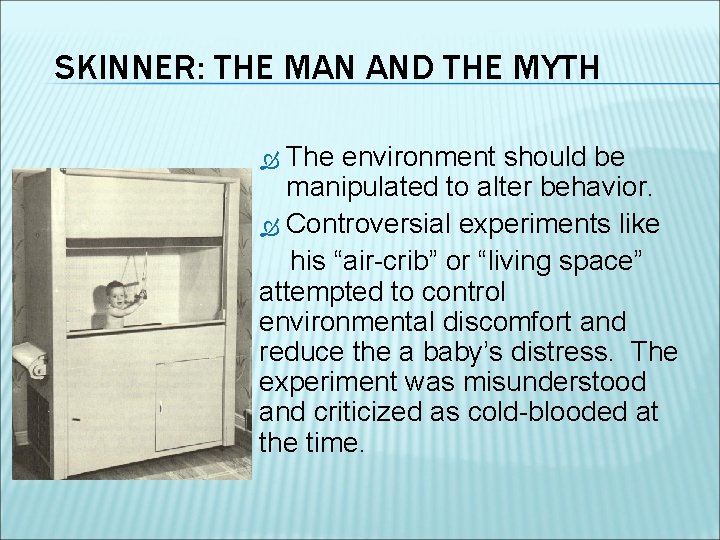
SKINNER: THE MAN AND THE MYTH The environment should be manipulated to alter behavior. Controversial experiments like his “air-crib” or “living space” attempted to control environmental discomfort and reduce the a baby’s distress. The experiment was misunderstood and criticized as cold-blooded at the time.
REINFORCERS VERSUS REWARDS AND PUNISHMENT Reinforcers are known by their effect (increase response) Rewards are pleasant events that affect behavior Punishment are aversive events that decrease the frequency of the behavior they follow
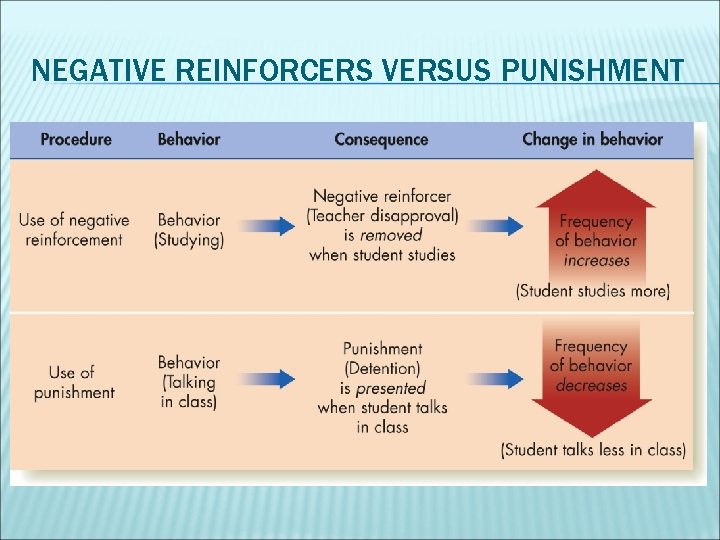
NEGATIVE REINFORCERS VERSUS PUNISHMENT
TWO USES OF NEGATIVE REINFORCEMENT Escape Conditioning: A person’s behavior causes an unpleasant event to stop. This increases behavior. Avoidance Conditioning: The person’s behavior prevents an unpleasant situation from happening. This increases behavior. Examples: A child whining and crying to get what he wants when a parent has said “No” Repeating “I’ll do it later, ” or “Okay, ” when asked to complete a chore, and you never do it
PUNISHMENT An unpleasant consequence occurs and DECREASES the behavior Examples?
WHEN PUNISHMENT WORKS Punishment can be a deterrent for some young criminal from repeated offenses (Brennan & Sarnoff, 1994) provided the punishment is consistently applied. The severity of the punishment, however, made no difference in term of relapsing into a previous undesirable type of behavior. Inconsistent punishment was found to have the same effect as an intermittent reinforcement schedule making the poor behavior highly resistive to extinction.
WHEN PUNISHMENT FAILS People often administer punishment inappropriately or mindlessly. The recipient of punishment often responds with anxiety, fear, or rage. The effectiveness of punishment is often temporary, depending heavily on the presence of the punishing person or circumstances. Person learns to avoid the person giving the punishment
WHEN PUNISHMENT FAILS Most misbehavior is hard to punish immediately. Punishment conveys little information. An action intended to punish may instead be reinforcing if brings attention.