
Opening Thoughts COSMO02 Wendy Freedman Carnegie Observatories Pasadena
Opening Thoughts COSMO-02 Wendy Freedman Carnegie Observatories, Pasadena CA Chicago, September 2002

Goals set by our friendly Organizing Committee… Dear Wendy and David: Cosmo-02 has proven even more popular than we had anticipated… Your two presentations constitute the opening and closing of the conference, … we are asking you for a combination of judgment, advice, inspiration and prognostication for its practictioners. And I’ll tell you what the dark energy is…
Goals set by our friendly Organizing Committee… Dear Wendy and David: Cosmo-02 has proven even more popular than we had anticipated… Your two presentations constitute the opening and closing of the conference, … we are asking you for a combination of judgment, advice, inspiration and prognostication for its practictioners. (In particular we are *not* looking for an overview or summary – give us your personal point of view. ) The talks are short (25 minutes…) and we realize that we are asking you to do the nearly impossible. We trust that all of our speakers will make an extra effort to come as close as possible to the unrealistic goals we have set for them. Sincerely,
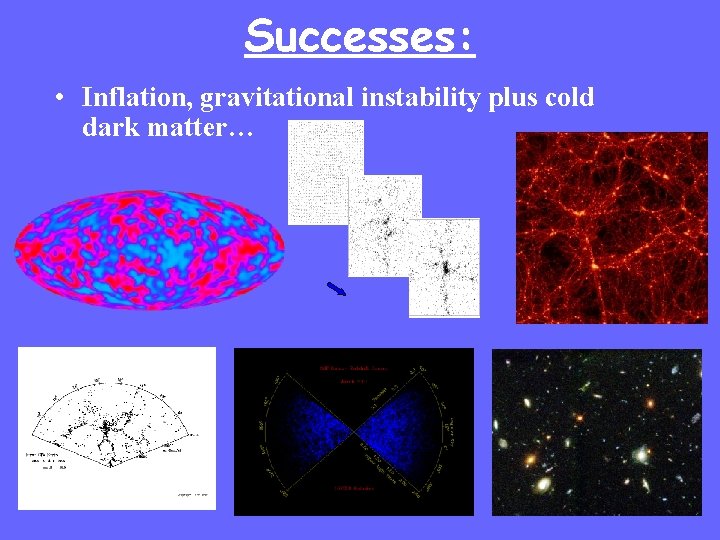
Successes: • Inflation, gravitational instability plus cold dark matter…
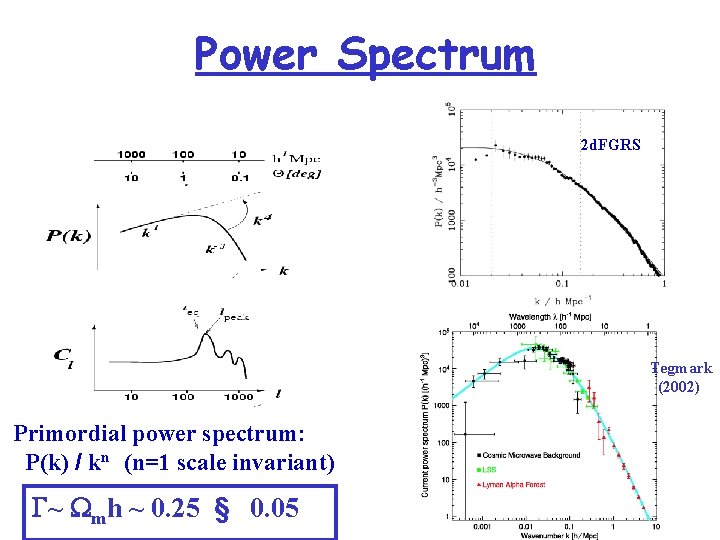
Power Spectrum 2 d. FGRS Tegmark (2002) Primordial power spectrum: P(k) / kn (n=1 scale invariant) G~ Wmh ~ 0. 25 § 0. 05
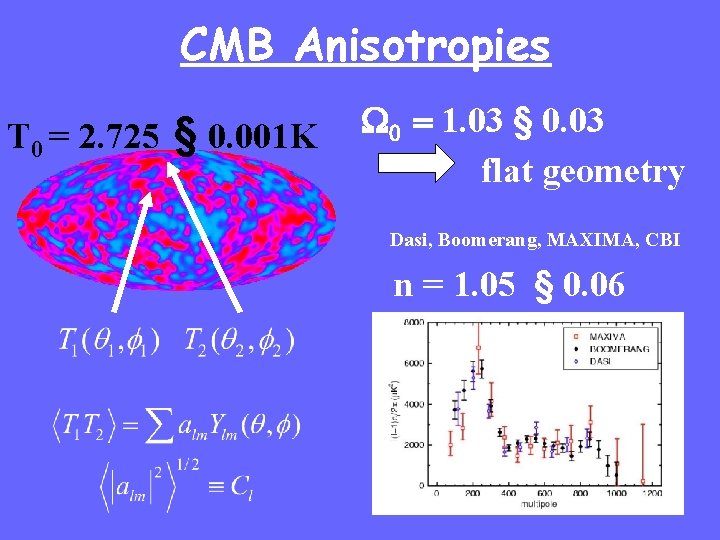
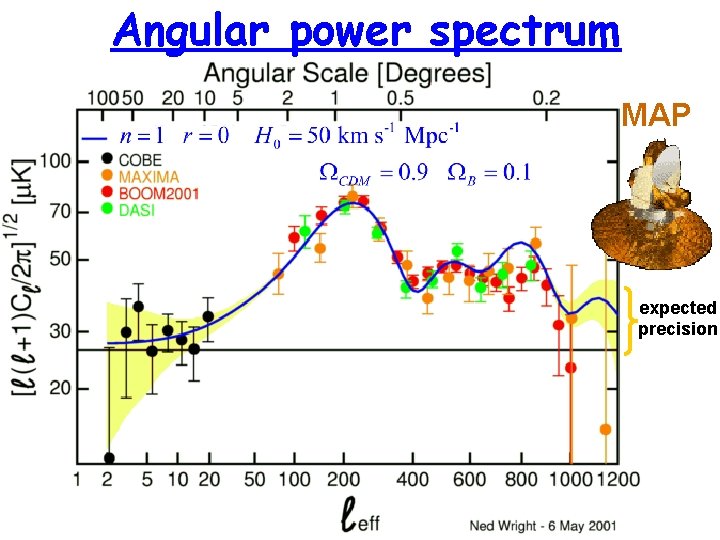
CMB Anisotropies T 0 = 2. 725 § 0. 001 K W 0 = 1. 03 § 0. 03 flat geometry Dasi, Boomerang, MAXIMA, CBI n = 1. 05 § 0. 06
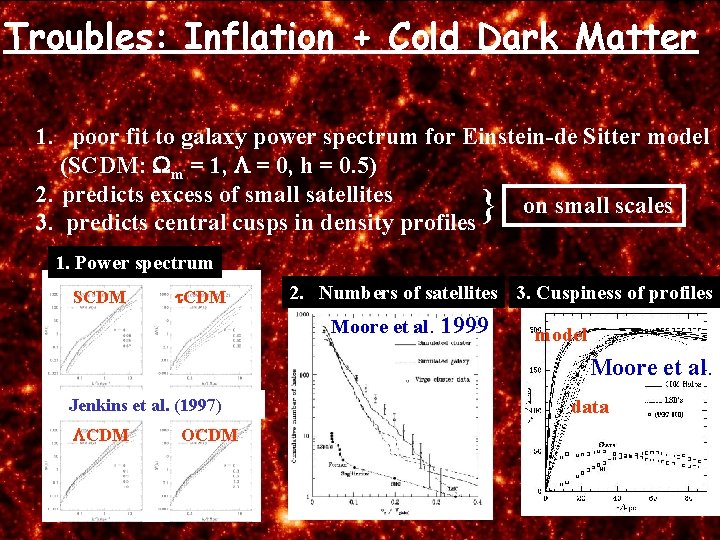
Troubles: Inflation + Cold Dark Matter 1. poor fit to galaxy power spectrum for Einstein-de Sitter model (SCDM: Wm = 1, L = 0, h = 0. 5) 2. predicts excess of small satellites on small scales 3. predicts central cusps in density profiles } 1. Power spectrum SCDM t. CDM 2. Numbers of satellites 3. Cuspiness of profiles Moore et al. 1999 model Moore et al. Jenkins et al. (1997) LCDM OCDM data
“How wonderful that we have met with a paradox. Now we have some hope of making progress. ” -Neils Bohr
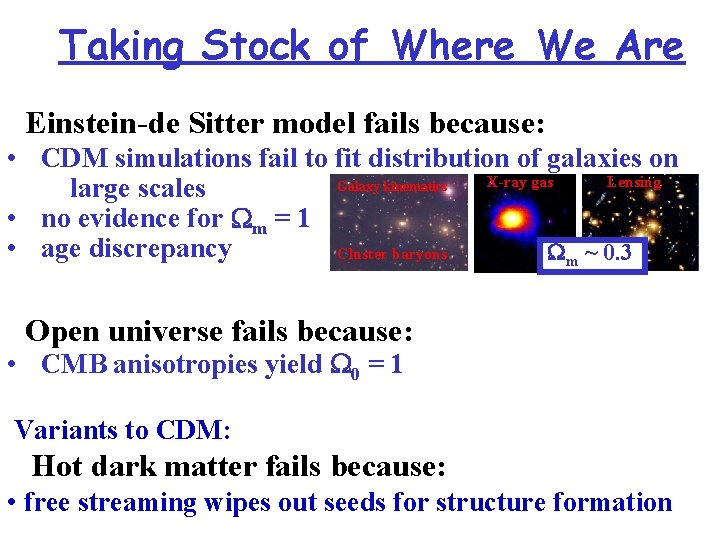
Taking Stock of Where We Are Einstein-de Sitter model fails because: • CDM simulations fail to fit distribution of galaxies on X-ray gas Lensing Galaxy kinematics large scales • no evidence for Wm = 1 • age discrepancy Cluster baryons Wm ~ 0. 3 Open universe fails because: • CMB anisotropies yield W 0 = 1 Variants to CDM: Hot dark matter fails because: • free streaming wipes out seeds for structure formation
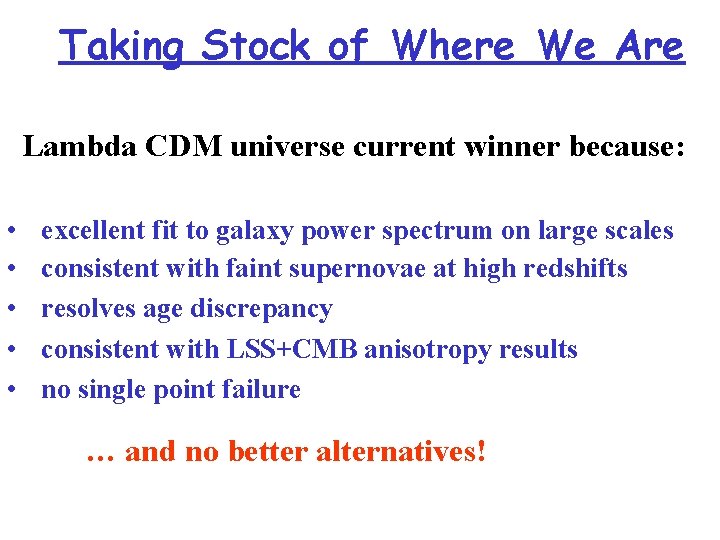
Taking Stock of Where We Are Lambda CDM universe current winner because: • • • excellent fit to galaxy power spectrum on large scales consistent with faint supernovae at high redshifts resolves age discrepancy consistent with LSS+CMB anisotropy results no single point failure … and no better alternatives!
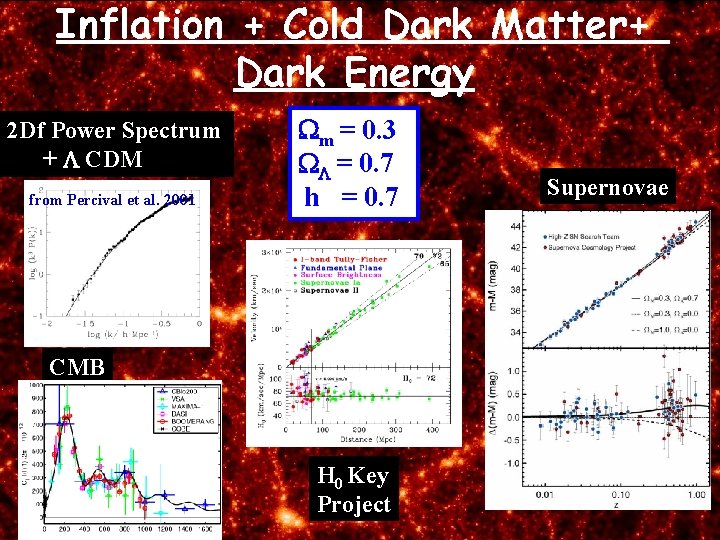
Inflation + Cold Dark Matter+ Dark Energy 2 Df Power Spectrum + L CDM from Percival et al. 2001 Wm = 0. 3 WL = 0. 7 h = 0. 7 CMB H 0 Key Project Supernovae
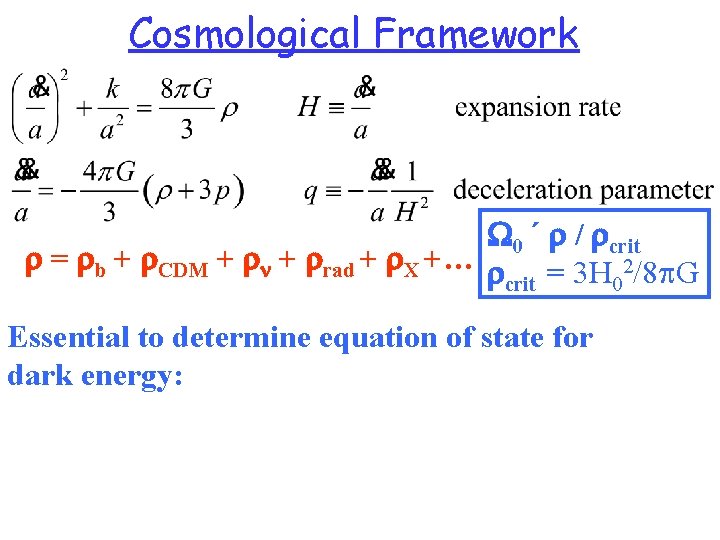
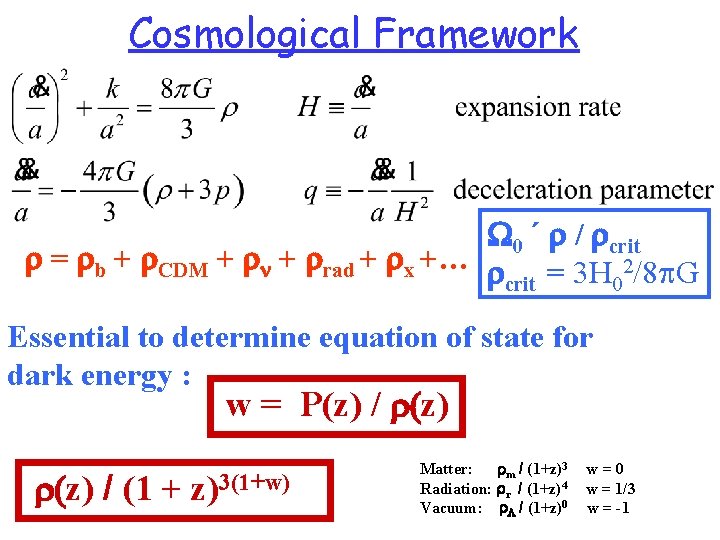
Critical Missing Pieces to the Current “Standard Model” • Cold dark matter dominates the matter density and is in an unknown form • The overall mass-energy density is dominated by dark energy, for which there is currently no explanation • The dynamics of inflation depends on particle physics at high energy, and nothing is known of the hypothetical scalar field that drives inflation
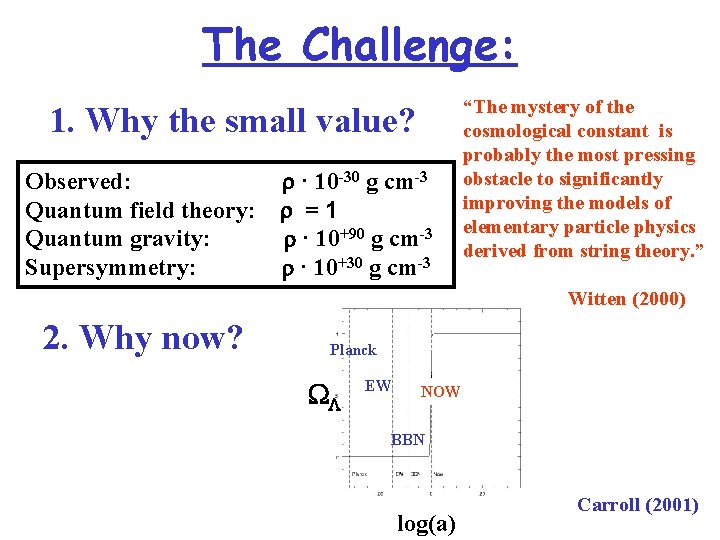
The Challenge: 1. Why the small value? Observed: Quantum field theory: Quantum gravity: Supersymmetry: r · 10 -30 g cm-3 r =1 r · 10+90 g cm-3 r · 10+30 g cm-3 “The mystery of the cosmological constant is probably the most pressing obstacle to significantly improving the models of elementary particle physics derived from string theory. ” Witten (2000) 2. Why now? Planck WL EW NOW BBN log(a) Carroll (2001)
L : Blunder, Convenient, or Correct? SN 1 a CMB 1900 1920 1940 1960 1980 2000 Year Freedman (2000)
Cosmological Framework W 0 ´ r / rcrit r = rb + r. CDM + rn + rrad + r. X +… r = 3 H 2/8 p. G crit 0 Essential to determine equation of state for dark energy:
Cosmological Framework W 0 ´ r / rcrit r = rb + r. CDM + rn + rrad + rx +… r = 3 H 2/8 p. G crit 0 Essential to determine equation of state for dark energy : w = P(z) / r(z) / (1 + z)3(1+w) Matter: rm / (1+z)3 Radiation: rr / (1+z)4 Vacuum: r. L / (1+z)0 w=0 w = 1/3 w = -1
16 Cosmological Parameters 2 sets of parameters: • first set: 10 parameters describing FLRW model -- the expansion -- global geometry -- age -- composition H 0, q 0, w, t 0, T 0, Wb, WCDM, Wn, Wx • second set: 6 parameters describing the deviations from exact homogeneity S, T, s 8 , n, n. T , dn/d ln k Freedman & Turner (Science, 2002)
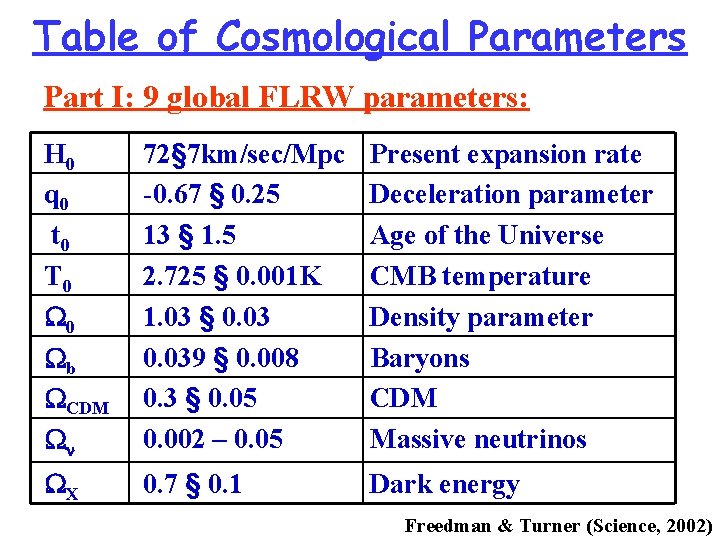
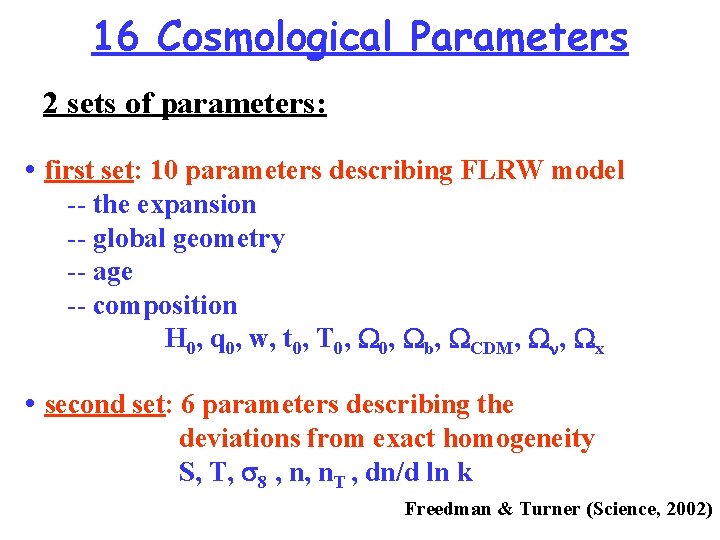
Table of Cosmological Parameters Part I: 9 global FLRW parameters: H 0 q 0 t 0 T 0 Wb WCDM Wn 72§ 7 km/sec/Mpc -0. 67 § 0. 25 13 § 1. 5 2. 725 § 0. 001 K 1. 03 § 0. 039 § 0. 008 0. 3 § 0. 05 0. 002 – 0. 05 Present expansion rate Deceleration parameter Age of the Universe CMB temperature Density parameter Baryons CDM Massive neutrinos WX 0. 7 § 0. 1 Dark energy Freedman & Turner (Science, 2002)
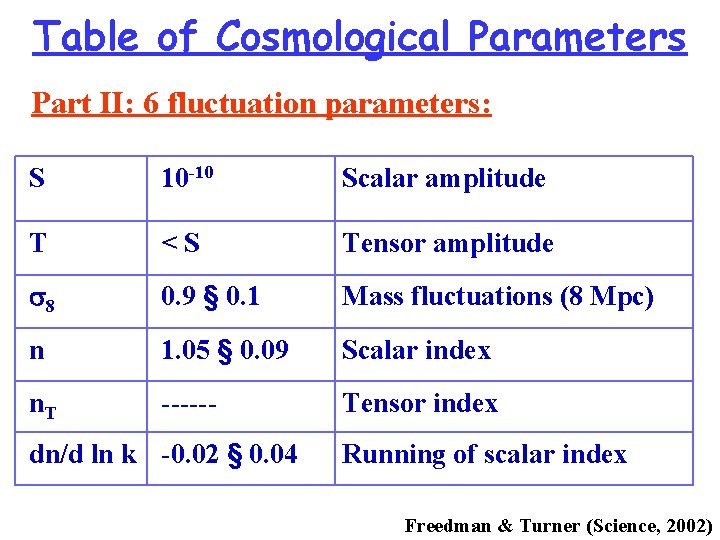
Table of Cosmological Parameters Part II: 6 fluctuation parameters: S 10 -10 Scalar amplitude T <S Tensor amplitude s 8 0. 9 § 0. 1 Mass fluctuations (8 Mpc) n 1. 05 § 0. 09 Scalar index n. T ------ Tensor index dn/d ln k -0. 02 § 0. 04 Running of scalar index Freedman & Turner (Science, 2002)
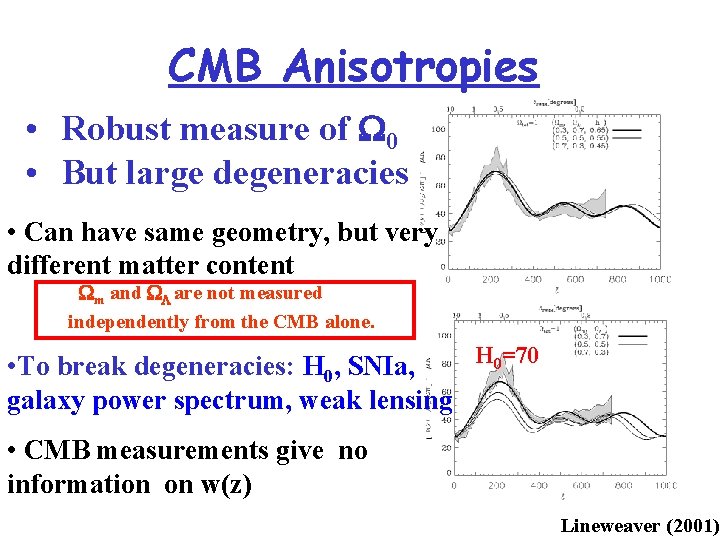
CMB Anisotropies • Robust measure of W 0 • But large degeneracies • Can have same geometry, but very different matter content Wm and WL are not measured independently from the CMB alone. H 0=70 • To break degeneracies: H 0, SNIa, galaxy power spectrum, weak lensing • CMB measurements give no information on w(z) Lineweaver (2001)
Angular power spectrum MAP expected precision
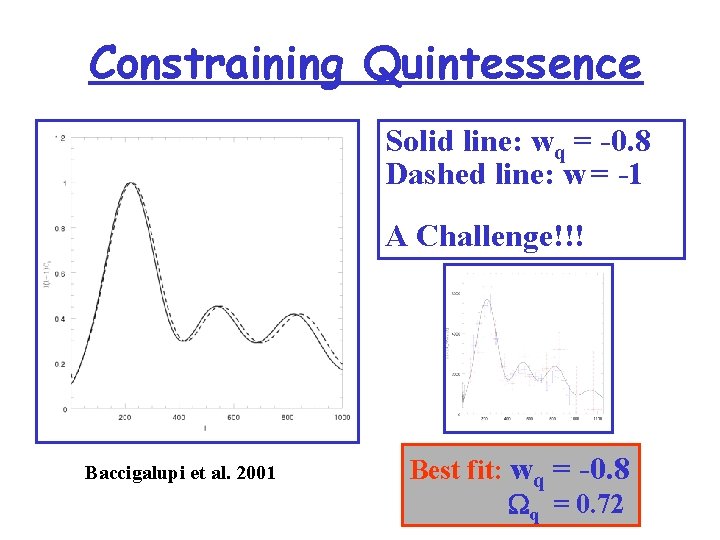
Constraining Quintessence Solid line: wq = -0. 8 Dashed line: w = -1 A Challenge!!! Baccigalupi et al. 2001 Best fit: wq = -0. 8 Wq = 0. 72
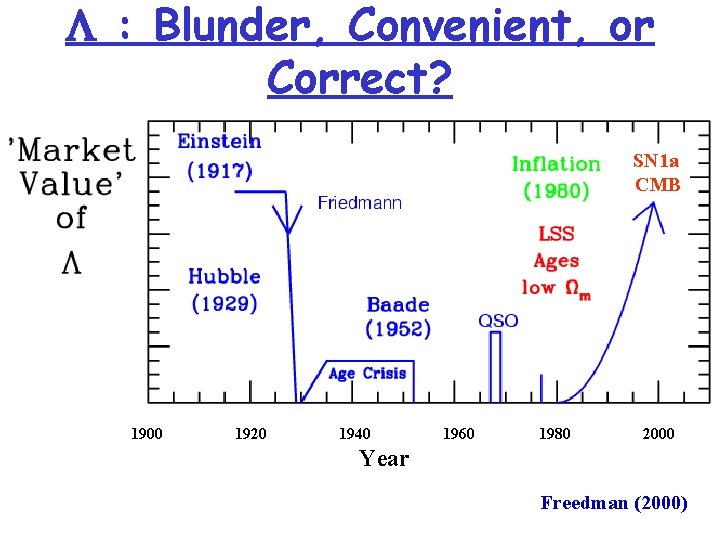
Prognostication*** Einstein will turn out to be right about the cosmological constant *** Beware of observers willing to tell the future….
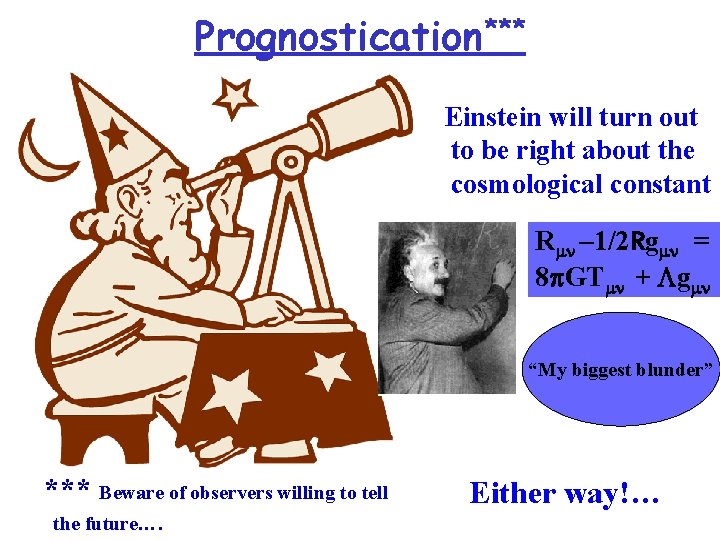
Prognostication*** Einstein will turn out to be right about the cosmological constant Rmn – 1/2 Rgmn = 8 p. GTmn + Lgmn “My biggest blunder” *** Beware of observers willing to tell the future…. Either way!…
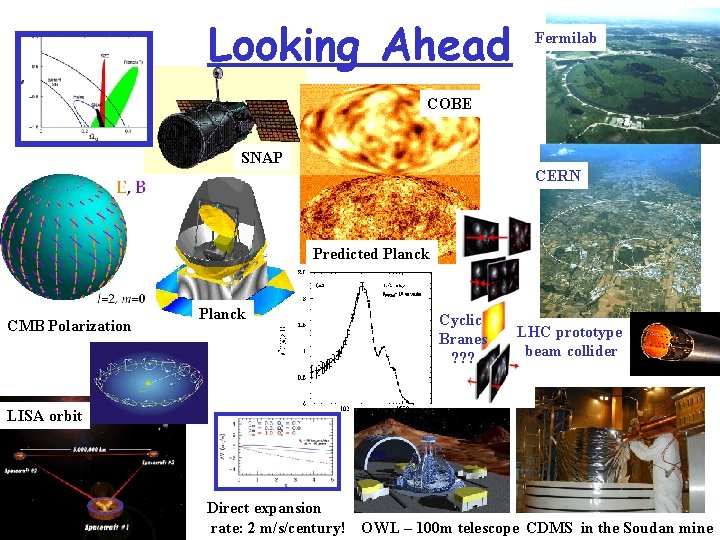
Looking Ahead Fermilab COBE SNAP CERN Predicted Planck CMB Polarization Planck Cyclic Branes ? ? ? LHC prototype beam collider LISA orbit Direct expansion rate: 2 m/s/century! OWL – 100 m telescope CDMS in the Soudan mine
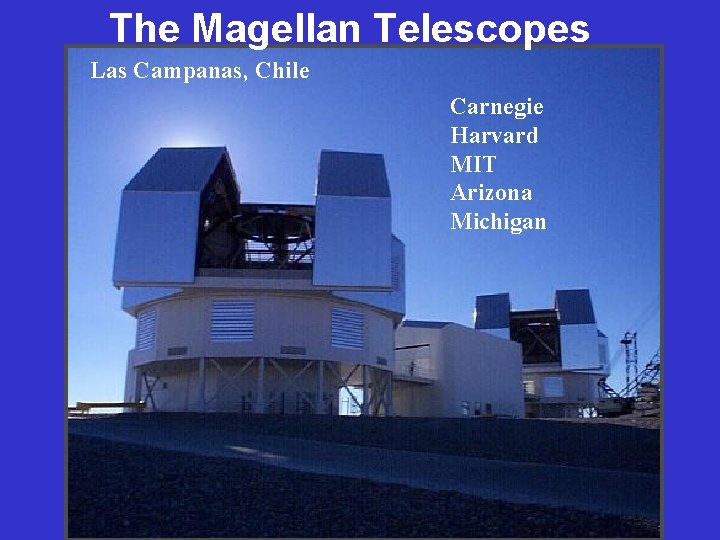
The Magellan Telescopes Las Campanas, Chile Magellans I and II domes Carnegie Harvard MIT Arizona Michigan
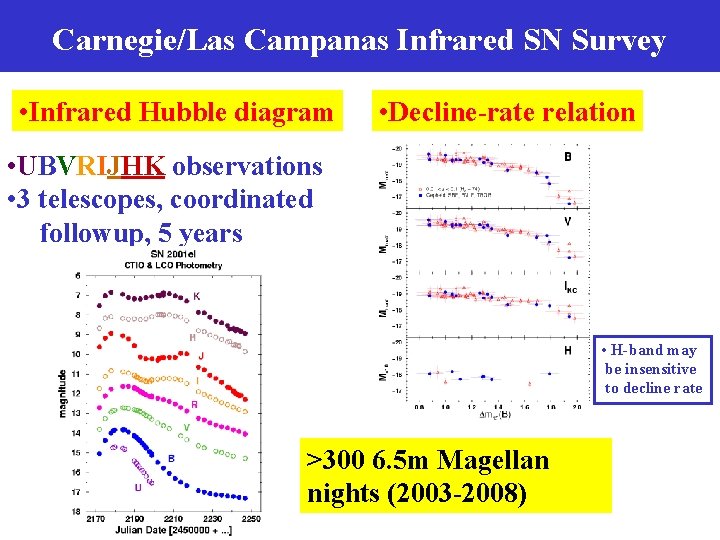
Carnegie/Las Campanas Infrared SN Survey • Infrared Hubble diagram • Decline-rate relation • UBVRIJHK observations • 3 telescopes, coordinated followup, 5 years • H-band may be insensitive to decline rate >300 6. 5 m Magellan nights (2003 -2008)
Carnegie Centennial Lectures Carnegie Centennial Symposium Measuring and Modeling the Universe November 18 -22, 2002 Pasadena, CA Malcolm Longair Lisa Randall Alan Guth Marc Kamionkowski John Carlstrom John Tonry David Spergel Matias Zaldiarraga Lyman Page Roger Blandford John Schwarz Michael Turner Steven Weinberg Wendy Freedman Chris Kochanek Joe Silk Andrew Lange Tony Readhead Sandy Faber Alex Filippenko http: //www. ociw. edu/ociw/symposia/symposium 2
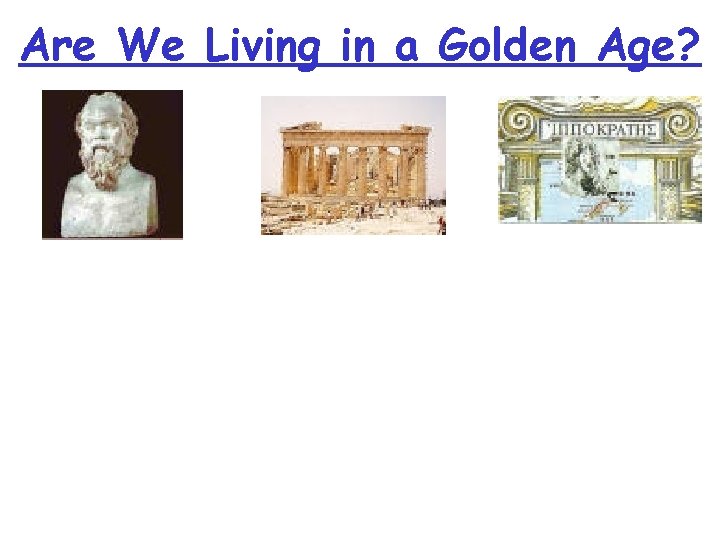
Are We Living in a Golden Age?
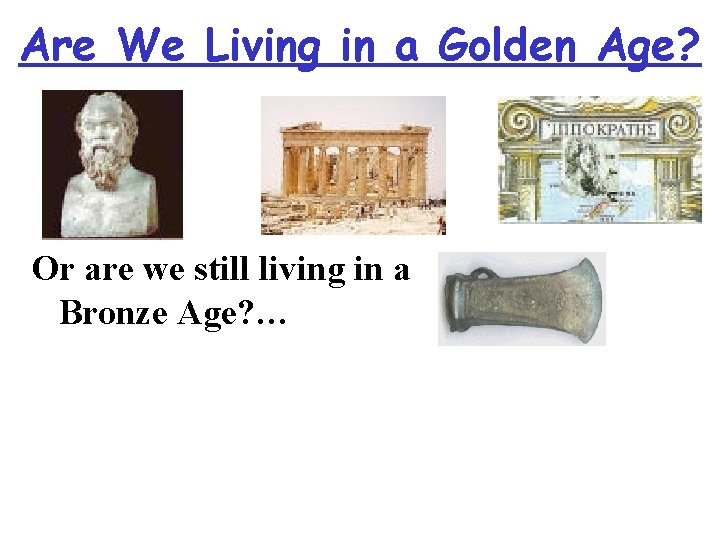
Are We Living in a Golden Age? Or are we still living in a Bronze Age? …
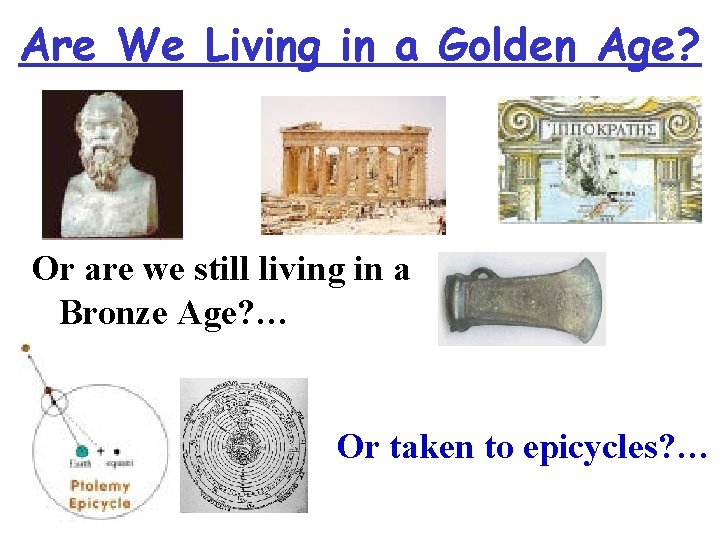
Are We Living in a Golden Age? Or are we still living in a Bronze Age? … Or taken to epicycles? …
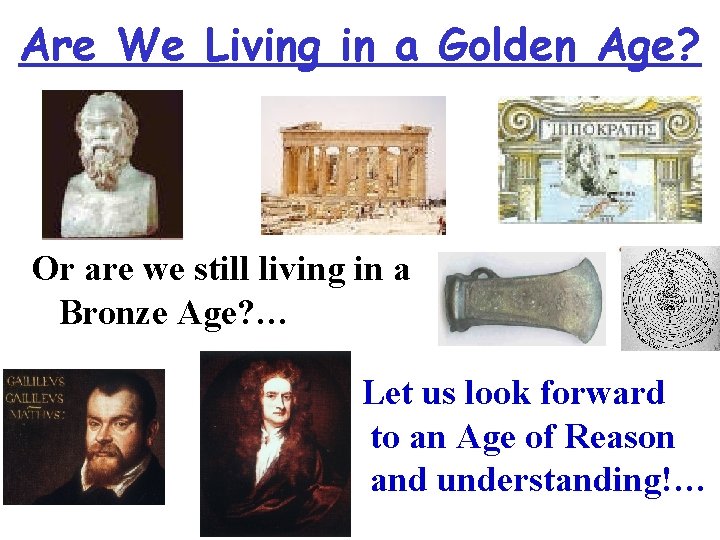
Are We Living in a Golden Age? Or are we still living in a Bronze Age? … Let us look forward to an Age of Reason and understanding!…

- Slides: 33