
Opening Science The Evolving Guide on How the

- Slides: 32
Opening Science The Evolving Guide on How the Internet is Changing Research, Collaboration and Scholarly Publishing Figures book. openingscience. org ISBN: 331900025 X
You are free to modify and reuse our figures. If you do so, please cite the book, chapter, or web page. We kindly ask you to send records of modified and/or reused figures and texts to the editors and chapter authors. Preferably send the overall document that contains the figure so that we can understand the context. Sönke Bartling & Sascha Friesike
Towards Another Scientific Revolution Sönke Bartling, Sascha Friesike
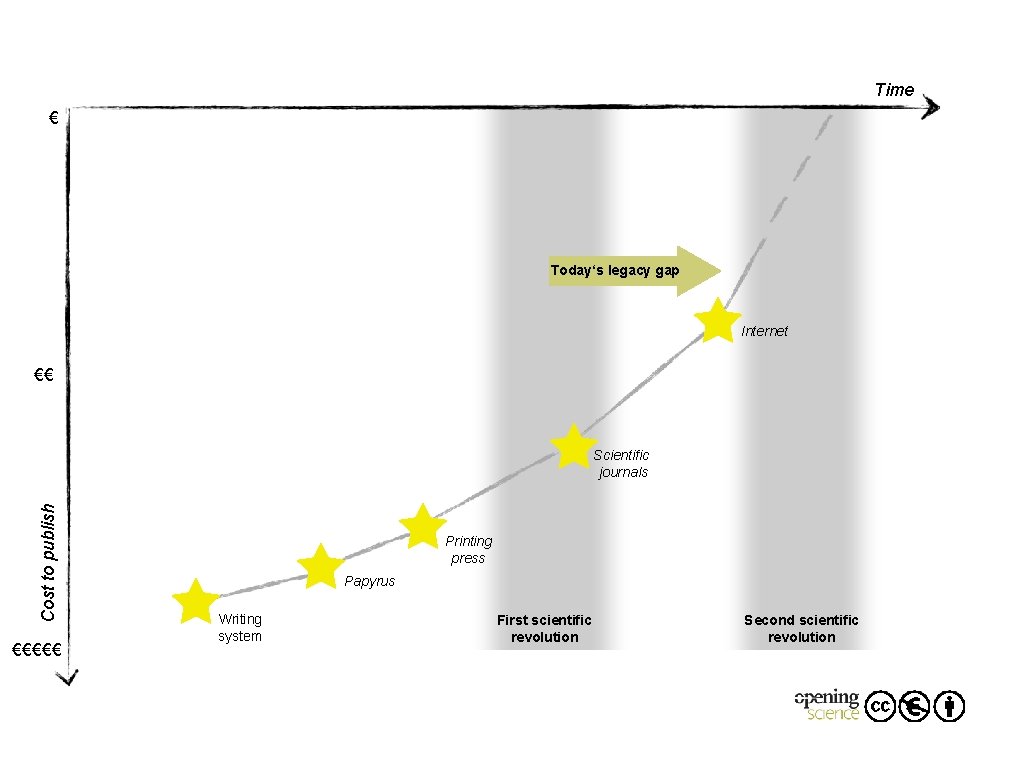
Time € Today‘s legacy gap Internet €€ Cost to publish Scientific journals €€€€€ Printing press Papyrus Writing system First scientific revolution Second scientific revolution
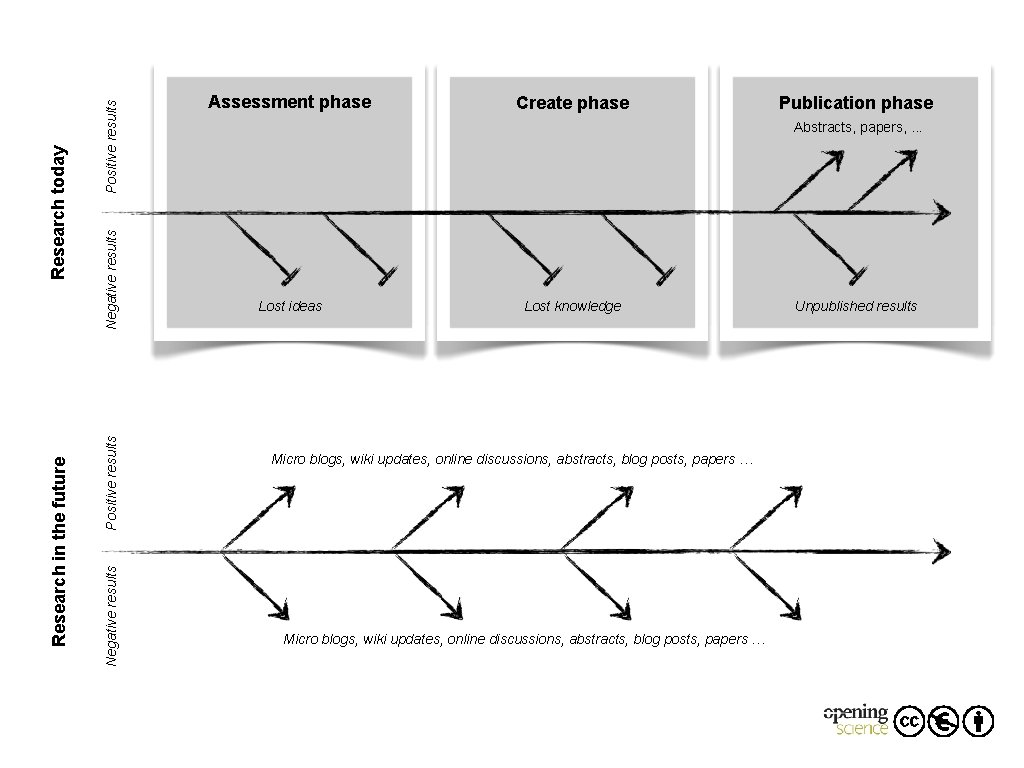
Positive results Negative results Research today Research in the future Assessment phase Create phase Publication phase Abstracts, papers, . . . Lost ideas Lost knowledge Micro blogs, wiki updates, online discussions, abstracts, blog posts, papers … Unpublished results
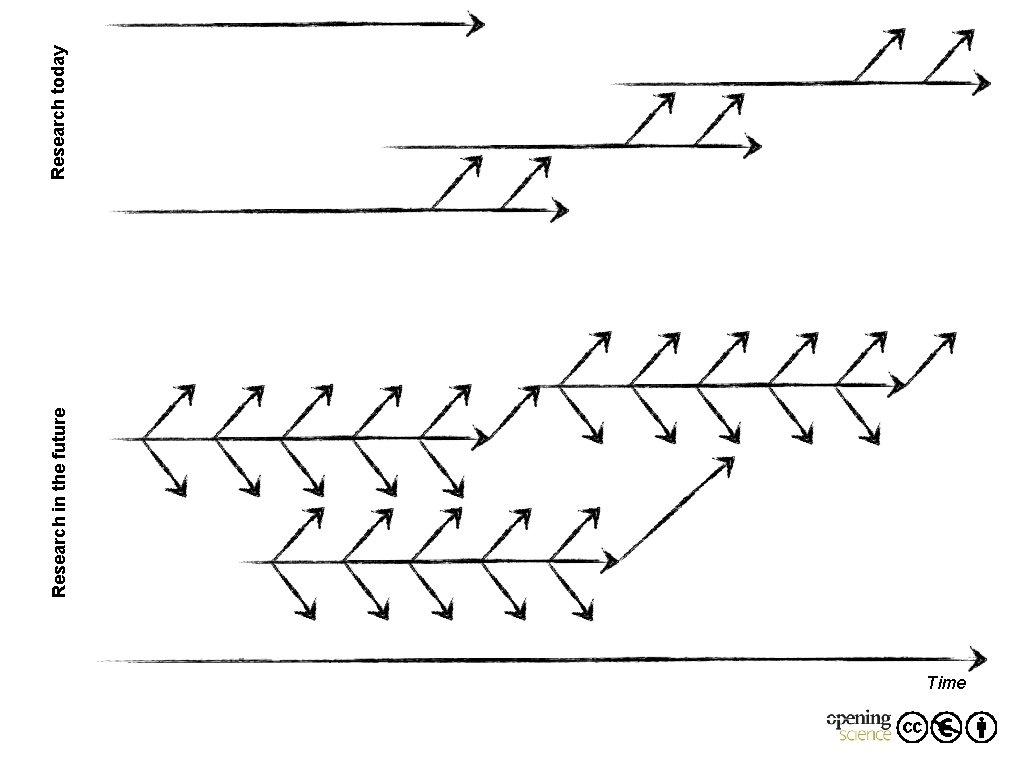
Time Research in the future Research today
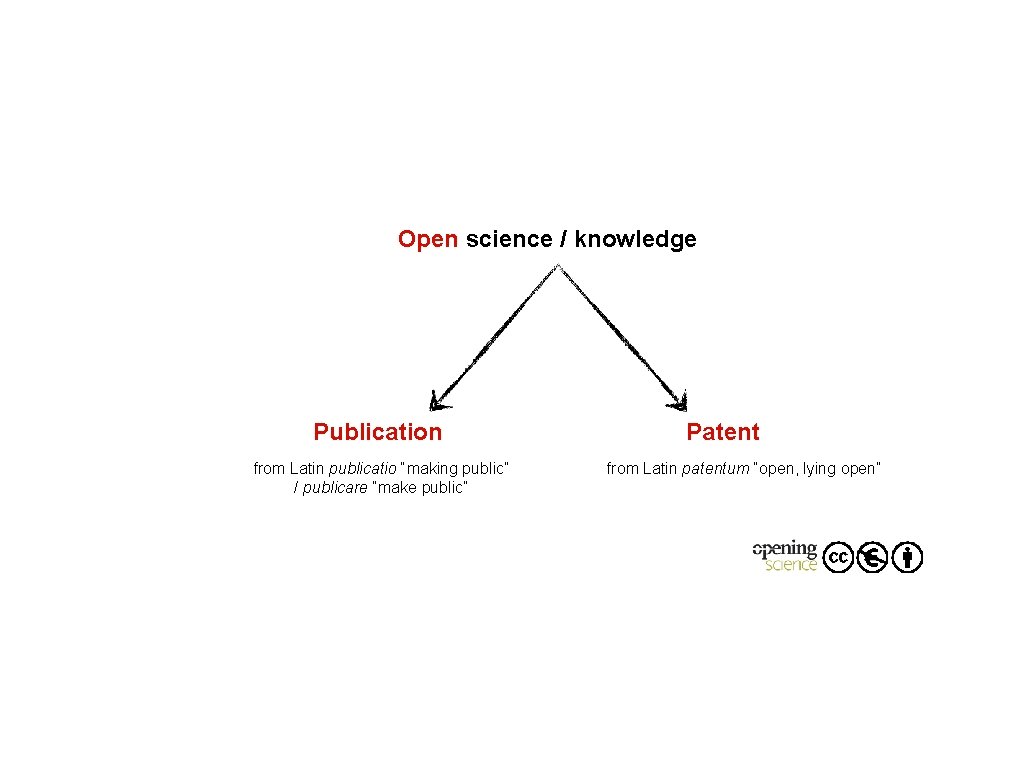
Open science / knowledge Publication from Latin publicatio “making public” / publicare “make public” 7 Patent from Latin patentum “open, lying open”
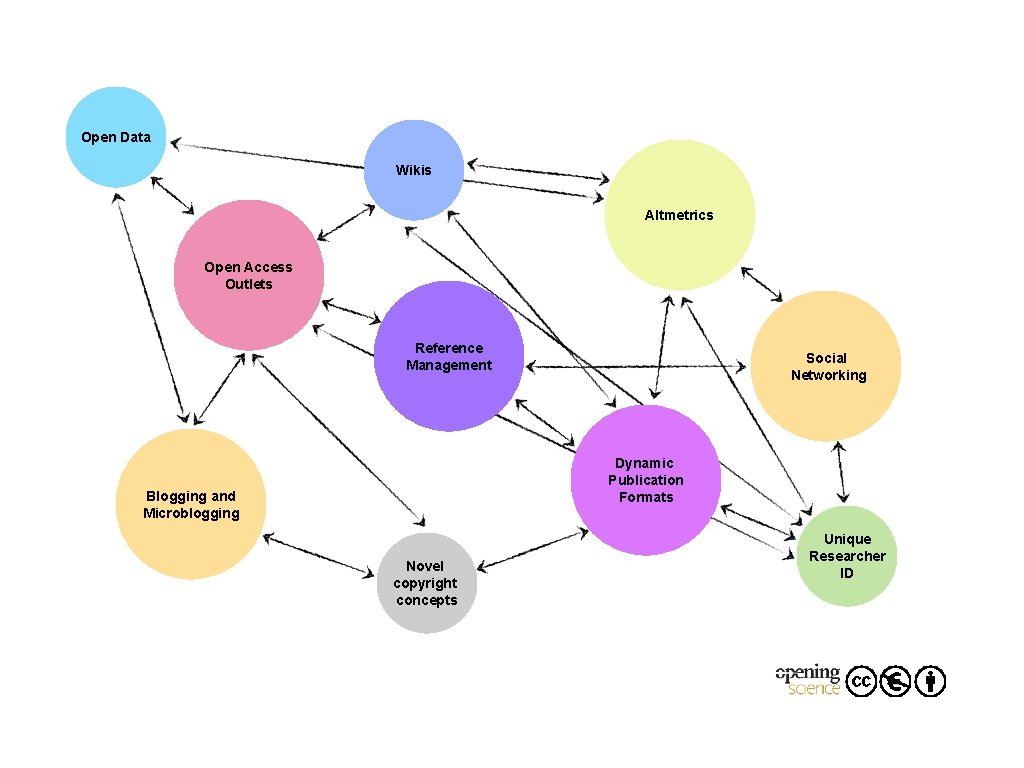
Open Data Wikis Altmetrics Open Access Outlets Reference Management Social Networking Dynamic Publication Formats Blogging and Microblogging Novel copyright concepts Unique Researcher ID
Open Science: One Term, Five Schools of Thought Benedikt Fecher, Sascha Friesike
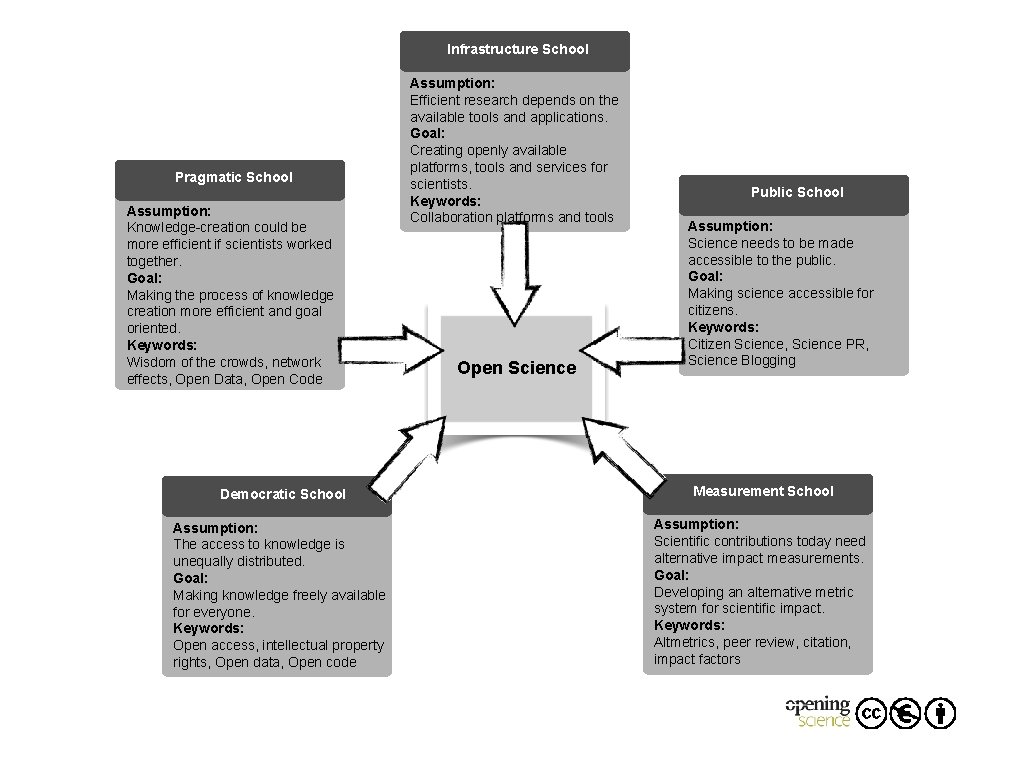
Infrastructure School Pragmatic School Assumption: Knowledge-creation could be more efficient if scientists worked together. Goal: Making the process of knowledge creation more efficient and goal oriented. Keywords: Wisdom of the crowds, network effects, Open Data, Open Code Assumption: Efficient research depends on the available tools and applications. Goal: Creating openly available platforms, tools and services for scientists. Keywords: Collaboration platforms and tools Open Science Public School Assumption: Science needs to be made accessible to the public. Goal: Making science accessible for citizens. Keywords: Citizen Science, Science PR, Science Blogging Democratic School Measurement School Assumption: The access to knowledge is unequally distributed. Goal: Making knowledge freely available for everyone. Keywords: Open access, intellectual property rights, Open data, Open code Assumption: Scientific contributions today need alternative impact measurements. Goal: Developing an alternative metric system for scientific impact. Keywords: Altmetrics, peer review, citation, impact factors
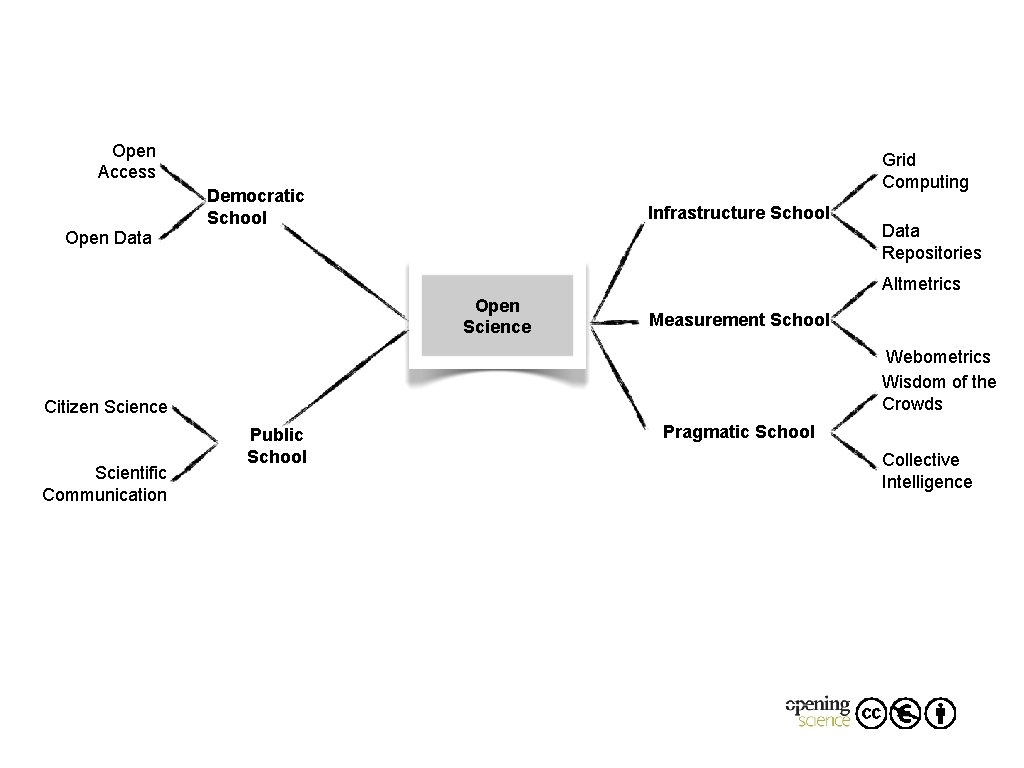
Open Access Open Data Grid Computing Democratic School Infrastructure School Data Repositories Altmetrics Open Science Measurement School Webometrics Wisdom of the Crowds Citizen Science Scientific Communication Public School Pragmatic School Collective Intelligence
Science Caught Flat-footed: How Academia Struggles with Open Science Communication Alexander Gerber
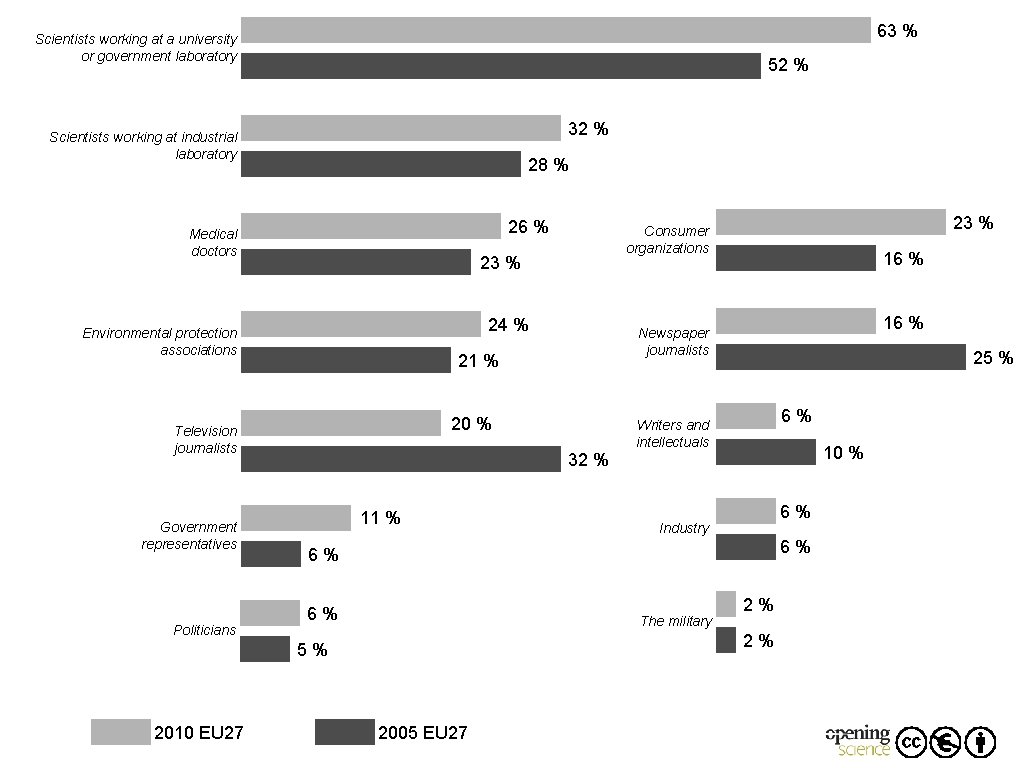
63 % Scientists working at a university or government laboratory 52 % 32 % Scientists working at industrial laboratory 28 % 26 % Medical doctors 23 % 24 % Environmental protection associations Government representatives 20 % Politicians 32 % 11 % 16 % 25 % 6% Writers and intellectuals 10 % 6% Industry 6% 6% 6% The military 2% 2% 5% 2010 EU 27 16 % Newspaper journalists 21 % Television journalists 23 % Consumer organizations 2005 EU 27
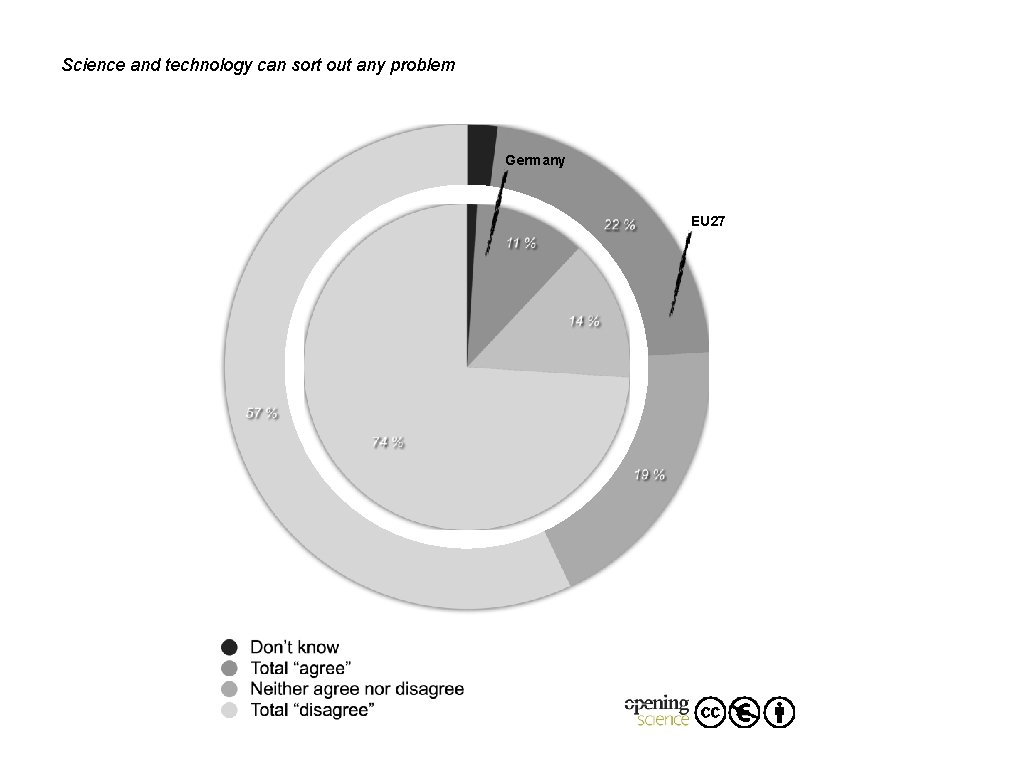
Science and technology can sort out any problem Germany EU 27
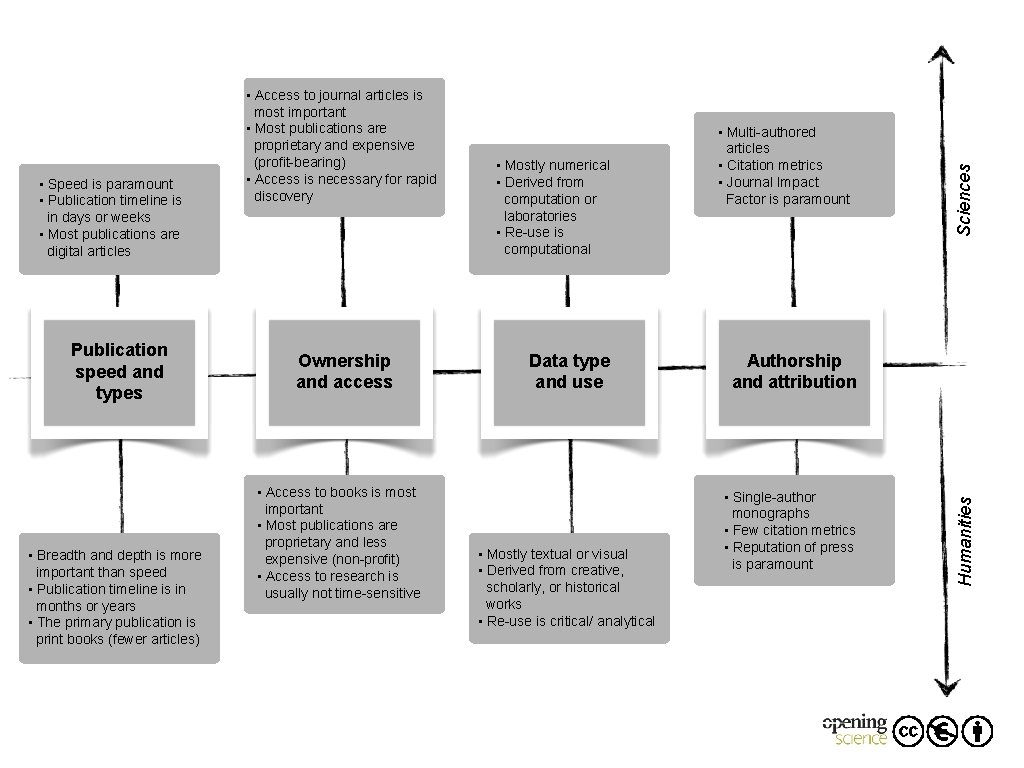
Open Science and the Three Cultures: Expanding Open Science to All Domains of Knowledge Creation Michelle Sidler
Publication speed and types • Breadth and depth is more important than speed • Publication timeline is in months or years • The primary publication is print books (fewer articles) Ownership and access • Access to books is most important • Most publications are proprietary and less expensive (non-profit) • Access to research is usually not time-sensitive Data type and use • Mostly textual or visual • Derived from creative, scholarly, or historical works • Re-use is critical/ analytical Sciences • Mostly numerical • Derived from computation or laboratories • Re-use is computational • Multi-authored articles • Citation metrics • Journal Impact Factor is paramount Authorship and attribution • Single-author monographs • Few citation metrics • Reputation of press is paramount Humanities • Speed is paramount • Publication timeline is in days or weeks • Most publications are digital articles • Access to journal articles is most important • Most publications are proprietary and expensive (profit-bearing) • Access is necessary for rapid discovery
Reference Management Martin Fenner, Kaja Scheliga, Sönke Bartling
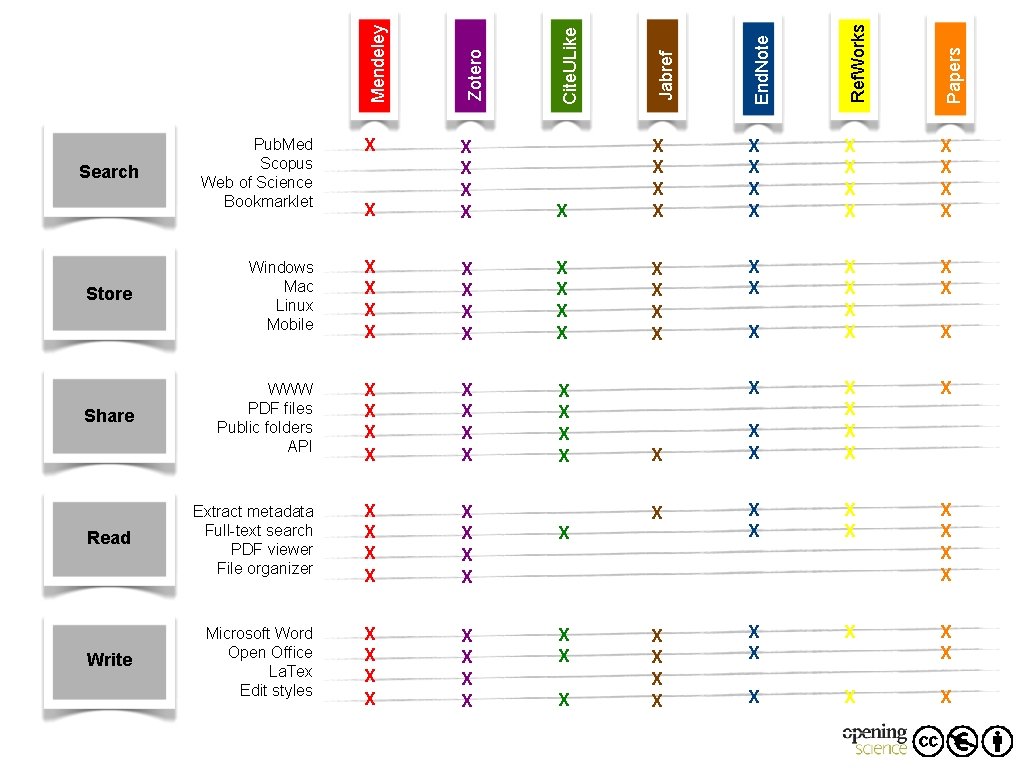
Cite. ULike Jabref End. Note Ref. Works Papers X X X X X X X X X X X X X X Read Extract metadata Full-text search PDF viewer File organizer X X X X X X Write Microsoft Word Open Office La. Tex Edit styles X X X Search Store Share X Zotero X X Mendeley X X X Pub. Med Scopus Web of Science Bookmarklet X X X Windows Mac Linux Mobile X X WWW PDF files Public folders API X X X X
Open Access: A State of the Art Dagmar Sitek and Roland Bertelmann
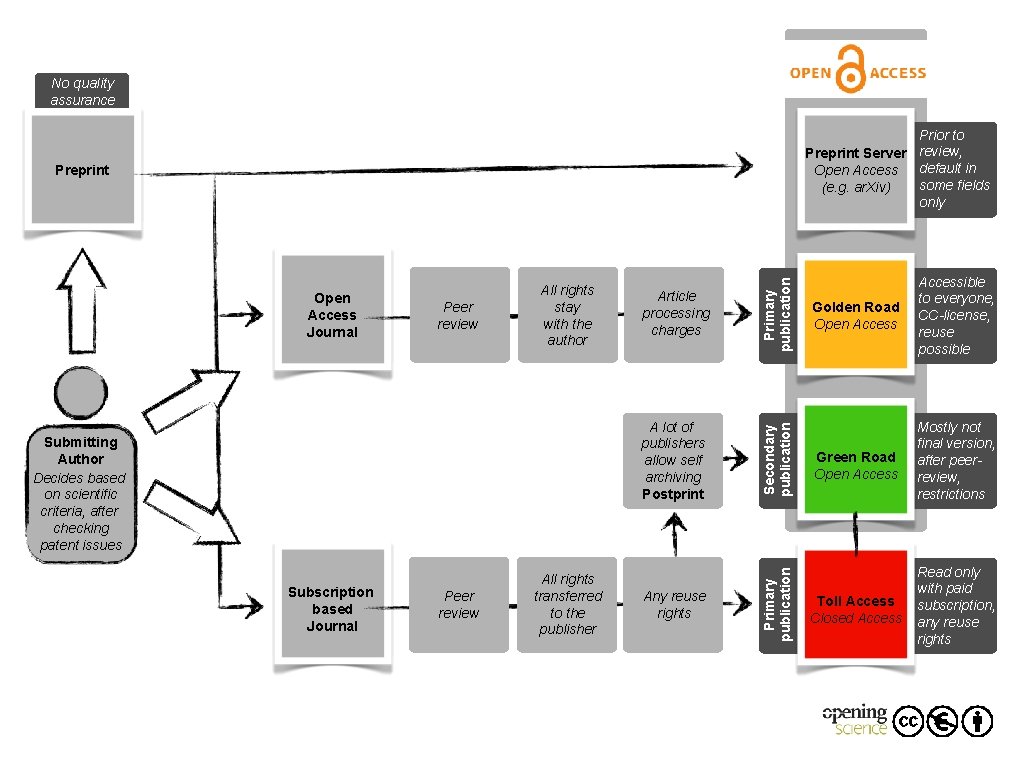
No quality assurance Prior to Preprint Server review, default in Open Access some fields (e. g. ar. Xiv) only Article processing charges A lot of publishers allow self archiving Postprint Submitting Author Decides based on scientific criteria, after checking patent issues Subscription based Journal Peer review All rights transferred to the publisher Any reuse rights Secondary publication Peer review Primary publication Open Access Journal All rights stay with the author Primary publication Preprint Golden Road Open Accessible to everyone, CC-license, reuse possible Green Road Open Access Mostly not final version, after peerreview, restrictions Toll Access Closed Access Read only with paid subscription, any reuse rights
Dynamic Publication Formats and Collaborative Authoring Lambert Heller, Ronald The, Sönke Bartling
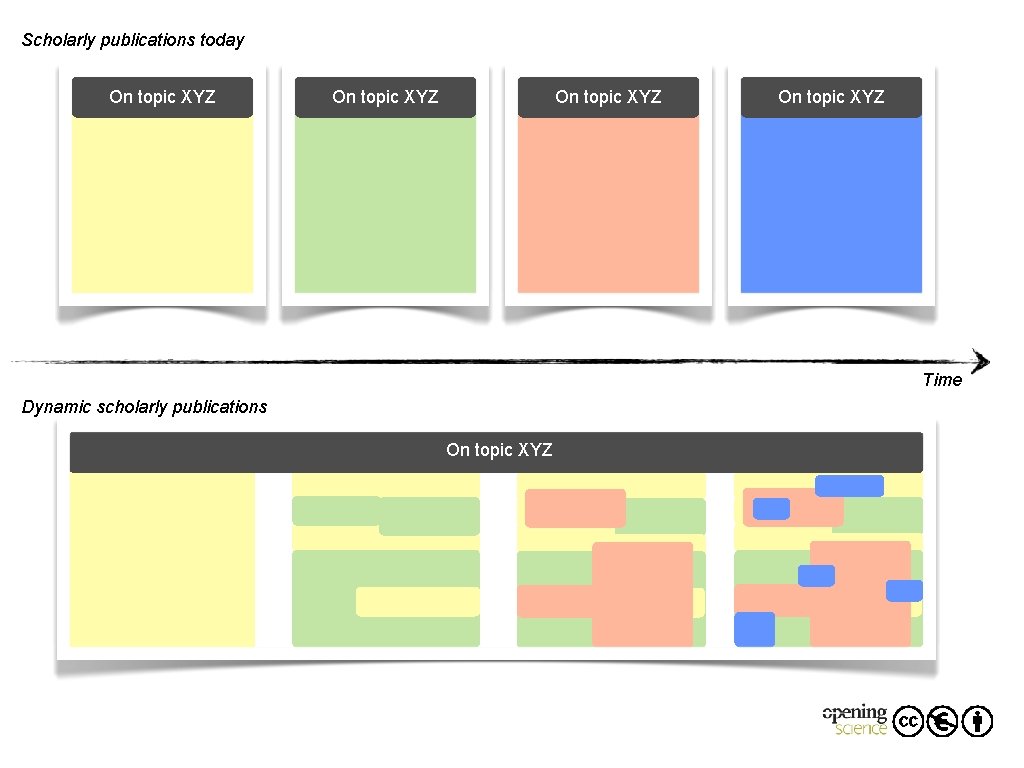
Scholarly publications today On topic XYZ . . Time Dynamic scholarly publications On topic XYZ . .
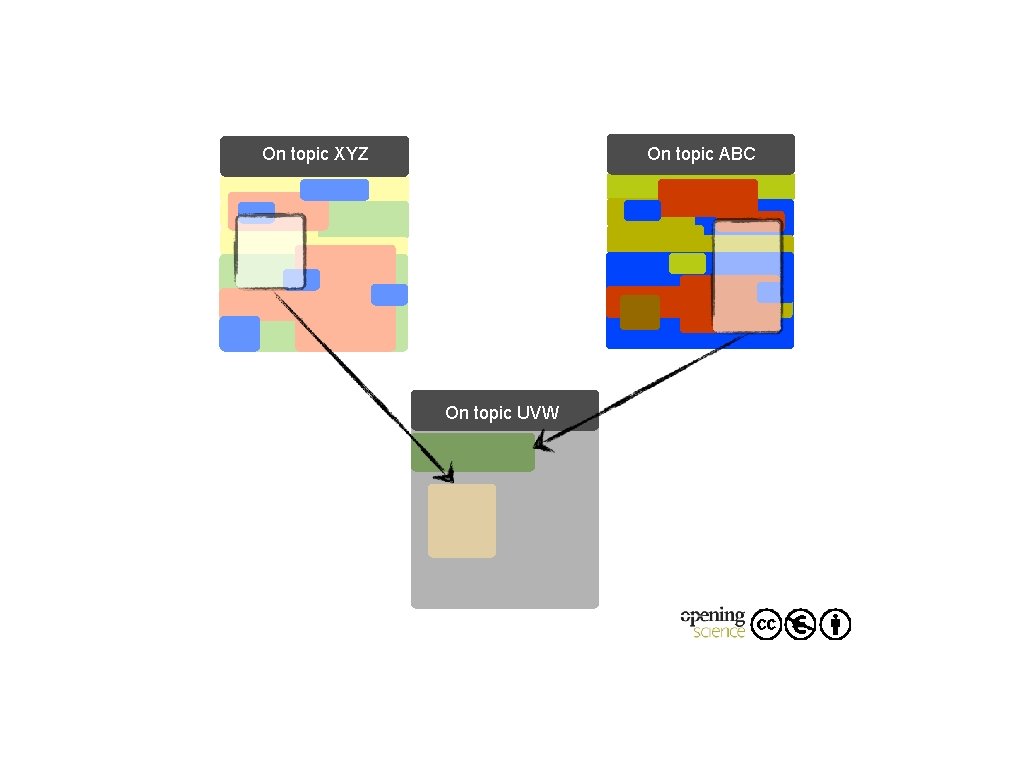
On topic ABC On topic XYZ . . . . On topic UVW
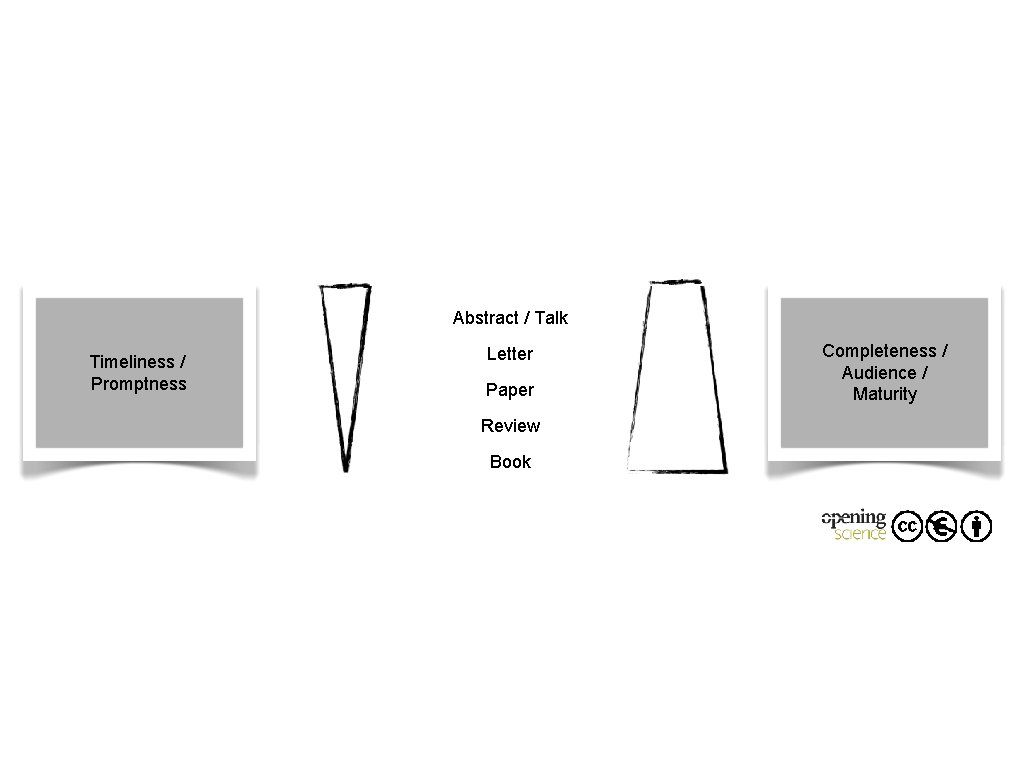
Abstract / Talk Timeliness / Promptness Letter Paper Review Book Completeness / Audience / Maturity
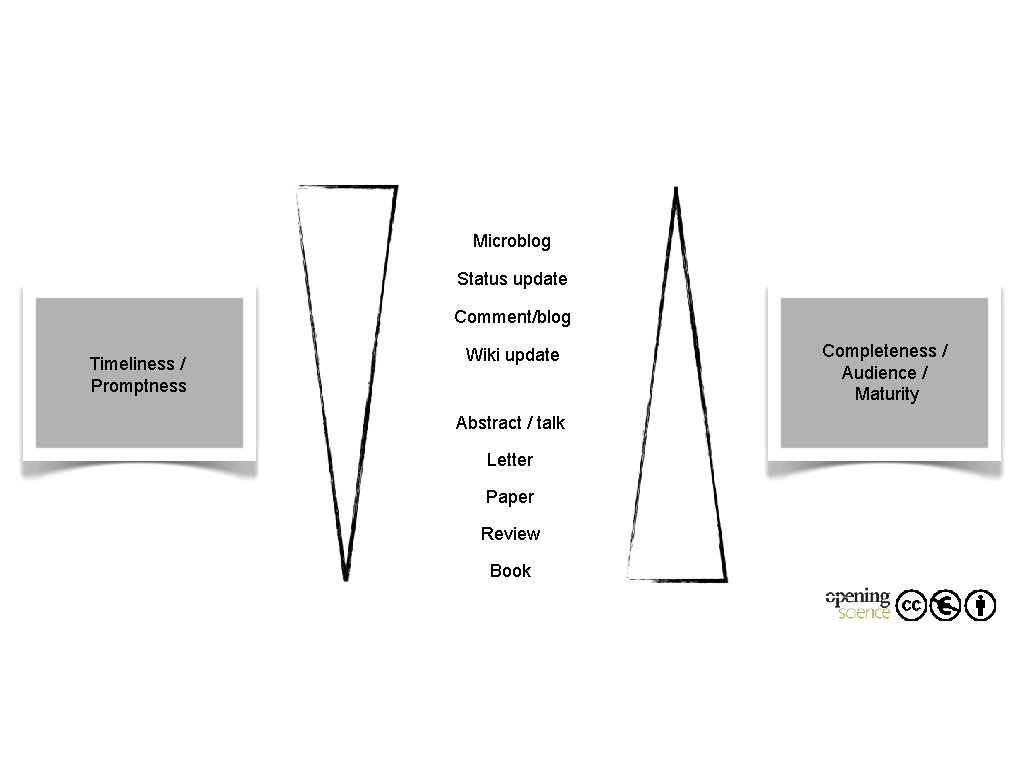
Microblog Status update Comment/blog Timeliness / Promptness Wiki update Abstract / talk Letter Paper Review Book Completeness / Audience / Maturity
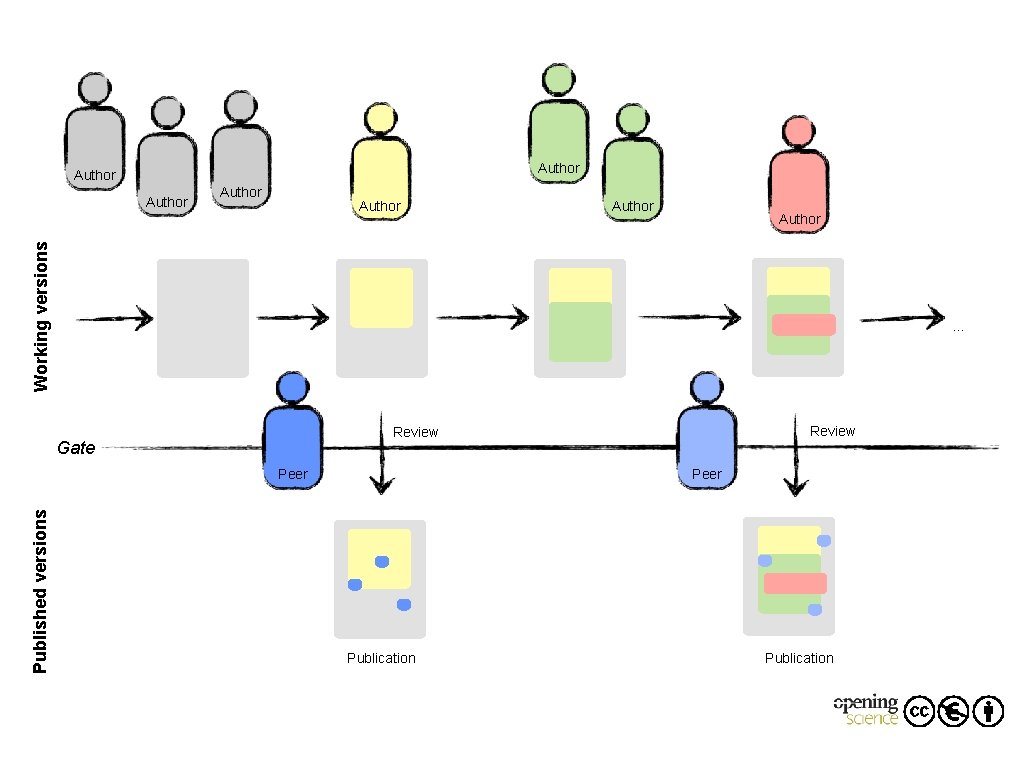
Author Author Working versions Author … Gate Peer Published versions Review Peer Publication
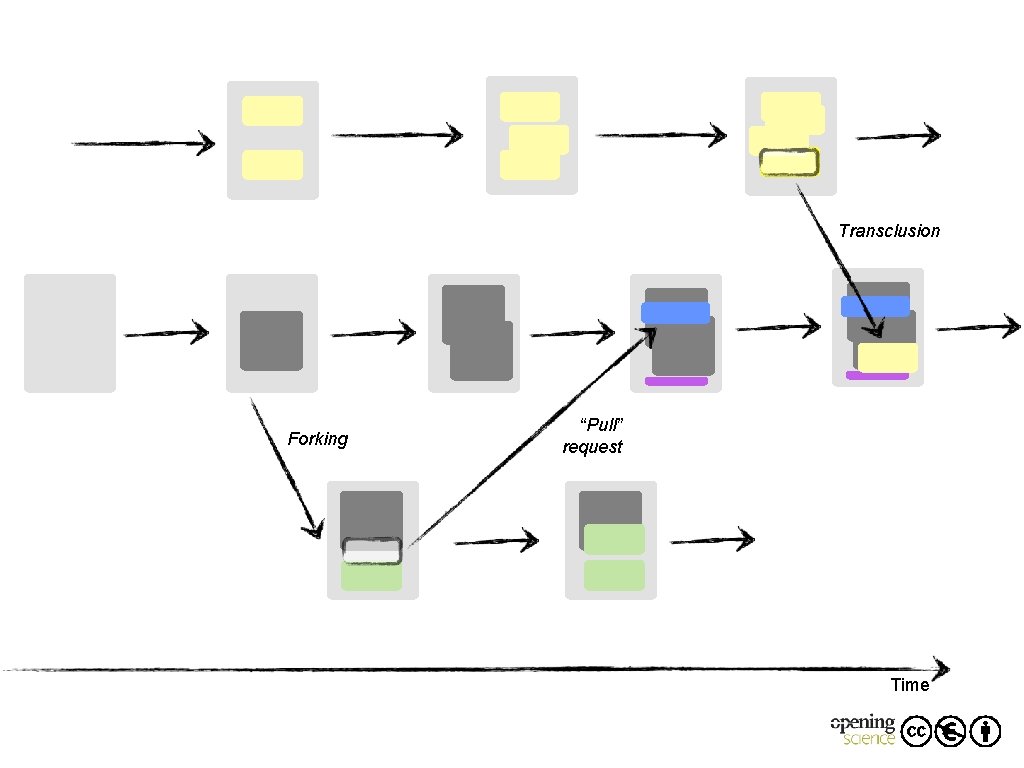
Transclusion Forking “Pull” request Time
Open Innovation and Crowdsourcing in the Sciences Thomas Schildhauer, Hilger Voss
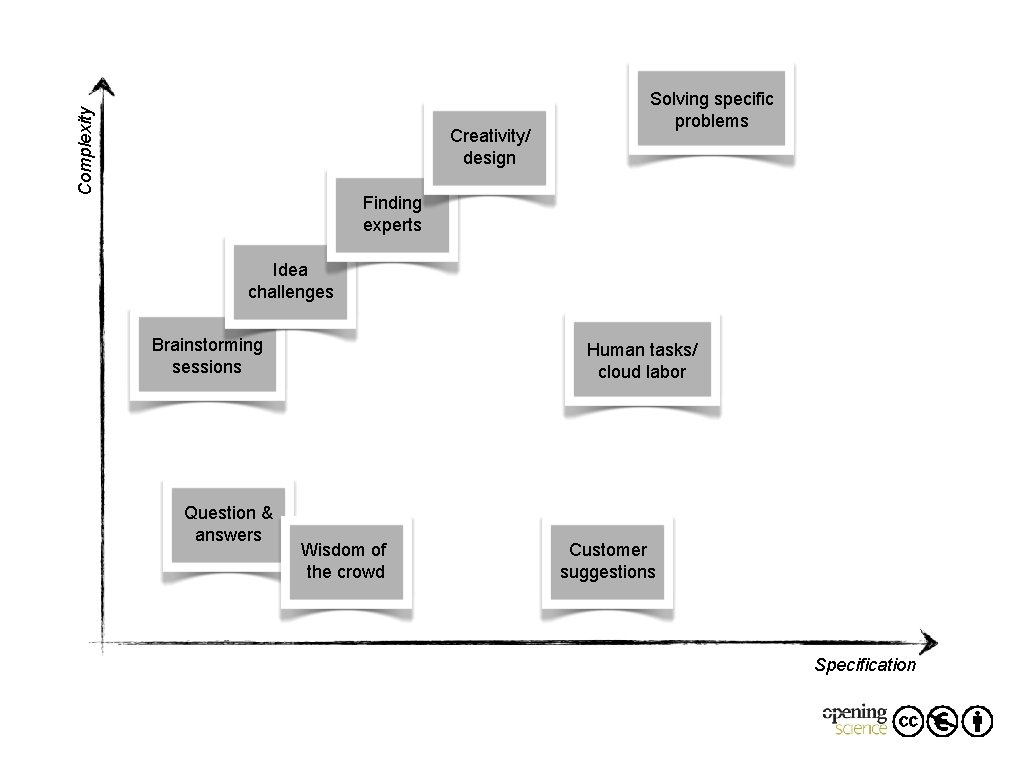
Complexity Creativity/ design Solving specific problems Finding experts Idea challenges Brainstorming sessions Question & answers Human tasks/ cloud labor Wisdom of the crowd Customer suggestions Specification
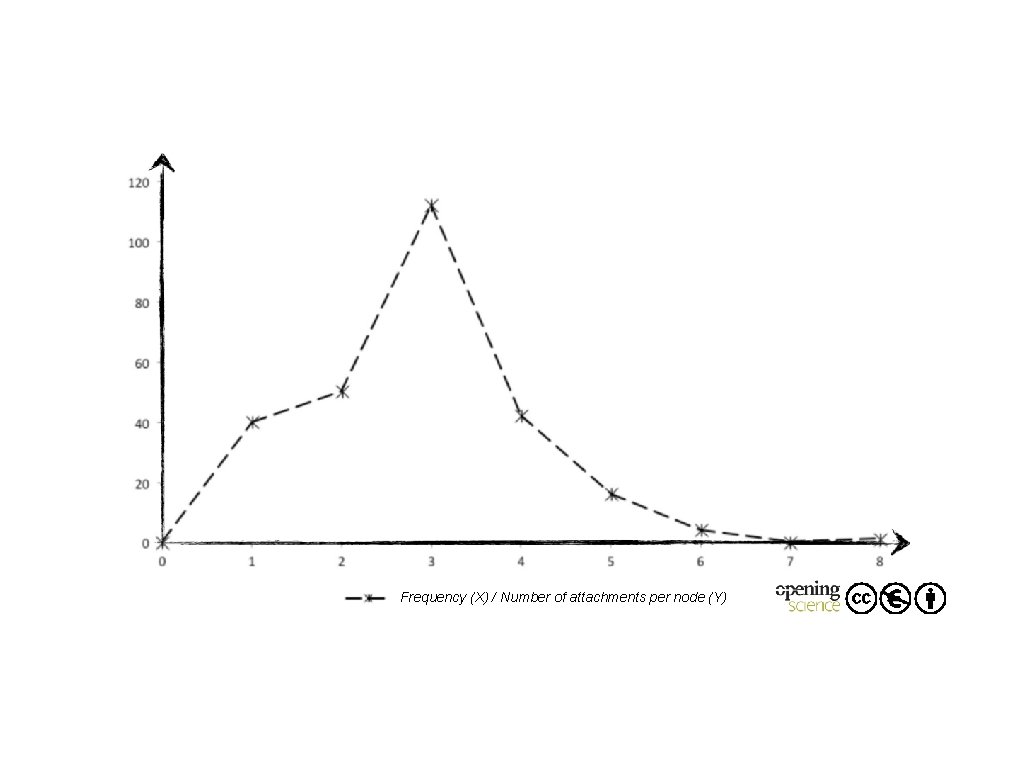
Frequency (X) / Number of attachments per node (Y)