
Opening Quiz Long Division of Polynomials If youre
- Slides: 31
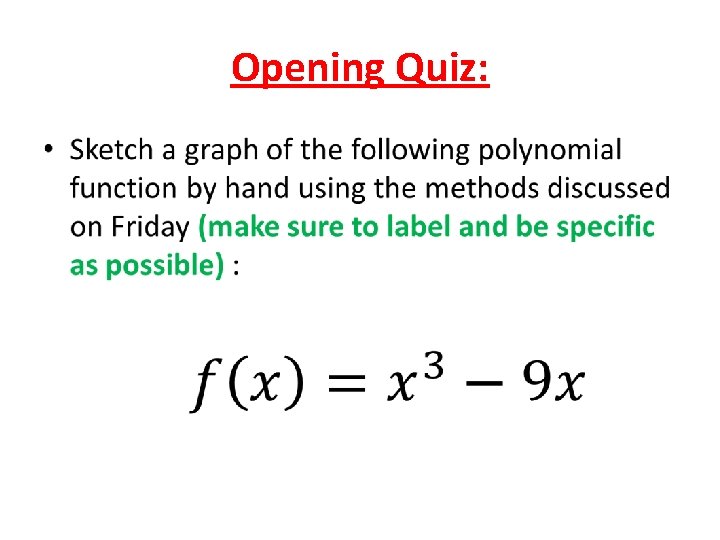
Opening Quiz: •
Long Division of Polynomials • If you're dividing a polynomial by something more complicated than just a simple monomial, then you'll need to use a different method for the simplification. That method is called "long (polynomial) division", and it works just like the long (numerical) division you did back in elementary school, except that now you're dividing with variables.
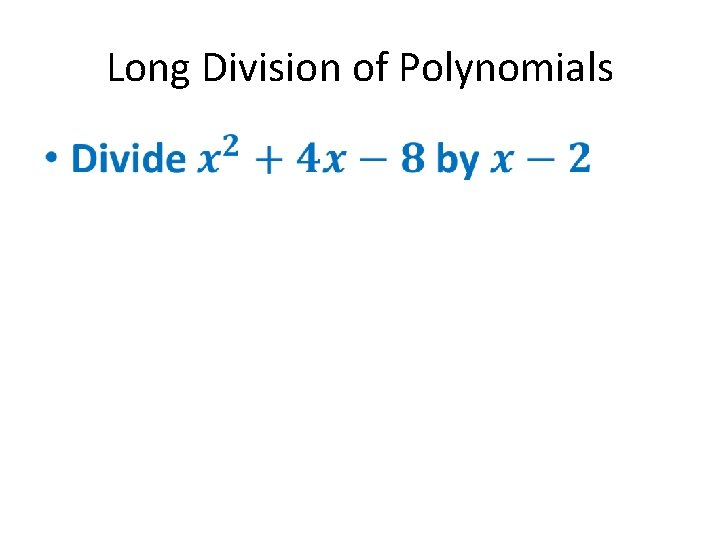
Long Division of Polynomials •
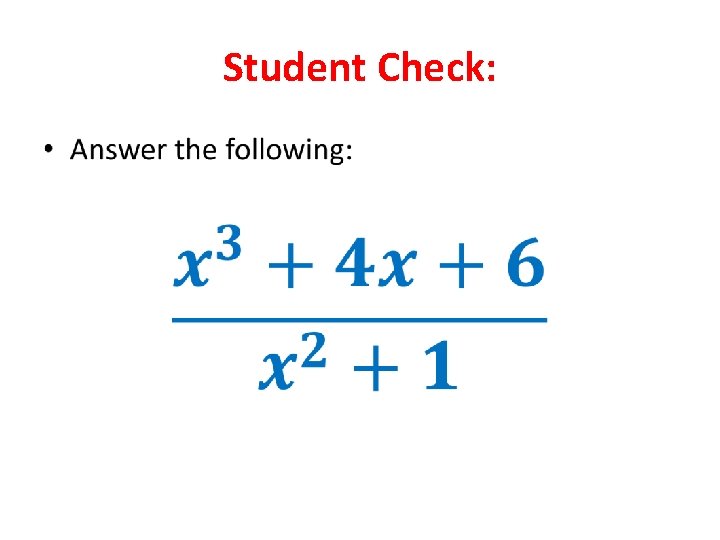
Student Check: •
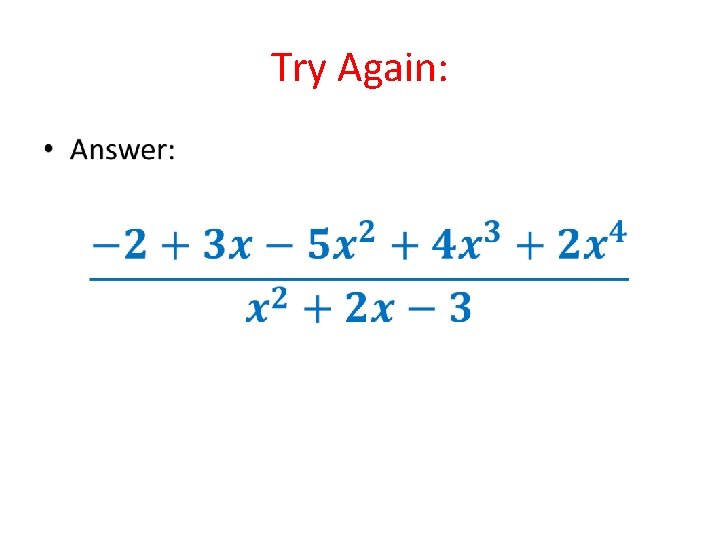
Try Again: •
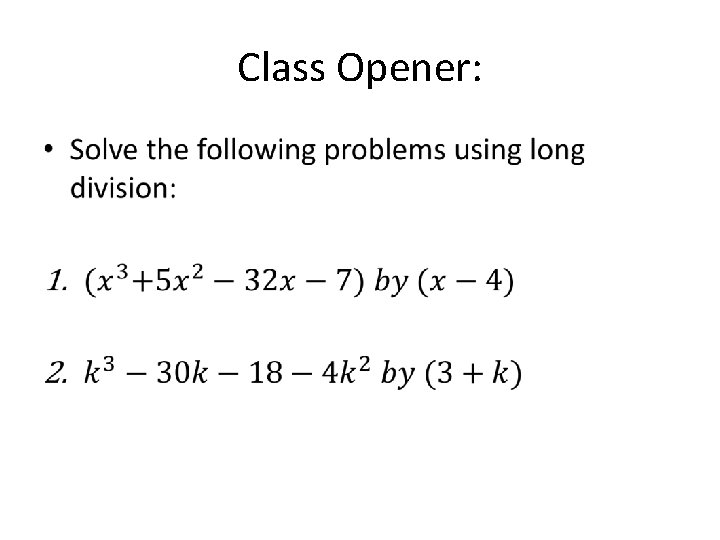
Class Opener: •
Synthetic Division • There is a nice shortcut for long division of polynomials when dividing by divisors of the for (x – k). This short cut is known as SYNTHETIC DIVISION
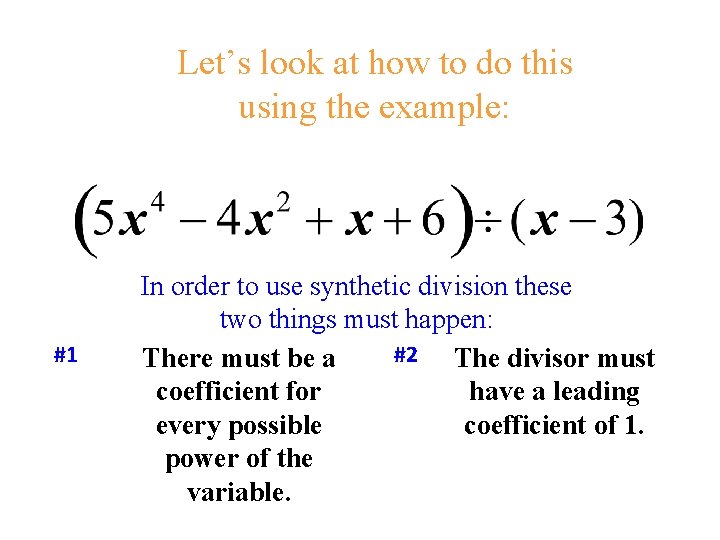
Let’s look at how to do this using the example: #1 In order to use synthetic division these two things must happen: #2 The divisor must There must be a coefficient for have a leading every possible coefficient of 1. power of the variable.
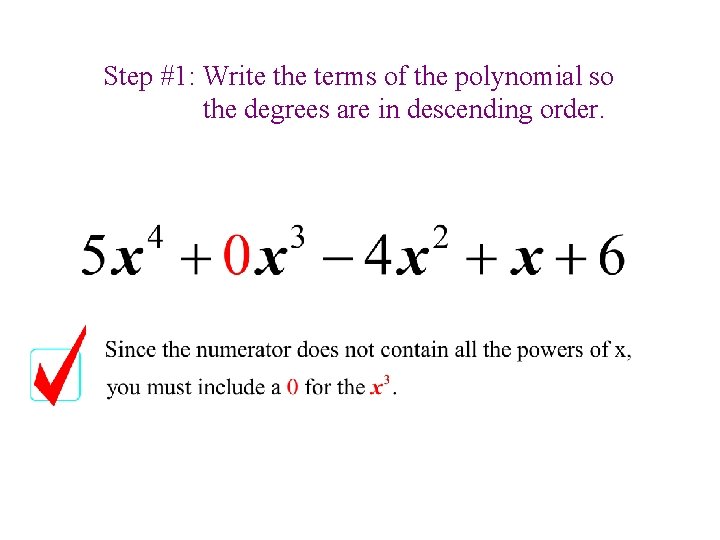
Step #1: Write the terms of the polynomial so the degrees are in descending order.
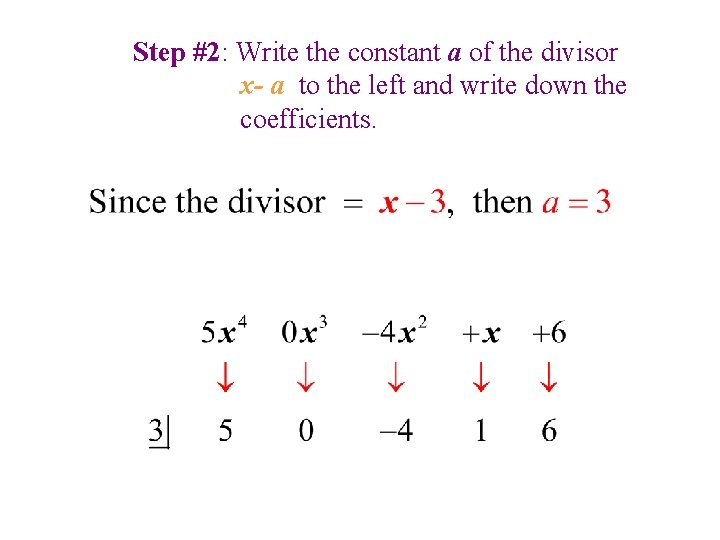
Step #2: Write the constant a of the divisor x- a to the left and write down the coefficients.
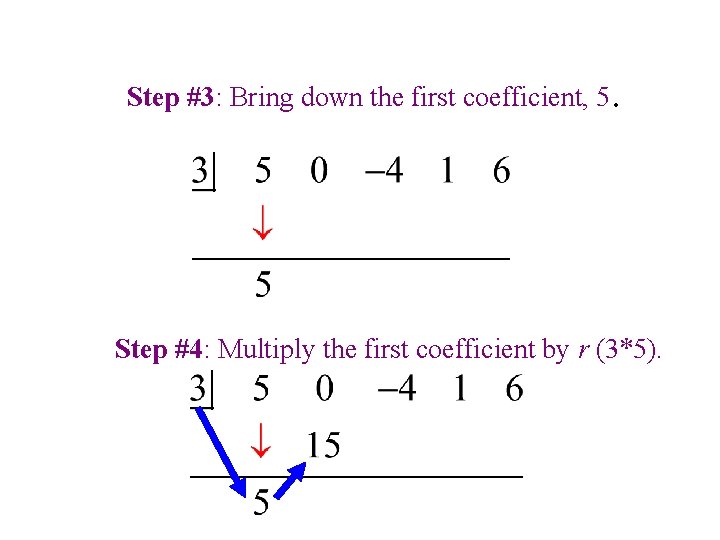
Step #3: Bring down the first coefficient, 5. Step #4: Multiply the first coefficient by r (3*5).
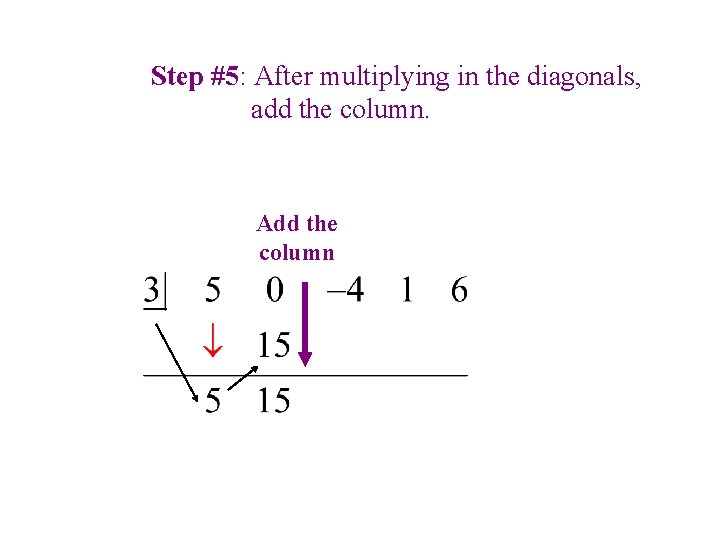
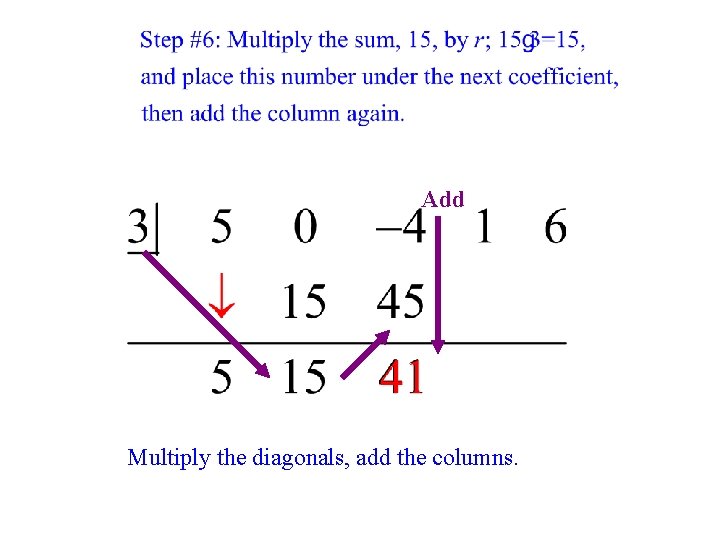
Step #5: After multiplying in the diagonals, add the column. Add the column
Add Multiply the diagonals, add the columns.
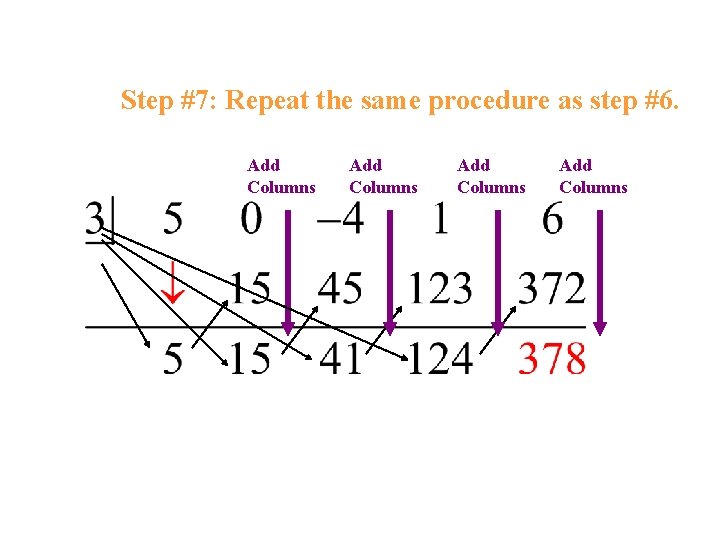
Step #7: Repeat the same procedure as step #6. Add Columns
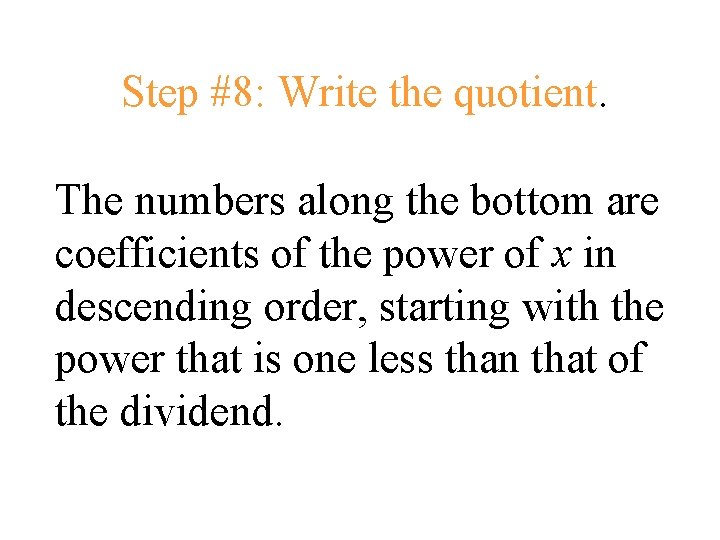
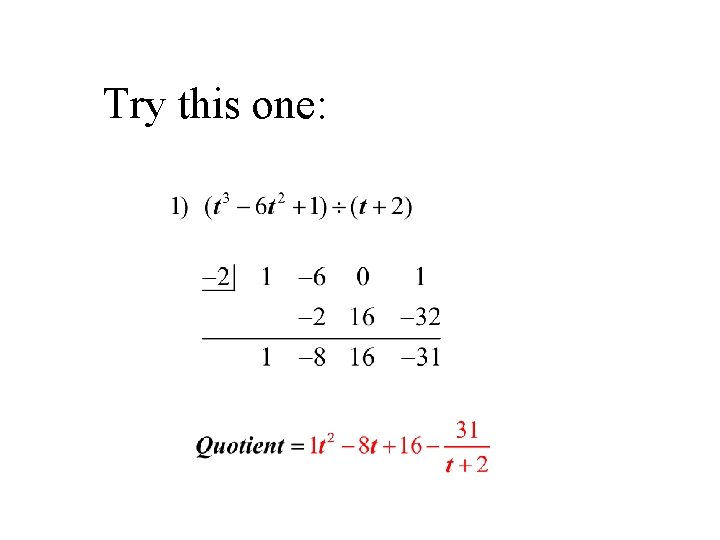
Step #8: Write the quotient. The numbers along the bottom are coefficients of the power of x in descending order, starting with the power that is one less than that of the dividend.
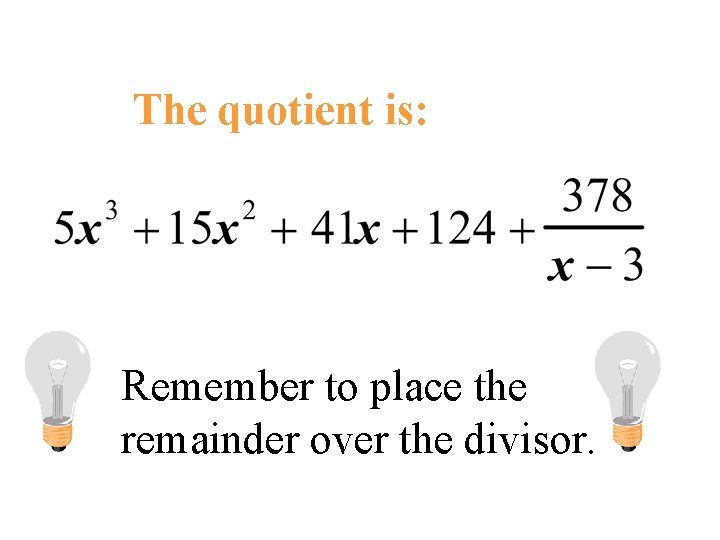
The quotient is: Remember to place the remainder over the divisor.
Try this one:
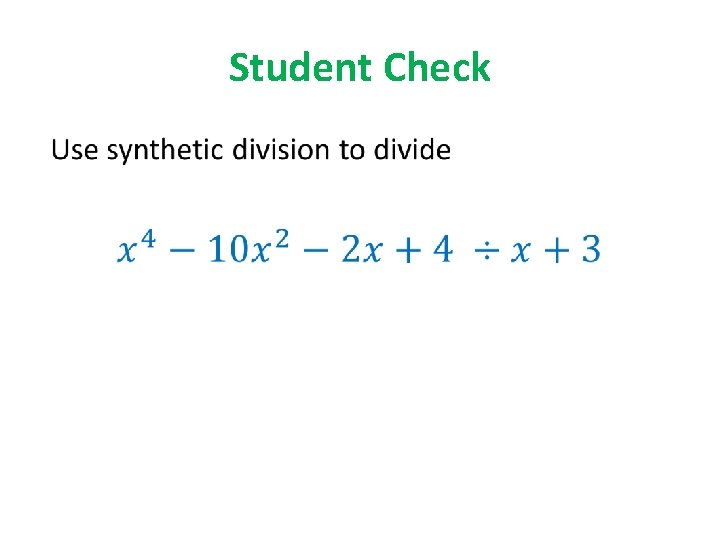
Student Check •
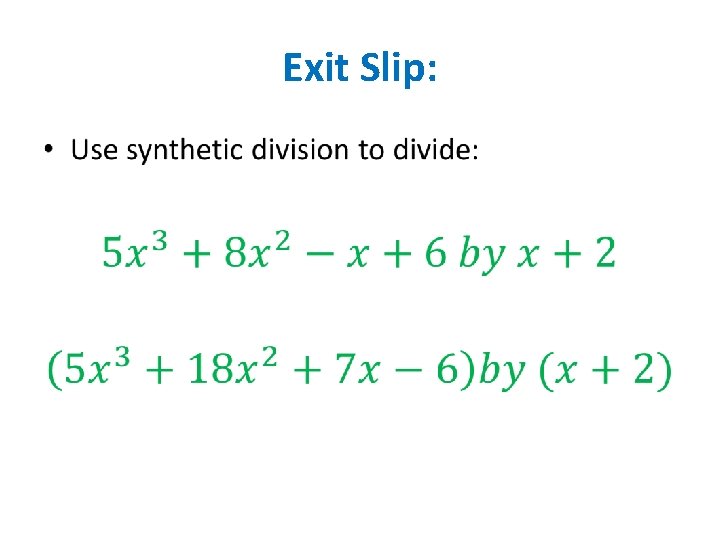
Exit Slip: •
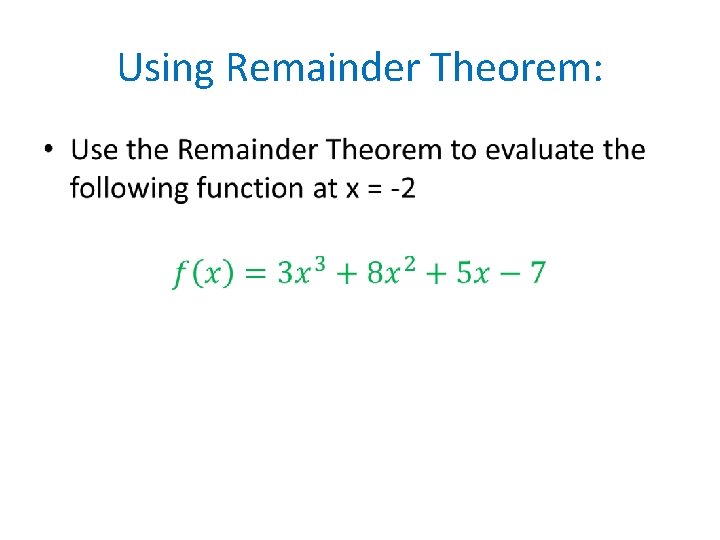
Remainder Theorem • If a polynomial f(x) is divided by x – k, the remainder is r = f(k)
Using Remainder Theorem: •
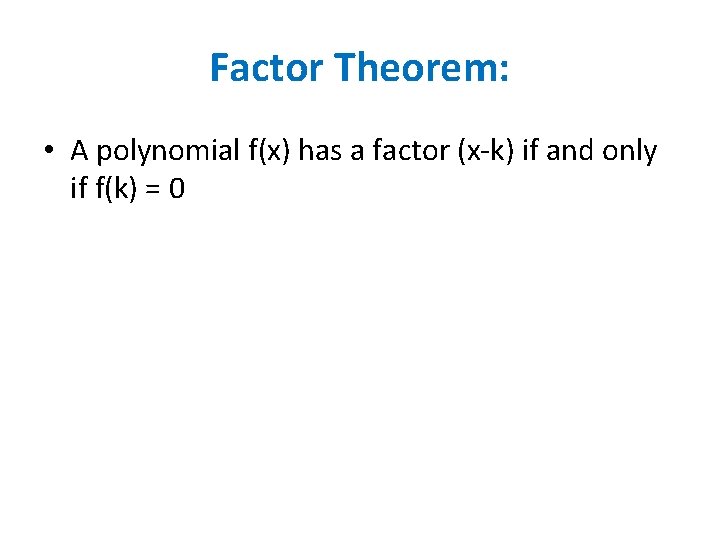
Factor Theorem: • A polynomial f(x) has a factor (x-k) if and only if f(k) = 0
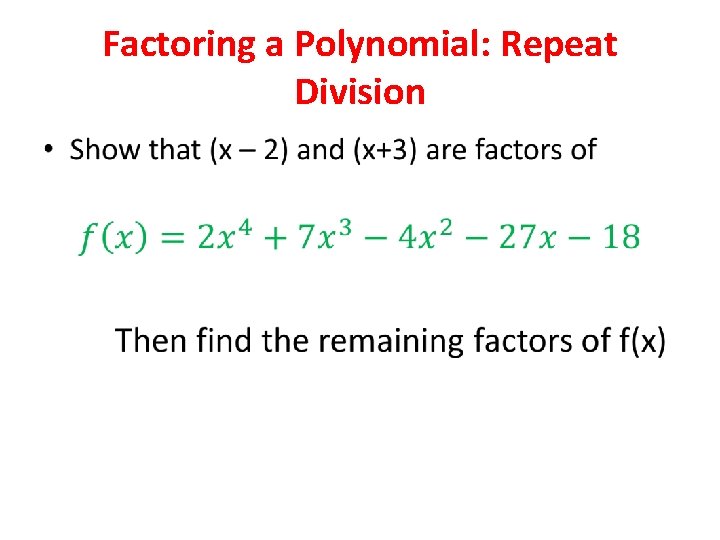
Factoring a Polynomial: Repeat Division •
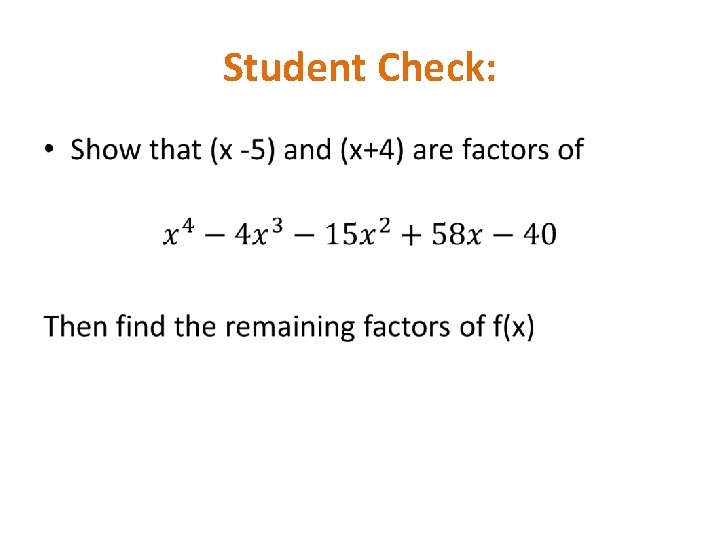
Student Check: •
Using the Remainder in Synthetic Division: • In summary, the remainder r, obtained in the synthetic division of f(x) by (x – k) provides the following information: 1. If r = 0, (x – k) is a factor of f(x) 2. The remainder, r, gives the value of f at x=k that is, r = f(k). 3. If r = 0, (k, 0) is an x-intercept of the graph of f
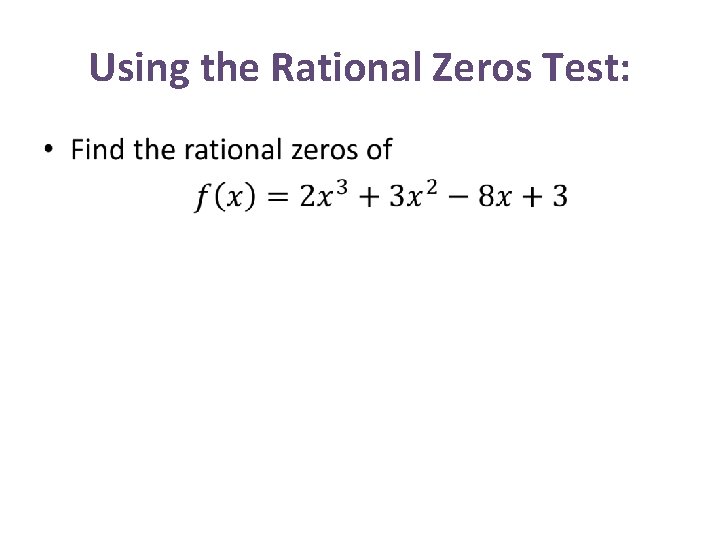
Rational Zero Test: • The rational zero test relates the possible rational zeros of a polynomial (having integer coefficients) to the leading coefficient and to the constant term of the polynomial.
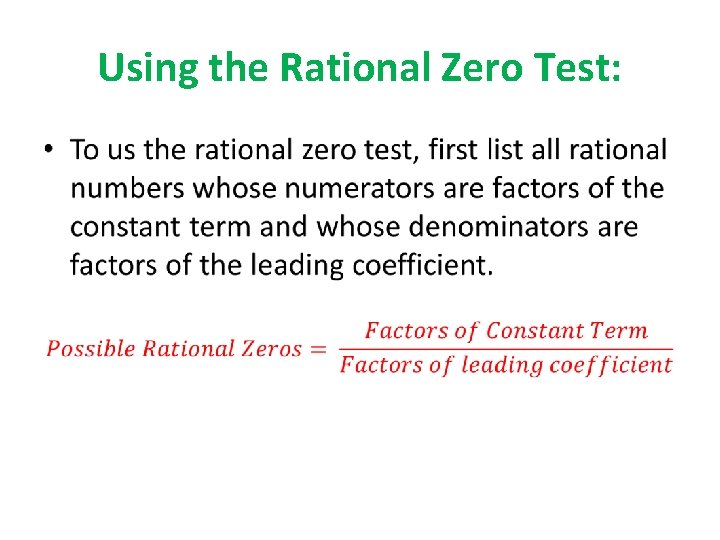
Using the Rational Zero Test: •
Tips: • If the leading coefficient is not 1, the list of possible zeros can increase dramatically. Use these tips to shrink your search: 1. Use a graphing calculator to graph the polynomial 2. Use IVT, and table function of calculator 3. Use The Factor Theorem and synthetic division.
Using the Rational Zeros Test: •
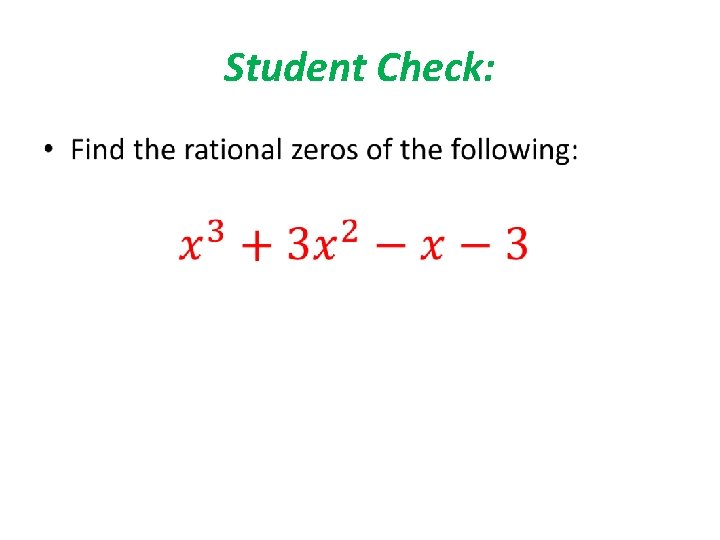
Student Check: •
Descartes’ Rule of Signs • method of determining the maximum number of zeros in a polynomial. Look on page 124 in text.