
OPENING ACTIVITY Pull out your pretest for the
- Slides: 17
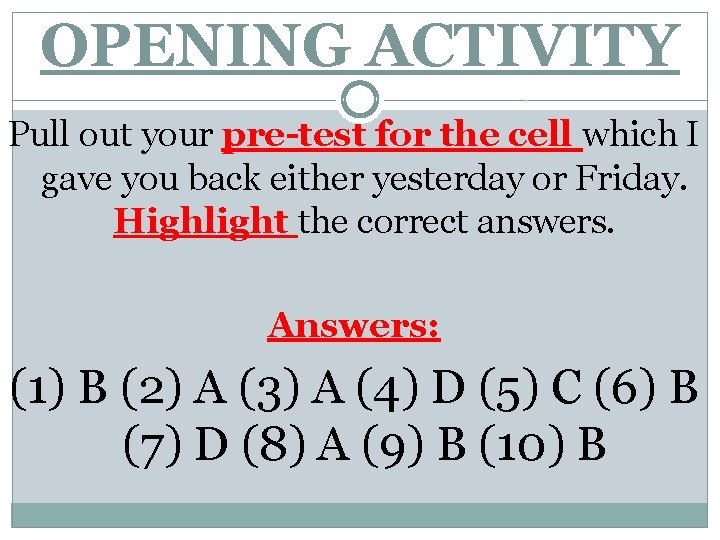
OPENING ACTIVITY Pull out your pre-test for the cell which I gave you back either yesterday or Friday. Highlight the correct answers. Answers: (1) B (2) A (3) A (4) D (5) C (6) B (7) D (8) A (9) B (10) B
Classification
How did classification begin? �Organize groups based on similarities – classification. �Taxonomy – the branch of biology that groups organisms based on different characteristics.
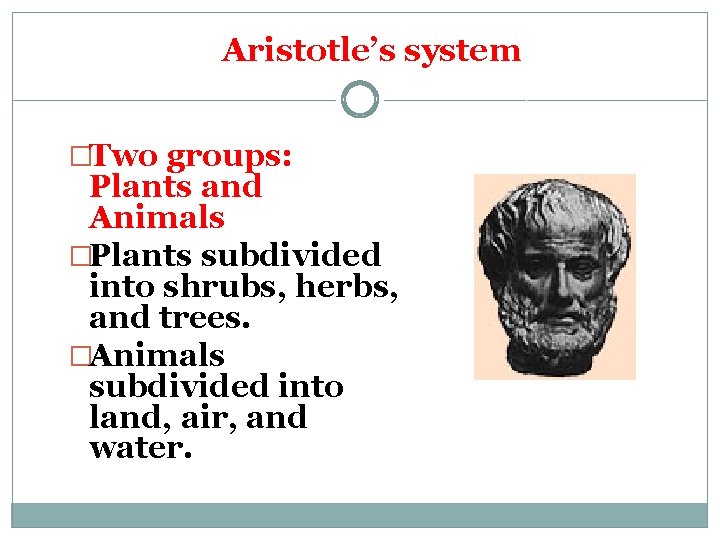
Aristotle’s system �Two groups: Plants and Animals �Plants subdivided into shrubs, herbs, and trees. �Animals subdivided into land, air, and water.
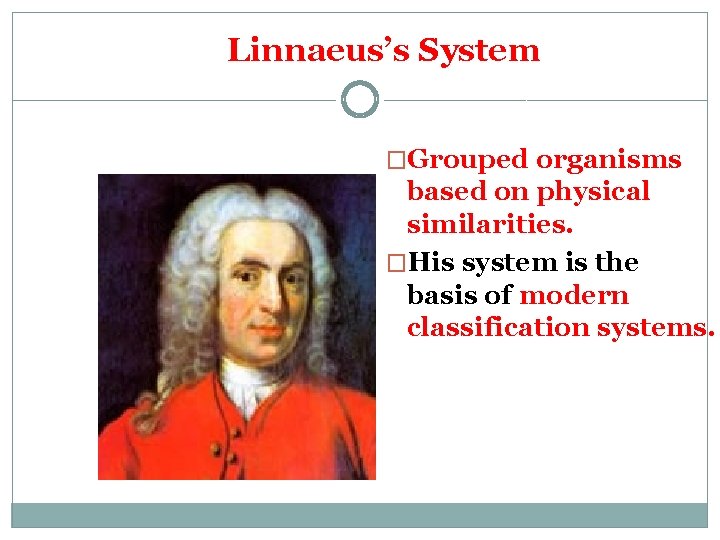
Linnaeus’s System �Grouped organisms based on physical similarities. �His system is the basis of modern classification systems.
Binomial Nomenclature �A two-word naming system that identifies the genus and species of an organism. �Genus – a group of similar species. �Scientific names are Latin, italicized or underlined when written. �The genus is capitalized and the species name is not. Example: Homo sapiens
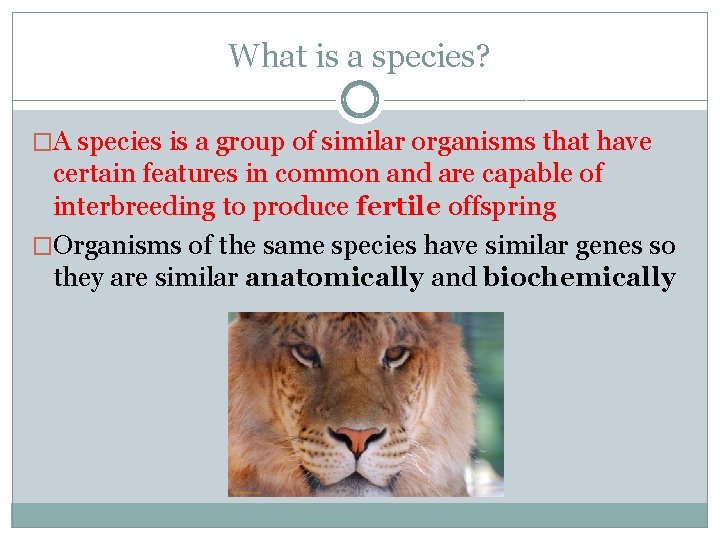
What is a species? �A species is a group of similar organisms that have certain features in common and are capable of interbreeding to produce fertile offspring �Organisms of the same species have similar genes so they are similar anatomically and biochemically
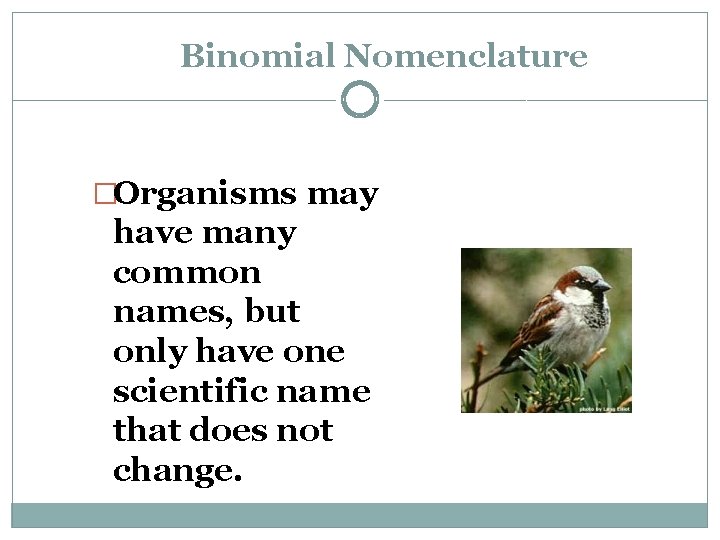
Binomial Nomenclature �Organisms may have many common names, but only have one scientific name that does not change.
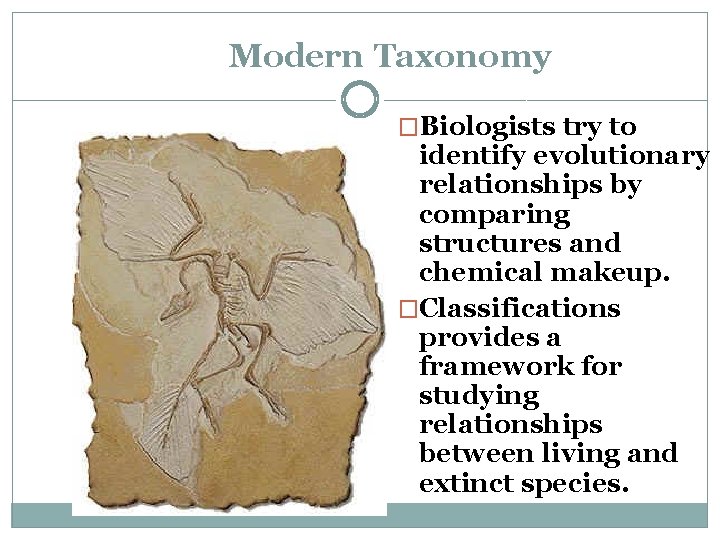
Modern Taxonomy �Biologists try to identify evolutionary relationships by comparing structures and chemical makeup. �Classifications provides a framework for studying relationships between living and extinct species.
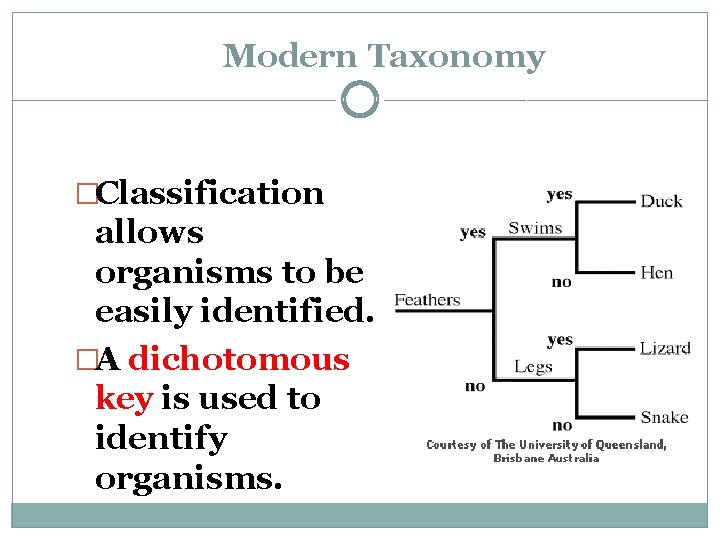
Modern Taxonomy �Classification allows organisms to be easily identified. �A dichotomous key is used to identify organisms.
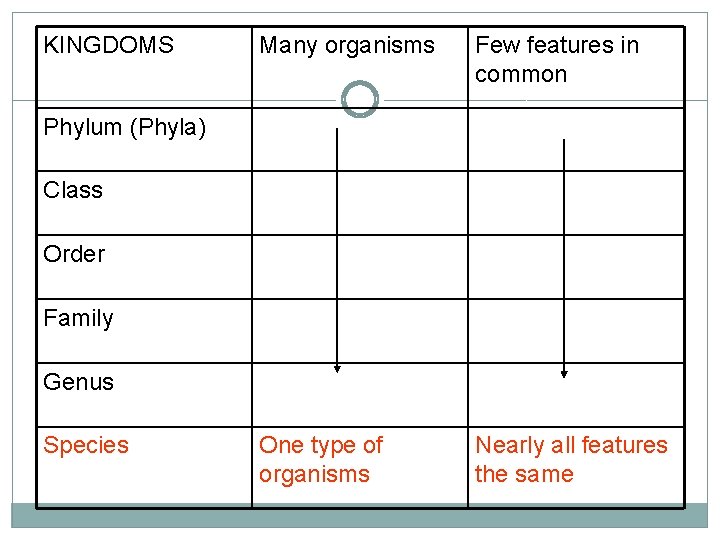
Taxonomy �Living things are classified in a hierarchial system �There are five main groups called KINGDOMS
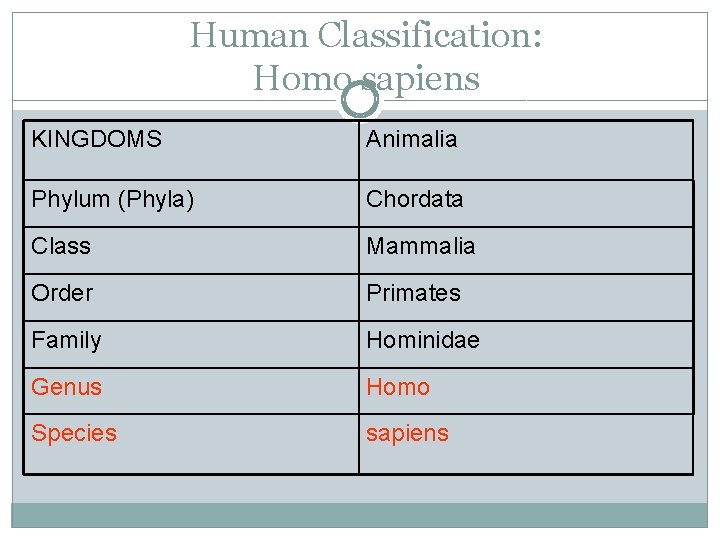
KINGDOMS Many organisms Few features in common One type of organisms Nearly all features the same Phylum (Phyla) Class Order Family Genus Species
Human Classification: Homo sapiens KINGDOMS Animalia Phylum (Phyla) Chordata Class Mammalia Order Primates Family Hominidae Genus Homo Species sapiens
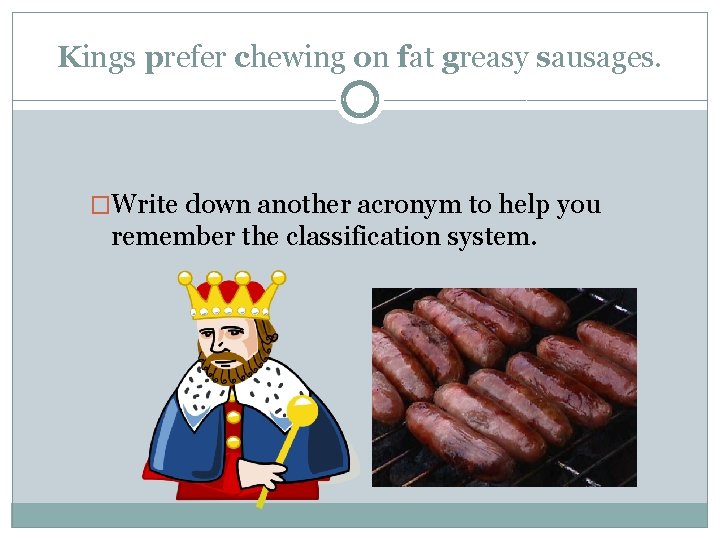
Kings prefer chewing on fat greasy sausages. �Write down another acronym to help you remember the classification system.
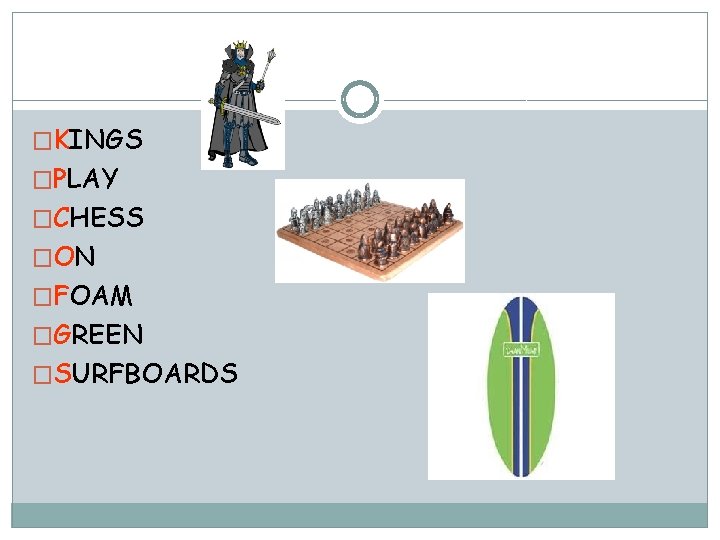
�KINGS �PLAY �CHESS �ON �FOAM �GREEN �SURFBOARDS
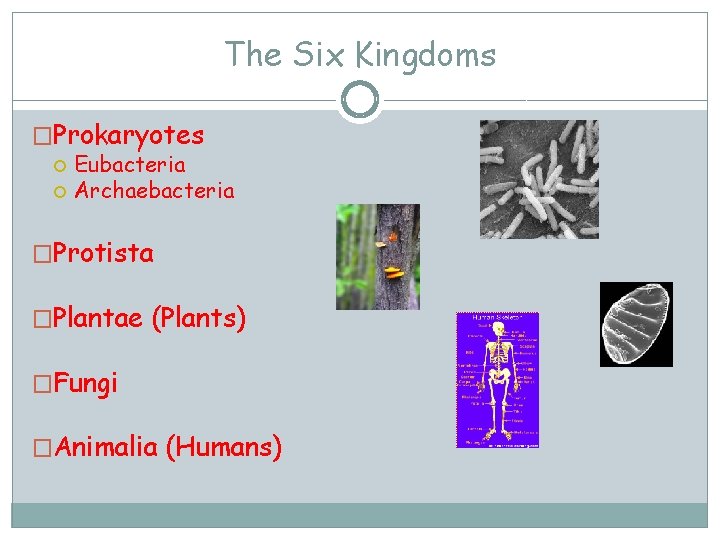
The Six Kingdoms �Prokaryotes Eubacteria Archaebacteria �Protista �Plantae (Plants) �Fungi �Animalia (Humans)
Closing: Page 470 - 473 1. List the six kingdoms Provide three facts about EACH kingdom 2. Which kingdom would a unicellular organism with a nucleus and membrane bound organelles belong? It has no cell wall, but uses flagella. 3. What kingdom is composed of multicellular autotrophs? 4. What feature do eubacteria and archaebacteria share? o