
Open Sys Bio Journal Club Interstitial fluid osmolarity
Open Sys. Bio Journal Club Interstitial fluid osmolarity modulates the action of differential tissue surface tension in progenitor cell segregation during gastrulation. By Krens SFG, Veldhuis JH, Barone V, Čapek D, Maître JL, Brodland GW, Heisenberg CP. Development. 144(10): 1798 -1806. 2017. Osvaldo Chara La Plata, Argentina, 03. 11. 2017 Sys. Bio
Outline Introduction on gastrulation, Tissue Surface Tension (TST). Results Discussion Conclusions

introduction
introduction During gastrulation, the germ layer progenitor cell types –ectoderm, mesoderm and endoderm – segregate into distinct germ layers with ectoderm positioned on the outside of the embryo and mesoderm and endoderm on its inside (Stern, 2004). The molecular, cellular and biophysical mechanisms that underlie cell segregation and tissue self-organization have been studied for decades (Borghi and Nelson, 2009).
introduction Differences in cell adhesion and cortical tension, which together determine tissue surface tension (TST), are generally thought to constitute crucial determinants that drive cell sorting and tissue layering in development (Foty and Steinberg, 2013; Krens and Heisenberg, 2011). In zebrafish and Xenopus gastrulation, differential TST between the forming germ layers has been postulated to trigger progenitor cell segregation and germ layer positioning (Krieg et al. , 2008; Maître et al. , 2012; Schötz et al. , 2008).
introduction However, evidence that supports this view has so far nearly exclusively come from experiments performed on cells and tissues in culture. Moreover, studies in Xenopus embryos have suggested that cadherin-dependent differential TST causes cell sorting in vitro, but not in the embryo (Ninomiya et al. , 2012). The main difficulty in determining the contribution of differential TST to cell sorting in vivo has been the lack of techniques for determining TST within the physiological environment where these processes naturally occur.
introduction Here, we introduce Cell. FIT-3 D, a 3 D force inference method (Brodland et al. , 2010, 2014) that allows us to analyze TST within the zebrafish gastrula.

results
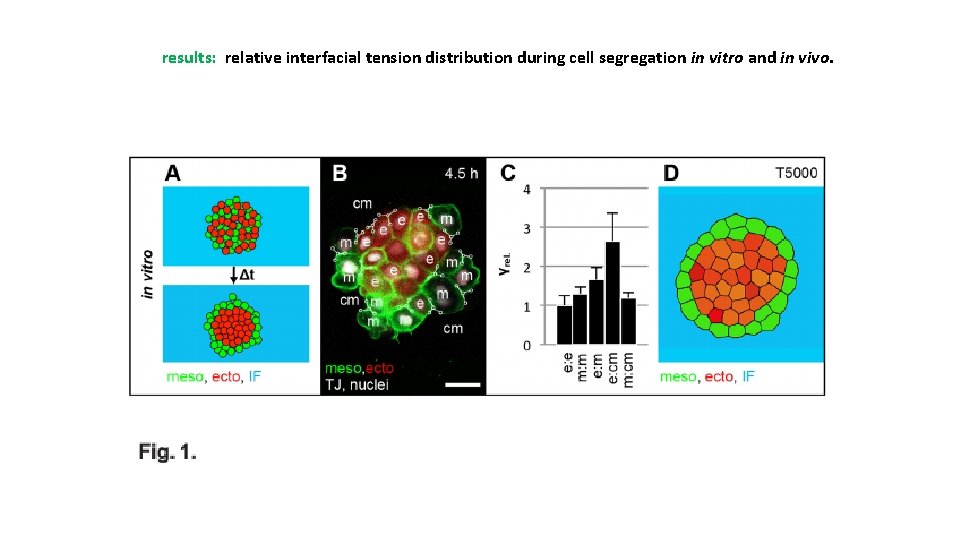
results: relative interfacial tension distribution during cell segregation in vitro and in vivo.
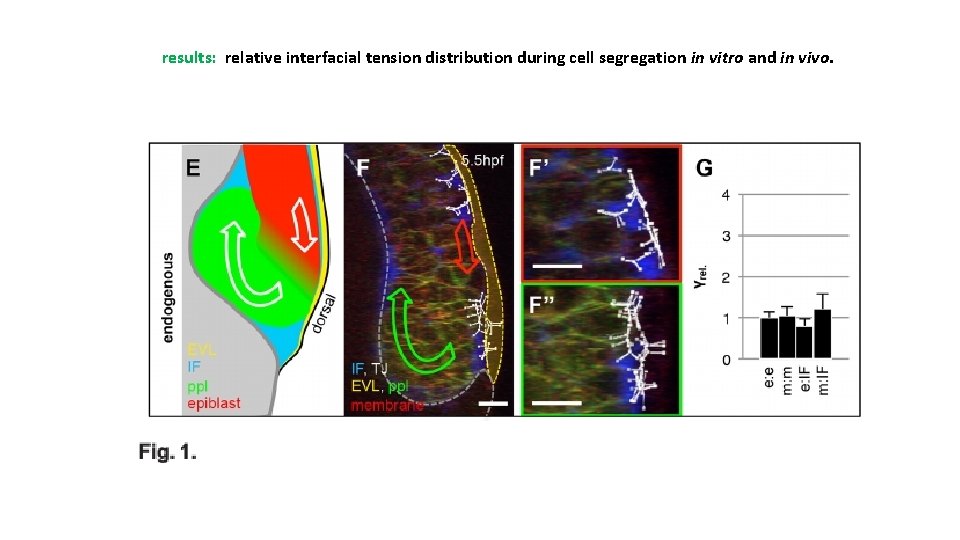
results: relative interfacial tension distribution during cell segregation in vitro and in vivo.
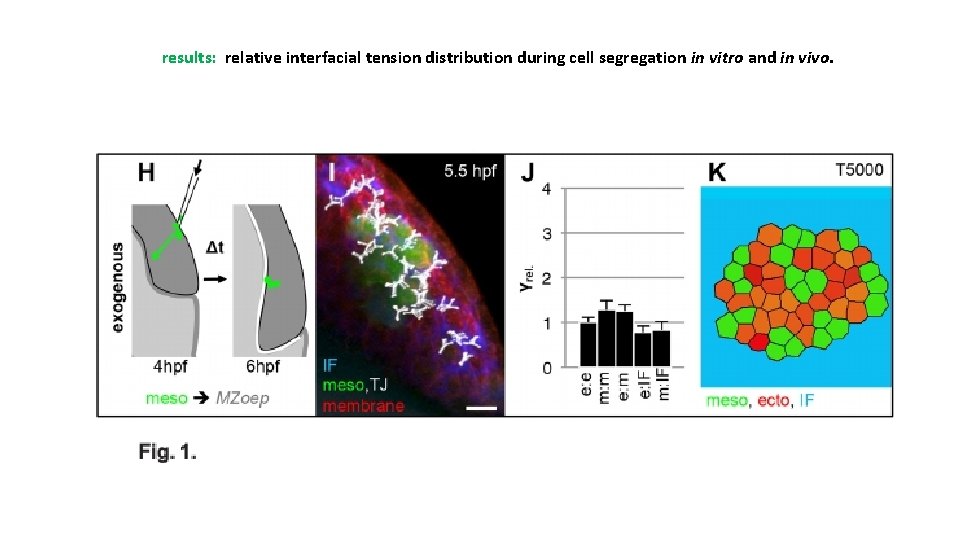
results: relative interfacial tension distribution during cell segregation in vitro and in vivo.
results: questions Our analysis raises two main questions: (1) why are cell interfacial tensions different in the embryo compared to the situation in culture; and (2) what mechanism(s) – if not differential TST – drive progenitor cell segregation in vivo?
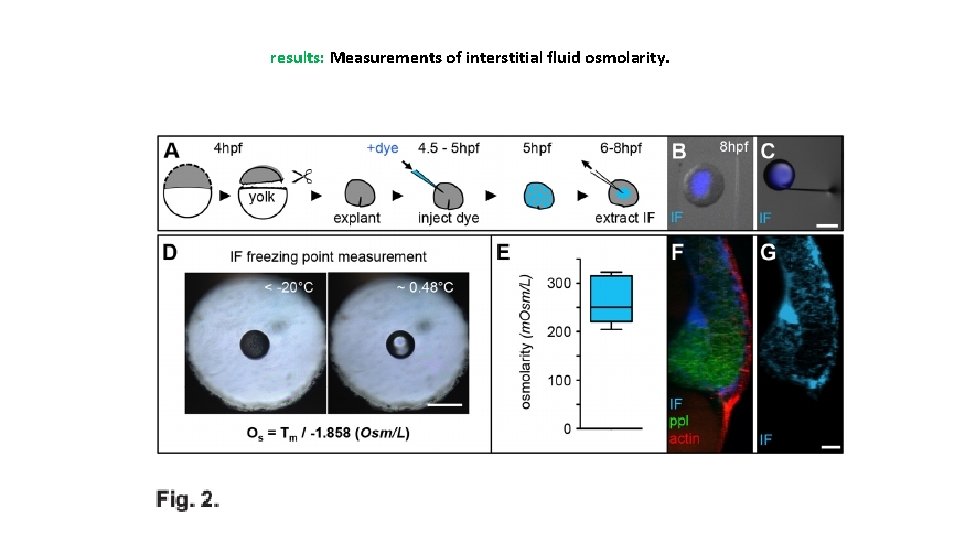
results: Measurements of interstitial fluid osmolarity.
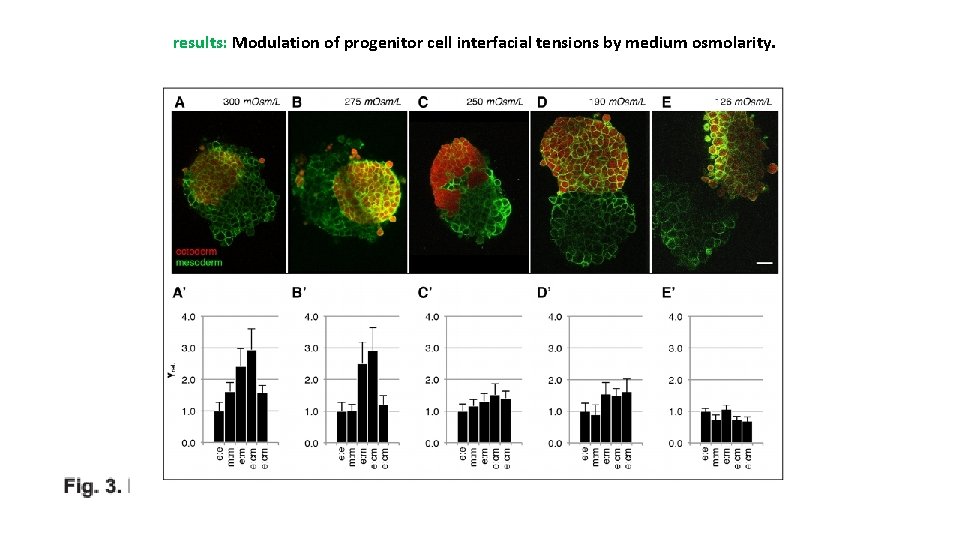
results: Modulation of progenitor cell interfacial tensions by medium osmolarity.
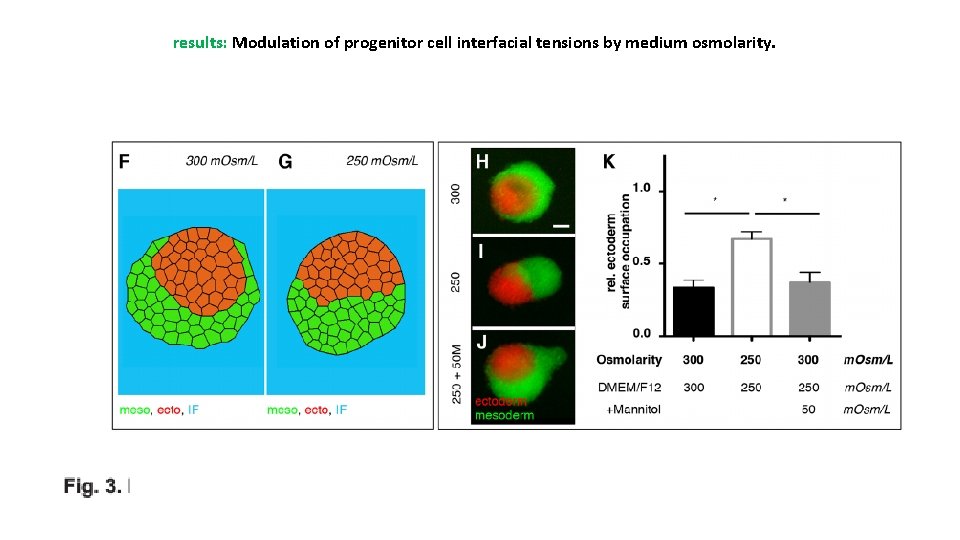
results: Modulation of progenitor cell interfacial tensions by medium osmolarity.
results: questions Our analysis raises two main questions: (1) why are cell interfacial tensions different in the embryo compared to the situation in culture; and (2) what mechanism(s) – if not differential TST – drive progenitor cell segregation in vivo?
results: questions Our analysis raises two main questions: (1) why are cell interfacial tensions different in the embryo compared to the situation in culture; and (2) what mechanism(s) – if not differential TST – drive progenitor cell segregation in vivo?
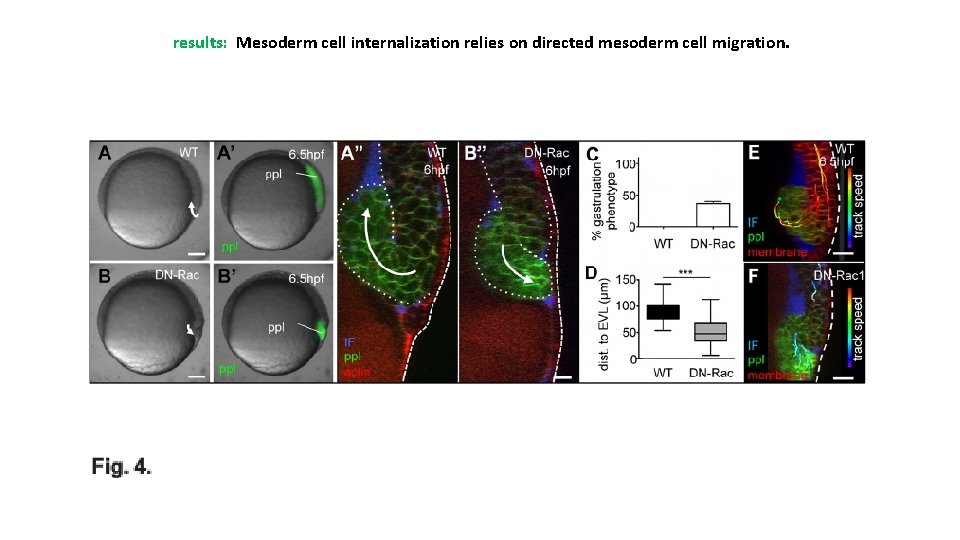
results: Mesoderm cell internalization relies on directed mesoderm cell migration.
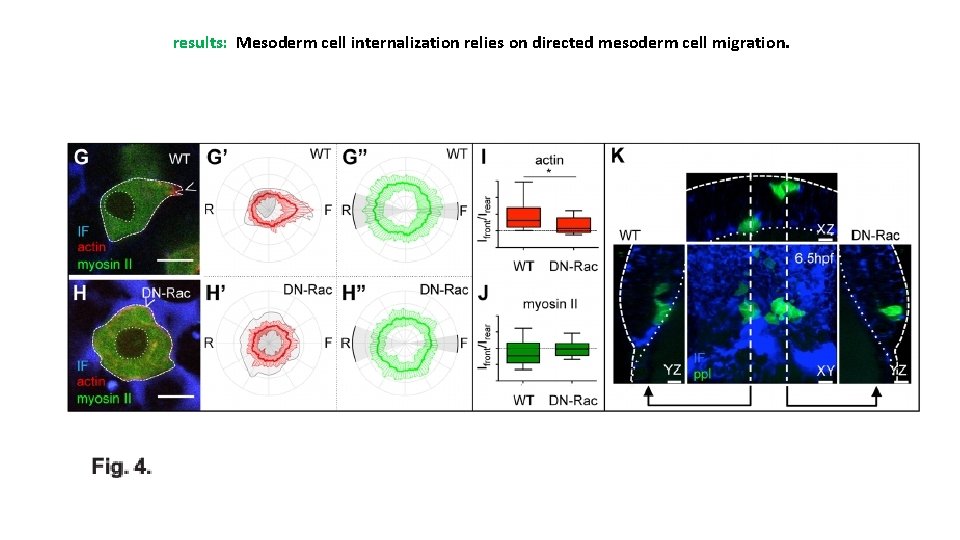
results: Mesoderm cell internalization relies on directed mesoderm cell migration.
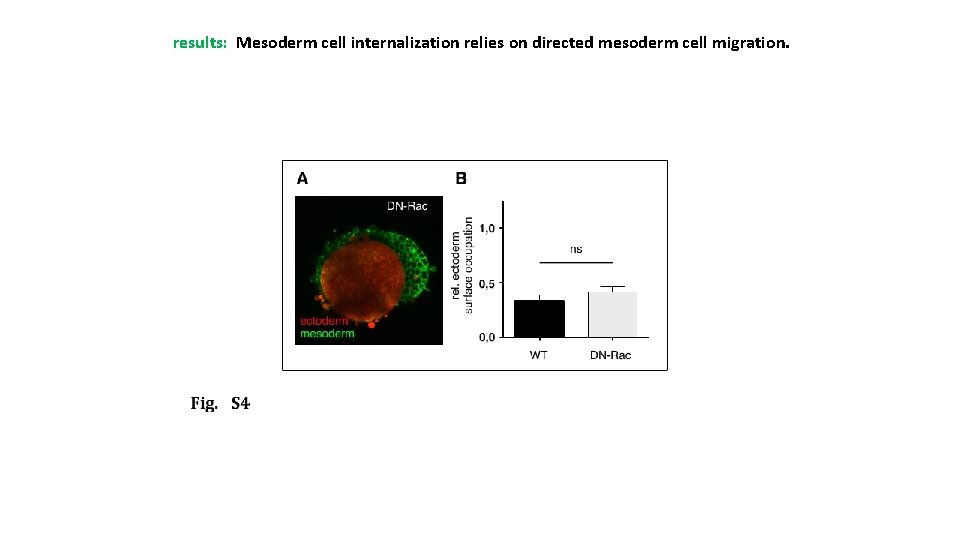
results: Mesoderm cell internalization relies on directed mesoderm cell migration.

Discussion
Discussion 1. Previous studies have shown that germ layer progenitor cell segregation in culture is driven by differences in TST among the forming germ layers, with ectoderm displaying higher TST than mesoderm and endoderm (Krieg et al. , 2008; Maître et al. , 2012; Schötz et al. , 2008). Here, we show that this difference in germ layer TST crucially depends on the osmolarity of the surrounding fluid interface, and that within the gastrulating embryo under physiological osmolarity levels, this difference in TST diminishes. This argues against TST playing an instructive role in germ layer progenitor cell segregation during zebrafish gastrulation.
Discussion 2. Osmolarity has previously been shown to affect cell interfacial tensions by altering hydrostatic cell pressure that in turn is balanced by cortex tension (Lang et al. , 1998; Salbreux et al. , 2012; Stewart et al. , 2011). So far, studies on the interplay between medium osmolarity and hydrostatic cell pressure have mostly focused on cell responses to changes in medium osmolarity on timescales of seconds to minutes. By contrast, progenitor cell segregation both in vitro and in vivo occurs over a period of minutes to hours, and thus we recorded the response of progenitor cells to changes in medium/IF osmolarity on comparably long timescales.
Discussion 2. Consequently, the response of ectoderm and mesendoderm progenitors to changes in medium/IF osmolarity in our analysis describes the specific ability of those cell types in maintaining fluid homeostasis rather than their immediate response to changes in hydrostatic pressure. How, over such comparably long timescales, medium and/or IF osmolarity affects progenitor cell interfacial tensions is not yet clear, but the ability of progenitor cells to undergo regulated volume increase or decrease in response to osmotic swelling or shrinkage, and associated changes in the ionic composition of the cell cytoplasm are likely involved. A systematic analysis of how medium and/or IF osmolarity affects progenitor cell interfacial tensions, and how the acquisition of different cell fates by those progenitor cells modulates their response to IF and/or medium osmolarity will be needed to further explore how osmolarity functions in gastrulation movements.
Discussion 3. We also show that instead of differential TST driving germ layer progenitor cell segregation, directed migration of mesendoderm cells from the outside to the inside of the germ ring margin is required for mesendoderm cell internalization during gastrulation. Why mesoderm cells polarize and migrate from the outside to the inside of the germ ring is still unclear, but one possibility is that the blastoderm displays an overall polarity along the radial axis of the embryo, and that this tissue polarity then triggers mesendoderm polarization and internalization.
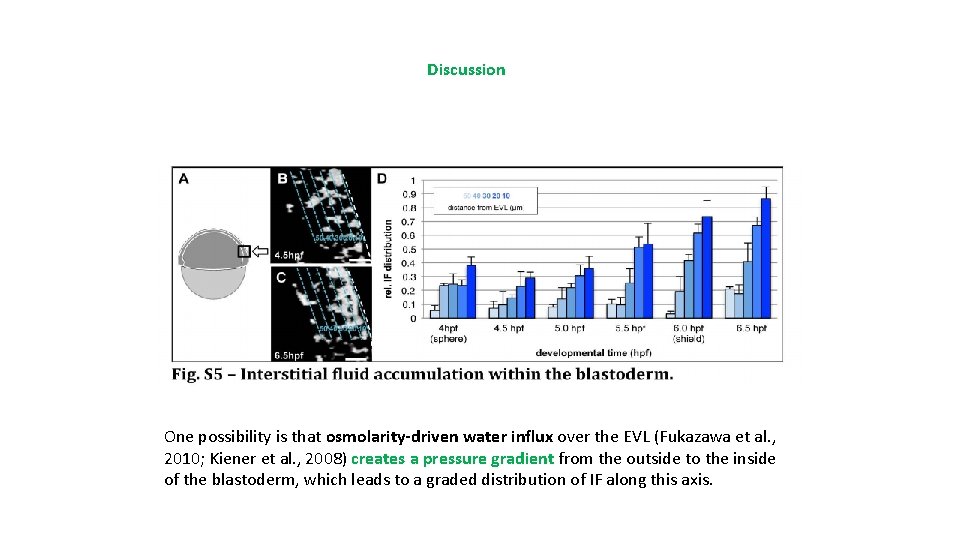
Discussion One possibility is that osmolarity-driven water influx over the EVL (Fukazawa et al. , 2010; Kiener et al. , 2008) creates a pressure gradient from the outside to the inside of the blastoderm, which leads to a graded distribution of IF along this axis.

Conclusions
Conclusions The role of differential TST in early development is still debated. Our Cell. FIT-3 D-based analysis of cell interfacial tensions within the gastrulating embryo provides the first direct evidence that differential TST is not sufficient to explain germ layer progenitor cell segregation during zebrafish gastrulation. This does not argue against differential TST playing other important roles in early development, but clearly shows that complex morphogenetic processes, such as the formation and positioning of the different germ layers during gastrulation, depend on the interplay between different processes, including directed cell migration and polarization.

Thank you for your attention! La Plata, Argentina, 03. 11. 2017 Sys. Bio
- Slides: 30