
Open Space Rural Amenities Values and Policy Issues
- Slides: 26
Open Space: Rural Amenities, Values and Policy Issues Don Mc. Leod Agricultural & Applied Economics University of Wyoming And the help of many Colleagues
LAYOUT • • So What? Who Cares? Examples/Typologies of Amenities Valuation Policy Issues
Relevance of Rural Open Space • • • Biodiversity Groundwater Arable Lands Recreation Scenic Views Economic Importance to Rural Communities • Stock of Developable Lands • Private Property
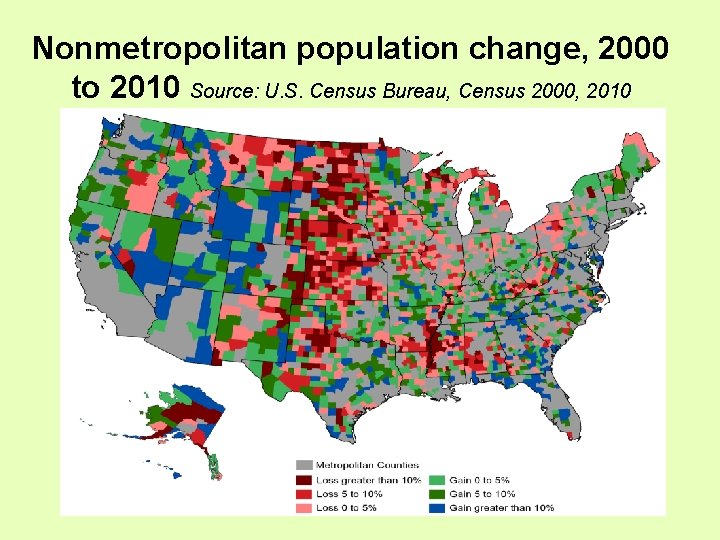
Nonmetropolitan population change, 2000 to 2010 Source: U. S. Census Bureau, Census 2000, 2010
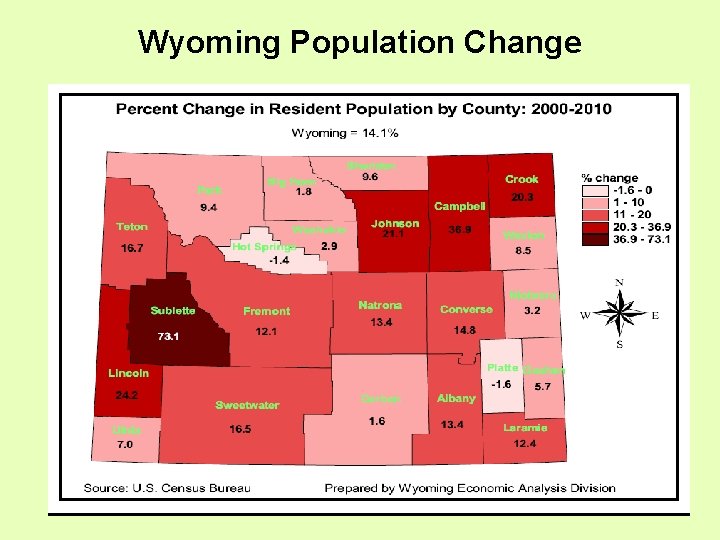
Wyoming Population Change
Open Space Conversion • • Energy Residential Fragmentation/Parcelization Adversely Impacting Open Space Attributes
INTERESTED PARTIES IN AMENITY DEBATE • • • Landowners Development Agents NGOs/LTAs Grass Root Community Groups Public Use/Management Agencies Tax Entities (IRS, Dept of Revenue) • Extremely Varied Interests in Definition/Valuation
Conceptual Underpinnings • • Land = Input for Agriculture Land = Input for Development Land = Final Consumer Good Land = Source of Public Goods
AMENITY TYPES • Faushold & Lilieholm (EM, 1999, p. 308): Open space “…undeveloped land that retains most of its natural characteristics (such as) forest, grazing, agricultural lands and recreation areas. ” • Bergstrom (Pres, 2002): Typology of Values: “Amenity Values are derived directly from the land (landscape) and have large non-consumptive or passive use values. ”
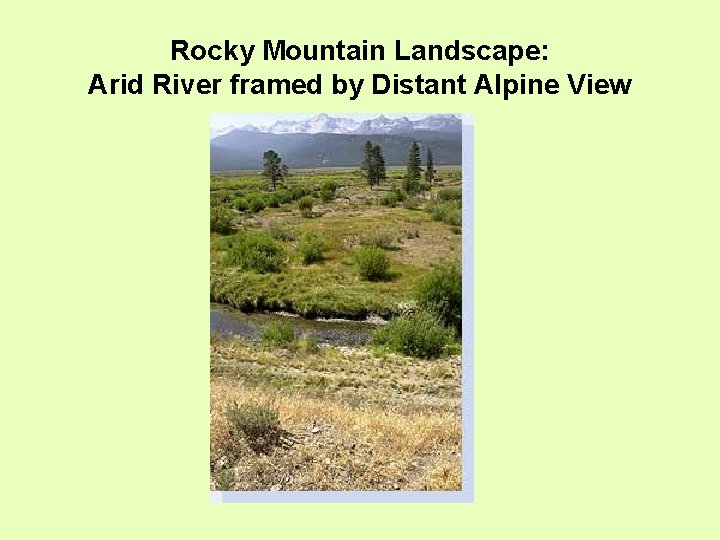
Rocky Mountain Landscape: Arid River framed by Distant Alpine View
AMENITY TYPES (CONT. ) • Randall (ERAE, 2002): Multifunctionality of Agricultural Lands: Valuation of Amenities via Type, Quality and Accessibility • Surveys of 4 Rocky Mtn Counties (1997 -2001): Wildlife Habitat, Water Quantity & Quality, Working Landscapes, Scenic Views; Approval of CEs & Zoning
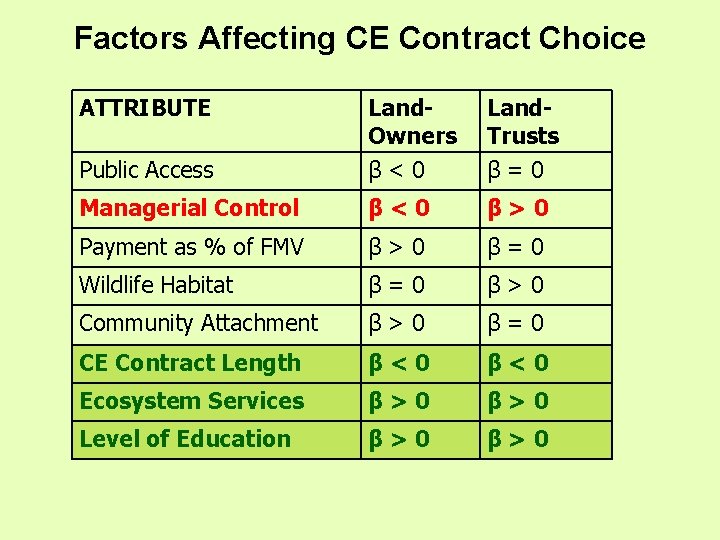
WHAT AMENITIES ARE DEMANDED… by whom and how? • LO Focus Groups (Miller et al 2010): Wildlife & Open Space Provision; Links to Rural Communities; No Access; Management Control • LTA Focus Groups (Keske et al 2011): Water Quality Protection; Biodiversity; Cultural Importance; Large Block; Landowner Interest; Monitoring & Enforcement;
Factors Affecting CE Contract Choice ATTRIBUTE Public Access Land. Owners β<0 Land. Trusts β=0 Managerial Control β<0 β>0 Payment as % of FMV β>0 β=0 Wildlife Habitat β=0 β>0 Community Attachment β>0 β=0 CE Contract Length β<0 Ecosystem Services β>0 Level of Education β>0
Stated Payments for Farmland Protection (Bergstrom & Ready, 2003) • Generic “any” Agricultural Lands by State • Prime “productivity” Agricultural Lands by State
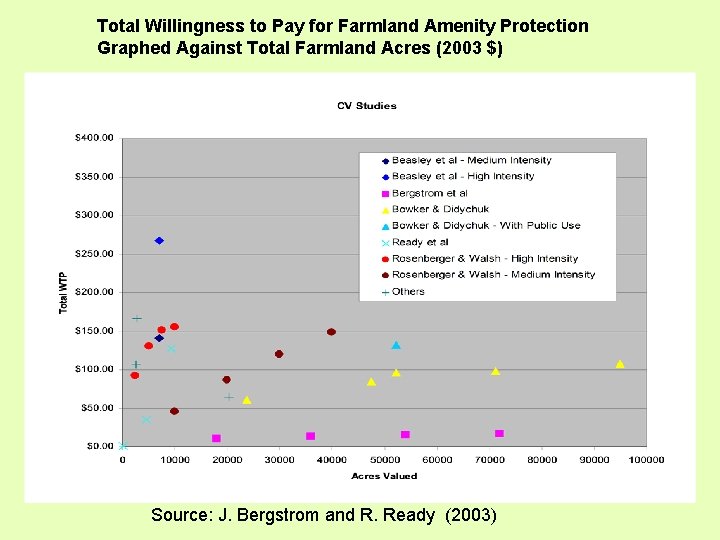
Total Willingness to Pay for Farmland Amenity Protection Graphed Against Total Farmland Acres (2003 $) Source: J. Bergstrom and R. Ready (2003)
Some Stated Preference Research • Public Preferences for Land Preservation: Bergstrom et al. , 1985 Mc. Leod et al. , 1999 Duke & Lynch, 2006, 2007 Johnston & Duke, 2008 • Landowner Preferences for Land Preservation: Phipps, 1983 Lynch & Lovell, 2003 Duke, 2004
Stated Preferences • CVM: WTP for Land Attributes (each) • Which Good(s)? Service(s)? -------------------------- • Stated Choice: WTP for Bundle Choices • Data Requirements for # of Attributes? • Which Attributes? Levels/Quality? Specification? • EG Mc. Gaffin et al 2010; Cropper et al 2013
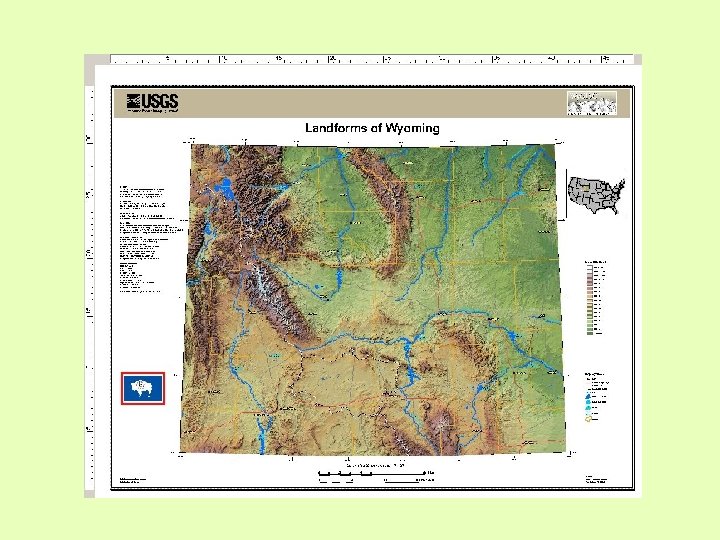
Revealed Preferences • • Wyoming Agricultural Land Values Finding Attribute Values based on Land Prices GIS to Quantify Attributes Bastian et al (2002); Wasson et al (in press): *Elk Habitat; Trout Habitat *Remoteness *Access to Blue Ribbon Public Lands *Index of Variety of Scenery & Specific Scenery Components
Opportunity Cost of Development • Cost of Community/Public Services • AG v. Subdivision Use (Coupal et al 2003) • Density of Rural Development (Lieske et al 2012; and Lieske et al forthcoming) • Impacts on Rural Public Service Provision and Budgets
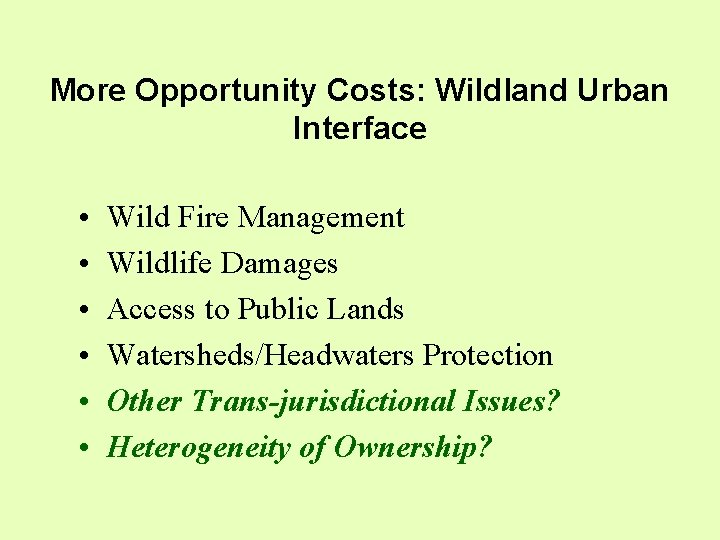
More Opportunity Costs: Wildland Urban Interface • • • Wild Fire Management Wildlife Damages Access to Public Lands Watersheds/Headwaters Protection Other Trans-jurisdictional Issues? Heterogeneity of Ownership?
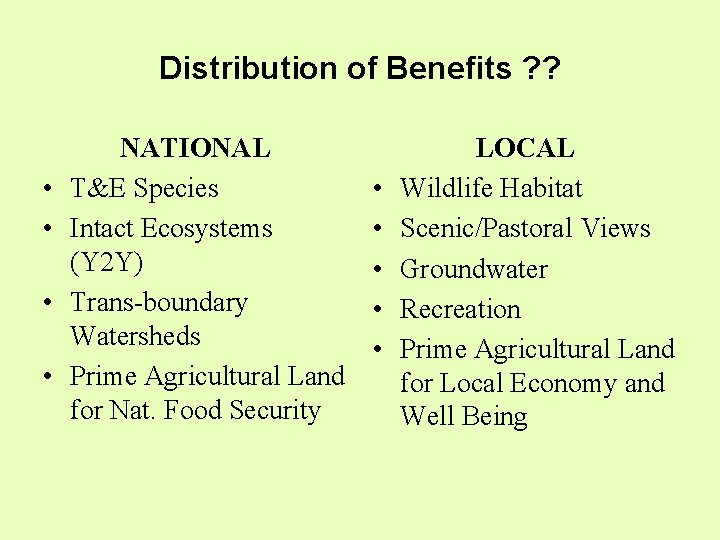
Distribution of Benefits ? ? • • NATIONAL T&E Species Intact Ecosystems (Y 2 Y) Trans-boundary Watersheds Prime Agricultural Land for Nat. Food Security • • • LOCAL Wildlife Habitat Scenic/Pastoral Views Groundwater Recreation Prime Agricultural Land for Local Economy and Well Being
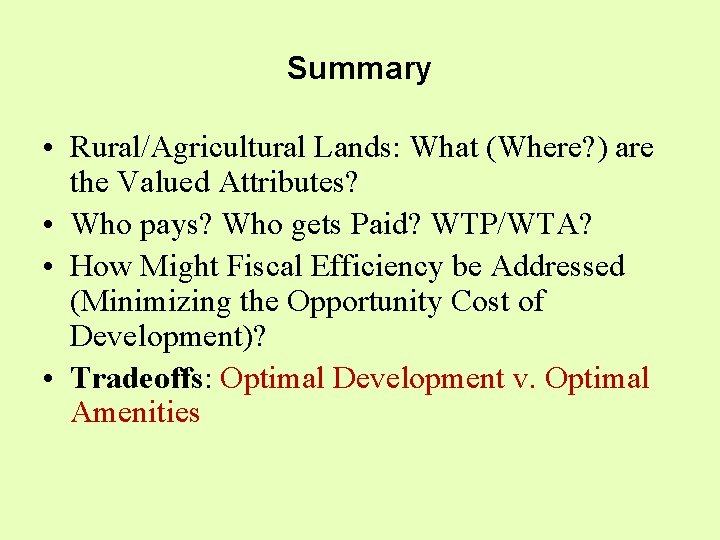
Summary • Rural/Agricultural Lands: What (Where? ) are the Valued Attributes? • Who pays? Who gets Paid? WTP/WTA? • How Might Fiscal Efficiency be Addressed (Minimizing the Opportunity Cost of Development)? • Tradeoffs: Optimal Development v. Optimal Amenities
Policy Implications • How are Amenities Incorporated into Private/Public Land Use Planning/Protection Efforts? VALUES • How Can Public/Private Sectors Partner To Avoid Duplication Effort/Funding? EFFICIENCY • Avoid Conflicts In Management? MINIMIZE TRANSACTIONS COSTS • Markets? Regulation? ALLOCATION • “True” Cost of Development/Land Conversion? (AG to Other Uses)
QUESTIONS?