
Open Space Residential Design OSRD Andrea Cooper Smart
- Slides: 23
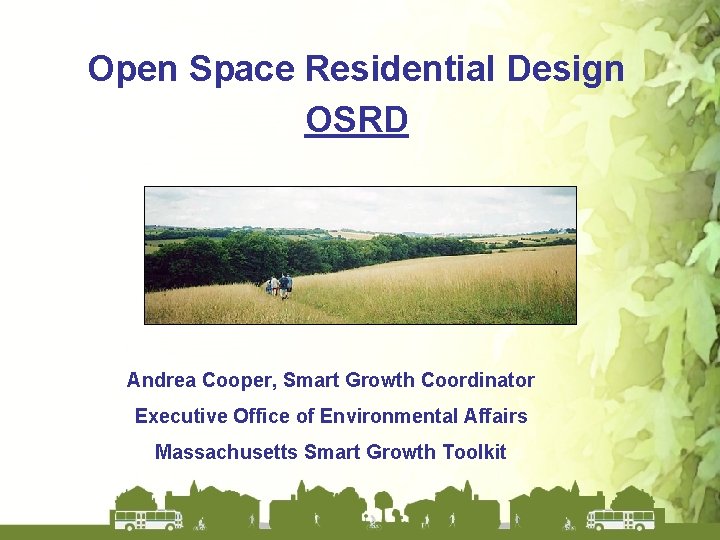
Open Space Residential Design OSRD Andrea Cooper, Smart Growth Coordinator Executive Office of Environmental Affairs Massachusetts Smart Growth Toolkit
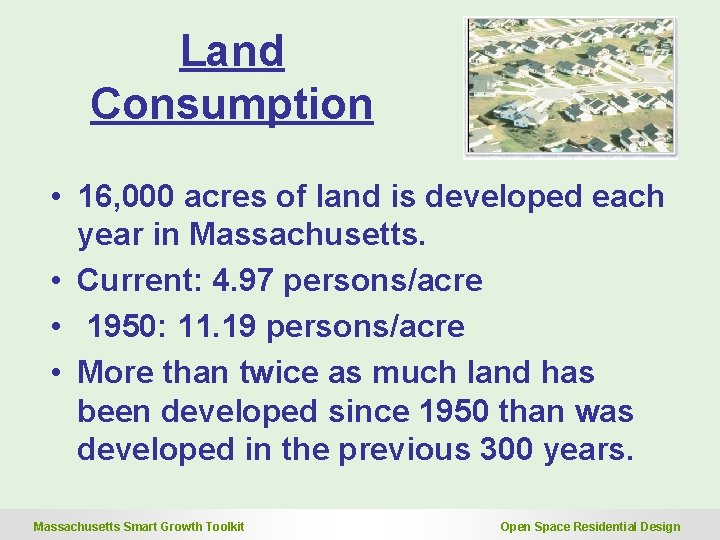
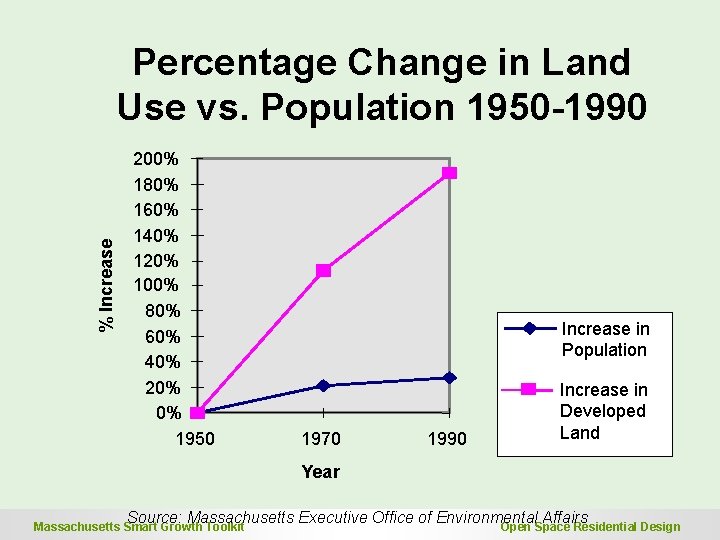
Land Consumption • 16, 000 acres of land is developed each year in Massachusetts. • Current: 4. 97 persons/acre • 1950: 11. 19 persons/acre • More than twice as much land has been developed since 1950 than was developed in the previous 300 years. Massachusetts Smart Growth Toolkit Open Space Residential Design
% Increase Percentage Change in Land Use vs. Population 1950 -1990 200% 180% 160% 140% 120% 100% 80% 60% 40% 20% 0% 1950 Increase in Population 1970 1990 Increase in Developed Land Year Source: Massachusetts Executive Office of Environmental Affairs Massachusetts Smart Growth Toolkit Open Space Residential Design
Growth Pressures • Rapidly increasing sprawl development • Loss of open space and community character • Lack of economically viable housing • Social isolation • Threat to natural resources and water quality Massachusetts Smart Growth Toolkit Open Space Residential Design
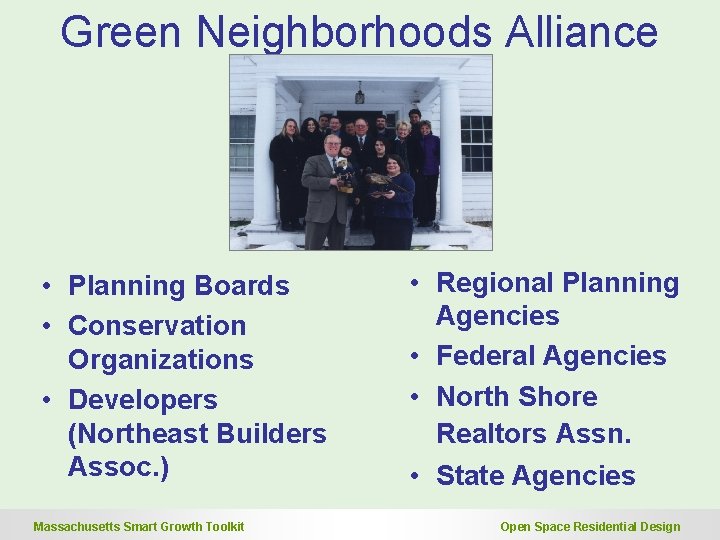
Green Neighborhoods Alliance • Planning Boards • Conservation Organizations • Developers (Northeast Builders Assoc. ) Massachusetts Smart Growth Toolkit • Regional Planning Agencies • Federal Agencies • North Shore Realtors Assn. • State Agencies Open Space Residential Design
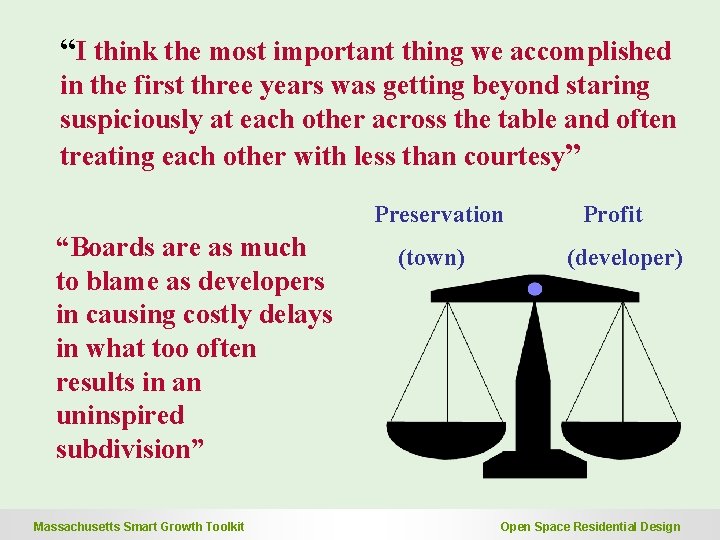
“I think the most important thing we accomplished in the first three years was getting beyond staring suspiciously at each other across the table and often treating each other with less than courtesy” Preservation “Boards are as much to blame as developers in causing costly delays in what too often results in an uninspired subdivision” Massachusetts Smart Growth Toolkit (town) Profit (developer) Open Space Residential Design
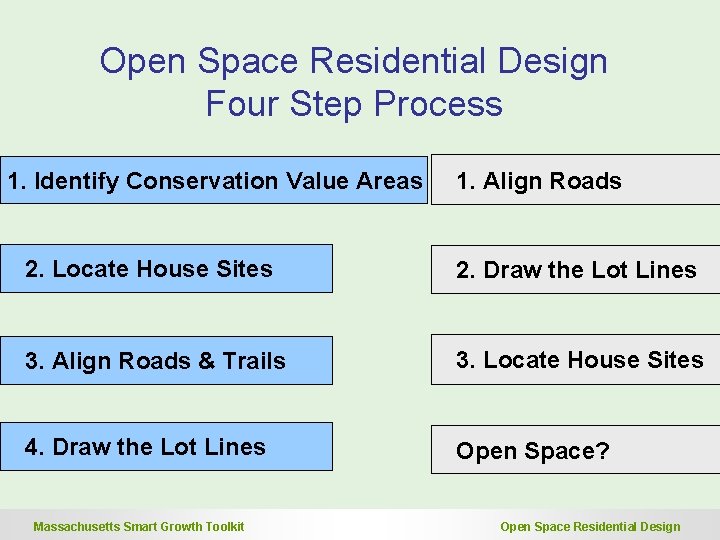
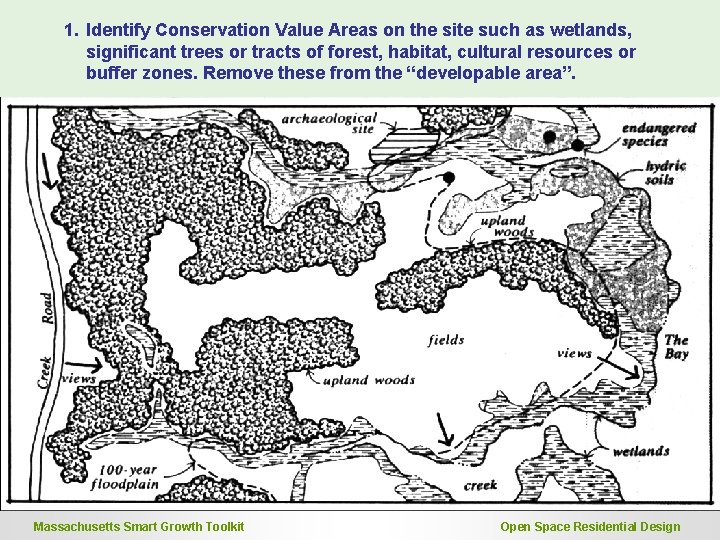
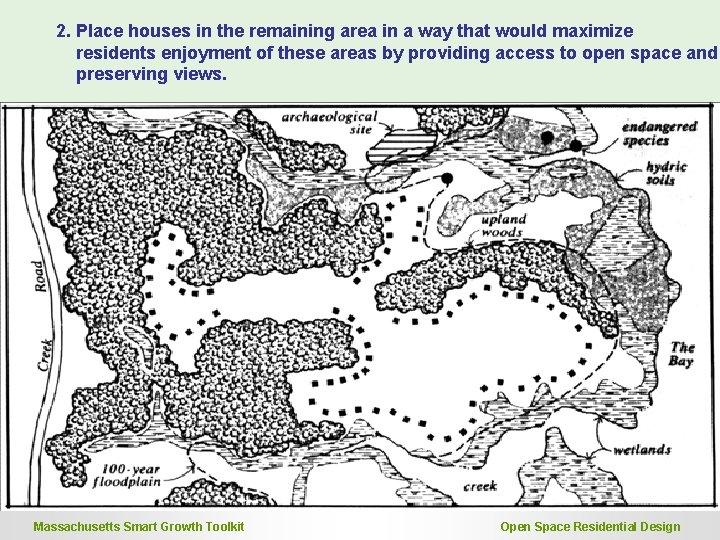
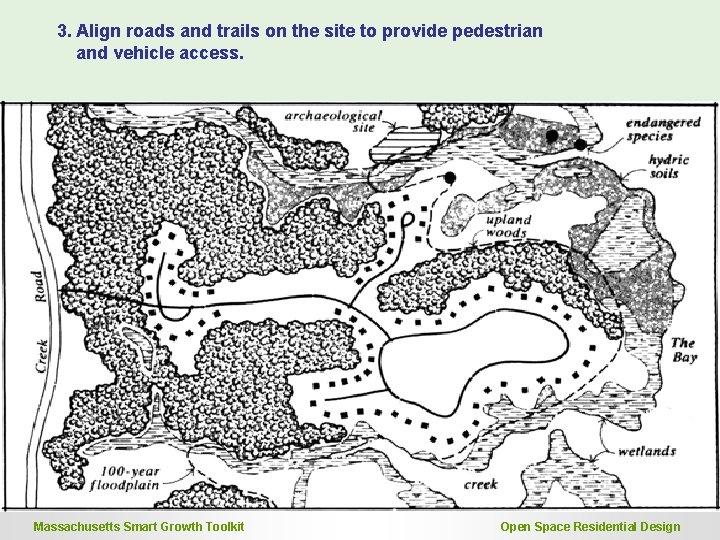
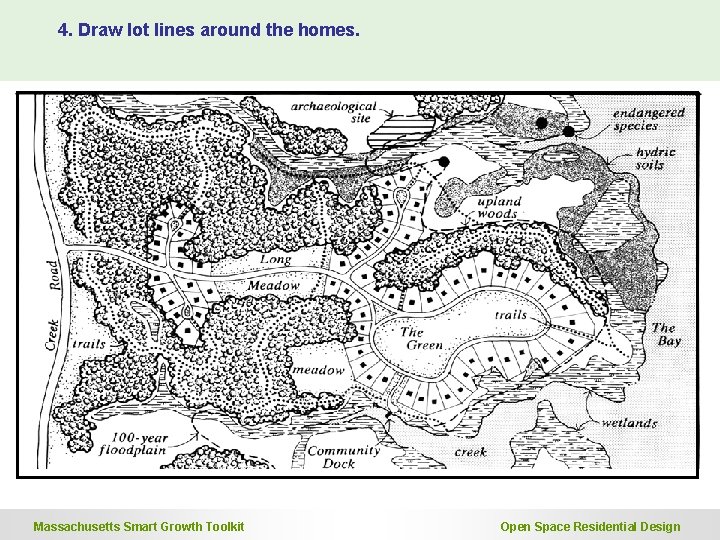
Open Space Residential Design Four Step Process 1. Identify Conservation Value Areas 1. Align Roads 2. Locate House Sites 2. Draw the Lot Lines 3. Align Roads & Trails 3. Locate House Sites 4. Draw the Lot Lines Open Space? Massachusetts Smart Growth Toolkit Open Space Residential Design
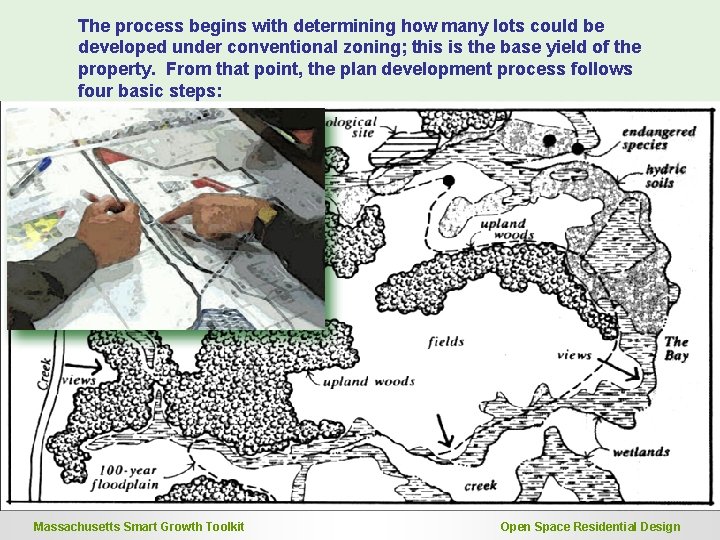
The process begins with determining how many lots could be developed under conventional zoning; this is the base yield of the property. From that point, the plan development process follows four basic steps: Massachusetts Smart Growth Toolkit Open Space Residential Design
1. Identify Conservation Value Areas on the site such as wetlands, significant trees or tracts of forest, habitat, cultural resources or buffer zones. Remove these from the “developable area”. Massachusetts Smart Growth Toolkit Open Space Residential Design
2. Place houses in the remaining area in a way that would maximize residents enjoyment of these areas by providing access to open space and preserving views. Massachusetts Smart Growth Toolkit Open Space Residential Design
3. Align roads and trails on the site to provide pedestrian and vehicle access. Massachusetts Smart Growth Toolkit Open Space Residential Design
4. Draw lot lines around the homes. Massachusetts Smart Growth Toolkit Open Space Residential Design
Opportunities and Incentives • Density Bonuses • Reduced infrastructure • Pork chop lots • Creative use of frontage requirements • Creative use of various lot sizes Massachusetts Smart Growth Toolkit • Mixed housing types for low to moderate income • Yard Setbacks • Minimum Width at Building Line • Maximum Impervious Surface per Lot • Lot Shape Open Space Residential Design
Density Bonuses a. Towns may choose to give Density Bonuses: • Based on a % over the minimum of open space set aside • To encourage a specific age demographic • To promote town planning goals • To promote low to moderate income units • Based on the sensitivity of resources or the protection of resources • Reduction of bedrooms to minimize school impacts Massachusetts Smart Growth Toolkit Open Space Residential Design
OSRD OR CLUSTER? • Creative Partnership • Pre-Application Mtg (Four Step Process) • Special Permit Early in Process • Conservation Values • Streamlined Process • Early Stakeholder Involvement • Creative Incentives • Alternative to Comp. Permit Massachusetts Smart Growth Toolkit • Regulatory Focus • Early Financial Investment • Concurrent Permit Processes • Open Space Percentage • Uncertain Timeframe • Involvement at the hearing phase • Density Bonus Only Open Space Residential Design
ORSD or Large Lots? • Lots may be consumed by home, garage, pool, shed, patio, landscaping, etc. • May or may not contain open space • Usually reserved for upscale homes • Less covering of impervious surfaces • Permanent open space • May contain mixed housing types Massachusetts Smart Growth Toolkit Open Space Residential Design
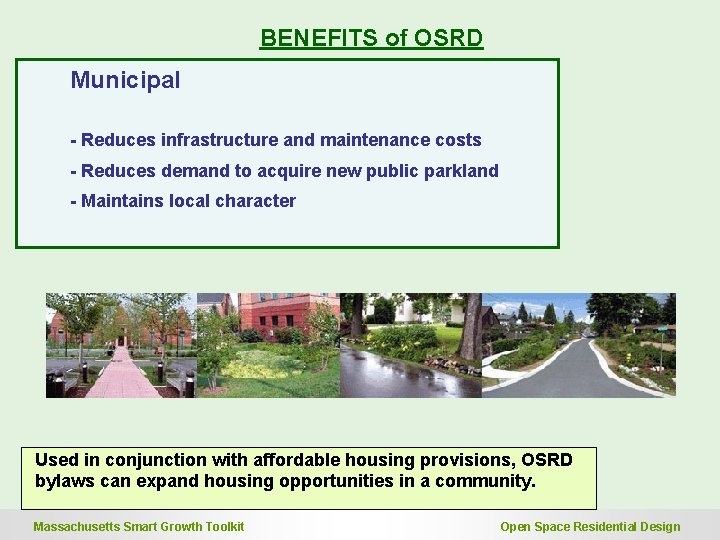
BENEFITS of OSRD Municipal - Reduces infrastructure and maintenance costs - Reduces demand to acquire new public parkland - Maintains local character Used in conjunction with affordable housing provisions, OSRD bylaws can expand housing opportunities in a community. Massachusetts Smart Growth Toolkit Open Space Residential Design
BENEFITS of OSRD Environmental - Protects unique or fragile habitats - Reduces the pollution impacts of stormwater runoff - Promotes aquifer recharge - Provides opportunities to link wildlife habitats - Conservation values are part of the planning process - Can further goals of open space and community development plans The planning process for OSRD inherently protects natural resources and promotes recharge to underlying aquifers. Massachusetts Smart Growth Toolkit Open Space Residential Design
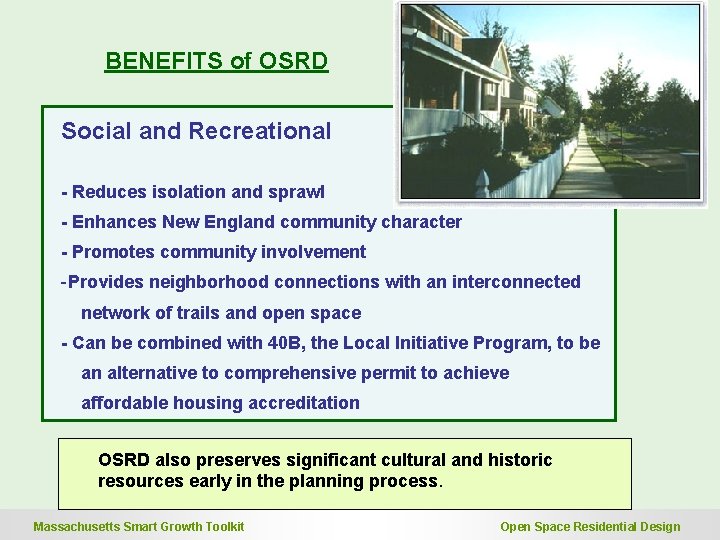
BENEFITS of OSRD Social and Recreational - Reduces isolation and sprawl - Enhances New England community character - Promotes community involvement -Provides neighborhood connections with an interconnected network of trails and open space - Can be combined with 40 B, the Local Initiative Program, to be an alternative to comprehensive permit to achieve affordable housing accreditation OSRD also preserves significant cultural and historic resources early in the planning process. Massachusetts Smart Growth Toolkit Open Space Residential Design
BENEFITS of OSRD For the Developer and Realtor - Streamlines plan review process; reduces time and costs - Adds valuable amenities that can enhance marketing and sale prices - Increases resale value; homes in OSRD subdivisions have shown to appreciate faster than those in conventional subdivisions - Provides flexibility to encourage developers to create “Green Neighborhoods” - Decreases site development costs by designing with the terrain The OSRD permitting structure encourages smart growth and facilitates a permitting process that is clear, easy to understand, and cost-effective to developers. Massachusetts Smart Growth Toolkit Open Space Residential Design
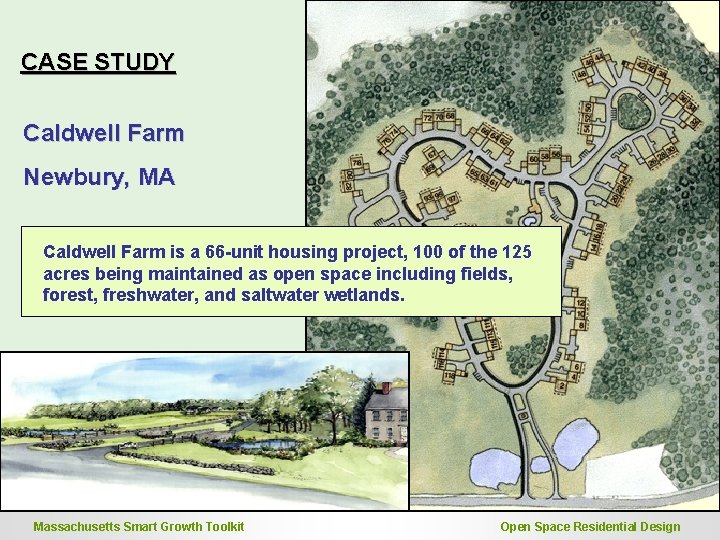
CASE STUDY Caldwell Farm Newbury, MA Caldwell Farm is a 66 -unit housing project, 100 of the 125 acres being maintained as open space including fields, forest, freshwater, and saltwater wetlands. Massachusetts Smart Growth Toolkit Open Space Residential Design
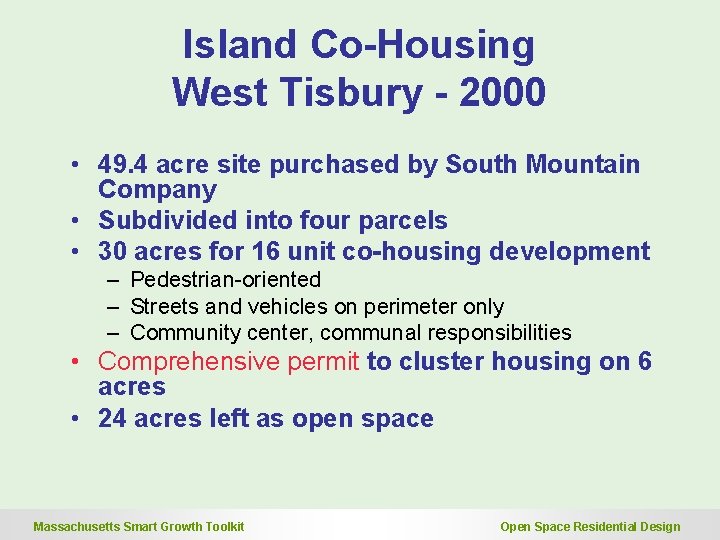
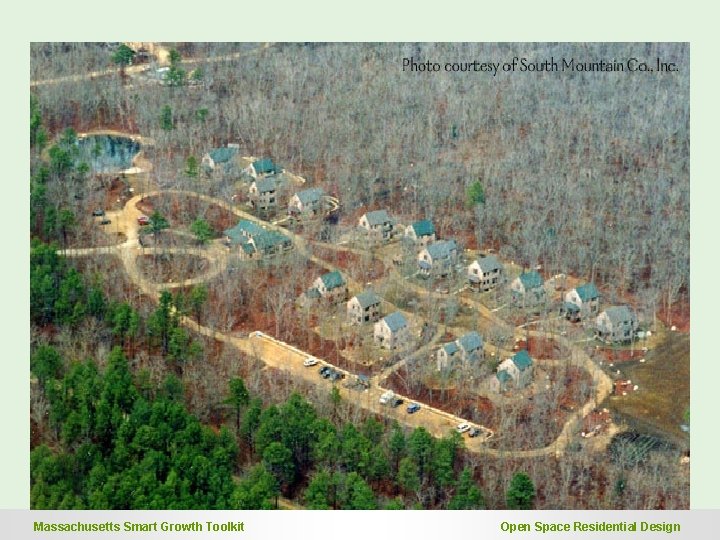
Island Co-Housing West Tisbury - 2000 • 49. 4 acre site purchased by South Mountain Company • Subdivided into four parcels • 30 acres for 16 unit co-housing development – Pedestrian-oriented – Streets and vehicles on perimeter only – Community center, communal responsibilities • Comprehensive permit to cluster housing on 6 acres • 24 acres left as open space Massachusetts Smart Growth Toolkit Open Space Residential Design
Massachusetts Smart Growth Toolkit Open Space Residential Design