
Open Source Mapping for Earthquake Risk Assessment and

- Slides: 18
Open Source Mapping for Earthquake Risk Assessment and Risk Reduction Richard Hinton, MGIS Candidate Dr. Anthony Robinson, Adviser
Outline • • Introduction Emergency Response Cycle Current Geospatial Frameworks Purposed Methodology Data Considerations Open Source in Disaster Management The Road Ahead Closing thoughts
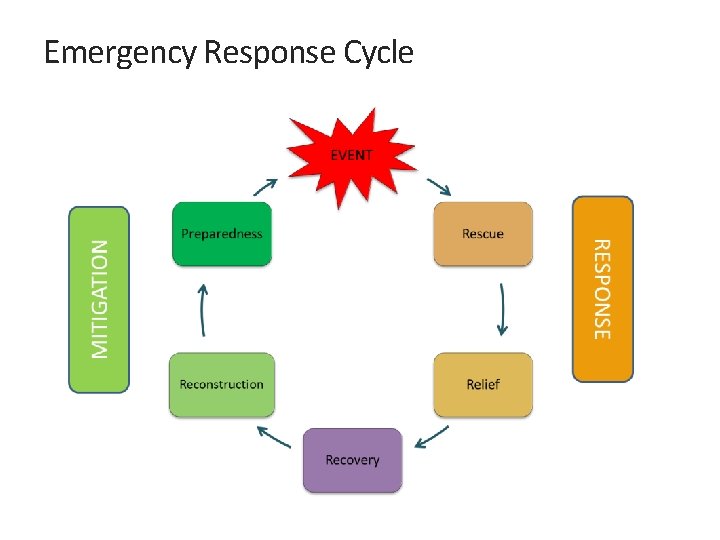
Emergency Response Cycle
Current Geospatial Frameworks/Initiatives Developed countries often have preparedness plans available www. ready. gov www. ncdp. mailman. columbia. edu
Current Geospatial Frameworks/Initiatives www. dpri. kyoto-u. ac. jp www. gazi. edu. tr www. fema. gov/hazus
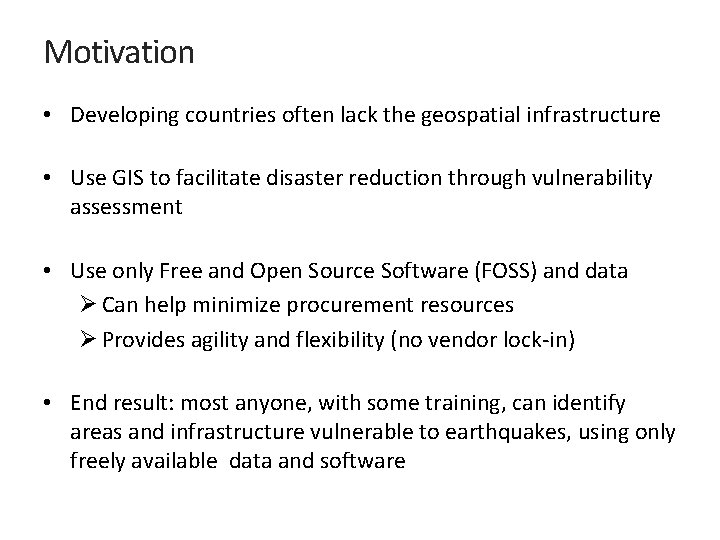
Motivation • Developing countries often lack the geospatial infrastructure • Use GIS to facilitate disaster reduction through vulnerability assessment • Use only Free and Open Source Software (FOSS) and data Ø Can help minimize procurement resources Ø Provides agility and flexibility (no vendor lock-in) • End result: most anyone, with some training, can identify areas and infrastructure vulnerable to earthquakes, using only freely available data and software
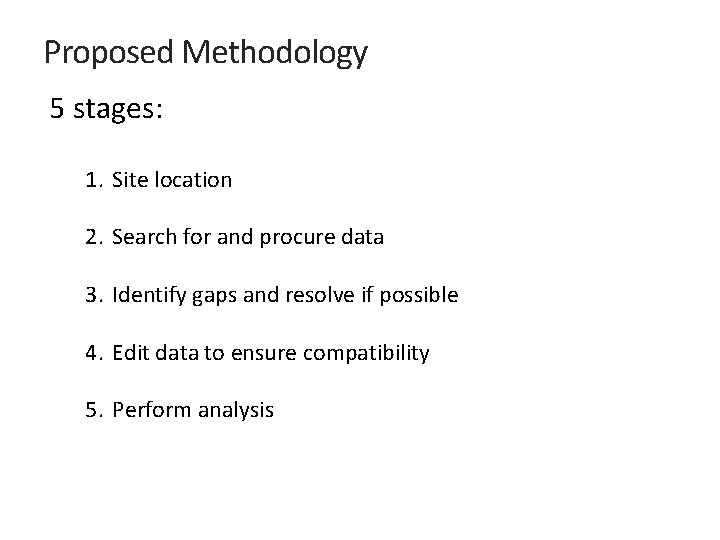
Proposed Methodology 5 stages: 1. Site location 2. Search for and procure data 3. Identify gaps and resolve if possible 4. Edit data to ensure compatibility 5. Perform analysis
Proposed Methodology cont… Not used to predict casualty figures To predict casualty figures… HAZUS-MH- Hazard U. S. – Multi Hazard www. fema. gov/hazus CATS - Consequences Assessment Tool Set www. saic. com/products/security/cats/
Proposed Methodology cont… PAGER – Prompt Assessment of Global Earthquakes for Response http: //earthquake. usgs. gov/research/pager/ Ina. SAFE - Indonesia Scenario Assessment for Emergences inasafe. readthedocs. org
Data Considerations Data Sources: Open Source Free Including Crowd-sourced Primary Data Concerns: Quality Usability Security Crowd-sourced proven useable: Geocoding data project proved to be 85% accurate Ushahidi-Haiti Project www. usaid. gov www. ushahidi. com
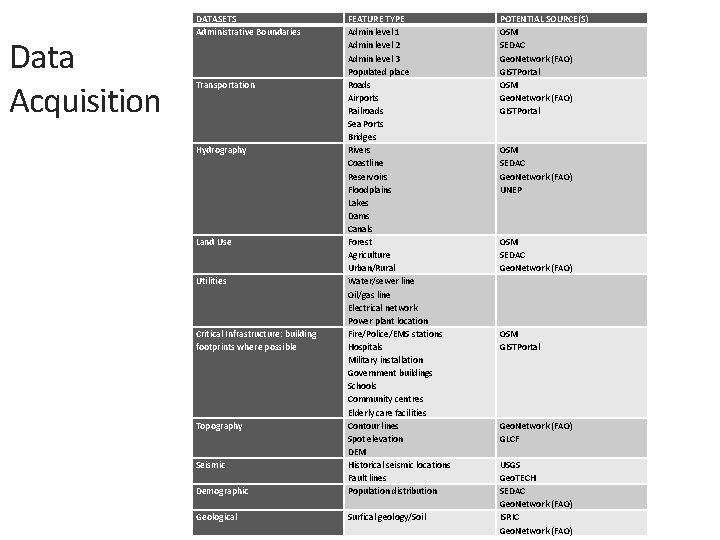
Data Considerations Common datasets include: • Administrative boundaries and populated places • Hydrography • Topography • Land cover and land use • Utilities • Critical infrastructure • Demographic data Disaster specific datasets for earthquakes: • Fault lines • Historical seismic activity • Soil classification
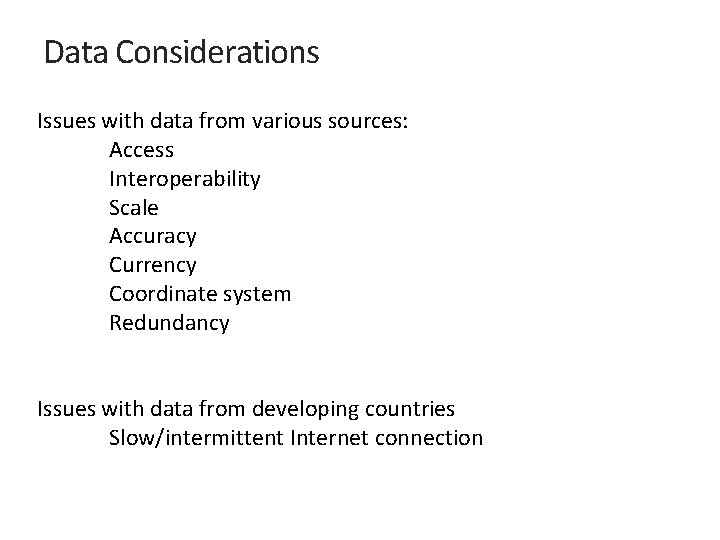
Data Considerations Issues with data from various sources: Access Interoperability Scale Accuracy Currency Coordinate system Redundancy Issues with data from developing countries Slow/intermittent Internet connection
Data Acquisition DATASETS Administrative Boundaries Demographic FEATURE TYPE Admin level 1 Admin level 2 Admin level 3 Populated place Roads Airports Railroads Sea Ports Bridges Rivers Coastline Reservoirs Floodplains Lakes Dams Canals Forest Agriculture Urban/Rural Water/sewer line Oil/gas line Electrical network Power plant location Fire/Police/EMS stations Hospitals Military installation Government buildings Schools Community centres Elderly care facilities Contour lines Spot elevation DEM Historical seismic locations Fault lines Population distribution Geological Surfical geology/Soil Transportation Hydrography Land Use Utilities Critical Infrastructure: building footprints where possible Topography Seismic POTENTIAL SOURCE(S) OSM SEDAC Geo. Network (FAO) GISTPortal OSM SEDAC Geo. Network (FAO) UNEP OSM SEDAC Geo. Network (FAO) OSM GISTPortal Geo. Network (FAO) GLCF USGS Geo. TECH SEDAC Geo. Network (FAO) ISRIC Geo. Network (FAO)
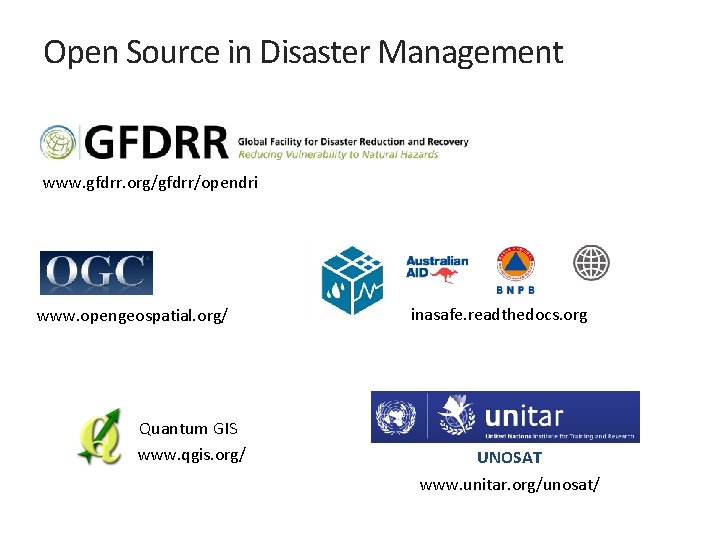
Open Source in Disaster Management www. gfdrr. org/gfdrr/opendri www. opengeospatial. org/ Quantum GIS www. qgis. org/ inasafe. readthedocs. org UNOSAT www. unitar. org/unosat/
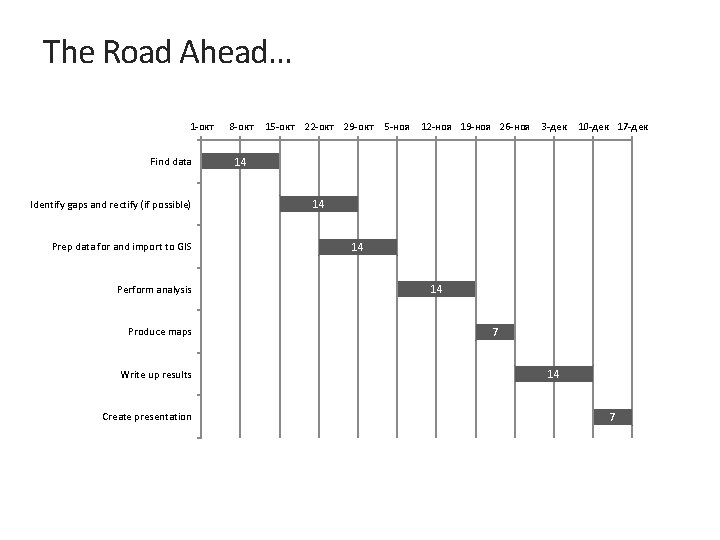
The Road Ahead… 1 -окт Find data Identify gaps and rectify (if possible) Prep data for and import to GIS Perform analysis Produce maps Write up results Create presentation 8 -окт 15 -окт 22 -окт 29 -окт 5 -ноя 12 -ноя 19 -ноя 26 -ноя 3 -дек 10 -дек 17 -дек 14 14 7
Closing Thoughts • Open Source has been used with success • Community involvement • With little training, areas and infrastructure at risk can be identified • Every community has it’s own specific needs • Communities change over time
Thank you!