
Oombulgarri Prescribed Poem by Ali Cobby Eckermann Oombulgarri
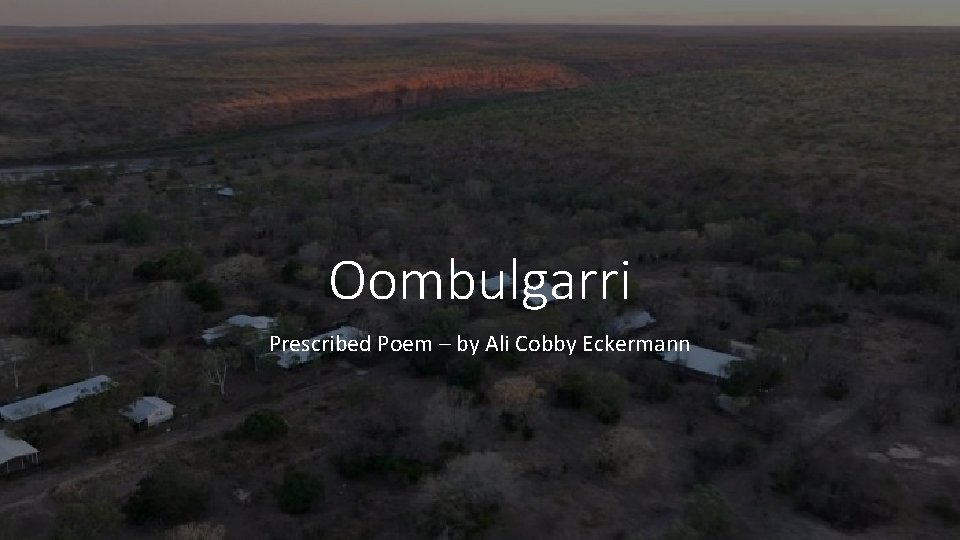
Oombulgarri Prescribed Poem – by Ali Cobby Eckermann
Oombulgarri tumble weeds of blue pattern dresses echoes of laughter roll like distant thunder drift down empty streets but unlike a storm cannot pass by where paddy wagons once patrolled hysterical energy whips, and wails the town is empty now tumble weeds form an interwoven frenzy as empty as the promises a fortress to guard the perimeter of this site that once held it together broken, even the creak of the gate is silent even the wind can no longer stir movement at the playground all the equipment is rushed shut
Eckermann reads Oombulgarri
Eckermann Interview on Oombulgarri

Context and Purpose • Read through the following slides to deepen your knowledge and understanding of the historical context of the poem.
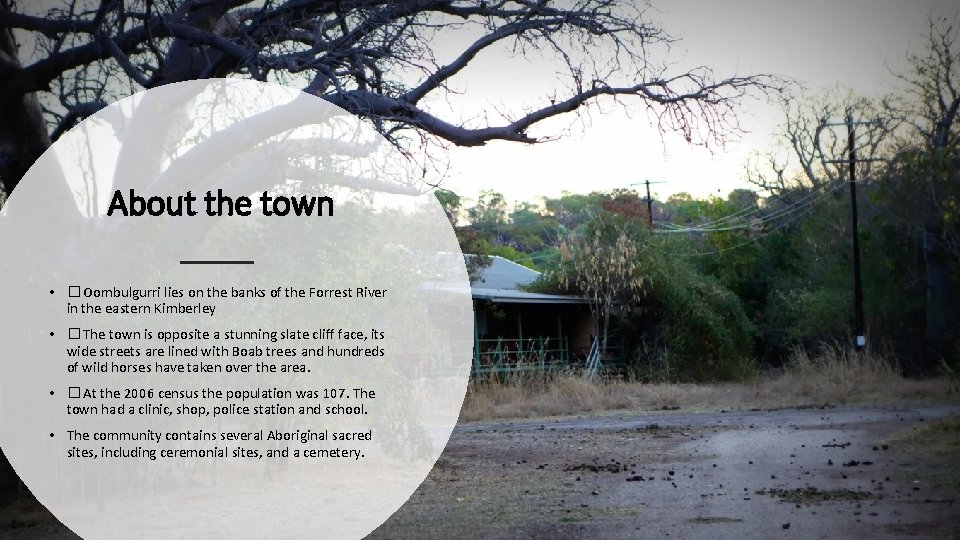
About the town • �Oombulgurri lies on the banks of the Forrest River in the eastern Kimberley • �The town is opposite a stunning slate cliff face, its wide streets are lined with Boab trees and hundreds of wild horses have taken over the area. • �At the 2006 census the population was 107. The town had a clinic, shop, police station and school. • The community contains several Aboriginal sacred sites, including ceremonial sites, and a cemetery.
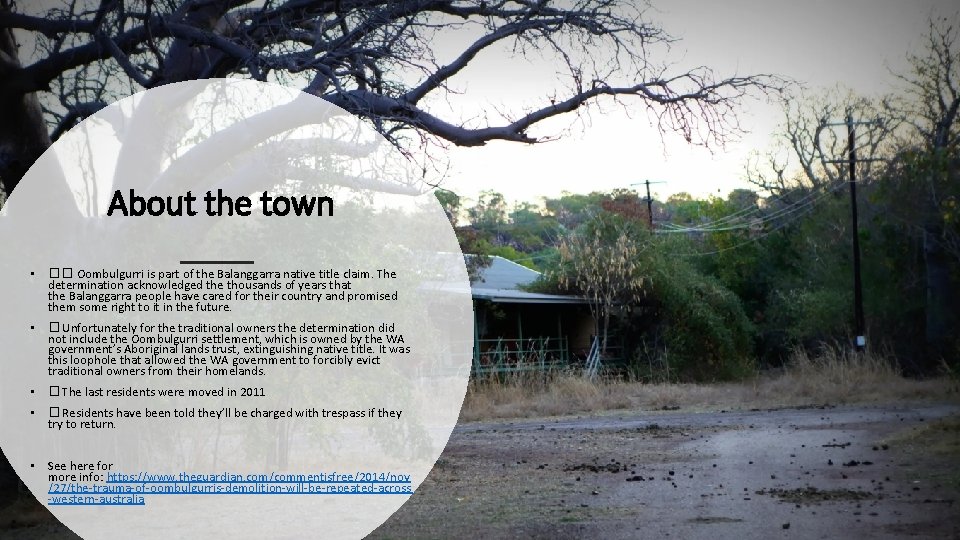
About the town • �� Oombulgurri is part of the Balanggarra native title claim. The determination acknowledged the thousands of years that the Balanggarra people have cared for their country and promised them some right to it in the future. • �Unfortunately for the traditional owners the determination did not include the Oombulgurri settlement, which is owned by the WA government’s Aboriginal lands trust, extinguishing native title. It was this loophole that allowed the WA government to forcibly evict traditional owners from their homelands. • �The last residents were moved in 2011 • �Residents have been told they’ll be charged with trespass if they try to return. • See here for more info: https: //www. theguardian. com/commentisfree/2014/nov /27/the-trauma-of-oombulgurris-demolition-will-be-repeated-across -western-australia
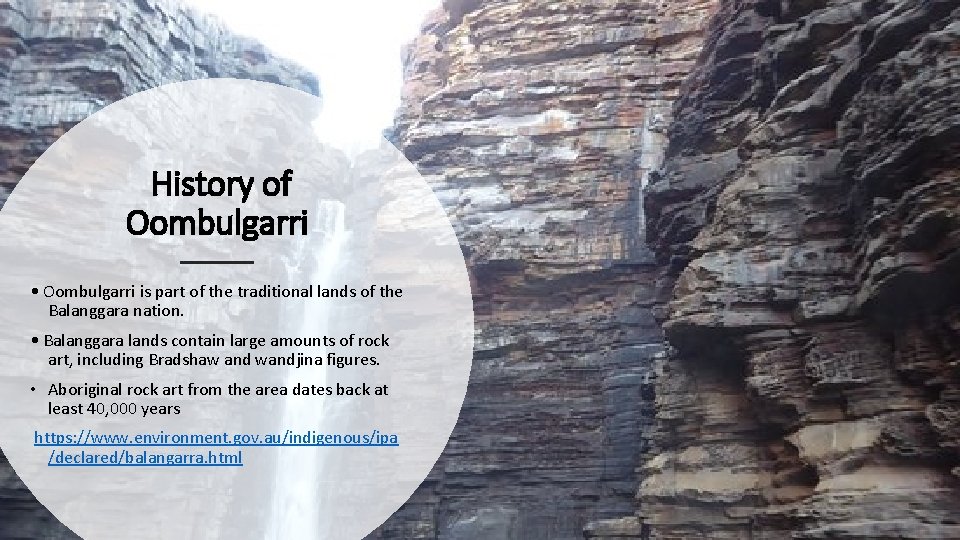
History of Oombulgarri • Oombulgarri is part of the traditional lands of the Balanggara nation. • Balanggara lands contain large amounts of rock art, including Bradshaw and wandjina figures. • Aboriginal rock art from the area dates back at least 40, 000 years https: //www. environment. gov. au/indigenous/ipa /declared/balangarra. html
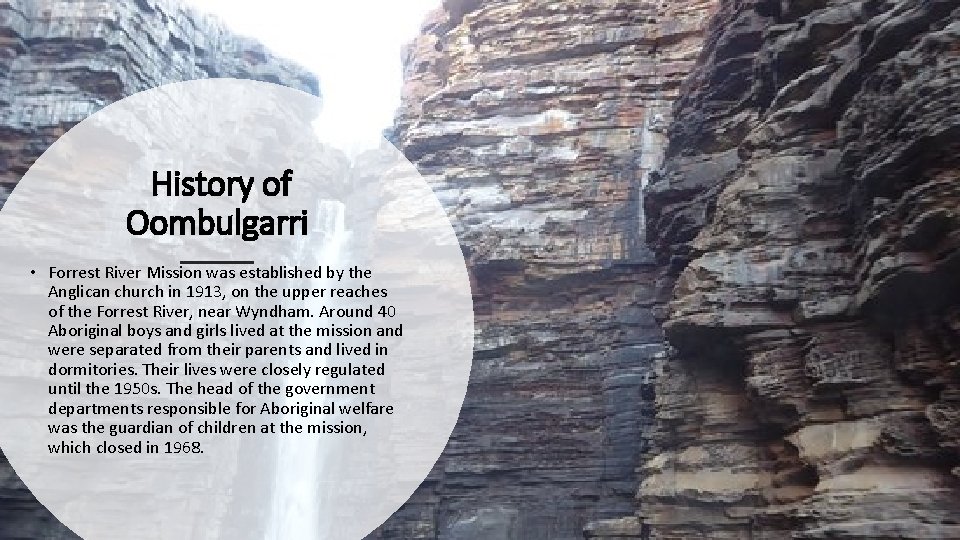
History of Oombulgarri • Forrest River Mission was established by the Anglican church in 1913, on the upper reaches of the Forrest River, near Wyndham. Around 40 Aboriginal boys and girls lived at the mission and were separated from their parents and lived in dormitories. Their lives were closely regulated until the 1950 s. The head of the government departments responsible for Aboriginal welfare was the guardian of children at the mission, which closed in 1968.
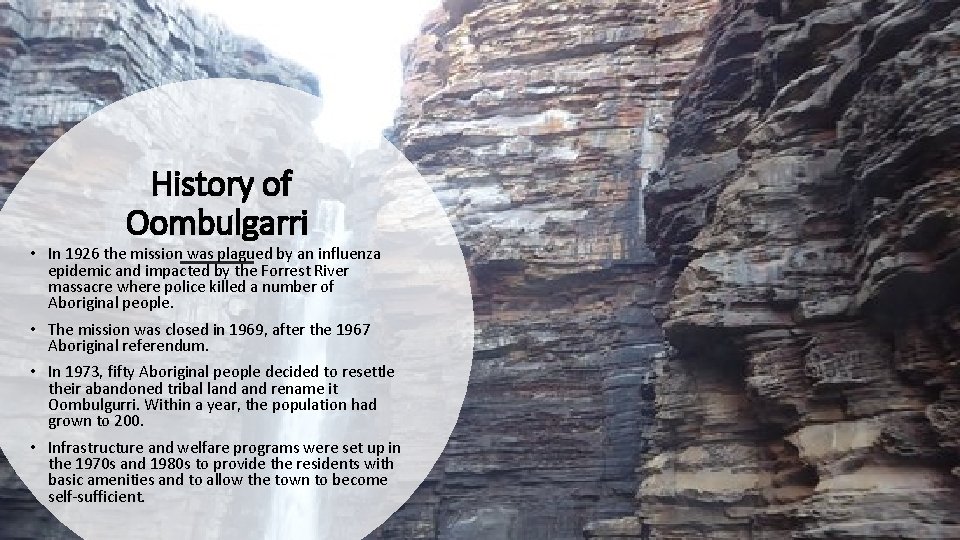
History of Oombulgarri • In 1926 the mission was plagued by an influenza epidemic and impacted by the Forrest River massacre where police killed a number of Aboriginal people. • The mission was closed in 1969, after the 1967 Aboriginal referendum. • In 1973, fifty Aboriginal people decided to resettle their abandoned tribal land rename it Oombulgurri. Within a year, the population had grown to 200. • Infrastructure and welfare programs were set up in the 1970 s and 1980 s to provide the residents with basic amenities and to allow the town to become self-sufficient.
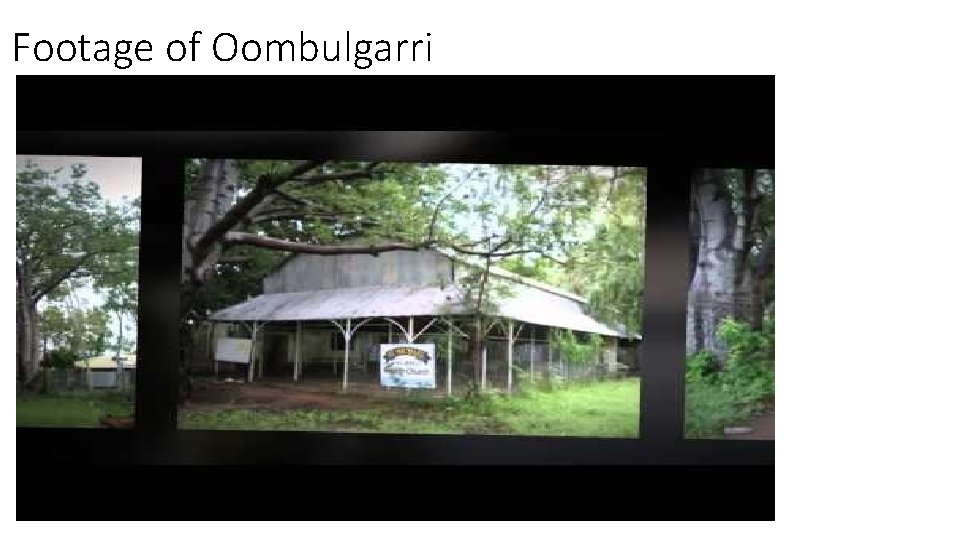
Footage of Oombulgarri
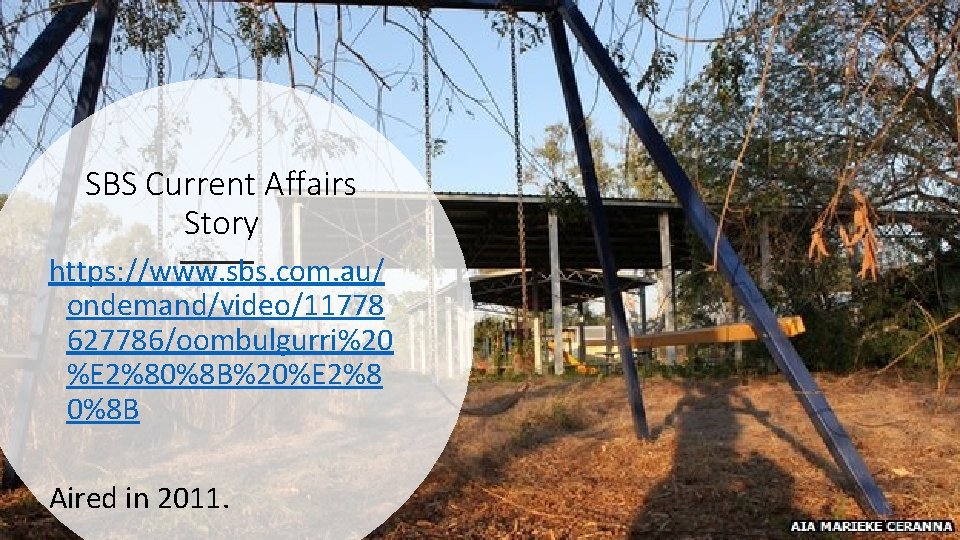
SBS Current Affairs Story https: //www. sbs. com. au/ ondemand/video/11778 627786/oombulgurri%20 %E 2%80%8 B%20%E 2%8 0%8 B Aired in 2011.
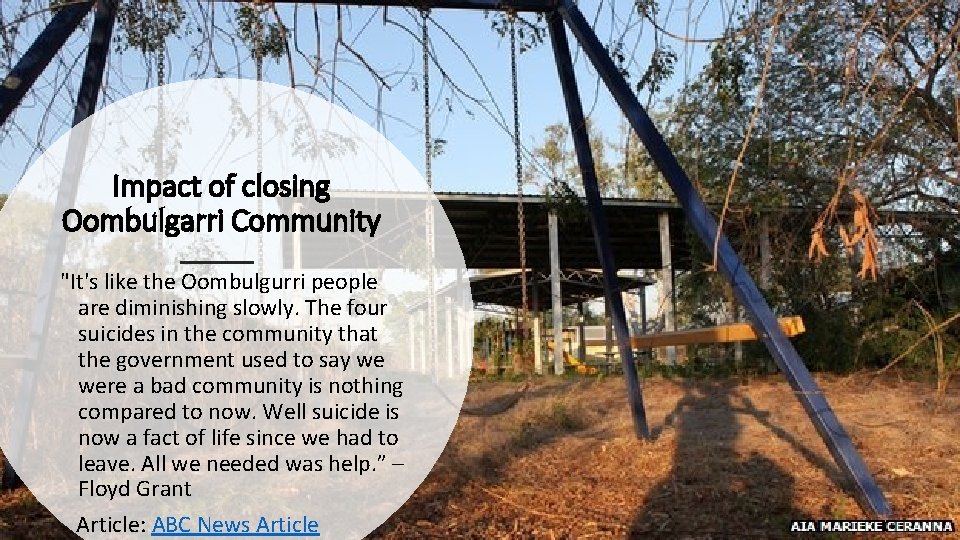
Impact of closing Oombulgarri Community "It's like the Oombulgurri people are diminishing slowly. The four suicides in the community that the government used to say we were a bad community is nothing compared to now. Well suicide is now a fact of life since we had to leave. All we needed was help. ” – Floyd Grant Article: ABC News Article

Purpose • the poem “. . . as a challenge to the reader to research the place names and to find out the bigger story of these places and to know that everything the government tells you is not true. ”- Ali Cobby Eckermann

Take note of the following language forms and features on the poem: Poem Annotation • tercet: a poetic unit of three lines, rhymed or unrhymed • Absence of punctuation • Personification • Metaphors • Similes • Symbols • Aural, Visual and Tactile imagery • High modality • Distinct stanza divisions • Repetition • Motif/symbol of wind/breath • Allusion to historical events
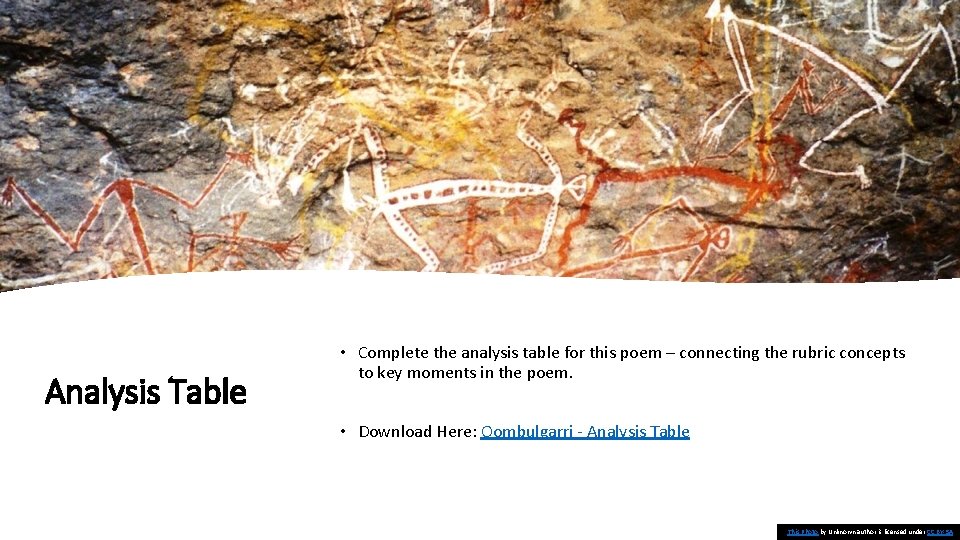
Analysis Table • Complete the analysis table for this poem – connecting the rubric concepts to key moments in the poem. • Download Here: Oombulgarri - Analysis Table This Photo by Unknown author is licensed under CC BY-SA.
Paragraph Writing • Write an analytical paragraph in response to the following question: How does Ali Cobby Eckerman address dispossession in Oombulgarri?
- Slides: 17