
Ontologies What they are Why you should care
- Slides: 14
Ontologies (What they are; Why you should care; What you should know) Deborah L. Mc. Guinness Associate Director and Senior Research Scientist Knowledge Systems Laboratory Stanford University Stanford, CA 94305 650 -723 -9770 dlm@ksl. stanford. edu
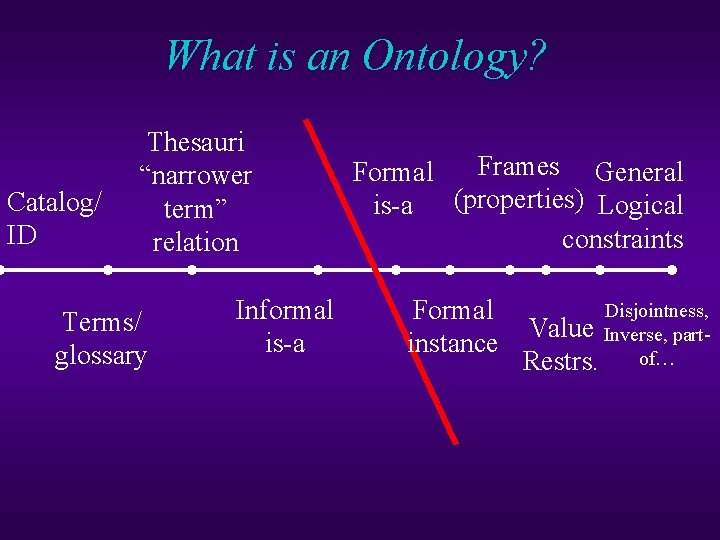
What is an Ontology? Catalog/ ID Thesauri “narrower term” relation Terms/ glossary Informal is-a Frames General Formal is-a (properties) Logical constraints Formal instance Disjointness, Value Inverse, part. Restrs. of…
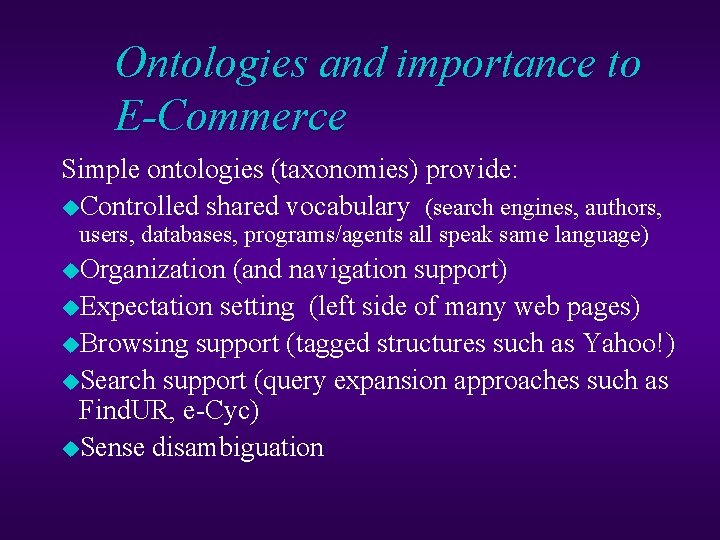
Ontologies and importance to E-Commerce Simple ontologies (taxonomies) provide: u. Controlled shared vocabulary (search engines, authors, users, databases, programs/agents all speak same language) u. Organization (and navigation support) u. Expectation setting (left side of many web pages) u. Browsing support (tagged structures such as Yahoo!) u. Search support (query expansion approaches such as Find. UR, e-Cyc) u. Sense disambiguation
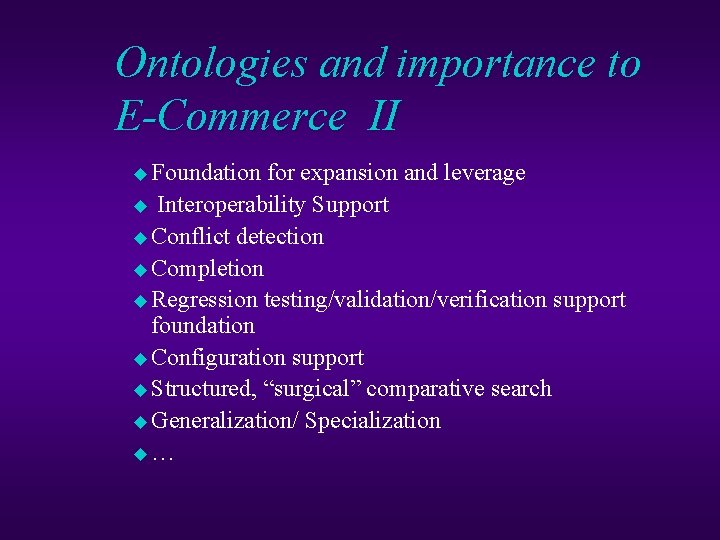
Ontologies and importance to E-Commerce II u Foundation for expansion and leverage u Interoperability Support u Conflict detection u Completion u Regression testing/validation/verification support foundation u Configuration support u Structured, “surgical” comparative search u Generalization/ Specialization u…
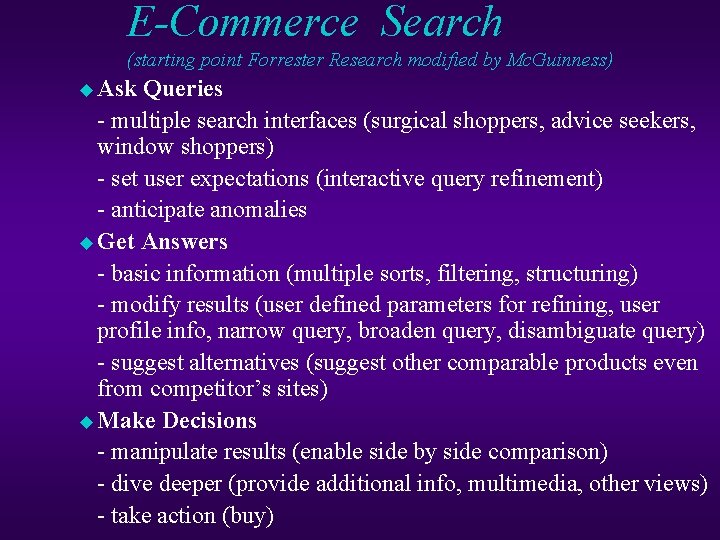
E-Commerce Search (starting point Forrester Research modified by Mc. Guinness) u Ask Queries - multiple search interfaces (surgical shoppers, advice seekers, window shoppers) - set user expectations (interactive query refinement) - anticipate anomalies u Get Answers - basic information (multiple sorts, filtering, structuring) - modify results (user defined parameters for refining, user profile info, narrow query, broaden query, disambiguate query) - suggest alternatives (suggest other comparable products even from competitor’s sites) u Make Decisions - manipulate results (enable side by side comparison) - dive deeper (provide additional info, multimedia, other views) - take action (buy)
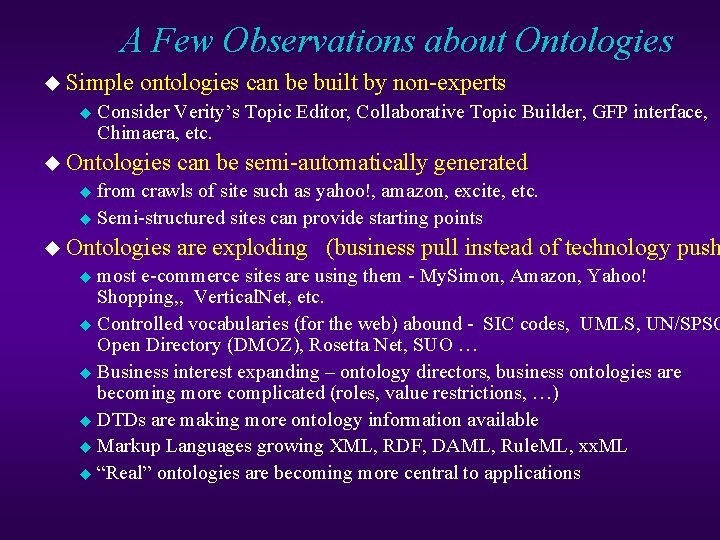
A Few Observations about Ontologies u Simple u ontologies can be built by non-experts Consider Verity’s Topic Editor, Collaborative Topic Builder, GFP interface, Chimaera, etc. u Ontologies can be semi-automatically generated from crawls of site such as yahoo!, amazon, excite, etc. u Semi-structured sites can provide starting points u u Ontologies are exploding (business pull instead of technology push most e-commerce sites are using them - My. Simon, Amazon, Yahoo! Shopping, , Vertical. Net, etc. u Controlled vocabularies (for the web) abound - SIC codes, UMLS, UN/SPSC Open Directory (DMOZ), Rosetta Net, SUO … u Business interest expanding – ontology directors, business ontologies are becoming more complicated (roles, value restrictions, …) u DTDs are making more ontology information available u Markup Languages growing XML, RDF, DAML, Rule. ML, xx. ML u “Real” ontologies are becoming more central to applications u
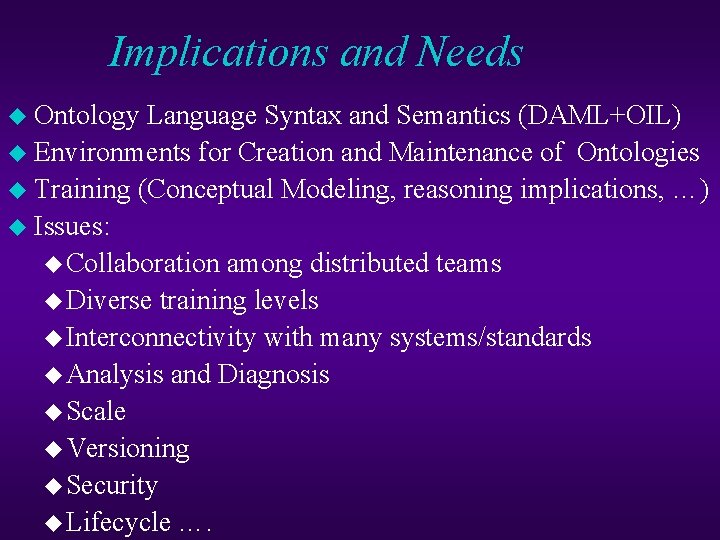
Implications and Needs u Ontology Language Syntax and Semantics (DAML+OIL) u Environments for Creation and Maintenance of Ontologies u Training (Conceptual Modeling, reasoning implications, …) u Issues: u Collaboration among distributed teams u Diverse training levels u Interconnectivity with many systems/standards u Analysis and Diagnosis u Scale u Versioning u Security u Lifecycle ….
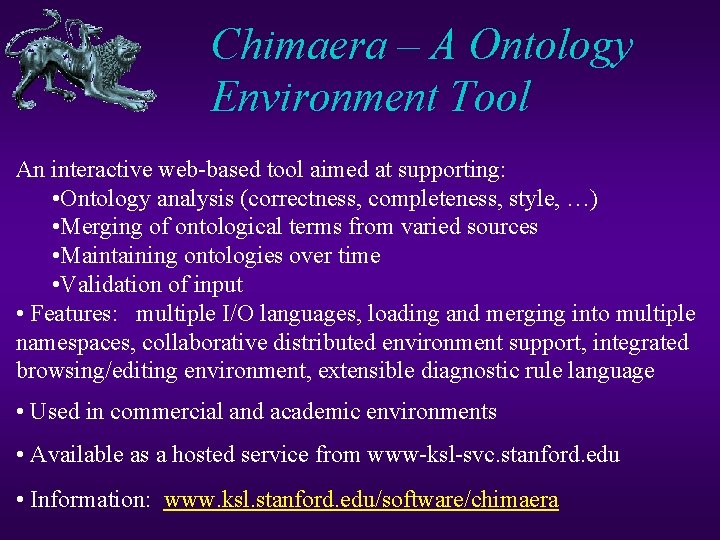
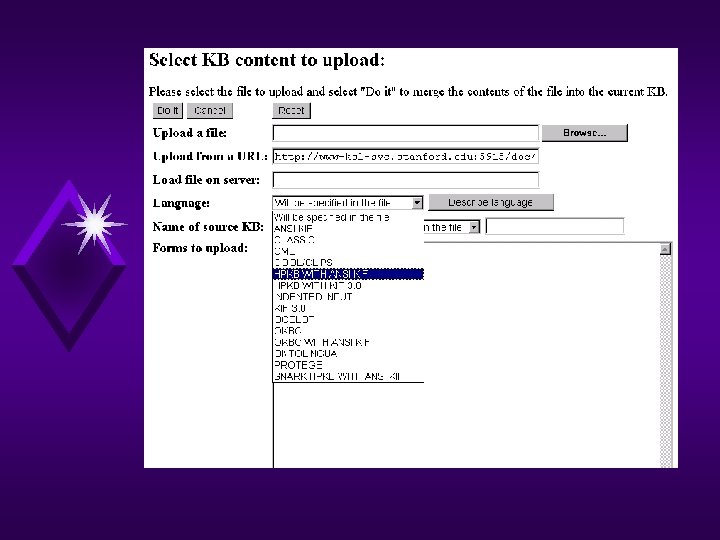
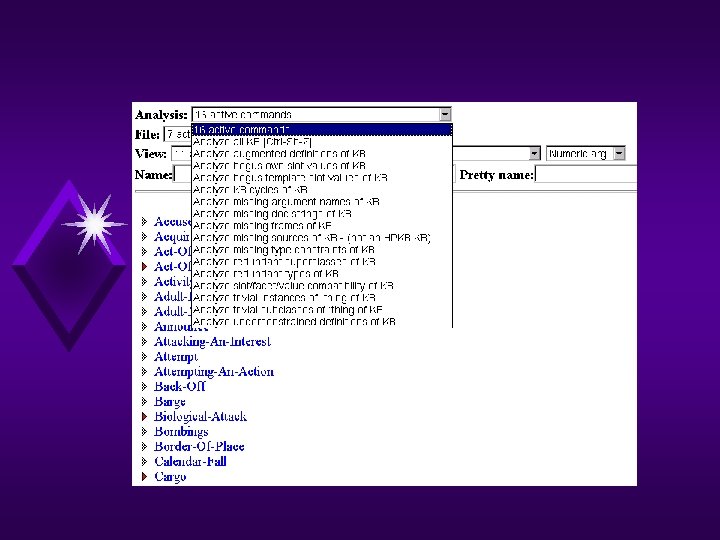
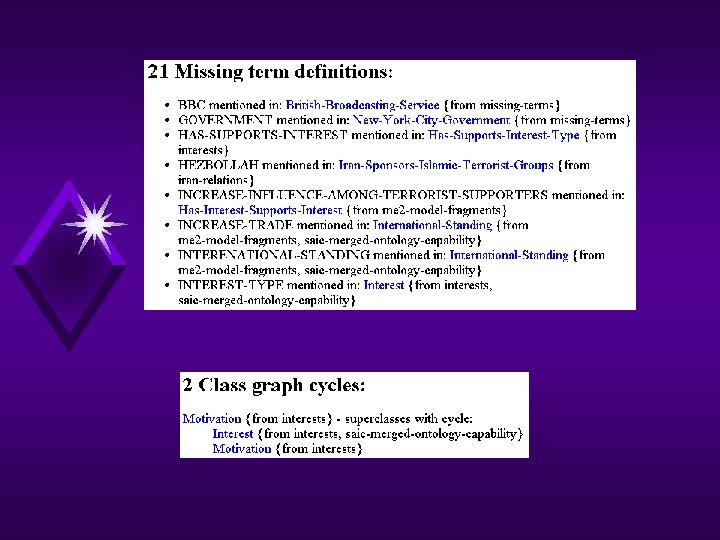
Chimaera – A Ontology Environment Tool An interactive web-based tool aimed at supporting: • Ontology analysis (correctness, completeness, style, …) • Merging of ontological terms from varied sources • Maintaining ontologies over time • Validation of input • Features: multiple I/O languages, loading and merging into multiple namespaces, collaborative distributed environment support, integrated browsing/editing environment, extensible diagnostic rule language • Used in commercial and academic environments • Available as a hosted service from www-ksl-svc. stanford. edu • Information: www. ksl. stanford. edu/software/chimaera
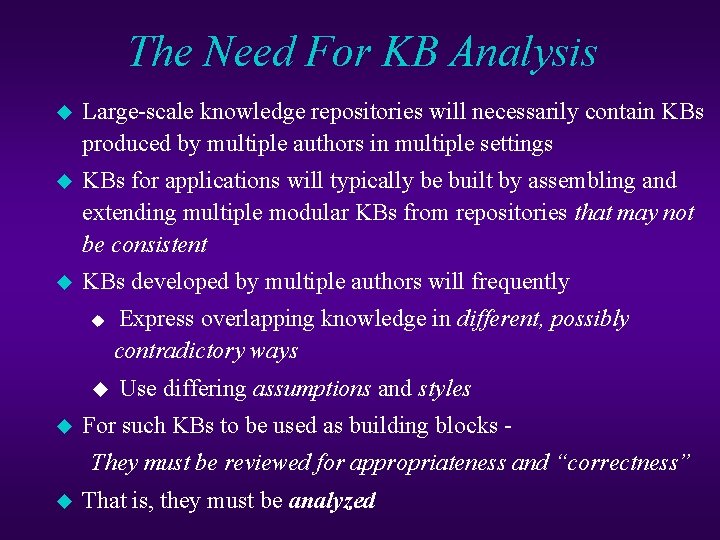
The Need For KB Analysis u Large-scale knowledge repositories will necessarily contain KBs produced by multiple authors in multiple settings u KBs for applications will typically be built by assembling and extending multiple modular KBs from repositories that may not be consistent u KBs developed by multiple authors will frequently u u u Express overlapping knowledge in different, possibly contradictory ways Use differing assumptions and styles For such KBs to be used as building blocks They must be reviewed for appropriateness and “correctness” u That is, they must be analyzed
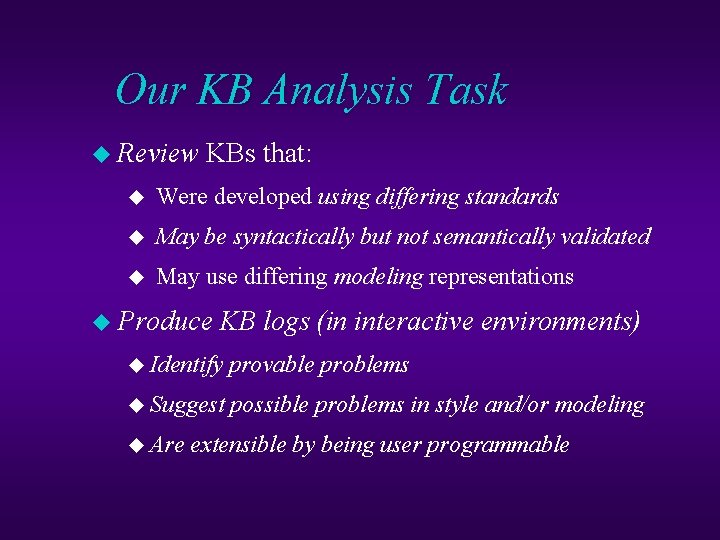
Our KB Analysis Task u Review KBs that: u Were developed using differing standards u May be syntactically but not semantically validated u May use differing modeling representations u Produce KB logs (in interactive environments) u Identify provable problems u Suggest possible problems in style and/or modeling u Are extensible by being user programmable
Discussion/Conclusion • Ontologies are exploding and at the core of many applications • Business “pull” is driving ontology language tools and languages • New generation applications need more expressive ontologies and more back end reasoning • New generation users (the general public) need more support than previous users of KR&R systems • Distributed ontologies need more support for merging and analysis and handling incompleteness(and inconsistencies) • Scale and distribution of the web force mind shift • Everyone is in the game – Government (DARPA, NSF, NIST, …), W 3 C, consortiums, business, …