
Online Teaching Nuts and Bolts DR STEVE CANIPE
Online Teaching: Nuts and Bolts DR. STEVE CANIPE RILEY COLLEGE OF EDUCATION AND LEADERSHIP WALDEN UNIVERSITY 1

Radical Paradigm Shift PARADIGM SHIFT 2
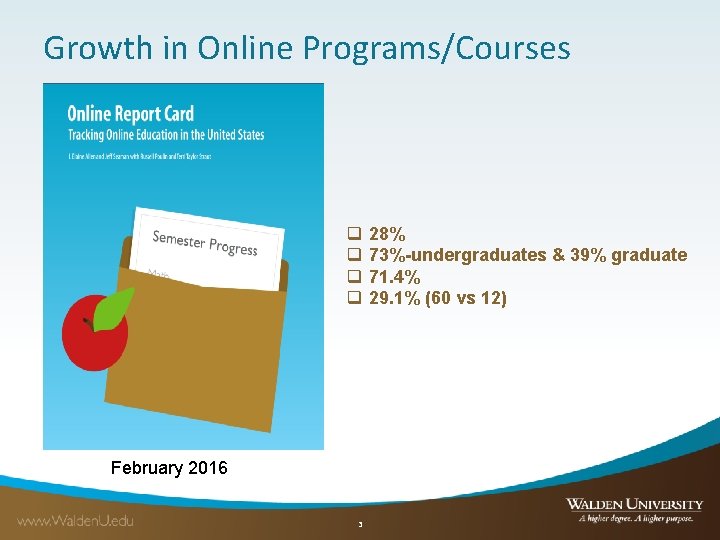
Growth in Online Programs/Courses q q February 2016 3 28% 73%-undergraduates & 39% graduate 71. 4% 29. 1% (60 vs 12)
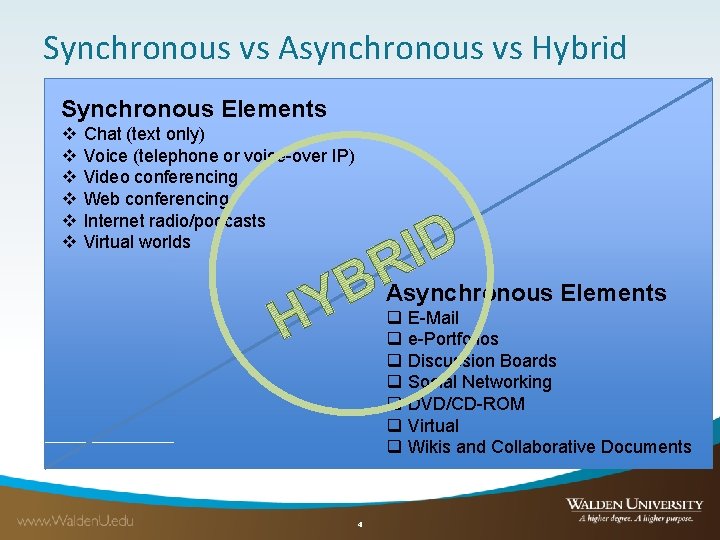
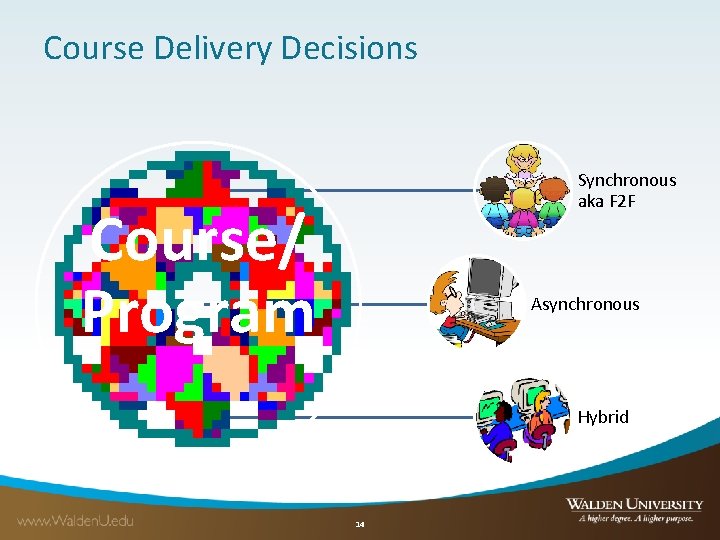
Synchronous vs Asynchronous vs Hybrid Synchronous Elements v v v Chat (text only) Voice (telephone or voice-over IP) Video conferencing Web conferencing Internet radio/podcasts Virtual worlds Asynchronous Elements q q q q 4 E-Mail e-Portfolios Discussion Boards Social Networking DVD/CD-ROM Virtual Wikis and Collaborative Documents

Hands-on Training --- JIT 5
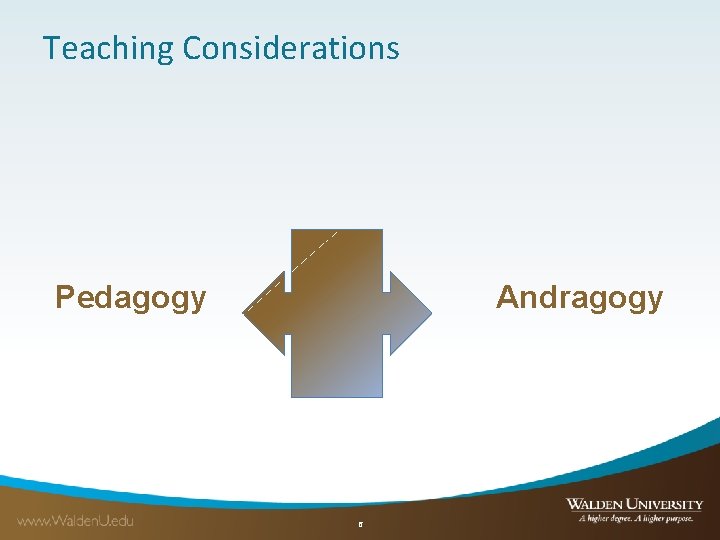
Teaching Considerations Andragogy Pedagogy 6

Course Development A. D. D. I. E. • “analysis, design, development, implementation, and evaluation. ” 7

Planning document (sample) Title Topics to Cover Week 1 Week 2 Week 3 Learning Objectives Required Reading Supplemental Reading Media Resources Content Review or Quiz Discussion Assignment 8
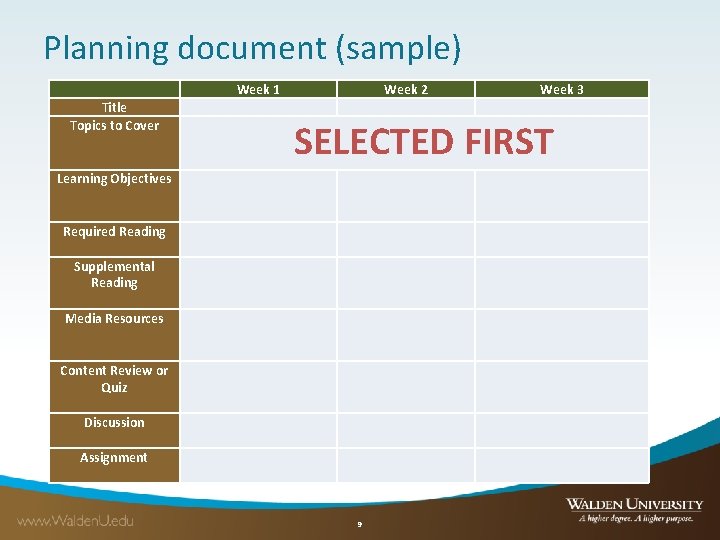
Planning document (sample) Title Topics to Cover Week 1 Week 2 Week 3 SELECTED FIRST Learning Objectives Required Reading Supplemental Reading Media Resources Content Review or Quiz Discussion Assignment 9
Case Study #1 Begin with course’s rough description 1. Sticky notes/whiteboard/3”x 5” cards/etc. 2. Pen or marker 3. Worksheet for planning 10
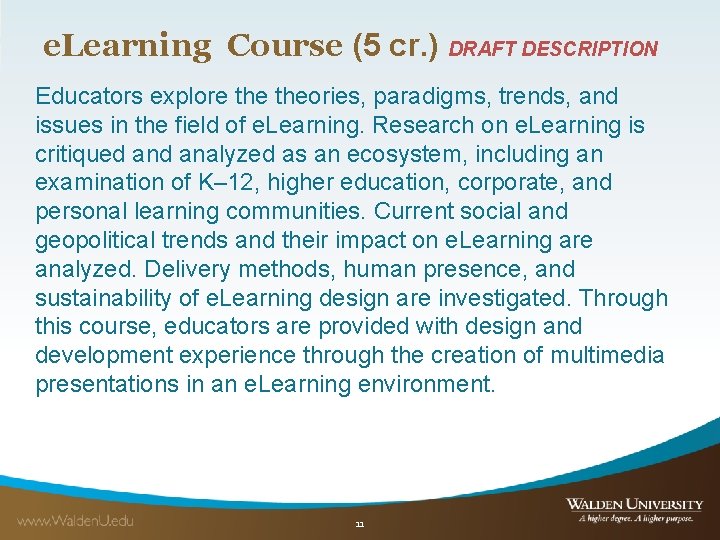
e. Learning Course (5 cr. ) DRAFT DESCRIPTION Educators explore theories, paradigms, trends, and issues in the field of e. Learning. Research on e. Learning is critiqued analyzed as an ecosystem, including an examination of K– 12, higher education, corporate, and personal learning communities. Current social and geopolitical trends and their impact on e. Learning are analyzed. Delivery methods, human presence, and sustainability of e. Learning design are investigated. Through this course, educators are provided with design and development experience through the creation of multimedia presentations in an e. Learning environment. 11
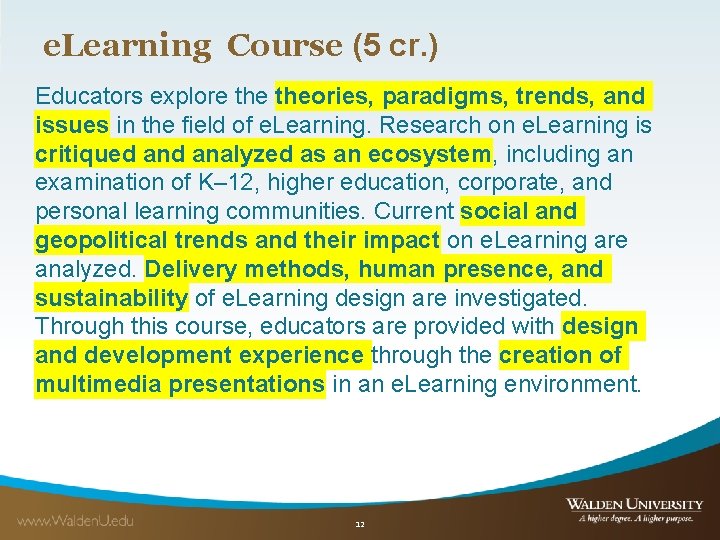
e. Learning Course (5 cr. ) Educators explore theories, paradigms, trends, and issues in the field of e. Learning. Research on e. Learning is critiqued analyzed as an ecosystem, including an examination of K– 12, higher education, corporate, and personal learning communities. Current social and geopolitical trends and their impact on e. Learning are analyzed. Delivery methods, human presence, and sustainability of e. Learning design are investigated. Through this course, educators are provided with design and development experience through the creation of multimedia presentations in an e. Learning environment. 12
Work in Teams ~7 minutes then report 13
Course Delivery Decisions Synchronous aka F 2 F Course/ Program Asynchronous Hybrid 14

Case Study #2 Your school is located in a large urban area where traffic/parking are problematic. Your target enrollment is professionals but who can come to class during the typical 8 AM -5 PM time. Your school has a satellite campus that is located in the suburbs and in addition you are getting more enrollments in your program from other parts of your state. You’ve even started getting some enrollments from foreign countries--help to the bottom line, as they pay out of state tuition. 15

How do you respond to this situation? Your school is located in a large urban area where traffic/parking are problematic. Your target enrollment is professionals but who can come to class during the typical 8 AM -5 PM time. Your school has a satellite campus that is located in the suburbs and in addition you are getting more enrollments in your program from other parts of your state. You’ve even started getting some enrollments from foreign countries--help to the bottom line, as they pay out of state tuition. 16
Work in Teams ~5 minutes then report 17
Case Study #3 You get 3 requests in an existing course. Rank order and place them into change categories. ü Class web links are not working ü Research is inadequate; new ideas exist ü New edition of text; assignments no longer supported in text 18
Work in Teams ~3 minutes then report 19
Course Evaluation “Evaluation is often viewed as a test of effectiveness – of materials, teaching methods or whatnot – but this is the least important aspect of it. The most important is to provide intelligence on how to improve these things” (Ramsden, P. (2003). Learning to teach in higher education (2 nd ed. ). London: Routledge. Falmer. , p. 223). 20
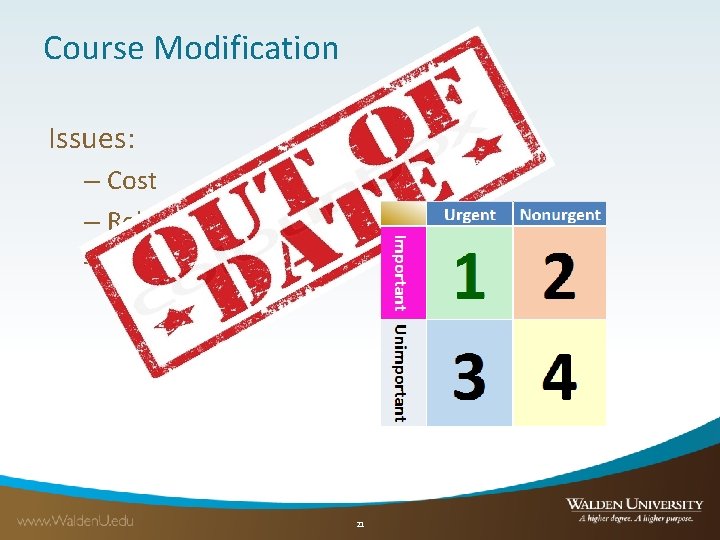
Course Modification Issues: – Cost – Relevance – Change Categories 21

Starting your class – “here be dragons” 22

23 ?
Questions/Comments Dr. Steve Canipe, Walden University The Richard W. Riley College of Education and Leadership NCATE accredited 100 Washington Avenue South, Suite 900 Minneapolis, MN 55401 1 -800 -925 -3368 x 1011416 steve. canipe@waldenu. edu 24

25
- Slides: 25