
Online Questioning Techniques that Enhance Critical Thinking Bridget
Online Questioning Techniques that Enhance Critical Thinking Bridget Arend University of Denver
Effective Questioning Techniques In the face-to-face classroom
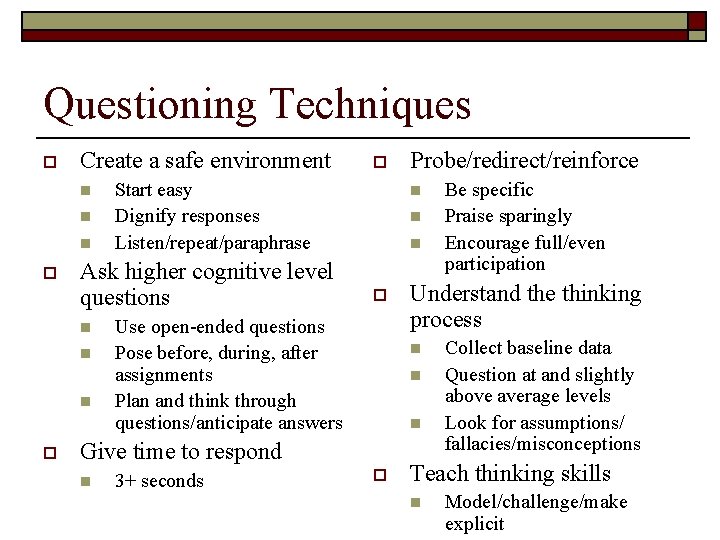
Questioning Techniques o Create a safe environment n n n o Start easy Dignify responses Listen/repeat/paraphrase Ask higher cognitive level questions n o n n n o Use open-ended questions Pose before, during, after assignments Plan and think through questions/anticipate answers 3+ seconds n n o Be specific Praise sparingly Encourage full/even participation Understand the thinking process n Give time to respond n Probe/redirect/reinforce Collect baseline data Question at and slightly above average levels Look for assumptions/ fallacies/misconceptions Teach thinking skills n Model/challenge/make explicit
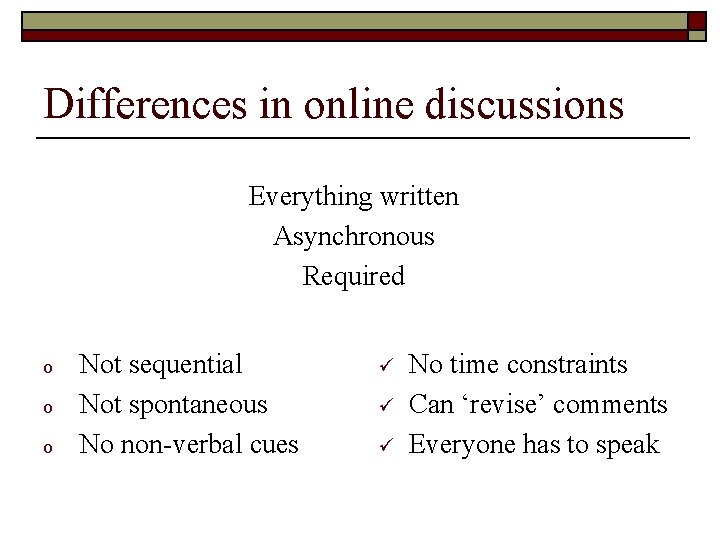
Differences in online discussions Everything written Asynchronous Required o o o Not sequential Not spontaneous No non-verbal cues ü ü ü No time constraints Can ‘revise’ comments Everyone has to speak
Effective Questioning Techniques In the online classroom
Study Details o o Site = CCCOnline Two phase, mixed-method design Phase I/Quantitative = 60 courses across disciplines o o Surveys of 411 students and 51 instructors 60 course observations Phase II/Qualitative = follow up of 9 courses o o Email/phone interviews with 29 students and 8 instructors 9 course observations
Study Findings Critical Thinking Strategies Positively related o Discussions o Written assignments o (Problem assignments, Journals) Negatively Related o Finals/Midterms o Non-graded assignments o (Knowledge-based, multiple-choice questions)
Online Discussions o o Where “the class” takes place Purpose: n n o Explore different concepts or strategies to solve a problem Apply material, dig deeper Informal/formative n n Graded, but informal Focus on content and development of ideas rather than format and structure
Online Discussions o Time for reflection n o Spent time preparing for discussions, think about ahead of time, look up supporting material All students required to “speak”
Online Discussions o Can be challenging for students n n Some struggle to express themselves in written format Some more comfortable with instructor-led discourse
Online Discussions o Instructors with higher critical thinking levels: n n n Used more discussions Made discussions a higher percentage of course grade (10 -40%) Facilitation style: o o o Remain neutral Respond less frequently Respond purposefully - probe/challenge
Examples “Good point. ” “Well said, I agree. ” “Anyone else? ” Vs. “Thanks for your contributions. Now some in this debate would say [presents one side of the argument]…while others defend [presents the other side…[provides a link to a related article]…where do you stand? ”
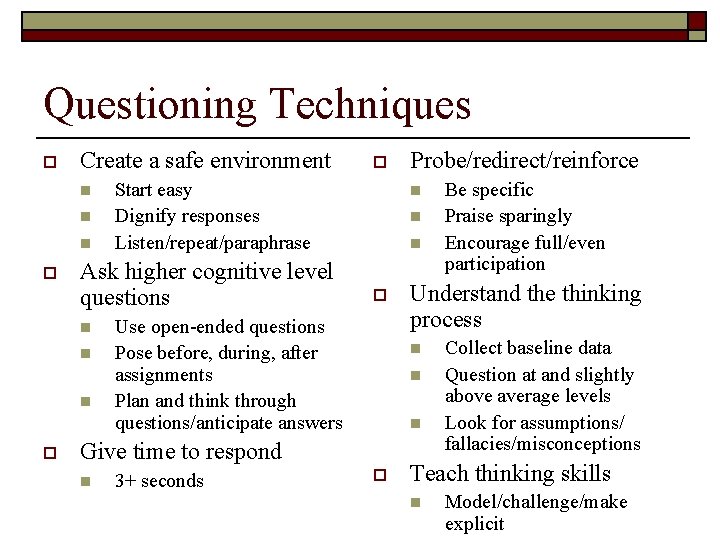
Questioning Techniques o Create a safe environment n n n o Start easy Dignify responses Listen/repeat/paraphrase Ask higher cognitive level questions n o n n n o Use open-ended questions Pose before, during, after assignments Plan and think through questions/anticipate answers 3+ seconds n n o Be specific Praise sparingly Encourage full/even participation Understand the thinking process n Give time to respond n Probe/redirect/reinforce Collect baseline data Question at and slightly above average levels Look for assumptions/ fallacies/misconceptions Teach thinking skills n Model/challenge/make explicit
An Example
Thank you! Bridget Arend University of Denver bridget. arend@du. edu http: //portfolio. du. edu/barend
- Slides: 15